
2027 How to Become a Nurse with a Biology Degree: Education, Salary, and Job Outlook

Co-Founder and Chief Data Scientist
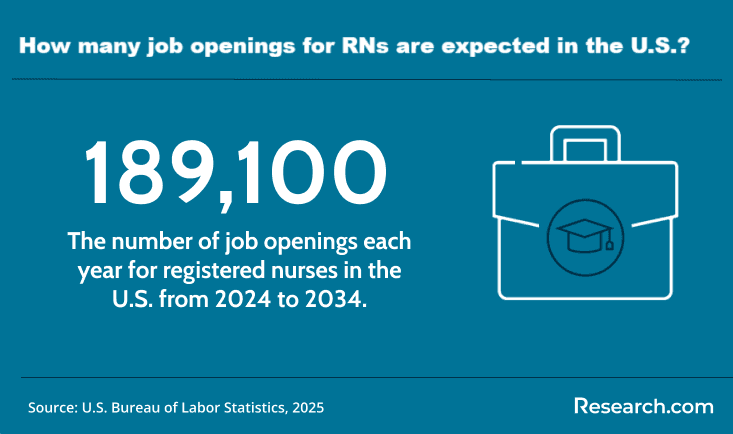
The U.S. continues to face a nationwide nursing shortage, with the Bureau of Labor Statistics projecting a 5% employment growth for registered nurses (RNs) from 2024 to 2034 and 189,100 openings each year. As such, nursing has become an increasingly appealing alternative path for an increasing number of professionals with science backgrounds, such as those with a biology degree, who seek meaningful and stable careers. A biology degree gives you a strong foundation in anatomy, physiology, and lab sciences, making it an excellent stepping stone for nursing education and clinical practice.
This article will walk you through how you can transition into nursing with a biology degree. It will also provide information on what you can expect as you take your next steps toward becoming an RN.
What are the benefits of becoming a nurse with a biology degree?
- Strong Scientific Foundation: Your biology background equips you with a deep understanding of human anatomy, physiology, and microbiology—essential knowledge that gives you a head start in nursing courses and clinical practice.
- Faster Path to Licensure: Many accelerated BSN or direct-entry MSN programs accept biology graduates, allowing you to become a registered nurse (RN) in as little as 12–18 months.
- Broader Career Options: A biology degree can help you qualify for specialized nursing roles or bridge into research, public health, or advanced practice positions.
- High Earning Potential: With RNs earning a median annual salary of $93,600 and nurse practitioners earning a median annual salary of $129,210, the financial rewards can be significant, especially for those advancing to higher degrees or leadership roles.
- Job Security and Growth: Nursing offers consistent demand and stability, with employment of RNs projected to grow 5% from 2024 to 2034, ensuring long-term career sustainability.
What can you do as a nurse with a biology degree?
A biology degree can open the door to a variety of nursing roles and specialties. Once you complete your nursing education and earn licensure, you’ll find that your science background makes you a strong candidate in both clinical and research-focused settings. Here are some career paths you can pursue:
- Registered Nurse (RN): Provide direct patient care in hospitals, clinics, or long-term care facilities, applying your biology knowledge to assess and manage health conditions.
- Public Health Nurse: Use your understanding of biology and disease processes to promote community health, conduct outreach programs, and prevent illness on a population level.
- Research Nurse: Work alongside scientists and clinicians on clinical trials or medical studies, using your biology expertise to help advance evidence-based healthcare.
- Nurse Educator: Teach future nurses or healthcare workers, combining your scientific background with hands-on nursing experience.
- Advanced Practice Roles: With further education, you can become a nurse practitioner, nurse anesthetist, or nurse midwife—roles that blend clinical care with deep biological and medical understanding.
Your biology degree not only helps you transition smoothly into nursing but also positions you for specialized and impactful roles that bridge science and patient care.
Where can you work as a nurse with a biology degree?
Nurses with a biology background are qualified to work in a wide range of healthcare and research settings. Your scientific expertise makes you valuable not only in traditional clinical environments but also in roles that integrate patient care, education, and medical Research.common workplaces include:
- Hospitals and Clinics: Provide direct patient care in medical-surgical units, emergency departments, or specialized wards such as oncology or cardiology.
- Public Health Organizations: Work for government agencies or nonprofits to promote community wellness, disease prevention, and health education.
- Research Institutions and Laboratories: Assist in clinical trials or biomedical studies, contributing your biology training to evidence-based healthcare research.
- Universities and Teaching Hospitals: Serve as a nurse educator or clinical instructor, helping train the next generation of healthcare professionals.
- Private Practices and Specialty Centers: Support physicians and advanced practice providers in fields such as dermatology, pediatrics, or reproductive health.
With both nursing credentials and a biology degree, you’ll have the flexibility to choose from a variety of workplaces—ranging from hands-on patient care to research and education—depending on your career goals.
How much can you earn as a nurse with a biology degree?
If you transition into nursing with a biology degree and follow the typical path (earning your nursing education, getting licensed, possibly advancing further), here’s what you might expect in terms of pay, based on U.S. data. Salaries can vary a lot depending on role, experience, location, and level of education — but a biology degree gives you the scientific foundation to aim for higher-earning positions sooner.
- Registered Nurses: According to BLS, RNs earn a mean annual salary of $98,430, or $47.32 an hour.
- Public Health Nurses: According to Indeed, a public health nurse in the U.S. can earn an average base salary of $87,735 per year, as of September 2025.
- Nurse Practitioners: NPs earn a mean annual salary of $132,000 or $63.46 per hour, according to BLS data.
- Nurse Midwives: Certified nurse midwives (CNMs) earn a mean annual salary of $128,110 or $61.59.
What to Keep in Mind
- Having a biology degree doesn’t automatically raise your starting salary, but it can help you move more quickly into advanced programs such as a direct-entry MSN, or specializations that lead to higher pay.
- Location matters a lot. States with higher cost of living tend to offer higher salaries. Also, rural vs urban settings can differ significantly.
- Additional certifications, shift premium (nights, weekends), overtime, and leadership responsibilities can boost income.
- What are the steps to becoming a nurse if you have a biology degree? Becoming a Nurse
- What nursing programs can I pursue with a biology degree? Types of Programs
- What are the requirements for biology degree-holders enrolling in a nursing program? Admission Requirements
- How much do nursing programs cost for students with a biology degree? Cost
- What are the financial aid options for nursing students with a biology degree? Financial Aid
- What skills do you develop as a nurse with a biology degree? Core Skills
- How do you choose the best program to become a nurse with a biology degree? How do you choose the best program to become a nurse with a biology degree?
- What is the job outlook for nurses with a biology degree? Job Outlook
- What are the challenges of becoming a nurse with a biology degree? What are the challenges of becoming a nurse with a biology degree?
- Is becoming a nurse after earning a biology degree worth it? Is becoming a nurse after earning a biology degree worth it?
What are the steps to becoming a nurse if you have a biology degree?
If you already have a biology degree, you’re in a great position to fast-track your way into nursing. Many programs recognize your prior coursework in science, allowing you to complete your nursing education in less time than traditional routes. Here’s a step-by-step overview of how to make the transition:
- Evaluate Your Biology Coursework: Review your transcript to identify which prerequisite courses – such as anatomy, physiology, and microbiology – can transfer toward a nursing program. This can save both time and tuition.
- Choose the Right Nursing Pathway: Depending on your career goals, you can pursue an Accelerated Bachelor of Science in Nursing (ABSN) or a Direct-Entry Master of Science in Nursing (MSN). Direct-entry MSNs are the best masters in nursing programs for non nurses.
- Complete Your Nursing Education: Enroll in and complete the required nursing coursework, which combines classroom learning with clinical training. Choose a program accredited by accreditation by bodies like the Commission on Collegiate Nursing Education (CCNE) or the Accreditation Commission for Education in Nursing (ACEN) to ensure program quality and eligibility for licensure. Accelerated programs typically take 12-18 months, while traditional routes may take 2-4 years.
- Pass the NCLEX-RN Exam: After finishing your program, you must pass the National Council Licensure Examination for Registered Nurses (NCLEX-RN) to earn your RN license and practice legally.
- Obtain State Licensure: Apply for nursing licensure in the state where you plan to work. Requirements vary by state but generally include background checks and verification of education.
- Consider Advanced Education or Specialization: Once you gain experience as an RN, you can pursue advanced practice roles such as nurse practitioner, nurse educator, or nurse researcher, especially if your biology background sparks interest in specialized fields.
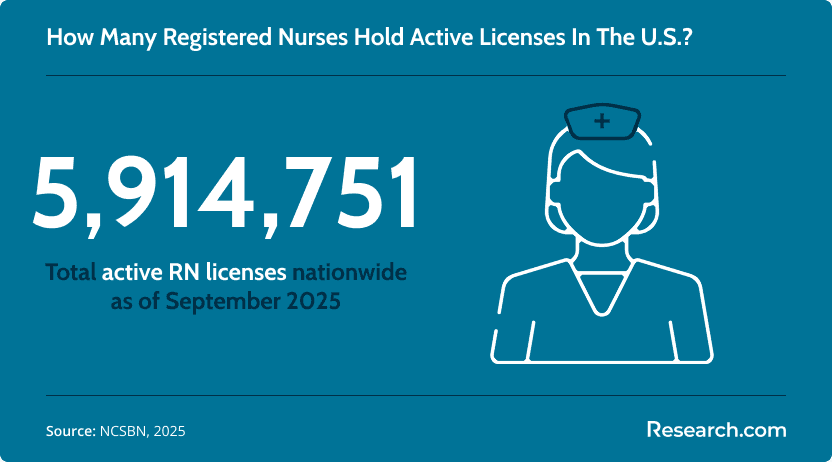
By following these steps, your biology degree can serve as a powerful foundation for a rewarding and stable nursing career—one that blends science, compassion, and lifelong learning. Earning an RN license means you will be able to join the amost-6-million-strong nursing workforce in the U.S.
What nursing programs can I pursue with a biology degree?
If you have a biology degree, you’ll find several nursing programs designed to help you transition into the field quickly. Many schools offer options tailored to students who already hold a bachelor’s degree in another discipline—especially in the sciences. Here are the main nursing pathways you can pursue:
- Accelerated Bachelor of Science in Nursing (ABSN): An ABSN is the quickest way to become a nurse if you have a non-nursing bachelor's degree. Ideal for biology graduates, this intensive program builds on your existing science background and allows you to earn a BSN in as little as 12 to 18 months. It combines nursing theory with clinical experience, preparing you to take the NCLEX-RN exam.
- Direct-Entry Master of Science in Nursing (MSN): Designed for non-nursing bachelor’s degree holders, this program allows you to move directly into advanced practice or leadership roles. It typically takes 2 to 3 years to complete and may lead to roles such as nurse practitioner or clinical nurse leader.
- Associate Degree in Nursing (ADN): While not as advanced as the four-year BSN, a two-year ADN still qualifies you to sit for the NCLEX-RN exam and start working as an RN. Accelerated options are not common, though, so an accelerated BSN or even a direct-entry MSN would still end up being a more sensible and time-efficient choice.
- Entry-Level Doctor of Nursing Practice (DNP): A smaller number of schools offer direct-entry DNP programs for those with a non-nursing bachelor’s degree. These prepare you for the highest level of clinical nursing practice, often in specialized or leadership roles.
Each pathway offers a different timeline and level of advancement, but all can leverage your biology background to accelerate your journey into nursing and open doors to a wide range of healthcare careers.
There are almost 200,000 job openings projected for RNs each year across the country through 2034, so going for a program that allows you to get your RN license much quicker means being able to join the workforce sooner.
What are the requirements for biology degree-holders enrolling in a nursing program?
If you already hold a biology degree and want to enter nursing, you’ll still need to meet certain academic and admission requirements before beginning your nursing studies. These requirements ensure that you’re prepared for the rigor of nursing coursework and clinical training. While details vary by school and program type, most nursing programs for biology graduates require the following:
- A Bachelor’s Degree in Biology: You must hold an accredited undergraduate degree in biology or a closely related science discipline to qualify for accelerated or direct-entry nursing programs.
- Minimum GPA Requirement: Most programs require a minimum GPA of 3.0, though competitive schools may prefer higher. Some may also look at science course GPA separately.
- Completion of Prerequisite Courses: Even with a biology degree, you may need to complete or refresh courses such as anatomy and physiology, microbiology, chemistry, statistics, and psychology if they were taken too long ago or don’t meet program criteria.
- Entrance Exam (if required): Some programs may ask applicants to take the TEAS (Test of Essential Academic Skills) or HESI Admission Assessment to evaluate readiness for nursing coursework.
- Letters of Recommendation and Personal Statement: Schools often request recommendations from professors or employers, along with a personal essay explaining your motivation to pursue nursing.
- Background Check and Health Requirements: Before clinical rotations, students typically need to complete a criminal background check, immunizations, CPR certification, and drug screening.
Meeting these requirements demonstrates your readiness to transition from a biology background into nursing – showing both your academic preparation and your commitment to joining the healthcare profession. You can then proceed to selecting on-campus or online RN programs for non nurses.
How much do nursing programs cost for students with a biology degree?
Having a biology degree doesn’t eliminate costs, but it can help reduce time in school, especially for accelerated programs, which affects overall expense. Tuition, fees, supplies, and living expenses all factor in. Here are some estimates and things to watch out for:
- Accelerated BSN (ABSN): ~$17,000 to $90,000+ for tuition, fees, books and supplies, depending on school (public vs private) and length. Northeastern University’s ABSN program, for example, requires 67 credits at $1,353 per credit hour.
- Direct-Entry MSN (for non-nursing bachelor’s holders): ~ $60,000–$70,000+ total tuition for many institutions. For example, North Park University charges about $62,900 for its DEMSN program, while Marquette University’s direct-entry MSN is ~$67,000.
Factors that affect cost include:
- In-State vs Out-of-State/Private vs Public: Public schools with in-state tuition tend to be much cheaper than private schools or out-of-state tuition.
- Program Length & Intensity: Accelerated programs (shorter, more intense) may cost more per semester/credit (or require paying full-time status) but may reduce living and opportunity costs.
- Prereqs & Prerequisite Repeats: If your biology degree already covers prerequisites, you may save; if not, you may need to take extra courses.
- Supplies, Clinical Fees, Licensing Prep: Must budget for books, uniforms, lab/clinical supplies, background checks, NCLEX review. These hidden costs can be several thousand dollars.
- Living Expenses: Housing, food, transportation, insurance — especially if your program requires full-time, on-campus attendance.
If you want a faster ROI on your education costs, plan your nursing career path strategically. For example, you may want to look into industries that pay RNs the most. The chart below shows the top industries for RNs in terms of median annual salary.
In comparing tuition and long-term returns, it’s worth thinking the same way business students do when weighing a difference between MBA and PhD — the shorter path may cost less upfront but lead to different career outcomes and earning potential.
What are the financial aid options for nursing students with a biology degree?
Even if you already have a biology degree, there are several financial aid paths you can take to help cover the cost of a nursing program. Many of these aid options apply to accelerated BSN or on-campus or online direct entry MSN programs. Here’s a breakdown of what’s out there, plus tips on how to access them.
Scholarships & Grants
These are “free money” — you don’t have to pay them back. They often reward academic merit, financial need, or specific commitments (like working in underserved areas). Some examples:
- Scholarships offered by professional nursing organizations (e.g. American Association of Colleges of Nursing)
- Grants for disadvantaged or low-income students.
- State and institutional scholarships. Schools often have their own funds, and some states offer scholarships targeted to high-demand health professions, including nursing.
Federal & State Grants
If you’re in the U.S., filling out the Free Application for Federal Student Aid (FAFSA) can unlock several opportunities:
- Federal Pell Grant (for undergraduates who have not yet earned a bachelor’s in a similar discipline) may apply to many nursing students.
- Grants for low income, or for students from underserved or special groups.
Scholarship/Service-Commitment Programs
These require you to commit to a certain service after graduation, often in underserved or rural areas, in exchange for financial aid.
- HRSA Nurse Corps Scholarship Program covers tuition, fees, perhaps a stipend, with the requirement to work in a critical shortage facility.
- National Health Service Corps (NHSC) programs that assist students or repay loans for those who work in Health Professional Shortage Areas.
Loans
When scholarships and grants don’t fully cover the bill, loans are a common way to fill in the gaps. But you’ll want to borrow smart.
- Federal student loans (subsidized or unsubsidized) are often more favorable because of lower interest, more flexible repayment, and protections.
- Private loans are an option but tend to have higher interest rates and fewer borrower protections. Use only as a backup.
Loan Repayment/Forgiveness Programs
If you work in high-need settings (such as rural, underserved hospitals or clinics) after you graduate, you may be eligible for programs that reduce or wipe out part of your education debt.
- Nurse Corps Loan Repayment (HRSA) — will repay a large portion of debt in exchange for service.
- NHSC Loan Repayment Program.
Employer Tuition Assistance
Hospitals or healthcare providers sometimes offer tuition reimbursement, especially if you sign a contract to work for them after graduation. This can be a very helpful route if your employer is willing.
What skills do you develop as a nurse with a biology degree?
A biology background gives you a strong scientific foundation, but nursing expands your skill set beyond theory into practical, people-centered care. As you transition into the nursing field, you’ll build a mix of clinical, analytical, and interpersonal skills that prepare you for diverse healthcare settings.
Here are some key skills you’ll develop as a nurse with a biology degree:
- Clinical and Patient Care Skills: You’ll learn to assess, monitor, and treat patients directly — applying your scientific knowledge to real-world health scenarios. This includes administering medications, performing diagnostic tests, and responding to emergencies.
- Critical Thinking and Problem-Solving: Nursing requires quick, evidence-based decisions. Your biology training in data interpretation and lab analysis will evolve into clinical reasoning, helping you evaluate symptoms, plan care, and adapt to changing patient conditions.
- Communication and Collaboration: Nurses work closely with patients, families, and healthcare teams. You’ll develop strong communication skills to explain complex medical information clearly and compassionately, while also coordinating effectively with doctors and other professionals.
- Empathy and Emotional Intelligence: Nursing emphasizes human connection and compassion. You’ll strengthen your ability to support patients emotionally, manage stress, and maintain professionalism in high-pressure environments.
- Leadership and Time Management: As your career progresses, you’ll refine organizational and leadership skills — managing multiple patients, prioritizing care, and mentoring junior staff.
Together, these skills create a well-rounded professional profile, combining the analytical rigor of biology with the compassion and hands-on expertise that define nursing.
These competencies also reflect what educators emphasize in educational leadership and management, where analytical thinking and interpersonal awareness work hand-in-hand to guide effective teams — a useful mindset for future nurse leaders.
How do you choose the best program to become a nurse with a biology degree?
Choosing the right nursing program is a crucial step in turning your biology degree into a nursing career. The ideal program should fit your educational background, learning preferences, career goals, and timeline. Here are key factors to consider when making your decision:
- Program Type and Duration: Decide whether you want an Accelerated BSN (12–18 months), Direct-Entry MSN (2–3 years), or ADN (2 years). If you’re eager to enter the workforce quickly, an accelerated program might be best; if you aim for leadership or advanced practice, a master’s route may be more suitable.
- Accreditation: Ensure the program is accredited by recognized bodies such as the Commission on Collegiate Nursing Education (CCNE) or the Accreditation Commission for Education in Nursing (ACEN). Accreditation guarantees educational quality and eligibility for licensure.
- Clinical Training Opportunities: Look for programs that offer diverse, hands-on clinical experiences in hospitals or community health settings. Strong clinical partnerships can enhance your skills and job readiness.
- NCLEX-RN Pass Rates: A program’s NCLEX-RN exam pass rate is a good indicator of how well it prepares students for licensure. Aim for schools with consistently high pass rates (typically above 90%).
- Flexibility and Learning Format: If you’re balancing work or family, consider hybrid or online programs that combine online coursework with local clinical placements.
- Cost and Financial Aid Options: Compare tuition rates, scholarships, and financial aid availability to find a program that fits your budget without sacrificing quality.
By evaluating these factors, you can choose a nursing program that not only recognizes your biology background but also sets you up for long-term success in the healthcare field.
Check out these easiest direct entry MSN programs to get into if you are looking to pursue a master's in nursing degree and aiming for more advanced nursing roles right away.
What is the job outlook for nurses with a biology degree?
For biology degree-holders considering a switch to nursing, the job outlook is very promising. Here’s how prospects look, based on current U.S. data, and what advantages people with biology backgrounds might have.
Here are some key trends:
- Growth of Registered Nursing Jobs: Employment of RNs is projected to increase by about 5% from 2024 to 2034, which is faster than the average for all occupations.
- Annual Job Openings: The U.S. expects roughly 189,100 RN job openings each year over the next decade. Many are due not only to growth in demand, but also to replacement needs (retirements, career changes, etc.).
- Advanced Practice Roles: For roles such as nurse practitioners, nurse anesthetists, and midwives, growth is even more robust. The BLS projects around 35% growth for APRNs between 2024 and 2034.
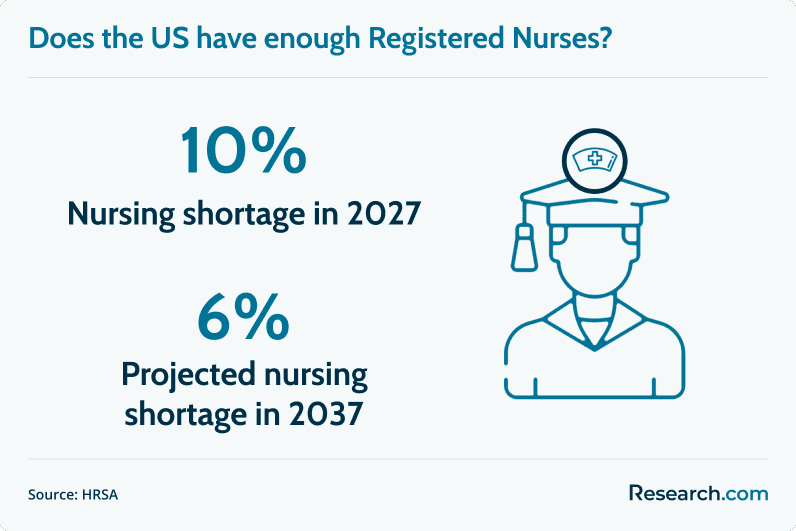
- Shortage of Nurses: There is an ongoing shortage of RNs in many states. The Health Resources and Services Administration (HRSA) projects a 10% shortage of RNs in 2027. By 2037, the shortage is 6% (a shortage of 207,980 full-time equivalent RNs).
Having a biology degree can give you advantages in this environment. You may be more competitive in accelerated or direct-entry programs, which can get you into the workforce sooner. And because nursing schools are turning away qualified applications due to capacity limits (like faculty shortages or limited clinical placements), having strong science coursework can help you stand out. Moreover, with demand especially strong for specialized and advanced roles (e.g., NPs, APRNs), biology grads who pursue further credentials can move into these higher-growth, higher-paying paths.
These opportunities parallel the logic of pursuing benefits of getting a teaching degree, where the combination of foundational education and applied practice opens stable, high-demand career paths.
What are the challenges of becoming a nurse with a biology degree?
Transitioning from a biology background to a nursing career can be rewarding, but it’s not without its hurdles. While your science foundation gives you a head start, the nursing pathway introduces new academic, financial, and practical challenges that you’ll need to prepare for.
Here are some common challenges biology graduates face when shifting into nursing:
- Additional Coursework and Clinical Training: Even with a biology degree, you’ll still need to complete nursing-specific courses such as pharmacology, patient care, and clinical practice. Accelerated or bridge programs can be intensive, requiring full-time study and hands-on training that may feel very different from lab-based biology studies.
- Licensing Requirements: To practice as a nurse in the U.S., you must pass the NCLEX-RN exam and meet your state’s licensing criteria. This adds time and effort, especially if you’re entering the field from a non-nursing background.
- Program Competitiveness: Nursing programs — particularly accelerated BSN and direct-entry MSN programs — often have limited slots and competitive admission standards. Strong GPAs, prerequisite completion, and healthcare experience are typically required.
- Financial Commitment: Earning a nursing degree can be costly, especially for second-degree students who may not qualify for certain federal grants or scholarships. Balancing tuition, living expenses, and reduced income during full-time study can be challenging.
- Career Transition and Mindset Shift: Moving from a theoretical science discipline to a patient-centered, high-stakes profession requires emotional resilience and adaptability. Nursing demands not just technical knowledge but also empathy, communication, and the ability to work under pressure.
Many career changers navigate this shift the same way other professionals do when exploring is being an LPN worth it, weighing the short-term costs and training demands against long-term job security and growth potential.
Is becoming a nurse after earning a biology degree worth it?
For many biology graduates, transitioning into nursing is a highly rewarding and practical career move. It allows you to build upon your scientific background while entering one of the most in-demand and respected professions in healthcare. The path may require additional education and licensing, but the long-term benefits often outweigh the challenges.
Here are a few reasons why it’s worth it:
- High Demand and Job Security: BLS projects a growth in the employment of RNs, driven by aging populations, chronic illness management, and healthcare workforce shortages.
- Strong Earning Potential: According to the BLS (May 2024), registered nurses earn a median annual salary of about $93,600, with higher wages for advanced roles like nurse practitioners, who earn over $132,000 on average. Nurses with biology backgrounds often have a head start in scientific reasoning and evidence-based care, making them strong candidates for advancement.
- Career Flexibility and Growth: Nursing offers a wide range of roles — from bedside care to research, education, or management. With your biology degree, you can also pursue specialized fields like genetics, critical care, or clinical research nursing.
- Personal Fulfillment and Impact: Beyond salary and job security, nursing provides the opportunity to make a tangible difference in people’s lives. You apply your scientific understanding to improve patient outcomes and community health.
In short, becoming a nurse after earning a biology degree can be both personally meaningful and professionally advantageous, offering a stable, well-paying, and impactful career built on your existing academic foundation. You can check out these highest paying nursing jobs if you want to specialize in something more financially rewarding.
The table below shows the projected employment growth for RNs and APRNs from 2024 to 2034, as well as their median annual salary. Knowing these figures will give you an idea of whether pursuing a nursing career after obtaining a biology degree is worth it.
| Projected Employment Growth (2024-2034) | Median Annual Salary as of May 2024 | |
| Registered nurses | 5% | $93,600 |
| Nurse anesthetists | 9% | $223,210 |
| Nurse midwives | 11% | $128,790 |
| Nurse practitioners | 40% | $129,210 |
Key Findings
- The U.S. Bureau of Labor Statistics reports that in May 2024, the median annual wage for registered nurses was $93,600.
- Employment of registered nurses is projected to grow 5% from 2024 to 2034, with about 189,100 openings per year expected over the decade.
- The median annual wage for nurse anesthetists, nurse midwives, and nurse practitioners was $132,050 in May 2024. Their employment is projected to grow 35% from 2024 to 2034, which is “much faster than average.”
- In 2023, the AACN says U.S. nursing schools turned away 65,766 qualified applications due to limitations in faculty numbers, clinical sites, and classroom space.
- The Health Resources and Services Administration (HRSA) projects a 10% shortage of RNs by 2027 and a shortage of 6% by 2037, which translates to 207,980 full-time equivalent RNs.
- By 2030, the U.S. is estimated to face a deficit of around 295,360 registered nurses.
- The BLS records 3,282,010 RNs employed as of May 2024.
Here’s What Nurses with a Biology Degree Have to Say About Their Career
- Rachel: "I always loved biology, but after earning my degree, I realized I wanted to apply my knowledge more directly to helping people. That’s what led me to enroll in an accelerated BSN program. My biology background made the transition easier — I already understood anatomy, microbiology, and pharmacology. Now, as a registered nurse in a cardiac unit, I see how that foundation helps me make sense of complex patient cases every day. Nursing has been the most rewarding way to connect science with compassion. "
- Mitch: "With a biology degree, I spent a few years in a research lab, but I missed human interaction. Nursing felt like a natural next step because it let me merge scientific reasoning with patient care. My background in lab research has been incredibly helpful when interpreting diagnostic results and understanding disease processes. Today, I work as an oncology nurse, and it’s fulfilling to translate complex biology into care that improves lives."
- Carmel: "After finishing my biology degree, I wasn’t sure which direction to take — medical school or research. When I shadowed a nurse practitioner, I saw how nurses could make an immediate difference in patients’ lives, and that inspired me to change paths. The accelerated nursing program was challenging, but my science training helped me grasp clinical concepts quickly. Now, as a family nurse practitioner, I feel like I’ve found the perfect balance between science, empathy, and purpose."
References:
- American Association of Colleges of Nursing. (2024, May). Nursing Shortage Fact Sheet. AACN.
- American Association of Colleges of Nursing. (n.d.). Scholarships & Financial Aid. AACN.
- Health Resources and Services Administration. (2024 November). Nurse Workforce Projections, 2022-2037. HRSA.
- Health Resources and Services Administration Data Warehouse. (2023). Workforce Projections. HRSA Data Warehouse.
- Indeed. (2025, September 29). Public health nurse salary in United States. indeed.com.
- Nightingale College. (2024, May 27). Is There a Nursing Shortage in the US? Statistics by State. Nightingale.edu.
- United States Bureau of Labor Statistics. (2025). Occupational Employment and Wage Statistics Query System. BLS.
- United States Bureau of Labor Statistics. (2025, August 28). Occupational Outlook Handbook | Nurse Anesthetists, Nurse Midwives, and Nurse Practitioners. BLS.
- United States Bureau of Labor Statistics. (2025, August 28). Occupational Outlook Handbook | Registered Nurses. BLS.
- Wiegand, B. (2025). The U.S. Nursing Shortage by State: 2025 and the Road Ahead. IntelyCare.
- WifiTalents. (2025, June 1). Nurse Practitioner Statistics. WifiTalents.
Other Things You Should Know About Becoming a Nurse with a Biology Degree
The job outlook for nurses with a biology degree in 2027 is positive, with the Bureau of Labor Statistics predicting a 7% growth rate for registered nurses from 2026 to 2031, driven by an aging population and increased demand for healthcare services.
Yes, in 2027, biology graduates can take advantage of accelerated nursing programs. These programs recognize previous biology coursework, enabling graduates to complete nursing degrees faster, typically in 12-18 months. This pathway combines clinical practice and theory, quickly preparing students for the NCLEX-RN exam.
Yes, in 2027, several universities offer bridge programs specifically designed for biology graduates. These programs streamline the transition by focusing on nursing fundamentals, clinical skills, and patient care, enabling students to leverage their biology background effectively.


