
2027 BA vs BS Degree: Explaining the Difference

Co-Founder and Chief Data Scientist
Choosing between a Bachelor of Arts (BA) and a Bachelor of Science (BS) degree is a life-changing commitment for students embarking on their higher education journey. However, The Guardian reported a 5% decline in college enrollment among 18-year-old freshmen in the fall semester of 2024, with the most remarkable drops occurring at public and private nonprofit 4-year colleges.
Differentiating a BA degree from a BS degree is crucial for prospective students to align their educational pursuits with their career aspirations. Factors such as desired career path, interest in interdisciplinary studies, and long-term professional goals should guide this decision.
Key things you should know about BA and BS degrees
- A BA degree offers flexibility in subject choice with more general education and elective courses. In contrast, a BS degree is more specialized as its focus is on technical, scientific, or analytical subjects.
- A BA degree is well-suited for careers in the humanities, arts, or social sciences, while a BS is ideal for careers in STEM fields.
- A BS degree may provide a more direct path to graduate studies in fields like engineering, medicine, or data science, while a BA degree may be used to pursue graduate programs in law, business, or the arts, depending on the major.
- What is the main difference between a BA and a BS degree? BA vs. BS Degree
- How long does it take to complete a BA vs a BS degree? Completion Time
- Is a BA degree easier than a BS degree? Is a BA degree easier than a BS degree?
- What majors are usually offered as BA and BS degrees? What majors are usually offered as BA and BS degrees?
- Do employers prefer candidates with a BS over a BA? Employer Preference
- What careers can you get with a BA vs. a BS degree? Career Paths
- What is the average salary difference between a BA and a BS degree? Average Salary
- Can you get into a master’s program with either a BA or a BS degree? Can you get into a master’s program with either a BA or a BS degree?
- Which degree looks better on a resume, a BA or BS degree? Which degree looks better on a resume, a BA or BS degree?
- Do BA programs have lower tuition than BS programs? Program Cost
- Are BA or BS degrees more future-proof in an evolving job market? Are BA or BS degrees more future-proof in an evolving job market?
- Which degree offers better financial aid opportunities? Which degree offers better financial aid opportunities?
- What factors matter most when choosing between a BA and a BS degree? What factors matter most when choosing between a BA and a BS degree?
What is the main difference between a BA and a BS degree?
A BA degree emphasizes a broad liberal arts education, incorporating subjects such as humanities, social sciences, and languages. This approach fosters critical thinking, communication skills, and a well-rounded perspective.
A BS degree centers on specialized knowledge and technical skills, usually within STEM. BS programs require more coursework in mathematics and science, preparing students for roles that demand analytical and quantitative expertise.
Students should consider the curriculum requirements, potential career outcomes, and their personal preferences when weighing between the two degree types. Consulting with academic advisors and researching programs can also present smart insights.
For those thinking of getting a language-related program, here's your guide to the fast track online ESL programs.
How long does it take to complete a BA vs. a BS degree?
The completion time for a BA degree or a BS degree can vary based on several aspects. These include the program itself, student age, and individual circumstances.
- Duration: Both BA and BS degrees are designed to be completed in approximately 4 years, requiring around 120 credit hours.
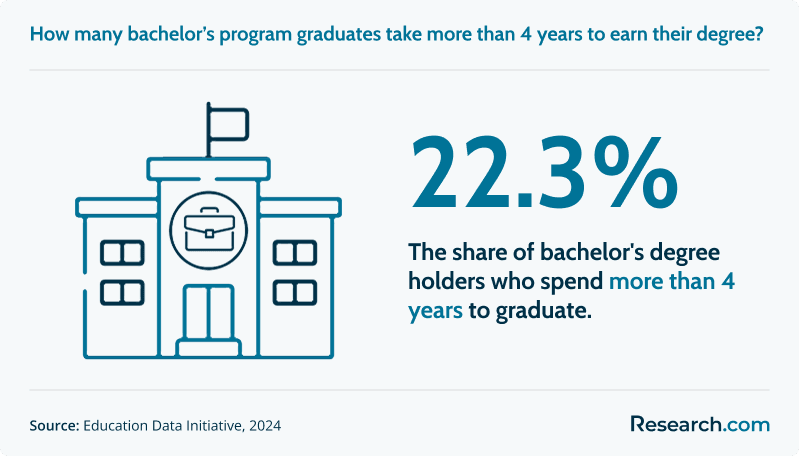
- Completion Rates: Data from the National Center for Education Statistics indicates that half of students aged 23 years or younger graduated in 45 months or less, while older students took an average of 162 months to complete their degrees.
- Others: Degree completion can also be affected by course load, major requirements, transfer credits, and personal circumstances.
The standard duration is 4 years, but actual completion times are not all the same due to personal situations. If you'd like to enter the workforce sooner than expected, try the shortest bachelor's program in supply chain management.
Is a BA degree easier than a BS degree?
The perceived difficulty of a BA vs a BS is subjective and depends on a learner's aptitudes and passion. Aspiring college students need to assess their strengths, career goals, and the particular demands of each program before enrolling.
For students who excel in writing, analysis, and abstract thinking, a BA degree is recommended. These programs may require proficiency in foreign languages and extensive reading and writing assignments, which can be difficult for some students.
On the other hand, BS programs require more coursework in mathematics and science. For students inclined toward quantitative analysis, problem-solving, and empirical research, a BS degree may be more suitable. Nevertheless, the rigorous coursework and technical requirements can be a struggle for students with an inadequate background in these areas.
For those ready to study challenging disciplines, check out the fastest online bachelor's degree in sustainability programs.
What majors are usually offered as BA and BS degrees?
The distinction between a BA degree and a BS normally hinges on the depth of study within a field. While both degrees require around 120 credit hours, the nature of the coursework can vary crucially.
Nursing
A nursing degree prepares students to become registered nurses with a focus on patient care, medical ethics, and clinical practice. It combines theoretical knowledge with hands-on training in hospitals and clinics, providing a foundation for compassionate and skilled healthcare delivery. Graduates can work in different healthcare settings, from hospitals to community health organizations.
Students considering nursing often compare BS in nursing vs BSN programs to understand differences in curriculum structure and professional pathways. While both lead to RN licensure, BSN programs typically emphasize leadership, community health, and career advancement opportunities in healthcare systems.
Computer Science
A computer science degree covers the study of algorithms, programming, software development, and systems design. It emphasizes problem-solving skills and computational thinking applied to areas such as artificial intelligence, data science, and cybersecurity. Graduates are equipped to become software engineers, IT consultants, and systems analysts.
Healthcare Administration
A healthcare administration degree focuses on the business and management aspects of healthcare systems, including policy, finance, and operations. Students learn about managing healthcare facilities, healthcare laws, and healthcare delivery strategies. Graduates can work in hospitals, insurance companies, or government health agencies.
Management
A management degree teaches students the principles of leadership, organizational behavior, and strategic decision-making. It prepares them to lead teams, manage resources, and drive organizational success across industries. Graduates can secure positions as managers, supervisors, or consultants in industries, including retail, finance, and manufacturing.
Management Information Systems
A management information systems degree combines business management with information technology, focusing on how to design, implement, and manage systems that support business operations. Students are taught to oversee databases, invent software, and interpret data to improve business performance. Graduates can work as IT managers, systems analysts, or business consultants in tech-driven environments.
Business Administration
A business administration degree teaches topics related to business operations, including finance, marketing, accounting, and entrepreneurship. Students develop skills in leadership, decision-making, and strategic planning to manage businesses. Graduates are prepared for leadership roles in industries such as marketing, finance, and operations.
Social Work
A social work degree prepares students to provide support and services to individuals and communities facing adversities such as poverty, mental health issues, and family crises. It emphasizes awareness of social problems, social justice, and working within systems to reinforce positive change. Graduates can work in social services, healthcare, or community organizations, supporting those in need.
Overlapping Majors
Some disciplines offer both BA and BS degree options, allowing students to select the path that best fits them. For instance:
- Psychology: A BA in Psychology may focus more on theoretical aspects and human behavior, while a BS may delve deeper into research methodologies and biological underpinnings.
- Biology: A BA may focus on ecological and environmental studies, while a BS could lean toward cellular and molecular biology.
The choice between a BA and a BS in these fields often depends on whether a student prefers a more interdisciplinary approach or a more research-oriented curriculum.
The chart below shows that business is the most common bachelor's degree field in the U.S.
Do employers prefer candidates with a BS over a BA degree?
Employers' preferences between a BA and a BS rely on the specific industry and the nature of the job role. For instance, roles in software development or laboratory research basically favor the analytical and quantitative skills that a BS curriculum provides.
Conversely, industries like education, media, and public relations may prioritize a BA, underscoring its focus on communication, critical thinking, and versatility.
Still, it's important to note that many employers place greater importance on a candidate's skills, experience, and the relevance of their coursework to the job at hand, rather than the type of degree.
Here's another example: in the tech industry, employers look at a candidate's practical abilities and project experience over their BA or BS qualifications. Additionally, some companies are increasingly adopting skills-based hiring practices, focusing on competencies and practical experience rather than formal educational credentials.
Students entering early education or social services may ask why study early childhood education, since it builds foundational leadership and communication skills—qualities often valued just as highly by employers as the technical expertise taught in BS programs.
What careers can you get with a BA vs. a BS degree?
The career opportunities available to graduates with a BA or BS match the structure of their respective programs. They can open doors to numerous professions, but the paths may differ based on the skills and knowledge gained during the course of study.
Careers with a BA
The following fields value the interdisciplinary approach and adaptability that a BA provides, allowing graduates to apply their skills in an array of contexts.
- Education: Roles such as teachers, school counselors, and education administrators.
- Media and Communications: Positions like journalists, public relations specialists, and content creators.
- Human Services: Careers in social work, counseling, and nonprofit organizations.
- Business and Management: Roles in marketing, human resources, and sales.
- Government and Public Service: Positions within local, state, or federal agencies.
Careers with a BS
The following professions require the technical and analytical skills taught in BS programs, preparing graduates for specialized roles in their chosen fields.
- Healthcare: Roles such as nurses, medical technologists, and public health analysts.
- Technology and Engineering: Software development, data analysis, civil engineering, and web development jobs.
- Natural Sciences: Careers in research, laboratory management, and environmental science.
- Finance and Business Analytics: Roles in financial analysis, accounting, and operations management.
Overlap & Considerations
Some fields offer both BA and BS degrees, letting students pick a path based on their interests and career goals. For instance:
What is the average salary difference between a BA and a BS degree?
BS degrees, particularly in fields like engineering, computer science, and healthcare, tend to lead to higher-paying positions due to their emphasis on technical and specialized skills.
For example, graduates with a BS in computer science or engineering often secure roles such as software developers or mechanical engineers. The average salaries of these occupations range from $102,000 to $155,000 annually.
Meanwhile, BA graduates venturing into marketing, social work, or education can earn between $60,000 and $118,000 per year.
If you're entering the social media workforce, this article explains how much you'll receive with a social media salary.
Can you get into a master’s program with either a BA or a BS degree?
Yes, you can get into a master's degree with either a BA or a BS degree. Graduate schools require applicants to have completed an accredited bachelor's degree, whether it's a BA or a BS. Yet, some programs may have prerequisites that coincide more closely with the coursework of one type of degree.
For instance, a Master of Science (MS) program in a technical field may prefer or require a BS in a related discipline. Alternatively, a Master of Arts (MA) or a Master of Fine Arts (MFA) program in the humanities may accept applicants with a BA in various fields. These students will then be shortlisted for many MA and master of fine arts jobs in the long run.
If your undergraduate degree is in a different field than the master's program you're considering, you may still be eligible for admission. Many graduate schools admit students from other academic backgrounds, but they may need to complete additional coursework or demonstrate relevant experience.
Which degree looks better on a resume: a BA or a BS degree?
In many cases, hiring managers pay more attention to the mastery, experiences, and accomplishments that candidates bring to the table rather than the type of undergraduate degree. The degree can become consequential only in the matter of the industry or a certain job role.
Fields that require advanced technical knowledge may go for a BS due to its quantitative and scientific coursework. Professions in the humanities, education, or communications may show more approval to the learning associated with a BA.
Ultimately, the impact of listing a BA or BS on a résumé is minimal unless the job description explicitly specifies a preference for one over the other.
According to the figures below, a bachelor's degree remains the top credential among workers aged 25+.
Graduates also explore postgraduate or hybrid routes, such as MFA vs MA programs, depending on whether they prefer creative mastery or academic scholarship. Similarly, the distinction between BA and BS often mirrors that same choice—practical artistry versus analytical depth.
Do BA programs have lower tuition than BS programs?
The type of bachelor's degree does not affect tuition costs. Most universities charge the same tuition rates for both BA and BS programs within the same major, but there are exceptions.
At some institutions, BS programs, especially those in fields like engineering or computer science, may have higher tuition fees due to the resources and facilities used. These variations are more about the program's demands than the degree designation itself.
Besides tuition, room and board, textbooks, and personal expenses also contribute to the overall cost of a degree.
Students comparing tuition rates often also weigh certificate vs degree salary outcomes to determine long-term financial returns. While degrees generally offer higher earning potential over time, certificates can provide faster entry into specialized roles, making both paths viable depending on individual goals.
Are BA or BS degrees more future-proof in an evolving job market?
When evaluating enduring career benefits, consider each degree’s capacity to adapt to shifting industry demands and technological advancements. BA graduates often leverage their interdisciplinary background to navigate diverse sectors, embracing roles that require creative problem solving and effective communication. Conversely, BS graduates benefit from specialized technical proficiencies that can be critical in rapidly evolving industries, although they may need regular skill upgrades. Staying informed through current market insights and resources such as the best online degrees to get can help graduates align their qualifications with future job market trends.
Which degree offers better financial aid opportunities?
Financial aid opportunities are not determined by whether a student is enrolled in a BA or a BS. Instead, eligibility is based on financial need, academic performance, and enrollment status. Here are some financial aid options for BA and BS students alike:
- Federal and State Financial Aid: Both BA and BS students are qualified for federal and state financial aid programs, including Pell Grants, Federal Work-Study, and federal student loans. The criteria for these programs are based on income level, family size, and other factors disclosed in the Free Application for Federal Student Aid (FAFSA), not the type of degree being pursued.
- Scholarships and Institutional Aid: Some universities or third-party organizations may offer scholarships based on academic merit, need, or specific fields of study. In this case, BS programs in technical fields may have more specialized scholarship opportunities due to the demand for professionals in those areas. However, BA programs in fields like the humanities or social sciences can also have scholarships, particularly those provided by organizations or foundations that support these fields.
- Field-Specific Financial Aid: Certain programs, particularly those in technical fields (like engineering, healthcare, or natural sciences), may offer additional financial aid through grants, fellowships, or research assistantships. These opportunities are more common in BS programs due to their focus on technical knowledge. However, these opportunities are not exclusive to BS programs and may also exist within BA programs in some disciplines.
What factors matter most when choosing between a BA and a BS degree?
Your college credentials can greatly impact your academic journey and future career.. The following factors matter most when deciding between the two programs:
Career Goals and Industry Requirements
- The most critical element in choosing between a BA and a BS is your target career path. Some industries stress specific types of degrees.
- For example, technical and scientific fields require a BS, while communications, education, and the humanities may be more appropriate for a BA.
Interest in Specialized vs. Generalized Education
- If you prefer a program with a focus on specialized knowledge, problem-solving, and technical skills, a BS may be more fitting.
- If you’re drawn to a more inclusive educational experience, a BA may be the right choice. BA programs incorporate a wider range of electives and allow for greater exploration of non-technical subjects.
Postgraduate Plans
- If graduate studies are on the table, the type of degree you choose may affect the programs you can apply to. Some graduate programs, especially those in technical fields, may require or prefer a BS, while others, such as those in the humanities, law, or social sciences, may be more open to students with a BA. The specific requirements of the graduate school or program you’re interested in should play a role in your decision.
- Some fields may also have career advancement opportunities that are more accessible with a BS, particularly in scientific and technical industries, where advanced certifications or specializations are common.
Program Structure and Flexibility
- A BA's versatility can be seen in its course offerings selection. Its offering of humanities, social sciences, and arts courses is more comprehensive. It can be appealing if you want to tailor your education to different interests.
- A BS program tends to have a more structured curriculum in technical and scientific subjects. If you prefer a more focused path with fewer electives, take a BS.
Here’s What Graduates Have to Say About Their BA & BS Jobs
- Arthur: "Studying for my BA in English allowed me to develop strong communication skills and a deep understanding of human experiences, which have been invaluable in my career as a content strategist. I’ve been able to connect with diverse audiences and craft compelling narratives, something I always felt passionate about. It wasn’t just about writing, but about shaping stories that resonate with people."
- Daniel: "As a BS graduate in Computer Science, I gained a solid foundation in technical problem-solving and critical thinking. The hands-on experience with coding, algorithms, and software development has opened doors to high-paying job opportunities and a rewarding career in tech. The analytical skills I developed have been essential in tackling real-world challenges, and I’m proud of how far I’ve come."
- Olivia: "The flexibility and creativity I experienced in my BA in Psychology allowed me to explore various career paths, and I ultimately found my calling in human resources. The program taught me not only the science of behavior but also the art of listening and understanding people, which has been crucial in my role. Every day, I get to apply what I learned to make workplaces better for everyone."
Key Findings
- BA and BS degrees can be completed in roughly 4 years.
- In the U.S., 391,375 students took business as their bachelor's degree field.
- Some disciplines offer both BA and BS degrees to give students the freedom to select a trajectory based on their preferences and ambitions.
- Graduate schools require applicants to fulfill a bachelor's degree, whether a BA or a BS, from an accredited institution.
- Of workers aged 25 and older, 25.2% of them are bachelor's degree earners.
References:
- Arizona State University. (2025, January 14) BA vs. BS: The differences between the two degree types. Retrieved October 7, 2025, from ASU.
- CollegeAdvisor. (2025, February 1). Exploring Types of Bachelor's Degrees: Choosing Your Path. Retrieved October 7, 2025, from CollegeAdvisor.
- Southern New Hampshire University. (2024, September 18). How Many Years is a Bachelor's Degree? Retrieved October 7, 2025, from Southern New Hampshire University.
- The Guardian. (2024, December 8). College enrollment is falling at a concerning rate, new data reveals. Retrieved October 7, 2025, from The Guardian.
Other Things You Should Know About a BA and a BS Degree
A BA is not the same thing as a liberal arts degree, though the two are often confused. A BA is an academic degree awarded in fields such as history, psychology, languages, political science, or even certain sciences. The liberal arts is an educational philosophy that emphasizes critical thinking, communication, and problem-solving through study across the humanities, social sciences, natural sciences, and mathematics.
Many BA programs are rooted in the liberal arts tradition, but not all BA degrees are strictly liberal arts. Also, not all liberal arts programs lead only to a BA; some result in a BS or other degree types.
Again, a BA is a degree type, while liberal arts is an educational approach.
Whether one is "stronger" depends on the context and the field of study. A BS degree focuses on subjects that require a more technical, scientific, or quantitative approach, such as engineering, mathematics, or natural sciences.
Meanwhile, a BA degree is more focused on the humanities, social sciences, or arts, with an emphasis on critical thinking, effective communication, and a more in-depth knowledge base.


