
2027 BS in Nursing vs. BSN Degree: Explaining the Difference

Co-Founder and Chief Data Scientist
As a career and education planning expert, I understand that distinguishing between a Bachelor of Science (BS) with a major in nursing and a Bachelor of Science in Nursing (BSN) can be confusing. The internet is filled with conflicting and often inaccurate information, making it a significant challenge to determine the real-world differences.
This ambiguity can create unnecessary stress for prospective nursing students. My goal is to clarify these distinctions for you. I will outline the core differences in curriculum, clinical focus, and career implications, providing a clear path to help you select the degree that best aligns with your professional aspirations.
What are the benefits of getting a BSN degree vs. a BS with a nursing major?
- Career Advancement: Unlocks pathways to leadership and management roles, specialized fields like informatics and public health, and is a mandatory prerequisite for all advanced practice registered nurse (APRN) careers, such as Nurse Practitioner or Nurse Anesthetist.
- Earning Potential: BSN-prepared nurses have a higher lifetime earning potential; they can earn an average of over $9,000 more per year than nurses with an associate’s degree (PayScale, 2025).
- Flexible Learning: Multiple pathways exist to achieve the BSN, including traditional four-year programs and flexible online RN-to-BSN programs designed for working nurses who already hold an associate’s degree or diploma.
What can I expect from a BSN program?
- Professional Nursing Focus: An intensive curriculum centered on key professional areas like nursing research, evidence-based practice, community and public health, and leadership and management principles.
- Integrated Curriculum: Delivery combines in-depth classroom and lab instruction with extensive, supervised clinical rotations across a wide variety of healthcare settings, including hospitals, clinics, and community agencies.
- Evidence-Based Practice Emphasis: A core focus on teaching students how to critically evaluate research and use the best available evidence to make clinical decisions that improve patient safety and outcomes.
- Multiple Pathways: In addition to the standard four-year track, programs include accelerated options (ABSN) for those with a prior bachelor’s degree that can be completed in 11–18 months and RN-to-BSN bridge programs.
- Networking Opportunities: Connect with expert nursing faculty, experienced clinical preceptors, and a diverse cohort of professional peers, building a valuable network for your future career.
Where can I work with a BSN degree?
- Magnet Hospitals: Top-tier hospitals that have achieved Magnet recognition for nursing excellence strongly prefer or require a BSN for their nursing staff.
- Public Health Departments: Work for local, state, or federal agencies in roles focused on community health, disease prevention, and health education, which typically require a BSN.
- Military and Government: A BSN is the minimum degree required to be commissioned as an officer in the Nurse Corps of the U.S. Army, Navy, or Air Force, or to work in federal agencies like the VA.
- Nursing Education: The BSN provides the foundation needed to work as a clinical instructor or to pursue a graduate degree to become a nurse educator at a college or university.
- Pathway to Advanced Practice: The BSN is the essential stepping stone to all high-paying advanced practice roles, including Nurse Practitioner (NP), Certified Registered Nurse Anesthetist (CRNA), and Clinical Nurse Specialist (CNS).
How much can I make with a BSN degree?
- Staff-Level Roles: A BSN-prepared Registered Nurse working in a staff position can expect an average salary in the range of 75,000 to 95,000, with BSN holders often having a higher starting salary and faster pay progression.
- Leadership & Specialized Roles: Advancing into positions that often require a BSN, such as Charge Nurse or Nurse Case Manager, can increase earnings to a range of $90,000 to $110,000 annually (Salary.com, 2025).
- Advanced Practice Roles: Using the BSN to pursue a graduate degree unlocks the highest earning potential, with Nurse Practitioners earning a median salary of $128,490 and Certified Registered Nurse Anesthetists earning a median of $212,650 per year (U.S. Bureau of Labor Statistics, 2025).
- What are the similarities and differences between a BS and a BSN degree? BS vs. BSN Degrees
- How long does it take to complete a BS with a nursing major degree vs. a BSN degree? Program Duration
- What are the admission requirements and academic focuses of BS and BSN programs? Admission Requirements
- What are the career opportunities available to BS graduates compared to BSN graduates? Career Opportunities
- What are the average salaries and job outlooks for BS vs. BSN degree holders? Salaries
- What are the licensure and certification implications for BS vs. BSN graduates? Licensure & Certification
- Which universities and colleges in the USA offer BS and BSN programs? Universities
- What challenges do students face in general BS programs compared to BSN programs? What challenges do students face in general BS programs compared to BSN programs?
- What advantages and professional pathways does a BSN provide over a general BS? Professional Paths
- What are the current and emerging trends in BS and BSN education in the USA? What are the current and emerging trends in BS and BSN education in the USA?
What are the similarities and differences between a BS and a BSN degree?
While both a Bachelor of Science (BS) with a major in nursing and a Bachelor of Science in Nursing (BSN) or BSN degree are four-year undergraduate degrees that qualify graduates to sit for the registered nurse licensure exam, they have fundamental distinctions in their educational approach and professional focus. The primary difference lies in the curriculum's emphasis, with the BSN being a specialized, professional degree and the BS in nursing being a broader science-focused degree that includes nursing as a major field of study.
- Accreditation: BSN programs hold specialized nursing accreditation (CCNE or ACEN), which is professionally crucial for many advanced roles, while a BS with a nursing major typically falls under the university's broader regional accreditation.
- Advanced Degree Preparation: The BSN is the direct and universally preferred pathway for graduate nursing degrees (MSN, DNP), whereas a BS with a nursing major may be viewed less favorably and require additional justification for admission to these competitive programs.
- Career Flexibility: The BSN provides superior flexibility for career advancement and leadership roles within the nursing profession, while the broad science core of the BS might offer slightly more flexibility for pivoting to non-clinical science careers.
- Clinical Hours: BSN programs are structured to mandate a higher and more comprehensive number of supervised clinical hours compared to the typical requirements found within a BS nursing major track.
- Curriculum Focus: A BSN curriculum is integrated and nursing-centric from the start, weaving professional concepts throughout the four years, while a BS curriculum prioritizes foundational sciences for the first two years, treating nursing as a specialized major in the latter half.
- Degree Title and Perception: The degree conferred is a "Bachelor of Science in Nursing" (BSN), a distinct professional title, versus a "Bachelor of Science" (BS), a general academic title where nursing is simply the major field of study.
- Employability: BSN graduates have a clear advantage in the job market, as top healthcare systems and Magnet-designated hospitals specifically prefer or require the BSN degree for entry-level, specialty, and leadership positions.
- Leadership Training: Coursework in leadership, management, and health policy is a core, required component of BSN programs, whereas these essential professional development topics are often minimal or absent in a general BS track.
- Professional Identity: The BSN program is intentionally structured to immerse students in the nursing profession from day one, fostering a strong nursing identity, while the BS program cultivates a broader scientific identity first.
- Program Structure: BSN programs are often direct-entry, four-year integrated models where students are nursing students from the beginning, whereas a BS with a nursing major is typically a "2+2" structure requiring a separate, competitive application to the major after two years.
- Research Emphasis: A BSN emphasizes the application of evidence-based practice and nursing-specific research to improve patient outcomes, while a BS focuses more broadly on general scientific research principles.
A useful framing here is how institutions debate bachelor of arts vs science labels more broadly; titles signal curricular emphasis and professional expectations, which is exactly why employers read “BSN” differently from “BS (nursing major).”
According to a national survey by the American Association of Colleges of Nursing (AACN), in 2024, 25.0% of healthcare employers required newly hired RNs to hold a BSN, while 69.8% preferred BSN-prepared nurses, as shown in the figure below.
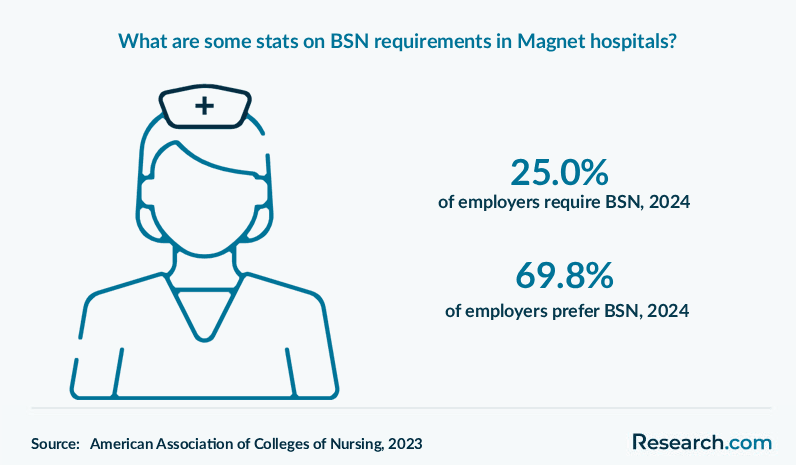
These are slightly down from 2023 figures of 27.7% and 71.7%, respectively. Despite minor fluctuations, employer preference for BSN education remains strong, especially in Magnet-designated hospitals where BSN attainment is essential for maintaining nursing excellence. These figures underscore the BSN’s value in boosting employment prospects across the nursing workforce.
How long does it take to complete a BS with a nursing major degree vs. a BSN degree?
The time required to complete a BS with a nursing major (also know as BS in nursing) versus a BSN degree is quite similar for a traditional student, but various program formats can alter the duration significantly. Both degrees are designed as four-year programs for students entering directly from high school.
- Accelerated BSN (ABSN): For students who already hold a bachelor's degree in another field, these intensive programs can be completed in 11 to 18 months.
- BS to BSN Bridge: This pathway is for those with a BS in another field and typically takes around two years, including prerequisite coursework.
- LPN to BSN Bridge: Licensed Practical Nurses (LPNs) can enroll in bridge programs that build upon their existing knowledge, often taking two to three years to complete.
- RN to BSN Bridge: Registered nurses with an Associate's Degree in Nursing (ADN) can complete a BSN, often online, in as little as 12 to 24 months. The cheapest RN to BSN program offerings can give you a good head start.
- Standard BS Program: A traditional Bachelor of Science with a major in nursing typically requires four years of full-time study, or approximately 120-130 credit hours.
- Standard BSN Program: A traditional Bachelor of Science in Nursing program also requires four years of full-time study to complete the required credit hours.
The total time commitment is therefore highly dependent on the student's prior education and the specific pathway chosen. Both degrees represent a significant investment in time and effort, culminating in eligibility for a professional nursing career.
Based on the 2024 National Nursing Workforce Survey (Journal of Nursing Regulation), approximately 717,727 registered nurses participated, reflecting an estimated U.S. RN population of over 4.5 million. The most common level of education is a baccalaureate degree, held by 46.0% of respondents (328,000) and 2.1 million nurses nationwide. Associate degrees follow at 34.2% (244,000 respondents; 1.56 million total), with diplomas at 8.6% (61,000; 392,000), vocational/practical certificates at 5.7% (41,000; 261,000), and master’s degrees at 5.5% (39,000; 249,000), as shown in the graph below.
From 2015 to 2024, diploma holders declined from 9.2% to 4.3%, and associate degrees from 30.1% to 22.8%. Baccalaureate degrees rose from 43.4% to 51.1% in 2022, then adjusted to 47.8% in 2024. Graduate-level credentials saw the strongest growth: master’s degrees increased from 15.8% to 20.6%, and doctor of nursing practice (DNP) degrees rose from 0.6% to 2.6%, confirming a sustained shift toward higher educational attainment in the nursing profession.
The RN workforce is increasingly composed of nurses prepared at the baccalaureate or BSN degree and graduate levels.
What are the admission requirements and academic focuses of BS and BSN programs?
Admission into nursing programs is highly competitive for both BS in nursing and BSN tracks, with requirements designed to identify candidates who can succeed in a rigorous academic and clinical environment. While prerequisites overlap, the academic focus of each program diverges, shaping the graduate's perspective and skills. Programs with the cheapest online nursing prerequisites encompass these, too.
- Academic Focus (BS): Emphasizes a strong foundation in the liberal arts and hard sciences (chemistry, biology, physics), with nursing courses taken as a specialized major in the final two years.
- Academic Focus (BSN): Centers on nursing science from the beginning, integrating topics like pathophysiology, pharmacology, health assessment, and evidence-based practice throughout the four years.
- Admission Essays: Both program types typically require personal statements or essays where applicants articulate their motivation for pursuing nursing and highlight relevant experiences.
- Clinical Experience: While not always mandatory, volunteer or work experience in a healthcare setting (CNA, medical assistant) can significantly strengthen an application for either degree.
- Competitive GPA: Both programs require a high GPA, often a minimum of 3.0, but competitive applicants for sought-after programs frequently have GPAs of 3.5 or higher.
- Extracurricular Activities: Involvement in community service, leadership roles, and relevant extracurriculars can be a deciding factor in competitive admission cycles for both degrees.
- Interviews: Some highly selective programs, for both BS and BSN degree tracks, may require an in-person or virtual interview as part of the admission process.
- Letters of Recommendation: Strong letters of recommendation from science professors, employers, or mentors are crucial for demonstrating an applicant's readiness for nursing studies.
- Prerequisite Courses: Core requirements for both include anatomy and physiology, microbiology, chemistry, statistics, and general psychology.
- Standardized Tests: Many programs require standardized test scores, such as the SAT or ACT for traditional students, and often the TEAS (Test of Essential Academic Skills) for all applicants to gauge program readiness.
The BSN's academic focus is tailored to produce a well-rounded nursing professional with skills in leadership and research. The BS with a nursing major provides a robust science education that serves as a foundation for the nursing specialty.
What are the career opportunities available to BS graduates compared to BSN graduates?
Graduates from both the BS with a nursing major (BS in nursing) and the BSN programs are eligible to take the NCLEX-RN exam to become registered nurses and can qualify for similar entry-level positions. However, the BSN degree is increasingly becoming the key that unlocks a wider range of career opportunities, especially in leadership, specialized fields, and non-hospital settings.
- Acute Care Nurse: Both graduates can work in hospital settings, including medical-surgical, critical care, and emergency departments.
- Ambulatory Care Nurse: Opportunities in outpatient clinics, physicians' offices, and surgical centers are available to both, but BSN-prepared nurses may have an advantage.
- Case Manager: While both can become case managers, the leadership and health systems training in BSN programs provides a stronger foundation for this role.
- Clinical Nurse Leader (CNL): This advanced role requires a master's degree, for which a BSN is the necessary stepping stone.
- Correctional Nurse: Both BS and BSN graduates can find employment in correctional facilities, providing care to incarcerated populations.
- Forensic Nurse: This specialty, which involves caring for victims of trauma and collecting evidence, often prefers or requires a BSN and further certification.
- Hospice and Palliative Care Nurse: Both degrees qualify nurses for roles in end-of-life care, though a BSN can be beneficial for leadership positions within these organizations.
- Informatics Nurse Specialist: A career in nursing informatics, which combines nursing science with information management, typically requires a BSN as a base for further training or graduate education.
- Military and Public Health Service Nurse: A BSN is mandatory to become a commissioned officer and active-duty nurse in all branches of the U.S. military and the U.S. Public Health Service.
- Nurse Educator: While a master's degree is needed to teach at the university level, a BSN is the required foundation and may qualify a nurse for clinical instructor roles.
- Occupational Health Nurse: Both can work in corporate or industrial settings, but a BSN is often preferred for management roles.
- Public Health Nurse: A BSN is often the minimum requirement for positions in government and community health agencies due to its focus on community health and policy.
- Research Nurse: A BSN is typically the minimum requirement for roles on clinical research teams in universities and pharmaceutical companies.
- School Nurse: While requirements vary by state, many school districts prefer or require a BSN for school nurse positions.
- Telehealth Nurse: Both graduates are qualified for telehealth roles, providing remote patient monitoring and consultation.
A BS with a major in nursing provides a solid entry into the profession. A BSN builds upon that foundation, opening doors to a more diverse and advanced set of career paths over the long term. To get there faster, you can explore 1 year accelerated online nursing degree programs from accredited universities.
According to the U.S. Bureau of Labor Statistics, the median pay for registered nurses in 2024 was $93,600 per year, or $45.00 per hour. The typical entry-level education for the profession is a bachelor's degree. In 2024, there were an estimated 3,391,000 registered nurse jobs in the United States.
The employment data indicates a strong and growing demand, with the job outlook for 2024 through 2034, with a projected growth rate of 5%, which is faster than the average for all occupations. This trend is expected to result in an employment change of approximately 166,100 new jobs over the decade, as shown in the graphic below.
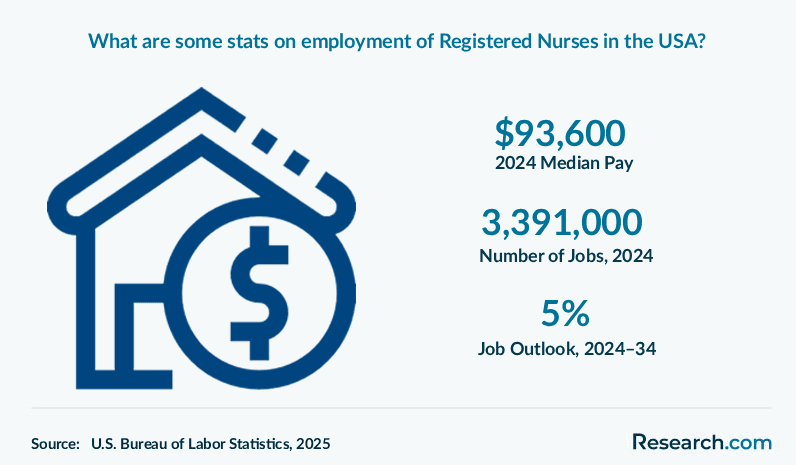
These statistics portray registered nursing as a large, well-compensated, and in-demand profession. The faster-than-average job growth highlights a sustained need for qualified nurses in the coming years.
What are the average salaries and job outlooks for BS vs. BSN degree holders?
The job outlook for registered nurses is exceptionally strong, regardless of whether they hold a BS with a nursing major (BS in nursing) or a BSN degree. However, salary potential often diverges, with BSN-prepared nurses typically earning more, especially as they advance in their careers.
- Advanced Role Salaries: Leadership, specialty, and advanced practice roles requiring a BSN as a foundation (e.g., nurse manager, clinical specialist) command significantly higher salaries.
- BSN Salary Advantage: Nurses with a BSN often earn more than their non-BSN counterparts, with some studies showing a difference of several thousand dollars per year, a gap that widens with experience.
- Entry-Level Salary: For initial staff nurse positions in hospitals, the starting salary for new graduates with either a BS or a BSN is often comparable and dictated by institutional pay scales and geographic location.
- Geographic Variation: Salaries for all nurses vary significantly based on the state, city, and cost of living, with metropolitan areas in states like California and New York offering the highest compensation.
- Job Growth: The U.S. Bureau of Labor Statistics projects much faster than average growth at 5% for registered nurses in the coming decade, ensuring high demand for graduates of both programs.
- Magnet Hospital Preference: Magnet-designated hospitals, recognized for nursing excellence, have policies requiring a high percentage of their nurses to hold a BSN, directly impacting job prospects and creating a competitive advantage for BSN graduates.
- Salary Negotiation: A BSN can provide greater leverage in salary negotiations, particularly for roles outside of traditional staff nursing that value leadership and advanced training.
- Tuition Reimbursement: Many employers offer tuition reimbursement programs specifically to help their ADN or BS-prepared nurses obtain a BSN, recognizing its value and impact on patient outcomes.
If you’re comparing career ladders and pay bands, the contrast between licensed practical nursing and the bachelor’s route is instructive; the difference between LPN and BSN often maps to higher ceilings for pay, leadership roles, and specialty options.
Nationally, the U.S. Bureau of Labor Statistics reports a median RN salary of $93,600 in 2025, while Glassdoor lists $99,282 average total pay for RNs (U.S. Bureau of Labor Statistics, 2025; Glassdoor, 2025). Here are some general salary ranges in the graph below.
General and Entry-Level Nursing Salaries
Entry-level roles show steady early-career pay growth. New graduate RNs average $74,030, pediatric nurses $80,900, and ER staff nurses $84,722 (Salary.com, 2025). Pay in community and school settings remains moderate. School nurses earn $62,431, certified school nurses $66,994, occupational health staff nurses $67,466, and public health nurses $73,074 (Salary.com, 2025). These are among the less stressful nursing jobs.
Specialized Nursing Salaries
Specialized clinical roles earn higher compensation. Hospice nurses make $87,933, home care nurses $88,534, OR nurses $89,055, oncology nurses $89,100, dialysis RNs $90,600, hospice RNs $90,774, and NICU nurses $91,810 (Salary.com, 2025).
Administrative, Procedural, and Supervisory Nursing Salaries
Advanced and procedural positions command premium pay. Utilization review nurses earn $92,100, nurse case managers $93,979, cardiac catheter lab nurses $96,600, telemetry nurses $97,926, and OR RNs $96,384 (Glassdoor, 2025; Salary.com, 2025). Senior roles exceed six figures: infection control staff nurses $100,774, charge nurses $102,242, labor and delivery nurses $102,023, and med-surgery/telemetry RNs $106,630 (Salary.com, 2025; Glassdoor, 2025).
What are the licensure and certification implications for BS vs. BSN graduates?
For initial licensure as a Registered Nurse (RN), there is no distinction between a BS with a nursing major and a BSN; graduates of both programs are eligible to take the National Council Licensure Examination for Registered Nurses (NCLEX-RN). The differences emerge when pursuing specialty certifications and advanced practice credentials.
- Advanced Practice Registered Nurse (APRN): To become an APRN (e.g., Nurse Practitioner, Clinical Nurse Specialist, Nurse Anesthetist, or Nurse-Midwife), a BSN is a mandatory prerequisite for entry into the required Master of Science in Nursing (MSN) or Doctor of Nursing Practice (DNP) program.
- Clinical Ladder Advancement: Many hospitals use a clinical ladder system for promotion that often requires or strongly favors a BSN for advancement to higher levels, which come with increased responsibility and pay.
- Initial Licensure (NCLEX-RN): Both a BSN and a BS with a nursing major from an accredited program qualify a graduate to apply for and take the NCLEX-RN exam in all 50 states.
- Public Health Nursing Certification: The credential for Certified in Public Health (CPH) often requires a BSN due to the degree's emphasis on community health, epidemiology, and health policy.
- School Nurse Certification: Many states require a bachelor's degree for school nurse certification, and a BSN is often specified as the preferred or required degree.
- Specialty Certification Eligibility: While many basic specialty certifications are open to all RNs, a growing number of advanced credentials, such as those in nursing informatics, case management (CCM), or nursing professional development, list a BSN as a preferred or required qualification.
The BSN remains the most common entry into nursing, but enrollment has declined—entry-level BSN programs dropped 9.9% from 2022 to 2023, following a five-year decline in RN-to-BSN enrollment. From 2002 to 2018, these programs saw strong growth.
Between 2019 and 2023, NCLEX-RN candidates rose from 252,311 to 358,998. First-time international candidates more than tripled from 21,041 to 65,966, while U.S.-educated candidates stayed relatively stable between 171,387 and 188,005. Pass rates fell from 72.8% in 2019 to 63.4% in 2022, then rebounded to 69.7% in 2023. These are shown in the graphic below.
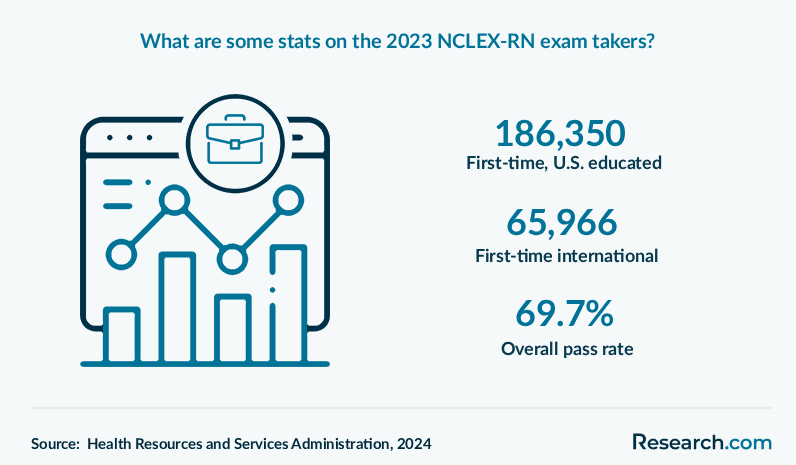
Newly licensed RNs increased from 183,682 in 2019 to 250,078 in 2023, driven by rising test-taker volume. Internationally educated nurses are helping offset domestic enrollment declines.
Which universities and colleges in the USA offer BS and BSN programs?
Thousands of institutions across the United States offer undergraduate nursing education, but they are typically structured as dedicated BSN programs rather than a general BS with a nursing major. The latter is a less common pathway, though it exists at some larger universities where nursing is a major within a broader college.
BS with Nursing Major
This degree structure is uncommon, as most universities have transitioned to offering a direct BSN. In a BS with a nursing major program, students are typically admitted to the university as general science students and must complete two years of rigorous prerequisite courses before applying separately to the competitive nursing major for their final two years of specialized study.
Private University BSN Programs
- Duke University: Its School of Nursing is celebrated for its strong integration of research and global health opportunities, allowing students to engage in cutting-edge studies while participating in international clinical experiences.
- Emory University: The Nell Hodgson Woodruff School of Nursing offers unique clinical partnerships with top-tier healthcare facilities like Emory Healthcare, providing students with diverse patient care experiences and extensive networking opportunities in Atlanta.
- Johns Hopkins University: Renowned for its evidence-based practice curriculum and close ties to its world-class hospital system, the School of Nursing allows students to learn directly from leading nurse researchers and expert clinicians.
- University of Pennsylvania: Penn Nursing is the only Ivy League institution to offer a BSN, and it features a unique sub-matriculation option that allows students to begin graduate-level coursework while completing their undergraduate degree.
Public University BSN Programs
- University of California, Los Angeles (UCLA): The UCLA School of Nursing is recognized for its commitment to community-centered and culturally responsive healthcare education within one of the nation’s most diverse urban settings. It integrates rigorous academic training with extensive clinical experience through its strong partnership with the world-renowned UCLA Health system.
- University of Michigan: Known for its strong emphasis on leadership development and interprofessional education, the School of Nursing enables students to collaborate with peers from medicine, dentistry, and social work to improve patient outcomes.
- University of North Carolina at Chapel Hill: UNC's School of Nursing offers a globally recognized program with exceptional clinical opportunities at a top-ranked academic medical center, and it maintains a strong focus on preparing nurses for rural and underserved populations.
- University of Washington: The UW School of Nursing is highly regarded for its innovation in nursing science and its leadership in population health, offering students extensive research opportunities and diverse clinical placements across the Pacific Northwest.
Online RN-to-BSN Programs
- Capella University: This university features a competency-based FlexPath learning model that allows students to progress at their own pace for a flat-rate tuition fee, and it offers a streamlined curriculum designed for working professionals.
- Purdue University Global: Backed by a major public university system, this program offers a personalized and flexible online experience, and its curriculum emphasizes the development of evidence-based practice and leadership skills.
- Western Governors University (WGU): WGU utilizes a unique competency-based education model that allows students to accelerate their degree by demonstrating subject mastery, making it an affordable and potentially faster option for self-motivated RNs.
This begs the question: are online nursing degrees respected? Yes, they are widely respected by employers, licensing boards, and academic institutions, but with one critical condition: the program must be properly accredited.
State College and University Systems
Nearly every state university and college system, from small regional campuses to large flagship institutions, offers an accredited BSN program, providing accessible and high-quality options for residents in every state.
Prospective students should verify that any program they consider is fully accredited by either the Commission on Collegiate Nursing Education (CNE) or the Accreditation Commission for Education in Nursing (AEN). This accreditation is essential for licensure eligibility and future educational and career opportunities.
What challenges do students face in general BS programs compared to BSN programs?
Students in both the BS with a nursing major and the BSN programs face a demanding curriculum, but the nature of their challenges can differ. BSN students are immersed in nursing from day one, while BS students must transition from a general science focus to a specialized professional one.
- Application Timing: BS students often apply to the nursing major after completing two years of general coursework, creating a high-stakes progression point not present in direct-entry BSN programs.
- Clinical Competition: In larger BS programs, students may face more competition for desirable clinical placements compared to BSN programs, where cohorts are managed within a single school of nursing.
- Cohort Identity: BSN students typically progress through the program as a tight-knit cohort, providing strong peer support, which may be less structured for nursing majors within a larger BS college.
- Curriculum Cohesion: The BSN curriculum is holistically designed, with concepts building progressively; the "2+2" model of a BS can sometimes feel disjointed, separating foundational sciences from their nursing application.
- Faculty Mentorship: BSN students have access to nursing faculty as advisors from their freshman year, whereas BS nursing majors may have a general science advisor for their first two years.
- "Weed-Out" Courses: BS programs often feature notoriously difficult prerequisite science courses that serve to "weed out" students before they can even apply to the nursing major.
- Intense Clinical Demands: Both student groups face the challenge of balancing rigorous coursework with long hours in clinical rotations, which can be physically and emotionally taxing.
- NCLEX Preparation: BSN programs integrate NCLEX preparation throughout the curriculum, while BS majors may need to seek out more independent study resources in their final year.
- Professional Socialization: BSN programs actively socialize students into the nursing profession through ethics, leadership, and theory courses, a process that may be more condensed for BS students.
- Time Management: The sheer volume of information, from complex scientific principles to hands-on clinical skills, requires exceptional time management and study skills from all nursing students.
Format matters too: many students confuse print-based home study with modern online delivery. Knowing the difference between correspondence course and online course helps you pick support structures (live simulations, proctored exams, faculty access) that affect how manageable these challenges feel.
What advantages and professional pathways does a BSN provide over a general BS?
A Bachelor of Science in Nursing (BSN) provides a significant and measurable advantage over a general BS with a nursing major, primarily by establishing a stronger foundation for career-long professional advancement. This specialized degree is designed not just to train a nurse for a first job, but to cultivate a future leader, specialist, and innovator in the healthcare field.
- Access to Graduate Education: A BSN is the universal key to master's and doctoral nursing programs, required for becoming a Nurse Practitioner, Clinical Nurse Specialist, Nurse Anesthetist, or Nurse-Midwife.
- Autonomy and Critical Thinking: The curriculum's emphasis on theory, research, and evidence-based practice equips BSN graduates with superior critical thinking and clinical reasoning skills.
- Career Portability: As the national standard, a BSN is more easily recognized and valued across different states and healthcare systems, enhancing career mobility.
- Commissioned Officer Status: A BSN is the minimum educational requirement to be commissioned as an officer in the Nurse Corps of the U.S. Army, Navy, and Air Force.
- Competitive Edge: In a competitive job market, holding a BSN immediately distinguishes a candidate from those with an associate's degree and can provide an edge over a general BS.
- Enhanced Patient Outcomes: A large body of research, including studies supported by the American Association of Colleges of Nursing (AAN), links higher percentages of BSN-prepared nurses on staff with lower patient mortality rates and better patient outcomes.
- Foundation for Certification: The BSN provides the necessary knowledge base to pursue a wide range of specialty certifications that can lead to higher pay and more specialized roles. There are many nursing certifications online that can forge different career specialties and higher earning opportunities.
- Health Policy Influence: With coursework in health systems and policy, BSN graduates are better prepared to engage in advocacy and shape healthcare policy at the institutional or community level.
- Leadership and Management Roles: The BSN is considered the minimum educational credential for nursing leadership positions such as nurse manager, charge nurse, and other supervisory roles.
- Magnet Recognition: To achieve and maintain prestigious Magnet status, hospitals must demonstrate that a high percentage of their nurses hold a BSN or higher degree, creating a strong institutional preference.
- Professional Standing: The BSN is recognized by nursing organizations and healthcare institutions as the benchmark for professional nursing practice.
- Public and Community Health Roles: The broader focus on community, population health, and health promotion in BSN programs is essential for roles in public health departments and community agencies.
The BSN is more than just a degree; it is a direct investment in long-term career growth. It opens doors to the full spectrum of professional nursing pathways, from the bedside to the boardroom.
What are the current and emerging trends in BS and BSN education in the USA?
Nursing education is constantly evolving to meet the demands of a complex healthcare system, with several key trends shaping both BS (BS in nursing) and BSN programs across the country. These trends focus on improving student learning, ensuring patient safety, and preparing graduates for the future of healthcare.
- Artificial Intelligence (AI) Integration: Programs are beginning to explore AI for personalized learning paths, clinical decision support simulation, and data analysis to identify at-risk students.
- Competency-Based Education: A shift is occurring from focusing solely on credit hours to ensuring students demonstrate mastery of specific clinical competencies before progressing.
- Cultural Competency and Humility: Curricula are placing a much stronger emphasis on developing cultural humility, addressing health disparities, and providing equitable care to diverse patient populations.
- Focus on Mental Health and Resilience: Recognizing high rates of burnout, programs are integrating content on self-care, mental health awareness, and resilience-building strategies for nursing students.
- Geriatric Care Specialization: With an aging population, there is a growing trend to incorporate more specialized and comprehensive coursework in gerontology and care for older adults.
- Global Health Experiences: More programs are offering opportunities for students to participate in global health initiatives, providing clinical experience in different cultural and resource settings.
- Holistic Admissions Processes: Schools are moving beyond reliance on grades and test scores to a more holistic review of applicants, considering life experience, resilience, and commitment to the profession.
- Increased Use of Simulation: High-fidelity simulation labs are becoming central to nursing education, allowing students to practice complex clinical scenarios in a safe, controlled environment.
- Interprofessional Education (IPE): A major trend involves bringing nursing students together with students from other health professions (medicine, pharmacy, physical therapy) to learn how to collaborate effectively as a team.
- Online and Hybrid Learning: The availability of flexible online formats, especially for RN-to-BSN and graduate programs, continues to expand, making education more accessible for working nurses.
- Social Determinants of Health: There is an increased focus on educating students about the social, economic, and environmental factors that impact patient and community health outcomes.
- Telehealth and Technology Integration: Curricula are rapidly incorporating training in telehealth platforms, remote patient monitoring, and electronic health records to prepare graduates for technology-driven care delivery.
Leadership development is also getting more precise about roles. Courses now draw a clear line between nurse manager vs nurse leader expectations, so students know whether they’re training for operational management or broader culture, quality, and strategy work.
Here's What Graduates Say About Their BS in Nursing/BSN Degrees
- Tina: "Earning my BSN opened doors to leadership roles I never thought possible. The clinical rotations were intense but gave me the confidence to work in a fast-paced trauma unit right after graduation. "
- Rita: "My BSN program emphasized evidence-based practice, which helped me improve patient care and advocate for safer protocols. I now work in a Magnet-designated hospital where BSN-prepared nurses are highly valued. "
- Dominique: "I chose a BSN because I wanted flexibility and long-term growth. The degree not only qualified me for better pay but also made me eligible for graduate school in nurse education. "
Key Findings
- Advanced and Supervisory Salaries: Positions with advanced or supervisory responsibilities command the highest pay, with a charge nurse earning an average of $102,242 and a med-surgery/telemetry registered nurse averaging $106,630 (Salary.com, 2025; Glassdoor, 2025).
- Employer BSN Preference: In 2024, 25.0% of healthcare employers required a BSN for newly hired registered nurses and 69.8% preferred it, showing a consistent, strong demand for baccalaureate-prepared nurses despite a slight dip from 27.7% and 71.7% in 2023 (American Association of Colleges of Nursing, 2024).
- Entry-Level and Community Salaries: Compensation in community-based roles includes an average of $62,431 for school nurses and $73,074 for public health nurses, while new graduate registered nurses in their first hospital roles average $74,030 (Salary.com, 2025).
- Growth in Newly Licensed Nurses: Despite fluctuating pass rates, the number of newly licensed registered nurses in the U.S. increased from 183,682 in 2019 to 250,078 in 2023, largely due to the rising volume of total test-takers.
- National RN Compensation: The national median pay for registered nurses was $93,600 per year in 2024, while separate 2025 data indicated a slightly higher average total pay of $99,282 (U.S. Bureau of Labor Statistics, 2024; Glassdoor, 2025).
- NCLEX Candidate Trends: The total number of NCLEX-RN candidates grew from 252,311 in 2019 to 358,998 in 2023, a trend significantly driven by the number of first-time international candidates, which more than tripled from 21,041 to 65,966 in the same period.
- NCLEX Pass Rate Fluctuation: Overall pass rates for the NCLEX-RN declined from 72.8% in 2019 to a low of 63.4% in 2022 before rebounding to 69.7% in 2023.
- Registered Nurse Job Growth: Job growth for registered nurses is projected at 5% from 2024 to 2034, which is faster than average and expected to add approximately 166,100 new jobs to the 3,391,000 positions recorded in 2024 (U.S. Bureau of Labor Statistics, 2024).
- RN Educational Landscape: A baccalaureate degree is the most common educational level for registered nurses, held by 46.0% of the workforce (an estimated 2.1 million nurses), followed by an associate degree held by 34.2% (1.56 million nurses) (Journal of Nursing Regulation, 2024).
- Specialized Clinical Salaries: Compensation increases with specialization, with 2025 data showing average salaries of $89,100 for an oncology nurse, $90,600 for a dialysis registered nurse, and $91,810 for a registered nurse in the NICU (Salary.com, 2025).
References:
- American Association of Colleges of Nursing. (2023). New graduate employment data: 2023 survey on employer preferences for baccalaureate-prepared nurses. AACN.
- American Association of Colleges of Nursing. (2024). Nursing workforce fact sheet. AACN.
- American Association of Colleges of Nursing. (2024, June). The impact of education on nursing practice [Fact sheet]. AACN.
- American Nurses Credentialing Center. (2025). Magnet Recognition Program® eligibility criteria. American Nurses Association.
- Glassdoor. (2025). Registered nurse salaries in the United States. Glassdoor.
- Glassdoor. (2025). Operating room registered nurse salaries in the United States. Glassdoor.
- Salary.com. (2025). Cardiac cath lab nurse salary in the United States. Salary.com.
- Salary.com. (2025). Certified school nurse salary in the United States. Salary.com.
- Salary.com. (2025). Charge nurse salary in the United States. Salary.com.
- Salary.com. (2025). Home health nurse salary in the United States. Salary.com.
- Salary.com. (2025). Hospice registered nurse salary in the United States. Salary.com.
- Salary.com. (2025). Medical-surgical/telemetry registered nurse (RN) salary in the United States. Salary.com.
- Salary.com. (2025). New graduate registered nurse salary in the United States. Salary.com.
- Salary.com. (2025). NICU nurse salary in the United States. Salary.com.
- Salary.com. (2025). Nurse case manager salary in the United States. Salary.com.
- Salary.com. (2025). Occupational health nurse salary in the United States. Salary.com.
- Salary.com. (2025). Oncology nurse salary in the United States. Salary.com.
- Salary.com. (2025). Pediatric nurse salary in the United States. Salary.com.
- Salary.com. (2025). Public health nurse salary in the United States. Salary.com.
- Salary.com. (2025). School nurse salary in the United States. Salary.com.
- Salary.com. (2025). Staff nurse – RN – emergency room salary in the United States. Salary.com.
- Salary.com. (2025). Staff nurse – RN – home care salary in the United States. Salary.com.
- Salary.com. (2025). Staff nurse – RN – hospice salary in the United States. Salary.com.
- Salary.com. (2025). Staff nurse – RN – infection control salary in the United States. Salary.com.
- Salary.com. (2025). Staff nurse – RN – operating room salary in the United States. Salary.com.
- Salary.com. (2025). Telemetry nurse salary in the United States. Salary.com.
- Salary.com. (2025). Utilization review nurse (registered nurse) salary in the United States. Salary.com.
- U.S. Bureau of Labor Statistics. (2025, August 27). Registered Nurses. Occupational Outlook Handbook. U.S. Department of Labor. U.S. Bureau of Labor Statistics.
Other Things You Should Know About BS in Nursing/BSN Degrees
In 2027, "BS in Nursing" and "BSN degree" are synonymous terms. Both refer to the Bachelor of Science in Nursing degree, which equips students with the necessary education and skills to become registered nurses. Institutions may use different terminologies, but the curricula and outcomes are equivalent.
A BSN typically emphasizes clinical practice, including hands-on patient care and leadership skills. A BS in Nursing may focus more on nursing science and theory, possibly offering more electives in specialized or administrative nursing roles.
BSN programs in 2027 often offer specializations like pediatrics, oncology, and critical care, providing more focused training. In contrast, a BS in Nursing generally provides a broader, generalized nursing education without these specialized tracks, allowing graduates a wider range of entry-level positions.


