
2027 LPN vs. RN vs. BSN: Explaining the Difference

Co-Founder and Chief Data Scientist
Choosing a path in American nursing—from Licensed Practical Nurse (LPN) to Registered Nurse (RN) with either an Associate or a Bachelor of Science in Nursing (BSN)—is often complex due to conflicting information online. As a career planning and education expert, I recognize that locating precise, state-specific details about roles, time commitments, and salary expectations can be difficult for prospective students.
My goal here is to cut through the confusion and provide clear, reliable guidance on these credentials. We will establish the core distinctions between an LPN license, an RN license, and the BSN degree to properly ground your educational and professional decisions in the US healthcare system.
What are the benefits of choosing an LPN, RN, or BSN career path?
- Career Advancement: Allows progression through nursing roles (LPN → RN → BSN → advanced licensure) and access to leadership or specialized roles
- Earning Potential: Higher credentials generally lead to higher salaries (e.g., RN median ~$93,600 annually)
- Flexible Learning: Many institutions offer bridge, night, part-time, or online options to accommodate working students
What can I expect from pursuing an LPN, RN, or BSN pathway?
- Foundational Training: LPNs receive basic nursing knowledge and clinical skills in about 1–2 years
- Structured Progression: RN and BSN paths build on foundational coursework, adding leadership, research, and advanced clinical content
- Clinical Immersion: Hands-on practice via rotations in hospitals, clinics, long-term care, and community settings
- Rigorous Licensure: All pathways include passing NCLEX exams (PN for LPN, RN for RN/BSN)
- Mentorship & Networking: Exposure to preceptors, clinical faculty, and peers aids professional growth
- Accelerated Options: Some BSN programs offer accelerated schedules or bridge formats for career changers
Where can LPNs, RNs, and BSN-prepared nurses work?
- Hospitals & Acute Care: Provide direct patient care, critical care, surgery, and telemetry
- Long-Term Care & Nursing Homes: Manage daily needs of chronically ill or elderly patients
- Home Health & Hospice: Deliver care in patients’ homes or end-of-life settings
- Community & Public Health: Focus on prevention, education, and population health
- Clinics & Outpatient Centers: Serve in specialty clinics, primary care offices, and surgical centers
- Schools & Correctional Facilities: Provide nursing services in educational or institutional settings
- Research & Academia (BSN & beyond): Teach, coordinate clinical trials, publish evidence-based practice studies
How much can LPNs, RNs, and BSN-prepared nurses make?
- LPN Salary: Licensed Practical Nurses earn about $62,340 per year on average (Bureau of Labor Statistics, May 2024).
- RN Salary: Registered Nurses across all education levels make an average of $93,600 annually (Bureau of Labor Statistics, May 2024).
- BSN-Prepared RN Salary: RNs holding a BSN degree earn, on average, close to $99,000 per year (PayScale, 2025).
- Top-Tier Earnings: The top 10% of BSN-prepared RNs can earn well over $135,000 annually, especially in high-cost states and specialized hospital units.
- What are the similarities and differences between LPN, RN, and BSN roles? LPN, RN & BSN
- How long does it take to complete an LPN program, RN training, or a BSN degree? Duration
- What are the career opportunities for LPNs, RNs, and BSN-prepared nurses? Career opportunities
- What are the salaries for LPNs, RNs, and BSN-prepared nurses? Salaries
- What is the job market outlook for LPNs, RNs, and BSN nurses? Job market
- How does scope of practice differ between LPNs, RNs, and BSN-prepared nurses? Scope of practice
- Which universities, colleges, and nursing schools in the USA offer LPN, RN, and BSN programs? Universities
- What are the biggest challenges faced by LPNs, RNs, and BSN-prepared nurses in practice? What are the biggest challenges faced by LPNs, RNs, and BSN-prepared nurses in practice?
- What are some current and future trends related to LPNs, RNs, and BSNs in the USA? Trends
What are the similarities and differences between LPN, RN, and BSN roles?
The nursing profession features distinct career levels, primarily the Licensed Practical Nurse (LPN) and the Registered Nurse (RN), which are differentiated by education and professional scope.
The LPN offers the quickest entry into direct patient care, typically focusing on basic tasks under supervision. The RN role, accessible via an Associate Degree in Nursing (ADN) or a Bachelor of Science in Nursing (BSN), involves comprehensive patient assessment and care planning. The BSN is specifically an academic degree that broadens the RN's capacity for leadership and management.
Here are some key differences among the three ori
Education/Duration
- LPN: 1-year certificate or diploma program.
- RN: 2 to 4 years (ADN or BSN required).
- BSN: 4-year bachelor's degree; includes leadership studies.
Licensure
- LPN: Must pass the NCLEX-PN exam.
- RN: Must pass the NCLEX-RN exam.
- BSN: Qualifies graduates to take the NCLEX-RN.
Roles
- LPN: Provides foundational, direct, and routine patient care.
- RN: Assesses, plans, coordinates, and manages patient care.
- BSN: RN roles plus research, education, and management preparation.
Scope of Practice
- LPN: Limited; focuses on stable patients, collecting patient data (vitals), and performing routine tasks like changing dressings.
- RN: Broad; performs initial patient assessments, develops care plans, administers complex medications (IVs), and performs specialized procedures.
- BSN: Widest scope; integrates clinical practice with evidence-based research, quality improvement, and advanced critical thinking for complex patient populations.
Supervision/Autonomy
- LPN: Must work under an RN or physician's direct supervision; cannot independently perform comprehensive patient assessments or initiate care plans.
- RN: Practices with high independence; responsible for clinical decisions and legally accountable for patient care; delegates tasks to LPNs/aides.
- BSN: Highest autonomy; education prepares nurses for charge, supervisory, and clinical leadership roles, driving patient outcomes and institutional policy.
Understanding these distinctions is crucial for choosing the appropriate career and educational trajectory in healthcare.
For nurses looking to advance beyond the RN level, higher education opens doors to specialized and advanced practice roles. Earning a Master of Science in Nursing (MSN) is the minimum requirement to become an Advanced Practice Registered Nurse (APRN), such as a Nurse Practitioner (NP) or Nurse Educator. Furthermore, the Doctor of Nursing Practice (DNP) represents the highest clinical degree, with corresponding high Doctorate in Nursing salary ranges..
In 2024, first-time, U.S.-educated candidates showed consistently high NCLEX-RN pass rates. Diploma-prepared nurses achieved a 90.8% pass rate, baccalaureate-prepared nurses reached 91.9%, and associate degree nurses recorded 90.6% (National Council of State Boards of Nursing, 2024). Candidates in special program codes performed far lower, with only 37.0% passing. When all first-time, U.S.-educated candidates were combined, the overall pass rate was 91.2%, as shown in the graphic below.
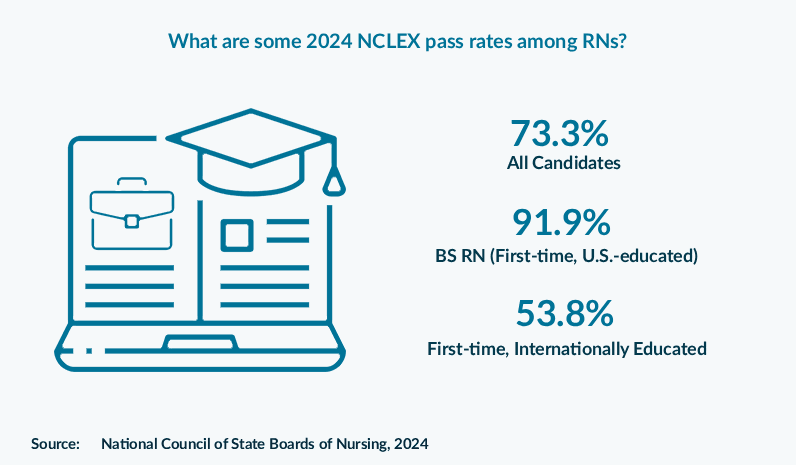
Repeat U.S.-educated candidates had a substantially lower pass rate of 50.9%, while first-time internationally-educated candidates passed at 53.8%. Repeat internationally-educated candidates had the lowest outcome at 36.4%. Across all candidates tested in 2024, the overall NCLEX-RN pass rate was 73.3% (National Council of State Boards of Nursing, 2024).
These results highlight the strong performance of first-time, U.S.-educated candidates compared to both repeat testers and internationally-educated groups. The data show that prior test attempts and international education pathways are linked to lower pass rates, underscoring the importance of preparation and educational support for these populations.
How long does it take to complete an LPN program, RN training, or a BSN degree?
The duration required to achieve licensure or a degree varies significantly across the different nursing pathways, reflecting the scope and depth of education for each role. This difference in time commitment is often a major factor in a student’s initial career planning.
- LPN Certificate Program: Typically requires one year (12 months) of full-time vocational training for a diploma or certificate.
- LPN-to-ADN Bridge Program: Allows LPNs to transition to RN licensure in approximately 1 to 2 years.
- ADN Program (RN Licensure): Usually takes two years of full-time study at a community or technical college. Some online ADN programs for non nurses are great options for those who are keen on nursing but have not yet taken the licensure exam.
- RN-to-BSN Bridge Program: Can be completed by current RNs in as little as 12 to 18 months, often fully online.
- Traditional BSN Degree: Requires four years of full-time university study, integrating general education and nursing science.
- Accelerated BSN (ABSN): For those with a bachelor’s in a non-nursing field, this path takes 11 to 18 months.
- Concurrent Enrollment Programs (CEP): Allow LPNs or ADN students to start BSN coursework simultaneously, streamlining progression time.
- Prerequisites for Entry: General education courses in science and math often require one to two semesters before starting any core program.
- Clinical Hours: LPN programs require fewer clinical hours compared to the extensive clinical rotations mandated in ADN and BSN programs.
- Program Pacing: All timeframes depend on full-time enrollment; part-time options will increase the total duration significantly.
- MSN Program: Requires roughly two to three years of additional study after the BSN for advanced practice roles.
- DNP Program: Requires an additional three to five years of study after the BSN or MSN for doctoral-level leadership.
The quicker LPN and ADN paths allow faster entry into the workforce, while the BSN and subsequent graduate programs represent a greater but ultimately valuable long-term investment in professional development.
The total number of registered nurse (RN) educational programs in the United States has consistently increased over the past decade, reflecting efforts to meet the escalating demand for nurses. Starting from 2,410 RN programs in 2015, the number grew steadily, crossing the 2,500 mark by 2019 with 2,530 programs (National Council of State Boards of Nursing, 2025).
This expansion accelerated noticeably during the early 2020s, rising to 2,652 programs in 2020 and jumping further to 2,764 in 2022, culminating in 3,021 programs reported in 2024. This sustained growth, which saw a net increase of 611 programs over nine years, demonstrates the nursing education sector's commitment to expanding capacity to address workforce shortages and public health needs.
The continuous rise in available RN programs suggests a crucial investment in the future pipeline of professional nursing staff.
What are the career opportunities for LPNs, RNs, and BSN-prepared nurses?
Career opportunities broaden significantly with each step up the educational ladder, offering diverse employment settings and professional responsibilities in the growing healthcare industry.
- LPN in Long-Term Care / Nursing Homes: Manages daily care, medications, and assistance for stable residents.
- LPN in Home Healthcare: Provides personalized, one-on-one care in a patient’s residence under remote supervision.
- LPN in Outpatient Clinics: Assists with routine procedures, vital signs, and patient intake in physician offices or urgent care.
- LPN in Correctional Facilities: Provides primary care and emergency response in prison systems.
- LPN-to-RN Bridge Roles: Allows LPNs to continue working while pursuing RN licensure, balancing income and education.
- RN in General Medical & Surgical Hospitals: Largest employer of RNs, involving complex care, assessments, and coordination.
- RN in Critical Care / ICU: Specialized role managing unstable, acutely ill patients.
- RN in Emergency Departments (ED): Requires rapid triage, decision-making, and trauma care.
- RN in School Nursing: Provides care and manages chronic conditions for students in K–12 settings.
- Travel Nursing for RNs: Short-term contracts across states or countries, offering high pay and diverse experience.
- BSN in Nurse Management / Charge Nurse: First-level administrative role involving shift supervision, scheduling, and staff delegation.
- BSN in Public Health Nursing: Works in community settings to promote health and prevent disease.
- BSN in Case Management: Coordinates long-term care for patients with chronic or complex conditions.
- BSN in Clinical Research Coordinator: Oversees and manages clinical trials, ensuring compliance and data collection.
The BSN is increasingly preferred for roles involving leadership, teaching, research, or complex patient populations due to its emphasis on theory, critical analysis, and healthcare systems.
As nurses advance, some pursue graduate practice tracks; understanding where can a FNP work helps illustrate the wider set of clinical and community settings available after additional education.
What are the salaries for LPNs, RNs, and BSN-prepared nurses?
Compensation correlates with the education required, scope of practice, and professional responsibilities, with substantial jumps between each level.
- LPN National Median Annual Salary: $62,340 (May 2024) (U.S. Bureau of Labor Statistics, 2024).
- LPN in Top 10%: Earn more than $77,870 annually (U.S. Bureau of Labor Statistics, 2024).
- LPN Salary in Government Agencies: Often above $63,000, higher than private sector averages (U.S. Bureau of Labor Statistics, 2024).
- Entry-Level RN Salary (10th Percentile): About $61,250 annually (U.S. Bureau of Labor Statistics, 2024).
- RN National Median Annual Salary: $93,600 (May 2024) (U.S. Bureau of Labor Statistics, 2024).
- RN in Hospitals: RNs in hospital settings generally earn more than those in schools or long-term care (U.S. Bureau of Labor Statistics, 2024).
- RN with ADN vs. BSN Salary Difference: BSN-prepared RNs earn 5% to 15% more than ADN-prepared RNs in the same roles (PayScale, 2025).
- Top-Paying States for RNs: Exceed $120,000 annually in high-cost, high-demand states like California and Hawaii (U.S. Bureau of Labor Statistics, 2024), among the highest paying states for nurses.
- BSN Nurse Average Salary: $99,820 (Glassdoor, 2025).
- BSN Nurse in Clinical Roles: $96,321 (Glassdoor, 2025).
- Hourly Wage Difference: The gap between LPNs and RNs is often $15–$20 per hour (PayScale, 2025).
- Experience Impact: RNs with 10+ years of practice typically earn $20,000+ more than entry-level peers (PayScale, 2025).
- Nurse Practitioner (MSN): Median salary exceeds $125,000 annually, reflecting the added responsibility of advanced practice (U.S. Bureau of Labor Statistics, 2024).
The median annual salary for Licensed Practical Nurses (LPNs) was $62,340 in May 2024, with top earners in the 90th percentile making over $77,870, and government roles often paying above this amount (U.S. Bureau of Labor Statistics, 2024). Nurse Practitioners (NPs), requiring a Master of Science in Nursing (MSN), have the highest earnings, with a median annual salary of $125,900 (U.S. Bureau of Labor Statistics, 2024).
Registered Nurses earn a median annual wage of $93,600 as of May 2024, with entry-level RNs earning about $61,250. Hospital RNs typically earn more than those in schools or long-term care. Location plays a key role, with states such as California and Hawaii reporting salaries above $120,000 (U.S. Bureau of Labor Statistics, 2024).
BSN-prepared RNs earn about 5% to 15% more than ADN-prepared nurses, averaging around $99,820 annually (Glassdoor, 2025). Experienced RNs with 10+ years of practice typically earn $20,000 or more above entry-level peers (PayScale, 2025), as shown in the graph below.
Overall, higher education in nursing strongly correlates with higher salaries, greater career mobility, and long-term financial security.
What is the job market outlook for LPNs, RNs, and BSN nurses?
The job market outlook across all levels of nursing is positive, driven by demographic shifts, chronic disease prevalence, and ongoing staffing shortages. Growth rates and opportunity volumes differ by role.
- Annual LPN Openings: Approximately 54,400 job openings per year through 2034 (U.S. Bureau of Labor Statistics).
- LPN Job Growth Projection: Employment for LPNs is projected to grow about 3%, in line with average occupational growth.
- Annual RN Openings: Estimated 189,100 openings annually, combining growth and retirements (American Association of Colleges of Nursing).
- RN Job Growth Projection: Employment for RNs is projected to grow about 6%, faster than average.
- Hospital Preference for BSN: Many acute care facilities prefer or require RNs to hold a BSN.
- BSN as Career Anchor: A BSN offers stronger long-term job security and flexibility in evolving healthcare systems.
- Aging Population Demand: Both LPNs and RNs are essential for managing the growing needs of an older population.
- Home Healthcare Expansion: Demand for nurses in home and community settings continues to rise.
- Rural vs. Urban Demand: Rural areas face acute shortages across all nursing levels.
- Specialty Certification Value: RNs with certifications in areas like critical care or oncology have stronger job prospects.
- Geographical Mobility: The Nurse Licensure Compact (NLC) expands job mobility across member states.
- Nurse Practitioners (NPs): 45% projected growth from 2022 to 2032
The overall nursing market remains robust, with stable to strong growth, especially for RNs and BSN-prepared nurses over the next decade.
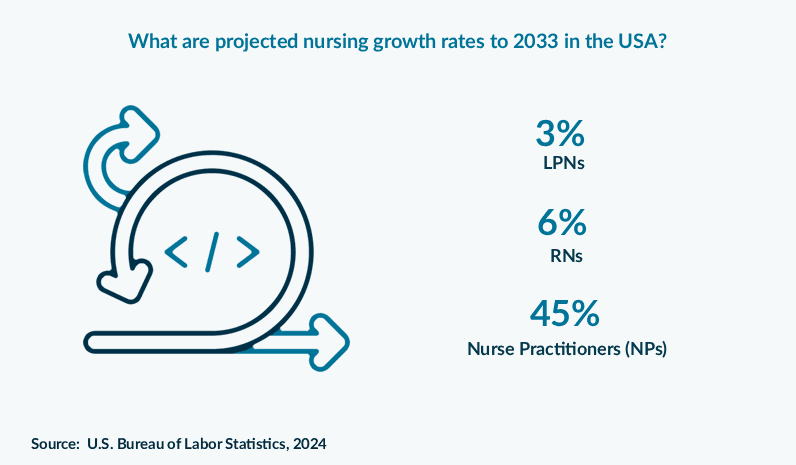
According to the U.S. Bureau of Labor Statistics (2024), employment for licensed practical nurses is projected to experience a growth rate of 3% from 2024 to 2034. In contrast, the employment of registered nurses (RNs) is expected to see a faster increase, projected at 6% growth from 2023 to 2033. The most dramatic trend is seen in advanced practice nursing, where nurse practitioners (NPs) are projected to experience an extraordinary 45% growth between 2022 and 2032, highlighting rapid expansion in advanced clinical roles.
These figures, shown in the graphic below, clearly demonstrate that while all nursing careers offer stability and growth, the highest projected demand is for those with graduate-level education, cementing advanced practice as the fastest-growing sector of the profession.
For LPNs weighing entry into the field amid this outlook, a common question is is it worth getting an LPN license, given steady demand and clear bridge pathways to RN and BSN roles.
How does the scope of practice differ between LPNs, RNs, and BSN-prepared nurses?
The legal scope of practice is a key differentiator in nursing roles. State boards of nursing regulate what each license level can legally perform, influencing what a nurse is trained to do.
- LPN Scope: Provides basic patient care and data collection, usually limited to stable patients.
- LPN Accountability: Always works under the supervision of an RN or physician.
- RN Scope: Broad and independent, includes advanced assessments, care planning, and critical decision-making.
- Initial Assessment: Only RNs can perform comprehensive patient assessments.
- Care Planning: RNs develop and initiate formal care plans; LPNs may contribute observations.
- Delegation: RNs delegate tasks to LPNs and CNAs, bearing legal responsibility for outcomes.
- Medication Administration: LPNs can administer oral, IM, and subcutaneous meds; RNs can administer complex IV therapies and advanced medications.
- Patient Acuity: LPNs are typically assigned to stable patients; RNs manage unstable or critically ill patients.
- Independent Triage: Reserved for RNs in emergency and high-acuity settings.
- BSN Scope: The BSN does not expand the RN license but provides leadership, research, and systems-level knowledge.
- Education: BSN curricula prepare nurses for evidence-based practice, policy, and quality improvement.
RNs carry greater autonomy, critical thinking, and legal responsibility, while BSN preparation expands career opportunities into leadership and policy roles.
Beyond RN practice, graduate preparation leads to advanced roles with distinct regulatory frameworks; comparisons like DNP vs nurse practitioner highlight how a degree versus a licensed role affects scope, autonomy, and clinical responsibilities.
Which universities, colleges, and nursing schools in the USA offer LPN, RN, and BSN programs?
Nursing programs are widely available across the United States at various institutions, reflecting different pathways and student priorities. Here’s a list of U.S. colleges, universities, and technical schools that offer LPN/PN, RN (ADN), or BSN nursing programs.
LPN / Practical Nursing
- Best Care College (Virginia) Best Care College offers a 52-week Practical Nursing (LPN) program with about 1,500 hours of classroom, lab, and clinical instruction. The program follows a holistic nursing philosophy emphasizing psychological, social, spiritual, and physical care. The college also provides an LPN-to-RN associate degree pathway, recognizing prior LPN credits toward RN coursework.
- Bridgerland Technical College (Utah) Bridgerland Technical College provides a Practical Nursing program that emphasizes hands-on clinical training in community and hospital settings. The college also supports an LPN-to-RN bridge option through articulation with partner institutions, allowing a smooth transition for graduates who want to continue toward RN licensure.
- Saint Paul College (Minnesota) Saint Paul College runs a Practical Nursing program, typically completed in three semesters. The curriculum includes extensive use of simulation labs along with clinical rotations in local hospitals and care facilities. The college is known for smaller cohort sizes, close mentorship, and strong NCLEX-PN preparation.
RN/ADN + Bridge/Combined Pathway Institutions
- Chattahoochee Technical College (Georgia) Chattahoochee Technical College offers a Practical Nursing diploma program with high NCLEX-PN pass rates in the region. Students can continue into an LPN-to-RN bridge pathway, which builds on prior coursework and clinical experience. The program is designed for working students seeking steady progression from PN to ADN.
- Rasmussen University Rasmussen University provides a fast-track Practical Nursing diploma that can be completed in as little as 12 months. The university emphasizes career laddering, offering clear progression pathways from LPN to RN and BSN. Students benefit from flexible scheduling and online course availability.
- Rutgers University (School of Nursing, New Jersey) Rutgers University operates one of the largest comprehensive nursing schools in New Jersey. The school offers pre-licensure BSN programs, RN-to-BSN pathways, and graduate nursing degrees. Rutgers emphasizes community health, diversity, interprofessional learning, and research engagement with broad clinical placements across the state.
BSN & Graduate-Oriented/Dual-Focus Institutions
- University of Arizona (College of Nursing) The University of Arizona offers both conventional and accelerated BSN options. The conventional BSN is a four-semester upper-division program completed after prerequisites, while the accelerated Integrative Health BSN allows students to finish in about 15–16 months. The curriculum emphasizes evidence-based practice, simulation training, and diverse clinical placements across Arizona.
- Chamberlain University Chamberlain University provides an accelerated three-year BSN program offered at campuses nationwide, with year-round enrollment and multiple start dates. The university emphasizes individualized support, hybrid learning options, and preparation for NCLEX-RN licensure. Bridge programs, including RN-to-BSN, are also widely available.
- Duke University (North Carolina) Duke University offers BSN, MSN, DNP, and PhD programs in nursing. The BSN curriculum emphasizes leadership, interdisciplinary teamwork, global health, and research integration. Students benefit from access to Duke Health’s advanced clinical facilities and research opportunities.
- Emory University (Georgia) Emory University provides a BSN program that combines rigorous classroom instruction with clinical placements in Atlanta’s major healthcare systems. The program emphasizes leadership development, research, and service in community and global health contexts.
- Nebraska Methodist College of Nursing & Allied Health Nebraska Methodist College offers BSN programs designed with smaller class sizes and personalized faculty support. The college emphasizes holistic, patient-centered care, community engagement, and a strong commitment to allied health education.
- Platt College (Colorado) Platt College runs a focused three-year BSN program that prepares graduates directly for RN licensure. The curriculum emphasizes early exposure to clinical experiences, simulation, and NCLEX-RN readiness.
- University of Maryland School of Nursing The University of Maryland School of Nursing offers a pre-licensure BSN program that requires completion of prerequisite credits before entering the upper-division sequence. The program emphasizes clinical excellence, research integration, and preparation for leadership roles.
- University of Michigan (Ann Arbor, School of Nursing) The University of Michigan provides a BSN program that integrates nursing coursework with liberal arts, social sciences, and biological sciences. Honors pathways are available, and students benefit from extensive research opportunities, strong faculty mentorship, and a favorable student-to-faculty ratio.
- University of San Francisco (School of Nursing & Health Professions) The University of San Francisco offers a traditional BSN along with graduate programs, including an MSN entry option for students with non-nursing bachelor’s degrees. The school emphasizes social justice, community partnerships, and public health engagement, with clinical placements throughout the Bay Area.
- University of Virginia (School of Nursing) The University of Virginia provides BSN, MSN, DNP, and PhD programs in nursing. The BSN curriculum emphasizes compassionate patient care, interdisciplinary teamwork, and evidence-based practice. Strong hospital partnerships across Virginia give students access to extensive clinical training opportunities.
- University of Washington (Seattle, School of Nursing) The University of Washington runs a professional BSN program completed after prerequisites. The curriculum integrates leadership, research, and health equity, with clinical experiences across Seattle-area hospitals and clinics.
- West Coast University (Texas / multiple campuses) West Coast University offers accelerated and traditional BSN programs across multiple campuses. The university provides flexible schedules, hybrid delivery, and clinical partnerships that support access for working students.
- Western Governors University (Online, national) Western Governors University provides competency-based online nursing programs, including RN-to-BSN and MSN pathways. The model allows working nurses to progress at their own pace based on demonstrated mastery. The university emphasizes affordability and flexibility for adult learners.
Prospective bridge students comparing online RN-to-BSN options often review Capella vs Chamberlain RN to BSN to match pacing, transfer credit policies, and clinical requirements.
Students should verify accreditation and NCLEX pass rates to ensure program quality.
What are the biggest challenges faced by LPNs, RNs, and BSN-prepared nurses in practice?
Nurses at all levels encounter challenges rooted in the demanding and high-stakes environment of healthcare. While some issues are universal, others differ by degree level and scope of practice.
- Continuing Education Pressure: RNs and BSN-prepared nurses are required to stay current with best practices, pharmacology, and new technologies. Many states require continuing education for license renewal, adding to time pressures, especially in the best places to work as a nurse.
- Delegation Challenges (RNs): RNs are legally responsible for supervising LPNs and aides, balancing efficiency with accountability. Mismanagement in delegation can lead to liability.
- Emotional Stress & Burnout: Nurses regularly manage life-and-death situations, trauma, and patient loss. Burnout rates are particularly high among hospital-based RNs and BSNs working in intensive care and emergency settings.
- Lack of Autonomy (LPNs): While RNs can assess, plan, and lead care independently, LPNs are restricted to working under supervision. This limitation can create job dissatisfaction for ambitious LPNs.
- Long and Irregular Hours: Nurses must staff 24/7 facilities, leading to rotating shifts, overnight work, weekends, and holidays. This can disrupt family life, sleep cycles, and overall health.
- Moral Distress: When forced to work under unsafe conditions or deliver care below professional standards due to resource limitations, nurses experience significant ethical strain.
- Physical Strain: Frequent lifting, repositioning, and mobilizing patients lead to musculoskeletal injuries. LPNs in nursing homes often face high physical demands due to patient loads.
- Public Health Crises: Events such as the COVID-19 pandemic magnify stress, with nurses on the frontlines facing supply shortages, increased risk of infection, and societal scrutiny.
- Staffing Shortages: Persistent nurse-to-patient ratios that exceed recommended levels lead to overwork, higher risk of medical errors, and reduced patient satisfaction. LPNs often face these shortages in long-term care, while RNs and BSNs feel it in hospitals and acute care.
- Technology Fatigue: The widespread use of electronic health records (EHRs), barcode scanning, and telehealth adds to nurses’ workloads. Many report documentation requirements consume time better spent with patients.
- Workplace Violence: Nurses—especially RNs in emergency departments and psychiatric units—face physical and verbal aggression from patients or families. The American Nurses Association notes violence is a leading reason nurses leave the profession.
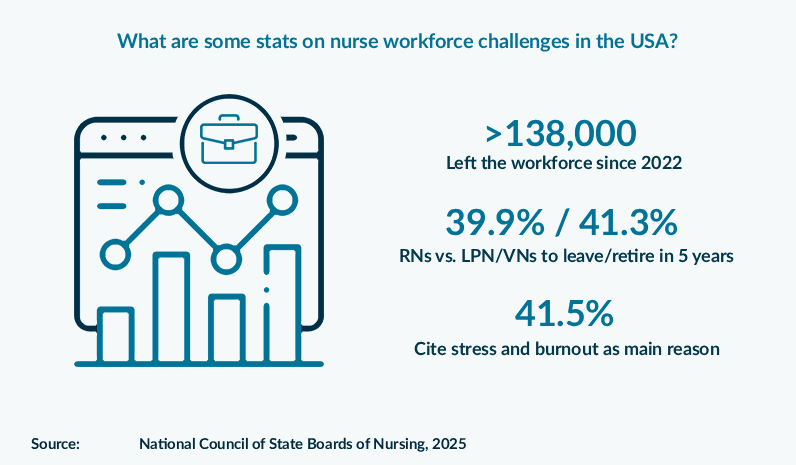
Since 2022, more than 138,000 nurses have left the U.S. workforce, citing stress, burnout, and retirement as the primary reasons, consistent with surveys from two years earlier (National Council of State Boards of Nursing, 2025). Attrition intent remains high, with 39.9% of RN licensees and 41.3% of LPN/VN licensees planning to leave or retire within five years; among them, 41.5% cite stress and burnout as the root cause, followed by workload, understaffing, and inadequate pay (National Council of State Boards of Nursing, 2025), shown in the graphic below.
Despite retention concerns, 87.7% of RN licensees and 70.6% of LPN/VN licensees are currently employed in nursing. Median pre-tax annual earnings have risen by 10–16%, driven by inflation and rising health care demand. Workforce diversity has also grown, with Latino/Hispanic RNs doubling from 3.6% in 2015 to 7.2% in 2025 (National Council of State Boards of Nursing, 2025).
Persistent issues, however, include staffing shortages, stress, burnout, and workplace safety challenges that predate and outlast the pandemic. Many nurses cite strong purpose, patient gratitude, and teamwork as sources of resilience. Efforts are underway to address these issues, including safe staffing legislation, mental health resources, and workplace protections.
What are the advantages and career opportunities of pursuing a BSN over LPN or RN credentials?
Choosing the BSN path, even when ADN is a viable option for RN licensure, provides strategic advantages that enhance long-term career growth, compensation, and professional impact.
- Accelerated Pathway: RNs can complete BSNs quickly via RN-to-BSN programs. This is the quickest way to become a nurse BSN degree for those who are already practicing RNs.
- Career Mobility: Opens opportunities in administration, education, informatics, and non-bedside roles.
- Comprehensive Curriculum: Covers leadership, research, health policy, and community health.
- Critical Thinking Skills: BSN programs emphasize evidence-based practice and advanced analysis.
- Higher Salary Potential: BSN-prepared nurses generally earn more than ADN-prepared nurses.
- Hiring Preference: Magnet hospitals and many major health systems prefer or require BSN graduates.
- Improved Patient Outcomes: Hospitals with higher BSN nurse ratios report better patient outcomes.
- Job Security: Offers more flexibility and resilience in a shifting healthcare system.
- Military Nursing: A BSN is required for commissioned officer roles.
- Prerequisite for Advanced Degrees: Required for MSN, DNP, and other graduate-level programs.
- Professional Credibility: Provides access to leadership roles and nursing organizations.
While the ADN provides a quicker path to licensure, the BSN is considered the most future-proof investment in a nursing career.
What are some current and future trends related to LPNs, RNs, and BSNs in the USA?
The nursing profession is rapidly adapting to technological, demographic, and policy changes. These trends are reshaping what it means to be an LPN, RN, or BSN in the coming decades.
- Aging Workforce & Retirement: Many experienced nurses are retiring, creating an urgent need for new graduates at all levels. This will especially affect BSN-prepared nurses in leadership roles.
- BSN as Entry Standard: Professional organizations such as the American Association of Colleges of Nursing advocate for the BSN as the minimum credential for RNs, citing research that links higher education to better patient outcomes. Most accredited online universities are already preparing for this shift.
- BSN in 10 Legislation: Some states now require newly licensed ADN or diploma RNs to complete a BSN within 10 years. This elevates the BSN as the expected standard for entry into practice.
- Competency-Based Education (CBE): Nursing schools are increasingly awarding credit based on demonstrated mastery rather than time spent in class, which accelerates degree completion for motivated learners.
- Enhanced Nurse Licensure Compact (eNLC): Multi-state licensure agreements allow RNs to practice across participating states with one license. This enhances mobility and flexibility, particularly in telehealth and travel nursing.
- Expanding Role of LPNs in Community Settings: As RNs concentrate on acute and specialized care, LPNs are being increasingly utilized in clinics, schools, and long-term care facilities.
- Focus on Nurse Resilience & Mental Health: Programs are embedding stress management, mindfulness, and self-care training into curricula to address burnout.
- Growing Demand for Geriatrics: With an aging U.S. population, LPNs, RNs, and BSNs will need stronger preparation in elder care, chronic disease management, and end-of-life care.
- Interprofessional Education (IPE): Nursing students now train alongside medical, pharmacy, and allied health students to promote team-based, collaborative care.
- Microcredentials & Stackable Certifications: Nurses are pursuing specialized credentials (e.g., wound care, informatics, palliative care) that can be stacked toward advanced degrees.
- Nursing Workforce Diversity: Efforts are being made to recruit a more diverse nursing workforce to reflect the populations they serve, addressing cultural competency and health disparities.
- Policy Advocacy: Nurses with BSNs and advanced degrees are playing larger roles in shaping healthcare policy, emphasizing health equity, staffing legislation, and access to care.
- Telehealth Integration: Training in remote patient monitoring and virtual consultations is becoming part of BSN and graduate curricula, reflecting healthcare’s growing reliance on digital platforms.
- Virtual Simulation & VR Training: High-fidelity manikins and immersive simulations are supplementing or replacing some in-person clinical hours, giving students more exposure to complex scenarios in a controlled environment.
Overall, the future of nursing points toward higher education levels, increased digital literacy, and expanded leadership roles. While LPNs will continue to play key roles in basic and community care, the BSN is on track to become the gold standard for professional nursing practice.
Here's What Graduates Say About Their LPN vs. RN vs. BSN degrees
- Rein: "Starting out as an LPN gave me a solid foundation in patient care and helped me enter the workforce quickly. Transitioning to RN opened up more responsibilities and nearly doubled my salary, which was life-changing."
- Chloe: "Earning my BSN not only boosted my confidence but also expanded my career options into leadership and research roles. I now work in a magnet hospital and feel proud to be part of a team that values evidence-based practice."
- Christel: "I began as an RN after completing an associate degree, but going back for my BSN helped me qualify for specialized units and earn over $99,000 annually. The journey was tough, but the growth—both personal and professional—was worth every step."
Key Findings
- National NCLEX-RN Pass Rates: In 2024, first-time U.S.-educated candidates showed strong NCLEX-RN pass rates: diploma-prepared nurses at 90.8%, baccalaureate-prepared at 91.9%, and associate degree nurses at 90.6%, contributing to an overall pass rate of 91.2% (National Council of State Boards of Nursing, 2024).
- NCLEX Pass Rate Disparities: Repeat internationally-educated candidates had the lowest pass rate at 36.4%, while repeat U.S.-educated candidates passed at 50.9%. Candidates in special program codes had a similarly low pass rate of 37.0% (National Council of State Boards of Nursing, 2024).
- Employment Growth Projections: Nursing employment is expected to grow across all levels: 3% growth for LPNs (2024–2034), 6% for RNs (2023–2033), and an exceptional 45% for nurse practitioners (2022–2032) (U.S. Bureau of Labor Statistics, 2024).
- LPN Earnings: The median salary for LPNs was $62,340 in May 2024, with top earners (90th percentile) making over $77,870. Government positions often offer even higher pay (U.S. Bureau of Labor Statistics, 2024).
- RN Compensation and Education: Registered nurses earned a median annual wage of $93,600 as of May 2024. Entry-level RNs made about $61,250, while BSN-prepared RNs earn 5%–15% more than those with associate degrees, averaging around $99,820 annually (U.S. Bureau of Labor Statistics, 2024; Glassdoor, 2025).
- Advanced Practice and Experience: Nurse practitioners with MSNs have the highest median salary at $125,900. Experienced RNs (10+ years) typically earn $20,000+ more than entry-level peers. Location affects pay, with hospital RNs and those in states like California and Hawaii earning over $120,000 (U.S. Bureau of Labor Statistics, 2024; PayScale, 2025).
- Workforce Attrition and Intent to Leave: Since 2022, over 138,000 nurses have left the U.S. workforce. Attrition intentions remain high, with 39.9% of RNs and 41.3% of LPN/VNs planning to leave or retire within five years, citing stress, burnout, workload, understaffing, and low pay as key reasons (National Council of State Boards of Nursing, 2025).
- Employment and Diversity Trends: Despite challenges, 87.7% of RN licensees and 70.6% of LPN/VN licensees are actively employed in nursing. Median pre-tax earnings have risen 10–16%, and diversity has improved, with Latino/Hispanic RNs doubling from 3.6% in 2015 to 7.2% in 2025 (National Council of State Boards of Nursing, 2025).
References:
- Glassdoor. (2025). Registered nurse (BSN) salaries. Glassdoor.
- Glassdoor. (2025). RN BSN salaries. Glassdoor.
- Indeed. (2025). Registered nurse salary in the United States. Indeed.
- Indeed. (2025). Registered nurse - emergency department salary in the United States. Indeed.
- Indeed. (2025). Registered nurse - medical/surgical salary in the United States. Indeed.
- National Council of State Boards of Nursing. (2024). 2024 NCLEX exam statistics final report. National Council of State Boards of Nursing.
- National Council of State Boards of Nursing. (2025). A line-of-sight into the future pipeline of nurses. Journal of Nursing Regulation, 16(2). National Council of State Boards of Nursing.
- National Council of State Boards of Nursing. (2025). NCSBN research highlights small steps toward nursing workforce recovery; burnout and staffing challenges persist. National Council of State Boards of Nursing.
- Salary.com. (2025). Licensed practical nurse salary. Salary.com.
- Salary.com. (2025). Licensed practical nurse (LPN) salary. Salary.com.
- U.S. Bureau of Labor Statistics. (2024, April 18). Licensed practical and licensed vocational nurses. U.S. Department of Labor, Occupational Outlook Handbook. U.S. Bureau of Labor Statistics.
- U.S. Bureau of Labor Statistics. (2024, April 18). Registered nurses. U.S. Department of Labor, Occupational Outlook Handbook. U.S. Bureau of Labor Statistics.
- U.S. Bureau of Labor Statistics. (2023, November 13). A look at nurse practitioners for National Nurse Practitioner Week. TED: The Economics Daily. U.S. Bureau of Labor Statistics.
Other Things You Should Know About LPN vs. RN vs. BSN Degrees
In 2027, an LPN typically needs a diploma from an accredited practical nursing program. RNs may become licensed with an Associate's Degree in Nursing (ADN) or a Bachelor of Science in Nursing (BSN), while a BSN-educated nurse completes a four-year degree, providing advanced training and more opportunities for specialization.
LPNs must pass the NCLEX-PN, while RNs and BSN graduates must pass the NCLEX-RN. Both exams are administered by the National Council of State Boards of Nursing to ensure candidates meet the necessary standards to practice safely.


