
2027 Is a Master's in Curriculum and Instruction Worth It?

Co-Founder and Chief Data Scientist
For dedicated K-12 educators, the drive to improve your craft is constant. You’re always looking for the next strategic step to deepen your impact, increase your salary, and expand your professional options. This often leads to a critical question: is a master’s in curriculum and instruction worth it? With the high cost of graduate school, you need to know if the investment of time and money will lead to a tangible return.
Recent data shows that teachers with a master’s in curriculum and instruction often earn $3,000 to $10,000 more annually compared to those without, depending on district, role, and state. This guide provides a clear, data-driven analysis to help you make that decision. We’ll break down the costs, the immediate salary benefits you can expect, and the long-term career pathways this degree unlocks, both inside and outside the classroom.
Key Things You Should Know About Master's in Curriculum and Instruction Programs
- For most teachers in public school districts, earning a master's degree results in a contractual pay raise through a "lane change" on the salary schedule.
- The program develops expertise in instructional design and learning technology, which are in high demand in corporate training and Ed-Tech sectors.
- This degree is designed to make you a master practitioner and instructional leader from the classroom, distinguishing it from an educational administration degree focused on becoming a principal.
- With a typical tuition range far below the average for graduate school, the return on investment for a C&I master's is often rapid and significant.
- Most C&I master's degrees are offered online and structured for working teachers, allowing you to earn your degree without leaving your current job.
- What is a master's in curriculum and instruction? C&I Master's Definition
- Who is a C&I master's degree designed for? Who is a C&I master's degree designed for?
- What key skills will you learn in a curriculum and instruction program? Top Skills
- How much does a master's in C&I typically cost? Education Cost
- How does a C&I master's increase a teacher's salary? How does a C&I master's increase a teacher's salary?
- How long does it take to complete this degree while teaching? Program Length
- What is the salary and job outlook for instructional coordinators? Average Pay
- What jobs can you get with a C&I degree outside of the school system? Alternative Careers
- How does this degree prepare you for school leadership roles? How does this degree prepare you for school leadership roles?
- What are the main benefits of a C&I master's for a classroom teacher? Advantages
- Are there any drawbacks to choosing a C&I master's? Are there any drawbacks to choosing a C&I master's?
- How does a C&I master's compare to a master's in educational administration? How does a C&I master's compare to a master's in educational administration?
What is a master's in curriculum and instruction?
A master's in curriculum and instruction is a graduate degree that focuses on the art and science of teaching and learning. Unlike programs that concentrate on administrative theory, this degree is a deep dive into the practical "how" of education.
This degree is designed to turn experienced educators into master practitioners by honing their skills in instructional design, assessment strategies, and the application of modern learning science.
Think of it as an advanced workshop on the craft of teaching. You will explore how to design more effective and engaging lesson plans, develop assessments that accurately measure student growth, and integrate technology in meaningful ways.
The coursework moves beyond abstract theories and equips you with a sophisticated toolkit for solving real-world challenges in the classroom and improving student outcomes.
Educators who enjoy blending pedagogy with analytical thinking often compare this field’s professional growth opportunities to those seen in other applied disciplines—such as cognitive vs behavioral therapy, where understanding how people learn and adapt is central to effectiveness.
Who is a C&I master's degree designed for?
This degree is specifically designed for experienced, licensed teachers who want to become master practitioners and instructional leaders. It is the ideal fit for educators who are passionate about the craft of teaching itself and are looking to deepen their impact from within the classroom, rather than pursuing a path into school administration.
If you see yourself as a "teacher's teacher" and want to take your instructional skills to the highest level, this program is built for you.
The curriculum assumes you already have a strong foundation in classroom management and pedagogy. It is not an initial licensure program for new teachers. Instead, it is a post-licensure degree that builds on your professional experience, helping you evolve into an expert who can lead curriculum development, mentor other teachers, and drive instructional improvement within your school or district.
If this sounds like the professional you aspire to be, let's explore the specific skills you'll acquire.
Teachers with a strong background in child development or psychology may also find this degree complements credentials like in which states can you get licensed with a master's in psychology, since both fields involve understanding learning processes, behavior, and evidence-based instructional methods.
What key skills will you learn in a curriculum and instruction program?
A key value of a C&I master's is that it provides a concrete toolkit of professional skills that are highly valued in both education and the corporate world.
According to the Association for Talent Development (ATD), these programs build core competencies that directly map to roles in talent development and instructional design. This means the degree does more than make you a better teacher; it builds a credible bridge to roles in corporate training, educational technology, and consulting.
Key transferable skills you will master include:
- Instructional Design: This involves creating effective, engaging, and outcomes-driven learning experiences, from single lesson plans to entire corporate training modules.
- Learning Technologies: You will develop expertise in using and evaluating the digital tools, software, and platforms that are essential for modern online and hybrid instruction.
- Evaluating Impact: This skill focuses on using data and assessment to measure the effectiveness of a curriculum or training program and demonstrate its return on investment.
- Training Delivery and Facilitation: You will refine your ability to lead professional development workshops and training sessions for adult learners in any professional setting.
- Knowledge Management: This involves learning how to organize and distribute an organization's learning resources and intellectual capital in a clear and accessible way.
The principles of effective instruction and leadership are universal. The same core skills needed to design a teacher training workshop are conceptually similar to those required for developing leaders in other specialized fields, as seen in the demand for clear pathways to nursing leadership job opportunities. This transferability is what gives the degree its long-term career flexibility.
How much does a master's in C&I typically cost?
The typical tuition for a master's in curriculum and instruction ranges from $12,000 to $40,000 for the entire program. While this is a significant investment, it's crucial to place this cost in the proper context.
According to recent data, the average debt from graduate school alone is $94,141, making the C&I master's one of the more affordable advanced degrees available to educators.
This lower price point is intentional. Many of these programs, especially those at public universities, are specifically designed to be accessible to working K-12 teachers. They represent a focused professional investment rather than a high-cost academic track.
The affordability is a key factor in the degree's value proposition, as it allows for a much faster return on investment.
Meanwhile, students who don't have the finances to comfortably afford the program can obtain various kinds of financial aid. They can start by applying for the Free Application for Federal Student Aid (FAFSA), which shows them the types of federal aid available.
With the cost now clear, the next logical step is to analyze the financial return you can expect.
How does a C&I master's increase a teacher's salary?
A master's in curriculum and instruction increases a teacher's salary in a direct and predictable way through the lane change mechanism built into most public school district pay scales. This is not a speculative hope for a raise; in most districts, it is a contractual, automatic salary increase once you earn the advanced degree.
School district salary schedules are typically structured as a grid, with years of experience (steps) on one axis and educational attainment (lanes) on the other. When you earn a master's degree, you move from the bachelor's degree lane to the master's degree lane, resulting in an immediate and permanent pay bump that continues to grow with each year of experience.
While the exact amount varies by district, the financial impact is significant. The median annual salary for high school teachers is $64,690, and the U.S. Bureau of Labor Statistics reports that master's degree holders across all occupations earn 25.4% more on average than those with only a bachelor's degree.
This clear, guaranteed return on investment is the primary financial reason that, for many teachers, the answer to "Is a master's in curriculum and instruction worth it?" is a confident yes. It transforms the cost of tuition into a direct investment in your long-term earning potential.
How long does it take to complete this degree while teaching?
Most master's in curriculum and instruction programs can be completed in 18 to 24 months while working full-time. For a busy teacher, the thought of adding graduate coursework to an already demanding schedule can be a major hurdle. However, these programs are specifically structured for working professionals, with a timeline designed to be rigorous yet manageable.
A key detail is that the vast majority of these programs are offered in flexible online or hybrid formats. This allows you to complete coursework on your own schedule—on evenings or weekends—without having to commute to a campus after a long day in the classroom.
This steady, professional pace ensures you can absorb the material deeply without burnout, a contrast to some unusually accelerated programs in other fields, such as a fast track philosophy degree online. The C&I master's is built for sustainable growth, balancing your career and education.
What is the salary and job outlook for instructional coordinators?
The primary in-school leadership role that a C&I master's prepares you for is instructional coordinator, and it's essential to understand the professional landscape for this position. The U.S. Bureau of Labor Statistics projects that job growth for this role will be 1% between 2024 and 2034. This indicates that it is a competitive, expert-level field rather than a high-growth area with many open positions.
This context is critical because it frames the role correctly: it is a position you attain by becoming a recognized expert within your school or district, not one you can simply apply for in a booming market.
The Financial Reward for Expertise
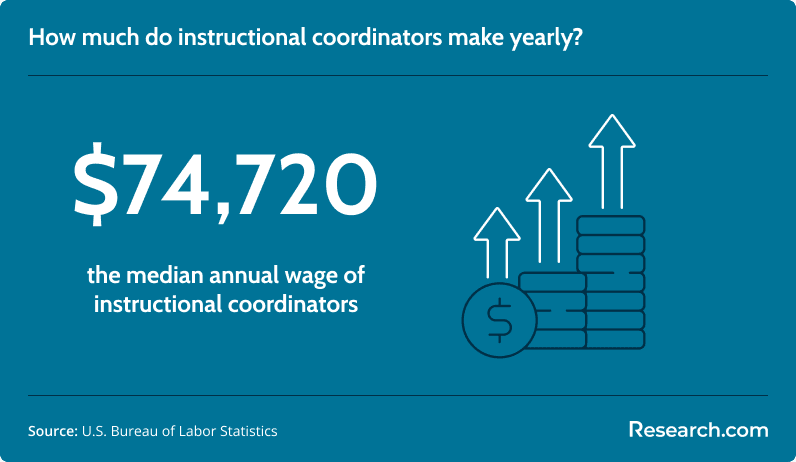
With that competitive landscape in mind, the financial incentive for reaching this level of expertise is substantial. The BLS reports a median annual salary of $74,720 for instructional coordinators as of 2024. This figure represents a significant increase over a typical teacher's salary and is the long-term return on investment for becoming a true pedagogical leader.
The notable pay helps answer the critical question teachers have about their long-term career goals: Is a master's in curriculum and instruction worth it?
Educators exploring how this pay compares to similar professional tracks—such as paralegal salary by state or other licensed professions—can use salary benchmarking tools to understand how regional pay structures influence overall earning potential in education leadership.
What jobs can you get with a C&I degree outside of the school system?
One of the most significant benefits of a C&I master's is the career optionality it provides. The program develops a skill set that is directly transferable to several key roles in the corporate and technology sectors, offering a credible pathway for teachers who may be considering a career change.
Your background in education, combined with these specialized skills, makes you a strong candidate for the following positions.
- Corporate Trainer: In this role, you design and deliver training programs for a company's employees, covering everything from new software to leadership development. Your skills in facilitation and evaluating impact are directly applicable.
- Instructional Designer: This position focuses on creating the actual learning materials—such as e-learning courses, training manuals, and video tutorials—for corporate development. This is a direct application of the instructional design principles you master in the degree.
- EdTech Consultant: Working for an educational technology company, you would help schools or other businesses choose, implement, and effectively use learning software and platforms, leveraging your expertise in both pedagogy and technology.
- Learning and Development Specialist: This is a broader role within a company's human resources or talent department, where you would help manage the overall training strategy, assess learning needs, and measure the success of various training initiatives.
- Curriculum Developer: You can apply your skills at educational publishing houses or curriculum companies, where you would be responsible for writing and developing the instructional materials that are sold to school districts.
Your deep understanding of how people learn is a rare and valuable asset in the business world. While you may want to familiarize yourself with new topics like business administration course subjects, your core skills give you the agency to choose a professional path that is right for you.
How does this degree prepare you for school leadership roles?
A master's in curriculum and instruction prepares you for a specific and vital type of school leadership: instructional leadership. It is important to distinguish this from the operational leadership track that is the focus of a degree in educational administration. This program is designed to create experts who lead teaching and learning, not managers who run the school building.
Instructional leadership centers on the craft of teaching itself. It involves leading curriculum development, mentoring teachers on best practices, and implementing new instructional strategies to improve student outcomes.
In contrast, operational leadership focuses on managing the school as an organization—handling budgets, school law, staffing, and day-to-day building logistics. This degree is squarely focused on the former, positioning you to lead from a place of deep pedagogical expertise.
The Pathway to District-Level Influence
This focus on instructional leadership is the foundation for a career that can extend to the highest levels of a school system. While an instructional coordinator is a key school-level role, this same expertise is required for district-level positions like Curriculum Director.
For those with long-term ambitions, this master's can also serve as a stepping stone toward a terminal degree. The skills you develop are highly relevant if you aspire to high-level positions, as many of the PhD in organizational leadership jobs in the education sector require a deep background in the science of teaching and learning.
The chart below shows the industries that employ the most instructional coordinators.
What are the main benefits of a C&I master's for a classroom teacher?
For a dedicated classroom teacher, the benefits of earning a master's in curriculum and instruction are both immediate and long-term. This degree is a strategic investment in your craft that pays dividends financially, professionally, and personally. It provides a clear path to becoming a more effective, impactful, and recognized leader in your field.
Here is a summary of the main advantages:
- Predictable Salary Increase: The most tangible benefit is the contractual pay raise you receive from your district's "lane change" policy, providing a direct and rapid return on your tuition investment.
- Pedagogical Mastery: The program is designed to transform you into a "master teacher" by providing a deep, evidence-based understanding of instructional design, assessment, and learning science.
- In-School Leadership Pathway: This degree is your entry point to instructional leadership roles like department chair or instructional coordinator, allowing you to increase your influence without having to leave the classroom environment you love.
- Enhanced Career Optionality: You will gain a versatile toolkit of transferable skills in instructional design and learning technology that are highly valued in corporate and EdTech roles, providing valuable career optionality.
- Flexible Program Formats: The majority of C&I master's degrees are offered in flexible online formats specifically designed to be manageable for full-time working teachers.
These combined benefits provide a powerful answer to the core question, "Is a master's in curriculum and instruction worth it?" To make a fully informed decision, however, it is also important to understand what this degree is not designed to do.
For educators interested in language education or international teaching, a related option like TEFL vs TESOL may complement a C&I degree by providing credentials for teaching English abroad or in multicultural classrooms—expanding your global teaching opportunities.
Are there any drawbacks to choosing a C&I master's?
A curriculum and instruction master's is a specialized degree, and making a wise choice means understanding its specific focus. Here are the two main trade-offs to consider before enrolling:
- Not a Direct Path to Principal Licensure: C&I programs focus on the craft of teaching and typically do not include the specific coursework in school finance, law, and operational management required to become a licensed school principal.
- Low Job Growth for the Primary Leadership Role: The job market for instructional coordinators is not a high-growth field. These are expert-level positions that are often competitive and typically earned through internal promotion rather than an abundance of open roles.
Understanding these trade-offs is key, as it leads directly to the final and most important strategic question you'll need to answer.
How does a C&I master's compare to a master's in educational administration?
The choice between a master's in curriculum and instruction and one in educational administration comes down to a fundamental question about your career goals. Both are leadership degrees, but they prepare you for distinctly different roles. The C&I program is designed for instructional leadership, while the administration program is designed for operational leadership.
Here is a direct comparison of their focus:
- Master's in Curriculum & Instruction: This degree is for the "Head Chef." It focuses on the craft of teaching, instructional design, and pedagogical theory, preparing you to be an expert practitioner and mentor.
- Master's in Educational Administration: This degree is for the "Restaurant Manager." It focuses on school operations, including finance, law, and personnel management, preparing you to run a building as a principal.
For teachers who love the art of teaching and want to maximize their impact on students and colleagues, the answer to "Is a master's in curriculum and instruction worth it?" is a resounding yes.
Finding the Right Fit for Your Leadership Goals
Ultimately, the right degree is the one that aligns with the leader you want to become. If your ambition is to become a principal or superintendent, an administration degree is the more direct path.
However, if your goal is to be a master teacher or an instructional leader who shapes how learning happens, the C&I degree is the superior choice. For some educators, there are even hybrid paths that blend these focuses, such as education specialist degree in leadership online programs that can further specialize your expertise later in your career. This choice empowers you to take control of your professional development and build the future you envision.
The chart below presents the states that offer the highest average salary to instructional coordinators.
Here’s What Graduates Have to Say About Their Master's in Curriculum and Instruction
- Diego: "I was at the top of my pay scale and couldn't advance financially without a master's. The C&I program was the most direct path to a significant pay increase on my district's salary schedule. Seeing that contractual lane change hit my paycheck was the clearest proof of my return on investment. It wasn't just about the money; it was about being compensated for the expertise I was building."
- Jason: "After ten years in the classroom, I felt like I was running on autopilot. This program completely re-energized my teaching practice by giving me a new framework for instructional design. I learned how to create lessons that were more engaging and assessments that actually told me what my students needed. My students are more successful now, and that's the most rewarding part."
- Raymund: "After fifteen years of teaching, I was ready for a change of pace. The C&I program gave me the specific skills I needed to make a successful pivot into the corporate world. Six months after graduating, I accepted a position as a learning and development specialist for a tech company. My background in pedagogy gave me a huge advantage, and I'm now applying my passion for education in a completely new and exciting environment."
How can I ensure a C&I master’s program meets high-quality academic standards?
Evaluate the program’s accreditation by verifying its recognition from reputable agencies, ensuring that curriculum content is aligned with current educational standards and innovative practices. Examine faculty credentials and research contributions to confirm that industry experts lead the coursework. Analyze support services—including career advisement and alumni networks—to gauge how well the program prepares you for leadership roles in both academic and corporate settings. Additionally, consider alternative advanced pathways, such as markdown link 2 year Ed.D programs online, which highlight the importance of structured, accelerated academic models that maintain rigorous standards and offer flexible scheduling for working professionals.
Key Findings
- With a typical tuition of $12,000 to $40,000, the C&I master's is a focused investment that allows teachers to see a rapid return through district pay raises, avoiding the much higher average graduate school debt of $94,141.
- The earnings premium for master's degree holders is 25.4% on average, providing a significant and predictable financial boost that directly counteracts salary stagnation on the teacher pay scale.
- The primary in-school leadership role this degree unlocks, instructional coordinator, offers a median annual salary of $74,720, representing a substantial long-term financial goal for career educators.
- The 1% projected job growth for instructional coordinators means this career path is not a boom market but a competitive field where advancement is earned through expertise, making the degree a tool for skill acquisition rather than a ticket to an open job.
- The degree's emphasis on transferable skills like instructional design and learning technologies provides a credible pathway into corporate roles, effectively de-risking a teacher's long-term career by creating valuable professional options outside of the K-12 system.
- The fundamental choice for an educator is between instructional leadership (C&I) and operational management (Administration), making the C&I master's the definitive choice for those who want to advance their career by mastering the craft of teaching.
References:
- Gallup. (2025). Public trust in higher ed rises from recent low. Gallup News. Retrieved October 6, 2025, from https://news.gallup.com/poll/692519/public-trust-higher-rises-recent-low.aspx
- National Center for Education Statistics. (2024). Press Release October 17, 2024. National Center for Education Statistics. Retrieved October 6, 2025, from https://nces.ed.gov/whatsnew/press_releases/10_17_2024.asp
- U.S. Bureau of Labor Statistics. (2024). Education pays. U.S. Bureau of Labor Statistics. Retrieved October 6, 2025, from https://www.bls.gov/careeroutlook/2024/data-on-display/education-pays.htm
- USAFacts. (2025a). How much do teachers get paid in the US?. USAFacts. Retrieved October 6, 2025, from https://usafacts.org/answers/how-much-do-teachers-get-paid-in-the-us/country/united-states/
- USAFacts. (2025b). Where are students moving to attend college?. USAFacts. Retrieved October 6, 2025, from https://usafacts.org/articles/where-are-students-moving-to-attend-college/
Other Things You Should Know About Master's in Curriculum and Instruction Programs
In 2027, earning a Master's in Curriculum and Instruction can lead to career advancement, such as higher salaries, leadership roles in educational settings, and enhanced instructional design skills, which are valued in curriculum development, educational technology integration, and policy-making positions.
In 2026, entry requirements for a master's in curriculum and instruction typically include a bachelor's degree in education or a related field, a valid teaching license, and relevant teaching experience. Some programs may also require letters of recommendation, a personal statement, and GRE scores.


