
2027 On the Job Training: OJT Meaning, Advantages & Types

Co-Founder and Chief Data Scientist
On-the-job training is often the point where classroom learning becomes real career experience. It matters because employers do not hire based on theory alone. They want people who can show up on time, use workplace tools correctly, follow procedures, communicate clearly, and improve with feedback.
If you are a student, recent graduate, career changer, or entry-level worker, OJT can help you test a field, build job-ready skills, and collect evidence you can use in interviews, resumes, portfolios, or future applications. It can also show whether a career path actually fits your interests, schedule, and long-term goals before you commit more money or time to additional education.
This guide explains what on-the-job training is, how it differs from internships, apprenticeships, co-ops, practicums, and job shadowing, and how to choose the right format for your situation. It also breaks down benefits, risks, costs, digital trends, evaluation methods, and the steps that help you turn a placement into a stronger career move.
OJT can support many study paths. A learner in an online associate degree for administrative assistants, a student in a bachelor’s program in fashion, or a graduate student earning a data science master’s degree online may all need hands-on experience to connect coursework with real workplace performance.
The goal is not just to finish required hours. The best OJT experiences help you build confidence, identify strengths and gaps, earn feedback, and leave with concrete proof of what you can do. Use this article to decide which format fits your goals, what to ask before accepting a placement, what warning signs to avoid, and how to make the experience useful long after it ends.
Quick Answer: What Is On-the-Job Training?
On-the-job training, or OJT, is supervised learning that happens in a real workplace. Instead of practicing only in a classroom, trainees learn by observing experienced staff, completing actual tasks, receiving coaching, and gradually taking on more responsibility.
For students and early-career workers, OJT may take the form of an internship, apprenticeship, co-op, practicum, clinical placement, job shadowing experience, service-learning project, or employer training program. The best option depends on your career goal, whether you need academic credit, whether you need pay, how much supervision you will get, and how closely the placement matches the role you want next.
What On-the-Job Training Really Means
OJT is a structured way to learn job-specific knowledge, habits, and skills while participating in an organization’s daily work. In practice, that means learning how work gets done, not just what the work is supposed to look like in theory.
For students, the value of OJT is simple: it closes the gap between education and employer expectations. It gives you a chance to apply what you know, understand workplace culture, and prove that you can operate in a professional environment. A 2025 NACE survey reported that 99.2% of employers hired interns who graduated with a bachelor's degree, while 98.3% hired co-ops with bachelor's degrees.
The terminology can vary by country, school, and industry. Words like internship, apprenticeship, practicum, placement, co-op, and work-integrated learning may sound interchangeable, but they can differ in pay, duration, academic credit, legal status, supervision, and what the trainee is expected to do.
| OJT term | What it is mainly used for | Best fit for |
| Internship | Short-term exposure to a field, often before graduation | Students who want to test a profession and gain resume experience |
| Apprenticeship | Paid work combined with classroom instruction | Learners preparing for skilled trades or regulated occupations |
| Co-op | Planned work periods built into an academic program | Students in programs designed around employer-connected learning |
| Practicum or clinical placement | Supervised practice required by a course, program, or licensure path | Students who must demonstrate applied competence in a real setting |
| Job shadowing | Observation of a professional during routine work | Students exploring a field before committing to a longer placement |
When Is the Right Time to Start OJT?
The best time to start depends on your preparation and your goal. Many students get the most from OJT after they have enough coursework to understand the setting and contribute meaningfully.
Early-stage experiences such as job shadowing or service learning can help with exploration. Mid-program internships can help you build early experience. Later placements such as co-ops, practicums, or specialized internships often make the most sense when you are close to graduation and ready to show more advanced skills.
In some programs, OJT is required rather than optional. Students may need supervised hours to complete a diploma, bachelor’s degree, advanced diploma, or licensure-related program, especially in fields where hands-on competence must be documented.
Some countries introduce work-based learning much earlier. Germany and Denmark are often associated with dual apprenticeship models, where students aged 16 to 19 combine classroom study with employer-based training. These programs may take approximately three years and connect education directly to employment preparation.
| Stage of study | OJT option to consider | Why it can help |
| Early program or first year | Job shadowing, service learning, short volunteer experience | Lets you explore interests before choosing a concentration or long-term path |
| Middle of program | Part-time internship, employer project, campus partnership placement | Builds experience and shows which skills still need work |
| Final year | Internship, practicum, co-op, employer-sponsored capstone | Turns coursework into job-ready examples and references |
| After graduation | Apprenticeship, trainee role, structured employer onboarding program | Supports the transition into paid employment or a specific occupational track |
Who Supervises and Evaluates OJT?
Good OJT depends on clear responsibility. Before you begin, you should know who trains you, who checks your progress, who confirms completion, and how your performance will be assessed.
Most placements involve the trainee, the school or academic department, an OJT coordinator, the employer or host site, and a direct workplace supervisor. The experience works best when these roles are clearly defined instead of handled informally.
The on-site supervisor usually manages day-to-day learning. That person assigns tasks, explains procedures, decides what the trainee can safely handle, observes work, and gives feedback based on the organization’s standards.
The faculty adviser, practicum coordinator, or school representative usually manages academic oversight. Their job may include approving the site, confirming that requirements are met, following up during the placement, handling concerns, and verifying completion.
| Person or group | Main responsibility | Question to ask |
| Student or trainee | Learn actively, complete assigned work, follow rules, and track progress | What should I be able to show by the end of this placement? |
| On-site supervisor | Provide training, assign work, monitor progress, and give feedback | How often will we review my performance, and who completes my final evaluation? |
| OJT coordinator or faculty adviser | Make sure the experience meets school or program requirements | Does this placement satisfy the rules for credit, graduation, or required hours? |
| Employer or host organization | Provide a safe, relevant, supervised setting for learning | What will I actually do each week, and how closely will it relate to my field? |
Common Types of On-the-Job Training
OJT can take several forms, and each one serves a different purpose. The right choice depends on whether you want exploration, academic credit, pay, licensure preparation, portfolio material, or a route into a particular occupation.
- Internship. A temporary experience that helps students apply classroom learning, explore a field, and understand workplace expectations. Internships can be paid or unpaid, full-time or part-time, and may or may not count for credit.
- Apprenticeship. A highly structured route into a skilled occupation that usually combines paid work with classroom instruction. Apprenticeships often take 3-4 years and are common in trades such as plumbing, electrical work, and carpentry.
- Cooperative education. A planned model that links academic study with scheduled work periods before graduation. Co-ops are often more extensive than short internships and may be built into certificate, associate, or bachelor’s programs.
- Credit for prior learning (CPL). Also called Prior Learning Assessment (PLA), this lets eligible students request college credit for learning gained outside traditional coursework if the school accepts it.
- Entrepreneurship. Starting and running a business can become a form of work-based learning because the learner must handle operations, customers, pricing, marketing, suppliers, and risk.
- Job shadowing and service learning. Shorter experiences that are useful for exploration, especially when you are not ready to commit to a longer placement.
Workers' Top Factors When Looking for Employment

| OJT format | Is it usually paid? | Main strength | Main caution |
| Internship | Sometimes | Supports exploration, networking, and resume building | Unpaid work can create financial pressure |
| Apprenticeship | Usually | Offers a paid path into a skilled career | Usually requires a longer commitment and specific entry rules |
| Co-op | Often, but not always | Provides deeper employer experience tied to coursework | May require careful scheduling or extend time to graduation |
| Credit for prior learning | Not a placement | Can convert approved previous learning into college credit | Policies vary widely by institution |
| Entrepreneurship | No income is guaranteed | Develops broad problem-solving and business skills | Has higher risk and less formal supervision |
What You Can Learn Through OJT
OJT teaches far more than technical tasks. It shows how work happens when deadlines, customers, software, quality standards, budgets, and team dynamics all shape the result.
- How to follow policies, safety rules, documentation standards, reporting lines, and standard operating procedures.
- What professionalism looks like in practice, including punctuality, confidentiality, communication, dress, and field-specific vocabulary.
- How to work with supervisors, coworkers, clients, vendors, and cross-functional teams.
- How to strengthen transferable skills such as teamwork, adaptability, communication, problem-solving, initiative, work ethic, and time management.
- How to respond to feedback, fix mistakes, improve over time, and document progress.
Why OJT Matters for Students and Early-Career Workers
OJT benefits both learners and employers. Companies can train talent around real workflows, while students and new workers can practice the skills needed to move from academic readiness to workplace readiness.
The most useful placements include real responsibilities, regular feedback, and proof of achievement such as completed projects, portfolio samples, supervisor evaluations, references, or measurable resume outcomes.
OJT Helps You Turn Theory into Practice
Classroom learning is important, but it does not fully prepare you for workplace decisions. A supervised placement gives you a lower-risk setting to ask questions, make manageable mistakes, receive coaching, and improve before you are expected to work independently.
You learn by watching experienced staff, completing assigned work, correcting errors, and taking on more responsibility over time. That process is similar to how a well-designed decision tool weighs different inputs before suggesting a result.
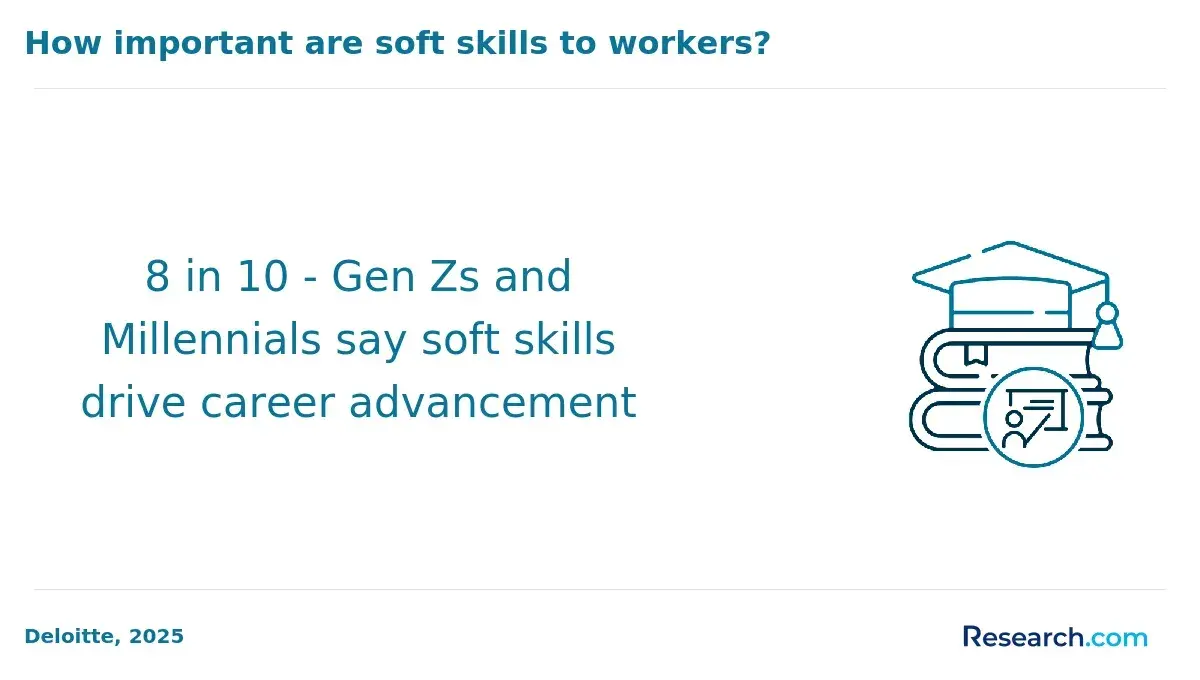
OJT also strengthens soft skills that employers continue to value across industries. Deloitte reported in 2025 that 8 in 10 Gen Zs and Millennials believe soft skills help progress their careers, which is why communication, teamwork, adaptability, and problem-solving should be treated as core outcomes rather than bonus skills.
OJT Shows How a Field Operates in Real Life
Coursework explains concepts. Workplaces show how those concepts are applied under real pressure. Trainees see how teams prioritize tasks, manage clients, solve problems, use tools, and meet performance expectations.
Even routine assignments can be informative if they reveal the pace and structure of a role. Attending meetings, preparing reports, handling administrative tasks, or supporting a project can clarify what the job really asks for.
That insight helps students decide whether a field matches their interests, strengths, values, and tolerance for the day-to-day conditions of the work.
OJT Can Help You Build Professional Connections
Many students finish school with limited industry contacts. OJT can introduce you to supervisors, coworkers, alumni, clients, and hiring managers who understand the field and can offer guidance.
Networking is not only about getting a job right away. A strong professional contact may explain hiring expectations, recommend useful skills, review your resume, suggest training options, or act as a reference if your work is reliable.
Some OJT Options Include Pay or Other Support
Paid internships, co-ops, and apprenticeships can make work-based learning more accessible. Compensation matters because trainees may still have to cover tuition, transportation, housing, food, uniforms, tools, and the cost of lost wages from other work.
Relevant OJT Can Improve Employability
Employers often want evidence that candidates can function in a professional setting. A relevant OJT experience can show punctuality, coachability, teamwork, technical exposure, communication, and familiarity with workplace expectations.
NACE’s 2026 Job Outlook reported that among employers who do not screen applicants by GPAP, 79% consider candidates who completed an internship in the industry, while 74% consider applicants who completed one within their organization. That does not guarantee a job offer, but it does show why related experience can matter in early-career hiring.
| OJT benefit | What it may look like | How to prove it later |
| Skill development | You use tools, procedures, and workflows to complete real tasks | Save project notes, software names, methods, and supervisor feedback |
| Career clarity | You learn whether the daily work matches your interests and strengths | Reflect on which tasks felt easy, difficult, engaging, or draining |
| Professional network | You build relationships with supervisors and coworkers | Request references or professional connections when appropriate |
| Stronger resume | You can describe real responsibilities instead of only classroom projects | Use action verbs, tools, tasks, and outcomes in your resume bullets |
| Possible job pathway | The host organization may consider you for future roles | Ask about hiring timelines and next steps before the placement ends |
How to Judge Whether an OJT Placement Is Worth It
Think of an OJT placement the same way you would think about a course or a job offer: evaluate the structure, credibility, cost, and fit. A worthwhile placement should support your goals, provide supervision, and leave you with something useful you can show later.
- Define the goal first. Decide whether you want exploration, credit, paid experience, licensure-related hours, portfolio material, or a possible job route.
- Review the training plan. Check the duties, learning outcomes, schedule, supervision, feedback process, and evaluation standards before you accept.
- Verify program alignment. Make sure the placement satisfies school, department, graduation, or licensure rules that apply to you.
- Evaluate the supervisor. A committed supervisor is often more valuable than a famous employer name.
- Count the real costs. Transportation, unpaid time, uniforms, equipment, background checks, software, and lost wages can change whether the placement makes sense.
- Ask about what comes next. Find out whether strong performers may receive references, extended placements, apprenticeships, interviews, or job consideration.
| Question to ask before accepting OJT | What a strong answer should include |
| Who will supervise me directly? | A specific person with time for onboarding, coaching, and feedback |
| What tasks will I actually do? | Clear duties related to your field, not just errands or passive observation |
| How will my work be reviewed? | Written expectations, scheduled feedback, and final evaluation criteria |
| Is there pay, a stipend, reimbursement, or credit? | A clear explanation of compensation, credit, and expense coverage |
| Will my school accept this placement? | Written or documented confirmation from your adviser or department |
| What happens if the placement is not going well? | A process for solving problems, adjusting duties, or changing placements |
How Short Academic Programs Can Support OJT
Short academic programs can be useful when OJT exposes a skill gap that you want to close quickly. Courses in Excel, coding, medical terminology, project management, digital marketing, safety practices, or field-specific software may help you perform better during or after a placement.
Students comparing shorter options can review 6-month degree course options, but they should still verify accreditation, transferability, employer recognition, and relevance before enrolling.
How Fast Online Credentials Can Fit Into Your OJT Plan
Online credentials can complement OJT when they teach tools or concepts you are already using in the workplace. A trainee preparing reports may benefit from analytics coursework, while someone in operations may need accounting, logistics, or project management basics.
If speed matters, compare options such as a fast online degree pathway, but do not treat speed as the main measure of value. Accreditation, transfer value, and employer trust matter more than finishing quickly.
How Digital Tools Are Changing On-the-Job Training
Digital systems are changing how employers deliver, monitor, and improve OJT. Many organizations now use learning platforms, simulations, mobile checklists, collaboration software, dashboards, and AI-supported coaching tools to make training more consistent and easier to track.
This shift matters because many entry-level jobs now expect comfort with digital platforms, data, cybersecurity basics, and AI-assisted workflows. If you are planning further study, it can make sense to compare technology-related fields and long-term earning potential, including Research.com’s guide to bachelor’s degrees associated with higher earnings.
| Digital OJT tool | How it can help | What to watch for |
| Learning platform | Stores modules, policies, quizzes, and documentation in one place | Online content should not replace direct coaching and feedback |
| Simulation or virtual reality | Lets trainees practice before handling expensive or risky tasks | Ask how the simulation connects to real job duties |
| Performance analytics | Tracks errors, milestones, and learning progress | Data should support development, not just surveillance |
| Remote collaboration tools | Support hybrid or distributed training teams | Clarify communication norms and response-time expectations |
| AI-supported tools | May help with drafting, troubleshooting, practice, or knowledge checks | Follow rules on privacy, accuracy, security, and allowed use |
How to Succeed During OJT
OJT rewards preparation, reliability, and a willingness to learn. You are not expected to know everything on day one, but you should show up ready to listen, follow directions, and improve.
- Learn the environment in the first week. Pay attention to schedules, reporting lines, communication tools, meeting habits, documentation rules, and how to ask questions appropriately.
- Follow conduct rules closely. Review policies on attendance, confidentiality, safety, dress, technology use, and professional behavior.
- Act professionally from the beginning. Arrive on time, prepare for assignments, protect private information, and communicate quickly if you are late or absent.
- Keep your work organized. Track deadlines, assignments, meetings, logins, feedback, and file storage rules.
- Watch before you assume. Pay attention to how experienced employees communicate, prioritize, solve problems, and document decisions.
- Manage deadlines carefully. Be punctual, finish work on time, and ask for help early if your workload starts to collide.
- Build respectful relationships. Be helpful, steady, and professional. Avoid gossip, complaints, and interruptions that create friction.
- Document your growth. Keep a weekly record of tasks, tools, projects, feedback, and challenges so you can use the experience in applications later.
What OJT Can Mean for Costs and Next Education Decisions
After OJT, you may decide to pursue a certificate, associate degree, bachelor’s degree, graduate program, trade credential, or professional certification. Before you enroll, look at the full cost, not just tuition. Fees, books, tools, exams, transportation, unpaid time, and loan interest can all change the real price.
If you are considering advanced study, resources such as Research.com’s guide to PhD costs can help you think through the level of investment involved.
| Cost or ROI factor | What to check before enrolling |
| Accreditation | Whether the institution or program is recognized by the right accrediting body |
| Transfer credit | Whether OJT, CPL, military training, or previous coursework can reduce required credits |
| Employer support | Whether tuition reimbursement, paid training, exam reimbursement, or apprenticeship funding is available |
| Licensure or certification rules | Whether the program meets the standards required in the state, region, or field where you want to work |
| Time to completion | Whether the schedule lets you keep working or manage other responsibilities |
| Career outcome evidence | Job placement data, alumni outcomes, employer partnerships, and realistic salary expectations |
What to Do After OJT Ends
OJT gives you information you did not have before: what you do well, what kind of work you enjoy, which environments suit you, and where you still need improvement. Use that information to make a more informed next move.
If your placement was in the trades, your next step may be an apprenticeship, licensure preparation, employer training, or an option from online trade school options, depending on the rules in your state or region.
If your placement was in business, IT, healthcare, education, design, public service, or a technical field, you may be ready for an entry-level job, a specialized certification, a more advanced internship, or a different role within the same industry.
OJT can also spark entrepreneurship. Real workplace exposure may reveal customer needs, inefficient systems, vendor problems, pricing gaps, or service opportunities that later become business ideas.
The smartest next step is to turn the placement into a plan. Update your resume, ask for references, identify remaining skill gaps, compare credential options, and apply for roles or programs that build directly on what you learned.
| If OJT showed that... | Next step to consider |
| You performed well and liked the field | Apply for entry-level jobs, extended internships, or trainee programs |
| You need a required credential | Research degree, licensure, or certification rules before spending money |
| You like the work but need stronger technical skills | Choose a targeted certificate, short course, bootcamp, or lab-based class |
| You want a different area within the field | Use your network to ask for informational interviews or more shadowing |
| You want to work for yourself | Build a business plan, test demand, and seek mentoring before launching |
How to Measure Whether OJT Worked
A strong OJT experience should show visible progress. Both trainees and employers can judge success through skill growth, feedback, task quality, attendance, professionalism, independence, and readiness for more complex work.
If you need flexible learning afterward, you might compare options such as the most affordable self-paced online colleges and courses, but any follow-up program should address the gaps you actually discovered during the placement.
| Effectiveness measure | Evidence to collect |
| Skill improvement | Before-and-after assessments, supervisor notes, completed task checklists |
| Quality of work | Error patterns, revisions, team feedback, client comments |
| Professional behavior | Attendance, punctuality, reliability, communication, confidentiality |
| Independence | Tasks completed with less direct supervision over time |
| Career readiness | Resume bullets, portfolio samples, interview examples, references |
| Employer value | Project contributions, reduced onboarding needs, or continued employment when available |
Common Mistakes to Avoid in OJT
Many disappointing OJT experiences are avoidable. The biggest problems usually come from poor planning, weak communication, or choosing a placement for the wrong reason.
| Common mistake | Why it creates problems | Better approach |
| Accepting any placement just to finish required hours | You may complete the requirement without gaining useful experience | Choose a site connected to your target role, field, or skill gap |
| Choosing based only on employer reputation | A well-known organization can still give poor training tasks | Ask what you will do each week and how you will be supervised |
| Ignoring school approval rules | The placement may not count for credit, graduation, or licensure | Confirm eligibility with your program before you accept |
| Avoiding feedback conversations | You lose the chance to fix issues before the final evaluation | Ask for short, scheduled progress check-ins |
| Not recording accomplishments | You may forget details needed for resumes or interviews | Keep weekly notes on tasks, tools, results, and feedback |
| Assuming OJT guarantees a job offer | Most placements are learning experiences, not automatic hiring paths | Ask about next steps while continuing to network and apply elsewhere |
Career Pathways After OJT
After OJT, you should have better evidence of your strengths and better insight into what you want next. That information can guide your next education step, job search, or career pivot.
Students who completed OJT in skilled trades may continue into apprenticeships, licensure preparation, employer training, or flexible programs offered through online trade school options. The right choice depends on industry standards and local rules.
Students in business, information technology, healthcare, education, design, public service, or technical fields may use OJT to target entry-level work, advanced internships, certifications, or cross-functional roles. If you discovered an interest in leadership, analytics, operations, project coordination, or customer-facing work, build on that direction intentionally.
Entrepreneurship can also follow OJT. Firsthand experience may reveal unmet needs, inefficient processes, vendor issues, or service gaps that could become a business opportunity later.
| If OJT revealed that... | Consider this next |
| You liked the work and performed well | Apply for entry-level jobs, extended internships, or trainee programs |
| You need a credential to keep moving forward | Research degree, licensure, or certification requirements first |
| You enjoy the field but need more technical depth | Choose a targeted certificate, bootcamp, or lab-based course |
| You want a different role inside the field | Ask for informational interviews or more shadowing opportunities |
| You want to build a business | Create a plan, validate demand, and look for mentoring before launching |
Key Insights
- OJT is supervised workplace learning, and its value comes from real tasks, feedback, and measurable growth.
- The best format depends on your goal: internships support exploration, apprenticeships support paid occupational training, co-ops link work with school, and practicums often satisfy program or licensure requirements.
- Timing matters. Early exposure can help with career exploration, while later placements often deliver more value because you can contribute at a higher level.
- A strong supervisor and clear expectations matter more than a famous employer name.
- Relevant OJT can improve employability by showing communication, reliability, teamwork, and field-specific readiness.
- Costs are part of the decision. Unpaid time, transportation, equipment, and follow-up education can change whether an opportunity is realistic.
- Digital tools, simulations, analytics, and AI-supported workflows are changing how training is delivered and tracked.
- Keep records of tasks, tools, feedback, and achievements so you can turn the experience into resume bullets, interview stories, and portfolio evidence.
- OJT is a launch point, not a guarantee. The best results come from using it to make a clearer and better-informed next move.
References:
- Almeida, R. K., & Faria, M. L. (2014). The wage returns to on-the-job training: evidence from matched employer-employee data. IZA Journal of Labor and Development, Discussion Paper No. 8314. IZA.
- CRELL. (2012, May 15). Benchmarking employability of young graduates. EU Science Hub.
- Deloitte. (2025). 2025 Gen Z and Millennial Survey: Growth and the pursuit of money, meaning, and well-being. Deloitte.
- Di Gregorio, M., Elhussein, G. & Jativa, X. (2025, December). New Economy Skills: Building AI, Data and Digital Capabilities for Growth. World Economic Forum.
- Garrouste, C., & Rodrigues, M. (2012). The Employability of Young Graduates in Europe. Brussels, Belgium: European Commission.
- Mulder, R. H., Messmann, G., Konig, C. (2015). Vocational education and training: researching the relationship between school and work. European Journal of Education, 50 (4), 497-512. DOI.
- National Association of Colleges and Employers. (2025). 2025 Internship & Co-Op Report Executive Summary. NACE.
- National Association of Colleges and Employers. (2025). 2026 Job Outlook. NACE.
Other Things You Should Know About On the Job Training
Running an effective OJT program in 2027 includes keeping up with technological advancements, customizing training to meet modern industry demands, ensuring inclusivity, and aligning with environmental sustainability goals. Instructors should also focus on developing both hard and soft skills to prepare trainees for diverse workplace scenarios.
OJT programs are typically conducted by experienced employees or supervisors within a company. These seasoned professionals guide trainees through daily tasks, providing real-world insights and immediate feedback. Their expertise ensures that trainees gain relevant skills while aligning with the organization's standards and expectations.
Common types of OJT include internships, apprenticeships, cooperative work experiences, credit for prior learning (CPL), and entrepreneurship. Each type offers different structures and focuses on various aspects of professional development.
Students can learn practical skills and procedures specific to their job or industry, general workplace standards, professional norms, networking, and essential soft skills like teamwork, problem-solving, communication, and time management.
Benefits of OJT include developing and fine-tuning skills, building industry knowledge, expanding professional networks, gaining financial compensation, and improving job prospects by making students more attractive to employers.
Students can maximize their OJT experience by quickly adapting to the workplace, abiding by the code of conduct, maintaining professionalism, staying organized, being observant, managing time wisely, and cultivating healthy relationships with coworkers.
OJT significantly enhances future employment opportunities by providing practical experience, improving industry knowledge, and developing essential skills. Many employers prefer hiring candidates who have completed OJT, making them more competitive in the job market.


