
2027 COTA vs. OTA: Explaining the Difference

Co-Founder and Chief Data Scientist
Occupational therapy is one of the fastest-growing healthcare fields in the U.S., with more than 160,000 professionals employed and projected growth of 14% from 2024 to 2034 according to the Bureau of Labor Statistics (BLS). Yet, many people confuse the roles of Occupational Therapy Assistants (OTAs) and Certified Occupational Therapy Assistants (COTAs).
This article breaks down what separates the two—from education and certification requirements to salary, job outlook, and career advancement. By the end, readers will understand which path best fits their goals in this expanding healthcare profession.
Key Things You Should Know About COTA vs. OTA
- COTA means certification. All Certified Occupational Therapy Assistants (COTAs) are OTAs who have passed the NBCOT exam, which validates their professional competency. Without this certification, graduates cannot legally practice as occupational therapy assistants in most states.
- Education defines entry level. OTAs typically hold an associate degree from an accredited occupational therapy assistant program, while occupational therapists (OTRs) require a master’s degree. This educational gap leads to different roles, autonomy levels, and pay scales in clinical practice.
- Job demand is strong. The occupational therapy field is projected to grow 14% from 2024 to 2034—much faster than average. Demand for assistants remains equally high as aging populations and rehabilitation programs expand nationwide.
- What is the difference between COTA and OTA? COTA vs OTA
- How do you become a COTA vs an OTA? Becoming COTA vs OTA
- How does salary for OTAs/COTAs compare to full OTs and how does certification impact pay? Salary & Certification Impact
- What is the job outlook and demand for OTAs/COTAs in 2027? Job Outlook
- What are the pros and cons of becoming a COTA/OTA vs going full OT? Pros & Cons
- Can an OTA or COTA advance or transition into being an OT? Advancing to OT
- What skills, certifications, or specialties can boost OTA/COTA career prospects? Skills & Certifications
- What should you look for when choosing an OTA/COTA program? What should you look for when choosing an OTA/COTA program?
- What challenges do COTAs/OTAs face? What challenges do COTAs/OTAs face?
What is the difference between COTA and OTA?
The main difference between a COTA (Certified Occupational Therapy Assistant) and an OTA (Occupational Therapy Assistant) is certification. Every COTA is an OTA who has passed the National Board for Certification in Occupational Therapy (NBCOT) exam, while an OTA without certification cannot legally practice or use the title “COTA.”
In short, OTA refers to the educational background, and COTA refers to professional licensure and credentialing.
OTAs complete an associate degree from an accredited occupational therapy assistant program that includes classroom study and supervised clinical practice. After graduation, they must pass the NBCOT certification exam to become licensed as COTAs. This certification confirms that the practitioner meets national competency standards and is qualified to work directly with patients under the supervision of an occupational therapist (OTR).
While both roles perform similar hands-on rehabilitation tasks—such as helping patients regain daily living skills—only COTAs have the authority to implement therapy plans in clinical settings. Most employers require certification before hiring, making the COTA credential essential for employment and career progression. The distinction also affects salaries and advancement opportunities, as certified practitioners often earn higher pay and have access to broader clinical roles.
The distinction between certification and education in this field mirrors the difference between a licensed and certified massage therapist, where licensing provides legal permission to practice, and certification confirms professional skill and competence.
| CATEGORY | OTA | COTA |
| Education | Associate degree in occupational therapy assisting | Same degree, plus NBCOT certification |
| Legal Status | Not authorized to practice until certified | Licensed and certified to work under OT supervision |
| Governing Body | Accredited by ACOTE (education) | Certified by NBCOT |
| Scope of Work | Training phase or pending licensure | Full professional practice within OT plans |
| Job Outlook | Eligible after certification | 14% growth (2024–2034) – strong demand |
How do you become a COTA vs an OTA?
To become an OTA or COTA, candidates must follow a structured educational and licensing process that ensures competency and professional readiness. The key difference is that COTAs complete certification after meeting OTA educational requirements.
Steps to Become an OTA:
- Earn an Associate Degree – Complete a two-year ACOTE-accredited occupational therapy assistant program combining classroom and clinical training.
- Finish Supervised Fieldwork – Complete hands-on clinical placements in rehabilitation or healthcare settings to gain direct patient experience.
- Graduate and Apply for Certification – After finishing coursework and fieldwork, graduates become eligible for NBCOT certification.
Steps to Become a COTA:
- Pass the NBCOT Exam – Successfully complete the National Board for Certification in Occupational Therapy (NBCOT) exam to earn the COTA credential.
- Apply for State Licensure – Obtain a license to practice in your state; requirements may vary by location.
- Maintain Certification – Renew every three years with continuing education credits to stay current in practice standards.
This progression—from education to certification—mirrors the broader professionalization process seen in related fields such as how to become an online therapist, where accredited training and licensure are equally essential.
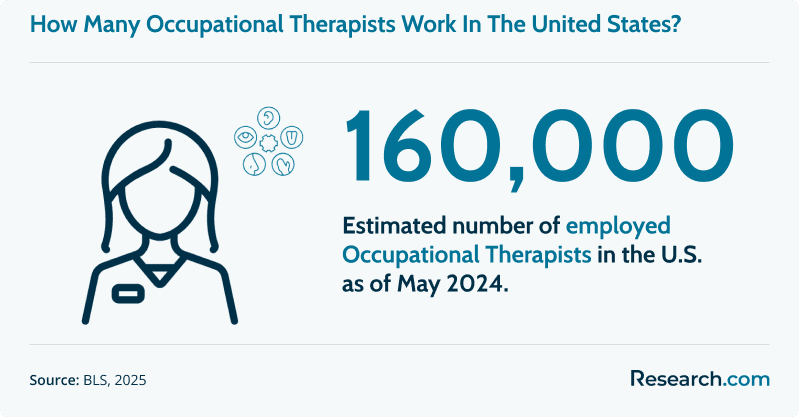
The infographic below highlights the national scale of this career path, showing the total number of Occupational Therapists currently employed in the United States.
3. What do COTAs and OTAs do day-to-day — what are their responsibilities and limits?
COTAs and OTAs support occupational therapists by carrying out treatment plans, assisting patients with daily living skills, and documenting progress, but they differ in their scope and level of independence. OTAs complete the accredited coursework and fieldwork but have not yet earned the NBCOT certification, while COTAs hold the credential that confirms their competence to practice under supervision.
Typical Responsibilities of COTAs and OTAs:
- Direct Patient Care: Assist patients with activities of daily living (ADLs), from dressing and grooming to mobility and feeding exercises, as outlined in individualized therapy plans.
- Therapeutic Interventions: Implement prescribed rehabilitation exercises, adaptive equipment training, or sensory activities in school, home health, or clinical settings.
- Documentation and Reporting: Record patient progress, note functional changes, and communicate updates to the supervising occupational therapist.
- Equipment Management: Fit and monitor the use of adaptive devices like wheelchairs, splints, and braces to support patient independence.
- Education and Support: Teach caregivers, teachers, or family members how to reinforce therapy goals at home or in community settings.
Limits:
- COTAs and OTAs cannot independently evaluate patients or create treatment plans; only licensed occupational therapists can do initial assessments and modify care goals.
- Their interventions must be supervised and signed off by an OT to ensure compliance with clinical and legal standards.
Day-to-day, a COTA might spend the morning in a skilled nursing facility running group exercise sessions, while an OTA in training might shadow an occupational therapist during evaluations and help prepare adaptive equipment for afternoon pediatric sessions. This split between hands-on care and supervised limits ensures both patient safety and practitioner development.
Much like in healthcare administration or construction industries, this division of duties aligns with choosing between should you get a certificate or degree in construction management, where both credentials lead to practical roles but vary in depth of responsibility and long-term advancement potential.
How does salary for OTAs/COTAs compare to full OTs and how does certification impact pay?
Certified Occupational Therapy Assistants (COTAs) and Occupational Therapy Assistants (OTAs) earn significantly less than fully licensed Occupational Therapists (OTs), primarily due to differences in education, licensure, and responsibility. According to the Bureau of Labor Statistics, the median annual salary for OTs is $98,340, with the top 10% earning about $128,740 and the lowest 10% earning $64,640. By comparison, most COTAs earn between $55,000 and $63,000 per year based on employer listings and aggregate data from Zippia and ZipRecruiter.
Certification makes a clear difference. OTAs without the NBCOT credential often work under provisional or supervised titles with limited earning potential. Once certified as COTAs, they typically qualify for higher pay, full-time roles, and benefits, since certification signals verified clinical competence and compliance with state licensure standards. Experienced COTAs working in skilled nursing facilities or home health settings tend to earn on the higher end of the range.
To reach higher income brackets, many assistants eventually pursue a master’s degree to become registered OTs—a pathway explored in guides on how to make six figures as a therapist.
The chart below compares salary percentiles for full OTs in the United States, showing the range of potential earnings across experience levels and career progression.
What is the job outlook and demand for OTAs/COTAs in 2027?
The job outlook for OTAs and COTAs in 2025 is exceptionally strong, reflecting broader growth in the rehabilitation and allied health fields. According to the BLS, employment for occupational therapists is projected to grow 14% from 2024 to 2034, much faster than the average for all occupations. This increase directly fuels demand for assistants who work under licensed therapists in hospitals, skilled nursing facilities, and home health agencies.
Several factors drive this trend. The aging U.S. population, rising rates of chronic conditions, and increased emphasis on long-term recovery and independent living have made therapy services indispensable. As OTs expand their caseloads, COTAs become essential for implementing treatment plans, documenting progress, and managing patient care continuity. This combination of accessibility and growing clinical need ensures sustained job security and advancement opportunities across the country.
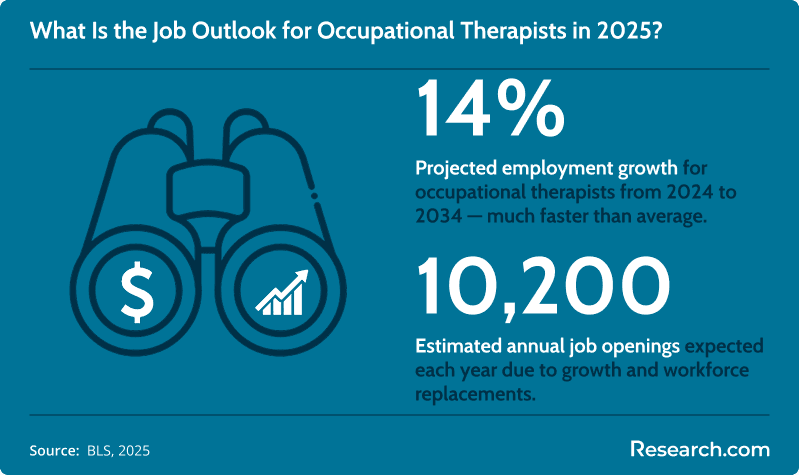
The infographic below highlights projected growth and annual openings, showing how rising demand for rehabilitation professionals translates into expanding opportunities for OTAs and COTAs nationwide.
This strong job growth trajectory parallels trends in technology and healthcare crossover fields such as difference between cybersecurity and data security, where new specializations emerge to meet the increasing complexity and demand of modern systems.
What are the pros and cons of becoming a COTA/OTA vs going full OT?
The main difference between becoming a COTA/OTA and a full Occupational Therapist (OT) lies in the level of responsibility, required education, and long-term earning potential. COTAs and OTAs can enter the workforce faster, but OTs enjoy higher pay and more autonomy in clinical decision-making.
Pros of Becoming a COTA/OTA:
- Faster entry into the field. Most OTA programs take about two years, compared to the master’s or doctorate required for OTs, which can take six or more years to complete.
- Lower educational cost. The average in-state tuition for OT graduate programs exceeds $11,000 per year, while associate programs cost significantly less.
- High job demand. With occupational therapy jobs projected to grow 14% from 2024 to 2034, assistants are seeing consistent employment opportunities across hospitals, schools, and home health care.
Cons of Becoming a COTA/OTA:
- Lower salary ceiling. Certified assistants earn less than licensed OTs—the median annual wage for OTs is $98,340, while OTAs generally earn 25–30% less.
- Limited independence. COTAs must work under OTs’ supervision and cannot conduct evaluations or develop treatment plans independently.
- Restricted advancement. Career progression is narrower without returning to school for a higher OT degree.
Overall, becoming a COTA/OTA offers a quicker and more affordable route into a growing healthcare field, while full OT licensure provides greater autonomy and long-term financial reward.
This trade-off between speed and scope of education is similar to the choice between MBA vs BBA which is better, where both paths can lead to rewarding careers—but one emphasizes early workforce entry while the other focuses on leadership and higher earning potential.
Can an OTA or COTA advance or transition into being an OT?
Yes. OTAs and COTAs can advance to become licensed Occupational Therapists (OTs) through bridge programs designed to recognize prior education and clinical experience. This transition typically involves earning a bachelor’s degree if not already held, then completing an accredited master’s or doctoral program in occupational therapy.
Most bridge pathways require a valid COTA license, professional work experience (often around 1,500 hours), and prerequisite coursework in anatomy, physiology, and psychology. After completing the program, candidates must pass the NBCOT exam for OTs and obtain state licensure. According to the BLS, occupational therapists earn a median of $98,340 per year, offering a clear financial incentive for assistants looking to advance.
While the process demands commitment and academic rigor, the result is increased autonomy and expanded career options, including supervisory or specialist roles. For reference, see Research.com’s guide on what degree do you need to be a therapist, which outlines similar educational progression models across healthcare fields.
What skills, certifications, or specialties can boost OTA/COTA career prospects?
Developing the right mix of technical and interpersonal skills is key for OTAs and COTAs who want to grow their careers and earning potential. According to ZipRecruiter, employers most often prioritize clinical proficiency, collaboration, and patient care experience.
Key Skills:
- Occupational Therapy Practice: Understanding treatment planning, patient evaluation, and rehabilitation techniques (31.01% of postings mention this).
- Clinical Experience: Working effectively in hospital, outpatient, or rehabilitation settings (13.77%).
- Rehabilitation Expertise: Supporting recovery and functional improvement for various conditions (12.37%).
- Collaboration and Communication: Working alongside OTs, nurses, and caregivers (7.67%).
- Documentation and Treatment Planning: Keeping accurate progress notes and adapting plans as needed (5.5–7%).
Valuable Certifications:
- COTA (NBCOT): Required for licensure and recognized nationwide.
- Certified Hand Therapist (CHT): For upper-limb rehab specialization.
- Assistive Technology Professional (ATP): For adaptive equipment and mobility support.
- CPR/BLS Certification: Often required in healthcare facilities.
Specializations That Enhance Career Prospects:
- Pediatrics – school-based therapy and early intervention.
- Geriatrics – home health, fall prevention, and adaptive living.
- Home Health and Neurorehabilitation – supporting long-term recovery.
For nontraditional career paths, see Research.com’s guide on can you become a therapist without a degree, which discusses alternative therapy routes that can complement or expand OTA credentials.
The chart below highlights the most common skills employers look for in OTs and OTAs — a good reference for setting professional growth goals.
What should you look for when choosing an OTA/COTA program?
When choosing an OTA or COTA program, the most important factors are accreditation, fieldwork opportunities, and cost. Accreditation ensures that the program meets professional standards required for licensure through the Accreditation Council for Occupational Therapy Education (ACOTE). Without it, graduates may not qualify for the NBCOT certification exam—a mandatory step to become a licensed OTA or COTA.
Key considerations when selecting a program:
- Accreditation: Verify that the school is ACOTE-accredited and recognized by NBCOT. This guarantees eligibility for licensure exams and quality instruction.
- Fieldwork Requirements: Look for programs that include Level I and II fieldwork placements. These provide hands-on clinical experience and mentorship under licensed OTs in hospitals, schools, or rehab centers.
- Tuition and Fees: Based on CollegeTuitionCompare, average annual costs are around $11,379 in-state and $33,643 out-of-state for undergraduate OT-related programs. Graduate programs average $11,368–$23,777 depending on residency.
- Program Duration: Most OTA programs take about 2 years to complete, while advancing to OT typically adds another 2–3 years of graduate study.
When evaluating options, consider aligning your specialization with long-term career goals. Research.com’s guide on in demand therapy specialization offers insight into areas with strong growth and competitive pay, such as pediatrics and geriatrics.
What challenges do COTAs/OTAs face?
COTAs and OTAs face several professional challenges despite their essential role in patient recovery and care delivery. The most common include supervision requirements, scope-of-practice restrictions, and limited upward mobility compared to fully licensed Occupational Therapists (OTs).
Key challenges include:
- Mandatory Supervision: COTAs must work under the direction of an OT, which limits their autonomy in clinical decision-making and treatment planning. They can implement plans but cannot independently modify them without OT approval.
- Scope Limitations: While OTAs handle direct patient interaction and documentation, only OTs can conduct evaluations and determine treatment goals. This dependency can restrict practice flexibility, particularly in smaller facilities.
- Career Ceiling: Advancement options for COTAs are often limited unless they pursue additional education to become OTs. Although COTAs can specialize in pediatrics, geriatrics, or hand therapy, managerial or academic roles typically require a master’s degree.
- Pay Gap and Workload: According to BLS, full OTs earn a median of $98,340, while assistants earn significantly less, reflecting differences in education and responsibility.
For those aiming to break through these ceilings, Research.com’s guide on the fastest way to become a therapist outlines strategic educational routes to progress quickly toward independent practice.
The chart below highlights tuition and cost considerations for OT-related programs, emphasizing how financial barriers can compound these professional challenges.
Here's What Graduates Have to Say About Their Careers in COTA or OTA
- Marisol: "Taking my OTA courses online gave me the flexibility to balance family and study without sacrificing clinical training. The hands-on fieldwork paired with virtual simulations helped me build confidence before entering a real rehab setting. Now, I work full-time in home health and love seeing patients regain independence every day. "
- Keiran: "The online program prepared me more than I expected. I learned documentation, adaptive equipment use, and treatment planning while working part-time. Once I passed the NBCOT exam, I landed a hospital role in less than a month. It’s rewarding to know my support directly improves people’s quality of life. "
- Delyse: "I transitioned into occupational therapy assisting after studying online during the pandemic. The flexible format made it possible to keep my job while training for a new career. Working as a COTA now, I see how vital our role is in rehabilitation teams—and it’s truly fulfilling work. "
Key Findings
- Occupational Therapists earn a median annual salary of $98,340, with the top 10% making $128,740.
- The projected job growth for OTs is 14% (2024–2034), adding about 10,200 new openings each year.
- COTAs must pass the NBCOT exam after completing an accredited associate program, while OTs need a master’s degree.
- Certification significantly boosts pay, with COTAs typically earning $50,000–$53,000, compared to OTs earning nearly double that amount.
- The average OT program cost ranges from $11,000 (in-state graduate) to $33,000 (out-of-state undergraduate).
- Top skills employers seek include Occupational Therapy (31.01%), Clinic (13.77%), and Rehabilitation (12.37%).
References:
- American Journal of Occupational Therapy (AJOT). Scoping Review of the Global Occupational Therapy Workforce.
- American Occupational Therapy Association (AOTA). Physical Rehabilitation Advanced Certification Program.
- American Occupational Therapy Association (AOTA). Board Certification in Physical Rehabilitation Pass Rate.
- Bureau of Labor Statistics (BLS). Occupational Therapists.
- CollegeTuitionCompare. Occupational Therapy/Therapist Major Tuition and Costs.
- Pass The OT. Occupational Therapy Assistant Job Opportunities.
- ZipRecruiter. Occupational Therapist Resume Keywords and Skills.
- Zippia. Occupational Therapist Overview.
Other Things You Should Know About COTA vs. OTA
In 2027, aspiring Certified Occupational Therapy Assistants (COTAs) typically complete a two-year associate degree program, while Occupational Therapists (OTAs) pursue a master's degree, which generally requires six years of study. Both must pass a national certification exam and fulfill continuing education for professional development.
Yes, many accredited institutions now offer hybrid or fully online OTA programs approved by the Accreditation Council for Occupational Therapy Education (ACOTE). These programs combine online coursework with required in-person fieldwork in clinical settings. This setup allows students to balance work or family responsibilities while earning a recognized, licensure-eligible degree.
In 2027, the average salary for a Certified Occupational Therapy Assistant (COTA) is around $48,000, while an Occupational Therapy Assistant (OTA) typically earns about $60,000. Salary may vary based on location, experience, and specific job settings.


