
2027 Online BA in Psychology - General Psychology: How to Evaluate Career Support for Students with No Related Experience
Audited and Verified:
Our Editorial and Data Verification Process
Research.com uses government datasets, official education statistics and primary institutional information to support its career and degree guides. Our review process checks factual accuracy, occupational definitions, source dates and the requirements associated with the credentials discussed.
How This Article Was Fact-Checked
Our editorial team verifies salary estimates, employment projections, education requirements and program information against original data providers and official organizations. Salary figures are checked against the relevant occupational definitions and reporting periods. Information about licensure, accreditation and required in-person training is reviewed separately.
Fact-checked and verified on:

Co-Founder and Chief Data Scientist
If you have no psychology-related work experience, an online BA's career services can matter as much as its course catalog. A résumé review will not, by itself, help you find a first research project, community placement, or entry-level employer.
This guide shows you how to distinguish accessible, structured career support from broad promises, what evidence to request before enrolling, and when a different route may be more direct. You can use the same questions to compare programs even if their websites describe career services differently.
Key Things You Should Know
- Prioritize programs that help beginners secure relevant experience - not just programs that advertise a job board or résumé appointments.
- Ask for evidence specific to online psychology students: placement access, supervision arrangements, graduate destinations, and whether services remain available after graduation.
- A general psychology BA commonly involves about 120 semester credits, but neither that degree nor career support qualifies a graduate to practice as a licensed psychologist.
What is an online bachelor's degree in general psychology?
An online BA in general psychology is an undergraduate degree covering psychological science across multiple areas rather than training for one licensed occupation. Students typically study behavior, development, social processes, research methods, and statistics alongside general education courses. A BA may leave more room for humanities or social science electives than a particular BS, but the actual curriculum - not the letters on the diploma - determines the difference.
"Online" describes how courses are delivered, not whether every opportunity is remote or self-paced. Research meetings, group projects, internships, and exams may have scheduled or local requirements. When comparing psychology degrees available through online study, check the requirements for the exact general psychology program and entry term.
For a student starting without related experience, the most valuable flexibility is often the ability to choose electives and projects that build evidence for a target role. Breadth is useful if you are still exploring; it is less useful if a program offers no realistic way to turn coursework into supervised experience.
Can you become a psychologist with an online psychology bachelor's degree?
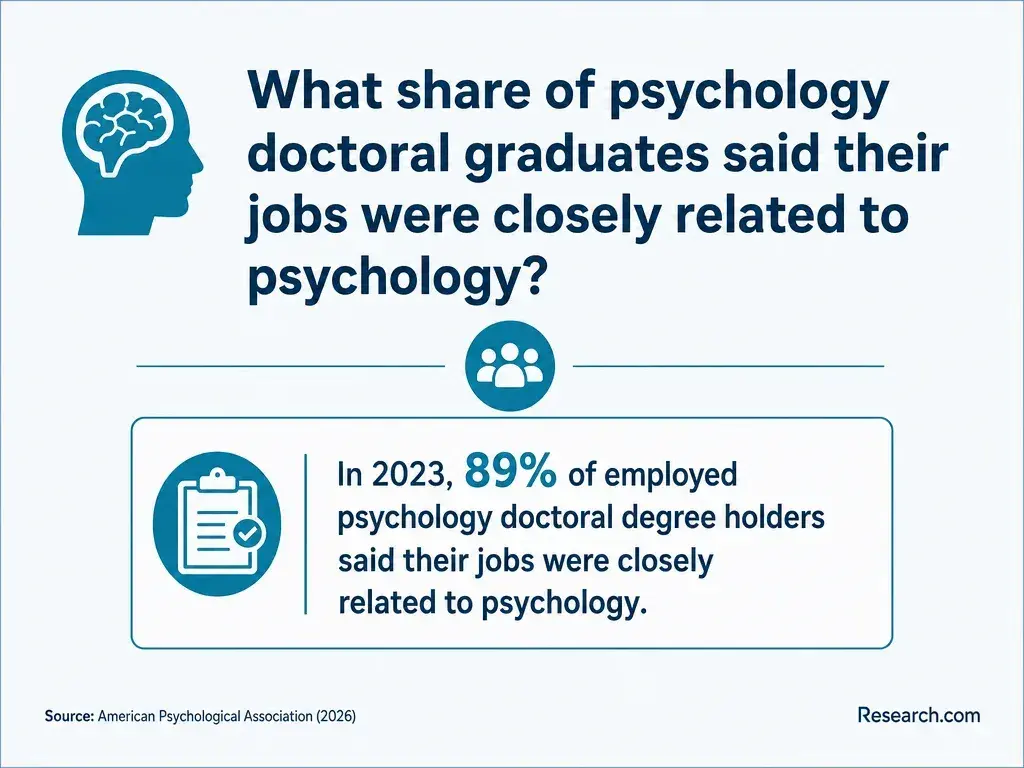
No. A psychology BA can provide academic preparation for further study, but it does not authorize someone to diagnose conditions, provide psychotherapy, conduct independent psychological assessments, or use a protected psychologist title. Psychologist licensure generally requires qualifying doctoral education, supervised experience, and examinations under the applicable state's rules. Other licensed mental-health careers have different educational pathways.
If your goal is therapy rather than nonclinical support work, compare the BA's preparation with the admission requirements of an appropriate professional graduate program. For example, faster completion planning for accredited clinical counseling study concerns a distinct pathway; an accelerated timeline does not replace required clinical training or state licensing checks.
Career services should describe these boundaries plainly. Treat claims that a psychology bachelor's degree prepares you to "work as a psychologist" without explaining subsequent training as a warning sign.
How can students without experience evaluate career support in online psychology programs?
Start with your likely first role, even if it is provisional: research support, human services, community outreach, or an organizational role. Then ask whether the program helps an inexperienced student produce the qualifications employers request. A service is more valuable when it is accessible online, available early enough to shape course choices, and connected to a supervised opportunity or a realistic hiring process.
The comparison below separates services that sound similar in advertising but solve different problems. Use it to identify what each school can actually document.
| Support feature | Evidence worth requesting | Limitation to check |
| Career advising | Psychology-relevant advising appointments and a first-year plan for students without experience | General résumé help may not identify suitable entry-level roles. |
| Experience access | Examples of approved internships, research roles, or community projects accessible to online students | A placement listing is not a placement guarantee; some roles are unpaid or in person. |
| Faculty and site support | Who approves sites, supervises work, assesses learning, and helps when a site falls through | Students may have to find their own site and meet separate eligibility rules. |
| Employer preparation | Interview practice and feedback on role-specific writing, data, or service skills | An employer partnership does not establish that beginners are hired. |
| Outcomes reporting | Results for online psychology students, including cohort size, response rate, and job types | School-wide employment figures may hide missing responses or unrelated jobs. |
Ask an advisor for the catalog policy and a recent example of the process, not a promise about your personal outcome. The most revealing questions follow the path from enrollment to a first application:
- When can a student with no prior experience meet a psychology-informed career advisor, and what plan will that advisor help build?
- Which research or nonclinical placements accept online students, who finds the site, and are there location, schedule, background-check, or unpaid-work requirements?
- Can you show how a student receives faculty feedback on a project and presents permitted work to an employer without exposing participant or client information?
- How are online psychology graduates' outcomes measured, and what proportion of the group answered the survey?
A good answer may differ by goal. Someone pursuing addiction-service support, for instance, should check local credential and employer requirements before assuming an internship or planning a degree focused on addiction counseling will qualify them for counseling duties. If a school cannot describe a credible route to your first relevant experience, its career-support package may be too thin for your starting point.
Online delivery does not inherently make a degree less credible. Employers and graduate programs can instead examine the institution's accreditation, the curriculum, your performance, and evidence that you can do the work. For a beginner, the practical difference is access: campus students may encounter labs and local organizations informally, while online students may need deliberate introductions and approved remote or local options.
Ask whether online students can join faculty research, receive meaningful project feedback, and obtain recommendations from instructors who know their work. Also confirm any live sessions or campus visits. These checks apply even when comparing specialized options such as forensic psychology bachelor's study with accelerated pacing: a faster online format says little about experience access or professional authority.
Programs commonly include introductory psychology, statistics, research methods, and coursework in areas such as development, cognition, social psychology, biological psychology, and psychological disorders. General education and electives make up a substantial part of the degree. Requirements and course availability vary, so inspect the degree map rather than assuming every listed elective runs each term.
If you have no experience, identify courses that create demonstrable, appropriate work: analyzing a public dataset, writing a research brief, or evaluating published evidence. Ask whether an internship, supervised research course, or capstone is required, optional, or unavailable online. A project can demonstrate reasoning and communication; it is not a substitute for supervised client work or permission to use confidential records.
Choose electives against an actual goal. Addiction-focused undergraduate psychology degrees may offer useful subject matter for prevention or support roles, but studying addiction does not itself confer a counseling credential.
Verify that the institution offering the degree has recognized institutional accreditation and that the accreditation covers the school and credential you intend to attend. Check the accreditor and the institution's status directly with the accreditor or the U.S. Department of Education's accreditation database. Confirm the specific program's catalog listing as well; accreditation alone does not verify its career services, internship access, or outcomes.
Do not reject a general psychology BA because it lacks American Psychological Association program accreditation. APA accreditation applies to specified professional psychology training programs and internships, not general psychology bachelor's degrees. The distinction also matters if you later explore fast-paced master's study in psychology: verify what the actual graduate credential prepares you to do rather than treating institutional accreditation as proof of licensure eligibility.
First-year applicants generally need evidence of secondary-school completion and whatever academic records the institution requires. Transfer applicants usually submit transcripts from prior colleges; a school may have separate rules for admission to the psychology major. Test, GPA, application, and prerequisite policies vary, so use the requirements for your intended entry term.
If you have completed college courses, request a written degree audit showing which credits satisfy general education, psychology, statistics, research methods, electives, and residency requirements. Accepted credit does not necessarily replace a required course. That distinction can change both your graduation date and your access to advanced projects. Before choosing planning an intensive online psychology degree, confirm when required methods courses run and whether an internship can fit the proposed schedule.
No related job experience is not usually the same as an admissions barrier. It does, however, make early access to experience-building support more important once enrolled.
A bachelor's degree commonly totals about 120 semester credits and is often planned across four years of full-time study. Transfer credit, part-time enrollment, course sequencing, and institutional residency rules can substantially change an individual timeline. Ask for a term-by-term plan based on an official credit evaluation, not an advertised fastest completion time.
Calculate cost from the credits you still need, tuition charged for your enrollment category, mandatory fees, books, technology, and any travel or lost wages associated with placements. An unpaid internship can be a major cost even when its academic credit is included in tuition. When reviewing online psychology programs ranked by affordability, compare your projected remaining cost and the experience opportunities available for that price - not a headline tuition figure alone.
If you would need to borrow substantially to enter a job that mainly requires supervised experience, compare the degree with lower-cost routes such as an entry-level support role, employer training, or targeted coursework. A BA may still be worthwhile for longer-term goals, but its career support must justify its cost for you.
Possible starting points include human-services support, community outreach, program coordination, and some research-support roles. Whether you qualify depends on the employer, location, duties, and competing applicants - not merely the degree title. The examples below show where a program's career support could help an applicant with no related experience close a specific gap.
| Potential role | Typical nonclinical work | Useful evidence to build |
| Social or human service assistant | Help people access services, maintain records, and support caseworkers | Supervised service experience, documentation, and knowledge of referral boundaries |
| Community outreach assistant | Support events, communication, and program participation | Accessible communication materials and a supervised community project |
| Research assistant | Support recruitment, data organization, or literature review under supervision | Methods coursework, careful data handling, and a faculty-reviewed work sample |
| Program assistant | Coordinate scheduling, reporting, and administrative tasks | Organization, spreadsheets, and concise written reports |
These are possibilities, not reserved jobs for psychology graduates. A research assistant opening may favor applicants with prior lab experience, while some support roles accept other majors or relevant work experience. Addiction-service positions may also have state-specific certification or supervision rules. If that is your goal, compare local job postings and credential requirements with substance abuse counseling bachelor's tuition and earning potential before paying for a general degree.
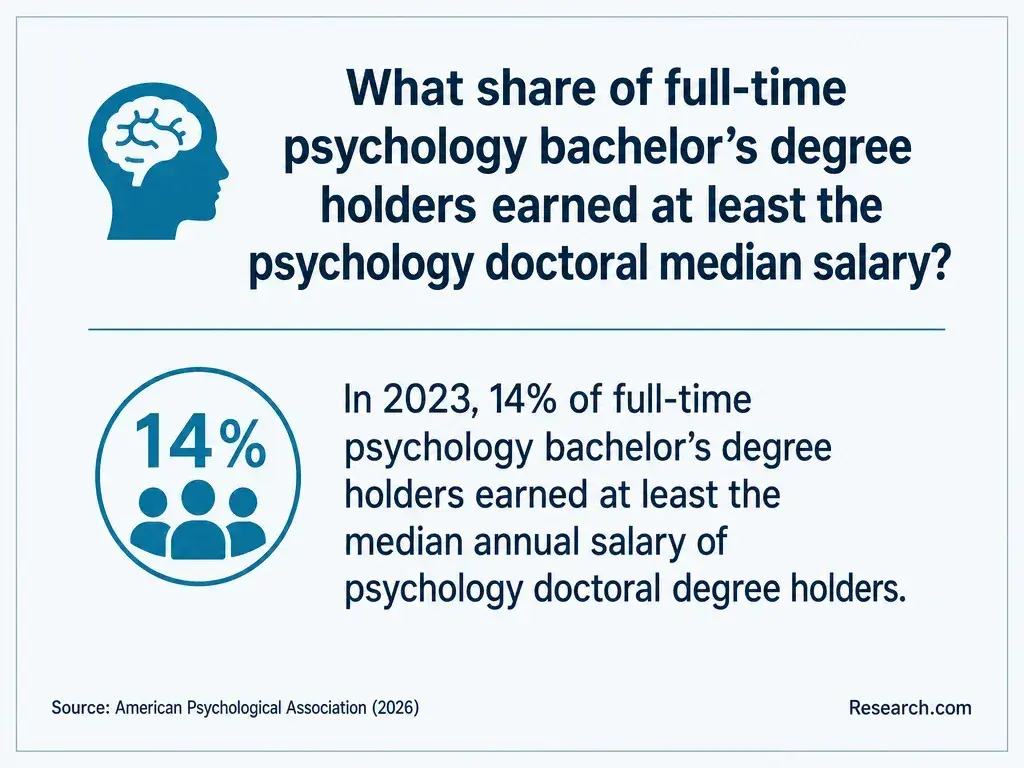
What salary and job outlook can psychology bachelor's graduates expect?
There is no single salary or job-growth figure for "online psychology BA graduates." The U.S. Bureau of Labor Statistics reports wages and projections by occupation, and people in an occupation may hold different degrees. Use its current Occupational Outlook Handbook entry for a specific target job, then read the typical entry requirements and duties before treating the figure as relevant to your plan.
For example, a social and human service assistant's occupation-wide median wage is not a starting offer for a new psychology graduate; employer, location, experience, and full-time status affect pay. A psychologist's wage is an even poorer proxy because a BA alone does not qualify someone for that licensed role. Ask each school whether its reported graduate salaries include only respondents, what jobs they hold, and when pay was measured.
Evaluate return on investment against the next credential your goal may require. If further nonclinical study is genuinely useful, psychology master's tuition comparisons can help frame that later cost. Do not assume a master's degree is necessary for an entry-level support job or that a general psychology master's leads to clinical licensure.
Other Things You Should Know About Psychology
It may strengthen applications when you can describe your duties and supervision. Ask the program separately whether it will award internship credit; volunteer work does not automatically satisfy academic placement rules.
No. Early advising leaves time to choose methods courses, seek faculty feedback, and apply for beginner-friendly experience before your final term.
Ask about approved remote research tasks and local roles in community organizations, schools, or service agencies. Confirm site and supervision requirements before relying on a remote opportunity.
Often, if it is your work and sharing is permitted. Remove confidential information, explain your contribution and methods accurately, and obtain any required faculty or site permission.
- Exploring the effectiveness of the Career Guidance and... - PMC https://pmc.ncbi.nlm.nih.gov/articles/PMC11534603/
- Full article: Internships and the graduate labour market: how upper-middle-class students 'get ahead' | tandfonline.com https://www.tandfonline.com/doi/full/10.1080/01425692.2021.1886051
- Psychology careers guide | apa.org https://www.apa.org/education-career/guide/careers
- Highlighting Transferable Skills When You Lack Direct Experience | Career Center https://career.charlotte.edu/blog/highlighting-transferable-skills-when-you-lack-direct-experience
- Careers in Psychology | Cal State LA https://www.calstatela.edu/nss/psychology/careers-psychology
- Career Outcomes - Psychology Major https://www.scranton.edu/academics/cas/psychology/professional-outcomes/careers-with-bachelors-degree.shtml
- Career Resources | University of Houston https://www.uh.edu/ucs/students/career-resources/
- How to Work Transferable Skills Into Your Resume | Wentworth Institute of Technology https://coopsandcareers.wit.edu/blog/2019/08/28/how-to-work-transferable-skills-into-your-resume/
- Discover Psychology Career Paths That Lead to Professional Success | Mount saint vincent https://online.mountsaintvincent.edu/degrees/undergraduate/bachelor-psychology/careers-for-professional-success/
- What Can You Do with a Psychology Degree? | Bellevue University https://www.bellevue.edu/articles/what-can-i-do-with-a-psychology-degree/


