
2027 How Much Do School Counselors Make: Salary & Job Growth

Co-Founder and Chief Data Scientist
School counseling is an ideal career path for students who are passionate about providing guidance, advocating for student well-being, and playing a critical role in shaping school communities. Today’s school counselors face increasing demands, with 73% identifying student mental health support as a primary focus of their time (YouScience, 2025).
As someone who has researched this field extensively, I know how important it is to understand the realities of this career. In this guide, my team and I will explore school counselor salary data, job growth trends, state and city comparisons, career advancement opportunities, and practical tips to help you plan a successful path forward.
What are the benefits of becoming a School Counselor?
- School counselors earn a stable income, with a median annual wage of $65,140 as of May 2024, providing financial security (Bureau of Labor Statistics [BLS], 2025).
- Employment is projected to grow 4% from 2024 to 2034, ensuring steady demand for qualified professionals (BLS, 2025).
- School counselors make a direct difference in students’ academic, social, and emotional success, creating a rewarding and purpose-driven career.
- What is the average School Counselor salary? Average Salary
- What benefits and perks do School Counselors typically receive? Benefits & Perks
- How does the School Counselor salary compare with that of other types of counselors? Salary Comparison
- Does a School Counselor salary differ across school settings? Does a School Counselor salary differ across school settings?
- What other factors affect School Counselor salaries? What other factors affect School Counselor salaries?
- What are the highest-paying cities or states for School Counselors? Highest-Paying States
- Does earning an advanced degree lead to a higher School Counselor salary? Does earning an advanced degree lead to a higher School Counselor salary?
- Can School Counselors advance to higher leadership or administrative roles? Career Advancement
- What are the best degree options for aspiring school counselors? What are the best degree options for aspiring school counselors?
- What is the job outlook for School Counselors? Job Outlook
- Can School Counselors transition into higher-paying related careers outside academe? Can School Counselors transition into higher-paying related careers outside academe?
What is the average School Counselor salary?
A school counselor salary varies based on experience, education, and location. Several reliable sources provide different but complementary data about average pay. Here is a summary of what they report:
- Bureau of Labor Statistics. The median annual wage for school and career counselors and advisors was $65,140 in May 2024. This means half of workers earned more than this amount and half earned less, with the lowest 10% earning under $43,580 and the highest 10% earning over $105,870.
- ZipRecruiter. Entry-level school counselors earn salaries ranging from $48,000 at the 25th percentile to $69,500 at the 75th percentile, with top earners in the 90th percentile making $82,500 annually. Salaries can be as low as $22,500 and as high as $96,000 nationwide.
- Zippia. The average salary for school counselors in the United States is $49,904 per year. Most school counselor salaries fall between $36,000 and $68,000 per year, with an average hourly wage of $23.99.
- Indeed. The average annual salary for school counselors is $63,246. Reported salaries range from $42,011 on the low end to $95,214 on the high end.
- Payscale. An entry-level school counselor with less than one year of experience earns an average total compensation of $51,016. Those with one to four years of experience earn an average of $55,194, while school counselors with 20 or more years of experience earn an average of $71,471.
It’s also worth noting that earning a master’s degree in counseling doesn’t limit you to school counseling roles alone. Many graduates pursue high-paying jobs you can get with a master's in counseling, such as clinical mental health therapist, marriage and family counselor, rehabilitation counselor, academic advisor, or behavioral health administrator. These expanded pathways can significantly increase long-term earning potential and career flexibility.
What benefits and perks do School Counselors typically receive?
They usually receive a comprehensive benefits package in addition to their base school counselor salary. These benefits often include:
- Health Insurance. School counselors typically receive medical, dental, and vision insurance. These benefits often include coverage for dependents and access to wellness programs.
- Retirement Plans. Most school counselors are eligible for pension plans or 401(k)/403(b) retirement savings plans. Employers often provide matching contributions, which help counselors build long-term financial security.
- Paid Time Off. School counselors generally receive paid vacation days, sick leave, and holidays. Many also enjoy extended time off during school breaks, depending on their school district’s calendar.
- Professional Development. Many employers provide funding for continuing education, workshops, or professional conferences. This support helps counselors maintain credentials and advance their careers.
- Job Stability and Union Representation. School counselors often benefit from strong job security due to the high demand for their role. In some districts, they may also have union representation, including the National Education Association (NEA) and the American Federation of Teachers (AFT), which can negotiate better pay and benefits.
In addition to these perks, school counselors often continue engaging with fields like educational psychology to better understand learning behavior, motivation, and student development. For anyone new to the field, asking what is educational psychology is a natural starting point, as this area of study helps counselors support students academically, socially, and emotionally by applying research-based strategies in real-world school settings.
How does the School Counselor salary compare with that of other types of counselors?
School counselors in the United States earn an average of $63,246 per year (Indeed, 2025), placing them below several other counseling careers that require advanced credentials or clinical practice.
For example, according to the highest-paying counselor jobs by Indeed (2025), counseling psychologists and sports psychologists both average around $231,227 annually, making them nearly four times as lucrative as the typical school counselor role. Clinical psychologists earn about $109,054 per year, offering a substantial salary increase for those willing to pursue a doctoral degree and clinical licensure.
Other related fields also offer higher compensation. Licensed clinical social workers average $87,347 per year, while family therapists or licensed marriage and family therapist salary is $86,284 annually, both comfortably above the national school counselor salary.
By comparison, a general therapist earns an average of $69,807 per year, which is only slightly higher than a school counselor but can grow substantially with private practice or specialization. These comparisons show that counselors who transition into clinical, therapeutic, or private-practice settings often have significantly higher earning potential than those who stay within the school system.
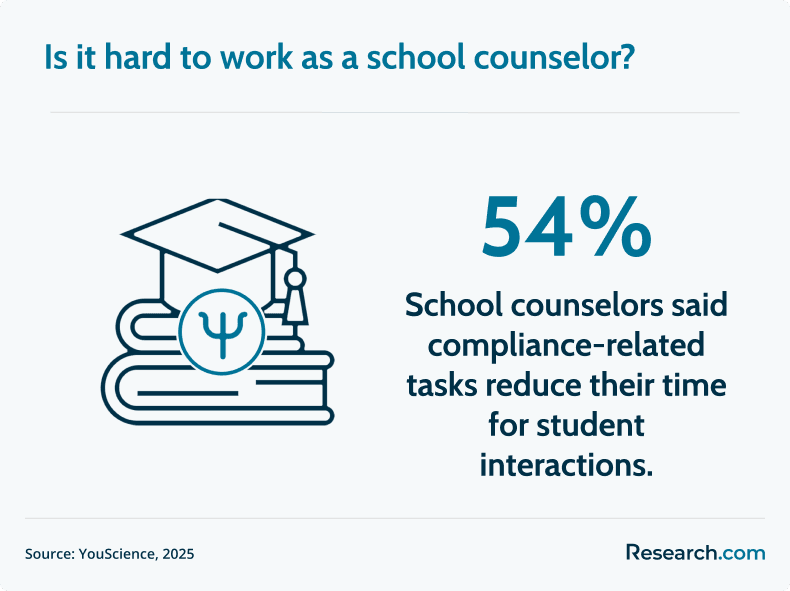
While a school counselor's salary is below other types of counselors, their workload is both demanding and highly impactful. According to the 2025 School Counselor Report, 54% of school counselors report that compliance duties take up a significant portion of their time, limiting opportunities for direct and meaningful student engagement (YouScience, 2025).
Does a School Counselor salary differ across school settings?
School counselor salaries vary depending on the type of school or educational setting. According to the data below, school and career counselors working in local elementary and secondary schools earn the highest median annual wage at $76,960.
Those working in private elementary and secondary schools earn a median wage of $62,090, while counselors in state and local colleges, universities, and professional schools earn about $60,170. Counselors in private colleges and universities make slightly less at $57,800, and those in other private educational services earn a median wage of $57,610.
Aspiring school counselors who want to maximize their salary should consider applying to public elementary and secondary school districts, as these positions consistently offer the highest pay.
Applicants should also research districts with strong funding and student support services, since well-funded schools are more likely to offer competitive salaries and benefits. Those who prefer higher education roles should target state or local colleges and universities, as they generally offer better pay than private institutions.
In the broader counseling field, many individuals explore different specializations over time. For example, some school counselors later pursue additional licensure to become Licensed Professional Counselors (LPCs). Understanding how much does an LPC make compared to school counselors can help professionals choose the path that best aligns with their financial goals and career interests.
What other factors affect School Counselor salaries?
Several factors influence how much a school counselor earns beyond just their school setting. These factors can include education level, years of experience, and even the state where they work.
- Education Level. School counselors who completed accelerated master's in educational counseling online with additional certifications typically earn higher salaries. Advanced education can also open doors to specialized or leadership roles that come with increased pay.
- Years of Experience. Counselors with more years in the field usually earn more than those just starting out. Salary schedules in many school districts reward longevity through step increases.
- Geographic Location. Salaries vary widely by state and city, with counselors in high-cost-of-living areas often earning more. States with strong school funding or counselor-to-student ratio requirements also tend to pay better.
- Type of Employer. Counselors working in public schools generally earn higher salaries than those in private schools or nonprofits. Employers with strong union representation often offer more competitive pay and benefits.
- Specialization or Additional Roles. Counselors who take on specialized duties, such as college advising or mental health counseling, may receive stipends or higher pay. Taking on leadership positions or department chair roles can also boost earnings.
What are the highest-paying cities or states for School Counselors?
Location plays a major role in determining a school counselor’s salary. States and cities with higher costs of living often offer higher pay to attract and retain qualified professionals. According to ZipRecruiter (2025), the highest-paying state for school counselors is Washington, where the average annual salary is $68,419.
This is followed closely by the District of Columbia at $68,264 and New York at $66,089. Other high-paying states include Massachusetts ($65,974), Alaska ($65,057), Vermont ($64,230), North Dakota ($63,918), Oregon ($63,870), Colorado ($63,521), and Hawaii ($62,762).
This data shows that location greatly affects a school counselor’s earning potential. Washington and the District of Columbia offer salaries about 8–10% higher than the national average, while states like North Dakota and Vermont provide competitive pay with lower living costs. School counselors should weigh both salary and cost-of-living factors to choose the best location for long-term financial stability.
High-paying cities also offer excellent opportunities for new school counselors to earn above-average salaries. The top five highest-paying cities for entry-level school counselor jobs are Berkeley, CA ($75,378), Barrow, AK ($75,256), Nome, AK ($74,937), San Francisco, CA ($71,172), and Oak Bluffs, MA ($71,127). Entry-level counselors starting their careers in these cities can earn well above the national average salary, making them attractive choices for those willing to relocate.
Does earning an advanced degree lead to a higher School Counselor salary?
Earning an advanced degree generally leads to a higher school counselor salary. Advanced degrees not only fulfill licensure requirements in most states but also place counselors on higher salary tiers within school district pay schedules, resulting in increased earnings over time. Some of the degrees and certifications you should consider to advance your career are:
- Master’s Degree in School Counseling. Degrees like the best master's in educational counseling online are the minimum requirement in most states and typically lead to licensure. Counselors with a master’s degree earn more than those with only a bachelor’s degree, as most school districts base their salary schedules at the master’s level.
- Education Specialist (Ed.S.) Degree. This post-master’s degree allows counselors to gain advanced expertise in school counseling or educational leadership. It often results in placement on a higher salary step and may qualify counselors for supervisory or coordinator roles.
- Doctor of Education (Ed.D.) or Doctor of Philosophy (Ph.D.). Counselors with a doctorate can move into leadership, administration, research, or higher education teaching roles. These positions typically offer significantly higher salaries compared to school-based counseling roles.
- Professional Certifications (NCC, LPC, LMHC). Earning certifications such as National Certified Counselor (NCC), Licensed Professional Counselor (LPC), or Licensed Mental Health Counselor (LMHC) can boost earning potential. These credentials can qualify counselors for clinical roles, private practice opportunities, or stipends offered by school districts for advanced credentials.
The data below shows that the vast majority of students in school counseling and guidance services programs earn a master’s degree (90.6%), making degrees like the fastest online master's in school counseling programs, the standard educational path for this career.
However, those who earn a research doctorate (2.79%) may gain a competitive advantage, particularly for roles in leadership, program development, or higher education settings. Having a doctorate can signal advanced expertise, potentially leading to faster promotions, specialized opportunities, and higher earning potential over the course of a career.
Can School Counselors advance to higher leadership or administrative roles?
School counselors can advance to higher leadership or administrative roles by gaining experience, earning advanced degrees, and pursuing additional certifications. These roles often come with greater responsibilities and higher salaries.
- Lead or Head School Counselor. This role involves coordinating the counseling program for an entire school or district. Lead counselors may mentor other counselors, manage caseloads, and develop comprehensive student support initiatives.
- School Counseling Program Coordinator. This position focuses on designing, implementing, and evaluating district-wide counseling programs. Coordinators often work with administrators to align counseling services with state and federal requirements.
- Assistant Principal or Principal. Counselors who earn an education leadership or administration degree can transition into school administration. These roles include overseeing staff, budgets, and school-wide initiatives.
- Director of Student Services or Guidance. This role involves managing counseling, special education, and student support teams across multiple schools. Directors are typically part of the district leadership team and influence policy decisions.
- Education Administrator or Superintendent (Long-Term Path). With extensive experience and advanced credentials, former counselors can move into senior leadership positions such as superintendent. These roles involve strategic planning, district management, and policy development.
For counselors who plan to pursue a doctoral degree to deepen their clinical expertise or position themselves for leadership roles, it can be helpful to understand admissions expectations. Some PsyD programs place emphasis on academic preparation, relevant experience, and personal fit rather than standardized tests. Researching factors like the PsyD in Counseling required GPA can help prospective students plan ahead and strengthen their graduate applications.
What are the best degree options for aspiring school counselors?
Evaluating degree options is crucial for building a strong foundation in school counseling. Prospective counselors should compare program curricula, accreditation statuses, and the balance between theoretical study and hands-on experience. Focusing on programs that emphasize counseling techniques, crisis intervention, and developmental psychology can position candidates for a competitive edge in the field. Additionally, exploring flexible learning opportunities and cost-effective pathways—such as the most affordable online counseling degrees—may provide financial advantages and accommodate diverse schedules.
What is the job outlook for School Counselors?
The job outlook for school counselors is positive, with employment projected to grow 4% from 2024 to 2034, about as fast as the average for all occupations (BLS, 2025). Each year, there are expected to be about 31,000 job openings for school and career counselors and advisors, driven by retirements, career changes, and the growing need for student mental health and academic support.
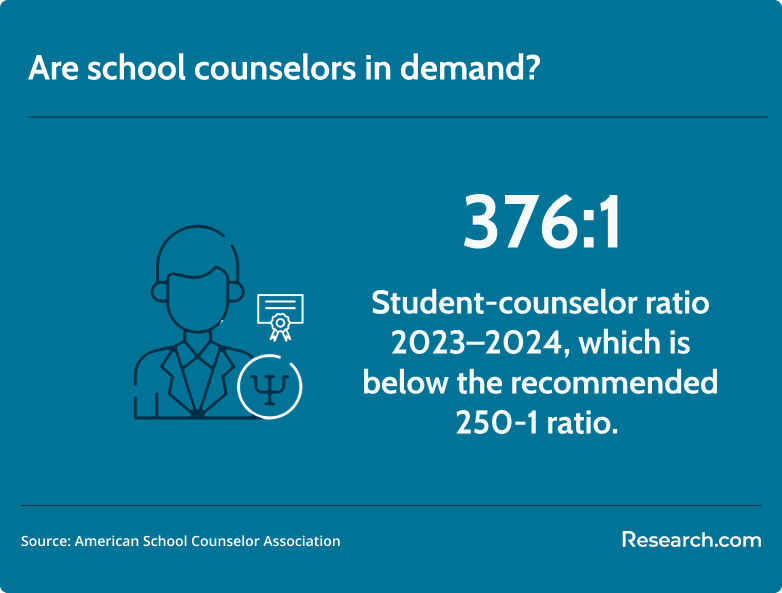
According to the American School Counselor Association (ASCA), the recommended student-to-counselor ratio is 250-to-1, but the national average remains much higher at 376-to-1 for the 2023–2024 school year (ASCA, n.d.). This significant gap suggests a strong demand for additional school counselors and may lead to increased hiring efforts, better job security, and potentially improved salaries in the future.
Can School Counselors transition into higher-paying related careers outside academe?
School counselors can transition into higher-paying related careers outside the academic setting, and doing so can often lead to a significant boost in overall earnings compared to the average school counselor salary. By leveraging their counseling expertise, communication skills, and knowledge of human development, they can pursue the following roles:
- Licensed Professional Counselor (LPC) or Therapist. School counselors who earn clinical licenses can open a private practice or work in mental health agencies. These roles often offer higher earning potential, especially for those who build a strong client base or specialize in high-demand areas like trauma counseling.
- Career Coach or Corporate Trainer. Counselors with expertise in career guidance can work for corporations, workforce development programs, or private firms. These roles typically involve designing employee development programs, providing career coaching, or conducting workshops, and they often pay more than traditional school-based counseling.
- Human Resources Specialist or HR Manager. School counselors can transition into HR roles, where their interpersonal and problem-solving skills are highly valuable. HR positions, particularly in management, usually offer competitive salaries and benefits for those with an accelerated online MBA in HR management degree or related field.
- College Admissions Consultant. Former counselors can use their experience with student advising to guide families through the college admissions process. Many admissions consultants operate independently and can set their own rates, potentially earning more than a school counselor salary.
- Nonprofit Program Director or Community Services Manager. Counselors can lead youth development programs, mental health initiatives, or social services organizations. These leadership positions often come with higher pay and opportunities for community impact.
Key Findings
- The lowest 10% of school counselors earn less than $43,580 annually, while the top 10% earn more than $105,870, showing a wide range of earning potential in this field.
- School counselors earn less than some other counseling professionals, with counseling psychologists and sports psychologists earning an average of $231,227 per year.
- School and career counselors employed in local elementary and secondary schools receive the highest median annual wage at $76,960, making this setting one of the most lucrative.
- The highest-paying state for school counselors is Washington, with an average salary of $68,419, followed closely by the District of Columbia ($68,264) and New York ($66,089).
- About 31,000 job openings for school and career counselors and advisors are projected each year, driven by retirements, career changes, and growing demand for student support services.
References:
- Data USA. (n.d.). School counseling & guidance services. Data USA. https://datausa.io/profile/cip/school-counseling-guidance-services
- Indeed. (n.d.). Highest paid counseling jobs. Indeed. https://www.indeed.com/career-advice/finding-a-job/highest-paid-counselling-jobs
- Indeed. (n.d.). School counselor salary. Indeed. https://www.indeed.com/career/school-counselor/salaries
- Payscale. (n.d.). School counselor salary. Payscale. https://www.payscale.com/research/US/Job=School_Counselor/Salary
- Zippia. (n.d.). School counselor salary. Zippia. https://www.zippia.com/salaries/school-counselor/
- ZipRecruiter. (n.d.). Entry level school counselor salary. ZipRecruiter. https://www.ziprecruiter.com/Salaries/Entry-Level-School-Counselor-Salary
- ZipRecruiter. (n.d.). School counselor salary by state. ZipRecruiter. https://www.ziprecruiter.com/Salaries/What-Is-the-Average-School-Counselor-Salary-by-State
Other Things You Should Know About School Counselor Salaries
In 2027, school counselors are expected to earn an average salary of around $60,000 to $70,000 annually, depending on factors like location, level of experience, and the educational institution. Urban districts often offer higher salaries compared to rural areas.
To become a school counselor in 2027, you typically need a master's degree in school counseling or a related field. This often includes completing coursework in counseling theory, ethics, and internships. State-specific certification may also be required.


