
2027 Educational Psychology: Theories, Principles & Applications Psychologists Should Know

Co-Founder and Chief Data Scientist
Educational psychology is the study of how people learn, develop, and adapt across different environments. It draws on theories of behavior, cognition, motivation, and social interaction to explain why individuals learn the way they do and how educators, psychologists, and organizations can support that process.
Whether working in schools, counseling centers, universities, or corporate training programs, knowledge of educational psychology helps professionals foster growth, improve outcomes, and apply evidence-based methods across diverse settings.
In this guide, I’ll take a closer look at educational psychology—the branch of psychology that explores how people learn, what motivates them, and which strategies lead to lasting growth.
Key Points About Educational Psychology
- Educational psychology explores how people learn, what motivates them, and how knowledge is retained.
- Major theories like behaviorism, cognitivism, constructivism, and humanism form the foundation for modern teaching and training practices.
- Principles such as motivation, assessment, memory, and metacognition guide how psychologists and educators design learning experiences.
- Applications extend beyond schools to include counseling, workplace training, instructional design, and corporate development.
- What are the foundational theories of educational psychology? Foundational Theories
- How do behaviorism, cognitivism, and constructivism shape learning? Theories That Shape Learning
- What principles of motivation and engagement are central to educational psychology? Main Principles
- What is the relevance of psychological theories to today's education landscape? Relevance
- How is educational psychology applied across different settings? Applications
- Do you need certification or licensure to work in educational psychology? Certifications
- How can professionals strengthen their expertise in educational psychology? How can professionals strengthen their expertise in educational psychology?
- What are the challenges of applying educational psychology theories in practice? What are the challenges of applying educational psychology theories in practice?
- What alternative approaches or models exist beyond traditional theories? What alternative approaches or models exist beyond traditional theories?
- What are the emerging trends shaping the future of educational psychology? What are the emerging trends shaping the future of educational psychology?
- How Does Educational Psychology Promote Equity and Inclusion in Diverse Learning Environments? How Does Educational Psychology Promote Equity and Inclusion in Diverse Learning Environments?
What are the foundational theories of educational psychology?
Educational psychology is built on several foundational theories that explain how people learn and how knowledge can be applied effectively. Each theory offers a different lens for understanding the learning process and continues to shape modern education, counseling, and training practices.
These frameworks are also highly relevant for fields that depend on strong learning and communication skills, such as speech-language pathology, where professionals often pursue advanced training through options like online speech pathology master's programs no GRE.
- Behaviorism: Focuses on observable behaviors and how they can be shaped through reinforcement and conditioning. Pioneers like B.F. Skinner and Ivan Pavlov demonstrated how rewards and consequences influence learning.
- Cognitivism Highlights the importance of mental processes such as memory, problem-solving, and information processing. Jean Piaget and Jerome Bruner showed how learners actively build knowledge structures.
- Constructivism: Emphasizes that learners construct knowledge through experiences and social interactions. Lev Vygotsky’s ideas about the zone of proximal development and scaffolding are central here.
- Humanism: Centers on personal growth, motivation, and self-actualization. Thinkers like Abraham Maslow and Carl Rogers stressed learner-centered approaches and the importance of meeting emotional as well as cognitive needs.
- Social Learning Theory: Introduced by Albert Bandura, this theory explains how people learn by observing others, modeling behaviors, and developing self-efficacy.
- Multiple Intelligences: Proposed by Howard Gardner, this theory suggests that intelligence isn’t a single measure but includes domains like linguistic, logical-mathematical, spatial, interpersonal, and more.
Together, these theories provide a comprehensive framework that psychologists and educators use to understand learning behaviors, design effective instruction, and address individual differences.
How do behaviorism, cognitivism, and constructivism shape learning?
Three of the most influential theories in educational psychology—behaviorism, cognitivism, and constructivism—offer distinct perspectives on how learning happens. Each has shaped teaching practices, counseling strategies, and training programs in meaningful ways. These theories are commonly introduced early in many psychology education pathways, and understanding them is often helpful when preparing to meet graduate school psychology requirements, since many programs expect applicants to demonstrate familiarity with foundational learning models.
- Behaviorism: Learning is seen as a change in behavior brought about by reinforcement or punishment. In classrooms, this translates into reward systems, structured routines, and behavior management strategies. In training settings, it underpins skill drills and performance-based feedback.
- Cognitivism: Focuses on the mental processes behind learning, such as attention, memory, and problem-solving. Teachers and psychologists apply this theory by breaking complex material into smaller, manageable chunks, using visual aids, and teaching learners how to process and organize information effectively.
- Constructivism: Argues that learners build their own understanding through active engagement and social interaction. This theory supports collaborative learning, project-based assignments, and scaffolding—where instructors guide learners step by step until they can work independently.
Together, these three perspectives help educators and psychologists design learning experiences that not only build knowledge but also encourage motivation, critical thinking, and long-term retention.
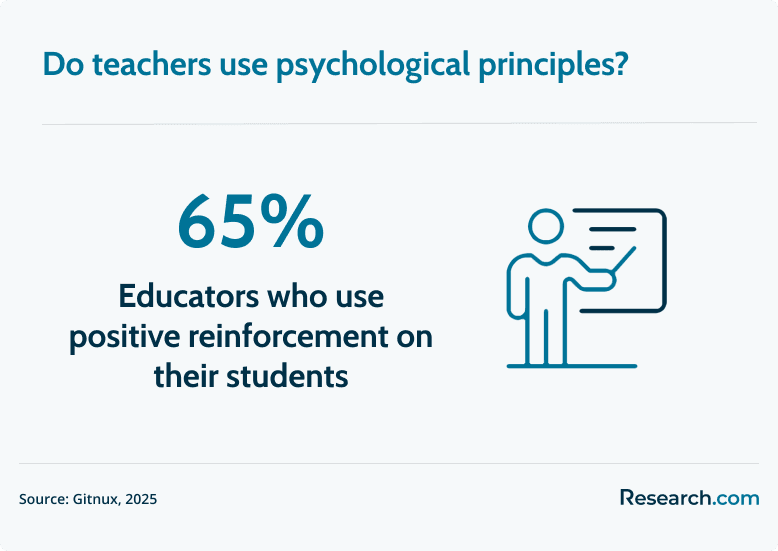
A recent study from Gitnux found that 65% of teachers use positive reinforcement as their primary behavior management technique in the classroom, and schools implementing Positive Behavior Interventions and Supports (PBIS) experience up to a 30% decrease in behavioral incidents.
What principles of motivation and engagement are central to educational psychology?
Motivation and engagement are at the heart of successful learning. Educational psychology identifies several key principles that explain why learners stay focused, put in effort, and achieve better outcomes.
These ideas are central not only in classrooms but also in advanced academic discussions, where students often ask questions like what is an EdS degree to understand how specialized programs connect theory to practice.
- Intrinsic vs. Extrinsic Motivation: Intrinsic motivation comes from genuine interest or enjoyment, while extrinsic motivation relies on rewards or external pressures. Both play a role in classrooms, counseling, and workplace training.
- Self-Determination Theory (SDT): Suggests that learners are most motivated when three psychological needs are met: autonomy (choice and control), competence (feeling capable), and relatedness (connection to others).
- Goal Orientation: Students with mastery-oriented goals focus on learning and improvement, while those with performance goals may be more concerned with grades or comparison to peers. Understanding this helps educators encourage healthier learning behaviors.
- Expectancy-Value Theory: Learners are more engaged when they believe they can succeed (expectancy) and see value in the task (value).
- Engagement Strategies: Practical applications include using active learning, providing timely feedback, relating material to real-life situations, and fostering a supportive learning environment.
By applying these principles, psychologists, teachers, and trainers can create conditions that boost both short-term effort and long-term persistence in learning.
What is the relevance of psychological theories to today's education landscape?
Psychological theories remain highly relevant because they provide the foundation for how educators, counselors, and trainers approach learning in an ever-changing world. While classrooms and workplaces have been transformed by technology, diversity, and new demands, core theories of learning continue to guide best practices.
These theories are also valuable for professionals transitioning into new roles—for example, someone moving from teacher to school counselor can rely on psychological frameworks to better understand student behavior, motivation, and social-emotional development.
- Adapting to Technology: Theories like constructivism support the rise of e-learning, online collaboration, and interactive platforms that emphasize active participation rather than passive absorption.
- Supporting Diverse Learners: Understanding principles of motivation, memory, and social learning helps educators create inclusive environments for students of different cultural, linguistic, and cognitive backgrounds.
- Data-Driven Instruction: Cognitive theories inform assessment design, feedback systems, and adaptive learning technologies that personalize education based on student performance.
- Real-World Transfer: Psychological frameworks ensure that what students learn is not only remembered but also applied effectively in professional, social, and personal contexts.
In today’s education landscape, psychological theories are not outdated—they are the blueprint that allows educators to interpret new challenges, integrate innovation, and prepare learners for success in a rapidly evolving society.
According to data from the Institute of Education Sciences (IES) which I've outlined below, 32% of students from 3 to 21 years old had a specific learning disability from the 2021 to 2022 school year.
How is educational psychology applied across different settings?
Educational psychology is versatile, shaping learning experiences in schools, clinical environments, and professional workplaces.
Its principles adapt to the unique needs of each setting and are particularly relevant for students exploring specialized training paths, including options like the shortest counselor education degrees online, which emphasize applying psychology directly to practice.
- Classroom Education: Teachers use theories of motivation, memory, and engagement to design lesson plans, manage classrooms, and address diverse learning needs. Strategies like scaffolding, active learning, and formative assessment stem directly from educational psychology research.
- Counseling and Clinical Practice: School and educational psychologists apply psychological principles to help students overcome learning difficulties, manage behavioral challenges, and develop coping strategies. In clinical practice, they assess learning disabilities, provide interventions, and collaborate with educators to support student success.
- Workplace Training and Development: In corporate and organizational settings, educational psychology informs instructional design, employee training, and leadership development. Principles such as adult learning theory, motivation, and feedback loops help professionals build skills efficiently and adapt to evolving job demands.
Whether in schools, counseling offices, or workplaces, educational psychology provides evidence-based methods to enhance learning, improve performance, and support personal growth.
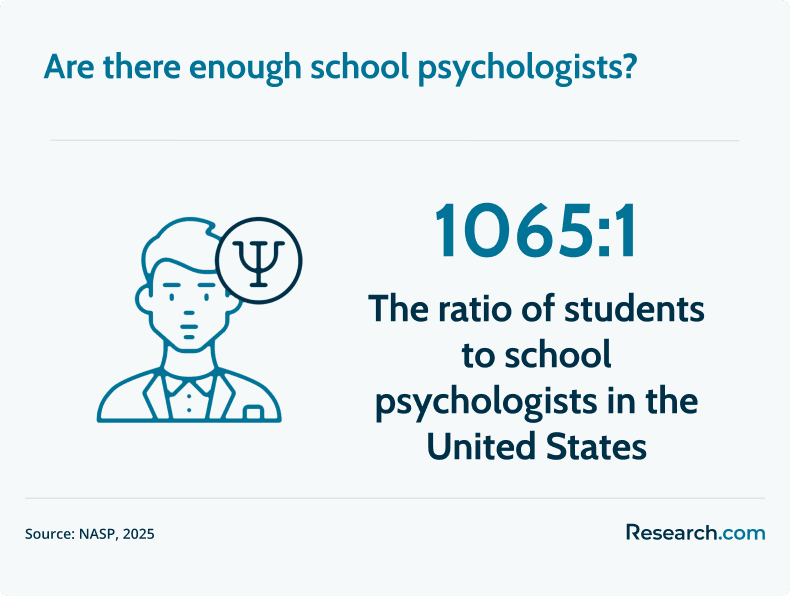
At the moment, each school psychologist has to support approximately 1,065 students.
Do you need certification or licensure to work in educational psychology?
The need for certification or licensure in educational psychology depends on the specific career path you choose. While some roles rely on applying educational psychology principles without formal credentials, others—especially clinical and school-based positions—require advanced training and legal licensure.
For those interested in related fields, such as teaching English as a second language, flexible study options like the fastest online ESL graduate certificate programs show how credentials can be earned efficiently to meet professional requirements.
- School Psychologists: In most regions, practicing as a school psychologist requires a specialist-level degree (such as an Ed.S. or master’s with additional coursework) and state licensure or certification. This ensures professionals are qualified to assess learning difficulties, provide interventions, and support student mental health.
- Clinical Educational Psychologists: Those working in private practice or healthcare settings typically need a doctoral degree (Ph.D. or Psy.D.), supervised clinical experience, and licensure from a state psychology board.
- Educators and Instructional Designers: Teachers, trainers, and instructional designers often use educational psychology principles in their work but do not need psychology-specific certification. Instead, they may hold teaching credentials, professional certifications in instructional design, or training development certifications.
- Higher Education & Research: Professors and researchers usually require a doctoral degree, but licensure is not necessary unless they also provide clinical services.
In short, careers that involve psychological assessment, counseling, or clinical practice almost always require certification or licensure, while careers in teaching, training, and research typically do not.
How can professionals strengthen their expertise in educational psychology?
Building expertise in educational psychology is a continuous process that blends formal education, practical experience, and ongoing professional development. Whether you’re a teacher, counselor, trainer, or researcher, several strategies can help deepen your knowledge and skills:
- Pursue Advanced Degrees: Graduate programs in educational psychology, counseling, or instructional design provide specialized training in theory, assessment, and applied practice.
- Engage in Professional Certification Programs: Credentials in areas like instructional design, applied behavior analysis, or school psychology can expand career opportunities.
- Stay Current with Research: Reading academic journals, attending conferences, and following leading researchers ensures you’re updated on new theories, interventions, and technological innovations.
- Gain Hands-On Experience: Internships, practicum placements, or workplace projects allow professionals to apply psychological principles in real-world settings.
- Network with Peers and Mentors: Professional associations, workshops, and online communities provide opportunities for collaboration and mentorship.
- Leverage Technology: Familiarity with e-learning platforms, educational apps, and data-driven tools can enhance your ability to apply psychology in modern educational environments.
Some professionals also explore specialized pathways, such as pursuing an accelerated graduate certificate in special education online, which allows them to quickly gain expertise in addressing diverse learning needs.
By combining formal study with continuous professional learning, practitioners can remain adaptable, effective, and competitive in careers that rely on educational psychology. The chart below shows the educational level of educational psychologists, indicating that the majority of educational psychologists have a masters degree.
What are the challenges of applying educational psychology theories in practice?
While educational psychology provides a strong framework for improving learning and development, applying its theories in real-world settings is not always straightforward. Professionals often face several challenges. For those interested in advancing their expertise, learning how to get a PhD in education can offer deeper training in bridging research and classroom practice, since doctoral programs emphasize applying theory to solve real instructional and organizational problems.
- Bridging Theory and Practice: Research findings don’t always translate neatly into classroom or workplace contexts, making it difficult to apply theories effectively.
- Individual Differences: Learners vary in background, motivation, abilities, and learning styles, so a single psychological approach rarely works for everyone.
- Institutional Constraints: Limited resources, rigid curricula, and standardized testing requirements can restrict the use of innovative, psychology-based methods.
- Resistance to Change: Teachers, administrators, or organizations may be hesitant to adopt new practices informed by psychology, preferring familiar approaches.
- Measuring Outcomes: The impact of educational psychology interventions—such as motivation strategies or instructional design—can be hard to quantify in the short term.
- Cultural Considerations: Theories developed in one cultural context may not align with the needs and values of diverse learner populations.
These challenges highlight the importance of adaptability, cultural sensitivity, and evidence-based practice when applying educational psychology in schools, counseling, or workplace training.
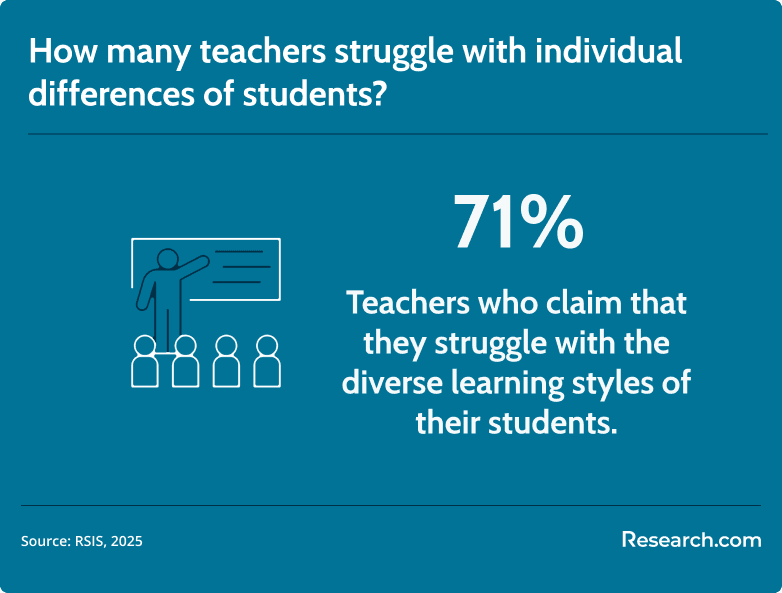
A recent study by the Research & Scientific Innovation Society (RSIS) found that 71% of teachers struggle with diverse learning styles.
What alternative approaches or models exist beyond traditional theories?
While foundational theories like behaviorism, cognitivism, and constructivism continue to guide education, newer and alternative models have emerged to address the complexities of modern learning environments. These approaches often blend psychology with technology, neuroscience, and social perspectives.
For students or professionals interested in applying these approaches at an advanced clinical level, exploring APA-accredited PsyD programs online no GRE can provide a more accessible pathway into counseling or clinical practice without additional standardized testing requirements.
Some examples of these alternative approaches include:
- Social and Cultural Learning Theories: Vygotsky’s sociocultural theory and later expansions emphasize the role of collaboration, language, and cultural context in shaping how people learn.
- Humanistic Approaches: Inspired by Maslow and Rogers, these models prioritize self-actualization, personal growth, and learner-centered environments that foster autonomy and well-being.
- Connectivism: A digital-age learning theory that views knowledge as a network, highlighting the importance of online resources, social media, and collaborative technologies.
- Neuroscience-Informed Models: Advances in cognitive neuroscience provide insights into how the brain processes information, linking memory, attention, and emotional regulation to learning strategies.
- Experiential and Project-Based Learning: These approaches focus on hands-on, real-world problem-solving and reflection, allowing learners to construct knowledge through lived experiences.
- Critical Pedagogy: Rooted in social justice, this model emphasizes empowering learners to question systems, address inequities, and apply knowledge for societal change.
These alternative models expand the reach of educational psychology, offering professionals more flexible, inclusive, and technology-driven ways to support diverse learners.
Key Findings
- There is over 1,000 students for every 1 school psychologist.
- About 32% IDEA students are affected by a specific learning disability.
- Approximately 71% of teachers struggle with the unique learning preferences of their students.
- The majority (71%) of educational psychologists have a masters degree.
- Roughly 65% of teachers use positive reinforcement.
What are the emerging trends shaping the future of educational psychology?
Recent developments indicate a significant shift toward integrating advanced technologies and interdisciplinary tools in educational psychology. Emerging trends include the use of artificial intelligence for personalized learning strategies, immersive simulations like virtual and augmented reality to replicate diverse learning environments, and enhanced data analytics for real-time feedback in educational settings. Additionally, practitioners are expanding their competencies by exploring new certification paths, such as pursuing the cheapest BCBA masters degree online, which aligns with the growing demand for behavior analysis in educational contexts. These advancements promise a more adaptive, data-driven, and inclusive approach to supporting learning across various environments.
How Does Educational Psychology Promote Equity and Inclusion in Diverse Learning Environments?
Educational psychology frameworks emphasize cultural responsiveness, social justice, and differentiated instruction as essential components for creating inclusive learning environments. Practitioners apply evidence‐based strategies to address systemic biases, actively engage diverse communities, and tailor interventions to meet varied linguistic, cultural, and socio-economic needs. These efforts enhance both academic outcomes and emotional well-being by ensuring that individual differences are respected and effectively supported. For professionals seeking advanced training that integrates these inclusive practices into clinical and educational settings, pursuing PsyD online programs offers an opportunity to deepen expertise in applying research-driven methodologies to real-world challenges.
References:
- Data USA. (2025). Educational Psychology. https://datausa.io/profile/cip/educational-psychology-422806
- NASP. (2025). State Shortages Data Dashboard. National Association of School Psychologists (NASP). https://www.nasponline.org/about-school-psychology/state-shortages-data-dashboard
- RSIS. (2025). Educational Philosophies and Teaching Methods Challenges of Junior High School Teachers - International Journal of Research and Scientific Innovation (IJRSI). International Journal of Research and Scientific Innovation (IJRSI). https://rsisinternational.org/journals/ijrsi/articles/educational-philosophies-and-teaching-methods-challenges-of-junior-high-school-teachers
Other Things To Know About Educational Psychology In Practice
In 2027, educational psychology emphasizes personalized learning and technology integration. Innovations like AI-driven adaptive learning platforms tailor educational experiences to individual students' needs, enhancing both engagement and efficacy. These tools allow for real-time feedback and ongoing adjustments, optimizing learning outcomes.
Absolutely. Theories of motivation, engagement, and cognitive processing are just as important online as in traditional classrooms. Educational psychology informs e-learning design, use of multimedia, interactive activities, and strategies to keep learners engaged remotely. It also helps tailor digital tools for diverse learners.
In 2027, ethical considerations in educational psychology research include ensuring informed consent, protecting participant confidentiality, and avoiding bias. Researchers must adhere to guidelines by entities like the American Psychological Association to maintain integrity and respect participant rights throughout the study process.


