
The Four Goals of Psychology for 2027

Co-Founder and Chief Data Scientist
Psychology is often introduced with a simple question: why do people think, feel, and act the way they do? The field answers that question through four connected goals: describing behavior, explaining its causes, predicting what may happen next, and using evidence to influence or improve outcomes. These goals matter whether you are studying for an exam, considering a psychology major, working in education or healthcare, or trying to understand human behavior in everyday life.
This guide explains the four goals of psychology in practical terms, with examples that show how they work in research, therapy, schools, workplaces, public policy, and personal decision-making. It also covers how psychology is used today, what ethical limits apply, and how psychology education can lead to different career directions.
Quick Answer: What Are the Four Goals of Psychology?
The four goals of psychology are to describe, explain, predict, and control behavior and mental processes. Psychologists first observe and define what is happening, then investigate why it happens, use evidence to estimate what may occur in the future, and apply research-based strategies to support healthier or more effective behavior. Like other scientific fields, psychology relies on observation, measurement, analysis, and evidence-based reasoning; students can review the meaning of empirical research to understand why research design is central to the discipline.
The Four Goals of Psychology: Article Guide
- What psychology studies and why it matters
- The four goals of psychology explained
- How advanced psychology degrees can support career growth
- How psychology appears in daily life
- Ethical standards in psychology research and practice
- When quick online psychology programs may make sense
- How short-term certificates may support psychology-related careers
- Current trends shaping psychology
- Psychology in social and community development
- How professional certification can strengthen a psychology career
- Factors that can influence earning potential in psychology
What Is Psychology?
Psychology is the scientific study of the mind and behavior. It examines how people think, learn, feel, develop, relate to others, make decisions, and respond to stress or change. The field includes many branches, including cognitive psychology, developmental psychology, social psychology, personality psychology, clinical psychology, educational psychology, industrial-organizational psychology, and neuropsychology. As summarized by Verywell Mind, psychology looks at how biological processes, social conditions, and environmental pressures shape behavior and mental life (Verywell Mind, 2026).
Psychology is not limited to therapy offices or research labs. Its ideas can influence how teams communicate, how teachers support learners, how marketers understand decision-making, and even how designers think about attention and usability in areas such as responsive web design. The same concern for user behavior can appear in practical tutorials, whether someone is learning how to create watermarks in PowerPoint or exploring how human behavior intersects with space, place, and geographic techniques and methods.
The roots of psychology reach back to ancient Greek and Egyptian thought, but it became a distinct scientific field in the early 1870s. A major milestone came in 1879, when Wilhelm Wundt established an experimental psychology laboratory in Leipzig, helping move the study of mind and behavior from philosophical debate toward systematic observation and experimentation.
Two early schools helped shape the field: structuralism and functionalism. Structuralism tried to identify the basic parts of conscious experience, while functionalism asked what mental processes do and how they help people adapt to their environment.
Modern psychology has moved far beyond those early approaches, but the same core question remains: how can researchers study subjective experience and observable behavior in a reliable way? Psychologists use case studies, experiments, surveys, interviews, assessments, observations, and statistical analysis to answer that question.
The American Psychological Association describes psychology as “the study of the mind, how it works, and how it affects behavior.” That definition is broad on purpose. Psychology includes brain function, emotion, learning, motivation, personality, culture, social behavior, mental health, workplace performance, and many other areas of human experience.
Students who want to study the field formally can compare programs by curriculum, faculty expertise, research opportunities, internship access, and accreditation. For example, learners exploring regional options may review resources on the best psychology colleges Texas offers, but they should also check whether a program matches their career goal, especially if they plan to pursue graduate study or licensure later.
Although psychology is strongly associated with mental health treatment, many psychology graduates work outside clinical practice. Psychology is used in education, business, human resources, public health, criminal justice, user experience research, social services, and policy work. The value of the field comes from its disciplined approach to understanding why people behave as they do and how environments can support better outcomes.
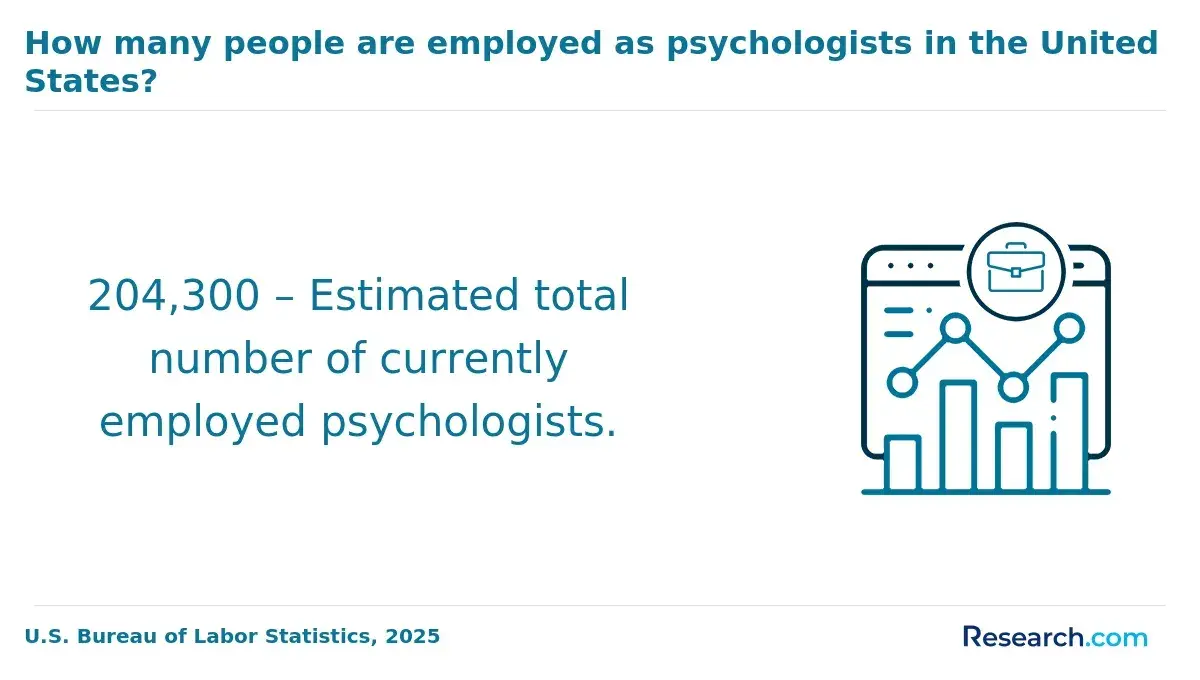
A degree in psychology can lead to several academic and professional paths, though many licensed psychology roles require graduate education and state-specific credentials. Students comparing career opportunities for psychology professionals should separate roles that require licensure from roles where psychology training is useful but not legally required. According to the employment categories shown in the BLS 2025 data below, clinical, counseling, and school psychologists are employed across schools, healthcare, self-employment, government, hospitals, and other industries.
Understanding the four goals of psychology helps students read research more critically. It also helps professionals ask better questions: What exactly is happening? Why might it be happening? What evidence suggests it may happen again? What intervention, if any, is ethical and appropriate?
| Goal | Plain-language meaning | Example question | Common methods |
| Describe | Identify what is happening as clearly and objectively as possible. | What behaviors, emotions, thoughts, or patterns are present? | Observation, surveys, interviews, case studies, assessments |
| Explain | Investigate why the behavior or mental process may be occurring. | What causes, conditions, or mechanisms are involved? | Experiments, theory testing, clinical assessment, statistical analysis |
| Predict | Use evidence to estimate what may happen under similar conditions. | Who is more likely to experience this outcome, and when? | Longitudinal research, screening tools, predictive models, trend analysis |
| Control or influence | Apply evidence-based strategies to change, reduce, support, or improve behavior ethically. | What intervention may help, and how should it be evaluated? | Therapy, education, prevention programs, workplace interventions, behavior-change plans |
What Are the Career Benefits of an Accelerated Psychology Education?
Accelerated psychology programs may appeal to students who want a faster route into graduate preparation, career change, or psychology-adjacent roles. A shorter timeline can be useful for working adults, but speed should not be the only factor. Students should confirm accreditation, faculty qualifications, course rigor, transfer-credit rules, internship or practicum expectations, and whether the program supports their long-term goal. An accelerated psychology degree online may be practical when it maintains academic quality while giving students flexibility in scheduling.
The Four Main Goals of Psychology
Most psychology courses introduce four major aims of the field: to describe, explain, predict, and control behavior (Coon, Mitterer, 2013). These goals are not separate boxes. In real research and practice, they build on one another. A psychologist cannot explain a behavior well without first defining it carefully, and ethical behavior change depends on accurate explanation and responsible prediction.
1. Describe: What Is Happening?
Description is the starting point of psychology. It involves observing and documenting behavior, thoughts, emotions, or symptoms in a way that is specific enough to study. Instead of saying a person is “stressed,” a psychologist might describe sleep changes, irritability, concentration problems, physical tension, work demands, and coping patterns.
To describe behavior, psychologists may use naturalistic observation, structured interviews, self-report questionnaires, case studies, surveys, or standardized assessments. The goal is to reduce vague impressions and replace them with evidence. Good description also helps distinguish between behavior that is common, behavior that is distressing, and behavior that may require professional support.
2. Explain: Why Is It Happening?
Explanation asks why a pattern occurs. This goal connects observations to possible causes, mechanisms, and theories. A psychologist studying test anxiety, for example, might examine prior academic experiences, perfectionism, sleep, family expectations, classroom environment, cognitive appraisals, and physiological arousal.
Psychological explanations can operate at different levels. Some theories focus on learning and reinforcement, others on cognition, development, personality, social influence, trauma, culture, biology, or the brain. Strong explanations are tested against evidence and revised when new findings challenge them.
Classical conditioning is a well-known example. Pavlov’s work showed how a neutral stimulus can become associated with a biologically meaningful stimulus, producing a learned response. This idea has been used to explain certain fears, emotional reactions, and habit formation.
John Watson helped popularize behaviorism in the United States and argued that behavior could be understood through patterns of stimulus and response. Contemporary psychology is broader than early behaviorism, but learning theory remains important in research, education, therapy, and behavior-change programs.
3. Predict: What Is Likely to Happen Next?
Prediction uses evidence from past and present patterns to estimate future behavior. Psychologists may predict who is at higher risk for burnout, which students may need academic support, how employees may respond to organizational change, or which treatment factors are associated with better outcomes.
Prediction does not always require a complete explanation. For example, if assessment data show that certain aptitude-test results are associated with student dropout risk, schools may use that information to identify students who need support. Psychology programs, including bachelor’s and masters in psychology online Texas options, often introduce students to research designs that examine patterns, correlations, and predictive relationships.
Prediction should be used carefully. A risk estimate is not a destiny. Ethical psychologists avoid treating people as fixed outcomes and instead use predictions to guide support, prevention, and informed decision-making.
4. Control or Influence: How Can Behavior Be Changed Responsibly?
The fourth goal is often called control, but in modern practice it is better understood as ethical influence or evidence-based change. Psychologists use research to reduce distress, improve learning, support healthier habits, strengthen relationships, increase workplace well-being, and design environments that help people make better choices.
Many behavior-change models are used in psychology and public health, including the health belief model, the theory of planned behavior, diffusion of innovation theory, social cognitive theory, the transtheoretical model, and social norms theory. These frameworks help professionals design interventions that match the behavior, population, and setting.
Successful behavior change usually depends on three steps: defining the problem clearly, identifying likely causes and barriers, and testing an intervention that is grounded in evidence. In clinical and community settings, psychologists must also consider consent, autonomy, cultural context, privacy, and the possibility of unintended harm.
| Scenario | Describe | Explain | Predict | Influence ethically |
| Student test anxiety | Record symptoms, timing, and triggers. | Examine study habits, beliefs, pressure, and past experiences. | Identify when anxiety is most likely to interfere with performance. | Teach coping skills, adjust study plans, or refer for support. |
| Workplace burnout | Document workload, exhaustion, disengagement, and turnover signals. | Analyze job demands, control, support, and organizational culture. | Estimate teams or roles at higher risk. | Improve workload design, manager training, and mental health support. |
| Public health behavior | Measure who follows or avoids a recommended behavior. | Study beliefs, access, norms, trust, and perceived risk. | Forecast groups needing more outreach. | Design culturally appropriate education and support strategies. |
| Relationship conflict | Identify communication patterns and conflict triggers. | Explore attachment, stress, expectations, and learned patterns. | Anticipate when conflict may escalate. | Use skills training, counseling, or structured communication tools. |
How Can Advanced Psychology Degrees Support Career Growth?
Advanced psychology study can deepen research skills, assessment literacy, statistical reasoning, and applied knowledge. For students aiming for licensed clinical, counseling, or school psychology roles, graduate education is typically part of the path, along with supervised experience and state requirements. For others, graduate training may support work in research, human resources, program evaluation, education, user research, social services, or organizational consulting. Students comparing flexible options should look beyond convenience; even an easiest masters degree online resource should be used alongside checks for accreditation, curriculum quality, career alignment, and outcomes transparency.
| Education path | Best fit | Important cautions |
| Associate or introductory coursework | Students testing interest in psychology or completing general education requirements. | Usually not enough for professional psychology roles by itself. |
| Bachelor’s in psychology | Students preparing for entry-level human services, business, research assistant, or graduate-school pathways. | Many psychology-specific licensed roles require further education. |
| Master’s-level study | Students seeking specialized applied, counseling-related, research, or organizational roles depending on program type. | Licensure rules vary by state and role; verify before enrolling. |
| Doctoral study | Students pursuing psychologist licensure, advanced research, academic careers, or specialized clinical practice. | Requires major time, cost, research, and supervised-training commitments. |
Psychology in Everyday Life
Everyday life is full of psychological questions. Why do people avoid difficult conversations? Why do habits persist even when they cause problems? Why do some teams collaborate well while others fall into conflict? Since Wundt’s 1879 laboratory, psychology has built a large body of evidence about the relationship among the brain, mind, behavior, and social context.
The four goals of psychology help organize these everyday questions. Description clarifies what is happening. Explanation identifies likely causes. Prediction helps anticipate patterns. Ethical influence guides practical steps to improve outcomes.
Improving Communication
Communication problems often begin when people interpret the same situation differently. Psychology helps explain how tone, body language, stress, personality, culture, and expectations shape conversations. Instead of assuming that conflict is simply a matter of bad intentions, psychological thinking encourages people to examine patterns and context.
A report by Virtual Speech Coach identifies spoken words, nonverbal cues, and tone of voice as key parts of communication. Psychological research helps people become more attentive to those signals and more careful in how they listen, respond, and repair misunderstandings.
Strengthening Relationships
Psychology can help people understand attachment, trust, similarity, conflict styles, social expectations, and emotional regulation. In relationships, the goal is not to label people but to recognize recurring patterns: what triggers conflict, what maintains closeness, and what helps people repair after disagreement.
Improving Work and Career Decisions
Workplaces use psychological principles in hiring, training, leadership, motivation, team design, employee well-being, and organizational change. Human resources and industrial-organizational psychology often focus on how to support performance without ignoring stress, fairness, and job satisfaction.
Understanding Other People
Psychology encourages people to look beyond surface behavior and consider context, motivation, emotion, learning history, and social pressure. Empathy is one example. It involves trying to understand another person’s experience, both emotionally and cognitively, without assuming that one’s own perspective is universal (“Psychology of emotional,” n.d.).
Building Realistic Self-Confidence
Self-esteem refers to a person’s overall sense of personal worth. Psychology studies how self-esteem develops, how it affects motivation and relationships, and why both very low self-esteem and inflated self-importance can create problems.
A Forbes article citing Zenger Folkman research reported that women tend to gain self-confidence with age compared with men’s confidence levels over time. The broader lesson is that confidence is not fixed. It can shift with experience, feedback, identity, support systems, and social expectations.
Psychological self-knowledge can help people identify strengths, notice harmful self-talk, set realistic goals, and seek support when needed. The point is not constant positivity; it is accurate self-understanding and healthier adjustment.
What Ethical Considerations Improve Psychology Research and Practice?
Ethics are essential because psychology often deals with vulnerable people, sensitive information, and decisions that can affect health, education, work, and legal outcomes. Core principles include informed consent, confidentiality, transparency, appropriate boundaries, cultural respect, accurate reporting, and protection from harm. Students exploring fast academic routes, including a 6 month degree course, should still expect rigorous instruction in ethics, research literacy, and responsible practice.
| Ethical issue | Why it matters | What responsible practice looks like |
| Informed consent | Participants and clients need to understand what they are agreeing to. | Use clear language about purpose, risks, limits, and voluntary participation. |
| Confidentiality | Psychology often involves private health, family, school, or work information. | Protect records and explain legal or safety-related exceptions. |
| Bias and fairness | Poorly designed research or assessment can misrepresent groups. | Use appropriate samples, culturally informed tools, and transparent limitations. |
| Evidence-based claims | Unsupported promises can harm clients and mislead the public. | Separate research findings from opinion and avoid guaranteed outcomes. |
What Are the Advantages and Limits of Quick Online Degrees in Psychology?
Quick online psychology programs can be useful for students who need scheduling flexibility, want to complete prerequisites, or are returning to school while working. However, faster does not automatically mean better. Before choosing among quick online degrees, students should ask whether credits transfer, whether the school is properly accredited, whether the curriculum prepares them for graduate study, and whether the program meets any career or licensure expectations in their state.
Can Short-Term Certifications Help a Psychology-Related Career?
Short-term certificates can strengthen targeted skills in areas such as crisis response, research methods, data analysis, behavioral support, trauma-informed practice, or workplace wellness. They are usually best viewed as supplements, not replacements for required degrees or licenses. Resources on 6 month online certificate programs for high paying jobs can help students compare options, but psychology learners should verify whether a certificate is recognized by employers, aligned with ethical standards, and appropriate for the work they want to do.
Emerging Trends in Psychology
Psychology continues to evolve as technology, healthcare access, workplace norms, neuroscience, and social expectations change. These trends do not replace the four goals of psychology; they create new settings where description, explanation, prediction, and ethical influence are applied.
1. Digital Therapy and Online Mental Health Tools
- Teletherapy and mental health apps: Online therapy and mobile mental health tools have expanded access to support, especially for people facing distance, scheduling, or mobility barriers. Quality varies, so users should check provider credentials, privacy practices, emergency procedures, and whether the service fits their needs.
- AI-supported tools: Chatbots and digital assistants are increasingly used for screening, reminders, psychoeducation, or low-intensity support. They should not be treated as a full substitute for licensed care when someone needs diagnosis, crisis support, or personalized treatment.
2. Neuropsychology and Brain-Behavior Research
- Neuroscience integration: Brain imaging, cognitive science, and neuroplasticity research continue to deepen understanding of how brain systems relate to attention, memory, emotion, learning, and behavior.
- Neurodiversity: Growing awareness of autism, ADHD, and other neurodevelopmental differences is encouraging more strengths-based, individualized approaches to assessment, education, and support.
3. Trauma-Informed Practice
- Complex trauma awareness: Schools, clinics, social services, and community programs increasingly recognize that trauma can affect attention, emotion regulation, relationships, health, and behavior.
- Evidence-informed trauma interventions: Approaches such as EMDR and somatic therapies are often discussed in trauma care. Responsible use requires appropriate training, careful assessment, and attention to client safety.
4. Cultural Competence and Equity
- Culturally responsive care: Psychologists increasingly consider race, ethnicity, language, religion, disability, gender, sexuality, migration history, and community context when conducting assessment or treatment.
- Social justice and systems thinking: Research and practice are paying closer attention to how discrimination, poverty, access to care, school systems, and workplace conditions shape mental health and opportunity.
5. Positive Psychology and Workplace Well-Being
- Strengths and resilience: Positive psychology examines well-being, meaning, gratitude, resilience, motivation, and human strengths, while still recognizing that serious mental health needs require appropriate care.
- Workplace mental health: Organizations are paying more attention to burnout, remote work challenges, psychological safety, work-life boundaries, and the relationship between well-being and performance.
Psychology’s Role in Social and Community Development
Psychology can support community development by helping leaders understand behavior at both individual and group levels. Its methods are useful for studying community stressors, designing prevention programs, improving service access, reducing stigma, and evaluating whether interventions actually help.
Community-focused psychology asks practical questions: What barriers keep people from seeking support? How do neighborhood conditions shape stress and health? Which messages are trusted by different groups? What interventions are culturally appropriate, sustainable, and measurable?
Professionals interested in community mental health, social services, and policy may also consider adjacent applied fields. For example, an online master's social work program may prepare students for roles that combine individual support, case management, advocacy, and systems-level practice.
At the community level, psychology is most useful when it avoids one-size-fits-all solutions. Effective programs are based on evidence, shaped by local voices, and evaluated over time.
What Is the Role of Professional Certification in a Psychology Career?
Professional certificates can demonstrate focused training, but their value depends on the field, employer, issuing organization, and legal requirements for the role. Some certificates strengthen skills in assessment, data analysis, coaching, behavioral support, trauma-informed care, or organizational practice. Students comparing accredited online certificate programs should confirm the credential’s reputation, prerequisites, scope of practice, and whether it complements or duplicates their degree plan.
What Factors Contribute to Higher Earning Potential in Psychology?
Earning potential in psychology depends on education level, licensure, specialization, location, employer type, experience, research or clinical expertise, and demand for the role. Advanced training in areas such as neuropsychology, industrial-organizational psychology, digital mental health, data-driven research, or specialized clinical practice may improve opportunities, but income is never guaranteed. Students exploring high-earning pathways can compare psychology with other options in guides to the best degrees to make 100k while considering debt, time to credential, and licensure requirements.
How to Use the Four Goals When Studying or Applying Psychology
The four goals are most useful when treated as a decision process. Before jumping to advice or conclusions, start with careful description. Then look for plausible explanations, test whether the evidence supports predictions, and only then consider intervention.
- Define the behavior clearly. Avoid vague labels. Identify what is observable, measurable, or reportable.
- Look for context. Consider biology, learning history, culture, relationships, stress, environment, and incentives.
- Separate evidence from assumption. Ask what data support the explanation and what alternative explanations exist.
- Use predictions responsibly. Treat risk patterns as guides for support, not as fixed judgments about people.
- Choose ethical interventions. Prioritize consent, safety, cultural fit, and measurable outcomes.
Common Mistakes When Learning About Psychology
| Mistake | Why it is a problem | Better approach |
| Confusing description with explanation | Observing a behavior does not prove why it happened. | Use evidence and consider multiple possible causes. |
| Assuming prediction means certainty | Human behavior is influenced by many changing factors. | Use predictions as probabilities, not guarantees. |
| Treating “control” as manipulation | Psychological influence can be unethical if it ignores consent or harm. | Focus on evidence-based, transparent, and voluntary change. |
| Overgeneralizing from one study or anecdote | A single example may not apply to other people or settings. | Look for replicated findings and clear limitations. |
| Choosing a program based only on speed or price | Fast or cheap programs may not meet career, transfer, or licensure needs. | Check accreditation, curriculum, faculty, outcomes, and state requirements. |
| Assuming all psychology degrees lead to licensure | Many psychology roles require graduate study and specific supervised experience. | Confirm requirements for the exact job title and state before enrolling. |
Key Insights
- The four goals of psychology are sequential: psychologists describe what is happening, explain why it may be happening, predict future patterns, and apply ethical strategies to influence outcomes.
- Description is the foundation: without clear observation and measurement, explanations can become guesses rather than evidence-based conclusions.
- Explanation requires theory and testing: psychology uses research methods to examine learning, cognition, biology, culture, social influence, development, and other causes of behavior.
- Prediction is useful but limited: psychological data can identify risk or likely patterns, but it should never be treated as a guaranteed outcome for an individual.
- Control should mean ethical influence: modern psychology emphasizes consent, well-being, evidence-based practice, cultural respect, and protection from harm.
- Psychology is broader than therapy: it informs education, business, public health, community work, communication, technology, and policy.
- Education choices require careful comparison: students should evaluate accreditation, career goals, graduate-school plans, licensure rules, cost, and program quality before choosing a psychology degree or certificate.
References:
- APA. (n.d.). Helping businesses and organizations. Retrieved March 2026, from Psychology: Science in Action.
- Cherry, K. (2026, February 5). What you should know about psychology. Retrieved March 2026, from Verywell Mind.
- College Factual. (2025). 2025 Psychology Degree Guide. College Factual.
- Cherry, K. (2026, February 12). The Major Goals of Psychology. Retrieved March 2026, from Verywell Mind.
- CareerProfiles (n.d.). Psychology careers, career opportunities, programs & job search resources. Retrieved March 2026, from CareerProfiles.com.
- Goldberg, G. (n.d.). Developing Empathetic Thinking. Retrieved March 2026, from Lesley University.
- McLeod, S. (2024, February 1). Classical Conditioning: How It Works With Examples. Simply Psychology.
- McLeod, S. (2024, September 3). What is psychology? Simply Psychology.
- U.S. Bureau of Labor Statistics. (2025). Psychologists: Occupational Outlook Handbook. BLS.
- Zenger, J. (2018, April 9). The confidence gap in men and women: Why it matters and how to overcome it. Forbes.
Other Things You Should Know About Psychology
Psychologists use various research methods, such as surveys, case studies, natural observation, and self-assessment tests, to observe and describe behaviors in detail. This helps them distinguish between normal and abnormal actions.
The purpose of explaining behavior is to understand the reasons behind individuals' actions. Psychologists use theories and scientific methods to uncover the underlying mechanisms and causes of behavior, providing a deeper understanding of human actions.
Predicting behavior is important because it allows psychologists to anticipate future actions and patterns based on past observations. This helps in planning, decision-making, and developing interventions to address potential issues.
Psychologists use the goal of control to influence or change behavior. This involves developing and implementing strategies, interventions, and therapies to promote positive behavior changes and improve mental health and well-being.
The goal of description is crucial in 2027 for understanding human behavior as it allows psychologists to systematically observe and record behaviors. By categorizing and detailing behaviors, psychologists can identify patterns, facilitating deeper analysis and a foundation for further psychological exploration and interpretation.


