
2027 What Do LPNs Do in Nursing Homes? Duties & Career Benefits

Co-Founder and Chief Data Scientist
Working in a nursing home can be one of the most demanding yet rewarding paths for Licensed Practical Nurses (LPNs). With nearly 1.85 million LPNs employed across the U.S. in 2027, many play critical roles in long-term care facilities where older adults require daily medical support and personal care.
This article answers common questions about what LPNs do in nursing homes, their key responsibilities, and the career benefits of this setting. By the end, you’ll know exactly what to expect if you choose this career path.
Key Things You Should Know About LPNs in Nursing Homes
- LPNs in nursing homes provide both medical care—like administering medications and monitoring vital signs—and personal assistance, including daily living support. They serve as the primary caregivers in many facilities, ensuring residents receive consistent attention and comfort while maintaining communication with registered nurses and physicians.
- The educational path to become an LPN is shorter than that of a registered nurse. Most complete a state-approved practical nursing program in about 12 months, followed by passing the NCLEX-PN exam. This makes the role an accessible entry point into healthcare with strong job demand.
- Nursing homes often rely heavily on LPNs because of ongoing workforce shortages. This environment offers steady employment, exposure to complex patient needs such as chronic illness and rehabilitation, and the opportunity to build strong patient-caregiver relationships that may not be as common in acute hospital settings.
- What do LPNs do in nursing homes? LPN Duties
- What qualifications and training do LPNs need to work in nursing homes? LPN Qualifications
- What is the typical daily schedule of an LPN in a nursing home? Daily Schedule
- What are the biggest challenges LPNs face in a nursing home setting? LPN Challenges
- What career advancement paths are available for LPNs in nursing homes? Career Advancement
- How much do LPNs in nursing homes earn (salary and benefits)? Salary & Benefits
- What is the job outlook and demand for LPNs in nursing homes? Job Outlook
- What is the difference between LPNs, RNs, and CNAs in a nursing home? LPN vs RN vs CNA
- What soft skills do LPNs need to succeed in nursing homes? What soft skills do LPNs need to succeed in nursing homes?
- What are the rewards and drawbacks of being an LPN in a nursing home? What are the rewards and drawbacks of being an LPN in a nursing home?
What do LPNs do in nursing homes?
LPNs in nursing homes provide daily medical and supportive care to residents under the supervision of doctors and registered nurses. Their work blends clinical responsibilities with personal care tasks that help maintain residents’ health and quality of life.
Here are the typical duties of LPNs in nursing homes:
- Medication administration: Dispensing prescribed drugs, monitoring effects, and recording outcomes.
- Vital signs monitoring: Checking blood pressure, temperature, pulse, and respiration regularly.
- Wound care and treatments: Cleaning, dressing, and monitoring healing of injuries or surgical sites.
- Assistance with daily living: Helping residents with bathing, dressing, mobility, and eating.
- Health documentation: Recording changes in condition, updating charts, and ensuring compliance with care plans.
- Supervising CNAs: Guiding certified nursing assistants who provide direct personal care.
- Resident and family communication: Explaining care plans, answering questions, and offering emotional support.
For context on how these responsibilities differ from RNs, see this comparison of licensed practical nurse vs registered nurse.
In nursing homes, LPNs are the backbone of daily resident care, balancing medical duties with compassionate support.
What qualifications and training do LPNs need to work in nursing homes?
To work in nursing homes, LPNs must complete formal training and obtain licensure before practicing. The essential qualification is graduating from a state-approved practical nursing program, which typically takes about one year to complete and covers both classroom instruction and clinical practice. For those curious about other specialized career paths that blend analysis and investigation, exploring what's a forensic accountant can offer insight into how financial expertise is used to uncover fraud and ensure compliance.
Key requirements and training include:
- Completion of an accredited LPN program: Offered at community colleges, vocational schools, and some universities.
- Clinical rotations: Hands-on training in hospitals, nursing homes, or clinics under supervision.
- Passing the NCLEX-PN: The national licensing exam required in all states for practice.
- State licensure: Meeting specific state board requirements, which may include background checks and continuing education.
- Basic certifications: Such as CPR and Basic Life Support (BLS), often required by employers.
- Soft skills development: Communication, patience, and organization, which are critical in long-term care.
Those interested should also consider LPN training cost when evaluating programs, as expenses can vary depending on location, institution, and format.
The table below shows the educational attainment levels of practicing LPNs today. It highlights that while many enter the field with associate or diploma credentials, others pursue higher education pathways to advance their careers in nursing homes and beyond.
What is the typical daily schedule of an LPN in a nursing home?
The typical daily schedule of an LPN in a nursing home revolves around direct patient care, medication administration, and communication with other healthcare staff. Their workday is structured around shifts, often lasting 8 to 12 hours, depending on the facility. For nurses or educators seeking to advance their leadership and academic qualifications later in their careers, an online EdD ABD completion program offers a flexible path to finishing a doctoral degree without starting over.
A common daily routine includes:
- Morning assessments: Checking vital signs, reviewing charts, and updating care plans.
- Medication administration: Distributing prescribed medications and documenting doses throughout the day.
- Wound care and treatments: Changing dressings, monitoring infections, and following treatment protocols.
- Assisting with daily activities: Helping residents with hygiene, mobility, and meals.
- Patient monitoring: Tracking behavioral or health changes and reporting to RNs or physicians.
- Documentation: Recording care activities, patient status, and incidents accurately.
- Family communication: Updating families on patient progress or concerns when needed.
- Evening wrap-up: Completing final medication rounds, handing off reports to the next shift.
This structured routine ensures consistent, safe, and personalized care for residents, while also balancing administrative and supportive responsibilities.
What are the biggest challenges LPNs face in a nursing home setting?
LPNs in nursing homes face challenges that affect both job satisfaction and quality of care. These challenges often stem from staffing shortages, high workloads, and the emotional demands of working with older adults in long-term care. Understanding the characteristics of a good nurse leader can help LPNs navigate these pressures more effectively, fostering teamwork, communication, and a supportive work environment.
Common challenges include:
- High workload and staffing shortages: Many nursing homes operate with fewer staff than needed, forcing LPNs to care for multiple patients at once. This increases stress and reduces time for personalized care.
- Emotional strain: Providing daily care to elderly residents, many with chronic illnesses or nearing end-of-life, can cause emotional fatigue and burnout.
- Limited career advancement: Surveys show financial constraints and personal obligations remain top barriers to furthering education, limiting opportunities for LPNs to transition into RN roles.
- Documentation and compliance demands: The balance between regulatory paperwork and hands-on care adds pressure to already full workloads.
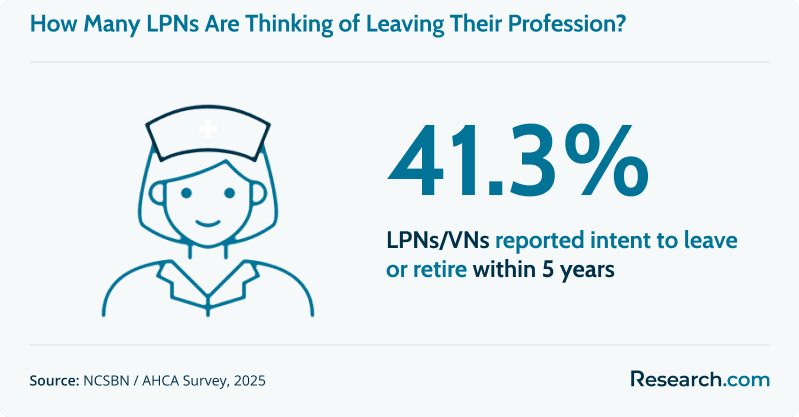
- Retention concerns: A national survey reported that 41.3% of LPNs and LVNs planned to leave or retire within five years, highlighting a growing workforce stability issue.
Recent surveys confirm these pressures are widespread. The infographic below captures the most concerning trend, showing the scale of attrition risk facing LPNs in the current healthcare landscape.
What career advancement paths are available for LPNs in nursing homes?
LPNs working in nursing homes have multiple career advancement paths that allow them to expand their skills, responsibilities, and earning potential. These paths often involve additional education, certifications, or bridge programs that move them into higher levels of nursing practice. Exploring different associates in nursing jobs can also help LPNs identify roles that align with their experience and serve as stepping stones toward becoming registered nurses or healthcare managers.
Common advancement options include:
- Becoming a Registered Nurse (RN): Many LPNs transition to RN roles by completing associate or bachelor’s degree programs. Bridge options, such as accelerated LVN to BSN programs online, allow working nurses to earn their credentials more quickly.
- Specialization through certifications: LPNs can pursue certifications in areas like gerontology, IV therapy, wound care, or palliative care, making them more competitive for specialized roles in nursing homes.
- Advancement into supervisory positions: Experienced LPNs may move into charge nurse or team lead roles, managing CNAs and coordinating patient care on their units.
- Transitioning to other healthcare careers: Some LPNs use their experience as a foundation to enter fields such as healthcare administration, case management, or nurse education.
By pursuing these opportunities, LPNs can build long-term career growth while continuing to provide vital care in nursing home settings.
How much do LPNs in nursing homes earn (salary and benefits)?
LPNs in nursing homes earn competitive wages that reflect their vital role in long-term care. According to the Bureau of Labor Statistics (BLS), the median annual wage for LPNs and LVNs was $62,340 in May 2024, with pay varying depending on experience, location, and employer. Those at the lower end of the pay scale, such as new graduates, earned around $47,960 annually, while the top earners brought in more than $80,510 per year.
In addition to salaries, LPNs often receive benefits like health insurance, paid time off, and retirement contributions. Some nursing homes also offer tuition assistance or reimbursement programs for LPNs who wish to advance their education, making the career path financially sustainable while opening doors for growth.
The chart below provides a clear breakdown of LPN/LVN salaries by percentile, helping prospective nurses understand earning potential at different career stages.
What is the job outlook and demand for LPNs in nursing homes?
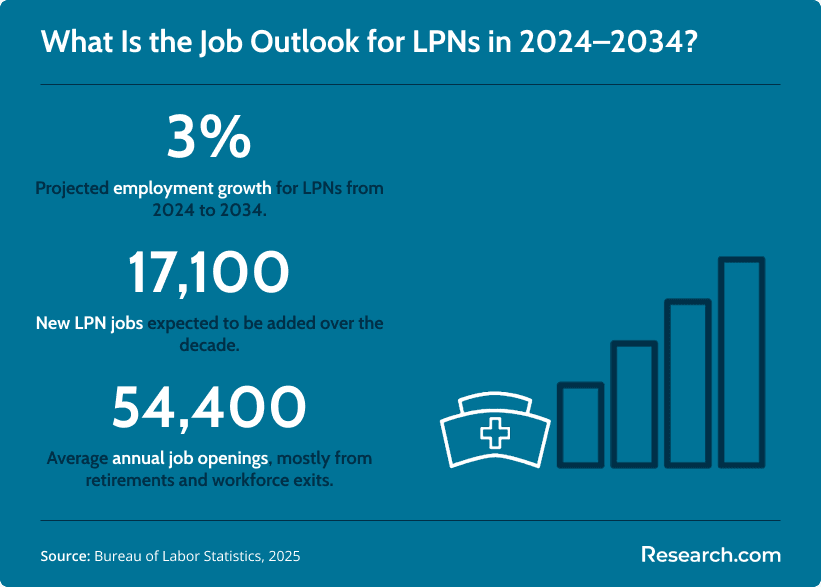
The job outlook for licensed practical nurses (LPNs) in nursing homes remains steady, with the Bureau of Labor Statistics projecting a 3% employment growth from 2024 to 2034. While this rate is slower than the average for all occupations, the demand is sustained by the aging population and the ongoing need for long-term care services. Nursing homes, assisted living facilities, and rehabilitation centers continue to rely on LPNs to provide hands-on care for residents who require daily medical support.
In addition to modest employment growth, replacement needs create significant opportunities. Every year, about 54,400 job openings are expected, largely due to retirements and workforce exits. This ensures that aspiring nurses who complete training and licensure will find consistent openings in the field. Those who are interested in expanding opportunities can also look into advancing along the LPN career path, including bridge programs into RN or BSN roles.
The infographic below highlights the projected growth, new jobs, and annual openings for LPNs through 2034, making it clear why this role remains a stable option for those entering nursing.
What is the difference between LPNs, RNs, and CNAs in a nursing home?
The main difference between LPNs, RNs, and CNAs in a nursing home lies in their scope of practice, training, and responsibilities.
- Licensed Practical Nurses (LPNs) provide direct patient care, administer medications, perform wound care, and monitor residents’ health, all under the supervision of RNs or physicians. They serve as a bridge between the highly skilled RNs and the supportive role of CNAs.
- Registered Nurses (RNs) have more advanced training, usually holding an associate or bachelor’s degree in nursing. Their responsibilities include developing care plans, administering complex treatments, supervising LPNs and CNAs, and coordinating with doctors to manage patient outcomes. Because of their higher education, RNs also earn higher salaries and have greater opportunities for advancement.
- Certified Nursing Assistants (CNAs) focus on basic daily living support. They help residents with bathing, eating, mobility, and other routine tasks. For those wondering what is the difference between LPN and CNA, CNAs provide essential personal care, while LPNs deliver skilled nursing care.
Together, these three roles form the backbone of nursing home care, ensuring both medical needs and daily living support are met for residents.
What soft skills do LPNs need to succeed in nursing homes?
LPNs in nursing homes need strong soft skills to deliver compassionate and effective care. These skills go beyond technical knowledge and help build trust with residents, families, and coworkers. They are critical for maintaining patient well-being in an emotionally demanding environment.
- Communication skills: LPNs must explain care instructions clearly to patients and families while also reporting changes in condition to RNs or physicians. Miscommunication can lead to errors or confusion.
- Empathy and compassion: Residents often feel vulnerable, and showing genuine care helps reduce anxiety and improve cooperation during treatment.
- Patience: Nursing homes serve many older adults with chronic conditions. Patience allows LPNs to provide consistent care without frustration.
- Adaptability: LPNs must adjust quickly to sudden health changes or staffing challenges, keeping residents safe under shifting conditions.
- Teamwork: Collaboration with RNs, CNAs, and other staff ensures smooth daily operations and quality resident outcomes.
Survey data also highlights employer priorities when hiring LPNs. The chart below outlines the most sought-after skills in job postings, showing how closely aligned soft skills are with real workplace demands.
What are the rewards and drawbacks of being an LPN in a nursing home?
Being an LPN in a nursing home comes with both fulfilling benefits and notable challenges. Many nurses find deep meaning in their work, but the role also carries physical and emotional demands that should be carefully considered.
Rewards of being an LPN in nursing homes:
- Personal fulfillment: Caring for elderly residents provides the chance to make a lasting difference in their quality of life.
- Strong relationships: LPNs often develop meaningful bonds with residents and their families through ongoing, consistent care.
- Career opportunities: The role serves as a stepping stone for further nursing education or specialties, including options such as the steps to become a travel LPN.
- Stable demand: With the aging population, nursing homes will continue to need skilled LPNs.
Drawbacks of being an LPN in nursing homes:
- Physical strain: Lifting, moving, and assisting residents can lead to fatigue or injury over time.
- Emotional challenges: Providing end-of-life care and witnessing patient decline can be emotionally draining.
- Workload stress: High patient-to-nurse ratios and staffing shortages often increase pressure on LPNs.
- Limited scope: Compared to RNs, LPNs face restrictions in duties and advancement within certain settings.
Here's What Graduates Have to Say About Working as LPNs in Nursing Homes
- Aveline: "Studying online gave me the flexibility to care for my family while earning my diploma. Now, as an LPN in a nursing home, I see the impact of my work every day—residents rely on me for both medical care and companionship. It’s demanding but incredibly rewarding. "
- Renard: "The online coursework prepared me for real-world challenges, especially in handling patient records and medications. What I enjoy most now is building relationships with residents—seeing their progress, or just making them smile, keeps me motivated. Nursing homes are where care feels the most personal. "
- Mireille: "Balancing online study with part-time work wasn’t easy, but it trained me for the multitasking that nursing homes demand. Today, I handle daily routines, charting, and emotional support for residents. The gratitude from families makes every effort worthwhile, and I know I chose the right path. "
Key Findings
- LPNs in nursing homes earn a median annual wage of $62,340.
- Employment for LPNs is projected to grow 3% from 2024 to 2034.
- About 54,400 job openings for LPNs are expected each year, mostly from retirements.
- 41.3% of LPN/VNs reported intent to leave or retire within 5 years.
- The most common education level is an associate degree (33%), followed by a diploma (31%).
- Employers rank patient care, long-term care, and CPR among the most essential LPN skills.
References:
- AACN. Nursing Shortage Fact Sheet.
- BLS. Licensed Practical and Licensed Vocational Nurses (OOH).
- BLS. Licensed Practical and Licensed Vocational Nurses (OEWS, May 2023).
- CollegeTuitionCompare. Licensed Practical/Vocational Nurse Training Program 2025 Tuition.
- Healthcare Workforce. NCSBN Survey Finds 40% of Nurses Plan to Leave the Profession by 2030.
- ICN. Recover to Rebuild: Investing in the Nursing Workforce for Health System Effectiveness.
- Kaplan. NCLEX Pass Rates 2025: What You Need to Know.
- NALPN. Nurse Practice Standards (May 2023).
- PubMed. Licensed Practical Nurse Barriers to Pursuing BSN.
- ZipRecruiter. LPN Resume Keywords and Skills.
- Zippia. Licensed Practical Nurse Overview.
Other Things You Should Know About LPNs in Nursing Homes
In 2027, the demand for LPNs in nursing homes continues to rise due to an aging population requiring increased care. LPNs play crucial roles in supporting registered nurses and enhancing patient care, making them integral to efficiently running nursing facilities.
To work as an LPN in a nursing home in 2027, candidates must complete a state-approved nursing program and pass the NCLEX-PN exam. State licensure is required, and some facilities may prefer candidates with prior geriatric care experience.


