
2027 Top Roles for Nurses with an Associate Degree

Co-Founder and Chief Data Scientist
Navigating the path toward a nursing career often begins with the decision to pursue an nursing associate degree or associate degree in nursing (ADN). This efficient and practical educational route prepares aspiring Registered Nurses (RNs) for immediate entry into the dynamic world of healthcare. Far from being a limiting credential, an ADN provides a robust clinical foundation that opens the door to a surprising variety of fulfilling and high-demand professional roles.
For instance, the U.S. Bureau of Labor Statistics projects that registered nurse employment will grow 8 percent until 2034, a rate faster than the average for all occupations, with many of these positions being accessible to ADN-prepared nurses. This article serves as your essential guide, exploring the top roles available to ADN graduates, from staple positions in acute care hospitals to rewarding opportunities in specialized and non-traditional settings.
Key things you should know about top roles for nurses with an ADN
- Nurses with an ADN typically work as registered nurses (RNs) in a variety of settings, including medical, surgical, rehab, orthopedics, psychiatric/behavioral health, and community or travel nursing.
- Popular top roles for ADN nurses include positions like RN practice manager, oncology nurse, wound care nurse, travel nurse, operating room nurse, and critical care nurse.
- Some specialized positions, such as oncology or operating room nurses, can earn higher salaries, around $84,000 to $86,000.
- What kind of work does a nurse with an ADN do? Work Overview
- What are the most common entry-level nursing jobs for new ADN grads? Entry-Level Jobs
- What is the difference between an ADN and a BSN regarding job roles? ADN vs. BSN
- What is the average starting salary for an ADN-prepared registered nurse? Average Salary
- Where do ADN-prepared nurses typically work besides hospitals? Work Settings
- What specific clinical skills do ADN nurses learn and perform on the job? Clinical Skills
- How can ADN nurses get a license to practice in another state? How can ADN nurses get a license to practice in another state?
- What are the pros and cons of working in a hospital vs. a doctor's office for an ADN nurse? Pros & Cons
- How can I advance my career as an ADN? How can I advance my career as an ADN?
- What is the job growth outlook for registered nurses with an ADN? Job Growth
What kind of work does a nurse with an ADN do?
A nurse with an ADN typically works as an RN performing a wide range of essential patient care tasks in various healthcare settings such as hospitals, clinics, and physicians' offices. Their work includes taking health histories, performing physical assessments, administering medications, including IVs and vaccinations, dressing wounds, monitoring patient vitals, and assisting doctors during patient exams.
Nurses who have pursued a nursing associate degree can also provide patient education, help prepare patients for procedures, and carry out physicians' orders while coordinating care with other healthcare professionals. With experience, they can specialize in areas like pediatrics, women's health, or gerontology and may supervise less-skilled health workers.
Nurses who want to transition out of direct patient care or move into administration might explore advanced non-nursing degrees, leading to new health science bachelor degree career options in areas like management, health informatics, or public health. In essence, ADN nurses serve as generalist caregivers who are the backbone of healthcare delivery in many clinical environments.
What are the most common entry-level nursing jobs for new ADN grads?
The most common and accessible entry-level nursing jobs for new ADN graduates are generally found in settings that provide comprehensive orientation and offer a wide range of basic patient care, often referred to as Staff Registered Nurse positions.
- Hospital Medical-Surgical (Med-Surg) Nurse: This is the traditional and most common entry point. Med-Surg nurses care for adult patients with a wide variety of medical conditions or those recovering from surgery. It offers a broad foundation in fundamental nursing skills, clinical assessment, and care coordination.
- Long-Term Care/Skilled Nursing Facility (SNF) Nurse: These roles are in high demand and provide a supportive environment for new grads. Nurses care for elderly or chronically ill patients, focusing on medication management, wound care, and assistance with daily activities.
- Home Health Nurse: ADN graduates often work for home health agencies, providing one-on-one care to patients in their homes. Duties include monitoring vital signs, administering medications, managing chronic conditions, and providing patient/family education. This role requires strong independent judgment.
- Outpatient Clinic Nurse: Nurses in doctors' offices, urgent care centers, and outpatient clinics handle routine patient visits, administer vaccinations, assist with minor procedures, and manage phone triage. The hours are often more regular than hospital shifts. For those aiming to advance their clinical and administrative expertise, pursuing a health systems leadership DNP OBS can open doors to executive nursing leadership roles.
While many hospitals actively recruit ADN-prepared nurses, especially in times of nursing shortages, new graduates seeking positions in high-acuity units like the ICU or Emergency Room (ER) often find entry easier by participating in New Graduate RN Residency Programs offered by healthcare systems.
Separately, for RNs looking to transition into pre-hospital emergency care, many seek the fastest RN to EMT bridge programs online to quickly obtain their EMT certification and expand their career options to include ambulance or flight nursing.
What is the difference between an ADN and a BSN regarding job roles?
The primary difference between a nursing associate degree and a BSN (Bachelor of Science in Nursing) regarding job roles lies in the scope, responsibilities, and opportunities. Nurses with an ADN focus mainly on direct clinical care and technical nursing tasks, including patient assessments, administering medications, and providing day-to-day patient care.
In contrast, BSN-prepared nurses receive a broader education that includes nursing research, leadership, health policy, and community health, which prepares them for more advanced roles beyond bedside care. For those interested in alternative scientific fields, exploring geoscience careers offers opportunities in research, environmental consulting, and earth science industries.
BSN nurses are often preferred by hospitals for their enhanced critical thinking skills and are eligible for leadership positions, specialized nursing roles, and roles in administration, public health, research, and education. While both ADN and BSN nurses can become registered nurses and perform many of the same clinical functions, the BSN degree opens more doors for career advancement and higher pay, with BSN nurses typically making more than ADN nurses.
Similarly, for those looking to start a new healthcare career fast, researching the shortest surgical tech associate's degree programs online is key to quickly gaining the credentials for a rewarding role in the operating room.
What is the average starting salary for an ADN-prepared registered nurse?
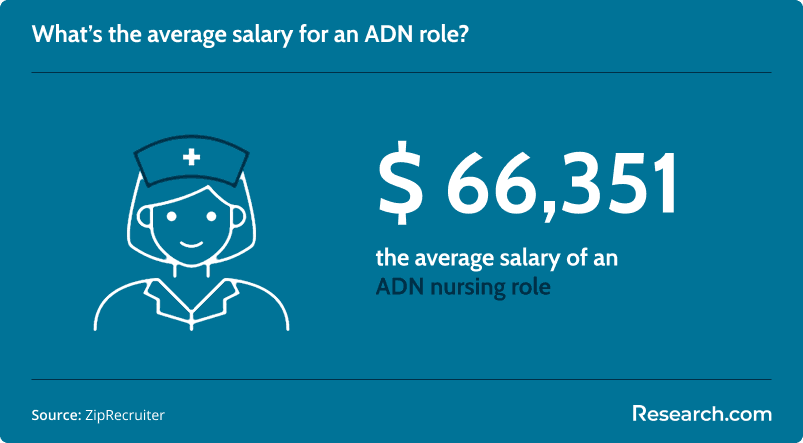
The average starting salary for an ADN-prepared registered nurse in the U.S. is approximately $58,000 to $65,000 per year, depending on the geographic location and employer.
Entry-level ADN nurses typically begin at this range before gaining experience and possibly advancing to specialized roles or leadership positions that pay higher. National average registered nurse salaries overall are higher, around $93,000 to $98,000 annually, which includes both ADN and BSN nurses with varying levels of experience.
As ADN nurses gain experience, develop specialized skills, or pursue certifications, they often see salary increases. Furthermore, ADN nurses who decide to continue their education to earn a BSN can access greater career advancement opportunities and potentially higher salaries.
Hospitals and healthcare organizations increasingly prefer or require BSN-prepared nurses for leadership and specialized clinical roles where the nursing leadership salary can significantly surpass those offered to ADN nurses.
Nonetheless, ADN nurses play a vital role in nursing care teams, often performing the same core patient care duties as BSN nurses but with a more direct focus on clinical practice versus broader nursing roles.
Where do ADN-prepared nurses typically work besides hospitals?
ADN-prepared nurses, who are licensed RNs, have a wide array of career options outside of traditional acute-care hospitals, with many roles offering a more predictable schedule or a specialized patient focus. For those interested in education, exploring jobs with masters in special education provides opportunities to work in classrooms, administration, or specialized instructional support.
- Long-Term Care and Skilled Nursing Facilities (SNFs): These facilities employ a large number of RNs with a nursing associate degree to care for elderly patients or those requiring extended rehabilitation following an illness or surgery. Roles here focus heavily on chronic disease management and comprehensive daily care.
- Outpatient Clinics and Physician Offices: This broad category includes primary care practices, specialty physician offices (like dermatology or orthopedics), and urgent care centers. Nurses in these roles often manage patient intake, administer vaccinations and injections, assist with minor procedures, and focus on patient education and preventative health.
- Home Health and Hospice Agencies: ADN nurses are essential in the growing field of home healthcare, providing personalized, one-on-one care to patients in the comfort of their residences. This includes wound care, medication administration, and chronic illness monitoring. Similarly, many work as Hospice Nurses, focusing on compassionate, palliative care for end-of-life patients.
- Public Health and School Nursing: Nurses in public health may work for local government agencies, focusing on community health initiatives, running vaccination clinics, providing health education, and disease prevention programs. School Nurses manage student health, administer medications, and handle minor injuries in K-12 settings.
- Ambulatory Surgery Centers (ASCs) and Dialysis Centers: These specialized settings allow nurses to focus on perioperative care (pre- and post-surgery) or chronic care management for patients receiving dialysis treatments, often with fixed daytime schedules.
For those interested in humanities-focused alternatives, exploring masters in history jobs offers roles in education, research, museums, and archival work.
What specific clinical skills do ADN nurses learn and perform on the job?
ADN-prepared nurses are fully licensed and trained to perform foundational registered nursing skills. Their clinical education focuses heavily on direct, hands-on patient care and the application of the nursing process in various settings.
- Comprehensive Patient Assessment: Performing a systematic, head-to-toe physical assessment and collecting detailed patient history, including current symptoms, past conditions, and allergies.
- Vital Signs Monitoring: Accurately measuring and interpreting vital signs (temperature, pulse, respiration, blood pressure, and pain level) to detect changes in a patient's condition.
- Triage and Prioritization: Using clinical judgment to rapidly assess a patient's condition, determine the urgency of care needed, and prioritize nursing interventions, particularly in unstable situations.
- Health Education: Providing critical instruction and teaching to patients and families regarding new diagnoses, discharge instructions, medication side effects, and self-care techniques (e.g., blood glucose monitoring, wound dressing changes).
- Care Planning: Utilizing the nursing process (Assessment, Diagnosis, Planning, Implementation, Evaluation) to develop, manage, and modify individualized patient care plans.
- Electronic Health Record (EHR) Documentation: Accurately charting and documenting all patient care, assessments, medications, and changes in condition using electronic medical records systems.
How can ADN nurses get a license to practice in another state?
To practice as an ADN-prepared nurse in another state, the nurse must obtain a nursing license in that state, usually through a process called licensure by endorsement. The process depends on whether the states involved are part of the Nurse Licensure Compact (NLC).
If both the current and new states are compact (NLC members), the nurse can hold a multistate license that allows practice in multiple states with one license. When moving to a new compact state, the nurse must apply for licensure by endorsement in the new state within 60 days of becoming a resident. They can continue working under the old state license until the new license is issued. Once the new multistate license is granted, the old license is deactivated.
If moving from a non-compact to a compact state or vice versa, or between two non-compact states, the nurse must apply for licensure by endorsement in the new state, which involves applying, providing proof of an active license, and meeting that state's specific requirements, such as background checks and continuing education.
The nurse may continue practicing on the old license until the new one is approved, but must notify the previous state board about the change once the new license is granted.
What are the pros and cons of working in a hospital vs. a doctor's office for an ADN nurse?
For nurses with a nursing associate degree, working in a hospital versus a doctor’s office has distinct pros and cons related to job duties, environment, schedules, and patient care complexity.
In hospitals, ADN nurses care for patients with acute or complex conditions, often managing multiple patients with diverse medical needs. The hospital setting is fast-paced, requiring strong organizational and critical thinking skills to handle emergencies, complex treatments, and various specialized departments.
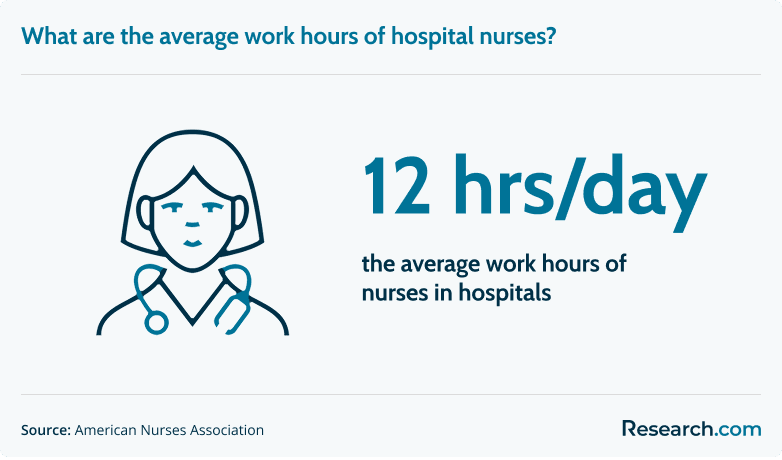
Hospital nurses typically work longer shifts, such as 12-hour shifts including nights, weekends, and holidays, which can lead to more days off but also increased fatigue. The work is physically and emotionally demanding but offers a higher salary on average and more opportunities for career advancement. Job satisfaction comes from providing critical care to seriously ill patients.
In contrast, ADN nurses working in doctors' offices or clinics usually provide more routine, preventative care in a calmer environment. Their duties focus on patient assessments, administering medications, assisting during exams, and educating patients on health management. The patient load is typically lighter, often caring for one patient at a time, with less exposure to emergencies.
Clinic nurses often work regular business hours, with no weekend or holiday shifts, offering a better work-life balance. However, the salary is generally lower than in hospitals, and the pace involves handling higher patient turnover and some administrative duties like updating patient records and following up on test results.
Clinic nursing can also involve more autonomy but less collegial support compared to hospitals.
How can I advance my career as an ADN?
ADN nurses can advance their careers in several ways, starting with gaining clinical experience and then pursuing further education, such as a BSN through RN-to-BSN bridge programs, which allow ADN credits to shorten the time needed for a BSN. Earning a BSN opens doors to more advanced clinical roles, leadership, management, research, and specialty areas like acute care or oncology.
Beyond a BSN, nurses can further advance by pursuing a Master of Science in Nursing (MSN), leading to roles such as nurse practitioner, nurse educator, nurse anesthetist, or healthcare administrator.
Aside from formal education, ADN nurses can enhance their careers by earning specialty certifications, rotating through various nursing units to diversify experience, and seeking mentorship or joining professional nursing organizations to expand networks and skills.
Some hospitals have formal career ladders where advancement depends on education, experience, certifications, and contributions like committee work. Advanced roles often bring higher salaries, more autonomy, and increased responsibilities.
Nurses can also explore non-traditional roles such as telehealth nursing, nurse coaching, legal nursing consulting, or healthcare writing.
Furthermore, for nurses interested in the business and administrative side of healthcare, exploring a degree in health administration can be a great path; understanding what can you do with a master's of health administration degree opens doors to executive and management positions beyond direct patient care.
What is the job growth outlook for registered nurses with an ADN?
The job growth outlook for registered nurses with an ADN is positive, with employment projected to grow about 6% from 2023 to 2033, which is faster than the average for all occupations. This growth reflects a strong ongoing demand for nurses in various healthcare settings due to the aging population, increased chronic health conditions, and expanded healthcare access.
Approximately 194,500 registered nurse positions are expected to open annually over the next decade, largely driven by workforce turnover, such as retirements and career changes.
While the overall RN workforce increasingly includes BSN-prepared nurses, ADN-prepared nurses remain vital, especially in acute care, long-term care, outpatient, and community health settings. As healthcare demands evolve with more emphasis on telehealth, home health, and specialized care, ADN nurses can find ample opportunities, although many may choose to pursue further education for advancement.
The nursing shortage in the U.S. and globally underscores the critical role ADN programs play in training nurses to meet healthcare needs, and this high demand also extends to supportive roles, creating numerous jobs for CNAs throughout the entire care continuum.
Here's what graduates have to say about their nursing role with an associate degree
- Miriam: "Getting my associate degree in nursing was the best financial decision; I was able to jump into the workforce as a Registered Nurse in under two years without being buried in debt. The affordability of the program meant I could focus on my studies, not my loan balance, and I immediately felt the pride of caring for my first patient."
- Ivan: "The ADN program was incredibly focused, giving me intense clinical rotations that built my hands-on skills fast—the hospital hired me right after graduation because they saw my readiness. It was an accelerated path, but nothing compares to the fulfillment of realizing you have the core knowledge to save a life."
- Chloe: "As a parent returning to school, the shorter length and predictable structure of the associate degree made a demanding career finally feel achievable. Now I have a professional role with a supportive work schedule that lets me be present for my family, balancing a rewarding career with my personal life."
Key Findings
- The job growth outlook for registered nurses with an ADN is positive, with employment projected to grow about 6%.
- 194,500 registered nurse positions are expected to open annually over the next decade.
- National average registered nurse salaries overall are higher, around $93,000 to $98,000 annually, which includes both ADN and BSN nurses with varying levels of experience.
- Some specialized positions, such as oncology or operating room nurses, can earn higher salaries, around $84,000 to $86,000.
- Hospital nurses typically work longer shifts, such as 12-hour shifts, including nights, weekends, and holidays.
References:
- Bureau of Labor Statistics (BLS). (2023). Registered nurses. Retrieved from https://www.bls.gov/ooh/healthcare/registered-nurses.htm
- National Council of State Boards of Nursing (NCSBN). (2023). NCLEX® pass rates: 2023 Q4. Retrieved from https://www.ncsbn.org/public-files/NCLEX_Stats_2023_Q4_PassRates.pdf
- National Council of State Boards of Nursing (NCSBN). (2024). NCLEX® pass rates: 2024 Q4. Retrieved from https://www.ncsbn.org/public-files/NCLEX_Stats_2024_Q4_Passrates.pdf
- Indeed. (n.d.). Associate degree in nursing jobs. Retrieved from https://www.indeed.com/career-advice/finding-a-job/associate-degree-nursing-jobs
- Indeed. (n.d.). High-paying nursing jobs. Retrieved from https://www.indeed.com/career-advice/finding-a-job/high-paying-nursing-jobs
- Zippia. (2023). Registered nurse job demographics. Retrieved from https://www.zippia.com/registered-nurse-jobs/demographics/
Other Things You Should Know About Top Roles for Nurses with an Associate Degree
In 2027, ADN nurses can explore roles such as registered nurse, home health nurse, and long-term care nurse. Opportunities also exist in outpatient care and rehabilitation centers. These positions utilize an ADN nurse's skills and offer pathways to further specialization and growth.
Yes, an ADN nurse can work in the ICU, ER, or other critical care settings, but typically with some additional experience and training. After earning an ADN and passing the NCLEX-RN to become a licensed registered nurse, most critical care roles, like ICU or ER nursing, require nurses to gain clinical experience in general nursing first. Employers often look for at least one to two years of nursing experience before nurses can move into these high-acuity areas.
In 2027, ADN nurses tend to find better job opportunities in rural and underserved areas, where the demand for qualified nursing professionals is high. Urban areas may also offer roles but often require competitive experience or additional certifications to secure positions.


