
2027 What Can You Do with a DNP in Health Systems Leadership?

Co-Founder and Chief Data Scientist
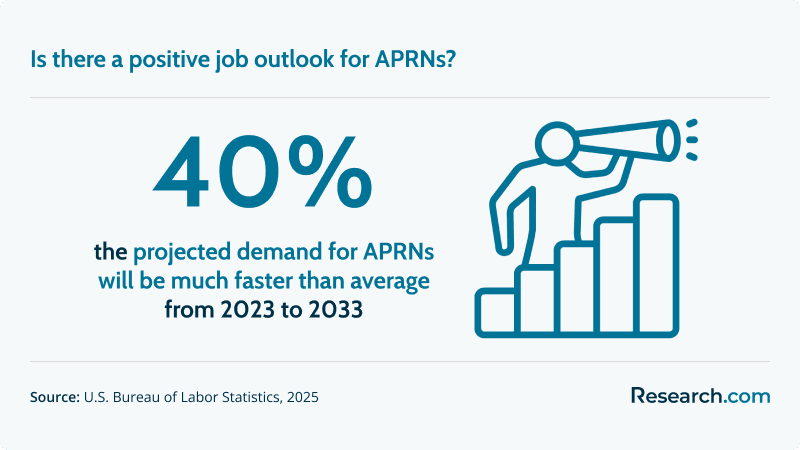
The healthcare field is projected to see a 40% surge in advanced practice nurses. This massive expansion creates a critical problem: a shortage of executives qualified to lead increasingly complex organizations. For experienced nurse leaders ready to fill this gap, the Doctor of Nursing Practice (DNP) in health systems leadership is the key. It provides the specific health systems leadership skills needed to move from management to the C-suite.
To provide a clear understanding of what that path entails, our career planning experts, with over 10 years of experience, have prepared this comprehensive guide. We will break down exactly what this degree empowers you to achieve.
Key Things You Should Know About DNP in Health Systems Leadership
- The DNP in Health Systems Leadership is positioned as a direct response to a market shift where a 40% growth in advanced practice nurses is creating a critical need for doctorate-prepared executives to lead complex organizations.
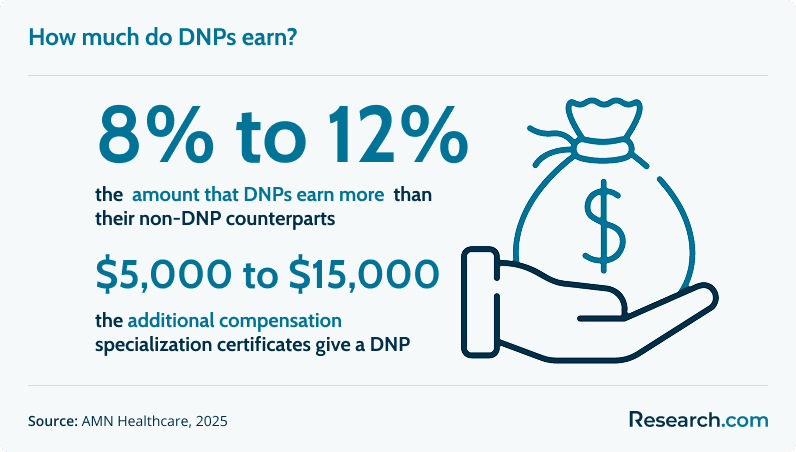
- There is a quantifiable financial justification for the degree, as evidenced by data showing DNP-prepared nurses earn an 8-12% salary premium compared to their master's-level counterparts.
- The degree offers a key strategic advantage by guiding nurses into a less-saturated leadership track, differentiating them from the majority of DNP graduates who pursue crowded clinical specializations.
- What is a DNP in health systems leadership? Overview
- What jobs can I get with a DNP in health systems leadership? Best Jobs
- How much can you earn with a DNP in health systems leadership? Average Salary
- What is the job outlook for graduates of DNP in health systems leadership programs? Job Outlook
- Where can I work with a DNP in health systems leadership? Where can I work with a DNP in health systems leadership?
- What skills do you need for DNP in health systems leadership jobs? Skills
- What are the education requirements to enroll in a DNP in health systems leadership program? Education Requirements
- What alternative paths are available instead of a DNP in health systems leadership? What alternative paths are available instead of a DNP in health systems leadership?
- What is the career progression for graduates with a DNP in health systems leadership? Career Progression
- What non-clinical career opportunities for graduates of a DNP in health systems leadership? Non-Clinical Careers
- How do you get started on your DNP in health systems leadership? How do you get started on your DNP in health systems leadership?
- Is a DNP in health systems leadership worth it? Is a DNP in health systems leadership worth it?
What is a DNP in health systems leadership?
A DNP in health systems leadership is a terminal practice doctorate that prepares experienced nurses to lead entire healthcare organizations. It is designed to shift your focus from individual patient care to the health of the entire system.
Many people often confuse this degree with other options, so let's clarify. It is not a PhD, which is focused on academic research. It is not a clinical DNP, which centers on advanced patient care. And while it includes business principles, it is not a general MBA; its curriculum is grounded in a nursing perspective to solve complex healthcare challenges.
The New Standard for Executive Practice
The reason this degree has become so critical is that the industry itself is setting a new standard. National bodies, such as the American Association of Colleges of Nursing (AACN), are advocating for the establishment of the DNP as the terminal degree for nursing practice.
This means that for top-tier executive roles, the DNP is quickly becoming the expected credential. It signals that you have the highest level of practice-based training to lead in today's complex medical landscape. Learn more about types of master degrees in healthcare.
What jobs can I get with a DNP in health systems leadership?
This degree prepares you for executive leadership roles where you can have the broadest impact on an organization. The most common positions graduates secure are in the C-suite or at the vice president level within a hospital or health system.
Chief Nursing Officer (CNO)
A CNO is the top nursing executive in a hospital or healthcare system, responsible for setting strategic goals for nursing departments. They manage staffing levels, budgets, and professional development initiatives to ensure high-quality care. CNOs also collaborate with other executives to align nursing practices with broader organizational goals, making them key decision-makers in shaping patient care delivery.
Healthcare Administrator
Healthcare administrators oversee the overall operations of healthcare facilities, from hospitals to outpatient clinics. They ensure compliance with state and federal regulations, manage budgets, and improve efficiency across departments. With a DNP, administrators bring a strong clinical perspective to their leadership, bridging the gap between patient care and organizational management.
Director of Clinical Operations
This role focuses on supervising daily clinical functions and ensuring that healthcare teams deliver safe, effective, and patient-centered care. Directors often evaluate workflow processes, monitor performance metrics, and implement evidence-based improvements. Their leadership helps streamline operations and maintain regulatory compliance while also supporting staff development.
Quality Improvement Director
Quality improvement directors design and oversee programs that enhance patient safety, reduce errors, and elevate care standards across the organization. They analyze performance data, identify gaps in care, and lead initiatives to address them. By applying research and evidence-based practices, they ensure healthcare systems continuously adapt to meet patient needs and regulatory benchmarks.
Policy Advisor or Consultant
DNP-prepared professionals in this role influence healthcare at a systems and policy level. They may work with government agencies, nonprofits, or healthcare organizations to advocate for reforms in access, quality, or affordability. Their background allows them to interpret research into actionable policy recommendations, making them valuable voices in shaping the future of healthcare delivery.
Nursing Program Director
Program directors manage nursing education or staff development programs within healthcare systems or academic institutions. They design curricula, oversee faculty or trainers, and ensure that programs align with industry standards and accreditation requirements. By fostering ongoing professional growth, they help prepare the next generation of nurses to meet evolving healthcare challenges.
Population Health Manager
This role emphasizes improving the health outcomes of entire populations, particularly vulnerable or underserved groups. Population health managers coordinate preventive care, chronic disease management, and resource allocation across communities. They analyze public health data to design initiatives that reduce disparities and enhance long-term wellness outcomes.
How much can you earn with a DNP in health systems leadership?
With this degree, you are positioning yourself for an executive-level salary. Compensation for these roles commonly ranges from $150,000 to over $250,000 annually, depending on the size of the organization and the specific responsibilities.
It is important to understand that your salary is tied to the executive function you perform, not just the degree itself. You may see lower average DNP salaries online, but that data is often skewed by clinical roles. The DNP in health systems leadership is your key to accessing these higher-paying executive positions. Explore more about types of mental health professionals.
Maximizing Your Earning Potential
The doctorate itself provides a direct and measurable return on investment. Studies have consistently shown that nurses with a DNP earn a significant premium, often between 8% and 12% more than their colleagues with a master's degree in similar roles.
This doctoral-level credential is a powerful signal to employers that you have the highest level of preparation for complex leadership challenges.
When you consider the scale of executive compensation, which is vastly different from technical roles, just compare an EMT vs medical assistant salary to a CNO's, that percentage increase becomes a substantial factor in your long-term financial growth.
What is the job outlook for graduates of DNP in health systems leadership programs?
With the number of advanced practice nurses projected to grow by 40% in the coming years, the job outlook for DNP-prepared leaders is excellent. The increasing complexity of healthcare, combined with a generation of executives nearing retirement, is creating a significant demand for qualified leaders to step into top roles.
This isn't just about a general nursing shortage creating openings. The demand is highly specific for leaders who have the doctoral-level training to manage this expanding and more specialized workforce. For those exploring related fields, programs like the best online bachelor's in fire science can offer insight into other high-demand, specialized career paths.
A Growing Demand for Top-Tier Leadership
What we are seeing is a shift in expectations for executive roles. Where an MSN was once the standard for a Chief Nursing Officer, organizations now require leaders who can manage complex budgets, shape policy, and use data for strategic planning.
This trend, often called "credential inflation," means the DNP is becoming the new baseline for C-suite consideration. This creates a market vacuum that DNP graduates are perfectly positioned to fill, making this a secure and strategic career move for the long term.
Where can I work with a DNP in health systems leadership?
The skills you gain with this degree open doors to leadership positions across a wide range of settings. While many graduates work in hospitals, your expertise is valuable in any organization that delivers or manages healthcare.
You will find opportunities in:
- Large academic medical centers
- Integrated health networks
- Community hospitals
- Public health organizations and government agencies
It's a common misconception that these roles only exist in massive hospital systems. The reality is that the need for strategic, systems-level thinking is universal in healthcare.
Exploring Opportunities in Private Industry
Beyond these traditional settings, there is significant growth in private industry for DNP-prepared leaders. Management consulting firms hire graduates to advise healthcare systems on improving efficiency and quality. Insurance companies need your clinical and systems expertise to develop effective population health strategies.
Additionally, the booming health-tech sector relies on leaders who understand the complexities of healthcare to guide innovation and ensure new technologies meet the real-world needs of patients and providers. For those interested in exploring other specialized fields, learning about geosciences subdisciplines can provide insight into high-demand, niche career paths.
What skills do you need for DNP in health systems leadership jobs?
Success in health systems leadership jobs requires a specific set of high-level executive skills that go far beyond clinical expertise. This is not just about being a "good leader"; it's about mastering the hard skills needed to run a complex organization.
Core competencies you will develop include:
- Financial Management and Budgeting – Leaders must understand how to allocate resources effectively, balance budgets, and make data-driven financial decisions. This ensures both fiscal responsibility and the ability to invest in high-quality patient care.
- Healthcare Policy Analysis – Analyzing and interpreting healthcare laws, regulations, and policies allows leaders to keep their organizations compliant. It also helps them anticipate and adapt to changes in the healthcare landscape.
- Strategic Planning and Execution – Effective leaders create long-term visions and actionable plans that align with organizational goals. They oversee implementation, monitor outcomes, and adjust strategies as needed.
- Data Analytics for Quality Improvement – Using data to track outcomes, identify inefficiencies, and improve patient safety is central to modern healthcare leadership. Leaders must translate data insights into practical improvements in care delivery.
- Organizational Leadership – Beyond managing people, leaders inspire teams, build strong workplace cultures, and guide organizations through change. This competency ensures that staff feel supported and motivated to provide excellent care.
These are the tangible skills that allow you to translate your clinical insights into sustainable, system-wide solutions.
Beyond Clinical Expertise: Mastering Executive Competencies
These skills are what truly separate an executive from a manager. A manager oversees a process; an executive designs and owns the entire system. For example, the difference between phlebotomist and medical assistant is about mastering distinct technical tasks.
In contrast, an executive with a DNP uses data analytics to redesign the entire workflow for laboratory services across a hospital network to improve efficiency and patient outcomes. This degree equips you to make that critical leap from managing daily operations to setting the strategic direction for the future.
What are the education requirements to enroll in a DNP in health systems leadership program?
To enroll in a DNP in health systems leadership program, you will typically need a solid foundation in nursing practice and academics. The standard requirements are a Bachelor of Science in Nursing (BSN) or a Master of Science in Nursing (MSN) from an accredited institution, along with an active, unencumbered RN license.
Most programs also require relevant leadership experience. This is a point of anxiety for many applicants, but it’s important to define it broadly. You don't necessarily need a formal "manager" title. Experience as a charge nurse, a committee chair, or the lead on a quality improvement project are a valuable example of leadership that programs look for.
Choosing the Right Program Format
Once you've confirmed you meet the prerequisites, the next step is finding a program that fits your life. You'll find a variety of formats, including fully online, hybrid, and executive weekend models. Unlike some fields that offer accelerated online physical education degrees, DNP programs are designed for deep, rigorous learning.
Even in a flexible online format, the curriculum requires a deliberate pace to master the complex financial, policy, and strategic skills necessary for executive practice. It's about finding a program that respects your professional experience while providing the high-level training you need.
What alternative paths are available instead of a DNP in health systems leadership?
When considering a doctorate, it's smart to evaluate all your options. The main alternatives to a DNP in health systems leadership are a clinical DNP, a Master of Business Administration (MBA), or a Master of Health Administration (MHA). Each of these paths leads to a different career outcome.
A clinical DNP prepares you to be an expert in advanced practice patient care. An MBA provides a broad business education but lacks a specific healthcare focus. An MHA is centered on the operational management of healthcare facilities.
Choosing Your Impact: Clinical vs. System-Level Leadership
The DNP in health systems leadership offers a unique advantage by integrating deep clinical insight with executive business acumen. While an MBA or MHA can teach you business operations, they cannot provide the credibility that comes from your years of nursing experience.
This degree is the only one that builds on that foundation, equipping you to lead from a clinical perspective in the boardroom. It is a strategic choice to focus on system-level impact.
As the following data on nurse practitioner specializations shows, the vast majority of DNP programs are focused on clinical preparation, making the leadership track a powerful way to differentiate yourself.
What is the career progression for graduates with a DNP in health systems leadership?
A DNP in health systems leadership provides a clear and structured career path toward executive roles. This isn't about a single promotion; it's a trajectory that builds on your experience and new skills, moving you from tactical management to strategic leadership.
Each stage of a DNP in health systems leadership career builds strategically on the last, expanding both scope and authority. At the managerial level, leaders are accountable for a single unit’s operations, staff performance, and quality of care. Progressing to the director role, they assume responsibility for multiple units or service lines, requiring advanced coordination and strategic oversight.
At the C-suite level, nurse leaders set organizational vision, direct system-wide nursing practice, and drive patient care outcomes at the highest level of leadership.
This is a high-level strategic track, fundamentally different from an entry-level administrative path like the fastest medical billing and coding associate degree online. Your DNP prepares you to handle the increasing responsibility at each stage of this executive journey.
The Doctorate Advantage: Standing Out in a Crowded Field
This level of advancement is possible because the doctorate gives you peer-level credibility in a boardroom filled with physicians, finance officers, and executives with business doctorates. In a field where the MBA and MHA are common, your DNP with its clinical grounding is a unique and powerful asset.
Holding a doctorate places you in an elite group of nursing professionals, as current data on nurse practitioner degrees illustrates. This scarcity makes you a highly sought-after candidate for the most prestigious leadership roles in the entire industry.
What non-clinical career opportunities for graduates of a DNP in health systems leadership?
A DNP in health systems leadership opens doors to diverse, high-level non-clinical career opportunities that capitalize on the ability to translate evidence-based clinical knowledge into strategic organizational change. The demand for clinically-informed leaders is growing rapidly in sectors outside of traditional hospital administration, extending far beyond the walls of the hospital.
Your ability to blend deep clinical insight with systems-level thinking makes you a valuable asset to management consulting firms that advise major healthcare clients; in these roles, you function as a Principal Consultant or Subject Matter Expert, analyzing organizational structures, optimizing resource flow, and implementing large-scale operational efficiencies for payers and providers alike.
Similarly, the Health Technology (Health-Tech) sector—including startups and established companies—needs executives who understand clinical workflows to guide product development and strategy; DNP leaders frequently step into roles like Chief Clinical Officer (CCO) or VP of Product, ensuring that new software, AI, or medical devices are clinically relevant and effectively integrate into patient care settings.
Furthermore, your expertise is critically sought after in public health and policy-making organizations, where you can significantly shape the future of healthcare on a regional or national level by working as a Health Policy Analyst or Director for governmental bodies or non-profits, translating research into impactful legislation.
Finally, the insurance and managed care industry relies on DNP leaders as Directors of Clinical Quality or Utilization Review Executives to design cost-effective care models and manage population health across large networks.
How do you get started on your DNP in health systems leadership?
Getting started on this path is a straightforward process when you break it down into manageable steps. Instead of seeing it as one overwhelming task, think of it as a project with four distinct phases.
Here is a simple guide to get you started:
- Evaluate your experience and goals. Take stock of your leadership background and clarify what you want to achieve with this degree.
- Research accredited programs. Look for programs that align with your career aspirations and offer the flexibility you need.
- Prepare your application materials. This typically includes your resume, transcripts, letters of recommendation, and a personal statement.
- Secure your financing. Explore options for tuition assistance, scholarships, and student loans.
Finding the Right Program for You
When you research programs, look beyond the curriculum. Investigate the faculty's professional backgrounds, the quality of the practicum opportunities, and the strength of the alumni network. These elements are just as important as the coursework. The good news is that you have plenty of choices.
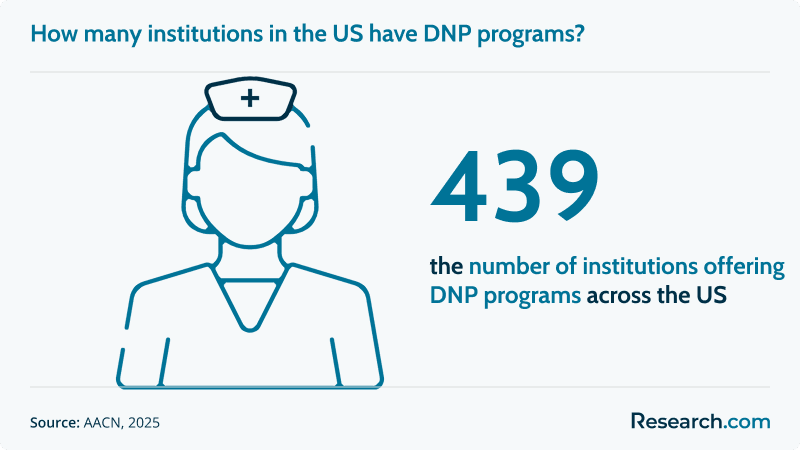
With over 439 institutions now offering DNP programs, the path to executive leadership is more accessible than ever. You can find a high-quality program that fits your specific needs and goals.
Is a DNP in health systems leadership worth it?
This degree is worth it if your primary career goal is to move beyond day-to-day management and gain the skills and authority to drive system-wide change from an executive level.
The "worth" of this DNP isn't just a simple calculation. It's a combination of three key factors: the significant financial return on investment, the expanded professional influence it gives you in the C-suite, and the personal impact you can have on the health of entire communities.
If you are a nurse leader who sees systemic problems and wants the power to fix them, this is the degree that provides the tools to do so.
The Ultimate Step in a Nursing Career
Ultimately, a DNP in health systems leadership is the capstone of a clinical career. It is the mechanism that allows you to translate years of bedside experience and hard-won clinical wisdom into boardroom strategy.
For many, a career in nursing begins with foundational steps, and there are many excellent online nursing programs CNA to RN that build that base. This DNP is the final step in that progression—the one that prepares you to lead the entire system you have dedicated your life to serving.
Here’s What Graduates Have to Say about Their DNP in Health Systems Leadership Program
- Terry: "I wasn't just thinking about my next job; I was trying to plan the next two decades of my career. This degree felt like the most strategic, long-term move I could make. It gave me the terminal degree that will keep me competitive for the most senior roles, ensuring that I won't hit a credential ceiling 10 or 15 years from now. I feel prepared for whatever comes next in healthcare."
- Melody: "What surprised me most was how practical the coursework was from day one. I was working on a major quality improvement project at my job while taking a course on the exact same topic. I was able to use my actual work for my assignments, getting expert faculty feedback in real-time. It felt less like school and more like a high-level executive mentorship that I could immediately apply to my career."
- George: "My biggest fear was getting pigeonholed into hospital administration for the rest of my life. This program showed me how my skills could translate to so many other areas. I actually ended up taking a position with a health-tech consulting firm, helping them design better systems for hospitals nationwide. I never would have even known this kind of role existed, let alone be qualified for it, without the DNP."
Key Findings
- The DNP provides a clear financial return on investment, with graduates earning an 8-12% salary premium over their MSN-prepared peers, directly addressing concerns about the significant cost of the degree.
- A projected 40% growth in advanced practice nurses is creating a critical need for more doctorally-prepared executives to manage these expanding teams, offering a clear pathway out of career stagnation.
- Holding a DNP places you in an elite group, as only 12.2% of nurse practitioners have achieved a doctorate, providing the peer credibility needed to close the credential gap in the C-suite.
- With over 70% of nurse practitioners specializing in family practice, the health systems leadership track offers a strategic, less-saturated path for those uncertain about which DNP focus provides the best career differentiation.
- The path to a DNP is more accessible than ever, with 439 institutions offering programs, easing concerns for prospective students about finding a program that fits their specific needs and qualifications.
- The 40% surge in APRNs is driving a trend of executive credential inflation where a DNP is becoming the new standard, making it a future-proof investment for long-term career security.
Other Things You Should Know About DNP in Health Systems Leadership Programs
References:
- American Association of Colleges of Nursing. (2025). DNP fact sheet. https://www.aacnnursing.org/news-data/fact-sheets/dnp-fact-sheet
- American Association of Nurse Practitioners. (2025). NP infographic. https://storage.aanp.org/www/documents/NP_Infographic_111122.pdf
- AMN Healthcare. (2025). Nurse practitioner salary report 2025. https://www.amnhealthcare.com/blog/advanced-practice/perm/nurse-practitioner-salary-report-2025/
- U.S. Bureau of Labor Statistics. (2024, September 4). Occupational outlook handbook: Nurse anesthetists, nurse midwives, and nurse practitioners. U.S. Department of Labor. https://www.bls.gov/ooh/healthcare/nurse-anesthetists-nurse-midwives-and-nurse-practitioners.htm
- Zippia. (2024, May 21). Nurse practitioner education requirements and degrees. https://www.zippia.com/nurse-practitioner-jobs/education/
Other Things You Should Know About DNP in Health Systems Leadership Programs
In 2027, a DNP in Health Systems Leadership can lead to roles like healthcare administrator, clinical operations director, and policy advisor. Graduates can shape healthcare delivery systems, lead quality improvement initiatives, and influence health policy, leveraging their expertise to improve organizational efficiency and patient outcomes.
A DNP project in health systems leadership can significantly improve healthcare outcomes by identifying system inefficiencies, implementing evidence-based practices, and showcasing leadership skills in 2027. These projects often drive organizational change, enhance patient care, and contribute to the overall advancement of healthcare systems.
In 2027, pursuing a DNP in Health Systems Leadership equips individuals with essential skills, including strategic planning, policy development, and analytical thinking. These competencies are crucial for effectively managing and leading healthcare organizations through complex challenges and changes in the industry.


