
2027 What Are the Major Subdisciplines of Geoscience: Career Paths to Pursue

Co-Founder and Chief Data Scientist
Geoscience, the study of the Earth's systems from its deep interior to its fluid envelopes, is at the core of the world's most pressing challenges, from the energy transition to resource security. Geoscientists are crucial for locating and sustainably developing critical minerals for renewable energy and for identifying the stable, deep-subsurface formations required for carbon capture and storage (CCS). The increasing complexity of resource management and natural hazard mitigation ensures that expertise in the geoscience subdisciplines remains highly valued.
In this article, I will explain the major subdisciplines of geoscience and detail the high-growth career paths they enable. We will look at what specialized knowledge is required for fields like hydrogeology, how modern tools such as geographic information systems (GIS) are creating stand-alone career tracks, and what further education is most beneficial for those seeking leadership in policy or business development.
Key Things You Should Know About Geoscience Subdisciplines
- Environmental geologist roles are projected to grow 4% from 2024 to 2034 and focus on identifying and remediating soil and groundwater contamination for public health protection.
- Engineering geoscientists focus on characterizing subsurface conditions to ensure infrastructure stability, advising on foundation designs, and mitigating geohazards like landslides and seismic risks.
- Advanced education like an MBA or Master of Public Policy (MPP) is essential for geoscientists seeking leadership and directorial roles.
- Non-traditional geoscience careers in policy and communication leverage technical expertise to advise government on natural hazards and write complex regulatory compliance reports.
- What are the top geoscience career paths? Career Paths
- What specialized knowledge is required for hydrology and hydrogeology in water resource management? What specialized knowledge is required for hydrology and hydrogeology in water resource management?
- What emerging geoscience subdisciplines are most crucial for geothermal energy and CCS initiatives? Subdisciplines
- What are the typical starting salary expectations for petroleum geoscientists? What are the typical starting salary expectations for petroleum geoscientists?
- How do the various geoscience subdisciplines contribute to the feasibility and sustainability of mineral resource extraction? How do the various geoscience subdisciplines contribute to the feasibility and sustainability of mineral resource extraction?
- How have GIS and remote sensing become indispensable, stand-alone geoscience subdisciplines with diverse career paths? How have GIS and remote sensing become indispensable, stand-alone geoscience subdisciplines with diverse career paths?
- What is the future outlook for marine geoscientist jobs related to offshore wind energy development? Future Outlook
- Are there non-academic geoscience career paths in the private space industry? Non-Academic Career Paths
- What further education is most beneficial for geoscientists seeking leadership roles in policy or business development? Leadership Roles
- What non-traditional geoscience career paths exist in science policy, technical writing, or public outreach? Non-Traditional Career Paths
What are the top geoscience career paths?
The current high-growth career paths in geoscience reflect a distinct shift toward mitigating human impact and supporting sustainable infrastructure. High-demand roles are concentrated within two key categories of the geoscience subdisciplines: environmental assessment and engineering geology. These professionals bring essential Earth knowledge to critical projects across various sectors.
Environmental geoscientists
Environmental geoscientists, often grouped with environmental scientists and specialists, focus on human impacts to the environment, including air, soil, and water quality. They are essential for regulatory compliance and remediation projects, with projected job growth of 4% from 2024 to 2034, about as fast as the average for all occupations.
- Environmental Consulting Geologist: These professionals perform initial Phase I and Phase II environmental site assessments, conducting field work and analyzing samples to identify and quantify soil or groundwater contamination for real estate or commercial projects.
- Contaminated Site Remediation Specialist: This role involves designing and managing cleanup programs for polluted sites, using advanced computer models to determine the most effective methods to remove or mitigate hazards.
- Water Resource Specialist: Focused on the movement and quality of water, these specialists develop strategies for sustainable groundwater use and protection, often working for government agencies or private consultancies on hydrogeological issues.
- Regulatory Compliance Officer: Working for government at the state or federal level, these officers interpret environmental law to ensure that industrial operations, waste disposal, and new infrastructure projects adhere to complex geological and environmental regulations.
Engineering geoscientists
Engineering geoscientists, often classified as geological engineers or mining engineers, combine geological knowledge with civil engineering principles to ensure the stability and safety of structures built upon or within the Earth. Just as earning a bachelor’s in natural sciences online provides the foundational Earth knowledge, this specialized engineering path requires a strong technical base in mechanics and physics.
- Geotechnical Engineer: This specialty focuses on characterizing subsurface conditions, assessing soil and rock stability, and recommending foundation designs for major infrastructure, such as bridges, dams, and deep buildings.
- Geohazard Mitigation Consultant: Professionals in this area analyze and predict natural threats like landslides, rockfalls, and seismic risks, designing slope stabilization and reinforcement systems to protect infrastructure and communities.
- Underground Construction Specialist: These experts provide crucial geological analysis and monitoring during the construction of complex subsurface facilities, including tunnels, caverns, and subway systems, to manage groundwater flow and rock structure challenges.
- Mining Geologist/Engineer: This function involves the exploration for and evaluation of mineral deposits, followed by the planning and design of mining operations to ensure efficient, safe, and environmentally responsible extraction.
These two fields demonstrate the strong and growing connection between geoscience expertise and the future needs of the built environment, offering robust career pathways with stable demand.
What specialized knowledge is required for hydrology and hydrogeology in water resource management?
Hydrology and hydrogeology are critical geoscience subdisciplines for managing Earth's water against climate and population pressures. Success demands highly quantitative, interdisciplinary expertise, blending deep geological and environmental knowledge. For professionals seeking advanced business skills to complement technical expertise, pursuing an MBA without work experience can provide leadership training and strategic insight early in their careers.
The required specialized knowledge and skills include:
- Quantitative Modeling and Forecasting: Expertise in computational tools to simulate water flow and storage across the hydrological cycle. This includes developing groundwater flow models and applying flood and drought forecasting models for resource planning and disaster mitigation.
- Subsurface Characterization and Aquifer Dynamics: Deep understanding of geological principles like porosity and permeability, which govern how rock and sediment layers store and transmit groundwater. This knowledge is critical for sustainable water supply development and preventing underground reservoir over-extraction.
- Water Balance and Allocation Analysis: The ability to perform rigorous water balance studies that quantify supply, demand, and changes in water storage within a basin or watershed. This informs policy decisions regarding water allocation for urban, agricultural, and industrial users, especially in water-scarce regions.
- Geochemical Contaminant Transport: Specialized training in hydrogeochemistry to understand chemical interactions between water, rocks, and pollutants. This allows professionals to track contaminant movement within aquifers and surface water and design effective remediation strategies.
- Field Data Acquisition and Geospatial Tools: Proficiency in collecting and analyzing field data, including measuring streamflow and testing for pollution levels. Essential technical skills include using GIS, remote sensing, and statistical analysis for large dataset interpretation.
This blend of expertise is vital for developing integrated water management plans that ensure long-term water security.
The average pay for hydrogeologists shown in the graph below, illustrates an increasing trend over the last decade.
What emerging geoscience subdisciplines are most crucial for geothermal energy and CCS initiatives?
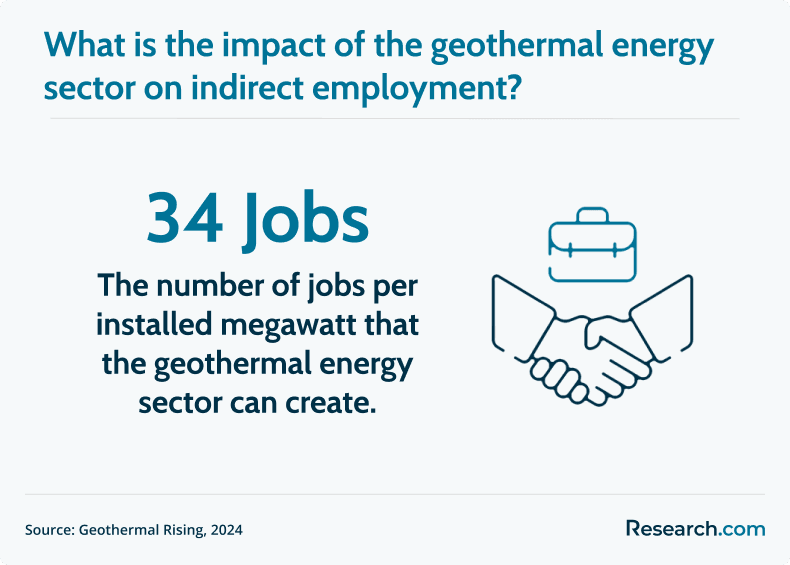
The global low-carbon transition has spurred growth in specialized, subsurface-focused geoscience subdisciplines: geothermal energy and CCS. These fields apply established petroleum and mining expertise to new energy requirements. Success relies on geoscientists' ability to characterize, model, and monitor the deep subsurface for long-term stability. Similarly, professionals in other evolving sectors—like those pursuing non clinical OT jobs—are adapting their expertise to meet emerging industry needs beyond traditional practice settings.
The critical emerging specialties include:
- Geothermal Resource Geophysicist: Uses seismic, gravity, and magnetic surveys to locate hidden heat sources and map subsurface fracture systems for geothermal extraction. They are essential for developing Enhanced Geothermal Systems (EGS) by identifying hot rock with low natural permeability.
- Reservoir Characterization Specialist (CCS): CCS professionals apply petroleum geoscience techniques to deep saline aquifers or depleted fields. They analyze rock strata properties like thickness and continuity to estimate capacity for safe, long-term carbon dioxide (CO2) storage.
- Geochemical Monitoring and Mineralization Expert: This specialty evaluates chemical interactions between injected CO2 and surrounding rocks. Experts track CO2 leakage pathways and study natural carbon mineralization, where CO2 reacts with silicate rocks to form stable carbonate minerals.
- Subsurface Thermal and Fluid Modeler: These experts use advanced numerical and dynamic modeling to predict fluid behavior under high pressure and temperature in both geothermal and CCS environments. They assess injection rates, pressure buildup, and reservoir sustainability for operational and regulatory filing requirements.
- Geomechanics and Seal Integrity Analyst: This function ensures containment of pressurized geothermal fluids and stored CO2. Analysts evaluate the integrity of the "caprock," which must prevent leakage and mitigate potential induced seismicity risks.
For those seeking to enter energy-focused geoscience, starting with a fast track geographic information systems degree online can provide essential skills in spatial data analysis, visualization, and subsurface mapping that are highly transferable to both geothermal and CCS site evaluation.
What are the typical starting salary expectations for petroleum geoscientists?
Starting salary expectations for petroleum geoscientists are among the highest across the geoscience subdisciplines, due to the specialized skill requirements of the oil and gas industry. While geoscientists broadly (excluding hydrologists and geographers) earned a median annual wage of $99,240 in May 2024, those specifically working in the Mining, Quarrying, and Oil and Gas Extraction industry reported the highest sector pay at a median of $148,760.
Starting pay for a Petroleum Geologist I typically falls within the range of $88,000-$118,358 for entry-level positions with less than one year of experience, based on recent job market data. For comparison, the closely related field of Petroleum Engineering reported a much higher national median wage of $141,280 in May 2024, with the lowest 10% earning less than $78,840. Fields that require specialized technical knowledge—such as those supported by the best health information management certifications—often see similar patterns, where advanced credentials directly enhance salary potential and career mobility.
A master's degree often functions as the effective entry-level requirement for major oil companies, substantially boosting starting compensation. Entry-level Petroleum Geologist I salaries often start above $115,000 for those with a postgraduate degree and specialized skills. Geoscientists who specialize early in sought-after areas, such as reservoir simulation, petrophysics, or the application of machine learning to subsurface data, are positioned to command salaries at the top end of the entry-level range.
Petroleum geoscientists working in major energy hubs consistently see higher pay, reflecting the concentration of high-paying jobs in regions like Texas and California. The Houston, Texas metropolitan area is noted for offering strong compensation, often exceeding the national average for these roles. For those entering the field or considering a career shift, exploring best online bachelor's degree programs can provide flexible, high-quality educational pathways to gain the foundational knowledge required.
The following graph shows the median annual salaries of petroleum engineers in top industries, according to the Bureau of Labor Statistics.
How do the various geoscience subdisciplines contribute to the feasibility and sustainability of mineral resource extraction?
Mineral resource extraction is governed by geoscience expertise throughout its entire lifecycle, ensuring both economic feasibility and environmental sustainability. As demand for critical minerals rises, the specialized geoscience subdisciplines are essential for locating new deposits, managing extraction, and minimizing long-term environmental liability.
At the initial exploration stage, economic geologists identify potential ore bodies using structural geology, remote sensing, and lithological mapping. This work is immediately complemented by geophysicists, who apply seismic, magnetic, and gravity surveys to image the subsurface and delineate the size and geometry of potential deposits. This initial phase establishes the spatial foundation required to evaluate a resource.
For project feasibility and mine planning, resource geologists take the lead. They employ advanced 3D geological modeling to estimate the resource size and quality, defining the total volume and distribution of the ore and waste rock. Accurately calculating the mineable reserve dictates the project's economic viability and forms the basis for subsequent mining engineering design, including predicting rock mass strength for safe pit or tunnel construction.
The long-term sustainability of mineral extraction is critically managed by geochemistry and environmental geology. Geochemists analyze the acid generating potential of mine waste, advising on water management strategies to prevent acid mine drainage, which forms when sulfide minerals are exposed to air and water.
Environmental geoscientists specialize in mine closure and reclamation planning, ensuring that unstable slopes are secured and the site is returned to a safe, stable, and non-polluting condition post-extraction, thereby minimizing liability and fulfilling regulatory requirements. The geospatial skills highly sought after in GIS degree jobs are crucial here, as they enable complex spatial analysis for site evaluation and monitoring mine drainage over time.
To further visualize the scale of the U.S. mining sector, the chart below shows the production distribution of 105.7 billion worth of non-fuel minerals, metals, and other natural aggregates in the country.
How have GIS and remote sensing become indispensable, stand-alone geoscience subdisciplines with diverse career paths?
GIS and Remote Sensing (RS) have transitioned from being specialized tools to becoming indispensable, integrated geoscience subdisciplines that create numerous stand-alone career paths.
RS collects comprehensive geospatial data from a distance, utilizing satellites, aerial photography, Light Detection and Ranging (LiDAR), and radar, providing the essential input for analysis. GIS then functions as the core platform for processing, visualizing, and manipulating this spatial information, enabling data-driven solutions across a wide range of industries.
The synergy between GIS and remote sensing supports diverse career specialization, notably in fields critical to infrastructure and environmental stability. For instance, specialists use satellite imagery and LiDAR to rapidly map and analyze the vulnerability of areas to natural disasters.
These roles involve tracking active processes like landslides, assessing surface roughness for hazard modeling, and providing rapid damage assessments after events such as floods and earthquakes to aid in emergency response and recovery planning.
For those aiming to enter this sector quickly, pursuing the fastest geosciences degree online programs can provide the foundational geospatial skills necessary to start in analysis or technical roles.
GIS analysts also utilize time-series remote sensing data for environmental monitoring and conservation, tracking pollution plume movement in water bodies, and assessing land cover changes over time. This specialization is vital for organizations managing natural resources and long-term climate change modeling.
Beyond these environmental and hazard roles, the field generates core geospatial career tracks. These include GIS Analysts, whose median annual wage was approximately $78,167 in 2023, and GIS Technicians, who are primarily responsible for data collection and digitization.
The field also employs Geospatial Developers, who build custom mapping applications and specialized geoprocessing tools. The demand for these quantitative skills confirms that GIS and remote sensing specialists now form a vital, cross-disciplinary segment of the modern workforce, connecting geoscience knowledge with engineering, environmental policy, and business intelligence.
What is the future outlook for marine geoscientist jobs related to offshore wind energy development?
The future outlook for marine geoscientist jobs is exceptionally strong, driven by the rapid, federally mandated expansion of the U.S. offshore wind industry. To meet the national goal of deploying 30 gigawatts of offshore wind capacity by 2030, the industry must employ thousands of workers in construction, supply chain, and project development roles.
Marine geoscience is foundational to every stage of a wind farm project, creating a high demand for specialists who can characterize the seabed.
The core role for geoscientists is site characterization, adapting proven techniques from the oil and gas sector. Marine geophysicists use high-resolution geophysical surveys (such as seismic and sonar) to map the seafloor topography and the underlying stratigraphy. This essential data is used for selecting appropriate foundation types and routing power transmission cables.
Geotechnical analysts and geohazard specialists are indispensable for structural integrity. They integrate geophysical survey results with direct sampling (borehole data and core samples) to evaluate sediment strength and identify potential geohazards. Critical hazard assessments focus on identifying features like shallow gas pockets, subcropping rock, and faulting that could compromise the foundation's stability or cause environmental damage.
The job growth for marine geoscientists mirrors this accelerated investment in infrastructure, requiring professionals with strong skills in integrated data analysis. For instance, one scenario projects that the industry's construction and operations will support an annual average of over 43,000 total jobs in the next decade.
Regulators, such as the Bureau of Ocean Energy Management (BOEM), require detailed, integrated geological, geophysical, and geotechnical data to approve site plans, ensuring that every project adheres to structural integrity and safety standards.
Are there non-academic geoscience career paths in the private space industry?
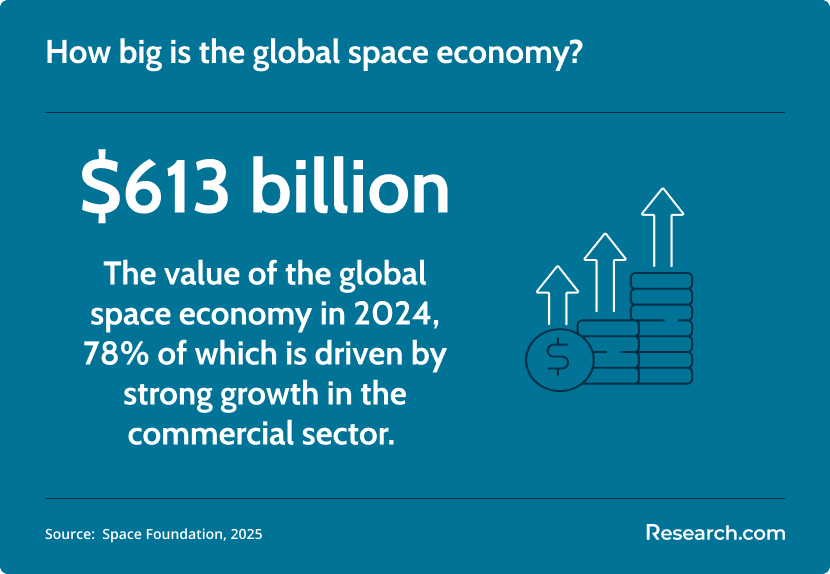
Geoscientists are finding high-value, non-academic careers in the booming private space industry by applying core Earth science and resource specialization to celestial bodies. The growth in commercial space ventures, including exploration and resource utilization, demands geoscience subdisciplines that can solve extraterrestrial logistics and resource problems.
The career paths and required expertise include:
- Planetary Resource Utilization Specialist: Often called a Space Mining Engineer, this role focuses on In Situ Resource Utilization (ISRU). Specialists assess the geological context and map critical space resources, such as water ice on the Moon, to determine technical feasibility and plan extraction processes.
- Planetary Remote Sensing Analyst: Professionals integrate remote sensing and GIS to analyze space mission data. They create geological maps and 3D models of planetary surfaces (planetary geology) to select landing sites and evaluate terrain stability for rovers and human settlement.
- Regolith/Space Materials Scientist: These geoscientists specialize in the physical and mineralogical properties of regolith or planetary surface materials . This expertise is critical for additive manufacturing of habitats and tools in space, informing equipment design for autonomous non-Earth environments.
- Space Exploration Project Manager: Geoscientists with management experience are highly valuable as program managers and mission planners. They oversee the integration of geological data with engineering constraints to manage complex project lifecycles for space infrastructure.
These roles confirm that a background in geoscience, combined with quantitative skills and an understanding of space environments, is a strategic entry point into the commercial space economy. Just as a best online environmental engineering degree prepares professionals for terrestrial environmental problem-solving, a planetary science focus prepares geoscientists for resource challenges beyond Earth.
What further education is most beneficial for geoscientists seeking leadership roles in policy or business development?
Geoscientists seeking directorial or advisory roles must demonstrate proficiency in financial planning, regulatory frameworks, and complex project governance. Accreditation from bodies like the Association to Advance Collegiate Schools of Business (AACSB) is the benchmark of quality for these advanced programs.
The following educational pathways bridge the gap between scientific knowledge and strategic decision making:
- Master of Business Administration (MBA): An MBA is highly valued for executive and strategic leadership in major energy, mining, and environmental consulting firms. It equips technical experts with skills in financial analysis, strategic thinking, and managing complex business operations, accelerating career trajectory into C-suite roles.
- Master of Public Policy (MPP) or Public Administration (MPA): These degrees are essential for geoscientists targeting science policy, government service, or regulatory affairs. They prepare professionals to manage natural resources on a state or federal level, influence environmental law, and lead science advisory committees through rigorous quantitative policy analysis and public management training.
- Specialized Certification and Licensing: Professional credentials like the Project Management Professional (PMP) certification are critical for geoscientists leading large-scale infrastructure and remediation projects. PMP holders typically earn significantly more than their non-certified peers. Additionally, professional engineering licenses open doors to leadership and major project supervision.
- Professional Science Master's (PSM): Programs like the PSM in Environmental Geology are designed to blend advanced geoscience with professional competencies. They integrate scientific methods with non-technical skills like project management and communication for high-impact leadership roles.
By pursuing an advanced degree focused on management and policy, geoscientists convert their specialized Earth knowledge into C-suite and public leadership competencies, ensuring their technical expertise guides strategic decisions.
What non-traditional geoscience career paths exist in science policy, technical writing, or public outreach?
Geoscientists who possess strong communication and analysis skills are increasingly finding careers that pivot away from traditional field and laboratory work. The field's emphasis on spatial reasoning, data analysis, and complex systems thinking makes it highly versatile for non-academic roles in policy and communication.
These non-traditional paths maximize geoscience expertise for societal impact and regulatory compliance:
- Science Policy Advisor: Advises government agencies or legislative bodies on energy, climate change adaptation, and natural hazard mitigation policy. Analysts translate technical geological and hydrological data into clear, actionable briefs for decision makers.
- Technical Compliance Writer: Works for engineering, consulting, or energy firms to produce high-quality regulatory reports and specialized documentation. They ensure complex environmental impact statements and operational manuals comply with federal standards.
- Hazard Communication Specialist: Creates accessible public outreach and educational materials about natural hazard risks, such as earthquakes, floods, and coastal erosion, for emergency management agencies and local governments.
- Science Literacy and Outreach Coordinator: Manages public engagement programs for museums, national parks, or scientific non-profits like the American Geophysical Union (AGU) or the Geological Society of America (GSA) to promote Earth science literacy and resource stewardship.
These career paths demonstrate the high value of geoscience beyond extraction, positioning experts to inform public dialogue and guide policy. These roles prioritize translating scientific facts into impactful public and legal action.
Key Findings
- Groundwater management is a core geoscience function, demanding expertise in aquifer dynamics, geochemical contaminant transport, and computational modeling for resource security.
- Entry-level salaries for Petroleum Geologist I positions range from $88,000-$118,358 with less than one year of experience in the Mining, Quarrying, and Oil and Gas Extraction industry.
- A master's degree often functions as the effective entry-level credential for petroleum geoscience, with salaries for postgraduates frequently starting above $115,000.
- Mineral resource sustainability is a core geoscience challenge, demanding expertise in economic geology, geophysics, and acid mine drainage mitigation.
- The marine geoscientist job outlook is strong, driven by the U.S. goal to deploy 30 GW of offshore wind, it could support over 43,000 annual jobs.
- Private space careers require geoscientists to apply Earth expertise in Planetary Resource Utilization (ISRU), remote sensing, and surface material analysis.
References:
- American Geosciences Institute. (2025). Geoscience profession data. https://profession.americangeosciences.org/research/data/
- Bureau of Labor Statistics. (2024). Atmospheric Scientists, Including Meteorologists: Occupational Outlook Handbook. U.S. Department of Labor. https://www.bls.gov/ooh/life-physical-and-social-science/atmospheric-scientists-including-meteorologists.htm
- Bureau of Labor Statistics. (2024). Environmental Scientists and Specialists: Occupational Outlook Handbook. U.S. Department of Labor. https://www.bls.gov/ooh/life-physical-and-social-science/environmental-scientists-and-specialists.htm
- Bureau of Labor Statistics. (2024). Geoscientists: Occupational Outlook Handbook. U.S. Department of Labor. https://www.bls.gov/ooh/life-physical-and-social-science/geoscientists.htm
- Bureau of Labor Statistics. (2024). Mining and Geological Engineers, Including Mining Safety Engineers: Occupational Outlook Handbook. U.S. Department of Labor. https://www.bls.gov/ooh/architecture-and-engineering/mining-and-geological-engineers.htm
- Bureau of Labor Statistics. (2024). Petroleum Engineers: Occupational Outlook Handbook. U.S. Department of Labor. https://www.bls.gov/ooh/architecture-and-engineering/petroleum-engineers.htm
- Department of Energy. (2025). Hydrologist. U.S. Department of Energy. https://www.energy.gov/eere/water/hydrologist
- Geological Society of America. (2025). GSA position statement - Geosciences and energy policy. https://www.geosociety.org/GSA/gsa/positions/position25.aspx
- Space Foundation. (2025, July 22). The Space Report 2025 Q2 Highlights Record $613 Billion Global Space Economy for 2024, Driven by Strong Commercial Sector Growth. https://www.spacefoundation.org/2025/07/22/the-space-report-2025-q2/
- USGS. (2024). Geologic CO2 Storage. Energy Resources Program. https://www.usgs.gov/centers/geology-energy-and-minerals-science-center/science/science-topics/geologic-co2
- USGS. (2025). Mineral Commodity Summaries 2025. U.S. Geological Survey. https://pubs.usgs.gov/publication/mcs2025
Other Things You Should Know About Geoscience Subdisciplines
In 2027, those pursuing environmental geoscience can consider roles such as environmental consultant, hydrologist, or climate analyst. Careers focus on addressing environmental challenges, assessing natural resources, and promoting sustainability in sectors like government, NGOs, and private firms.
Glaciology and cryosphere geosciences are pivotal in tracking climate change by providing critical data on ice mass balance, sea-level rise, and atmospheric interactions. These disciplines help predict future climate scenarios, offering essential insights for formulating environmental policies and climate adaptation strategies.


