
2027 Top Non-Clinical Occupational Therapy Careers to Explore

Co-Founder and Chief Data Scientist
Exploring occupational therapy careers extends far beyond the clinic. Today, the field continues to expand into diverse, non-clinical roles that allow professionals to leverage their expertise in human function, adaptation, and well-being in innovative ways. From research and policy to education, consulting, and technology, these paths are gaining recognition as meaningful and impactful alternatives to traditional patient care.
I, along with my team, have conducted extensive research into these emerging pathways. In the following sections, we’ll outline top non-clinical occupational therapy careers, the transition process, industry demand, and more.
What are the benefits of pursuing Non-Clinical Occupational Therapy Careers?
- Employment of medical and health services managers, for instance, is projected to rise by 23% from 2024 to 2034, outpacing many traditional clinical roles.
- Non-clinical careers in education and public service can provide earnings ranging from $42,210 to $112,900 for health educators (Bureau of Labor Statistics [BLS], 2024).
- OTs can pursue roles in education, research, administration, corporate wellness, or technology, allowing them to align career paths with personal interests and long-term goals.
- What are the top non-clinical occupational therapy careers in Education? Careers in Education
- What non-clinical occupational therapy careers exist in case management and care coordination? Careers in Case Management
- What non-clinical occupational therapy careers are available in nonprofit and community-based programs? Careers in the Nonprofit Sector
- What entrepreneurial opportunities are available for OTs outside of traditional practice? Entrepreneurial Opportunities
- Are there non-clinical occupational therapy careers in the corporate field? Corporate Roles
- How can OTs transition from direct patient care to non-clinical roles? Shifting to Non-Clinical
- Which industries offer the biggest non-clinical occupational therapy career opportunities? Which industries offer the biggest non-clinical occupational therapy career opportunities?
- How does the demand for non-clinical occupational therapy careers compare to traditional clinical roles? Demand
- How does the salary of OTs differ from that of non-clinical occupational therapy careers? Salaries
- What advanced degrees or certifications can help OTs qualify for non-clinical leadership roles? What advanced degrees or certifications can help OTs qualify for non-clinical leadership roles?
What are the top non-clinical occupational therapy careers in Education?
Occupational therapists can build rewarding careers in education by teaching, mentoring, and shaping future practitioners. They may also create educational content, supervise students, or lead professional training. A fast track master’s in science education online can help OTs transition quickly into academic or curriculum roles. This path suits those who enjoy sharing expertise and making a lasting impact through knowledge and innovation.
Here are the top education-related non-clinical careers for OTs:
- Academic Educator (Professor or Lecturer). An OT in this role teaches undergraduate or graduate courses, mentors students, and contributes to curriculum development in occupational therapy programs.
- Fieldwork or Clinical Instructor. These professionals guide OT students in real-world practice settings, bridging classroom theory with clinical application.
- Continuing Education Provider. OTs can design and deliver workshops or certification courses for practicing professionals to expand their skills and meet licensure requirements.
- Textbook or Educational Resource Author. Some OTs write or edit textbooks, manuals, or digital learning tools that support OT education.
- Academic Researcher. These individuals conduct and publish research to advance occupational therapy practice and contribute to university teaching.
What non-clinical occupational therapy careers exist in case management and care coordination?
Case management and care coordination are excellent non-clinical occupational therapy careers for those who enjoy organizing services, planning care, and ensuring patients receive comprehensive support across healthcare and community systems. These roles emphasize leadership, resource allocation, and collaboration rather than hands-on therapy.
By leveraging their understanding of patient needs and functional outcomes, OTs excel in coordinating services, advocating for resources, and guiding clients through complex healthcare systems—skills that also align well with pursuing roles like how to become a CEO for those aiming to move into executive or administrative positions.
Below are five career paths in case management and care coordination:
- Case Manager. This professional oversees patient care plans, ensures continuity of services, and advocates for resources across multiple healthcare settings.
- Discharge Planner. OTs in this role facilitate smooth transitions from hospital to home or rehabilitation centers, coordinating follow-up care and support systems.
- Care Coordinator. These professionals organize medical, social, and community services for clients, especially those with chronic or complex health needs.
- Utilization Review Specialist. This role involves evaluating the necessity and efficiency of care plans, helping reduce costs while maintaining quality care.
- Insurance or Benefits Coordinator. OTs can work with insurance companies to ensure clients receive appropriate coverage for rehabilitation, equipment, and community services.
Based on the chart below, rehabilitation centers across the world face the highest OT shortage at 76.5%, followed by hospitals (70.4%) and mental health or substance abuse services (66.7%). The gap in rehab centers creates not only a need for clinicians but also opportunities for OTs in non-clinical careers.
What non-clinical occupational therapy careers are available in nonprofit and community-based programs?
Occupational therapists can play a critical role in nonprofit and community organizations, where the focus is on creating inclusive environments, supporting underserved populations, and advocating for improved health and wellness. Unlike clinical practice, these roles emphasize program development, policy implementation, and outreach, enabling OTs to impact communities on a larger scale. To better understand how these roles differ from traditional healthcare paths, you can explore what's the difference between a nurse practitioner and a doctor.
Here are non-clinical occupational therapy careers in nonprofit and community settings:
- Community Program Developer. This professional designs and manages initiatives such as senior wellness projects, disability inclusion programs, or youth development services.
- Nonprofit Consultant. OTs in this role advise organizations on program planning, service delivery, and resource allocation tailored to community needs.
- Advocacy Specialist. These professionals raise awareness about accessibility and disability rights, working with local or national organizations to influence change.
- Grant Writer or Program Evaluator. OTs can secure funding for community initiatives and measure the effectiveness of ongoing programs.
- Volunteer Coordinator. This role involves organizing and training volunteers who support nonprofit projects that improve the quality of life for diverse populations.
What entrepreneurial opportunities are available for OTs outside of traditional practice?
Entrepreneurship offers occupational therapists the chance to apply their knowledge in creative and innovative ways, building businesses or independent practices that serve specific markets. Unlike working in clinical settings, entrepreneurship gives OTs greater autonomy, flexibility, and control over the direction of their careers.
It also allows them to design services or products that meet unmet needs in health, wellness, and accessibility. This path is ideal for OTs who enjoy independence, leadership, and the challenge of managing their own ventures.
For those interested in exploring how tech-driven roles differ in structure and focus, understanding the comparison between data engineer vs data analyst can offer valuable perspective on career specialization and skills diversification.
Some entrepreneurial opportunities for OTs include:
- Private Consulting Services. OTs may offer expertise in ergonomics, workplace wellness, or accessibility planning for schools, businesses, and communities.
- Business Ownership in Health and Wellness. Many OTs open fitness studios, wellness centers, or specialty practices that focus on preventive care and holistic health.
- Educational Platform Developer. OTs can create online courses, workshops, or training programs for professionals, students, and caregivers.
- Product or Device Innovator. This career involves designing adaptive equipment, assistive technology, or ergonomic tools to enhance daily living.
- Freelance Writer or Content Creator. Some OTs build businesses around writing, blogging, or developing digital resources for health education and advocacy.
For OTs who still want patient interaction while enjoying the flexibility of remote work, teletherapy is an excellent option. But what is teletherapy counseling? It involves using secure online platforms to deliver therapy sessions, giving OTs the chance to support clients’ needs without being tied to a traditional clinical setting. This career path blends direct client engagement with the convenience of working from home.
Are there non-clinical occupational therapy careers in the corporate field?
Occupational therapists are increasingly finding opportunities in the corporate world, where their expertise in ergonomics, wellness, and employee health is highly valued.
Unlike traditional patient care, these roles focus on improving workplace safety, preventing injuries, and enhancing employee productivity. OTs in corporate settings work closely with employers and employees to develop strategies that support both physical and mental well-being.
These corporate-focused non-clinical occupational therapy careers are especially appealing to those who are interested in organizational health, human resources, or occupational safety. For comparison, exploring coding bootcamp vs computer science degree can offer insights into how different educational paths prepare professionals for diverse industry roles.
- Corporate Wellness Consultant. This professional designs and implements health promotion programs to boost employee wellness and reduce absenteeism.
- Ergonomics Specialist. OTs in this role assess workplace setups and recommend modifications to prevent strain, fatigue, and workplace injuries.
- Occupational Health and Safety Trainer. These individuals provide training sessions and workshops on injury prevention, safe practices, and workplace compliance.
- Human Resources Health Advisor. OTs may work within HR departments to support employee accommodations, return-to-work programs, and wellness policies.
- Accessibility and Inclusion Consultant. This role involves advising companies on inclusive practices and compliance with accessibility standards to support diverse employees.
- Rehabilitation Technology Specialist. These specialists work with adaptive devices, assistive technologies, and ergonomic tools, often partnering with tech companies or medical equipment manufacturers to enhance accessibility and independence.
How can OTs transition from direct patient care to non-clinical roles?
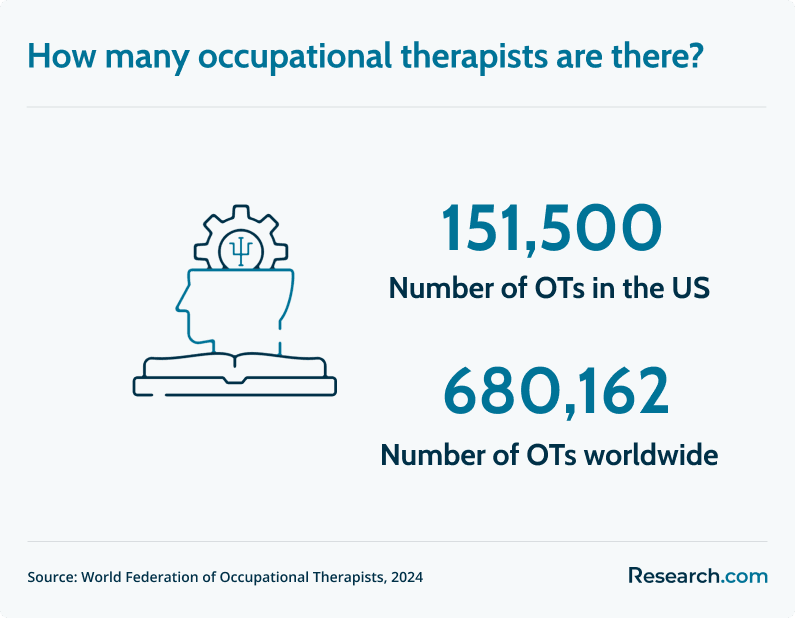
Occupational therapists often reach a point where they want to explore opportunities beyond direct patient care, and transitioning to non-clinical roles is both possible and rewarding. In the United States alone, there are about 151,500 OTs, and globally, over 680,162 OTs, many of whom are expanding into non-traditional roles.
This shift usually starts with identifying transferable skills—such as problem-solving, communication, and leadership—that are highly valued across industries like education, research, administration, and corporate wellness. While many non-clinical positions welcome experienced OTs without additional schooling, some careers may require further education or certifications.
For example, pursuing a master’s degree or doctorate can open doors in academia or research, while certifications in case management, ergonomics, project management, or health administration can boost employability in specialized roles. Networking, continuing education, and gaining experience in program development or policy advocacy are also key steps to successfully transition.
Ultimately, the move into non-clinical practice depends on aligning personal interests with professional growth and being proactive in acquiring the right credentials when needed.
Which industries offer the biggest non-clinical occupational therapy career opportunities?
According to the Bureau of Labor Statistics (BLS) table below, the industries with the highest levels of occupational therapist employment also present valuable opportunities for non-clinical career paths. Offices of Other Health Practitioners employ the largest number of OTs at over 42,000, and within this setting, many practitioners eventually transition into administrative or managerial positions, such as clinic managers or consultants overseeing operational efficiency.
Similarly, general medical and surgical hospitals employ nearly 32,000 OTs, and these facilities often create non-clinical opportunities in areas like program coordination, rehabilitation administration, and quality improvement.
Elementary and secondary schools, which employ more than 17,000 OTs, also provide a gateway to non-clinical roles. In this sector, OTs may become academic coordinators, special education administrators, or curriculum developers who influence how therapy integrates with education systems. Home health care services employ about 11,700 OTs and are rapidly expanding (BLS, 2023).
This growth supports non-clinical opportunities in telehealth program development, case management, and compliance oversight. Nursing care facilities, though smaller at nearly 10,000 OT jobs, also provide specialized non-clinical roles, including directors of rehabilitation, staff educators, and care coordination managers.
How does the demand for non-clinical occupational therapy careers compare to traditional clinical roles?
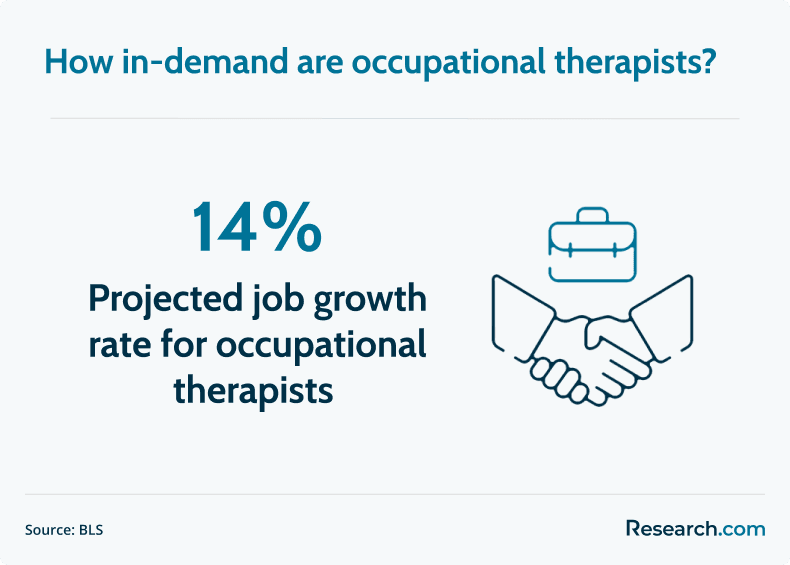
Employment of occupational therapists is projected to grow 14% from 2024 to 2034, which is much faster than the average for all occupations (BLS, 2024). This strong outlook reflects increasing demand for OT services in hospitals, schools, and community-based care.
In comparison, some non-clinical career paths show slower projected growth. For instance, employment of health educators is expected to grow by only 4%, and social and community service managers by 6%. However, other non-clinical pathways demonstrate significantly higher growth. Employment of medical and health services managers, for example, is projected to increase by 23% from 2024 to 2034, which is substantially higher than many clinical roles.
To transition into medical and health services management, occupational therapists typically need additional education or training beyond their OT degree. Most employers require at least a master’s degree in health administration, public health, or business administration (MBA). An MSN in public health nursing online is also an option you can consider.
Some positions may also prefer or require experience in healthcare leadership, budgeting, and policy. Certifications such as the Certified Medical Manager (CMM) or Fellow of the American College of Healthcare Executives (FACHE) can further enhance career prospects.
How does the salary of OTs differ from that of non-clinical occupational therapy careers?
In May 2024, the Bureau of Labor Statistics (BLS) reported that occupational therapists earned a median annual wage of $98,340, with salaries ranging from less than $67,090 to more than $129,830. By comparison, non-clinical career paths show varied earnings: health education specialists earned a median of $63,000, social and community service managers earned $78,240, and medical and health services managers earned $117,960.
These figures suggest that while some non-clinical roles pay less than traditional OT positions, leadership and administrative careers may provide significantly higher earning potential.
If you want to become an academic educator or pursue another non-clinical OT path such as health education, salary opportunities can differ significantly from traditional OT roles. The chart below shows that health education salary in Hospitals can reach up to $82,870 per year. Those who work for the government earn $68,390 per year, while educators in Ambulatory healthcare services receive $62,700 annually.
This indicates that although clinical OT positions generally offer higher earning potential, non-clinical fields such as education and public service can still provide competitive salaries, especially for those who prioritize stability, flexibility, or leadership opportunities over direct patient care.
What advanced degrees or certifications can help OTs qualify for non-clinical leadership roles?
Here are some of the most valuable advanced degrees and certifications that can help occupational therapists qualify for non-clinical leadership roles. While meeting the occupational therapy major requirements is the first step toward becoming a licensed OT, pursuing additional credentials can open doors to leadership, administrative, and academic opportunities:
- Master of Business Administration (MBA). This degree equips OTs with strategic, financial, and organizational skills that prepare them for executive or corporate wellness roles.
- Master’s in Healthcare Administration (MHA). This program trains OTs to effectively manage healthcare organizations, programs, and large interdisciplinary teams.
- Doctor of Occupational Therapy (OTD) or PhD. These degrees are essential for academic and research leadership positions, providing expertise in advanced practice and scholarship.
- Certified Case Manager (CCM). This certification highlights an OT’s expertise in coordinating complex care, making them competitive in administrative and case management roles.
- Project Management Professional (PMP). This credential develops leadership in program development, operations, and organizational change across healthcare and non-healthcare settings.
- Certified Professional in Healthcare Quality (CPHQ). This certification emphasizes quality improvement and patient safety, positioning OTs for leadership within healthcare systems.
Key Findings
- Offices of Other Health Practitioners (42,840) and General Medical and Surgical Hospitals (31,930) employ the largest number of occupational therapists.
- Rehab centers face the most critical gap, with a 76.5% shortage of occupational therapists worldwide.
- Occupational therapists earn a median annual wage of $98,340, compared to $67,090 for non-clinical roles such as health educators.
- Employment of occupational therapists is projected to grow 14% from 2024 to 2034, faster than the average occupation.
- By comparison, health educators are expected to grow only 4%, while social and community service managers will grow 6% in the same period.
References:
- U.S. Bureau of Labor Statistics. (n.d.). Health education specialists. In Occupational Outlook Handbook. https://www.bls.gov/ooh/community-and-social-service/health-educators.htm
- U.S. Bureau of Labor Statistics. (n.d.). Occupational therapists. In Occupational Outlook Handbook. https://www.bls.gov/ooh/healthcare/occupational-therapists
- World Federation of Occupational Therapists. (2024). WFOT Human Resources Project. https://hr-project.wfot.org
Other Things to Know About Non-Clinical Occupational Therapy Careers
Yes, certificate programs in areas like health informatics, ergonomics, and assistive technology can enhance skills relevant to non-clinical OT roles. These programs typically last a few months and are offered by many professional organizations and continuing education providers, bolstering credentials for diverse career paths.
Trends like telehealth, aging populations, workplace wellness, and AI-driven rehabilitation tools are opening new paths for OTs. These changes expand roles in policy, research, and healthcare management. Non-clinical OTs may also lead in designing digital therapy platforms. Such trends ensure their expertise remains relevant beyond direct patient care.


