
2027 How to Become a CEO: Education, Salary, and Job Outlook

Co-Founder and Chief Data Scientist
Rising to the role of CEO isn’t just about climbing the corporate ladder; it’s about mastering the art of leadership at the highest level. The path is challenging, requiring vision, resilience, and the ability to guide organizations through constant change. For those who dream big, understanding how to become a CEO is the first crucial step.
Education, experience, and leadership skills form the foundation of this journey. From choosing the right degree to climbing the corporate ladder, aspiring CEOs must navigate a competitive and evolving landscape. Salary expectations and job outlook also play a major role in shaping career decisions.
In this guide, I will break down the key steps on how to become a CEO in today’s world. You’ll learn what education and skills are most valuable, what salaries look like, and what the job market holds for future leaders.
What are the benefits of becoming a CEO?
- Overall employment of top executives, including CEOs, is projected to grow 4% from 2024 to 2034, about as fast as the average for all occupations (BLS, 2025).
- Top-earning CEOs can make up to $257,500 annually, reflecting the weight of responsibility that comes with the role (ZipRecruiter, n.d.)
- Beyond pay and titles, CEOs are the ones steering the wheel: setting vision, shaping culture, and guiding companies toward long-term greatness.
- What does a CEO do? CEO Duties
- How to become a CEO? Path to CEO
- What is the difference between a CEO and other C-level roles? What is the difference between a CEO and other C-level roles?
- What skills do you need to become a CEO? Essential Skills
- What are the best degree programs for aspiring CEOs? Best Degree Programs
- What is the average salary of a CEO? Average Salary
- What are the highest-paying industries for CEOs? Top-Paying Industries
- What are the challenges of becoming a CEO? Challenges
- What are the alternative career pathways for a CEO? Alternative Career Paths
- What are the most relevant leadership trends you need to know as a CEO? What are the most relevant leadership trends you need to know as a CEO?
- How can affordable executive education enhance your CEO journey? How can affordable executive education enhance your CEO journey?
What does a CEO do?
At the heart of every company, the CEO is the person responsible for shaping direction and driving results. Their role goes far beyond a title; they balance strategy, operations, and people leadership to keep the business moving forward. Learning how to become a CEO starts with identifying the key responsibilities that define the position.
Here are the core functions that define a CEO’s role:
- Defining Company Vision and Strategy: Establish long-term goals and determine the path to achieve sustainable growth.
- Making High-Stakes Decisions: Weigh risks and opportunities to guide the company’s financial health and market position.
- Leading Executive Teams: Manage and align senior leaders to ensure departments work toward a unified mission.
- Overseeing Daily Operations: Monitor business performance, streamline processes, and drive innovation across the organization.
- Managing External Relationships: Build trust with investors, partners, customers, and the board of directors to strengthen company reputation.
Mastering these responsibilities requires both experience and education. For those aiming to refine their skills and strengthen their career path, the best online MBA in general business programs can provide the foundation needed to take the next step toward executive leadership.
How to become a CEO?
Climbing to the CEO role is less about luck and more about deliberate moves that build expertise, credibility, and vision. While every path looks different, there are common steps that aspiring executives take to prepare for the top job. For many top-tier roles, securing an advanced degree is a critical early step, so exploring jobs you can get with a master's degree can help set your career trajectory. If you’re serious about learning how to become a CEO, these milestones will help guide your career path.
Here are the key steps to becoming a CEO:
- Earn a Solid Educational Foundation: Most CEOs begin with a bachelor’s degree in business, finance, or a related field.
- Gain Industry-Specific Experience: Build expertise in your chosen field by working in roles that expose you to operations, management, and strategy.
- Pursue Advanced Education: Many CEOs strengthen their credentials with an MBA or other executive programs to refine decision-making and leadership skills.
- Develop Leadership Skills Early: Seek opportunities to lead teams, manage projects, and demonstrate the ability to drive results.
- Network Strategically: Build connections with mentors, peers, and executives who can provide guidance and open doors.
- Climb the Corporate Ladder: Take on roles of increasing responsibility, moving from manager to director to executive before reaching the C-suite.
- Stay Adaptable and Innovative: Embrace change, adopt new technologies, and position yourself as a forward-thinking leader.
Following these steps can help position you for long-term success as an executive. For professionals looking to expand their leadership potential beyond traditional business routes, exploring masters in organizational leadership jobs may be a good step to take.
What is the difference between a CEO and other C-level roles?
While the CEO is the highest-ranking executive in a company, other C-level leaders also play critical roles in driving success. Each position has unique responsibilities, but their focus is narrower compared to the CEO, who oversees the entire organization.
Part of learning how to become a CEO is recognizing these differences, which reveal the role’s singular importance. Here’s the role differs from other C-suite positions:
- Chief Operating Officer (COO): Focuses on managing day-to-day operations, while the CEO sets the overall vision and long-term strategy.
- Chief Financial Officer (CFO): Oversees budgets, investments, and financial health, whereas the CEO makes broader decisions that balance finance with growth, culture, and market positioning.
- Chief Marketing Officer (CMO): Leads branding, marketing, and customer engagement efforts, while the CEO ensures these strategies align with the company’s mission and big-picture goals.
- Chief Technology Officer (CTO): Drives innovation and manages technological infrastructure, but the CEO decides how technology fits into the organization’s larger competitive strategy.
- Chief Human Resources Officer (CHRO): Handles talent management, culture, and workforce development, while the CEO balances these efforts with overall organizational performance and stakeholder expectations.
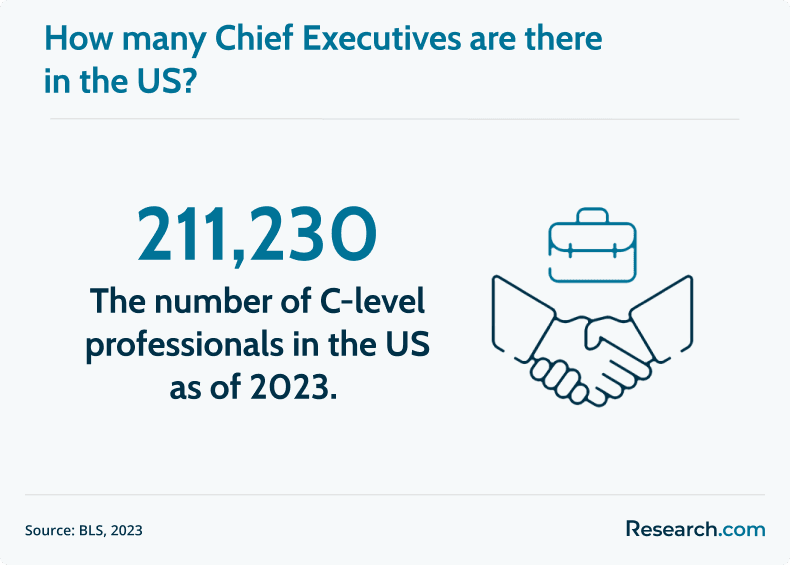
Each of these roles is vital, but the CEO is the one responsible for uniting all functions under a single vision and steering the company toward sustainable growth. To put the scale of this leadership into perspective, there are currently 211,230 Chief Executives in the US as of 2023, highlighting both the rarity and significance of reaching this level.
What skills do you need to become a CEO?
If you're wondering how to become a CEO effectively and efficiently, start by learning the qualities that define effective leadership. From making high-stakes decisions to inspiring entire organizations, the role demands versatility, resilience, and relentless business acumen.
Here are the most critical skills every CEO needs:
- Strategic Thinking: The ability to see the big picture, forecast trends, and align the company’s direction with long-term goals.
- Decision-Making Under Pressure: Confidence in choosing the best course of action even when stakes are high and information is limited.
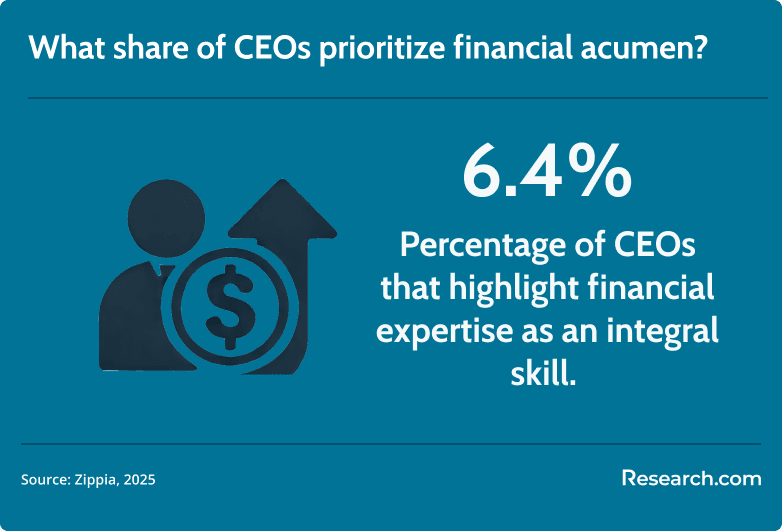
- Financial Acumen: 6.4% of CEOs highlight financial expertise—mastery of budgeting and financial statements—as essential for driving sustainable growth.
- Leadership and Communication: Inspiring teams, fostering collaboration, and clearly communicating vision at every level of the organization.
- Adaptability and Innovation: Staying agile in rapidly changing markets while driving new ideas and approaches.
- Emotional Intelligence: Understanding people, managing conflict, and building strong relationships across the company and with stakeholders.
Mastering these skills doesn’t just prepare you for the role; it sets the foundation for lasting impact as a leader. If you’re exploring how to become a CEO, focusing on these abilities will give you the edge to not just reach the top, but thrive once you get there. For those who are passionate about mental health and looking for a rewarding path, there are many fulfilling careers to pursue with a master’s in clinical mental health counseling.
What are the best degree programs for aspiring CEOs?
Education plays a critical role in shaping the path to executive leadership. While there isn’t a single right degree for the corner office, certain academic programs give aspiring leaders a strong foundation in strategy, finance, and organizational management.
Choosing the right degree program is one of the most important first steps in understanding how to become a CEO. Some of the best degree programs include:
- Business Administration: A broad program that covers management, finance, and operations—ideal for building well-rounded leadership skills.
- Finance or Accounting: Provides deep expertise in financial strategy and for guiding company growth. Here’s what to know before pursuing an accounting degree.
- Economics: Sharpens analytical thinking and helps leaders understand market dynamics, competition, and global trends.
- Engineering or Technology Management: Equips leaders to innovate, solve problems, and adapt quickly in tech-driven industries.
- Communications or Organizational Leadership: Strengthens the ability to inspire teams, manage culture, and lead through people-first strategies.
- MBA (Master of Business Administration): The most popular advanced degree for executives, refining leadership, strategy, and decision-making at the highest level.
Ultimately, the best degree depends on your career goals and the industry you want to lead in. Pairing the right academic background with hands-on experience and leadership development can dramatically increase your chances of reaching the top. If your goal is to lead an organization that focuses on social impact, you may want to look into jobs that help people and pay well.
What is the average salary of a CEO?
For many professionals, one of the biggest motivators in learning how to become a CEO is the earning potential. In the US, the average CEO salary is $151,302 per year, placing the role among the highest-paying in the business world. This pay reflects not just the title but the strategic responsibility that comes with leading an entire company.
Keep in mind: CEO salaries vary widely depending on company size, industry, and market position, with leaders at smaller firms earning closer to the average. Those at the helm of larger organizations often see their pay climb well above typical ranges.
At the top end, CEOs can earn up to $257,500 annually, underscoring the financial rewards of reaching executive leadership. For those preparing for this path, earning credentials is a must. Check out the top bachelor's in organizational leadership online for programs that can equip you with the necessary skills and knowledge.
To show how compensation is spread across different levels, the chart below breaks down CEO salaries by percentile:
What are the highest-paying industries for CEOs?
Compensation for CEOs can vary dramatically depending on the industry. At the top of the list is management of companies and enterprises, where average annual pay reaches $239,200. This sector rewards leaders who can oversee complex organizations and drive growth across diverse business units.
Close behind are CEOs in professional, scientific, and technical services, earning about $208,870 annually. These roles often demand specialized knowledge and the ability to guide innovation-driven companies. For those mapping out the ways on how to become a CEO, entering industries that thrive on expertise can translate to higher pay.
Another strong option is healthcare and social assistance, where CEOs average $194,360 per year. Leading organizations in this sector require balancing financial performance with mission-driven goals that impact communities. For nurses looking at career mobility in the healthcare sector, understanding where their skills are in high demand can be key to financial growth, so it’s worth researching the best states for nurses to practice.
To visualize how these industries compare, the next chart highlights the highest-paying fields for CEOs:
What are the challenges of becoming a CEO?
Reaching the top of the corporate ladder (oftentimes) comes with real obstacles. CEOs face steep competition, constant pressure to perform, and the weight of high-stakes decisions. For those exploring how to become a CEO, understanding these challenges is just as important as knowing the rewards.
Here are some of the biggest hurdles future CEOs should be prepared to navigate:
- Intense Competition: With limited openings at the top, aspiring leaders must stand out through exceptional performance, adaptability, and vision.
- Workload and Stress: The role demands long hours, constant decision-making, and accountability for a company’s overall success.
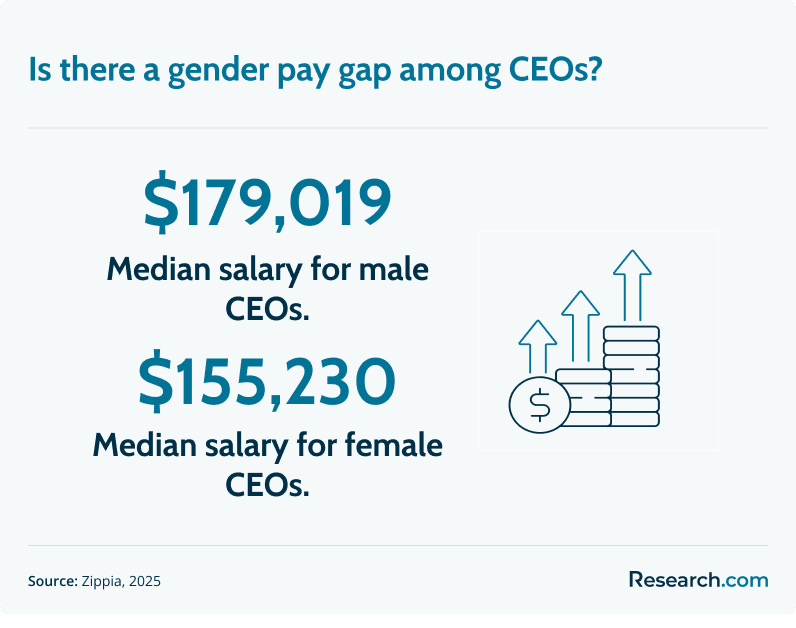
- Gender Wage Gap: Gender wage gap in this profession is prevalent. Male CEOs earn about $179,019, while female CEOs average $155,230: a pay gap of nearly $24,000.
- Stakeholder Pressure: Balancing the interests of shareholders, employees, and customers often leads to complex and conflicting demands.
- Continuous Adaptation: Markets, technologies, and consumer expectations evolve quickly, requiring CEOs to continually adapt their strategies.
While the role of CEO is prestigious and rewarding, it also comes with challenges that demand resilience, adaptability, and vision. Knowing these hurdles is a key step in preparing for the journey ahead.
What are the alternative career pathways for a CEO?
Not every ambitious professional takes a straight line to the CEO role. Many leaders gain valuable experience in adjacent positions that sharpen their strategic, financial, and operational expertise. For those exploring how to become a CEO, these alternative career pathways can serve as stepping stones to the top.
Here are some of the most common roles that prepare professionals for the CEO seat:
- General Manager (GM): Runs business units or divisions, blending people management with operational oversight.
- Entrepreneur/Founder: Builds a company from the ground up, providing firsthand experience in leadership, risk-taking, and innovation.
- Board Member: Gains perspective on governance, accountability, and high-level decision-making, all of which are critical for CEOs.
- Consultant/Strategy Director: Advises organizations on scaling, efficiency, and competitive advantage, gaining a broad view of business challenges.
- Nonprofit Executive Director: Oversees mission-driven organizations, honing skills in leadership, fundraising, and stakeholder management.
Exploring these alternative roles helps aspiring leaders build the skills and perspective needed to step into the CEO seat. For those aiming to accelerate their journey, advanced programs like DBA management online can provide the edge to stand out in executive leadership.
What are the most relevant leadership trends you need to know as a CEO?
Leadership of any era continues to evolve with the pace of technology, culture, and global markets. For professionals learning how to become a CEO, staying in the loop with these leadership shifts is key to stepping confidently into the role.
Here are the trends redefining today’s leadership according to Horton International (2025):
Leading With Empathy
Emotional intelligence and purpose-driven leadership are now essential for engaging teams and unlocking higher productivity. CEOs who put people first consistently see stronger results and lower turnover.
The Tech-First Mindset
With AI, automation, and big data shaping industries, leaders who embrace technology will set the pace for growth and efficiency. For CEOs, tech literacy has become a core competency, not an optional skill.
Power of Inclusive Voices
Diversity in leadership is no longer just a value statement; it’s a proven driver of innovation and profitability. CEOs who actively elevate different perspectives build stronger, more future-ready organizations.
Thriving Through Agility
Rapid shifts in global markets demand leaders who can pivot quickly. Adaptable CEOs not only survive uncertainty but also position their companies to capture new opportunities, from emerging markets to tech-driven transformations.
Wellbeing as Strategy
Employee mental health and work-life balance are now critical business priorities. Leaders who design organizations with wellness in mind, through flexible policies, sustainable workloads, and supportive cultures, create workplaces where people perform at their best.
How can affordable executive education enhance your CEO journey?
Research indicates that continuous education remains a decisive factor in sharpening strategic insights and leadership abilities, particularly in rapidly evolving markets. Tailored executive courses and affordable online MBA studies help bridge practical experience with academic rigor by exposing future CEOs to advanced financial analysis, innovative management practices, and global market trends. This targeted learning approach not only reinforces core competencies but also supports informed decision-making, risk management, and long-term organizational strategy. For a cost-effective option that aligns with these goals, consider exploring the best cheap online MBA programs.
Here’s What Professionals Have to Say About Becoming CEOs
- Lauren: "As a CEO, I earn far more than I ever imagined, but it’s the responsibility of guiding an organization through challenges that excites me most. Every decision feels impactful. I wake up knowing my choices truly shape the future."
- Alexis: "When I became CEO, my salary jumped to levels I never thought possible. Yet the biggest reward is the respect and trust that come with steering a company’s direction. It’s both humbling and empowering at the same time."
- Jorge: "The role of CEO demands long hours and constant adaptability, but the compensation more than matches the effort. Leading innovation while building a legacy is priceless. I’ve learned to thrive under pressure in ways I never expected."
Key Findings
- In the US, the average CEO salary is $151,302 per year, placing the role among the highest-paying in the business world
- There are currently 211,230 Chief Executives in the US as of 2023, highlighting both the rarity and significance of reaching this level.
- 6.4% of CEOs highlight financial expertise—mastery of budgeting, investments, and financial statements—as essential for driving sustainable growth.
- The highest paying industry for CEOs is management of companies and enterprises, where average annual pay reaches $239,200.
- Male CEOs earn about $179,019, while female CEOs average $155,230—a pay gap of nearly $24,000.
References:
- DDI. (2025). Global leadership forecast 2025. Ddi.com. Retrieved 1 October 2025.
- Gallup. (2020). Improve employee engagement in the workplace. Gallup.com. Retrieved 1 October 2025.
- Gartner. (2025). 2023 CEO Survey — The Pause and Pivot Year. Gartner.com. Retrieved 1 October 2025.
- Horton International. (2025). Leadership trends for 2025. Hortoninternational.com. Retrieved 1 October 2025.
- US Bureau of Labor Statistics. (2023). Occupational employment and wages, May 2023: 11-1011 chief executives. Bls.gov. Retrieved 1 October 2025.
- US Bureau of Labor Statistics. (2024). Top executives. U.S. Department of Labor. Bls.gov. Retrieved 1 October 2025.
- Zippia. (2024). Chief executive officer skills. Zippia.com. Retrieved 1 October 2025.
- ZipRecruiter. (2025). Chief executive officer salary. Ziprecruiter.com. Retrieved 1 October 2025.
Other Things You Need to Know About Becoming a CEO
Industries such as technology, healthcare, and renewable energy are projected to have the highest demand for CEOs in 2027 due to rapid innovation and growth. These sectors require leaders who can navigate complex challenges and drive strategic decisions.
In 2027, the job outlook for aspiring CEOs is competitive, with slow job growth expected as markets stabilize. Opportunities are generally better in emerging sectors like technology and renewable energy. Networking, substantial experience, and a strong educational background provide a competitive edge.
In 2027, aspiring CEOs need strong strategic thinking, leadership, and communication skills. Experience in managing diverse teams and a solid understanding of the company's industry are crucial. CEOs often benefit from proven track records in driving growth, making their backgrounds in business development or operations highly valuable.


