
2027 Types of Master's Degrees for Healthcare Professionals

Co-Founder and Chief Data Scientist
Healthcare in the United States faces persistent challenges, including workforce shortages, rising patient needs, and increasing demand for leadership and specialized expertise. In 2023 alone, over 17 million people were employed in the healthcare industry, making it the largest employment sector in the nation.
As the sector continues to expand, professionals are turning to advanced education to remain competitive and meet evolving demands. This article explores the different master's degrees for healthcare professionals, outlining their benefits, career outcomes, and long-term value.
What are the benefits of getting master's degrees for healthcare professionals?
- A healthcare master’s can qualify you for leadership, administrative, research, and specialized clinical roles across hospitals, government agencies, and private organizations.
- Professionals with master’s-level credentials generally report median annual wages significantly higher than those with bachelor’s degrees, with many exceeding six figures.
- Earning one of the recognized master's degrees for healthcare professionals provides advanced skills in leadership, patient care, and data-driven decision-making, making you more competitive in the job market.
What can you do with a master's degree for healthcare professionals?
Pursuing a master’s degree in healthcare equips professionals with the advanced knowledge and skills needed to step into leadership, specialized clinical, or research-oriented roles. These programs prepare students to manage healthcare systems, improve patient outcomes, and respond to challenges such as workforce shortages and technological change.
Whether you are a nurse seeking advanced practice certification, a clinician moving into administration, or a public health worker aiming to influence policy, master's degrees for healthcare professionals can open pathways to career advancement and long-term growth.
Where can you work with a master's degree for healthcare professionals?
Graduates often find opportunities in hospitals, outpatient care centers, and government health agencies, where they apply specialized expertise to improve healthcare delivery and management. Many also work in universities, nonprofit organizations, and research institutions, particularly in roles tied to public health and health informatics.
Healthcare professionals with master’s credentials are also in demand within private sector organizations, such as insurance companies, pharmaceutical firms, and consulting agencies. These roles often focus on policy development, health systems management, and technology integration to improve efficiency and patient outcomes.
How much can you earn with a master's degree for healthcare professionals?
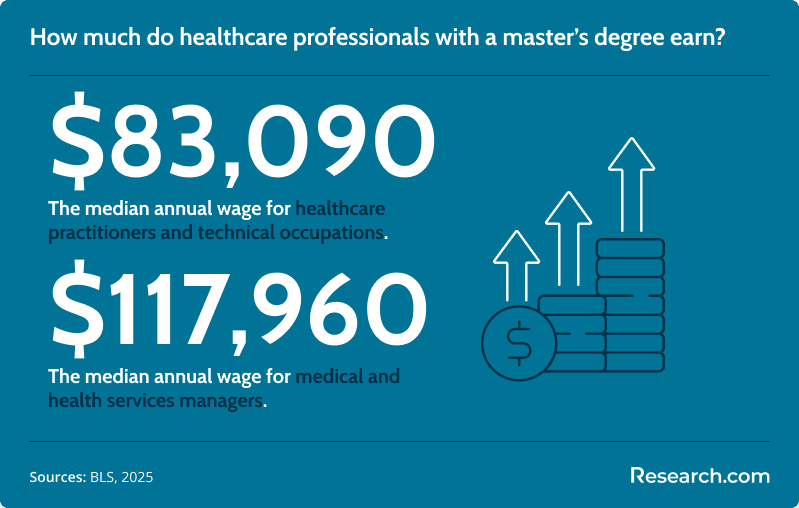
Earnings vary widely depending on the specialization. For example, medical and health services managers—a common role for those with an MHA or MBA—earned a median salary of $117,960 in May 2024, while healthcare practitioners and technical workers earned $83,090 in the same year.
Master’s-level professionals in specialized fields such as nurse practitioners or health informaticists often exceed these averages. These earnings reflect the strong demand for master's degrees for healthcare professionals, particularly as healthcare organizations seek leaders who can address workforce shortages and meet rising patient needs.
- What are the different types of master’s degrees available for healthcare professionals in 2027? Degree Types
- What are the admission requirements for a healthcare master’s degree? Admission Requirements
- How long does it take to complete a healthcare master’s degree? Completion Time
- How much does it cost to earn a healthcare master’s degree in 2027? Cost
- Can you complete a healthcare master’s degree fully online in 2027? Online Degrees
- What skills do you gain from a master’s in healthcare? Skills
- How do you decide which healthcare master’s degree is right for your career? How do you decide which healthcare master’s degree is right for your career?
- What jobs can you get with a healthcare master’s degree? Jobs
- What is the average salary for healthcare professionals with a master’s degree? Salary
- Will healthcare master’s degrees remain in demand in the next 10 years? Job Outlook
What are the different types of master’s degrees available for healthcare professionals in 2027?
Healthcare is a diverse and fast-evolving industry, so different master's degrees for healthcare professionals are designed to meet unique career goals. From administrative leadership to clinical specialization, these programs help professionals respond to workforce shortages, adopt new technologies, and improve patient care outcomes. Below are some of the most recognized master’s programs in the field.
Master of Science (MS) in Healthcare Administration
An MS in Healthcare Administration equips professionals with skills in hospital operations, healthcare policy, and financial management. This degree prepares graduates for leadership positions where they oversee teams, manage budgets, and design patient care systems. It is especially suited for those aiming to transition from clinical roles into executive or managerial positions.
Master of Science (MS) in Health Information Management
This degree focuses on the collection, analysis, and security of healthcare data, a critical component of modern medical systems. Students learn to ensure compliance with privacy regulations, improve efficiency through data analytics, and integrate health information systems. For those exploring the most common career change for nurses, transitioning into health informatics can be a natural next step. Professionals with this background often work as health information managers, compliance officers, or clinical data analysts.
Master of Business Administration (MBA) in Healthcare Administration
An MBA in Healthcare Administration blends business leadership training with healthcare expertise. Students gain advanced knowledge in strategy, economics, and operations while also learning to navigate healthcare-specific challenges such as regulations and patient safety. Many graduates take on executive roles in hospitals, pharmaceutical companies, and insurance providers, overseeing large teams and complex systems.
Master of Public Health (MPH)
The MPH prepares graduates to address population health, epidemiology, and preventive care. This degree emphasizes public policy, health education, and research methods to tackle global health issues and improve community well-being. Graduates often work in government health agencies, nonprofits, or research institutions focused on disease prevention and health promotion.
Master of Science in Nursing (MSN)
An MSN offers specialized training for nurses seeking to advance into roles such as nurse practitioners, clinical nurse specialists, or nurse educators. The curriculum combines advanced clinical practice with leadership and research. For example, some programs offer concentrations in patient safety and healthcare quality—explore more about what can you do with an MSN degree in patient safety and healthcare quality.
What are the admission requirements for a healthcare master’s degree?
Admission requirements vary by program, but most schools set baseline standards to ensure students are prepared for graduate-level study. If you are looking for flexible entry points, you may explore programs considered among the easiest healthcare administration degrees.
Typical requirements include:
- A bachelor’s degree in healthcare, nursing, biology, or a related field
- A minimum GPA, often 3.0 or higher
- Professional experience in healthcare (preferred for some programs such as MHA or MBA)
- Letters of recommendation from academic or professional references
- GRE or GMAT scores (sometimes waived for experienced professionals)
- A personal statement outlining career goals and reasons for pursuing the degree
Over the past decade, the number of master's degrees for healthcare professionals has steadily increased, reflecting rising demand for advanced training in the sector. This growth highlights how more students are pursuing graduate-level education to prepare for leadership roles, specialized practice, and research—especially at institutions such as the best historically women's colleges in the US.
The trend also demonstrates how healthcare organizations increasingly value advanced credentials as a response to workforce shortages and evolving patient needs. The chart below illustrates the steady expansion of master’s degree conferrals in health professions between academic years 2011–12 and 2021–22.
How long does it take to complete a healthcare master’s degree?
The timeline for completing master's degrees for healthcare professionals depends on program structure and enrollment type. Full-time students usually finish within two years, while part-time or working professionals may take three to four years. Accelerated pathways are also available for those who want to complete their studies faster.
Some programs, especially those that integrate clinical training, may require additional time. For individuals looking to supplement their graduate study, pursuing a certification for healthcare management alongside the master’s program can add value without significantly extending the duration.
How much does it cost to earn a healthcare master’s degree in 2027?
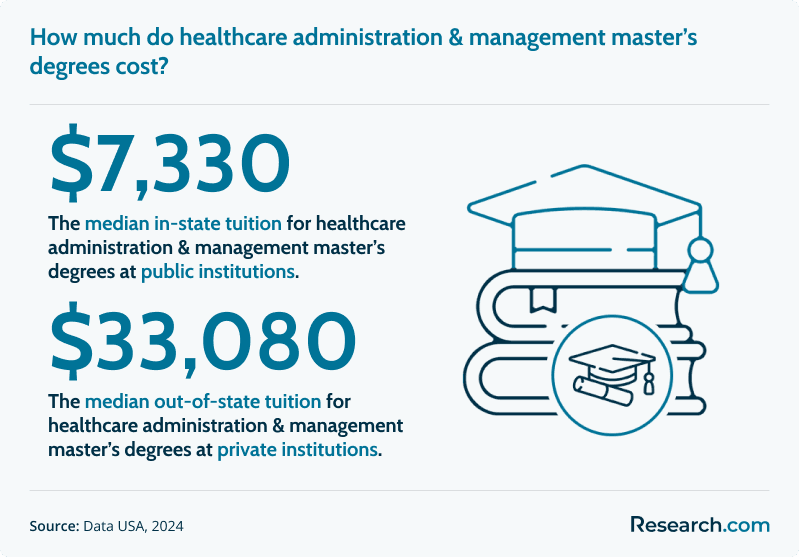
Tuition varies widely by institution, program type, and learning format. On average, the total cost of master's degrees for healthcare professionals ranges from $30,000 to $70,000. Public universities may be more affordable, while private institutions can be more costly.
Historically Black Colleges and Universities (HBCUs) also provide competitive and accessible graduate programs—see options in HBCU healthcare administration—which may offer scholarships and lower tuition compared to other institutions. Students should also consider additional expenses, such as textbooks, licensing exams, and practicum fees.
Can you complete a healthcare master’s degree fully online in 2027?
Yes, many universities now offer accredited master's degrees for healthcare professionals entirely online, providing flexibility for working adults. These programs often include asynchronous lectures, virtual simulations, and remote collaboration projects.
However, certain clinical degrees require in-person practicums or residencies to meet accreditation standards. Students interested in career pivots outside traditional clinical practice may consider alternative pathways, such as non medical biology careers, which are also accessible through online study.
What skills do you gain from a master’s in healthcare?
Graduates of master's degrees for healthcare professionals develop both technical and soft skills that prepare them for leadership and specialized practice.
Key competencies include:
- Leadership and management skills for overseeing healthcare teams and systems
- Data analysis and health informatics for evidence-based decision-making
- Policy and regulatory knowledge for compliance and health system navigation
- Communication and collaboration skills for working across multidisciplinary teams
Many of these competencies align with today’s job market demands, including best in-demand healthcare business intelligence jobs, which emphasize the use of data and analytics in improving patient outcomes.
How do you decide which healthcare master’s degree is right for your career?
Choosing among the many master's degrees for healthcare professionals depends on personal career goals and preferred work settings. Consider the following factors:
- Your current role (clinical, administrative, research, or policy-focused)
- Long-term career aspirations (e.g., hospital leadership, public health, academia)
- Program format (online, on-campus, hybrid, accelerated)
- Cost and financial aid opportunities
- Accreditation and employer recognition
What jobs can you get with a healthcare master’s degree?
Having a graduate credential in healthcare often comes with many benefits, including opening doors to a wide range of roles across various industries. Examples include:
- Medical and Health Services Manager
- Nurse Practitioner or Clinical Nurse Specialist
- Public Health Program Director
- Health Informatics Specialist
- Hospital or Clinic Administrator
- Pharmaceutical Project Manager
- Policy Analyst or Healthcare Consultant
What is the average salary for healthcare professionals with a master’s degree?
Earnings vary depending on specialization and setting, but master’s-level professionals generally see higher salaries than their bachelor’s-prepared counterparts. For instance, the median annual wage for healthcare practitioners and technical occupations was $83,090 in May 2024, covering roles such as nurses, physicians, and dental hygienists.
In comparison, medical and health services managers earned a median annual wage of $117,960 in May 2024. This highlights the significant earning potential for those with graduate credentials, especially in administrative and leadership positions. Professionals exploring multi-state practice opportunities may also benefit from knowing what states have LPC reciprocity, which can expand their career flexibility and income potential.
Will healthcare master’s degrees remain in demand in the next 10 years?
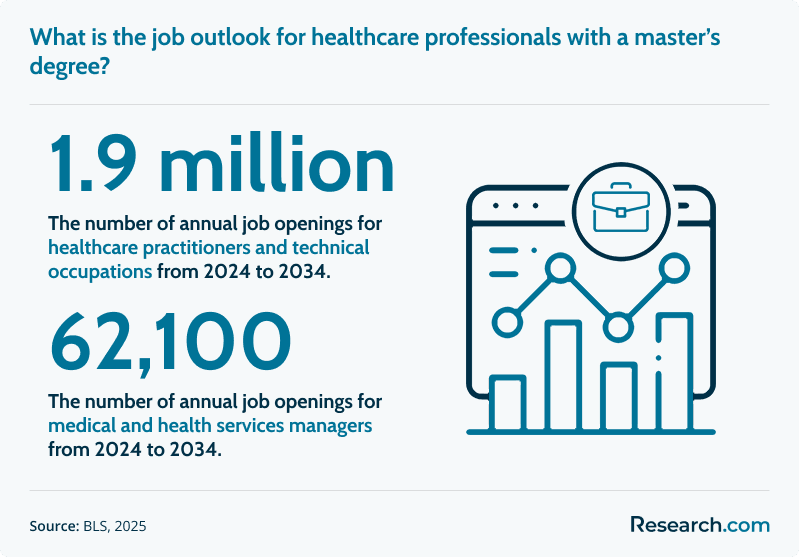
Demand for highly trained professionals will continue to rise as healthcare systems expand and adapt to new challenges. According to workforce projections, overall employment in healthcare occupations is expected to grow much faster than average from 2024 to 2034, with about 1.9 million openings annually.
The highest demand for nurses by state reflect how workforce shortages continue to drive opportunities across various healthcare roles, emphasizing the need for skilled graduates.
Within this growth, employment of medical and health services managers is projected to increase by 23% from 2024 to 2034, creating about 62,100 openings per year on average. This outlook ensures that investing in master's degrees for healthcare professionals will remain valuable for years to come.
Here’s What Graduates Have to Say About Their Master's Degrees for Healthcare Professionals
- Remi: "My MSN program prepared me to transition from bedside nursing into an advanced practice role. The coursework in patient safety and leadership gave me confidence to guide clinical teams, and the career change significantly increased my earning potential. Completing this degree also allowed me to mentor younger nurses."
- Josh: "As a public health graduate, my MPH helped me secure a position with a state health department. The training in epidemiology and policy development was directly applicable to my role, especially during public health crises. It also provided networking opportunities that expanded my career options beyond clinical practice."
- Gail: "Earning an MHA gave me the skills to oversee hospital operations and manage multi-million-dollar budgets. I now lead a team of administrators who focus on patient experience and cost efficiency. The program was challenging but gave me a clear pathway into senior leadership."
Key Findings
- The healthcare sector employed over 17 million people in 2023, making it the largest U.S. employment sector.
- Workforce shortages in nursing and physician care are projected to persist, increasing demand for advanced credentials.
- Master's degrees for healthcare professionals open career pathways in administration, public health, nursing, and informatics.
- Graduates often report higher salaries, with median annual wages ranging from $83,090 to $117,960 depending on role.
- Employment of medical and health services managers is projected to grow 23% by 2034, much faster than the national average.
- Online and flexible programs make healthcare master’s degrees more accessible to working professionals.
References:
- BLS. (2025, August 28). Healthcare occupations. bls.gov.
- BLS. (2025, August 28). Medical and health services managers. bls.gov.
- Data USA. (2024). Health Care Administration & Management. datausa.io.
- National Center for Health Workforce Analysis. (2024). State of the U.S. Health Care Workforce, 2024. bhw.hrsa.gov.
- NCES. (2024). COE - Graduate Degree Fields. nces.ed.gov.
Other Things You Should Know About Master's Degrees for Healthcare Professionals
In 2027, prerequisites for healthcare master's programs often include a bachelor's degree in a related field and sometimes require work experience, particularly for specialized tracks like healthcare administration or nursing. However, some programs may admit students directly from undergraduate studies. Always check specific program requirements.
In 2027, healthcare master's programs offer various specializations such as Health Informatics, Nurse Leadership, Public Health, and Healthcare Administration, allowing professionals to tailor their education to specific career goals and industry demands.


