
2027 What Can You Do with a Geoscience Degree?

Co-Founder and Chief Data Scientist
The market for geospatial technology is projected to reach $17.76 billion, yet many still view geoscience as a narrow field focused on oil rigs and dinosaurs. This perception gap creates real anxiety for passionate students and professionals wondering if this path is truly viable. The reality is that a geoscience degree is a versatile STEM qualification for solving critical 21st-century problems.
To cut through the confusion, our career planning experts with more than 10 years of experience have prepared this comprehensive guide. We'll give you a clear, straightforward look at the careers, salaries, and skills you need to build a successful future in this evolving field.
Key Things You Should Know About a Geoscience Degree
- The largest employers of geoscientists are engineering and consulting firms, directly challenging the common misconception that the field is dominated by the oil and gas industry.
- A graduate's marketability is now primarily driven by their digital competence with tools like GIS, a sector with a projected market size of $17.76 billion.
- Significant career advancement and higher earning potential are fundamentally linked to obtaining post-graduate credentials, specifically a master's degree and a Professional Geologist (P.G.) license.
- What is a geoscience degree? Degree Overview
- What jobs can I get with a geoscience degree? Best Jobs
- How much can you earn with a geoscience degree? Salary
- What is the job outlook for graduates of geoscience degree programs? Job Outlook
- Where can I work with a geoscience degree? Where can I work with a geoscience degree?
- What skills do you need for geoscience degree jobs? Skills
- What are the education requirements to enroll in a geoscience degree program? Education Requirements
- What alternative paths are available for a geoscience degree? Alternative Paths
- What career paths are available to graduates with a geoscience degree? Career Paths
- What advancement opportunities are available after a geoscience degree? What advancement opportunities are available after a geoscience degree?
What is a geoscience degree?
A geoscience degree is a rigorous, interdisciplinary science degree. It applies the core principles of physics, chemistry, and mathematics to study the Earth’s composition, structure, and processes.
Think of it as the foundational science of our planet. It’s a quantitative field that gives you a deep understanding of Earth's systems, from mineral formation to the movement of tectonic plates. This is different from geography, which often focuses more on human cultures and economies, or environmental science, which may take a broader, more ecological approach.
The curriculum is built on foundational courses like mineralogy, petrology, and structural geology. This strong scientific grounding is precisely what makes graduates such versatile problem-solvers in a wide variety of technical fields.
What jobs can I get with a geoscience degree?
A geoscience degree prepares you for a wide range of careers far beyond the traditional image of a geologist. Graduates are well-equipped for roles in the environmental, engineering, energy, and government sectors.
Hydrogeologist
As a hydrogeologist, you’ll investigate how groundwater moves through soil and rock formations, studying both its availability and quality. This role is essential in managing drinking water supplies, preventing contamination, and planning sustainable water usage. Hydrogeologists often work closely with environmental agencies, government organizations, and engineering firms to develop solutions for water scarcity and pollution remediation.
Environmental Consultant
Environmental consultants help businesses and governments minimize their environmental impact while ensuring compliance with regulations. You might assess soil, water, or air quality before construction projects or evaluate the long-term effects of land development. In this role, you serve as both an advisor and problem solver, helping clients balance growth with environmental responsibility.
Engineering Geologist
Engineering geologists apply geological knowledge to ensure the safety and stability of infrastructure such as dams, tunnels, and building foundations. You’ll analyze soil and rock conditions, identify potential hazards like landslides or earthquakes, and recommend design modifications to mitigate risks. This role is critical in preventing structural failures and protecting both people and the environment.
GIS Analyst
A GIS (Geographic Information Systems) analyst uses advanced mapping and spatial analysis tools to study geological features and processes. You’ll create detailed maps, run simulations, and model natural phenomena such as erosion, groundwater flow, or resource distribution. These insights are vital for urban planning, resource exploration, and environmental monitoring.
Exploration Geologist
Exploration geologists play a key role in the discovery of new mineral, oil, and gas deposits. You’ll analyze rock samples, conduct field surveys, and use geophysical tools to assess the potential of sites for resource development. This work is especially important in energy and mining industries, where accurate assessments determine the economic viability of projects.
The Modern Geoscience Landscape
Most of these roles are found within large consulting firms and government agencies. These organizations hire geoscientists to provide critical data and analysis for infrastructure, environmental protection, and resource management. The skills you build are highly valued, making you a strong candidate for a wide range of other applied sciences jobs.
How much can you earn with a geoscience degree?
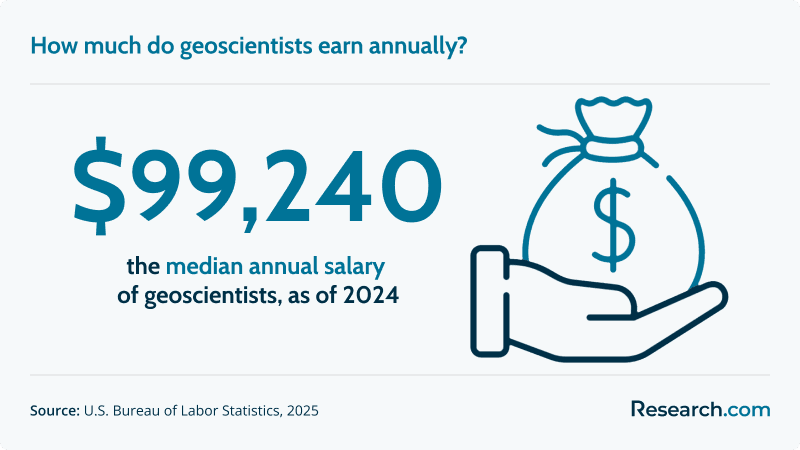
The median annual pay for geoscientists is $99,240. It's essential to recognize that this is a midpoint; actual salaries can vary significantly depending on several key factors.
While some high-end salaries in the oil and gas industry create a perception of universal six-figure incomes, the reality is more nuanced. Your earning potential is something you can actively shape through strategic career decisions.
Your industry, education, and professional credentials heavily influence your career earnings. The highest salaries are traditionally found in oil and gas, but these roles can be subject to market volatility. In contrast, the environmental and government sectors typically offer more stable career paths with steady salary growth. For healthcare professionals, pursuing specialty certifications for LPNs can similarly enhance credentials and open doors to higher-paying opportunities.
Employers often prefer a master's degree for more specialized roles and can lead to higher starting salaries. Furthermore, obtaining a Professional Geologist (P.G.) license is a critical milestone that significantly increases earning potential.
As you gain digital skills, you might wonder what is a GIS analyst salary and find it represents a highly lucrative path.
What is the job outlook for graduates of geoscience degree programs?
The overall job outlook is for steady growth, but that average number doesn't tell the whole story. The real opportunity is in specific, high-demand areas.
Many people associate the health of the geoscience field with oil and gas hiring, but the modern job market is far more diverse. The most significant growth is happening in sectors focused on environmental protection, water resource management, and climate resilience.
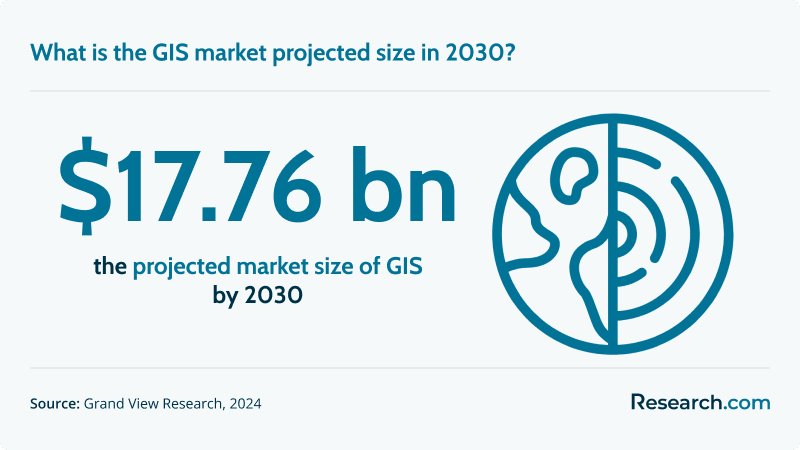
One of the most powerful trends driving job growth is the explosion in geospatial technology. The market for geographic information systems is projected to reach $17.76 billion by 2030, creating a massive need for professionals who can manage and interpret spatial data.
Geoscientists with strong digital skills are perfectly positioned to fill this demand, creating a secure and lucrative career path. Similarly, pursuing advanced degrees in specialized fields, like the best master's in sports journalism programs, can open doors to high-demand, niche careers.
Where can I work with a geoscience degree?
A geoscience degree prepares you for a dynamic career that spans diverse working environments, transitioning seamlessly between practical application and data analysis. You can expect to work in a mix of field, laboratory, and office settings.
While fieldwork remains an essential component—involving activities like collecting samples, mapping rock formations, and deploying sensors—the classic stereotype of a geologist constantly working in remote locations is largely outdated.
Most modern geoscientists spend the majority of their time working full-time in collaborative, office-based roles. Here, the core job involves advanced tasks such as using specialized software like GIS to analyze seismic data, geological models, and remote sensing imagery, followed by writing technical reports and managing complex environmental or engineering projects.
Laboratory work often supplements this, focusing on the sophisticated analysis of rocks, soil, and water samples to inform conclusions. Thus, fieldwork is typically a critical, intermittent component of the work rather than the entire job, with the bulk of the professional work occurring indoors.
The data on who employs geoscientists clearly shows that the majority of jobs are in the professional services sector. Architectural and engineering services are the largest employer, accounting for 30% of all geoscientists. For those interested in advanced clinical roles, exploring AGACNP careers offers insight into high-level healthcare opportunities that combine expertise and leadership.
The U.S. Bureau of Labor Statistics provides a clear breakdown of where geoscientists are employed:
What skills do you need for geoscience degree jobs?
Success with a geoscience degree requires a blend of foundational science knowledge, modern digital competencies, and strong professional skills. While classical skills are important, the modern geoscientist must also be a proficient data analyst.
Think of your skillset in three main categories. First are the foundational sciences like geology, physics, and chemistry. Second are the digital and technical skills, especially proficiency with geographic information systems and data analysis software. Finally, professional skills like clear writing and communication are critical for success.
Occupational data reveal that the most common activities for geoscientists are highly analytical and computer-based. The top work activities include analyzing data, getting information, and working with computers.
This proves that the job is primarily about interpreting complex information and communicating findings, not just identifying rocks in the field.
According to occupational data, the most important work activities for geoscientists are highly analytical:
What are the education requirements to enroll in a geoscience degree program?
To enroll in a bachelor's degree program, you'll need a strong high school foundation in math and sciences. This includes biology, chemistry, and physics, as these form the basis of university-level geoscience coursework.
For those considering a master's degree, a bachelor's in geoscience or a related STEM field like environmental science or engineering is the standard requirement. It's not enough to have a general science background; you need specific foundational knowledge to succeed in a graduate program.
While a bachelor's degree is the minimum entry requirement, a master's degree is often considered the professional standard in the field. Many employers prefer it for higher-level positions.
Furthermore, to practice publicly in many states, you must become a licensed Professional Geologist. This process is critical for career advancement and typically requires a specific number of geology course credits from your degree program, several years of relevant work experience, and passing national exams. For those seeking meaningful work, exploring jobs that help people can highlight careers that make a real-world impact.
What alternative paths are available for a geoscience degree?
Many people believe you must have a degree with the exact title "geoscience" or "geology" to enter the field, but that's not the case. The key is acquiring the core scientific and analytical competencies, not the specific name on your diploma.
You can absolutely enter the field with a degree in a related discipline. Many successful professionals start with degrees in environmental science, civil engineering, or physical sciences. They then specialize with targeted graduate coursework or professional certifications to pivot into a geoscience role.
Leveraging Geoscience Skills in Unexpected Fields
The analytical and systems-thinking skills you develop in a geoscience program are highly transferable. Geoscientists are trained to understand complex systems, work with incomplete data, and think across vast scales of time and space.
This unique skill set is why geoscientists can transition well into some of the fastest online logistics and supply chain management programs, where optimizing complex networks is a primary goal.
What career paths are available to graduates with a geoscience degree?
Once you're established in the field, your career path will typically evolve from a hands-on technical role toward one of two distinct tracks: people management or senior technical leadership.
This dual-track structure is a significant advantage of a technical profession. Unlike fields where one might ask what can you do with a digital photography degree and find a less structured path, a geoscience degree leads to careers with clear, well-defined opportunities for advancement based on your specific skills and interests.
The Management Track
This path involves progressing from a project geologist to a project manager, and eventually to a senior leadership role. Here, you'll oversee teams, budgets, and client relationships. This track is ideal for those with strong organizational and interpersonal skills who enjoy leading people.
The Technical Specialist Track
This path allows you to become a deep subject matter expert in a specific niche, such as hydrogeological modeling, seismic interpretation, or geochemistry. These senior specialists are highly valued for their technical expertise and often serve as internal consultants on the most complex projects.
How do you get started on your geoscience degree?
Getting started is about taking the right first step for where you are right now. The approach is different for a student planning their future versus a professional considering a change.
For High School Students
Your primary focus should be on building a strong academic foundation. Excel in your math and science courses, particularly any Earth science, chemistry, physics, or biology classes your school offers. Once you get to college, seek out opportunities to gain hands-on experience, such as field camps or assisting a professor with a research project.
For Career Changers
Before you enroll in any program, your first step should be research and networking. Conduct informational interviews with geoscientists who are working in fields that interest you. This will help you understand the day-to-day realities of the job and determine the most efficient educational path.
For those needing a flexible option, exploring a fast-track geosciences degree online can be an effective way to gain the necessary credentials.
What advancement opportunities are available after a geoscience degree?
Advancement in a geoscience career isn't automatic; it's something you actively build. Your progression is driven by three main factors: gaining project experience, earning a professional license, and specializing in a high-demand niche.
The single most important mechanism for advancement in many sectors is earning the Professional Geologist license. This credential is often a legal requirement to take on senior responsibility for projects, sign off on reports, and practice geology before the public.
For anyone serious about a long-term career in environmental or engineering geology, it's not an optional extra, it's an essential gateway to senior roles.
Beyond licensure, specializing in a high-demand area is a proven strategy for accelerating your career. Developing deep expertise in a field like groundwater modeling, carbon capture, or geothermal energy makes you a more valuable asset and opens doors to more advanced opportunities.
Is a geoscience degree worth it?
A geoscience degree is highly valuable, but with an important condition: its worth is maximized when you approach it strategically.
The degree is a powerful investment if you align your education with the modern, in-demand sectors of the economy and commit to developing the digital and analytical skills that employers need. The field is no longer just about resource extraction; it is now central to building a sustainable and resilient future.
The greatest challenges society faces—climate change, water scarcity, and the transition to sustainable energy—are fundamentally geoscience problems. A career in this field offers more than just a good salary; it provides an opportunity to work on projects of real consequence.
Whether you are helping a community secure its water supply, designing a geothermal energy project, or mitigating geological hazards, this career allows you to apply scientific principles to make a tangible, positive impact on the world.
Here’s What Graduates Have to Say about Their Geoscience Degree
- Christopher: "I had years of project management experience but wanted to work in sustainability. The master's program was perfect because it showed me how to apply my data analysis background directly to groundwater modeling. The flexibility of the program meant I could keep my job while retooling my entire career path. Now I manage environmental remediation projects, and it feels like I'm using all of my talents for the first time."
- Colette: "I always loved being outdoors, but I had no idea how to make a career out of it. This degree gave me the scientific framework to understand the landscapes I loved. Suddenly, it wasn't just a mountain; it was a complex geological story. The focus on GIS and data analysis was a surprise, but it's what landed me my first job as an environmental consultant right after graduation."
- Sonny: "I was making good money in marketing, but I felt like my work didn't matter. Switching to geoscience was about finding a purpose. The coursework was tough, but every class on water resources or soil contamination felt real and important. The program's design allowed me to make this change without uprooting my life; it was a gradual, manageable transition into a new world."
Key Findings
- With a median annual pay of $99,240, a geoscience degree offers a strong return on investment, directly addressing concerns about the financial viability of choosing this major or making a career change.
- The fact that 30% of geoscientists work for architectural and engineering firms provides a clear career map for students, showing that the most common path leads to stable, professional service roles.
- The geospatial technology market is projected to reach $17.76 billion, proving that developing digital skills provides a future-proof career path and makes your technical expertise highly relevant in a data-driven economy.
- The top work activities for geoscientists, such as analyzing data (92) and working with computers (86), reveal that the profession is fundamentally analytical, a key insight for career-changers looking to leverage their existing technical experience.
- Beyond engineering, management and technical consulting services (12%) and government agencies (15%) are major employers, offering diverse and stable career pathways that build confidence in the long-term security of the profession.
- The services segment, which dominated the GIS market with a 53.9% share, represents a high-growth target for career-changers, offering an efficient path to pivot into a modern, in-demand sector of the economy.
References:
- American Geosciences Institute. (2024). Status of the Geoscience Workforce. Retrieved September 30, 2025, from https://www.americangeosciences.org/workforce/reports
- Grand View Research. (2024, January). Geographic Information Systems (GIS) market size, share & trends analysis report by component (hardware, software, services), by function, by end-use, by region, and segment forecasts, 2024 - 2030. Retrieved September 30, 2025, from https://www.grandviewresearch.com/industry-analysis/geographic-information-systems-market
- National Association of State Boards of Geology (ASBOG). (n.d.). ASBOG Examination. Retrieved September 30, 2025, from https://www.asbog.org/
- U.S. Bureau of Labor Statistics. (2025, August 28). Geoscientists. In Occupational Outlook Handbook. Retrieved September 30, 2025, from https://www.bls.gov/ooh/life-physical-and-social-science/geoscientists.htm
- U.S. Department of Labor, Employment and Training Administration. (2024). 19-2042.00 - Geoscientists. O*NET OnLine. Retrieved September 30, 2025, from https://www.onetonline.org/link/details/19-2042.00
Other Things You Should Know About Geoscience Degree Programs
In 2027, a career in geoscience can range from physically demanding fieldwork involving outdoor exploration and data collection to less strenuous office-based roles focused on data analysis and research. Physical demands vary by job specialization and employer requirements.
Yes, joining a professional organization is a great way to network and learn about the industry. The Geological Society of America (GSA) is an excellent resource for students and offers networking events and research opportunities.
Other important organizations include the American Geophysical Union (AGU) and the American Association of Petroleum Geologists (AAPG), each offering resources for different specializations within the field.
In 2027, a B.A. in Geoscience typically emphasizes a broader liberal arts education with more electives, while a B.S. focuses on technical and scientific skills. The choice depends on career goals, with B.S. graduates often pursuing specialized scientific roles.


