
2027 Valuable LPN Specialty Certifications to Consider

Co-Founder and Chief Data Scientist
Licensed practical nurses (LPNs) often face the challenge of deciding which specialty certification will offer the greatest career return. With so many credentials available, it can be difficult to choose the path that best supports long-term growth, advancement, and job security.
This article is designed to guide that decision-making process with precision. LPNs with specialty certifications see an average salary increase of 7% within two years, clearly demonstrating the financial benefit of focused expertise. Drawing on the Research.com team’s expertise in career planning for over ten years, this resource delivers an essential overview of the most impactful certifications available today.
Key Things You Should Know About LPN Specialty Certifications
- Specialized LPN certifications, such as Nephrology, Wound Care, and Correctional Health, enhance competency in targeted clinical areas like IV therapy and managing chronic conditions.
- Dialysis/Nephrology offers the absolute highest salary potential, with top earners making over $92,000 annually, while the top five most in-demand fields for job security include Long-Term Care and Behavioral Health, driven by demographic and public health needs, such as the 5% projected job market growth for LPNs.
- Specialty certifications boost an LPN's professional credibility and earning potential, but completing the LPN-to-RN bridge program offers more significant long-term career progression and a broader scope of practice, despite the certifications not automatically granting college credit.
- List of Specialty Certifications for LPNs List of Certifications
- Which LPN specialty certification commands the absolute highest salary potential? Top-Paying Certifications
- What are the top 5 most in-demand LPN specialties for job security and career growth? Top Specialties
- What are the benefits of LPN specialty certifications? Benefits
- Do LPN specialty certifications grant transferable college credit or waive prerequisites for LPN-to-RN bridge programs? Do LPN specialty certifications grant transferable college credit or waive prerequisites for LPN-to-RN bridge programs?
- Which advanced certifications offer the most competitive advantage when applying to a Bachelor of Science in Nursing (BSN) program? BSN Programs
- Is it more beneficial for career progression to get a specialty certification or complete the LPN-to-RN bridge first? Is it more beneficial for career progression to get a specialty certification or complete the LPN-to-RN bridge first?
- How can an LPN leverage specialized certification to secure a Nurse Educator role without a BSN? How can an LPN leverage specialized certification to secure a Nurse Educator role without a BSN?
- What are the Continuing Education (CE) requirements for renewing the most popular LPN specialty certifications? Continuing Education
- Are there any state-funded grants or employer reimbursement programs available to help LPNs pay for specialty certification? Grants & Reimbursement
- How can I determine if a specific LPN certification is nationally recognized or only valid within my state? How can I determine if a specific LPN certification is nationally recognized or only valid within my state?
List of Specialty Certifications for LPNs
Specialty certifications allow LPNs to expand their skills, boost their credentials, and qualify for more specialized roles in healthcare. These certifications not only enhance clinical expertise but also open doors to higher earning potential and greater job stability.
Below is a list of popular LPN specialty certifications, each designed to help nurses align their career path with their professional interests and long-term goals.
IV Therapy
Certification in IV Therapy validates an LPN’s competency in the safe insertion, maintenance, and discontinuation of intravenous lines. It ensures knowledge of best practices, complications management, and patient care related to IV medications and fluids. This certification enhances the nurse’s ability to perform this essential skill confidently and safely.
Long-Term Care
Long-Term Care certification focuses on the skills needed to provide quality care to elderly or chronically ill patients in nursing homes or extended care facilities. It covers subjects such as patient dignity, chronic disease management, and regulatory compliance. This credential supports specialized care in facilities where ongoing, comprehensive care is critical.
Pharmacology
Pharmacology certification equips LPNs with knowledge about medications, including drug classifications, actions, side effects, and safe administration practices. It enhances their ability to recognize drug interactions and improve medication management. This specialization supports safe and effective pharmaceutical care.
Nephrology
Nephrology certification targets the care of patients with kidney-related illnesses, including chronic kidney disease and dialysis needs. It covers renal anatomy, pathophysiology, and treatment modalities. LPNs with this credential can provide specialized support in dialysis centers and nephrology units.
Urology
Urology certification prepares LPNs to care for patients with urinary tract conditions and disorders of the male reproductive system. It includes knowledge about catheterization, urinary retention, and common urologic procedures. This certification enhances care quality in urology clinics and hospital units.
Wound Care
Wound Care certification focuses on the assessment, treatment, and prevention of acute and chronic wounds. It teaches best practices for managing pressure ulcers, surgical wounds, and diabetic ulcers. LPNs with this credential can improve healing outcomes and prevent complications.
Correctional Health
Correctional Health certification equips LPNs to deliver healthcare within correctional facilities. It addresses unique challenges such as security protocols, communicable disease control, and mental health issues in inmate populations. This specialization is vital for nursing in prisons and jails.
Hospice and Palliative Care
Hospice and Palliative Care certification trains LPNs in providing comfort-focused care to terminally ill patients and those with chronic life-limiting illnesses. It emphasizes pain management, psychological support, and family communication. This credential supports compassionate end-of-life care.
Breastfeeding Specialist
Breastfeeding Specialist certification prepares nurses to support mothers during breastfeeding by providing education, troubleshooting breastfeeding problems, and promoting infant nutrition. It requires understanding lactation physiology and counseling techniques, enhancing maternal and infant health outcomes.
Certified Clinical Research Associate (CCRA)
The CCRA credential validates proficiency in managing clinical trials and research studies, including patient recruitment, data monitoring, and regulatory compliance. It is ideal for nurses involved in clinical research settings, ensuring ethical and accurate conduct of studies that advance medical knowledge.
Which LPN specialty certification commands the absolute highest salary potential?
The LPN specialty certification that currently offers the absolute highest salary potential is related to Dialysis/Nephrology. This specialized area consistently shows premium earning potential compared to other LPN specialties, similar to how professionals in research psychology careers can achieve higher salaries through advanced specialization and focused expertise.
Key Salary Insights for Dialysis LPNs
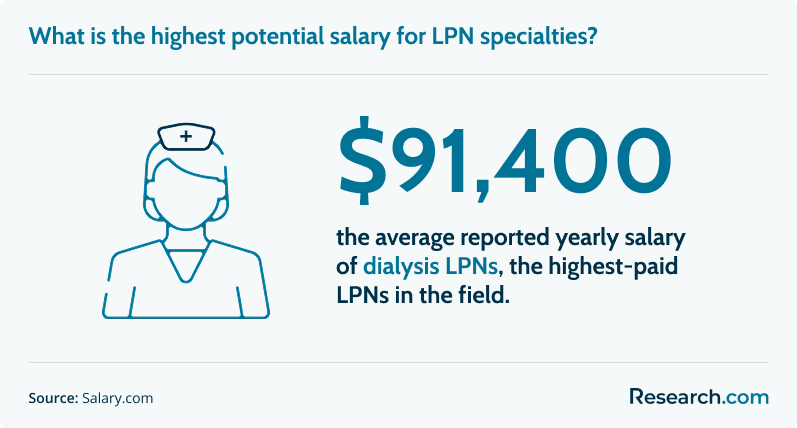
- Average Earnings: Dialysis LPNs report some of the highest average annual salaries in the field, around $91,427.
- Top Hourly Wages: Experienced or highly sought-after Dialysis LPNs, particularly those in high-demand regions or travel roles, can command hourly wages reaching $40 to $45 or even as high as $47.
- Maximum Annual Potential: For top earners, the annual salary potential is around $84,000 to over $92,000, with weekly pay for top earners potentially hitting $1,615 or more. This upper range is often seen in high-cost-of-living areas or for LPNs with significant experience or travel assignments.
While other LPN specialties pay well, nephrology/dialysis specialization frequently leads the salary rankings due to the complex, critical nature of the care and the rising prevalence of chronic kidney disease.
What are the top 5 most in-demand LPN specialties for job security and career growth?
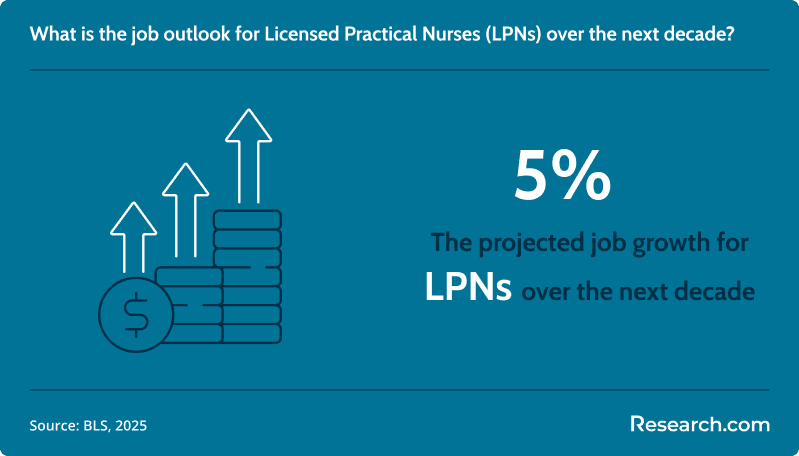
The job market for LPNs is projected to grow by 5% over the next decade, which is faster than the average for all occupations. To maximize job security and career growth, many professionals pursue careers that require a master's degree or focus on areas with the highest demand driven by demographic and healthcare trends.
Here are the top five most in-demand LPN specialties for 2027:
1. Long-Term and Geriatric Care Nursing
This specialty is essential due to the rapidly aging global population, which provides exceptional job stability and growth for LPNs. In fact, the proportion of the world's population over 60 years is projected to nearly double from 12% to 22% between 2015 and 2050.
LPNs in long-term care are highly sought after in nursing homes, assisted living facilities, and specialized rehabilitation centers. This is arguably the most stable and continually growing field for LPNs, offering consistent opportunities to manage chronic diseases and provide comprehensive daily care.
2. Behavioral Health Nursing
Demand in behavioral health has surged as mental health parity expands and access to treatment improves. This high demand reflects broad public concern, as 90% of the public thinks that there is a mental health crisis in the United States today.
LPNs specializing in this area find robust employment in diverse settings, including inpatient psychiatric hospitals, detox centers, and community mental health clinics. This specialty is experiencing rapid expansion, offering strong career prospects as awareness and treatment for mental health disorders become a top healthcare priority.
3. Correctional Health Nursing
Healthcare for incarcerated populations is a legally mandated service, making this a specialty with a stable and non-cyclical demand. The need is substantial, as the U.S. has maintained the highest incarceration rates in the world for nearly a century. With approximately 3,116 jails and 1,664 prisons holding almost two million incarcerated persons, there is a persistent need for health providers.
LPNs in correctional health work in these prisons, jails, and detention centers. While only 0.8% of all U.S. nurses work in corrections, correctional nurses make up most of the health providers working in this setting. This environment offers unique, high-stakes challenges and ensures that nurses in this field are consistently critical to the facility's operations.
4. Wound Management and Skin Care
The increasing prevalence of conditions like diabetes, vascular disease, and obesity means more patients require specialized wound care, often in outpatient and long-term settings. The demand for this specialization is amplified by data showing the widespread nature of related health issues; for example, the prevalence of obesity in U.S. adults was 40.3%, according to the latest health data.
LPNs with expertise in wound management are key players in home healthcare, specialized wound clinics, and extended care facilities. This focus area allows for focused professional development and is projected for strong growth as clinical needs intensify.
5. Home Health Nursing
Driven by patient preference for aging in place, home health is an explosively growing sector. LPNs in this specialty travel to patients' homes to provide a wide range of services, including medication administration, vital sign monitoring, and post-surgical care. This field offers LPNs flexibility and independence, and the demand for in-home nurses is expected to continue outpacing traditional hospital settings.
For those LPNs who choose to advance their careers beyond specialty certification and pursue a master's degree in a leadership role, they often research the MSN clinical nurse leadership salary to understand the long-term return on investment of an advanced nursing degree.
What are the benefits of LPN specialty certifications?
LPN specialty certifications provide numerous benefits, including:
- Enhanced Skills and Knowledge: Specialty certifications demonstrate that an LPN has acquired advanced, specialized clinical skills and knowledge beyond basic licensure. This improves the nurse's ability to deliver high-quality, patient-centered care with confidence.
- Increased Job Opportunities and Security: Certification helps LPNs stand out in competitive job markets by showing a commitment to professional development and expertise. Certified nurses are often preferred by employers and have a broader range of career options, improving job security. Many even pursue careers with a master’s in clinical mental health counseling to expand their professional scope and impact.
- Higher Earning Potential: Specialty certifications can lead to better pay and opportunities for promotion. Employers recognize the added value provided by certified nurses and often compensate them accordingly.
- Professional Respect and Credibility: Holding specialty certifications enhances the nurse's professional reputation, signaling dedication, competence, and readiness for advanced responsibilities. It also positively influences patient and employer trust.
- Support for Career Advancement: Certifications prepare LPNs for leadership roles and advanced practice areas by validating their expertise and encouraging ongoing education and clinical excellence.
To illustrate which specialty areas offer the greatest return on investment for the benefits listed above, the following chart highlights the top in-demand skills currently sought by employers for Licensed Practical Nurses.
Do LPN specialty certifications grant transferable college credit or waive prerequisites for LPN-to-RN bridge programs?
LPN specialty certifications generally do not automatically grant transferable college credits or waive specific prerequisites for LPN-to-RN bridge programs.
However, some nursing programs may consider relevant certifications and professional experience as part of a prior learning assessment (PLA), which can potentially translate into credits or advanced standing after formal evaluation. This process often involves demonstrating knowledge and skills gained through certification and work experience, not just holding the credential itself.
Credit transfer policies vary widely by institution. Some schools provide college credit for specific nursing certifications when accompanied by documentation and evaluation, especially if the certification aligns closely with course content in the bridge program. For instance, certain technical or health-related bridge programs may follow evaluation standards similar to those found in best online ABET-accredited engineering degree programs, where rigorous coursework and accreditation ensure transferability and quality.
Certifications alone typically are not enough to waive entire course prerequisites without additional assessment or proficiency exams. Therefore, LPN specialty certifications may support, but do not guarantee, college credit transfer or prerequisite waivers in LPN-to-RN bridge programs, depending on the nursing school's policies and evaluation processes.
Which advanced certifications offer the most competitive advantage when applying to a Bachelor of Science in Nursing (BSN) program?
The advanced nursing certifications that offer the most competitive advantage when applying to a Bachelor of Science in Nursing (BSN) program include:
- Basic Life Support (BLS) and Advanced Cardiovascular Life Support (ACLS): These foundational certifications demonstrate essential life-saving skills and are often considered baseline requirements, boosting the applicant’s clinical readiness and appeal.
- Certified Emergency Nurse (CEN): Validates expertise in emergency care settings, showcasing capability in high-pressure, critical nursing environments, which are valued by BSN programs emphasizing acute care.
- Pediatric Advanced Life Support (PALS): Highlights specialized clinical skills in pediatric care and emergency response for infants and children, making programs with pediatric or family nursing tracks more attractive.
- Certified Critical Care Registered Nurse (CCRN): Signifies advanced knowledge in intensive and critical care, underscoring readiness for complex patient care scenarios often covered in BSN curricula.
- Nursing Professional Development (NPD-BC): Demonstrates leadership in education and professional development, appealing to BSN programs that emphasize nursing leadership, clinical education, or academic growth.
Is it more beneficial for career progression to get a specialty certification or complete the LPN-to-RN bridge first?
For career progression, completing the LPN-to-RN bridge program generally offers more significant benefits than obtaining a specialty certification first.
The bridge program advances an LPN to a Registered Nurse (RN) level, which comes with broader responsibilities, higher earning potential, and more leadership and specialization opportunities. RNs have a broader scope of practice, encompassing medication administration, patient education, and care coordination, compared to LPNs, who provide more basic nursing care.
While specialty certifications enhance clinical skills and may improve job prospects and salary within the LPN role, the RN credential obtained through the bridge program opens doors to more diverse and advanced nursing roles. Hospitals and employers increasingly prefer RNs, especially those with Bachelor of Science in Nursing (BSN) degrees, for competitive careers and management roles.
Therefore, for long-term career growth and job mobility, prioritizing the LPN-to-RN bridge program is more beneficial. Specialty certifications can complement this progression later by building clinical expertise in chosen areas. This choice often leads nurses to research the practical outcomes of the first major step in their career, leading many to ask, “What can you do with an associate degree in nursing?”
Considering that the LPN-to-RN bridge program typically results in an Associate Degree in Nursing (ADN), it is helpful to look at how this degree positions a nurse within the broader profession, as shown by the breakdown of the most common degrees held by Registered Nurses.
How can an LPN leverage specialized certification to secure a Nurse Educator role without a BSN?
It is very challenging for an LPN to secure a Nurse Educator role without a BSN because nurse educator certifications typically require at least an active RN license and more advanced nursing degrees (master’s or doctoral).
Most recognized nurse educator certifications, such as the Certified Nurse Educator (CNE) credential from the National League for Nursing (NLN), require applicants to hold a master's or doctoral degree in nursing with an emphasis on nursing education or substantial academic teaching experience. The clinical and academic standards for nurse educators emphasize advanced education beyond the LPN level.
However, an LPN can leverage specialized clinical certifications and demonstrate extensive practical experience in a specialty area to position themselves for roles as clinical instructors or nurse aides within healthcare facilities or vocational nursing programs, though these are not usually formal Nurse Educator roles.
To formally become a Nurse Educator, the typical pathway involves progressing to RN licensure, completing a BSN, and then advancing to a graduate degree with education-focused coursework.
Given the challenges of securing this role without a BSN, many ambitious nurses explore advanced degree options like the accelerated BSN to PhD online pathway to quickly satisfy the educational requirements needed for top-tier educator positions.
What are the Continuing Education (CE) requirements for renewing the most popular LPN specialty certifications?
The CE requirements for renewing the most popular LPN specialty certifications generally include the following key elements:
- Most LPN specialty certifications require renewal every 2 to 3 years, involving completion of CE credits or contact hours relevant to the specialty area.
- Continuing education contact hours typically range from about 15 to 30 hours within the renewal period, depending on the certifying organization and specialty.
- Many certifications require documentation of clinical practice hours in the specialty to demonstrate ongoing competence.
- Renewal processes may also include submission of professional development activities, such as workshops, courses, and seminars related to the specialty.
- Some certifications may require passing a renewal exam or completing ethical guideline updates as part of renewal.
- Specific CE requirements vary by certifying body and specialty, so candidates must review individual certification renewal policies.
Are there any state-funded grants or employer reimbursement programs available to help LPNs pay for specialty certification?
Yes, there are state-funded grants and employer reimbursement programs available to help LPNs pay for specialty certification.
Many states offer workforce development or healthcare training grants that can be applied toward nursing specialty certifications. These are often administered through state departments of health, labor, or workforce development and targeted to increase qualified nursing staff in high-demand specialties. It's important to note that availability and eligibility criteria vary by state.
Healthcare employers may also be able to provide tuition reimbursement or continuing education benefits that cover specialty certification fees. Some hospitals and long-term care facilities support LPNs by paying for certification exam fees, preparatory courses, or continuing education required to maintain certification. Employer programs typically require employment commitment or passing probation periods.
Organizations like the National Association for Practical Nurse Education and Service (NAPNES) also sometimes offer scholarships, grants, or discounted certification preparation resources for LPN specialty certifications.
For those looking to leap into a formal educator role, they often seek financing for programs like nurse education online graduate certificate programs, which are often the next step after the LPN-to-RN bridge and BSN completion to gain the specialized teaching credentials required.
Meanwhile, the chart below shows the top five states for LPN salaries.
How can I determine if a specific LPN certification is nationally recognized or only valid within my state?
To determine if a specific LPN certification is nationally recognized or only valid within a particular state, consider the following steps:
- Check the Certifying Organization: Nationally recognized LPN certifications are typically offered by well-established professional bodies or credentialing organizations with wide acceptance across states. Certifications tied to national nursing associations or boards usually indicate national recognition.
- Verify State Board of Nursing Policies: Each state board of nursing regulates LPN licensure and may provide information on which certifications are accepted or recognized within its jurisdiction. State-specific certifications are often listed on the board's official website.
- Examine Accreditation and Exam Requirements: National certifications generally require passing a standardized exam, such as the NCLEX-PN, which is a national licensing exam for LPNs across the United States. Certifications based on recognized national accrediting bodies or national exams tend to be valid across states.
- Consult NCSBN and Nursys Databases: The National Council of State Boards of Nursing (NCSBN) and Nursys offer resources on nursing licensure and certifications that can clarify whether a credential has national or state-only validity.
- Review Program and Credentialing Information: Some certifications are connected to specialized training that is approved or accredited nationally, while others may be specific to state regulations, laws, or healthcare systems.
This need for nationally recognized credentials is a constant factor in nursing career advancement, especially for those pursuing highly specialized and advanced roles.
For instance, RNs moving into a niche field that requires a master's degree often specifically look for the accreditation and acceptance of programs like an MSN in forensic nursing online.
Here's what LPNs have to say about their specialty certifications:
- Elise: "Earning my IV Therapy certification gave me the confidence to handle more complex procedures and made me a valuable part of my team. It opened up new opportunities in hospital settings and increased my pay almost immediately. I feel more respected and fulfilled in my role."
- Isabel: "Specializing in gerontology through an LPN certification allowed me to focus on what I love most: caring for older adults. The extra training made me feel prepared for challenging situations and gave me the satisfaction of knowing I’m making a bigger difference in my patients’ lives."
- Sue: "Pursuing wound care certification not only strengthened my clinical skills but also helped me stand out when applying for higher-responsibility positions. The experience was demanding but rewarding, and it reminded me why I chose nursing in the first place: to grow, learn, and serve."
Key Findings
- LPNs with specialty certifications see an average salary increase of 7% within two years.
- The job market for LPNs is projected to grow by 5% over the next decade.
- The proportion of the world's population over 60 years is projected to increase to 1.4 billion by 2030, reaching 2.1 billion by 2050, increasing demand for health professionals specializing in geriatric care.
- The highest-paying LPN specialty, Dialysis/Nephrology, has a maximum annual salary potential of over $92,000.
- The prevalence of obesity in adults, which drives demand for specialized wound care, was 40.3% during August 2021–August 2023.
References:
- Emmerich SD, Fryar CD, Stierman B, Ogden CL. Obesity and severe obesity prevalence in adults: United States, August 2021–August 2023. NCHS Data Brief, no 508. Hyattsville, MD: National Center for Health Statistics. 2024. DOI: https://dx.doi.org/10.15620/cdc/159281
- How to become a registered nurse: what it is and career path - Zippia. (2025, January 8). https://www.zippia.com/registered-nurse-jobs
- Keller, E., Boch, S., Davis, K. G., Gillespie, G. L., & Hittle, B. M. (2024). “[It] does harden a person working in such a stressful environment.” Journal of Forensic Nursing, 20(3), 185–194. https://doi.org/10.1097/jfn.0000000000000479
- LPN Salary. (2025). ZipRecruiter. Retrieved September 26, 2025, from https://www.ziprecruiter.com/Salaries/Lpn-Salary#Yearly
- Mental health care is in high demand. Psychologists are leveraging tech and peers to meet the need. (2024, January 1). American Psychological Association. Retrieved September 26, 2025, from https://www.apa.org/monitor/2024/01/trends-pathways-access-mental-health-care
- Registered nurses. (2025, August 28). U.S. Bureau of Labor Statistics. Retrieved September 26, 2025, from https://www.bls.gov/ooh/healthcare/registered-nurses.htm#tab-6
- Registered nurse salary. (2025). ZipRecruiter. Retrieved September 26, 2025, from https://www.ziprecruiter.com/Salaries/Registered-Nurse-Salary#Yearly
- Salary.com (2025). Dialysis LPN Salary in the United States. Retrieved from https://www.salary.com/research/salary/opening/dialysis-lpn-salary
- What is a licensed practical nurse, and how to become one. (2025, January 8). Zippia. Retrieved September 27, 2025, from https://www.zippia.com/licensed-practical-nurse-jobs
- What is the average LPN salary by state? (2025). ZipRecruiter. Retrieved September 27, 2025, from https://www.ziprecruiter.com/Salaries/What-Is-the-Average-LPN-Salary-by-State
- World Health Organization: WHO. (2024, October 1). Ageing and health. https://www.who.int/news-room/fact-sheets/detail/ageing-and-health
Other Things You Should Know About the Valuable LPN Specialty Certifications
In 2027, an LPN seeking to advance in geriatrics should consider the Gerontology Certification. This certification, recognized by the National Association for Practical Nurse Education and Service (NAPNES), focuses on improving elderly patient care and increasing job opportunities in nursing homes and assisted living facilities.
To pursue wound care certification in 2027, an LPN must hold an active nursing license, have at least two years of clinical experience, and complete a board-approved wound care education program. Verification of clinical competency in wound management is also required.


