
2027 Best BSN to PhD Online Bridge Programs

Co-Founder and Chief Data Scientist
Nurses with a BSN risk falling behind in competitive healthcare roles if they don’t take steps now to advance their credentials. With clinical leadership, academic, and research positions increasingly requiring doctoral degrees, waiting too long could mean missing out on top-tier opportunities and higher salaries.
According to the U.S. Bureau of Labor Statistics, nursing instructors and teachers earn a median salary of $84,180 annually—roles often requiring a PhD. This expert-prepared guide highlights the best BSN to PhD online bridge programs for 2027, outlining flexible pathways designed to help nurses reach the highest levels of practice, leadership, and influence.
What are the benefits of the best BSN to PhD online bridge programs?
- Qualifies graduates for high-impact roles such as nurse researcher, nursing faculty, healthcare policy analyst, or director of clinical programs.
- Opens access to median annual salaries of $84,180 or more, especially in academic and research-based positions.
- Enables flexible, online learning that lets working nurses earn a terminal degree without stepping away from their current role.
What can I expect from the best BSN to PhD online bridge programs?
BSN to PhD online bridge programs are designed for nurses who want to move directly into research, academic, or leadership roles. These programs combine doctoral-level coursework with foundational graduate content, skipping the need for a separate MSN.
Students complete a core curriculum focused on nursing theory, research methods, statistics, and healthcare policy. Most programs require a dissertation or capstone project that contributes original research to the field. Some also include internship or residency hours in academic or clinical settings.
Tuition typically ranges from $30,000 to $90,000, depending on the school. Courses are delivered online through recorded lectures, live sessions, and interactive discussion boards—making it easier for working nurses to stay on track while studying.
Where can I work as a graduate of BSN to PhD online bridge program?
Graduates of BSN to PhD online bridge programs gain access to advanced roles in academia, healthcare research, policy development, and leadership. They can work in universities, government health agencies, hospitals, nonprofit organizations, or healthcare think tanks. Some also consult for corporations or start independent research or education ventures.
With a PhD, many pursue careers as nurse scientists, principal investigators, or nursing professors. According to the American Association of Colleges of Nursing, there’s a significant faculty shortage, with over 2,000 full-time positions unfilled in recent years—making this a high-demand path.
PhD graduates bring critical thinking, data analysis, and communication skills that translate well across industries, including public health, education, and healthcare innovation.
How much can I make as a graduate of BSN to PhD online bridge program?
Graduates of BSN to PhD online bridge programs can earn significantly more than nurses with only a BSN or MSN. According to the U.S. Bureau of Labor Statistics, nursing instructors and educators earn a median salary of $84,180 per year, while nurse researchers and healthcare administrators can make over $100,000 annually.
Salaries vary by industry, location, and experience. Entry-level PhD graduates may start around $75,000, but experienced professionals—especially in leadership or academic roles—can earn $120,000 or more.
Holding a PhD also opens doors to grants, consulting opportunities, and specialized roles that increase long-term earning potential. Additional certifications or fellowships can further boost salaries over time.
- List of the Best BSN to PhD Online Bridge Programs for 2027 List of Programs
- How long does it take to complete the best BSN to PhD online bridge programs? Program Length
- How does the best BSN to PhD online bridge program compare to an on-campus program? How does the best BSN to PhD online bridge program compare to an on-campus program?
- What is the average cost of the best BSN to PhD online bridge programs? Program Cost
- What are the financial aid options for students enrolling in the best BSN to PhD online bridge programs? What are the financial aid options for students enrolling in the best BSN to PhD online bridge programs?
- What are the prerequisites for enrolling in the best BSN to PhD online bridge programs? What are the prerequisites for enrolling in the best BSN to PhD online bridge programs?
- What courses are typically in the best BSN to PhD online bridge programs? What courses are typically in the best BSN to PhD online bridge programs?
- What types of specializations are available the best BSN to PhD online bridge programs? Specializations
- How to Choose the Best BSN to PhD Online Bridge Program How to Choose the Best BSN to PhD Online Bridge Program
- What career paths are available for graduates of the best BSN to PhD online bridge programs? Career Paths
- How do accelerated BSN nursing programs compare to BSN to PhD online bridge programs? How do accelerated BSN nursing programs compare to BSN to PhD online bridge programs?
- What is the job market like for graduates of the best BSN to PhD online bridge programs? Job Outlook
- How do BSN to PhD online bridge programs foster networking and mentorship opportunities? How do BSN to PhD online bridge programs foster networking and mentorship opportunities?
Best BSN to PhD Online Bridge Programs for 2027: A Practical Guide for Nurses
A BSN to PhD online bridge program is for registered nurses who already hold a Bachelor of Science in Nursing and want to move directly into doctoral research, nursing faculty, policy, or executive-level scholarly roles without first completing a separate MSN. It is a demanding pathway. You are not just earning another nursing credential; you are preparing to produce original research, teach future nurses, influence healthcare systems, and contribute to the nursing science evidence base.
This guide is designed for BSN-prepared nurses comparing online and hybrid PhD pathways. It explains how these programs work, how long they take, what they cost, what admissions committees look for, which careers they can support, and how to decide whether a research doctorate is the right next step.
Quick answer: Is a BSN to PhD online bridge program worth it?
A BSN to PhD online bridge program can be worth it if your long-term goal is nursing research, university teaching, health policy, evidence-based practice leadership, or academic administration. It is usually not the best fit if your main goal is advanced clinical practice, because nurse practitioner, nurse midwife, nurse anesthetist, and clinical nurse specialist roles generally follow different graduate preparation and certification pathways. For nurses focused on scholarship and systems-level impact, an online or hybrid BSN to PhD pathway can reduce the need to complete separate MSN and PhD programs while allowing continued professional work in some cases.
How Research.com evaluates BSN to PhD online bridge programs
Choosing a doctoral nursing program affects your finances, schedule, research trajectory, and future career options. Research.com bases program evaluations on transparent data sources, including the IPEDS database, Peterson's data, the College Scorecard, and the National Center for Education Statistics.
These sources help compare institutional quality, tuition, student outcomes, and program-level information where available. For more detail on Research.com’s ranking process, review the Research.com methodology.
What to compare first
| Decision factor | Why it matters for BSN to PhD students | What to ask before applying |
| Accreditation | Accreditation helps confirm that the nursing program meets recognized education standards. | Is the program accredited by CCNE or another recognized nursing accreditor? |
| Faculty research fit | Your dissertation success depends heavily on mentorship in your research area. | Which faculty members are accepting students in my area of interest? |
| Online format | Some programs are fully online, while others require campus intensives or residencies. | Are classes asynchronous, synchronous, hybrid, or tied to scheduled research sessions? |
| Total cost | Credit requirements and per-credit tuition vary widely. | What are the tuition, fees, travel costs, and dissertation-related expenses? |
| Time commitment | Doctoral nursing research requires sustained writing, data analysis, and faculty collaboration. | Can I enroll part-time, and what is the expected completion timeline? |
University of Arizona – BSN to PhD in Nursing
The University of Arizona offers a BSN to PhD Nursing pathway for nurses who want to enter doctoral research and academic preparation without completing a separate MSN first. The program emphasizes advanced nursing theory, evidence-based inquiry, health policy, and research development. Online coursework is combined with in-person research immersion experiences, giving students access to faculty mentorship while building the skills needed for nursing science, healthcare innovation, and policy-focused work.
- Required Credits to Graduate: 64
- Cost: $975 per credit hour
- Accreditation: Commission on Collegiate Nursing Education (CCNE)
University of Colorado Anschutz Medical Campus – BSN-PhD Program
The University of Colorado Anschutz Medical Campus provides an online bridge pathway for BSN-prepared nurses interested in interdisciplinary research and health systems improvement. Students may shape their studies around interests such as aging, informatics, and health equity. The program uses asynchronous learning and virtual seminars, with research mentorship supported by faculty at an academic medical campus.
- Required Credits to Graduate: 72
- Cost: $695 per credit hour
- Accreditation: CCNE
University of Wisconsin–Milwaukee – BS to PhD in Nursing
The University of Wisconsin–Milwaukee BS to PhD in Nursing pathway focuses on population health, informatics, and community-based research. Students complete structured research residencies and develop a dissertation connected to their scholarly goals. The program supports both part-time and full-time study, making it a possible option for nurses who need flexibility while preparing for research, academic, policy, or clinical leadership roles.
- Required Credits to Graduate: 67
- Cost: $750 per credit hour
- Accreditation: CCNE
Medical University of South Carolina – BSN to PhD in Nursing Science
The Medical University of South Carolina BSN to PhD in Nursing Science is delivered online with periodic campus-based intensives. The curriculum is built around research that can improve healthcare outcomes and address disparities. Students study topics such as grant writing, statistics, and theory development while engaging with research networks that support preparation for faculty, scholarly, and senior research roles.
- Required Credits to Graduate: 60
- Cost: $766 per credit hour
- Accreditation: CCNE
University of Iowa – BSN to PhD in Nursing
The University of Iowa BSN to PhD program is designed for nurses who want to influence healthcare through research, evidence development, and policy work. Online delivery includes interactive seminars and participation in faculty-led research teams. The program is a strong fit for students who are committed to research-centered careers and want a doctoral environment with active scholarly engagement.
- Required Credits to Graduate: 79
- Cost: $963 per credit hour
- Accreditation: CCNE
University of Utah – BSN to PhD Online Nursing Program
The University of Utah offers a fully online BSN to PhD in Nursing program centered on scholarly research, ethical leadership, and health equity. Students pursue independent research with interdisciplinary faculty support. Coursework includes areas such as philosophy of science and advanced statistics, preparing graduates for academic, public health, and research-focused careers.
- Required Credits to Graduate: 78
- Cost: $938 per credit hour
- Accreditation: CCNE
University of Kansas – BSN to PhD in Nursing
The University of Kansas provides an online BSN to PhD pathway that pairs flexible coursework with intensive faculty research guidance. Students learn to create, evaluate, and apply scientific knowledge to strengthen care delivery. Research interests may include rural health, chronic illness, and healthcare systems, with dissertation work guided by faculty mentors.
- Required Credits to Graduate: 67
- Cost: $700 per credit hour
- Accreditation: CCNE
University of Texas at Tyler – BSN to PhD Nursing Program
The University of Texas at Tyler offers a hybrid BSN to PhD program for nurses preparing for academic, policy, research, and leadership roles. Online instruction is paired with occasional campus visits for mentorship and research workshops. Students can develop individualized research interests in areas such as health promotion and systems improvement.
- Required Credits to Graduate: 60
- Cost: $631 per credit hour
- Accreditation: CCNE
Kent State University – PhD in Nursing, BSN to PhD Track
The Kent State University BSN to PhD track is offered in a mostly online format for nurses who need doctoral study to fit around professional responsibilities. The program emphasizes scientific inquiry, theory development, and data analysis. Students complete dissertation research and work with faculty involved in active scholarly projects, with full-time and part-time options available.
- Required Credits to Graduate: 71
- Cost: $665 per credit hour
- Accreditation: CCNE
University of Illinois Chicago – BSN to PhD in Nursing Science
The University of Illinois Chicago BSN to PhD in Nursing Science program prepares students to conduct research that improves healthcare outcomes, with particular attention to underserved populations. The distance-accessible format includes synchronous and asynchronous components. Students are encouraged to publish, present, and collaborate with faculty scholars while preparing for academic, research, and policy-oriented careers.
- Required Credits to Graduate: 65
- Cost: $950 per credit hour
- Accreditation: CCNE
How long does it take to complete a BSN to PhD online bridge program?
Most BSN to PhD online bridge programs take 4 to 6 years to complete. The exact timeline depends on enrollment status, dissertation progress, course availability, research design, and whether the program requires residencies or teaching experiences. Because these pathways combine master’s-level transition work with doctoral research preparation, they usually require a longer commitment than PhD options built for MSN-prepared nurses.
For comparison, students exploring other graduate healthcare and counseling pathways often ask how long it takes to become a marriage and family therapist, which usually takes around 2 to 3 years after a bachelor’s degree. A BSN to PhD pathway is longer because it leads to a research doctorate and culminates in original dissertation work.
| Program phase | Typical time frame | What students usually complete |
| Coursework phase | 2–3 years | Advanced nursing science, theory, statistics, research methods, policy, and electives tied to the student’s research interests. |
| Research and dissertation phase | 2–3 years | Independent study design, data collection or analysis, faculty mentorship, dissertation writing, and defense. |
| Residency, internship, or teaching requirement | Varies by program | Some schools require campus visits, research immersions, or teaching practicums that affect scheduling even if they do not substantially extend the timeline. |
Online learning can make the schedule more manageable, but it does not make the program academically lighter. Students still need consistent writing time, research meetings, statistics preparation, and dissertation momentum. Part-time enrollment can help working nurses stay employed, while full-time study may be better for students seeking faster completion or funding tied to research participation.
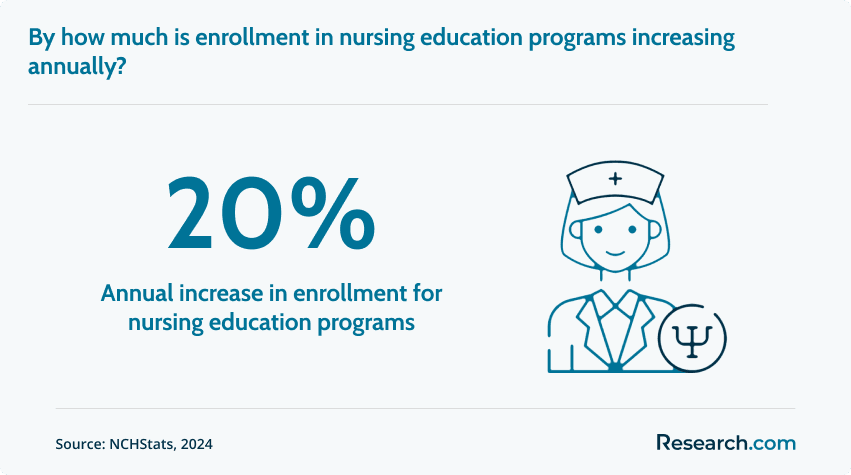
The growing interest in advanced nursing education is reflected in the reported annual 20% increase in nursing education enrollment. For BSN-prepared nurses, that growth highlights both the appeal and competitiveness of doctoral pathways designed for nurse researchers, educators, and leaders.
BSN to PhD online vs. on-campus programs: Which format is better?
Online and on-campus BSN to PhD programs can lead to the same doctoral credential, but the learning experience is different. The better option depends on your work schedule, need for local access, preferred learning style, research mentorship needs, and ability to travel for residencies or campus intensives.
Just as students comparing counseling credentials need to understand the difference between LMFT and AMFT pathways, nurses comparing doctoral formats should focus on requirements, outcomes, and fit rather than assuming one format is automatically stronger.
| Comparison point | Online or hybrid BSN to PhD | On-campus BSN to PhD |
| Course content | Usually covers the same doctoral topics: theory, research methods, statistics, policy, scholarship, and dissertation work. | Usually includes similar academic and dissertation expectations, delivered through in-person instruction. |
| Flexibility | Better suited for nurses who need to keep working or live far from campus. | Better suited for students who can relocate or attend scheduled daytime courses. |
| Faculty access | Mentorship happens through video meetings, research groups, email, virtual seminars, and occasional in-person experiences. | Faculty interaction may be easier to access informally through labs, offices, seminars, and campus events. |
| Peer networking | Requires intentional participation in virtual discussions, research forums, and residencies. | Often offers more spontaneous networking through campus-based cohorts and events. |
| Employer perception | Accreditation, institution reputation, faculty fit, and research output matter more than whether the coursework was online. | May appeal to students who want a traditional doctoral campus environment. |
When an online or hybrid program makes sense
- You are a working RN who cannot relocate.
- You need part-time enrollment or asynchronous coursework.
- Your ideal dissertation mentor is at a distant university.
- You are comfortable building relationships through virtual meetings and planned residencies.
When an on-campus program may be stronger
- You want frequent face-to-face contact with faculty and peers.
- Your research requires access to campus-based labs, clinics, or data teams.
- You are seeking a traditional full-time doctoral student experience.
- You prefer structured, in-person accountability.
How much do BSN to PhD online bridge programs cost?
The average total tuition for BSN to PhD online programs typically ranges from $30,000 to $90,000. Costs depend on the school, required credits, tuition model, residency status, fees, and whether the institution is public or private. Most programs charge between $600 and $1,000 per credit hour and require 60 to 80 credit hours.
Before choosing a PhD pathway, some nurses compare MSN-focused roles and ask what you can do with an MSN in care coordination. That comparison matters because an MSN and a PhD support different outcomes: one may lead more directly to advanced practice or care management roles, while the PhD is designed for research, academic, and scholarly leadership careers.
Cost comparisons should go beyond tuition. Students should also review technology fees, books, statistics software, travel for required campus sessions, conference expenses, dissertation costs, and lost income if they reduce work hours. Similar to how healthcare students compare gerontology and geriatrics before choosing a focus area, doctoral nursing applicants should compare the structure and long-term purpose of each program before committing financially.
| Cost item | Why it can change your total expense | Question to ask the school |
| Per-credit tuition | Programs with similar names can differ substantially in price per credit. | Is tuition charged per credit hour, by semester, or by residency status? |
| Credit requirement | A lower per-credit price may not mean a lower total cost if the program requires more credits. | How many credits are required for BSN-entry students? |
| Residency or intensive travel | Online programs may still require campus visits. | How often must students travel, and are those costs included in estimates? |
| Dissertation expenses | Research design, data collection, transcription, analysis tools, and conference presentation can add costs. | What dissertation-related expenses should students plan for? |
| Funding availability | Assistantships, scholarships, fellowships, and employer support can change affordability. | Are BSN to PhD students eligible for funding, stipends, or tuition support? |
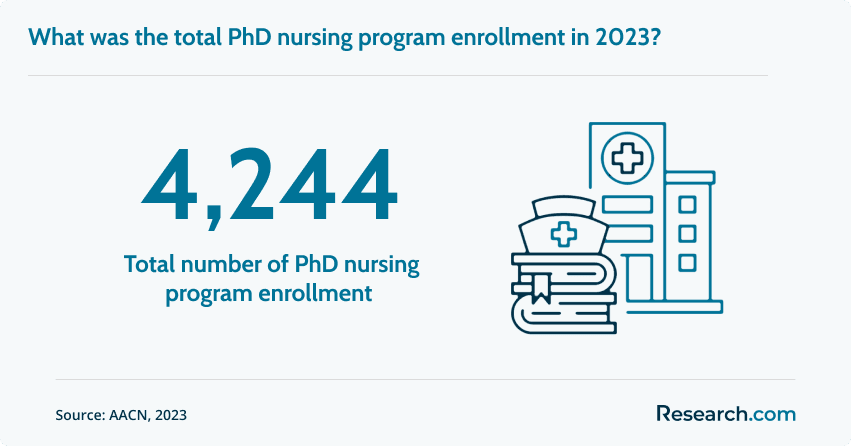
Interest in PhD nursing education remains meaningful. In 2023, PhD nursing programs enrolled 4,244 students. As demand for doctoral-prepared nurses continues, applicants should ask each school whether funding opportunities are available for online, hybrid, full-time, and part-time students.
Financial aid options for BSN to PhD online bridge students
A BSN to PhD program is a major academic and financial commitment. Students sometimes compare healthcare training levels by asking questions such as whether medical assistant school is hard, but doctoral nursing education involves a much deeper research, writing, and time investment. The good news is that multiple funding sources may help reduce out-of-pocket costs.
- Federal student aid: Graduate students may use federal options such as Direct Unsubsidized Loans and Grad PLUS Loans after completing the FAFSA.
- University scholarships and grants: Nursing schools may offer need-based or merit-based funding for doctoral students.
- Graduate fellowships or assistantships: Some programs provide tuition support or stipends in exchange for research or teaching responsibilities.
- Employer tuition reimbursement: Hospitals, health systems, universities, and public agencies may help employed nurses pay for doctoral study.
- External scholarships: Organizations such as the American Association of Colleges of Nursing, Sigma Theta Tau, and local nursing foundations may offer awards.
- Loan repayment programs: Programs such as NURSE Corps or the National Health Service Corps may support eligible nurses who serve in high-need areas.
How to reduce doctoral nursing costs
- Ask whether online students qualify for the same funding as campus students.
- Compare the total required credits, not only the per-credit price.
- Look for faculty grants that support student research assistant roles.
- Ask your employer about tuition assistance before applying.
- Clarify whether campus intensives, travel, and conference participation are required.
Admission requirements for BSN to PhD online bridge programs
Admission to a BSN to PhD online bridge program is selective because students enter directly into doctoral-level research preparation. Requirements vary by university, but most schools look for strong academic performance, active nursing licensure, clear research interests, and evidence that the applicant is ready for independent scholarly work. Understanding these requirements is as important for doctoral nursing applicants as understanding what medical billers and coders do is for students exploring administrative healthcare careers: the right pathway depends on the work you actually want to do.
| Requirement | What schools usually expect | How to strengthen your application |
| BSN degree | A Bachelor of Science in Nursing from an accredited program, commonly accredited by CCNE, ACEN, or NLN. | Confirm that your prior nursing program meets the doctoral program’s accreditation expectations. |
| Minimum GPA | Many programs require a minimum cumulative GPA of 3.0 or higher, while competitive programs may prefer 3.5 or above. | Address academic weaknesses directly and highlight strong performance in research or statistics courses. |
| Active RN license | An active, unencumbered RN license is typically required. | Check whether the program requires licensure in a specific state or accepts a multi-state compact license. |
| Recommendation letters | Applicants often submit two to three letters, including one from a nurse educator or doctorally prepared nursing professional. | Choose recommenders who can speak to your research potential, writing ability, and professional maturity. |
| Statement of purpose | Schools expect a clear explanation of career goals, research interests, and reasons for pursuing a PhD. | Name the faculty members or research areas that connect to your goals. |
| Résumé or CV | Programs usually request clinical experience, academic history, scholarly activity, and publications if applicable. | Include quality improvement, evidence-based practice, presentations, leadership, and research exposure. |
| Official transcripts | All prior college-level coursework must be documented. | Request transcripts early to avoid application delays. |
| Graduate-level preparation | Some programs require or prefer graduate-level statistics or research methods completed with a grade of B or better. | Consider completing a statistics or research course before applying if your background is limited. |
Admissions committees use these requirements to judge whether applicants can succeed in doctoral research. Nursing outcomes also help explain why advanced programs remain competitive. A recent report found that 96% of BSN graduates and 95% of MSN graduates secured jobs within 4 to 6 months of graduation, compared with 55.3% of graduates across all disciplines.
Typical courses in BSN to PhD online bridge programs
BSN to PhD online programs combine advanced nursing content with doctoral research training. The goal is to move students from clinical nursing knowledge into scientific inquiry, scholarship, data analysis, theory development, and dissertation research. Nurses comparing graduate routes may first explore what an MSN in health informatics can lead to, but PhD coursework is different because it centers on generating new evidence rather than primarily applying advanced professional skills.
| Course area | What students learn | Why it matters |
| Nursing theory development | How theoretical frameworks shape nursing research questions and interpretation. | Strong theory helps make dissertation research coherent and defensible. |
| Advanced research methods | Quantitative, qualitative, and mixed-methods research design. | PhD students must be able to design rigorous studies and evaluate evidence. |
| Biostatistics and data analysis | Statistical methods used to analyze healthcare and nursing data. | Research careers require comfort with complex data and valid interpretation. |
| Health policy and leadership | How nurses influence policy, systems change, and organizational decision-making. | Many PhD-prepared nurses work in policy, leadership, or academic governance. |
| Ethics in healthcare research | Responsible conduct of research, participant protection, and institutional review processes. | Human-subjects research must meet ethical and regulatory standards. |
| Scholarly writing and grant writing | Academic publishing, proposal development, and research funding applications. | Faculty and research careers often require publication and grant activity. |
| Dissertation seminar or capstone | Proposal development, dissertation planning, defense preparation, and scholarly presentation. | The dissertation is the central requirement of the PhD. |
Electives may include global health, informatics, nursing education, public health, population health, or other areas aligned with faculty expertise and dissertation goals.
Common specializations in BSN to PhD online bridge programs
Not every BSN to PhD program offers formal concentrations, but many allow students to shape electives, research assistantships, and dissertation topics around a focused area. The best specialization is one that aligns with faculty expertise, available data sources, your long-term career goal, and a healthcare problem you are prepared to study over several years.
Nurses who want a faster route into advanced clinical or leadership practice may also compare fast BSN to MSN online programs. A BSN to PhD pathway is usually the better match for students committed to research-intensive careers, nursing faculty roles, policy scholarship, or academic leadership.
| Specialization area | Best fit for students interested in | Possible career direction |
| Health policy and leadership | Healthcare reform, systems improvement, regulation, and advocacy. | Policy analyst, health system leader, academic policy researcher. |
| Population and public health | Community health, prevention, health disparities, and vulnerable populations. | Public health program director, population health researcher, faculty scholar. |
| Nursing education | Teaching, curriculum, simulation, learning outcomes, and faculty development. | Nursing professor, academic administrator, curriculum leader. |
| Clinical nursing research | Patient outcomes, quality improvement, care delivery, and evidence-based practice. | Nurse scientist, clinical researcher, director of nursing research. |
| Informatics and data science | Digital health, healthcare data, technology, and decision support. | Informatics researcher, data-focused nursing scientist, digital health leader. |
| Gerontology or aging studies | Aging, long-term care, chronic illness, and older adult health. | Aging researcher, faculty expert, health system consultant. |
| Mental health and behavioral science | Access to mental healthcare, treatment models, behavioral outcomes, and systems of care. | Behavioral health researcher, policy scholar, academic faculty member. |
These focus areas are also relevant to workforce concerns. North Carolina and Washington are each projected to face a 22% RN shortage by 2037, and several other states, including Maryland, South Carolina, and Michigan, are projected to have shortages nearing 20%. Doctoral-prepared nurses can help address workforce pressure by preparing new nurses, improving systems, and producing research that supports better care delivery.
How to choose the best BSN to PhD online bridge program
The right BSN to PhD program is not simply the cheapest, fastest, or highest-ranked option. It is the program where your research interests, faculty mentorship, funding situation, schedule, and career goals fit together. Students comparing other online degrees, such as the best online bachelor's in sociology programs, often look at curriculum and flexibility; doctoral nursing students must go further and evaluate research infrastructure, dissertation support, and faculty alignment.
Who should choose a BSN to PhD pathway?
| Choose this path if... | Consider another path if... |
| You want to become a nurse scientist, researcher, professor, policy scholar, or academic leader. | You primarily want to become a nurse practitioner or pursue another advanced clinical certification. |
| You are willing to spend several years developing research and dissertation expertise. | You want a shorter graduate program focused on direct clinical advancement. |
| You have a clear research interest or are ready to develop one with faculty guidance. | You are unsure whether you enjoy scholarly writing, statistics, or independent research. |
| You can manage long-term academic work alongside employment, family, or funding constraints. | You need a credential with faster short-term earnings impact. |
Key factors to evaluate
- Accreditation: Confirm that the nursing program is accredited by CCNE, ACEN, or another recognized body before applying.
- Faculty research match: Review faculty publications, funded projects, and dissertation chair availability.
- Program format: Ask whether courses are synchronous, asynchronous, hybrid, or residency-based.
- Cost and funding: Compare tuition, fees, travel, assistantships, fellowships, employer reimbursement, and research support.
- Dissertation support: Look for structured milestones, writing support, statistics consultation, and accessible faculty mentorship.
- Career outcomes: Ask where graduates work, how long students typically take to finish, and whether alumni enter academic, research, or leadership roles.
Common mistakes to avoid
- Choosing a program before confirming accreditation.
- Comparing only tuition while ignoring fees, travel, and dissertation expenses.
- Assuming online means self-paced or less rigorous.
- Applying without checking whether faculty match your research interests.
- Assuming all online programs have the same residency requirements.
- Relying only on rankings without reviewing graduation support and mentorship quality.
- Assuming a PhD automatically leads to a specific salary or job title.
Questions to ask admissions advisors and faculty
- Which faculty members are currently mentoring BSN-entry PhD students?
- What research areas are strongest in the school of nursing?
- How are online doctoral students integrated into research teams?
- Are assistantships, scholarships, or fellowships available to online students?
- How often are campus visits required?
- What support is available for statistics, grant writing, publishing, and dissertation completion?
- What careers have recent graduates pursued?
Career paths for BSN to PhD online bridge graduates
Graduates of BSN to PhD bridge programs often pursue advanced roles in nursing leadership, research, higher education, evidence-based practice, and health policy. The degree is designed for nurses who want to create and apply knowledge at a systems level, not only deliver bedside care.
| Career path | What the role often involves | Salary information cited |
| Nurse scientist or clinical researcher | Designing and leading studies that improve patient outcomes, practice standards, and care delivery. | Nurse researchers earn a median salary of around $95,000 per year. |
| Nursing faculty or professor | Teaching nursing students, mentoring research, publishing scholarship, and contributing to academic service. | Assistant Professors average around $69,174. |
| Director of nursing research | Overseeing research initiatives in hospitals, health systems, or academic clinical partnerships. | PhD-prepared nurses working as Directors of Nursing earn an average salary of $120,700. |
| Health policy analyst | Evaluating policy, using evidence to inform reform, and working with agencies or nonprofit organizations. | Salary varies by employer, region, and experience. |
| Public health program director | Leading community health initiatives informed by research and population health data. | Salary varies by organization and scope of responsibility. |
| Evidence-based practice consultant | Helping organizations translate research into clinical protocols and quality improvement initiatives. | Salary varies by consulting model and employer. |
| Academic dean or administrator | Managing nursing programs, faculty, curriculum, accreditation processes, and institutional strategy. | Deans of Nursing earn about $109,432. |
| Grant writer or research administrator | Supporting funded research through proposal development, compliance, budgeting, and project management. | Salary varies by institution and role level. |
| Nursing manager or advanced leadership role | Managing teams, improving systems, and using evidence to guide operational decisions. | Nursing Managers make approximately $137,623. |
| Advanced Practice Registered Nurse | Some APRNs may use doctoral research training alongside clinical expertise, depending on credentials and state requirements. | APRNs have average earnings of $116,046. |
Salary outcomes are not guaranteed. Pay depends on role, employer, location, experience, clinical credentials, academic rank, research funding, and leadership responsibility.
Accelerated BSN vs. BSN to PhD online bridge programs
Accelerated BSN programs and BSN to PhD bridge programs serve very different students. An accelerated BSN is usually for someone who already has a non-nursing bachelor’s degree and wants a faster route into registered nursing practice. A BSN to PhD bridge program is for someone who already has a BSN and RN background and wants doctoral preparation in nursing research, scholarship, teaching, policy, or academic leadership.
| Program type | Who it is for | Main outcome |
| Accelerated BSN | Students with a non-nursing bachelor’s degree who want to enter nursing. | Preparation for nursing practice and RN licensure eligibility. |
| BSN to PhD online bridge | BSN-prepared registered nurses seeking a research doctorate. | Preparation for nursing research, faculty, policy, and scholarly leadership roles. |
If you are still trying to enter the nursing profession, review options for accelerated BSN nursing. If you are already a BSN-prepared RN and want to produce nursing research or teach at the university level, a BSN to PhD pathway is the more relevant comparison.
Job market for BSN to PhD online bridge graduates
The strongest job market for BSN to PhD graduates is in academia, research, leadership, evidence-based practice, and health policy. As with students comparing the best online bachelor's in mathematics degree programs, nurses should evaluate how the degree connects to real roles, employer expectations, and long-term advancement rather than focusing only on the credential name.
Academic and research demand
Nursing schools continue to need qualified faculty. According to the American Association of Colleges of Nursing, more than 80,000 qualified applicants were turned away from nursing schools in recent years due to faculty shortages. BSN to PhD graduates can help address this issue by entering faculty roles, mentoring students, and expanding nursing research capacity.
Compensation and career stability
Doctoral-prepared nurses can qualify for roles with competitive pay, especially in leadership, research administration, academic administration, and health system positions. Nurse educators at the postsecondary level earn over $85,000 on average, while experienced professionals in high-demand areas can earn significantly more, sometimes over $120,000. Actual earnings vary, so applicants should review role-specific salary data in their region before estimating return on investment.
Technology, AI, and data expectations
AI, predictive analytics, electronic health records, and digital health tools are changing how nursing research is designed and applied. PhD-prepared nurses do not need to become software engineers, but they increasingly need data literacy, ethical judgment, interdisciplinary collaboration skills, and the ability to evaluate technology-driven evidence. Programs with strong statistics, informatics, and research methods support may better prepare graduates for modern nursing science.
What graduates say about BSN to PhD online bridge programs
- Maricel: "I did not realize I could move from a BSN directly into doctoral study until I found a bridge pathway. The online structure helped me keep working part-time while building the research skills I now use in a rural health disparities project."
- Carrie: "The program gave me a clear academic structure and consistent mentorship. Even though much of the work happened online, I had guidance through coursework, proposal development, and the early stages of scholarly writing."
- Ana: "As a first-generation college student, the idea of a PhD felt intimidating. The bridge format made the goal feel possible because it connected leadership, nursing science, and faculty support in a way I could follow step by step."
How online BSN to PhD programs support mentorship and networking
Strong online doctoral programs do more than post lectures. They create structured ways for students to work with faculty, join research conversations, present developing ideas, and build scholarly relationships. Common supports include virtual research seminars, dissertation writing groups, faculty-led projects, online colloquia, professional conference encouragement, and occasional in-person residencies.
Networking matters because doctoral careers often grow through mentorship, publications, funded projects, committee work, and institutional recommendations. Students earlier in the nursing education pathway may compare options such as the easiest accredited RN to BSN online programs, but PhD students should focus less on ease and more on sustained research support, faculty access, and scholarly community.
Key Insights
- A BSN to PhD online bridge program is best for BSN-prepared RNs who want research, faculty, health policy, or scholarly leadership careers.
- Most programs take 4 to 6 years because students complete doctoral coursework, research preparation, and a dissertation.
- Total tuition commonly ranges from $30,000 to $90,000, with many programs charging $600 to $1,000 per credit hour and requiring 60 to 80 credit hours.
- Accreditation and faculty research fit are more important than whether the program is online or on campus.
- Applicants should be ready to show a BSN from an accredited program, an active RN license, strong academic performance, recommendation letters, a clear statement of purpose, and research readiness.
- Online learning can improve access for working nurses, but it still requires disciplined writing, data analysis, faculty communication, and dissertation progress.
- The PhD is not the same as an MSN or advanced clinical practice pathway. Choose it if you want to create research, teach, influence policy, or lead evidence-based change.
- Before enrolling, ask about funding, residency requirements, dissertation support, faculty availability, graduate outcomes, and whether online students receive equal access to mentorship and research opportunities.
References:
- American Association of Colleges of Nursing. (2025). 2023 Employment Research Brief: New Graduate Employment Data. American Association of Colleges of Nursing employment data.
- American Association of Colleges of Nursing. (2025). PhD in Nursing: Data Snapshots. American Association of Colleges of Nursing PhD data.
- Meyer, J. (2024, October 24). The rise of online nursing programs – Are they the future of nursing education? NCHStats online nursing programs report.
- National Center for Health Workforce Analysis. (2024, November). Nurse workforce projections, 2022–2037 [Fact sheet]. National Center for Health Workforce Analysis nurse workforce projections.
- Payscale. (2025, June 20). Doctor of Philosophy (PhD), Nursing salary. Payscale PhD nursing salary data.
Other Things You Should Know About the Best BSN to PhD Online Bridge Programs
Yes, many BSN to PhD Online Bridge Programs in 2027 require a clinical practice component. These are designed to enhance practical skills and are often integrated into the curriculum as credit-bearing courses or mandatory externships, typically at approved healthcare facilities.
Admission requirements for BSN to PhD Online Bridge Programs in 2027 typically include a Bachelor of Science in Nursing (BSN), an active RN license, a minimum GPA (often around 3.0 or higher), professional recommendations, and a statement of purpose. Some programs may also require GRE scores and relevant work experience.


