
2027 Can an Acute Care NP Work in Primary Care? What You Need to Know

Co-Founder and Chief Data Scientist
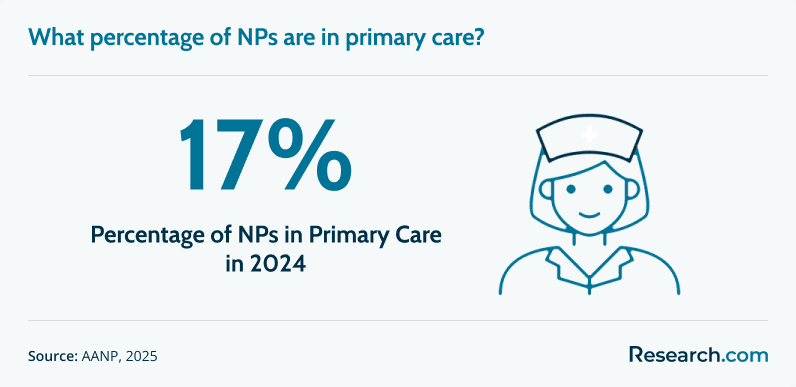
As an acute care nurse practitioner (ACNP), your high-acuity skills make you part of a vital and highly focused group of specialists. But with 87% of NPs working in primary care, it's natural to wonder if staying in such a specialized role is a worthwhile long-term option. You have invested in critical skills, but you're rightfully concerned about flexibility and avoiding a path that might feel too narrow down the road.
This guide provides the strategic insight you need to move forward with confidence. Created by career planning experts with over 10 years of experience, it offers a definitive look at the professional realities and outlines the concrete, viable pathways for your future.
Key Things You Should Know About Acute Care NP Degrees
- An Acute Care Nurse Practitioner degree prepares you for high-stakes roles in intensive care units and emergency departments, where you will manage critically ill patients during their most vulnerable moments.
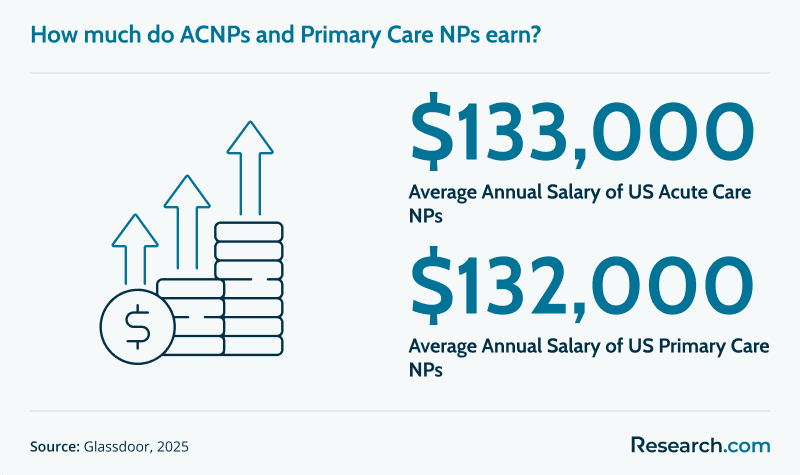
- Graduates can expect to earn a competitive salary, with acute care nurse practitioners making an average of $133,000 annually.
- Pursuing your degree online provides the flexibility to continue working while balancing your studies with your existing professional and personal commitments.
- Can an acute care nurse practitioner legally work in a primary care office? Can an acute care nurse practitioner legally work in a primary care office?
- What is the difference between an ACNP and an FNP? ACNP vs. FNP
- How does the APRN Consensus Model define NP scope of practice? Scope of Practice
- What skills do FNPs have that ACNPs are not trained for? Core Skills
- What happens if an ACNP practices in primary care? Primary Care Roles
- Is an outpatient specialty clinic considered primary care? Is an outpatient specialty clinic considered primary care?
- How can an ACNP become an FNP? Becoming an FNP
- What is the curriculum for a post-master's FNP certificate? What is the curriculum for a post-master's FNP certificate?
- Why do so many ACNPs want to work in primary care? Why do so many ACNPs want to work in primary care?
- How can an ACNP best leverage their hospital experience for an outpatient job? Outpatient Careers
- What strategic advantages does a DNP offer for ACNP career advancement? What strategic advantages does a DNP offer for ACNP career advancement?
- What is the most important thing to know before switching from acute to primary care? Considerations
- What additional educational opportunities can enhance an ACNP’s career transition? What additional educational opportunities can enhance an ACNP’s career transition?
Can an acute care nurse practitioner legally work in a primary care office?
The direct answer is no. An ACNP cannot legally work in a dedicated primary care office. Your legal scope of practice is tied directly to your certification and its specific "population focus"—in this case, patients with acute and critical conditions.
It's a common misconception that this can be bypassed by working under a physician's supervision. This is incorrect. State Boards of Nursing, not individual employers or physicians, are the final authority on your practice. They have determined that the ACNP scope is distinct from primary care.
Practicing outside your population focus is a serious violation. It can lead to disciplinary action from the board, loss of malpractice insurance, and significant legal and financial liability. This boundary is clear for a reason: it protects patients while also protecting your professional standing from risk.
Many nursing students exploring different paths early in their education often consider minors for nursing majors — for instance, in public health, psychology, or health administration—to broaden their understanding of healthcare systems. While these academic combinations can enhance versatility, they do not change or expand the legal limits of an ACNP’s scope of practice.
What is the difference between an ACNP and an FNP?
The simplest way to understand the difference is to look at the numbers: nearly 87% of all nurse practitioners are prepared for primary care. This is because ACNPs and FNPs are trained to manage entirely different patient populations. Let's look at what that means for each role.
The Acute Care Nurse Practitioner: Focused on Crisis Management
An ACNP is an expert in managing complex, acute, and critical conditions. Their work is focused on stabilizing patients during a medical crisis, often in an inpatient hospital setting like an ICU or emergency department. Their entire training is geared toward high-stakes, episodic care where the goal is immediate intervention.
Many nurse practitioners who begin their careers in primary care later explore FNP to Acute Care NP transition programs to expand their scope and work with more critically ill or hospitalized patients. These bridge pathways allow experienced FNPs to gain the acute clinical competencies required for advanced hospital-based practice while maintaining their foundation in holistic, family-centered care.
The Family Nurse Practitioner: Focused on Lifespan Health
In contrast, an FNP provides longitudinal care across the entire lifespan. Their focus is on health promotion, disease prevention, and managing chronic conditions over the long term. Rather than managing a single crisis, they build relationships with patients to manage their overall health for years.
So, the key difference isn't the building they work in, but the nature of the care they provide. The data on the primary care workforce, shown below, highlights just how significant this divide is within the NP profession.
How does the APRN Consensus Model define NP scope of practice?
Developed by the National Council of State Boards of Nursing, the APRN Consensus Model is the national framework that defines your scope of practice. It works by aligning four key things: your education, your program's accreditation, your certification exam, and your state license. All of these must be centered around a specific "population focus," like acute care or primary care.
Many people think this is just academic theory, but that's a serious misunderstanding. This national model is the blueprint that nearly all state Boards of Nursing use to write their laws and regulations for APRN practice. It is the reason the boundaries between specialties are so clear and legally enforceable.
This framework also directly shapes the nursing profession by creating distinct, non-interchangeable career tracks. The specialized training required for each population focus means that the workforce is divided by certification. As a result, advanced practitioners who pursue higher degrees—such as a Doctor of Nursing Practice (DNP)—often see expanded leadership opportunities and a notable increase in compensation. Recent data on doctor of nursing practice salary trends shows that DNP-prepared nurses frequently earn more than their master’s-prepared peers due to their advanced clinical and administrative expertise.
The chart below provides a clear breakdown of the most common NP specializations, showing the real-world result of this model in practice.
What skills do FNPs have that ACNPs are not trained for?
Family nurse practitioners are trained in a completely different clinical domain focused on preventative health. Their unique skills include health promotion, disease prevention, and the longitudinal management of patients across the entire lifespan. This means their core curriculum includes areas where ACNPs receive little to no training, such as pediatrics, well-child visits, and routine women's health.
It's a mistake to think of these as "softer skills." This is a distinct and rigorous body of clinical knowledge. The entire approach is different: it's about preventing a crisis over many years, not just managing one in a single moment.
The Educational Divide: Training for a Different Patient Population
The modern healthcare system is increasingly focused on preventative care to improve long-term outcomes and reduce costs. This shift makes the FNP skill set more valuable than ever. It's the reason why accredited RN to FNP programs dedicate so much of their curriculum to outpatient primary care, chronic disease management, and patient education.
This specialized training is precisely why a formal educational path is required to switch from acute care to primary care.
What happens if an ACNP practices in primary care?
Practicing outside your scope has severe and immediate consequences. This isn't a minor workplace issue; it's a direct violation of the law that governs your license. The repercussions fall into three main categories: legal, professional, and financial.
First, the state Board of Nursing can take disciplinary action, which could range from a formal reprimand to the suspension or even revocation of your nursing license. Second, your malpractice insurance will likely refuse to cover you if a claim arises from care you provided outside of your certified specialty. This leaves you personally exposed to the full cost of a lawsuit.
Finally, you face significant civil liability. It is critical to understand that the legal responsibility for practicing within scope rests entirely on you, the licensed NP, not on your employer. In a legal challenge, a supervisor's approval won't protect you; the only thing that matters is the scope tied to your license. Violating it puts your entire career at risk.
Is an outpatient specialty clinic considered primary care?
No, an outpatient specialty clinic is not considered primary care. This is a critical distinction, and it opens up a significant career pathway for you. The defining factor is the type of patient care being delivered, not the building where it happens.
Think of it this way: a primary care clinic manages a patient's general wellness and chronic conditions over their lifetime. A specialty clinic—like cardiology, oncology, or pulmonology—manages a specific, complex disease process. These clinics are often located outside of a hospital, but the care they provide is high-acuity and falls squarely within the ACNP's training and scope of practice.
Understanding this difference is key. It reveals a powerful career path for ACNPs seeking a different work environment. It's an opportunity to find a more predictable schedule while still using the expert, high-level clinical skills you worked so hard to develop, often without needing to go back to school.
How can an ACNP become an FNP?
Making the transition from ACNP to FNP is a formal process with clear, required steps. While you can't simply challenge the exam, the path forward is straightforward. Here is the standard process you would follow.
- Enroll in an accredited program. You must find and complete a post-master’s FNP certificate program, as certification bodies only accept graduates from properly accredited institutions.
- Complete the required coursework and clinical hours. This focused curriculum is designed to fill the specific knowledge gaps in pediatrics, women's health, and longitudinal primary care.
- Pass a national FNP certification exam. After graduating, you will be eligible to sit for the FNP certification exam from a recognized body like the AANP or ANCC.
- Obtain state licensure as an FNP. With your new FNP certification in hand, you can then apply to your state Board of Nursing for licensure in your new specialty.
This structured process ensures you have the documented education and competency to practice safely and legally. The good news is that many institutions now offer an accelerated 12 month FNP program to make this transition efficient.
What is the curriculum for a post-master's FNP certificate?
A post-master's FNP certificate is a focused program designed to bridge specific gaps between your acute care background and a primary care role. The curriculum is typically built around three core components.
- Core Coursework: Expect courses in advanced health assessment, pharmacology, and pathophysiology, all tailored to the primary care of pediatric, adult, and geriatric patients.
- Supervised Clinical Hours: This is the most significant part of the program, requiring hundreds of hours of hands-on practice in family medicine, pediatric, and women's health settings.
- Certification Preparation: The entire curriculum is designed to prepare you to successfully pass a national FNP certification exam, which is the final step before licensure.
This highly specific curriculum is what makes the post-master's certificate the definitive path for practicing NPs. As a point of comparison, for those starting from a non-nursing background, there are entirely different entry points into the field, such as MSN direct entry programs online.
Why do so many ACNPs want to work in primary care?
While many assume a major career change is about money, the data shows that ACNP and Primary Care NP salaries are nearly identical, at around $133,000 and $132,000 respectively. The real drivers for this transition are almost always about finding a more sustainable career pace and a different kind of professional fulfillment.
The high-acuity environment of acute care is demanding. Many experienced ACNPs eventually seek a role with a more predictable schedule and a better work-life balance. They look for an opportunity to build long-term, relationship-based care with patients, guiding their health over years rather than managing a crisis over a few hours or days.
For nurses exploring a shift toward a new practice focus or advanced leadership opportunities, direct entry Doctor of Nursing Practice programs online offer a flexible and efficient route. These programs allow experienced RNs and even non-nursing bachelor’s degree holders to transition into advanced practice while maintaining their current professional or personal commitments.
This isn't a search for an "easier" job; it's a mature career decision about longevity and preventing burnout. Choosing a path that aligns with your personal and professional needs for the long haul is a sign of strategic career management. The salary data below confirms that this decision is rarely driven by financial incentives.
How can an ACNP best leverage their hospital experience for an outpatient job?
The most successful ACNPs leverage their hospital experience by targeting high-acuity outpatient specialty clinics where their deep knowledge of complex disease management is a primary asset. Your background is a perfect fit for roles in cardiology, oncology, pulmonology, and other specialty service lines.
The key is to reframe your experience. Instead of emphasizing the inpatient setting, focus your resume on your expertise in managing specific, complex patient populations.
A hiring manager for a heart failure clinic, for example, will see immense value in an acute care NP with years of experience in a cardiac ICU. You're not just a hospital NP; you're a specialist in complex cardiac disease.
Where the Jobs Are: The NP Employment Landscape
Don't underestimate the size of the job market. While physician offices are the largest single employer of NPs, hospitals and outpatient care centers represent a massive segment of the job market.
This same high-acuity skill set is valuable in other non-traditional settings as well. Your ability to make critical decisions under pressure is a core competency that opens doors to unique opportunities. For those who thrive in high-stakes environments, a flight nurse career path is another example of a role where your acute care expertise is essential.
As the chart below illustrates, these settings employ nearly a third of all NPs, and this number is growing as more complex care moves to outpatient settings.
What strategic advantages does a DNP offer for ACNP career advancement?
Pursuing a Doctor of Nursing Practice transforms clinical expertise into leadership and system-level impact. A DNP curriculum deepens competency in evidence-based practice, quality improvement, and policy development, enabling ACNPs to assume roles that extend beyond direct patient care. This advanced training equips you to drive organizational change, optimize care delivery, and effectively manage interdisciplinary teams. Consider exploring easy doctor of nursing practice programs to discover flexible pathways that align with your professional objectives.
What is the most important thing to know before switching from acute to primary care?
The most important thing to know is that this is a fundamental shift in your entire mindset as a practitioner. It's a move from reactive, problem-focused crisis management to proactive, relationship-based health management.
As an acute care NP, you are an expert at handling the most critical moments of a patient's illness. In primary care, your role shifts to becoming a long-term partner in a patient's overall wellness, focusing on prevention and education over years or even decades.
Many people assume the biggest change is the schedule, but a mismatch in your core professional identity—from crisis expert to wellness coach—is the biggest risk for dissatisfaction.
Planning Your Terminal Degree: The Final Step in Your Career Arc
This decision is one step in what can be a long and rewarding career. The entire nurse practitioner profession offers strong financial stability and opportunities for growth, as you can see in the salary data below.
As you plan your next move, it's wise to look even further ahead. For many NPs, the ultimate goal is a terminal degree, and the shortest MSN to DNP program can be the final step in achieving their leadership and advanced practice goals.
Here’s What Graduates Have to Say About Their ACNP Programs
- Michael: "I was an ICU nurse for six years before starting my ACNP, and I thought I knew what to expect. But the program gave me a much deeper understanding of the "why" behind my patients' conditions. Now when I walk into a room, I feel a new level of confidence in my assessments and decisions. It’s a feeling of true ownership over my practice."
- Samantha: "The autonomy you gain is incredible. As an RN, I was always executing orders, but as an ACNP, I'm part of the team making the critical diagnostic and treatment decisions from the start. The respect you get from physicians and the rest of the care team is profound because they know the rigor of your training."
- Chloe: "What surprised me most was how much my communication with patients and families improved. The program teaches you how to discuss complex conditions and difficult prognoses with clarity and compassion. You're not just treating the illness; you are guiding people through the most critical moments of their lives."
Key Findings
- The acute care NP workforce has seen an explosive 836% growth over the past three decades, highlighting the critical and expanding need for specialists who can manage high-acuity patients.
- The median salaries for Acute Care NPs (133,000) and PrimaryCareNPs (132,000) are nearly identical, showing that career transitions are typically driven by a search for work-life balance, not a significant pay increase.
- The entire nurse practitioner profession is projected to grow by an incredible 40% over the next decade, ensuring that any chosen specialty represents a sound, high-demand career investment.
- Hospitals (25%) and outpatient care centers (8%) are major employers of NPs, creating a robust market for ACNPs to leverage their skills in settings with a different pace, often without retraining.
- Post-master's FNP certificate programs can be completed in as little as 12 months, providing an efficient and formal pathway for ACNPs who want to transition to primary care.
- Acute Care NPs represent about 9% of all NP specializations, highlighting the focused nature of the role and the importance of having a clear strategy for your career path.
What additional educational opportunities can enhance an ACNP’s career transition?
Pursue targeted continuing education and certificate programs that align with the evolving demands of outpatient care. Expanding your skill set through specialized coursework in chronic disease management, preventive strategies, and healthcare leadership can bridge any competency gaps. Consider programs that offer accelerated pathways, including the easy RN to BSN completion program, to rapidly bolster foundational knowledge while meeting the regulatory scope of practice.
References:
- American Association of Nurse Practitioners. (2025). NURSE PRACTITIONERS are the PROVIDERS OF CHOICE for MILLIONS OF AMERICANS [Infographic]. Retrieved September 7, 2025, from https://storage.aanp.org/www/documents/NP_Infographic_111122.pdf
- Connors, M. (2022). A guide to the top nurse practitioner specialties and NP types. Barton Associates. Retrieved September 7, 2025, from https://www.bartonassociates.com/blog/top-nurse-practitioner-specialties-and-np-types/
- Glassdoor. (2025). How much does an Acute Care Nurse Practitioner make? Retrieved September 7, 2025, from https://www.glassdoor.com/Salaries/acute-care-nurse-practitioner-salary-SRCH_KO0,29.htm
- Glassdoor. (2025). How much does a Primary Care Nurse Practitioner make? Retrieved September 7, 2025, from https://www.glassdoor.com/Salaries/primary-care-nurse-practitioner-salary-SRCH_KO0,31.htm
- U.S. Bureau of Labor Statistics. (2025). Nurse anesthetists, nurse midwives, and nurse practitioners. In Occupational Outlook Handbook. Retrieved September 7, 2025, from https://www.bls.gov/ooh/healthcare/nurse-anesthetists-nurse-midwives-and-nurse-practitioners.htm#tab-5
- U.S. Bureau of Labor Statistics. (2025). Occupational employment and wages, May 2024. Retrieved September 7, 2025, from https://data.bls.gov/oes/#/industry/000000
- ZipRecruiter. (2025). Acute Care Nurse Practitioner salary. Retrieved September 7, 2025, from https://www.ziprecruiter.com/Salaries/Acute-Care-Nurse-Practitioner-Salary#Yearly
Other Things You Need To Know About ACNP Career Paths
Yes, acute care nurse practitioners can hold dual certification as both an ACNP (Acute Care Nurse Practitioner) and an FNP (Family Nurse Practitioner). This dual certification enables them to practice in various settings, including both acute and primary care, by fulfilling the respective educational and certification requirements for each specialty in 2027.
ACNPs seeking to work in primary care in 2027 must obtain Family Nurse Practitioner (FNP) certification. This often involves completing additional coursework and clinical hours. Certification is governed by bodies such as the American Nurses Credentialing Center (ANCC) and American Association of Nurse Practitioners (AANP).
In 2027, ACNP scope of practice varies significantly between states due to differing laws and regulations. It's crucial for ACNPs to understand the specific practice guidelines in the state where they intend to work, including prescriptive authority and supervising physician requirements.


