
2027 How Should Nursing Students Pick a Minor?

Co-Founder and Chief Data Scientist
Choosing a minor can be a powerful way for nursing students to shape their education around future career goals, personal interests, or graduate school plans. While the nursing curriculum is already rigorous, adding a minor allows students to gain expertise in complementary fields.
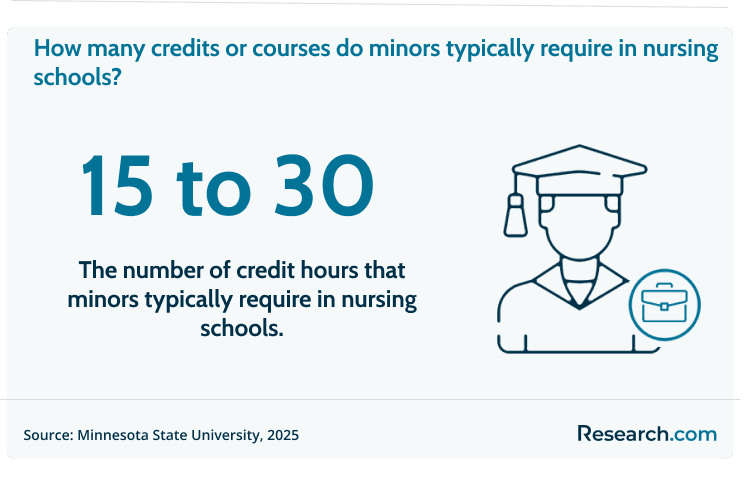
Most minors require 15 to 30 credits, which typically translates to five to ten courses, making it a manageable addition for students who plan their schedules carefully. This guide will walk readers through the key considerations, benefits, and career impacts of choosing a minor, helping nursing students make confident, informed decisions about their academic path.
Key things nursing students should know about picking a minor subject:
- Choosing a minor that complements your nursing career goals can give you a competitive edge in job applications and graduate school admissions.
- Some minors share courses with nursing prerequisites or general education requirements.
- Most minors typically require 15 to 30 credits, or about five to ten courses, which can add time and cost to your degree if not carefully planned.
What is a minor, and how does it differ from a major for nursing students?
A minor is a secondary area of academic study that allows students to gain additional knowledge outside their primary focus. For nursing students, this often means choosing a subject like psychology, public health, business, or health informatics to broaden their skills and perspectives beyond the core nursing curriculum.
A minor usually requires 15 to 30 credits of coursework, making it a smaller commitment compared to a major, and it’s designed to complement or diversify a student’s education.
Here is a comparison between a nursing major and a minor:
- Major: The primary area of study, such as nursing, typically requires 60+ credits, including clinicals, labs, and core coursework. It prepares students for professional licensure and defines their main career path.
- Minor: A secondary focus of study, usually requiring 15–30 credits, designed to complement or expand the major. It does not lead to licensure but enhances knowledge, skills, and career flexibility.
For nursing students, the key difference is that the major prepares them for licensure and direct patient care, while the minor adds depth in another field that can influence career direction, open doors to specialized roles, or support graduate study.
Much like understanding the difference between radiographer and radiologist degree programs, knowing how majors and minors serve distinct purposes helps students make more informed academic and career decisions.
How many credits or courses do minors typically require in nursing schools?
Most college minors generally require 15 to 22 semester credits, which usually equals about five to seven courses. This range is consistent across many universities, regardless of major, and provides students with enough structured coursework to gain meaningful knowledge in another discipline without extending their degree too much.
For nursing students, this often means adding elective classes that can either overlap with general education requirements or be taken during summer and elective slots. The actual load, however, depends on the school’s policies and the specific minor chosen.
In nursing programs specifically, the credit requirements can vary more widely. Depending on the minor and how much overlap exists with nursing core courses, students may only need as few as 9 additional credits or as many as 30 credits.
This means that while many minors fall within the standard credit range, nursing-related minors may require either fewer or more credits (15 to 30), depending on how they are structured alongside the nursing curriculum.
For some students, choosing a minor is also influenced by long-term career goals—similar to how prospective counselors weigh program requirements and potential LPC salary when planning their educational pathway.
Can nursing students count minor courses toward general education requirements?
In many nursing programs, it’s possible for minor courses to also fulfill general education requirements. Whether this is allowed depends on the university’s policies and how much overlap exists between the two areas of study.
Some minors, such as psychology, sociology, or biology, include courses that are already required for nursing prerequisites or general education. Enrolling in an ultrasound tech online school is another example of how students can streamline their education. This overlap allows nursing students to complete both requirements at once without adding extra classes.
By selecting a minor with built-in overlap, nursing students can make their academic path more efficient. This approach helps reduce scheduling conflicts and lowers the risk of extending graduation beyond the standard four years.
However, it's important to keep in mind that not every minor will count toward general education credits, and policies can vary between universities. Meeting with an academic advisor ensures you understand how courses will apply and helps you choose a minor that fits smoothly into your nursing curriculum.
What academic or registration policies affect minors in nursing programs?
When nursing students consider adding a minor, academic and registration policies often play a big role in what’s possible. These rules vary by school, but they can directly impact course planning, credit loads, and even graduation timelines.
Understanding the policies ahead of time helps students avoid surprises and make more strategic choices.
- Credit Hour Limits: Many universities cap the total number of credits a student can take per semester. Nursing students who want to add a minor may need special permission to exceed these limits, especially during clinical semesters.
- Course Sequencing Requirements: Some minors have prerequisites or specific course sequences that must be completed in order. This can create scheduling conflicts with nursing labs or clinicals if not carefully mapped out in advance.
- Double-Counting Restrictions: While certain courses may count for both general education and a minor, some schools restrict how many credits can overlap. Understanding policies like these is as important as clarifying the difference between EMT and MA, since both require careful attention to details that can impact academic or career progress.
- Minimum Grade Standards: Many minors require students to earn at least a “C” or higher in all minor courses. This means nursing students must balance the rigor of nursing classes while maintaining strong performance in their minor.
- Declaration Deadlines: Universities often set strict deadlines for declaring a minor, sometimes early in the degree program. Missing these deadlines could make it harder, or even impossible, to add a minor without delaying graduation.
What are the most popular minors among nursing majors?
When nursing students choose a minor, they often look for fields that complement their clinical training and broaden their career options. The most popular minors typically connect directly to patient care, healthcare systems, or leadership skills that nurses will use in professional practice.
Psychology
A psychology minor is one of the most common choices for nursing students because it deepens understanding of human behavior, mental health, and coping mechanisms. This foundation is especially helpful in specialties such as psychiatric nursing, pediatrics, and patient counseling, where communication and empathy are essential.
Nutrition
A nutrition minor complements nursing by giving students evidence-based knowledge of diet, wellness, and disease prevention. This expertise allows nurses to provide more comprehensive patient education and reinforce their role in promoting long-term health outcomes.
Public Health
A public health minor prepares nursing students to think beyond individual patient care and consider strategies that improve community and population-level health. It is particularly useful for those interested in epidemiology, health policy, or working in underserved communities.
Health Informatics
With the growing reliance on electronic health records and healthcare technology, a health informatics minor equips students with skills in data management, systems use, and digital tools. Just as meeting CMA certification requirements ensures medical assistants are prepared for their roles, these competencies give future nurses an edge in leadership and healthcare innovation.
Business Administration
A business administration minor helps nursing students build knowledge in management, finance, and organizational leadership. This background is especially valuable for nurses who aspire to move into administrative positions, run private practices, or pursue healthcare management careers.
Over the past several years, the landscape of nursing education has shifted significantly, with higher-level nursing degrees gaining more popularity. For students comparing nursing to other healthcare career paths, it can also be helpful to understand how long does it take to be an OT, since both fields offer patient-centered roles but follow different academic and licensing timelines.
The chart below illustrates the most common degrees in nursing.
Which minor boosts prospects for nursing leadership or administration roles?
For nursing students interested in moving into leadership or administrative positions, choosing the right minor can provide valuable skills beyond bedside care. These minors build knowledge in management, policy, and systems thinking, which are crucial for supervisory and executive roles.
- Business Administration: A business administration minor gives nursing students a solid foundation in management, finance, and organizational behavior. This combination of skills allows future nurse leaders to handle budgets, oversee teams, and contribute to strategic decision-making in healthcare organizations.
- Healthcare Administration: A healthcare administration minor focuses directly on the structure, policies, and operations of healthcare systems. For additional insights, you can explore resources from the American College of Healthcare Executives (ACHE), a leading organization in this field.
- Health Informatics: A health informatics minor equips students with knowledge in data systems, workflow optimization, and digital healthcare tools. These competencies are increasingly valuable for nurse leaders tasked with improving efficiency, implementing technology, and supporting evidence-based decision-making.
Does minoring in education help if I plan to teach in nursing school later?
Yes, minoring in education can be very beneficial if you plan to teach in a nursing school later. An education minor introduces you to foundational concepts in teaching, curriculum development, and learning strategies, which are directly applicable when training future nurses.
This background helps you build confidence in classroom management and instructional design, skills that are not typically covered in a standard nursing curriculum.
Here are some of the benefits of adding a minor in education for nursing students:
- Teaching Fundamentals: A minor in education introduces future nurses to core principles of pedagogy, such as how students learn, how to design lesson plans, and how to evaluate learning outcomes. These skills provide a strong foundation for teaching in nursing schools.
- Curriculum Development: Education coursework helps nursing students understand how to build effective and engaging curricula. This knowledge is particularly valuable when contributing to nursing program design or leading clinical instruction.
- Classroom and Clinical Confidence: By studying education methods, nursing students gain confidence in leading groups, managing classroom dynamics, and facilitating discussions. This preparation makes the transition into teaching roles smoother.
- Career Advancement in Academia: Employers value nurses who show early commitment to education, and having this background can strengthen graduate school applications. It positions you as someone ready to combine clinical expertise with teaching ability.
In addition, having a minor in education signals to employers and academic institutions that you are serious about combining clinical expertise with teaching ability. While you will likely need a graduate degree (such as an MSN or doctorate) to qualify for most faculty positions, the minor gives you an early start in developing the educational competencies you will rely on later in your career.
For further guidance, students can explore resources from the American Association of Colleges of Nursing (AACN), which provides standards and recommendations for nursing education.
As you explore academic and career pathways beyond bedside nursing, it’s helpful to be aware of salary differences across specialties and care settings. For instance, some nurses pursue roles in palliative or end-of-life care, where the average hospice nurse salary can vary based on region, certifications, and level of clinical responsibility. Understanding these compensation trends can help you plan your education and long-term career trajectory more strategically.
What advantages does a minor in health informatics offer to future nurses?
As technology continues to shape modern healthcare, a minor in health informatics gives nursing students a competitive advantage. It blends clinical knowledge with digital skills, preparing future nurses to navigate an increasingly data-driven environment while enhancing both patient care and career opportunities.
Improved technology skills
A health informatics minor equips nursing students with practical knowledge of electronic health records, data systems, and digital tools. Similar to how learning about crime scene investigator job requirements outlines the mix of technical and analytical skills needed for success in forensics, informatics training ensures that future nurses are prepared to thrive in increasingly tech-driven healthcare environments.
Stronger data literacy
Nurses who study informatics gain a deeper ability to collect, analyze, and interpret large volumes of healthcare data, ranging from electronic health records to population health statistics. This skill set not only strengthens their capacity for evidence-based decision-making but also equips them to recognize patterns in patient outcomes, identify areas for clinical improvement, and contribute to research initiatives.
Enhanced career flexibility
A foundation in informatics provides nurses with career mobility far beyond traditional bedside roles. By understanding both clinical processes and the digital systems that support them, nurses can transition into specialized positions such as clinical informatics nurse, quality improvement coordinator, or health IT consultant. These roles allow nurses to shape policy implementation or even work with technology vendors to develop better tools for patient care.
Support for leadership roles
Informatics training gives nurses valuable insights into workflow optimization, system integration, and healthcare policy. A nurse who understands how data flows through a healthcare system can design better protocols, streamline operations, and advocate for technology investments that improve care. This knowledge positions nurses to take on roles where they can influence decision-making and lead initiatives that impact entire organizations.
Better patient care coordination
Mastery of informatics tools enables nurses to improve communication across multidisciplinary care teams. This reduces errors, enhances collaboration, and promotes a more seamless patient experience. By leveraging digital systems for scheduling, charting, and care planning, nurses can coordinate complex treatment plans more effectively, which ultimately leads to safer, more efficient, and patient-centered care outcomes.
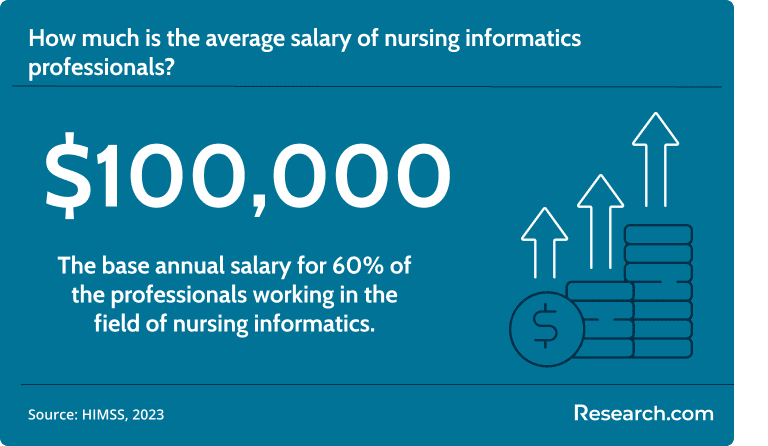
A recent workforce survey highlights the strong earning potential within nursing informatics, with 60% of professionals reporting a base annual salary of $100,000 or more. The figure underscores how specialized training, such as a minor or advanced coursework in health informatics, can position nurses for well-paying roles that go beyond bedside care, offering both financial stability and long-term career growth.
What steps should I follow to choose the right minor in nursing school?
Selecting the right minor in nursing school is more than just adding extra courses; it’s about making a strategic choice that supports your personal interests, strengthens your resume, and enhances your long-term career path.
Because nursing programs are already demanding, the process requires careful planning to ensure your minor complements your studies without creating unnecessary stress or delays in graduation.
- Assess Your Career Goals: Start by identifying where you see yourself in the future—whether it’s clinical practice, leadership, education, or research. This clarity helps you choose a minor that aligns with your long-term aspirations.
- Review Degree Requirements: Look closely at your nursing program’s curriculum to see how a minor could fit into your existing course load. Understanding credit requirements and overlap with prerequisites ensures you don’t delay graduation.
- Explore Available Options: Research the minors offered at your university and identify those that add value to nursing, such as psychology, public health, business, or health informatics. Make a shortlist of the most relevant options.
- Consult Academic Advisors: Meet with an advisor to confirm which minors are feasible alongside your clinical and classroom requirements. Advisors can also explain registration policies, credit limits, and deadlines for declaring a minor.
- Plan Your Timeline: Map out when and how you’ll complete the required courses, considering clinical rotations and heavy semesters. Planning ahead with the same attention you might give to researching career details, such as understanding what is the job outlook for a medical assistant, helps you stay focused, avoid scheduling conflicts, and keep the workload manageable.
How does a minor affect my career goals as a registered nurse?
Pursuing a minor as a nursing student can directly shape your career goals by giving you specialized skills that complement your core clinical training. For example, a minor in areas like health informatics, business, or psychology can set you apart when applying for jobs, graduate programs, or leadership opportunities.
By broadening your academic background, you create pathways into niche roles—whether that means working in data-driven healthcare, stepping into management, or focusing on patient populations with unique needs.
The career impact is especially clear in fields like health informatics. According to the U.S. Bureau of Labor Statistics, employment of health information technologists and medical registrars is projected to grow 15 percent from 2024 to 2034, much faster than the average for all occupations.
Over the next decade, there will be about 3,200 openings per year, with employment rising from 41,900 workers in 2024 to 48,100 in 2034. For registered nurses, adding a minor in health informatics can provide access to these high-growth, high-demand roles, positioning you for stable employment, career advancement, and competitive salaries.
Additionally, some nursing students use a minor to explore alternative care environments outside hospitals, such as community-based or in-home care. For instance, home health nursing is a rapidly growing field that combines autonomy, patient relationship-building, and flexible work settings. Understanding how much do home health nurses make can help students evaluate whether these specialized pathways align with their long-term goals and earning potential.
Here’s what graduates have to say about nursing degrees with a minor:
- Daniela: "Adding a psychology minor to my nursing degree gave me a deeper understanding of patient behavior, which I use every day in my work. Taking many of my courses online made it easier to balance clinical rotations with school, and I never felt like I was missing out on interaction or support. It was the best decision for both my career and personal growth."
- Marie: "Completing a minor in health informatics alongside my BSN has opened doors to leadership roles in my hospital. I loved the flexibility of online classes, which let me study data systems and technology on my own schedule while still keeping up with my nursing workload. It made me feel ahead of the curve in a field that’s rapidly growing."
- Trisha: "I chose a minor in business because I knew I wanted to move into nursing administration later in my career. The online format made it possible to finish extra classes without extending my graduation timeline, and I gained valuable skills in management and finance. Now I feel more confident about pursuing a leadership role in healthcare"
Key Findings
- Most nursing minors require 15–30 credits, which typically equals five to ten courses.
- Minors like psychology, public health, and business are among the most popular choices for nursing majors.
- A recent workforce survey found that 60% of nursing informatics professionals earn $100,000 or more annually, highlighting the career value of specialized training.
- Employment for health information technologists and medical registrars is projected to grow 15% from 2024 to 2034, much faster than average.
- Choosing a strategically aligned minor can strengthen graduate school applications, open leadership opportunities, and expand career flexibility.
How can a minor facilitate a seamless transition to higher nursing degrees?
Selecting a minor that aligns with your long-term educational objectives can create a foundation for further academic success. Specialized minors often incorporate skills and coursework that complement advanced degree requirements, thereby simplifying the transition into programs such as a BSN. A well-chosen minor not only enriches your clinical and analytical abilities but can also offer academic credit overlaps that streamline your path. For those looking to bridge into advanced nursing education with minimal disruptions, starting with a complementary minor may provide an integrated learning experience that eases course progression into programs like the easy RN to BSN program.
References:
- Healthcare Information and Management Systems Society. (2023). 2023 Nursing Informatics Workforce Survey. HIMSS
- Minnesota State University, Mankato. (2025). Minors and Certificates for Nursing. MSUM
- Prestianni, T. (2025). 120 Healthcare and Nursing Statistics for 2025. National University
- U.S. Bureau of Labor Statistics. (2025). Occupational Outlook Handbook: Health Information Technologists and Medical Registrars. U.S. BLS
Other Things You Should Know About Picking a Minor as a Nursing Student
In 2027, nursing students should first research graduate programs of interest to understand their prerequisites. Selecting a minor in a complementary field, such as public health or healthcare administration, can enhance their academic profile and provide useful interdisciplinary skills beneficial for graduate studies.
In 2027, nursing students typically need to complete 15 to 18 credit hours for a minor. Requirements vary by institution, so it's crucial to consult specific university guidelines to ensure both completion and alignment with educational goals.


