
2027 What Degree Do You Need To Be a Social Worker: Education Requirements in South Carolina

Co-Founder and Chief Data Scientist
Becoming a social worker in South Carolina starts with one practical question: which degree will actually qualify you for licensure, field placements, and the kind of work you want to do? The answer depends on whether you want an entry-level casework role, an advanced social services position, or independent clinical practice. With nearly 15% of the state’s population experiencing mental health challenges, South Carolina needs prepared social work professionals in child welfare, schools, healthcare, mental health, community programs, and public agencies.
This guide explains the degree levels recognized in South Carolina, what students study, how long programs usually take, how much they may cost, which specializations require graduate education, and how to avoid common mistakes when choosing a program. It is designed for prospective BSW students, career changers considering an MSW, working human services professionals, and anyone comparing online and campus-based social work programs for licensure eligibility.
Quick answer: What degree do you need to become a social worker in South Carolina?
The minimum degree for entry-level social work licensure in South Carolina is a Bachelor of Social Work (BSW) from an accredited program. A Master of Social Work (MSW) is required for broader professional roles and is the typical pathway toward independent or clinical practice. Independent practice also requires supervised post-graduate experience and the appropriate licensing exam.
Essential points about South Carolina social work degree requirements
- A BSW is the starting degree for entry-level licensure in South Carolina, while an MSW plus supervised experience is required for independent practice.
- Social work programs usually combine courses in ethics, policy, research, human behavior, practice methods, and supervised field education.
- Typical completion timelines are about four years for a BSW, two years for a standard MSW, and three to five years for doctoral-level social work study.
- Minimum degree required for South Carolina social work licensure
- Courses included in South Carolina social work programs
- How long social work degrees take to complete
- Expected cost of a social work degree in South Carolina
- Degree requirements by social work specialization
- Financial aid for social work students
- Alternative pathways into social work
- Whether online social work degrees are accepted
- South Carolina social work licensing process
- Accreditation for social work degree programs
- Institutions offering social work programs in South Carolina
- Career outlook and salary considerations
What is the minimum degree required to become a licensed social worker in South Carolina?
South Carolina ties social work licensure to both education level and practice authority. A bachelor’s degree can qualify graduates for entry-level licensed practice, but more advanced roles generally require a graduate degree and supervised experience. Before enrolling, students should match the degree they choose with the license and work setting they eventually want.
| License path | Minimum education | What it generally prepares you to do |
| Licensed Bachelor’s Social Worker (LBSW) | Bachelor’s degree in social work from an accredited institution | Entry-level generalist social work, often under agency supervision |
| Licensed Master’s Social Worker (LMSW) | Master’s degree in social work from a CSWE-accredited program | More advanced roles in social services, agencies, healthcare, policy, and program settings |
| Licensed Independent Social Worker (LISW) | Master’s degree plus supervised post-graduate experience | Advanced or clinical practice with greater independence, depending on license category and board requirements |
For many students, the bachelor’s degree in social work South Carolina pathway is the most direct starting point. However, students who want clinical practice, leadership, supervision, or independent practice should plan for an MSW early. If you are comparing graduate outcomes, this guide to what you can do with an MSW can help you understand how a master’s degree changes your career options.
How to choose the right degree level
- Choose a BSW if you want the fastest undergraduate route into licensed entry-level social work and may later apply for advanced standing MSW programs.
- Choose a standard MSW if you already have a bachelor’s degree in another field and want to move into professional social work.
- Choose an MSW with a clinical focus if your goal is therapy, behavioral health, healthcare social work, or independent clinical practice.
- Choose doctoral study if you are interested in advanced leadership, research, university teaching, or high-level policy work rather than initial licensure.
What courses are covered in a social work degree program in South Carolina?
Social work education is not just classroom theory. Programs are built to prepare students for ethical decision-making, client assessment, policy analysis, documentation, advocacy, and supervised work in real agencies. Course names vary by institution, but most South Carolina programs include a similar professional foundation.
| Course area | What students learn | Why it matters for practice |
| Introduction to Social Work | The profession’s history, mission, values, ethics, and service systems | Helps students understand the role of social workers before entering field placements |
| Human Behavior and the Social Environment | Development across the lifespan, culture, diversity, social systems, and justice issues | Builds context for understanding client needs and community conditions |
| Practice with Individuals, Families, and Groups | Assessment, engagement, intervention, communication, and case planning | Supports direct service work with clients and families |
| Practice with Organizations and Communities | Advocacy, community engagement, program planning, and systems-level change | Prepares students for agency, nonprofit, and public-sector practice |
| Social Welfare Policy and Services | How laws, programs, and public policy affect vulnerable populations | Strengthens advocacy and policy analysis skills |
| Research Methods in Social Work | Qualitative and quantitative research, program evaluation, and evidence-based practice | Helps graduates assess whether interventions and programs are working |
| Field Education or Internship | Supervised work in agencies, schools, healthcare settings, or community organizations | Connects classroom learning to licensure-related professional experience |
| Specialized Electives | Topics such as child welfare, mental health, substance abuse, healthcare, or school social work | Allows students to align coursework with career goals |
When comparing programs, look closely at field placement support. A strong curriculum is important, but internships often shape your first professional network, your references, and your readiness for licensing exams.
The chart below presents the distribution of full-time social work faculty members by academic rank, highlighting how positions are structured across the profession.
How long does it take to complete a social work degree program in South Carolina?
The time required depends on the degree, whether you study full time or part time, and whether you qualify for advanced standing. Field education can also affect pacing because students must coordinate placements with coursework, work schedules, transportation, and agency availability.
| Program type | Typical completion time | Best fit |
| Bachelor of Social Work (BSW) | Usually four years of full-time study | Students beginning college or transferring into an undergraduate social work major |
| Standard Master of Social Work (MSW) | Two years full time or three years part time | Students with a bachelor’s degree outside social work |
| Advanced Standing MSW | One year for qualified students with an accredited BSW | BSW graduates who meet admission and academic requirements |
| Doctor of Social Work (DSW) | Three to four years full time; five or more years part time | Experienced professionals seeking advanced practice or leadership preparation |
| PhD in Social Work | Four to five years full time; may extend beyond six years part time | Students focused on research, scholarship, policy analysis, or faculty roles |
Factors that can extend or shorten your timeline
- Enrollment status: Part-time study can nearly double the time needed, depending on course load and school policy.
- Advanced standing eligibility: Students with an accredited BSW may be able to reduce MSW study significantly.
- Field placement logistics: Internship scheduling can slow progress if placements are limited in a student’s area.
- Transfer credits: Community college coursework or prior university credits may reduce undergraduate time if accepted by the program.
- Online or hybrid format: Flexible delivery can help working students, but flexibility does not remove fieldwork requirements.
How much does a social work degree cost in South Carolina?
Costs vary widely by degree level, institution type, residency status, and delivery format. Students should compare total cost, not just tuition, because fees, books, transportation, technology, practicum expenses, and lost work hours during field placement can change the real price of attendance.
| Degree level or school type | Estimated cost stated for South Carolina students | Cost notes |
| BSW at public universities | $10,000 to $14,000 annually for in-state students | Often the lowest tuition route for South Carolina residents |
| BSW for out-of-state students | $25,000–$32,000 | Nonresident rates can significantly increase total cost |
| Private colleges | $30,000 to $40,000 per year | Scholarships and institutional aid may reduce the net price |
| MSW programs for in-state students | $12,000 to $16,000 yearly | Public in-state programs may offer stronger affordability |
| MSW programs for out-of-state students | Up to $35,000 | Some online programs use similar or slightly higher pricing models |
| DSW or PhD for residents | $15,000 to $22,000 annually | Doctoral costs depend heavily on program structure and funding |
| DSW or PhD for non-residents | $30,000 to $40,000 | PhD students may reduce costs through tuition waivers or assistantships |
Public universities commonly charge lower tuition to South Carolina residents, while private institutions may use a flat tuition model. Some online programs also use flat-rate tuition, which can benefit students who live outside the state. Before committing, ask the financial aid office for the full cost of attendance and the average net price after grants and scholarships.
Students weighing cost against future earnings should review salary expectations carefully rather than assuming that a higher-priced program automatically leads to higher pay. Researching the LCSW salary by state can provide useful context when estimating long-term return on investment.
Questions to ask before paying an enrollment deposit
- Is the program CSWE-accredited or in candidacy status, and how does that affect licensure eligibility?
- What is the total cost after tuition, fees, books, technology, travel, and field placement expenses?
- Does the school help secure field placements near where I live?
- Can I keep working while completing practicum or internship hours?
- What scholarships, assistantships, tuition waivers, or employer benefits are available?
- How many credits will transfer, and will transfer credits shorten my time to graduation?
What degrees are required for different social work specializations in South Carolina?
Not every social work role requires the same credential. Some positions are open to BSW graduates, while clinical, healthcare, school-based, leadership, and independent practice roles commonly require an MSW and additional licensure steps. Students should choose electives, field placements, and degree level based on the population they want to serve.
| Specialization | Typical degree requirement | Additional preparation mentioned |
| Clinical Social Work | MSW from a CSWE-accredited institution | At least 3,000 hours of supervised experience and passing the ASWB Clinical exam |
| School Social Work | Often starts with a BSW; an MSW is commonly needed for counseling, intervention, and state-level certification | Field experience in school or youth-serving settings is especially useful |
| Healthcare Social Work | MSW for most roles, especially clinical positions requiring LISW-CP licensure | Some entry-level positions may accept a BSW |
| Child and Family Social Services | BSW minimum for case management and child welfare | 400 supervised fieldwork hours; MSW preferred for advanced or clinical roles |
| Advanced Generalist Social Work | MSW | 900 supervised fieldwork hours and eligibility for advanced licenses such as LMSW or LISW-AP |
Which specialization should you choose?
- Choose child welfare or family services if you want direct community impact and are comfortable working with complex family systems, public agencies, and court-related processes.
- Choose clinical or mental health social work if you want to provide assessment, treatment, and behavioral health services, understanding that licensure takes time after the MSW.
- Choose healthcare social work if you are interested in hospitals, long-term care, discharge planning, care coordination, or patient advocacy.
- Choose school social work if you want to support students, families, attendance, behavioral needs, crisis intervention, and access to community resources.
- Choose advanced generalist practice if you want flexibility across direct practice, supervision, administration, and community-level work.
What financial aid options are available to social work students in South Carolina?
Social work students should build a funding plan before choosing a school. Because many social work roles are public-service oriented, reducing debt can matter as much as choosing the right concentration. Start with the FAFSA, then compare state aid, institutional scholarships, assistantships, work-study, and service-based funding.
- Federal Grants: Pell Grant and FSEOG funding can provide aid that does not need to be repaid for eligible undergraduate and some graduate students with financial need.
- South Carolina State Scholarships and Grants: The South Carolina Need-Based Grant supports eligible residents at approved institutions and requires financial need and a minimum 2.0 GPA.
- Institutional Scholarships and Fellowships: Universities, including the University of South Carolina, may award aid to BSW and MSW students with interests in areas such as child welfare or social justice.
- Graduate and Research Assistantships: MSW students may receive stipends and tuition support while assisting with teaching, administration, or research.
- Child Welfare BSW Scholars Tuition Assistance: This program provides up to $5,000 per semester plus textbook reimbursement for students who commit to working with the Department of Social Services.
- Work-Study Programs: Federal or institutional work-study allows eligible students to earn income through part-time jobs while enrolled.
- Student Loans: Federal Direct and Graduate PLUS loans may be available, with repayment options that can be useful for public service workers.
- Professional Organization Scholarships: Groups such as the National Association of Social Workers offer awards for students who demonstrate leadership and commitment to service.
If affordability is your top concern, compare campus programs with flexible online options and ask whether field placements can be completed locally. This overview of affordable online MSW programs may help you identify lower-cost graduate pathways while still keeping accreditation and licensure requirements in view.
Ways to reduce the cost of a social work degree
- Complete transferable general education credits at a lower-cost institution before entering a BSW program.
- Apply early for state grants, institutional scholarships, and program-specific awards.
- Ask whether your employer offers tuition assistance for human services or behavioral health training.
- Consider advanced standing MSW programs if you already hold an accredited BSW.
- Compare net price, not sticker price, because private schools may offer larger scholarships.
- Choose field placements carefully so travel and schedule demands do not force you to reduce paid work more than necessary.
What are the alternative pathways to become a social worker in South Carolina?
You do not always need to begin with a BSW to enter the profession. Career changers and graduates from related fields can move into social work through graduate study, bridge preparation, or supervised pathways. The best option depends on your prior degree, work experience, timeline, and intended license.
| Pathway | Who it fits | Decision point |
| Traditional MSW for Non-BSW Graduates | Students with bachelor’s degrees in other fields | Usually the main route for career changers who want full professional social work preparation |
| Advanced Standing MSW | Graduates with an accredited BSW | Can reduce MSW completion to one year for qualified applicants |
| Related Degrees | Students from psychology, sociology, or human services | Helpful background, but these degrees alone do not replace social work licensure requirements |
| Post-Bachelor’s Certificate or Bridge Programs | Non-BSW graduates missing prerequisite preparation | Can strengthen readiness before entering graduate social work study |
| State-Specific Alternative Certification | Human services workers seeking a structured route forward | May involve provisional licensure, supervised practice, and additional training |
The chart below shows BSW program enrollment in 2022–23 by institution type, offering insight into how student participation differs across public and private colleges.
Are online social work degrees recognized in South Carolina?
Online social work degrees can be accepted in South Carolina when they meet the same accreditation, coursework, and field education standards required of campus programs. The format alone is not the deciding factor. Accreditation and state licensing compatibility are what matter.
- CSWE accreditation is the key requirement: South Carolina licensure depends on completing a program that meets Council on Social Work Education standards, regardless of whether courses are online or in person.
- State board alignment still matters: Students should confirm that the curriculum and field education meet South Carolina Board expectations before enrolling.
- Fieldwork cannot be skipped: Online students still need supervised practicum or internship placements that satisfy licensure-related requirements.
- Out-of-state online programs may be viable: Many CSWE-accredited online programs outside South Carolina can be considered if they meet state licensure standards.
- Employers focus on accreditation and competence: Over 80% of employers accept accredited online social work degrees, with attention to skills, field experience, and licensure readiness.
How to evaluate an online social work program
- Verify CSWE accreditation directly rather than relying only on marketing language.
- Ask the school whether South Carolina students are eligible for admission and licensure preparation.
- Confirm who arranges field placements and whether placements are available near your location.
- Compare synchronous class times, residency requirements, and technology expectations.
- Ask graduates or admissions staff how the program supports licensing exam preparation.
How do you navigate the social work licensing process in South Carolina?
Licensing in South Carolina requires more than completing a degree. Applicants must document their education, meet supervised practice requirements when applicable, pass the correct examination, and follow the rules of the South Carolina Board of Social Work Examiners. Requirements differ by license level, so students should review board rules before choosing a degree or field placement.
Basic licensing steps to plan for
- Choose the correct degree: Match your BSW or MSW program to the license level you want.
- Confirm accreditation: Make sure the program meets CSWE expectations for social work education.
- Complete field education: Use internships to build supervised experience and professional references.
- Apply to the state board: Submit the required application materials and documentation.
- Prepare for the ASWB exam: Use the exam category required for your intended license.
- Complete post-graduate supervision if needed: Independent or clinical practice requires supervised experience after the MSW.
- Maintain the license: Track continuing education and renewal requirements after you become licensed.
If you are comparing social work with counseling careers, the licensing sequence can differ. For a related South Carolina pathway, review the fastest way to become a counselor in South Carolina.
What organizations accredit social work degree programs in South Carolina?
Accreditation is one of the most important checks students can make before enrolling. An unaccredited program can create problems with licensure eligibility, credit transfer, graduate admission, financial aid, and employer recognition. For social work, programmatic accreditation and institutional accreditation both matter.
| Organization | Role | Why students should care |
| Council on Social Work Education (CSWE) | National accreditor for BSW and MSW programs | Graduates from CSWE-accredited programs are positioned for state licensure eligibility and competency-based practice preparation |
| Southern Association of Colleges and Schools Commission on Colleges (SACSCOC) | Regional accreditor for institutions | Supports institutional accountability, credit transferability, and academic quality across South Carolina colleges and universities |
| South Carolina Department of Labor, Licensing and Regulation (LLR) | Licensing authority rather than an educational accreditor | Enforces state social work licensing rules and connects degree requirements to legal practice authority |
Students exploring flexible graduate options, including online MSW programs with accessible admissions pathways, should still treat CSWE accreditation as non-negotiable. Convenience does not help if the degree does not support the license you need.
Common accreditation mistakes to avoid
- Assuming a university’s general accreditation automatically means the social work program is CSWE-accredited.
- Choosing an online program without confirming it accepts South Carolina students for licensure preparation.
- Relying only on rankings, advertising, or short completion time instead of checking official accreditation status.
- Ignoring field placement requirements until after enrollment.
- Assuming credits from one school will transfer without written confirmation.
What are the top institutions offering social work degree programs in South Carolina?
South Carolina students have several institutional options for accredited social work education. The best choice depends on degree level, location, delivery format, field placement support, cost, and specialization. Students should use school reputation as one factor, not the only factor.
- University of South Carolina (Columbia): USC offers the state’s largest MSW program and the only PhD in social work, with broad field placement opportunities, multiple concentrations, and national recognition.
- Winthrop University: Winthrop provides on-campus and online MSW options and emphasizes empowerment practice for work with marginalized and vulnerable populations.
- Limestone University: Limestone offers a fully online CSWE-accredited MSW focused on advanced generalist practice in mental health and workforce needs across the state.
- South Carolina State University: South Carolina State offers a CSWE-accredited BSW with experiential learning, mentorship, and scholarship opportunities for future social workers.
- Columbia College: Columbia College provides a CSWE-accredited BSW in a supportive learning environment for entry-level preparation and graduate school readiness.
How to compare South Carolina social work schools
| Factor | What to look for | Why it matters |
| Accreditation | CSWE program accreditation and institutional accreditation | Protects licensure eligibility and academic credibility |
| Field placement network | Agencies, hospitals, schools, nonprofits, and rural placements | Fieldwork often leads to references, skills, and job leads |
| Format | Campus, hybrid, online, full-time, or part-time options | Determines whether the program fits your work and family schedule |
| Cost and aid | Net price after grants, scholarships, assistantships, and tuition support | Lower debt can improve career flexibility after graduation |
| Specialization fit | Electives, certificates, concentrations, and practicum settings | Helps align training with child welfare, clinical, healthcare, school, or policy goals |
| Licensing support | Advising, exam preparation, supervision guidance, and board information | Reduces confusion after graduation |
Students planning for research, leadership, or advanced academic work may eventually compare doctoral options. An affordable online doctorate in social work can be worth exploring after gaining graduate-level preparation and professional experience.
What do social workers in South Carolina say about their degree?
-
: "
My social work education helped me understand what South Carolina communities need beyond the surface. Policy courses and field training gave me practical tools, and my work in schools now shows me how important consistent support is for children. Tyrone
"
-
: "
The degree gave me more than academic knowledge. It helped me feel prepared to sit with families, listen carefully, and connect them to resources. Fieldwork was where the classroom lessons became real. Latisha
"
-
: "
Studying social work made me more aware of culture, rural access issues, and the barriers many families face. South Carolina communities have serious needs, but I left my program with practical skills and a clear sense of purpose. Diego
"
What are the career prospects and salary trends for social workers in South Carolina?
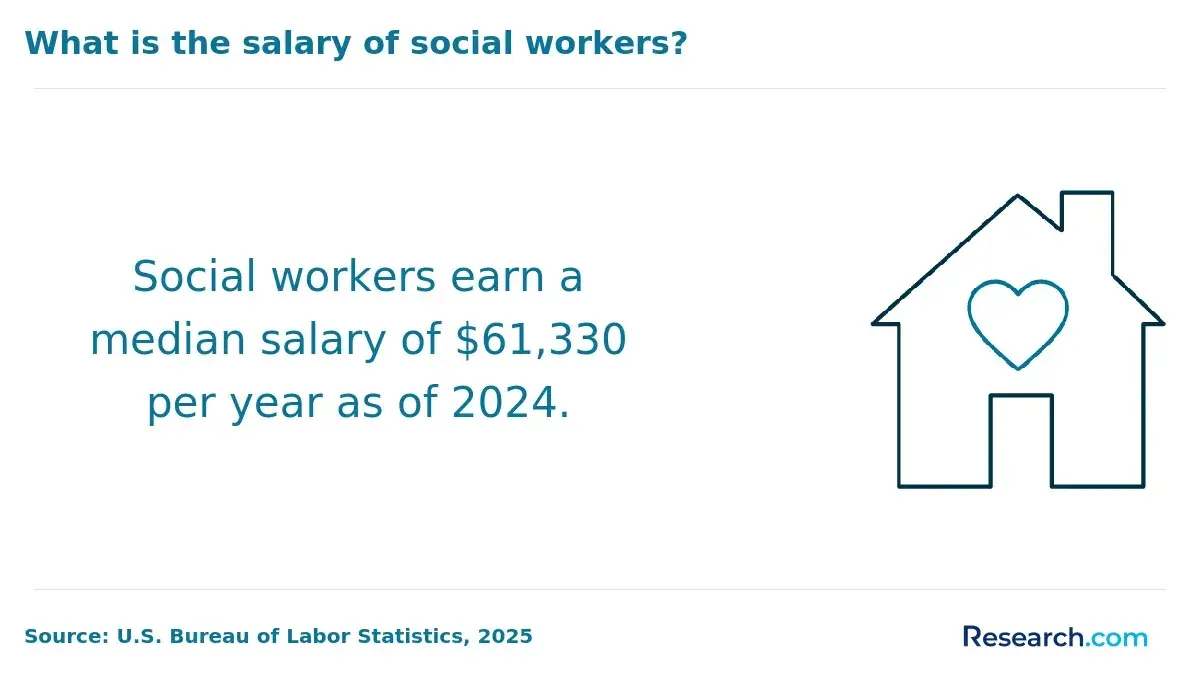
South Carolina social workers work in public agencies, hospitals, schools, behavioral health organizations, nonprofits, community programs, correctional settings, and child welfare systems. Demand is shaped by mental health needs, aging populations, family support services, healthcare coordination, and workforce shortages in some communities. Pay varies by license level, specialization, employer, region, and years of experience.
BSW graduates often start in case management or community service roles, while MSW graduates can qualify for more advanced practice settings. Independent and clinical licensure may improve access to roles involving diagnosis, treatment planning, supervision, or private practice, but salary outcomes are never guaranteed. Rural and metropolitan labor markets can also differ significantly.
For a step-by-step career guide that connects education, licensing, and employment, see how to become a social worker in South Carolina.
Current trends affecting social work education and careers
- Greater behavioral health need: Mental health and substance use concerns continue to shape demand for trained social workers in schools, clinics, hospitals, and community settings.
- Telehealth and digital documentation: Social workers increasingly need comfort with remote service delivery tools, electronic records, privacy rules, and digital communication.
- Employer focus on licensure: Many agencies use licensure level to determine job duties, supervision requirements, and advancement options.
- Field placement competition: Students in online, hybrid, and campus programs should secure clear field placement support early.
- Cost-conscious program selection: More students are comparing net price, advanced standing options, and online flexibility to reduce debt.
Common mistakes when preparing for a South Carolina social work career
| Mistake | Why it creates problems | Better approach |
| Choosing a program without checking CSWE accreditation | The degree may not support licensure eligibility | Verify accreditation before applying or enrolling |
| Looking only at tuition | Fees, books, transportation, practicum costs, and lost work hours can raise the true cost | Compare full cost of attendance and net price |
| Assuming every online program meets South Carolina requirements | State authorization, curriculum, and field placement rules may differ | Ask the program and the licensing board about South Carolina eligibility |
| Waiting too long to plan fieldwork | Placement availability can affect graduation timing | Ask about placement support before enrolling |
| Expecting salary guarantees after graduation | Pay depends on license, employer, region, specialization, and experience | Research realistic job postings and salary guides for your target role |
| Relying only on rankings | A highly ranked program may not be the best fit for your schedule, budget, or specialization | Compare accreditation, fieldwork, cost, format, and outcomes together |
Related Articles for Nearby States
- 2027 What Degree Do You Need to Be a Social Worker: Education Requirements in Georgia
- 2027 What Degree Do You Need To Be a Social Worker: Education Requirements in North Carolina
- 2027 What Degree Do You Need To Be a Social Worker: Education Requirements in Florida
- 2027 What Degree Do You Need To Be a Social Worker: Education Requirements in Tennessee
- 2027 What Degree Do You Need To Be a Social Worker: Education Requirements in Alabama
- 2027 What Degree Do You Need To Be a Social Worker: Education Requirements in Virginia
- 2027 What Degree Do You Need to Be a Social Worker: Education Requirements in Kentucky
- 2027 What Degree Do You Need To Be a Social Worker: Education Requirements in Mississippi
- 2027 What Degree Do You Need To Be a Social Worker: Education Requirements in West Virginia
- 2027 What Degree Do You Need to Be a Social Worker: Education Requirements in Louisiana
References
- Best MSW Programs. (n.d.). How to become a social worker in South Carolina. Retrieved from Best MSW Programs
- Careers in Psychology. (n.d.). Becoming a social worker in South Carolina: License, certification, careers. Retrieved from Careers in Psychology
- Florida State University Online MSW. (n.d.). Become a social worker in South Carolina. Retrieved from FSU Online
- Psychology.org. (n.d.). South Carolina social work license requirements. Retrieved from Psychology.org
- Social Work Degree Center. (n.d.). Become a social worker in South Carolina – Social Work Education Center. Retrieved from Social Work Degree Center
- Social Work License Map. (n.d.). How to become a social worker in South Carolina. Retrieved from Social Work License Map
- South Carolina Department of Social Services. (2023). SCDSS announces child welfare BSW scholars tuition assistance program. Retrieved from SCDSS
- South Carolina Labor, Licensing and Regulation Board. (n.d.). SCLLR licensure. Retrieved from SCLLR
- University of South Carolina Graduate School. (n.d.). Social work - MSW - Graduate School. Retrieved from University of South Carolina
- Tullahoma Talk. (2019). Hello! Just wondering if any of yall could help me with a question [Facebook post]. Retrieved from Facebook
Key Insights
- The BSW is the entry point, but the MSW expands practice authority. In South Carolina, a BSW can lead to entry-level licensure, while independent and many clinical roles require graduate education and supervised experience.
- Accreditation should be checked before cost, format, or speed. CSWE accreditation is central to licensure eligibility, and online programs must meet the same standards as campus-based programs.
- Field education is not optional. Internships and supervised placements are where students build applied skills, professional references, and readiness for licensed practice.
- Program cost varies substantially. Public, private, online, resident, and nonresident tuition models can lead to very different total costs, so compare net price and available aid.
- Specialization affects degree planning. Child welfare and case management may begin with a BSW, but clinical, healthcare, school, and advanced generalist roles often call for an MSW and additional licensure steps.
- Career changers have viable options. Students without a BSW can enter social work through a traditional MSW, while accredited BSW graduates may qualify for faster advanced standing routes.
- The best program is the one that fits your license goal. Rankings and convenience matter less than accreditation, field placement access, affordability, specialization fit, and South Carolina licensing alignment.
Other Things You Need to Know About Becoming a Social Worker in South Carolina
A BSW program in South Carolina in 2027 typically covers subjects such as human behavior, social welfare policy, social work ethics, and research methods. These courses provide foundational knowledge essential for effective practice in the field of social work.
To enroll in a Bachelor of Social Work (BSW) program in South Carolina in 2027, applicants typically need a high school diploma or GED, satisfactory SAT or ACT scores, and successful completion of prerequisite courses such as psychology or sociology. Additionally, a strong personal statement and letters of recommendation may be required.


