
2027 What Degree Do You Need To Be a Social Worker: Education Requirements in Kansas

Co-Founder and Chief Data Scientist
Struggling to understand what degree is essential to become a social worker in Kansas? With nearly 15% of Kansans living in poverty, the demand for qualified social workers continues to rise. Earning the right degree paves the way to meaningful careers that support vulnerable populations while ensuring licensure eligibility.
This article explores the specific education requirements in Kansas, including degree types and accredited programs needed to enter the field. Prepared by experienced career planning experts, it offers clear guidance to navigate the path toward becoming a licensed social worker in Kansas and turning a passion for helping others into a professional reality.
Key Things to Know About Social Work Education Requirements in Kansas
- A bachelor’s degree in social work (BSW) is the minimum requirement for entry-level positions in Kansas, opening doors to diverse community roles.
- For clinical licensure as a Licensed Master Social Worker (LMSW) or Licensed Specialist Clinical Social Worker (LSCSW), a Master of Social Work (MSW) from a CSWE-accredited program is mandatory.
- Kansas requires supervised experience post-MSW, typically 3,000 hours, to ensure practical expertise before full licensure and independent practice.
- What is the minimum degree required to become a licensed social worker in Kansas?
- What courses are covered in a social work degree program in Kansas?
- How long does it take to complete a social work degree program in Kansas?
- How much does a social work degree cost in Kansas?
- What degrees are required for different social work specializations in Kansas?
- What financial aid options are available to social work students in Kansas?
- What are the alternative pathways to become a social worker in Kansas?
- What are the job prospects for social work graduates in Kansas?
- Can a social work degree lead to a counseling career in Kansas?
- Are online social work degrees recognized in Kansas?
- What organizations accredit social work degree programs in Kansas?
- What are the top institutions offering social work degree programs in Kansas?
What is the minimum degree required to become a licensed social worker in Kansas?
Exploring the degree paths for social work licensure in Kansas reveals a clear progression tailored to different professional goals. Each degree aligns with specific licenses, reflecting the state's standards for accredited social work degree requirements in Kansas.
- Bachelor of Social Work (BSW): This is the foundational degree needed to become a Licensed Baccalaureate Social Worker (LBSW). It must come from a CSWE-accredited or KBSRB-approved program, offering essential preparation for entry into the field.
- Master of Social Work (MSW): Holding an MSW is necessary for advancing to Licensed Master Social Worker (LMSW) or Licensed Specialist Clinical Social Worker (LSCSW) status. These programs provide deeper expertise, making candidates eligible for more specialized roles and clinical practice. For those curious about opportunities beyond the MSW, see what can you do with a masters in social work.
- Doctoral Degree in Social Work (PhD/DSW): At the highest tier, doctoral degrees can qualify social workers for advanced licensure levels, assuming the program meets Kansas requirements. This path suits those aiming for scholarly, clinical, or leadership roles with rigorous academic preparation.
Choosing the right degree is essential for meeting the minimum degree requirements for a social worker license in Kansas while aligning with career ambitions and the growing demand for credentialed professionals within the state.
What courses are covered in a social work degree program in Kansas?
A strong academic foundation is key to preparing effective social workers who can navigate diverse challenges with confidence and skill. Kansas social work degree programs carefully structure their coursework to equip students with essential knowledge and practice abilities. Below is an overview of the core courses typically required, along with any notable state-specific mandates.
- Introduction to Social Work and Social Welfare: Explores the profession’s mission, core values, and historical context, setting the stage for understanding social work’s role in society.
- Human Behavior in the Social Environment: Focuses on developmental theories and behavioral influences across the lifespan, emphasizing the interaction of individuals and their social environments.
- Diversity, Equity, Inclusion, and Social Justice: Engages students in understanding complex social identities and systemic inequalities to foster equitable practice.
- Social Welfare Policy and Analysis: Provides insight into social policies, legislative processes, and their impact on vulnerable groups.
- Social Work Research Methods: Develops skills in research design and data analysis critical for evidence-based social work practice.
- Social Work Practice (Micro, Mezzo, Macro): Covers intervention strategies at individual, family, community, and organizational levels for comprehensive generalist practice.
- Field Practicum and Seminars: Requires a supervised practicum of about 12 credit hours coupled with seminars to integrate real-world experience and theory.
- Capstone or Professional Seminar: Offers an opportunity to synthesize learning and prepare for professional entry through a culminating project or seminar.
- State-Specific Requirement: For example, the University of Kansas mandates a grade of B or higher in an introductory course (SW 220) before advancing to higher-level classes.
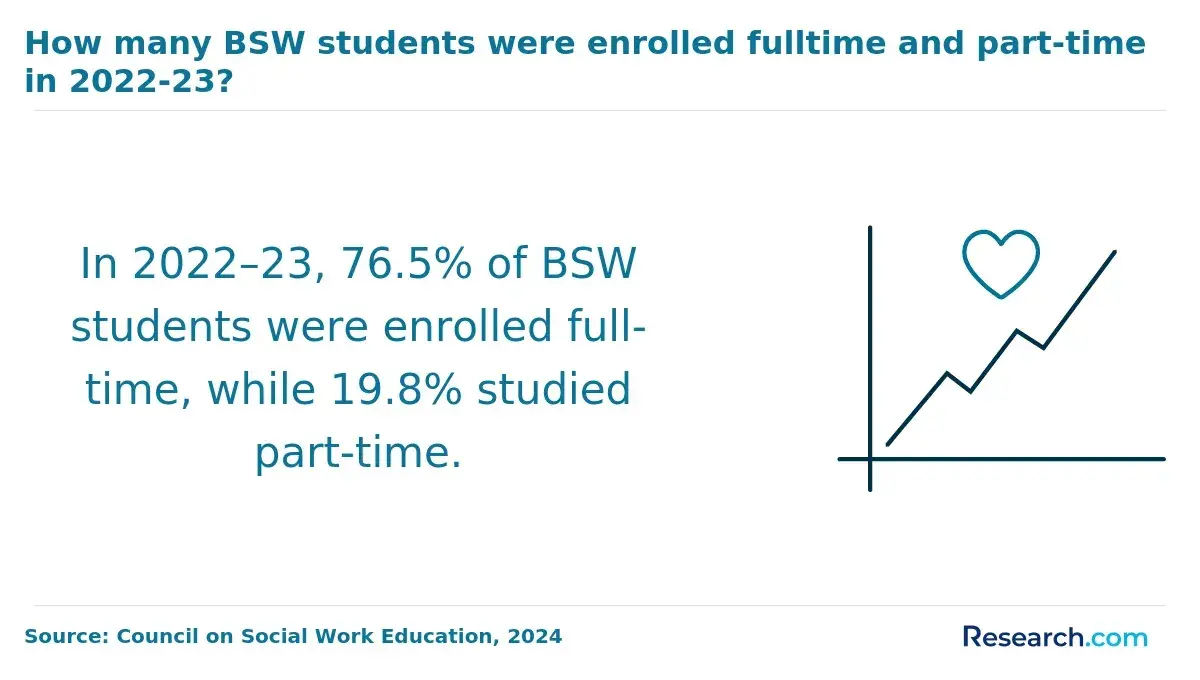
This image shows that most BSW students in 2022–23 were enrolled full-time, while a smaller percentage studied part-time. These enrollment patterns in Kansas programs reflect how coursework and field placements are designed to accommodate both traditional full-time students and those balancing other commitments.
How long does it take to complete a social work degree program in Kansas?
Timing is a crucial piece of the puzzle when planning a social work degree in Kansas. Knowing how long each program typically takes helps balance career ambitions with life’s demands, whether that means jumping straight into full-time study or pacing yourself part-time. Here’s a straightforward look at the usual timeframes and key factors shaping the journey to becoming a social worker in the Sunflower State.
- Bachelor of Social Work (BSW): Typically completed in four years of full-time study, with part-time options extending the timeline depending on course load and university flexibility.
- Master of Social Work (MSW): Full-time students without a BSW usually finish in two years, while part-time paths can take up to four years. Advanced Standing tracks allow BSW holders to earn the degree in as little as one year full-time or two years part-time, cutting down study time significantly.
- Doctoral Degrees (DSW and PhD): These programs range from three to five years full-time, subject to research demands, dissertation work, and enrollment status, with the University of Kansas uniquely offering this full academic spectrum.
- Enrollment Status and Flexibility: Full-time study offers the fastest route; however, many students balance jobs or family, resulting in longer part-time completion times. Online and hybrid options available at some Kansas universities provide added flexibility that can also influence how quickly degrees are finished.
- Fieldwork and Practicums: Integral to program completion, supervised fieldwork often runs alongside coursework but may extend timelines if placements are scarce or extra hours are required.
When I spoke with a social worker from Kansas who graduated locally, she reflected on her own path through a part-time MSW program that took her nearly three years, longer than her initial plan. “Balancing work, family, and classes was a puzzle,” she said. The practical experience was invaluable, but sometimes stretched her schedule unpredictably. She emphasized how important it was to remain flexible and patient throughout the process, as the timing wasn’t always within her control.
Looking back, she appreciated the extended timeline for allowing deeper immersion and growth, turning years of effort into a solid foundation for her career. “It wasn’t just about finishing— it was about becoming the professional I wanted to be.”
How much does a social work degree cost in Kansas?
Planning for the cost of a social work degree in Kansas is a vital step for aspiring social workers aiming to balance education expenses with future career goals. Knowing the details of tuition for BSW/MSW programs can unlock opportunities to find affordable social work programs Kansas residents and non-residents alike can consider.
- Bachelor of Social Work (BSW): In-state tuition at public universities ranges from $8,000 to $11,000 per year, while out-of-state students pay $19,000 to $26,000. Private institutions charge between $22,000 and $35,000, often with scholarships to reduce costs.
- Master of Social Work (MSW): Public MSW programs cost approximately $8,500 to $13,000 annually for residents and $20,000 to $28,000 for non-residents. Private programs frequently exceed $30,000 to $40,000 total but may offer graduate assistantships for financial relief.
- Doctor of Social Work (DSW): Less common in Kansas, public university tuition sits near $11,000 to $16,000 yearly for residents and $22,000 to $32,000 for non-residents. Private options might charge over $1,000 per credit hour.
- PhD in Social Work: Doctoral tuition at public institutions ranges from $11,000 to $15,000 in-state and $22,000 to $30,000 out-of-state, with some programs offering tuition waivers or stipends.
- Public vs. Private Institutions: Public universities provide lower rates for Kansas residents; private schools typically have higher prices but may compensate with robust financial aid.
- Online vs. On-Campus Options: Online BSW and MSW programs may offer competitive tuition similar to campus rates but reduce additional expenses like housing, though residency-based pricing often still applies.
For students evaluating these costs alongside factors like the masters in social work salary potential across states, a clear picture of social work degree tuition in Kansas helps navigate toward the most accessible and valuable education path.
What degrees are required for different social work specializations in Kansas?
Different social work roles demand varying levels of education because each specialization carries unique responsibilities and licensure requirements. Exploring the degree requirements for social work specializations in Kansas can guide students in choosing the right academic path for their career goals.
- Clinical Social Work: A Master of Social Work (MSW) from a CSWE-accredited program is required, along with supervised clinical experience and state licensure to practice independently.
- School Social Work: Typically requires an MSW from a CSWE-accredited institution, with additional education-related training or certification mandated by the Kansas State Department of Education.
- Healthcare Social Work: Entry-level roles may accept a Bachelor of Social Work (BSW), but most positions and advancement opportunities require an MSW, preparing professionals for clinical and hospital settings.
- Child and Family Services: A BSW is acceptable for many entry-level jobs, though supervisory roles often need an MSW or specialized certification like a child welfare certificate offered to BSW seniors.
- Generalist Social Work: A BSW is the minimum degree necessary, offering eligibility for licensure as a Licensed Bachelor Social Worker (LBSW) and preparing graduates for diverse entry-level positions.
This chart shows the most common career paths for PhD graduates in social work, with tenure-track positions in CSWE-accredited programs leading by a wide margin. It underscores how advanced degrees in Kansas open doors primarily in academia and research, while also supporting roles in practice and administration.
What financial aid options are available to social work students in Kansas?
Financial aid plays a vital role for students pursuing social work degrees in Kansas by easing the financial burden associated with tuition and living expenses. With access to various funding options, students can focus on their studies and embrace the meaningful journey of becoming social workers. Here are key financial aid options available for social work students in Kansas that open doors to opportunity and growth:
- Federal Grants: Need-based grants like the Pell Grant can be obtained by filing the FAFSA and provide funds that do not need repayment, significantly offsetting tuition fees.
- State Scholarships and Grants: The Kansas Board of Regents offers scholarships and grants targeted at students demonstrating financial need and academic merit, supporting their educational ambitions.
- Scholarships for BSW and MSW Programs: Universities such as the University of Kansas provide annual scholarships for social work students, awarded based on merit, need, or diversity, directly reducing tuition costs.
- Work-Study Programs: Federal and campus work-study options allow students to earn income through part-time jobs that also offer valuable professional experience.
- Student Loans: Federal and private loans help cover remaining expenses with some programs offering partial forgiveness for graduates working in public service roles common among social workers.
- Graduate Assistantships: MSW and PhD candidates may qualify for assistantships that include stipends and tuition support, fostering advanced academic work.
- Regional Tuition Discounts: Kansas and some Missouri residents benefit from in-state tuition rates through exchange programs, making education more affordable.
- Professional Organization Funding: Scholarships and grants from social work associations reward leadership, commitment, and financial need in the field.
Exploring these diverse financial aid for social work students in Kansas options is key to making social work education accessible. For those curious about career pathways, consider learning more about what can you do with a bachelors in social work to further fuel your professional aspirations.
What are the alternative pathways to become a social worker in Kansas?
Transitioning into social work in Kansas is surprisingly accessible for those holding degrees in related fields or seeking new career paths. Without needing to start over, individuals can leverage their academic and professional backgrounds while pursuing recognized alternative routes.
- Traditional MSW Track for Non-BSW Holders: Tailored for bachelor’s degree holders in psychology, sociology, or education, this two-year program provides comprehensive training for social work practice.
- Advanced Standing vs. Traditional MSW: Only BSW graduates qualify for the accelerated advanced standing track lasting about one year, while others follow the traditional two-year path.
- Post-Bachelor’s Certificates and Bridge Programs: These offer foundational social work coursework and smooth transitions into full BSW or MSW degrees.
- Leveraging Related Degrees: Degrees in human services or social sciences often count for credit, reducing coursework and focusing studies on social work essentials.
- State-Specific Certification Options: Kansas supports licensure reciprocity and alternative routes through the Social Work Licensure Compact and coursework adjustments for related master’s holders.
A social worker from Kansas, who graduated from a local university, shared how navigating alternative pathways felt like moving through uncharted yet welcoming territory. Coming from a psychology background, he initially worried about the workload and balancing practicum hours with his job.
Yet, the flexibility of employment-based practicum options allowed him to integrate his existing experience, which was “both challenging and empowering.” He described the journey as “a series of small victories” that deepened his commitment, saying, “I never felt like I was starting over, but rather building a new story on a familiar foundation.” This approach made his transition rewarding, practical, and full of personal growth.
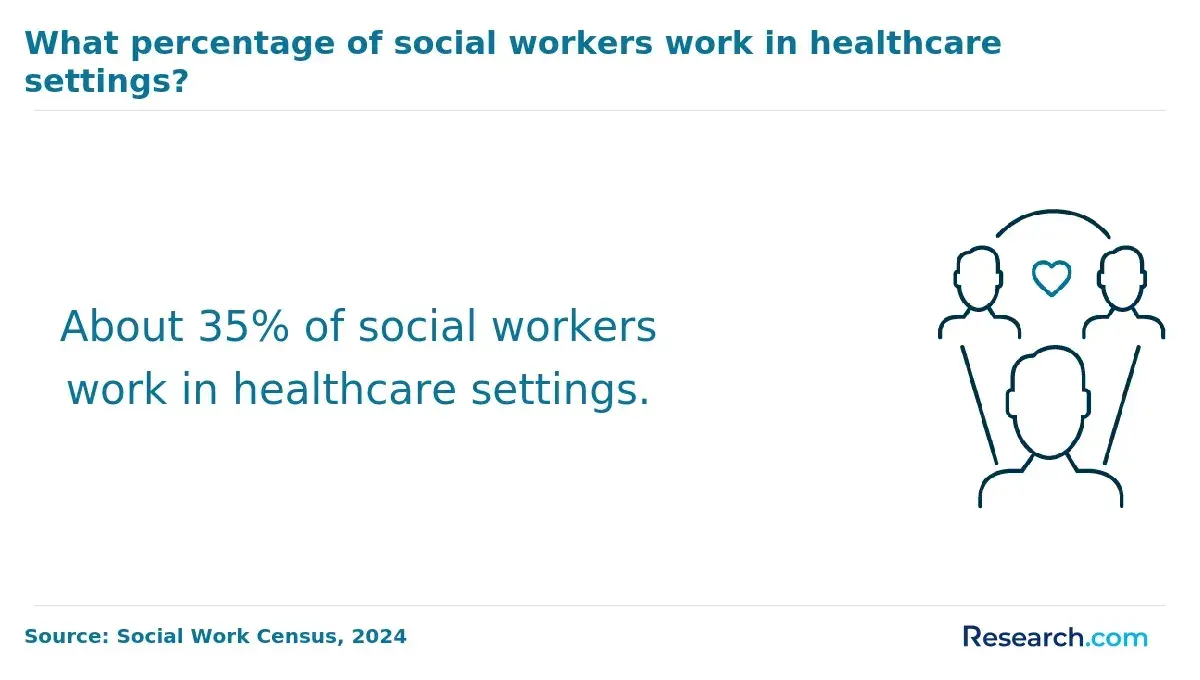
This image emphasizes that about 35% of social workers are employed in healthcare settings, underlining one of the most common career outcomes for those entering through alternative pathways in Kansas. It shows how diverse backgrounds can still lead to meaningful roles in hospitals, clinics, and healthcare organizations.
What are the job prospects for social work graduates in Kansas?
Kansas offers a stable job market for social work graduates, driven by a strong demand in healthcare, schools, and community agencies. Employment opportunities remain robust due to ongoing social challenges and the state’s commitment to improving public welfare. New graduates often secure roles that provide both clinical and community-based support, and growth in specialized practice areas continues to expand career pathways. For practical insights into navigating this employment landscape, explore how to become a social worker in Kansas.
Can a social work degree lead to a counseling career in Kansas?
A social work degree equips graduates with a robust understanding of human behavior, crisis intervention, and community resource management that can translate into counseling roles. In Kansas, while the foundational skills overlap, practitioners aiming to enter clinical counseling might be required to complete additional certifications or specialized coursework to satisfy state licensure criteria. For those considering a direct transition into counseling, reviewing the fastest way to become a counselor in Kansas can clarify the necessary steps and opportunities for career advancement.
Are online social work degrees recognized in Kansas?
The surge in online Bachelor and Master of Social Work programs reflects a dynamic shift in education, fueling accessibility across Kansas and beyond. Recognition of these degrees matters immensely because it directly impacts a student’s ability to gain licensure and unlock career opportunities in this growing field. As more students explore flexible online options, ensuring their degree holds weight with licensing boards and employers is essential for a successful social work career.
In Kansas, the credibility of an online social work degree hinges on its accreditation by the Council on Social Work Education (CSWE) and alignment with the Kansas Behavioral Sciences Regulatory Board’s standards. Research reveals strong employer confidence in accredited online programs; a 2022 survey found over 70% of employers nationwide equate accredited online degrees with traditional, on-campus ones. With programs at Fort Hays State University and others attracting high demand, enrollment in accredited online degrees continues to climb, signaling growing acceptance of this educational approach.
Beyond accreditation, students must navigate supervised fieldwork requirements, which demand in-person experiences at approved agencies, ensuring practical skills complement online learning. Hybrid models blending virtual classes with local placements offer a path to satisfy these necessities. Choosing a CSWE-accredited program recognized by Kansas authorities safeguards licensure eligibility and positions graduates for meaningful roles in diverse social work settings statewide.
This chart illustrates the variety of delivery methods available for BSW programs, from traditional in-person formats to blended, hybrid, and fully online options. It shows how flexible learning models are expanding, reinforcing that accredited online programs in Kansas are widely recognized and support licensure pathways.
What organizations accredit social work degree programs in Kansas?
Accreditation guarantees that social work degree programs in Kansas maintain high standards essential for licensure eligibility and employer recognition. This seal of quality assures students that their education meets national requirements, preparing them effectively for the profession.
- Council on Social Work Education (CSWE): As the primary accreditor nationwide, the CSWE endorses Bachelor of Social Work (BSW) and Master of Social Work (MSW) programs that fulfill educational standards required for licensure as a Licensed Bachelor Social Worker (LBSW) or Licensed Master Social Worker (LMSW) in Kansas.
- Regional Higher Education Accreditors: Institutions in Kansas, including those that offer social work degrees, typically hold accreditation from bodies like the Higher Learning Commission (HLC). This regional accreditation confirms the overall quality of the institution and supports the credibility of its social work programs.
- Kansas Board of Regents: Although it does not directly accredit social work degrees, this Board authorizes public institutions to operate within the state and oversees their adherence to state educational standards, indirectly supporting program quality.
There are over ten CSWE-accredited social work programs in Kansas, educating nearly 2,000 students statewide with strong success rates on licensing exams, reflecting their rigorous curricula. If you are exploring options or wondering how hard is it to get into MSW programs, focusing on accredited schools guarantees your education aligns with licensure pathways and professional standards.
What are the top institutions offering social work degree programs in Kansas?
Choosing the right school for your social work degree in Kansas shapes not only your accreditation and career readiness but also your financial investment and professional network. Accredited programs ensure you meet standards for licensure while opening doors to diverse career paths and meaningful field experiences.
- University of Kansas (KU): KU offers accredited BSW and MSW programs with dual clinical and macro practice tracks, featuring top-ranked online MSW options and extensive field placements that uplift graduate earnings above the state average.
- Fort Hays State University: Known for its fully CSWE-accredited MSW, Fort Hays specializes in clinical social work with flexible online courses combined with hands-on clinical training, focusing on behavioral health and leadership preparation.
- Washburn University: Washburn’s MSW stands out with a unique health care social work concentration and dual degree option with law, offering flexible schedules and personal faculty support tailored for working adults.
- Kansas State University (K-State): K-State’s BSW delivers a strong generalist curriculum emphasizing social justice and empowerment, with graduates achieving the highest earning potential among Kansas social work programs.
- Wichita State University: With a large and diverse student body, Wichita State provides a comprehensive BSW program supported by strong job placement and varied field site experiences across urban and rural settings.
For those exploring advanced options, resources like the cheapest online DSW programs can offer accessible pathways to higher degrees in social work. Considering the best universities for social work degrees in Kansas ensures you select a program aligned with your ambitions and the growing demands of this rewarding field.
What Do Social Workers in Kansas Say About Their Degree
- Completing my social work degree at Wichita State University gave me a strong foundation to start my career. Working in a local school allowed me to directly connect with children and families, providing support tailored to their unique circumstances. Kansas’ tight-knit communities made it rewarding to see real, positive changes over time. The practical experience I gained here nurtured my passion for helping students thrive emotionally and academically. I feel grateful for the stability and growth opportunities my role offers. Aleli
- Pursuing my social work education at the University of Kansas was a transformative journey that deepened my understanding of the diverse populations in our state. Starting my career in a local academic setting, I found the challenges Kansas presents—like rural access disparities—really helped me develop creative problem-solving skills. This experience has enriched my professional development and heightened my commitment to community improvement. I’ve grown personally by witnessing the resilience of the families I serve. Dominic
- Attending Kansas State University shaped not only my professional skills but also my sense of cultural awareness, especially given the rich mix of urban and agricultural communities here. The opportunity to work in a local school ignited my enthusiasm for contributing to children's well-being in ways that respect Kansas’ unique environment and values. This career path has allowed me to advance steadily, and I find great satisfaction in fostering positive change across generations. It’s a deeply rewarding field that keeps me motivated every day. Reyna
Related Articles for Nearby States
- 2027 What Degree Do You Need To Be a Social Worker: Education Requirements in Nebraska
- 2027 What Degree Do You Need To Be a Social Worker: Education Requirements in Oklahoma
- 2027 What Degree Do You Need to Be a Social Worker: Education Requirements in Missouri
- 2027 What Degree Do You Need To Be a Social Worker: Education Requirements in Colorado
- 2027 What Degree Do You Need To Be a Social Worker: Education Requirements in Iowa
- 2027 What Degree Do You Need To Be a Social Worker: Education Requirements in Arkansas
- 2027 What Degree Do You Need To Be a Social Worker: Education Requirements in Texas
- 2027 What Degree Do You Need To Be a Social Worker: Education Requirements in South Dakota
- 2027 What Degree Do You Need To Be a Social Worker: Education Requirements in Wyoming
- 2027 What Degree Do You Need To Be a Social Worker: Education Requirements in Minnesota
References:
- Careers in Psychology. Becoming a Social Worker in Kansas, Licensing, Certification, Careers.
- Kansas Board of Regents. Pre-Social Work Systemwide Transfer Degree.
- Kansas Legislature. 65-6306.
- Kansas State Board of Behavioral Sciences. Social Workers.
- Masters in Social Work Online. MSW Programs in Kansas for 2023 [Online Available].
- Public Health Online. Kansas Social Work License | LBSW, LMSW, LSCSW Requirements KS.
- Remnant Counselor Collective. Kansas Social Work Licensure Guide.
- School of Social Welfare, University of Kansas. Alternative Practicum Plans.
- Social Work Degree Center. How to Become a Social Worker in Kansas.
- Social Work License Map. How to Become a Social Worker in Kansas.
Other Things You Need to Know About Education Requirements in Kansas
In 2027, to become a licensed social worker in Kansas, you need a Bachelor of Social Work (BSW) for entry-level positions. Advanced positions usually require a Master of Social Work (MSW). Both degrees must be from a program accredited by the Council on Social Work Education (CSWE).
Community colleges in Kansas do not typically offer bachelor's degrees in social work. Students often begin their education at a community college for general education credits, then transfer to a university to complete a Bachelor of Social Work (BSW) degree, a requirement for licensure in Kansas.
Kansas requires licensed social workers to complete 40 hours of continuing education every two years, including 3 hours of ethics training. These requirements ensure social workers maintain up-to-date knowledge and skills throughout their careers while adhering to professional standards.


