
2027 Are Online Technical Communication Master's Degrees Respected by Employers? Hiring Trends & Career Outcomes

Co-Founder and Chief Data Scientist
Graduates holding online technical communication master's degrees often face uncertainty about their credentials' credibility during job searches. Unlike traditional campus programs, online degrees can prompt employer skepticism about program rigor and graduate skills. According to a recent survey, 42% of hiring managers expressed concerns over perceived differences in quality between online and in-person master's qualifications.
This perception affects interview callbacks, salary offers, and career growth opportunities. This article examines whether online technical communication master's degrees hold equal respect in hiring markets and analyzes factors like accreditation, institutional reputation, and career outcomes to guide readers in making informed education and career decisions.
Key Benefits of Knowing Whether Online Technical Communication Master's Degrees Are Respected by Employers
- Employer perception of online technical communication master's graduates has improved significantly, with over 65% of hiring managers in STEM fields now viewing these degrees as equal to traditional formats.
- Graduates from accredited online programs often demonstrate comparable workplace performance, leading to similar access to promotions and salary increases, reflecting skills-based hiring trends.
- Strong alumni networks and institutional reputation further enhance career prospects, with surveys showing online degree holders achieving 10-15% higher salary growth over five years than bachelor's-only peers.
How have employer perceptions of online technical communication master's degrees changed over the past decade?
Employer skepticism toward online degrees was widespread in the early 2010s, shaped largely by the negative reputation of for-profit colleges and concerns over the authenticity of online learning experiences. Many hiring managers viewed online technical communication master's degrees as less credible than traditional, campus-based programs, especially given the strong communication and critical thinking skills demanded by the field. Early surveys reflected doubts about graduates' preparedness and the rigor of online degrees.
The COVID-19 pandemic accelerated institutional adoption of remote learning and forced many employers to recalibrate their perspectives on online credentials beyond technical communication programs. This shift compelled employers to recognize that online degrees could maintain quality and rigor even under difficult circumstances. Such changes align with broader hiring attitudes toward online technical communication graduate programs, which now emphasize skills and outcomes over the mode of education delivery.
Recent data from a 2023 Champlain College survey confirms this evolution: 84% of employers are more accepting of online education than before the pandemic. This measurable shift reflects a growing trend where accreditation and institutional prestige serve as primary filters in hiring decisions, emphasizing the value of reputable programs. Prospective students should consider these factors carefully when evaluating online options.
- Early Skepticism: Initial doubts centered on the quality of for-profit schools and concerns about the legitimacy of online learning.
- Pandemic Acceleration: COVID-19 drove rapid adoption of remote education, prompting employers to reassess online master's program credibility.
- Data-Backed Acceptance: Champlain College's 2023 survey reveals 84% of employers hold more positive views on online education, reflecting broad changes in hiring attitudes.
- Focus on Accreditation: Employers prioritize accredited and reputable institutions when evaluating online technical communication degrees as markers of quality.
Those exploring graduate options might also investigate AI online degrees as part of a wider context in evolving employer perceptions across disciplines.
What do hiring managers actually think about online technical communication graduate credentials?
Hiring managers' views on online technical communication master's degrees have shifted significantly in recent years, influenced by evolving workplace norms and educational standards. Survey data from the National Association of Colleges and Employers (NACE) and the Society for Human Resource Management (SHRM) reveal a steady decline in skepticism toward online graduate credentials, especially when these degrees come from accredited, reputable institutions. The perception of online technical communication degrees varies, however, depending on the industry, company size, and geographic region.
For example, technology firms and large multinational corporations generally demonstrate greater openness to online technical communication master's degrees, prioritizing applicants' skills portfolios and proven competencies over the degree's delivery format. This growing trend towards skills-based hiring benefits graduates from online programs, as employers increasingly emphasize practical writing, content strategy abilities, and project experience in their evaluation process.
Conversely, traditional sectors and smaller companies-particularly those in less urbanized or tech-focused areas-may still regard on-site education more favorably, sometimes using campus experience as a deciding factor in tight hiring scenarios. A recruitment manager in aerospace recently noted in an SHRM interview that on-site experience can still be a "tie-breaker," though this view is gradually becoming less common.
Prospective students should weigh factors like program accreditation, institutional reputation, and alumni success when considering online technical communication degrees. For those exploring advanced education options, resources about cheap PhD programs online can also provide useful insights into cost-effective pathways.
- Sector Variability: Acceptance of online technical communication degrees differs widely by industry, with tech companies and large corporations typically more receptive than traditional or smaller firms.
- Company Size Influence: Larger organizations focus on skills and experience over degree format, whereas smaller companies may be more influenced by local hiring preferences.
- Geographic Differences: Urban and technology-driven regions show higher acceptance of online credentials compared to areas with limited remote education exposure.
- Recruiter Perspectives: HR professionals emphasize practical skills and portfolio quality as more important than where a degree was earned, reflecting a skills-based hiring trend.
- Rising Skills Emphasis: The increasing industry focus on applied competencies benefits online technical communication graduates as mode of program delivery becomes less critical.
Does accreditation determine whether an online technical communication master's degree is respected?
Accreditation remains a vital factor in how employers and credentialing organizations assess online technical communication master's degrees. There are two primary accreditation types to consider: regional accreditation, which certifies the overall quality of an institution, and programmatic or professional accreditation, which specifically evaluates technical communication programs against industry benchmarks. Employers often prioritize programmatic accreditation because it indicates a curriculum designed to meet the rigorous standards of the profession.
Students can verify a program's accreditation status through reliable tools such as the U.S. Department of Education's Database of Accredited Postsecondary Institutions and Programs (DAPIP) and the Council for Higher Education Accreditation (CHEA) directory. These resources confirm whether both institutions and their individual programs hold recognized accreditation-a crucial step before enrollment.
While technical communication has fewer dedicated programmatic accreditors, endorsements from professional bodies like the Society for Technical Communication may serve as valuable indicators of program credibility. Programs with specialized accreditation typically demonstrate stronger alignment with current industry needs than those relying solely on regional accreditation. Conversely, degrees from unaccredited programs-whether online or traditional-are rarely accepted by employers and can significantly hinder career advancement opportunities.
The acceptance of online degrees continues to grow: a 2023 survey reported that 75% of employers regard accredited online technical communication master's degrees as comparable in quality to campus-based programs, reflecting increasing confidence in virtual education pathways.
- Regional vs Programmatic Accreditation: Regional accreditation assesses institutional quality, while programmatic focuses on meeting industry-specific educational standards, often carrying greater influence in technical communication hiring.
- Verification Resources: Utilize DAPIP and CHEA directories to confirm current accreditation status for both the institution and its technical communication programs.
- Professional Validation: Organizations like the Society for Technical Communication offer endorsements that can reinforce a program's reputation beyond formal accreditation.
- Unaccredited Risks: Degrees from unaccredited programs are generally disregarded by employers, limiting job prospects and professional recognition.
- Employer Trends: Most employers now accept online accredited technical communication master's degrees as equivalent to traditional credentials, underscoring the shifting landscape in education acceptance.
A professional who pursued an online technical communication master's degree to transition careers shared that navigating program legitimacy was among his initial concerns. "I spent hours cross-referencing the program with official accreditation listings because I didn't want my investment to be meaningless," he recalled.
He also emphasized the reassurance he felt when the program had endorsements from recognized industry bodies. The validation helped him explain his online degree's value to hiring managers, who were initially unfamiliar with virtual credentials. He noted, "It wasn't just about getting a diploma-it was about demonstrating that my education was on par with anyone who studied on campus." His experience underlines how accreditation affects not just acceptance but confidence when entering the job market.
How does institutional reputation affect the value of an online technical communication master's degree in the job market?
The reputation of the institution awarding an online technical communication master's degree heavily influences employer perceptions, a phenomenon known as the "brand premium." Employers often view degrees from prestigious universities as indicators of rigorous academic standards and quality, regardless of whether the program was completed online or on campus.
For instance, Clemson University, the University of Washington, and Texas Tech University offer flagship online technical communication programs that uphold the same faculty, curriculum, and requirements as their on-campus counterparts, fostering employer confidence.
According to surveys by the National Association of Colleges and Employers (NACE), hiring managers frequently filter candidates based on university rankings and name recognition early in their recruitment process. However, the impact of institutional accreditation on technical communication graduate employment extends beyond prestige, emphasizing skills and relevant experience.
Choosing a well-accredited mid-tier program with strong industry ties and robust career placement can sometimes yield better employment outcomes than attending a top-tier school lacking such connections.
Prospective students should balance institutional reputation with curriculum quality, practical training, and professional networking opportunities. For those exploring options, programs such as those listed among the most affordable online colleges for engineering degrees might offer competitive alternatives alongside established brands.
- Brand Premium Effect: Degree reputation influences employer trust, allowing graduates of prominent universities to benefit from assumed academic rigor across both online and traditional programs.
- Flagship Online Programs: Institutions like Clemson and Texas Tech replicate campus standards in their online technical communication offerings, ensuring comparable quality.
- Hiring Pipeline Filters: Employers use university rankings as initial screening tools, although subsequent success depends on skills and experience.
- Importance of Accreditation: Accredited mid-tier programs with strategic industry partnerships can rival prestigious institutions in fostering graduate employment.
- Holistic Program Evaluation: Prospective students should consider reputation alongside job placement, curriculum, and professional development for the best long-term career value.
What salary outcomes can online technical communication master's graduates realistically expect?
The 2024 Education Pays report by the Bureau of Labor Statistics highlights that master's degree holders earn significantly higher median wages and face lower unemployment rates than those with a bachelor's degree. This pattern is consistent across many fields, including technical communication.
According to the BLS Occupational Outlook Handbook, professionals with a technical communication master's degree generally earn 15-20% more annually than those with only a bachelor's, with median salaries rising from around $75,000 to roughly $85,000 or higher depending on experience and industry.
When comparing online and on-campus program outcomes, research from institutions such as NYU SPS and peer-reviewed studies reveals minimal salary difference once factors like institutional reputation and program quality are accounted for. Employers increasingly focus on skill mastery, accreditation, and the credential's legitimacy rather than delivery mode. This supports growing acceptance of online master's degrees as credible pathways in technical communication careers.
Prospective students should weigh their return on investment realistically, considering tuition costs that typically range between $15,000 and $40,000, program durations of 18 to 24 months, and expected salary increases. Calculating added earnings over five to ten years relative to program expenses and time required helps clarify the financial benefit of pursuing this degree.
- Higher Earnings: Master's graduates in technical communication can expect a 15-20% salary boost compared to bachelor's holders, as confirmed by BLS data.
- Online vs. On-Campus: Salary differences linked to study format are negligible when institution quality and accreditation are comparable.
- Job Security: Master's holders enjoy lower unemployment rates, contributing to more stable career prospects.
- Growing Online Enrollment: Online graduate program enrollments grow about 5% annually, reflecting increasing acceptance.
- ROI Considerations: A practical evaluation of costs, time investment, and salary uplift is crucial for informed decisions.
One professional who completed her master's online shared her perspective on salary outcomes. Though initially uncertain about whether her online credential would hold the same weight, she found that employers valued her skills and portfolio over the degree's format.
Navigating job applications, she emphasized the importance of showcasing relevant projects and certifications alongside her degree. Over time, she reported a steady salary increase that aligned with expectations for master's graduates, attributing much of her success to the program's rigorous curriculum and the networking opportunities it provided, which helped bridge any perceived gap between online and campus degrees.
Which technical communication industries and employers are most receptive to online master's degree holders?
Employers in several industries increasingly recognize online master's degrees in technical communication, with the technology sector showing the highest acceptance. Companies in software development, IT, and user experience design prioritize candidates who demonstrate strong skills and project experience over the degree's delivery mode. This reflects a shift toward valuing practical capabilities in managing complex documentation and conveying technical information clearly.
The healthcare and medical technology fields are similarly open to online credentials, especially for professionals familiar with regulatory requirements and capable of distilling intricate technical data. These employers often emphasize program accreditation and candidate portfolios rather than whether the degree was earned online or on campus.
Government agencies and nonprofit organizations remain more cautious but are moving toward skills-based hiring, as supported by the National Association of Colleges and Employers (NACE) Job Outlook 2026 survey that finds 70% of employers now focus on skills rather than degree format. Public sector employers increasingly value certifications and demonstrated technical writing abilities, indicating a shift away from traditional credential biases.
Leading consulting firms and Fortune 500 companies sometimes still prefer traditional credentials; however, many have softened their stance. Organizations such as Deloitte and IBM openly welcome applicants holding online graduate degrees, provided candidates meet competency expectations.
In smaller businesses, acceptance varies widely and tends to depend on hiring managers' firsthand experience with online education quality. Candidates from accredited and reputable online programs with solid alumni support networks generally have better chances across all sectors.
- Industry Ranking: Technology leads in accepting online master's degrees, followed by healthcare, government, consulting, and smaller businesses.
- Skills-Based Hiring: A majority of employers prioritize demonstrated skills, lessening bias against online credentials.
- Employer Categories: Fortune 500 and public sector employers are increasingly dropping rigid degree-format requirements.
- Program Quality: Accreditation and institutional reputation heavily influence employer attitudes, especially in regulated industries.
- Evidence-Based Claims: Claims about hiring practices should rely on verifiable employer data and public statements to avoid speculation.
How Do Online Technical Communication Master's Programs Compare to On-Campus Programs in Terms of Curriculum and Academic Rigor?
Many established universities offering online technical communication master's programs maintain identical syllabi, faculty, and assessments as their on-campus counterparts. This curriculum equivalency ensures that graduates, regardless of delivery format, achieve the same rigorous academic standards. Such consistency is crucial in earning the trust of employers who seek assurance that online degrees reflect genuine competence and preparation.
Regional and programmatic accreditors require accredited programs to meet strict quality benchmarks regardless of whether courses are delivered online or in person. These standards cover faculty qualifications, student support services, and integrity of assessments, reinforcing the legitimacy of online credentials. As a result, employers increasingly view degrees from accredited online programs as comparable in value to traditional on-campus degrees.
Concerns about peer interaction are mitigated by the use of synchronous video sessions, virtual cohorts, and collaborative, project-based learning methods. These approaches simulate the collaborative and communicative environments essential in technical communication training. However, specializations requiring hands-on labs or clinical placements may challenge fully online formats; reputable programs often provide hybrid options or partnerships with local organizations to address these needs effectively.
A 2023 survey by the Online Learning Consortium found that 75% of employers regard online degrees from accredited institutions as equivalent to campus-based credentials, demonstrating growing acceptance tied to program quality and accreditation.
- Curriculum Equivalency: Identical syllabi, faculty, and assessments bridge online and on-campus programs, establishing consistent academic standards and employer confidence.
- Accreditation Assurance: Rigorous accreditation mandates apply uniformly to all delivery modes, guaranteeing academic integrity and employer trust in online degrees.
- Interactive Learning: Virtual cohorts and synchronous sessions replicate essential peer collaboration and communication skill development.
- Specialization Adaptations: Hybrid models or local partnerships enable online students to meet hands-on or clinical requirements.
- Employer Acceptance: Data indicates a majority of employers now recognize accredited online technical communication degrees as credible credentials.
What role does the online learning format play in developing job-ready skills for technical communication careers?
Online learning formats have evolved significantly, transforming from a perceived liability into a valuable asset for developing job-ready skills in technical communication careers. Self-directed study encourages students to take ownership of their learning process, a key trait emphasized in the National Association of Colleges and Employers (NACE) career readiness competency framework. By managing structured assignments and deadlines independently, students enhance critical time management and problem-solving skills that employers actively seek.
Digital collaboration tools-such as project management software, shared document platforms, and video conferencing-are integral to many online programs. These tools replicate modern workplace environments, fostering digital literacy and teamwork capabilities that students can immediately apply professionally.
Asynchronous communication further sharpens writing clarity and remote collaboration skills, which are increasingly important in the distributed work environments common to technical communication roles. Such skill development aligns well with curriculum designs that intentionally integrate project management and digital communication competencies.
Data from employers and alumni outcomes show graduates from online technical communication master's degree programs often enter the workforce with practical skills comparable to, or sometimes exceeding, those of their on-campus counterparts. While online students must usually be more proactive about networking, mentorship, and engaging with campus recruiting resources, their skillsets frequently meet industry expectations. Prospective students seeking comparable professional preparation might also explore resources like the MLIS degree to understand broader trends in affordable online graduate education.
- Self-Directed Learning: Fosters independent time management and problem-solving abilities, aligning with employer demand for versatile, proactive professionals.
- Digital Collaboration Skills: Utilization of modern communication and project tools prepares students to work effectively in increasingly virtual workplaces.
- Asynchronous Communication: Develops writing clarity and remote teamwork skills essential for distributed technical communication roles.
- Curriculum Alignment: Programs intentionally build competencies outlined by NACE, ensuring graduates are job-ready despite the online format.
- Networking Challenges: Online students may face limitations in informal mentorship and recruiting access, requiring deliberate strategies to engage with industry contacts.
What do graduate employment outcomes and alumni data reveal about online technical communication master's degrees?
Graduate employment outcomes and alumni data provide essential insights for prospective students assessing online technical communication graduate employment outcomes. Candidates should request official placement rates, median salaries, and lists of employer partners directly from the programs they consider. This approach offers a clearer understanding of career trajectories than broad promotional claims can provide.
Benchmarking these outcomes against the National Center for Education Statistics' (NCES) Integrated Postsecondary Education Data System (IPEDS) graduation rates and the National Association of Colleges and Employers' (NACE) graduate outcomes standards allows for objective comparisons. Evaluating whether a program's reported figures exceed or fall below typical sector averages can help identify stronger offerings.
One must approach self-reported data cautiously. Programs that incorporate third-party verification-such as audits by independent accounting firms or NACE-verified employer surveys-offer more trustworthy confirmations of graduate success. Without such accountability, outcomes may be biased or selectively reported, impacting the reliability of alumni career results for online technical communication master's degrees.
Current trends indicate established online technical communication programs from accredited institutions with robust industry connections tend to report competitive salaries and positive career progression, reflecting the growing acceptance of skills-based hiring practices focused on communication expertise and digital literacy. Those exploring options should also consider related fields and may find value in examining affordable online criminal justice programs for comparative funding perspectives.
When evaluating online technical communication programs, prospective students should focus on:
- Verified Outcomes: Graduation and job placement rates confirmed by independent entities ensure data accuracy and program credibility.
- Salary Benchmarks: Median salaries compared to national and regional averages help gauge the economic value of the degree.
- Employer Partnerships: Connections with relevant organizations reflect real-world industry engagement and potential job opportunities.
- Accreditation and Reputation: Institutional standing and recognized accreditation signify program rigor and institutional quality.
- Alumni Success: Career advancement and testimonials provide qualitative evidence of program impact and professional growth.
What are the biggest misconceptions employers have about online technical communication master's degrees?
Several outdated misconceptions about online technical communication master's degrees persist despite growing evidence to the contrary. Early skepticism often painted these programs as less rigorous or credible, but recent data and evolving workplace dynamics have significantly shifted that view.
- Academic Rigor: Contrary to the belief that online degrees require lower intellectual effort, surveys such as those from Excelsior College and Zogby Analytics show 83% of executives now consider online and traditional degrees equally reputable.
- Accreditation Standards: Many worry that online programs lack proper accreditation, yet reputable online master's tracks in technical communication meet the same rigorous standards as campus-based ones, ensuring program quality.
- Program Difficulty: The assumption that online courses are easier or faster is inaccurate; accredited programs maintain comprehensive curricula designed for working professionals, balancing flexibility without sacrificing academic rigor.
- Commitment Levels: Perceptions of reduced dedication among online learners are diminishing, especially as remote work spreads. Online education often cultivates self-discipline and time management, skills highly valued in modern workplaces.
- Institutional Credibility: The entrance of prestigious universities into online education has narrowed the credibility gap, prompting employers to reevaluate and increasingly trust online credentials from recognized institutions.
These factors combined demonstrate how pandemic-era shifts and evolving hiring practices have enhanced the overall standing and career value of online technical communication master's degrees in today's job market.
What is the long-term career outlook for professionals who hold an online technical communication master's degree?
Occupations closely related to technical communication that typically require or benefit from a master's degree-such as technical writing, user experience design, and information architecture-are expected to grow between 5% and 8% through 2032-2034, according to U.S. Bureau of Labor Statistics projections. Median annual wages in these fields generally range from around $75,000 to over $95,000, reflecting attractive compensation opportunities.
Data from the BLS Monthly Labor Review reveals that earning an advanced degree leads to an average salary increase of approximately $24,588 annually, with salaries rising from about $69,459 before the degree to $94,047 afterward in relevant professions. This increase highlights the economic advantage of graduate education when paired with applicable skills.
As professionals accumulate experience and demonstrate results, the distinction between online and traditional degree formats fades in the eyes of employers and promotion panels. Enhanced accreditation and program quality have helped dissolve earlier doubts about online credentials.
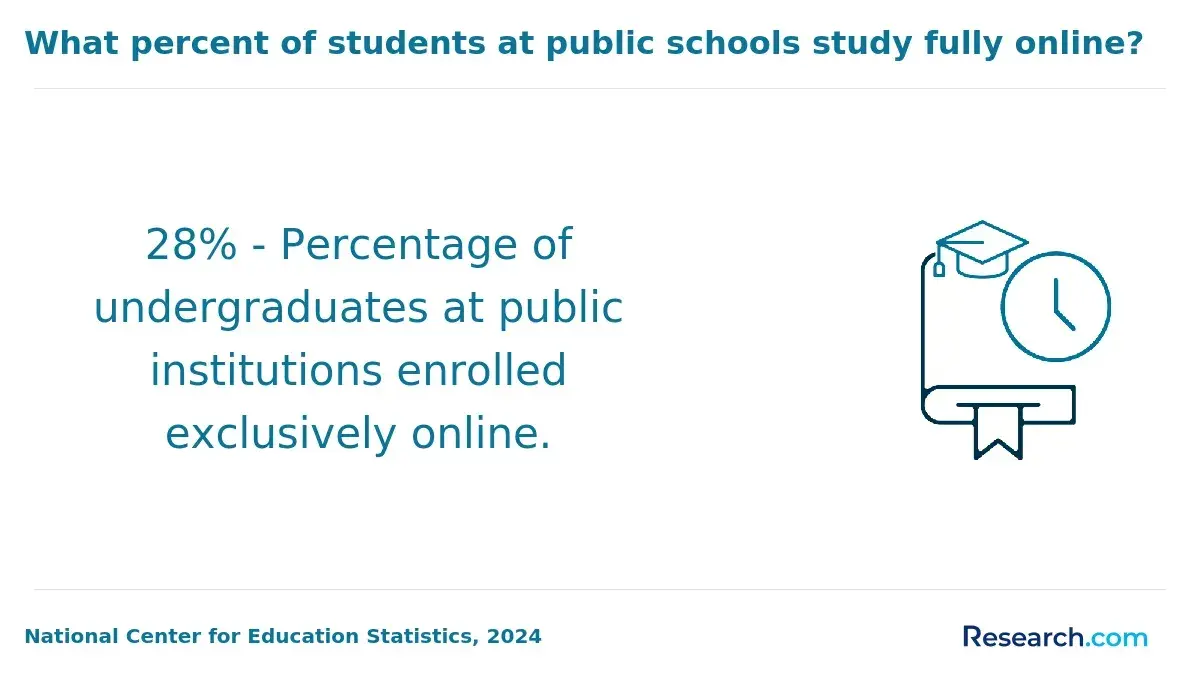
In fact, the National Center for Education Statistics reports over 2.5 million graduate students enrolled exclusively in online programs during 2023-24, underscoring widespread acceptance of online graduate education and its growing value in career advancement.
- Projected Job Growth: Technical communication-adjacent occupations expect 5%-8% growth to 2034, signaling robust employment prospects with solid wages.
- Salary Gains: Advanced degrees typically increase earnings by roughly $24,588 annually, emphasizing significant financial returns.
- Credential Equivalence: Employer focus shifts from degree format to experience and proven skills over time.
- Online Education Acceptance: Over 2.5 million exclusively online graduate students in 2023-24 reflect normalized online program participation.
What Graduates Say About Employer Reception to Their Online Technical Communication Master's Degree
- Grace: "When I brought up my online technical communication master's degree to my employer, they were genuinely impressed by the program's rigor and accreditation. This validation boosted my confidence in leveraging my degree for meaningful projects, knowing that the education I received is well respected in the industry. It has opened doors I didn't expect, and I feel well-prepared to tackle complex communication challenges."
- Danielle: "Reflecting on my career shift, enrolling in an accredited online technical communication master's degree was one of the best professional choices I've made. Initially, my employer was curious but quickly recognized the value my advanced skills brought to the team. It's rewarding to see how earning a degree from a recognized program has elevated my role and redefined my contributions in a technical environment."
- Siobhan: "My employer's reception to my online technical communication master's degree was very professional and supportive, which reinforced my decision to pursue the program despite doing it remotely. It's clear that accredited online degrees hold significant weight and are taken seriously. This experience has not only broadened my knowledge but has also accelerated my career growth in ways traditional paths might not have."
Other Things You Should Know About Technical Communication Degrees
In 2027, an online technical communication master's degree enhances career advancement by imparting specialized skills desired by employers, making graduates strong candidates for promotions. Many employers value the advanced training and adaptability that comes with an online degree, leading to increased opportunities in senior roles.
In 2027, skills-based hiring emphasizes practical capabilities over formal qualifications, leading employers to value real-world technical communication skills. Online master's degrees remain relevant when they effectively build competencies in digital content creation, project management, and user experience. Graduates should showcase specific skills gained during their studies.
Graduates should highlight the rigor and accreditation of their online program alongside specific skills gained. Emphasizing project experience, portfolios, and any practical work completed during the degree can strengthen their case. It's important to address any employer concerns about online learning by focusing on outcomes rather than delivery mode.
References
- A Snapshot of Employers’ Expectations of Graduates’ Skills and Abilities in Technical Communications - Center for Engaged Learning https://www.centerforengagedlearning.org/a-snapshot-of-employers-expectations-of-graduates-skills-and-abilities-in-technical-communications/
- How do 100% Online Degrees impact employability in today's job market? https://www.emerging.fr/post/how-do-100-online-degrees-impact-employability-in-todays-job-market
- We’re all techies now: Digital skill building for the future https://www.mckinsey.com/capabilities/people-and-organizational-performance/our-insights/we-are-all-techies-now-digital-skill-building-for-the-future
- 5 Ways Online Learning Builds Essential Modern Career Skills https://www.k12.com/how-online-learning-works/5-ways-online-learning-prepares-students-for-modern-careers/
- 7 Myths Surrounding Online Master’s Degree Programs https://www.snu.edu/blog/7-myths-surrounding-online-masters-degree-programs
- The role of digital learning in building 21st-century workplace skills: Bridging education and industry https://www.chieflearningofficer.com/2025/02/11/the-role-of-digital-learning-in-building-21st-century-workplace-skills-bridging-education-and-industry/
- Busting the 8 Biggest Myths About Online Learning https://www.techclass.com/resources/lifelong-learning/busting-the-8-biggest-myths-about-online-learning
- 2025 Career Outcomes Report: MCIT Online Graduates Continue to Lead in Tech and Beyond https://online.seas.upenn.edu/career-insights/2025-career-outcomes-report-mcit-online-graduates-continue-to-lead-in-tech-and-beyond/
- Are Online Master’s Degrees Respected? https://www.snhu.edu/about-us/newsroom/education/are-online-masters-degrees-respected
- Master's in Communication Salaries by Career and Position (2025 Update) https://www.mastersincommunications.com/faqs/masters-in-communication-salary


