2026 Career Paths with a Public Safety Master's Degree Explained

Co-Founder and Chief Data Scientist
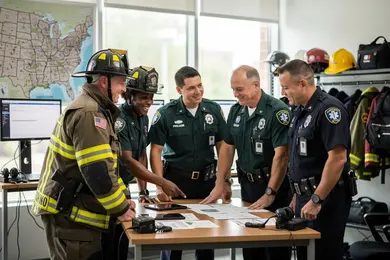
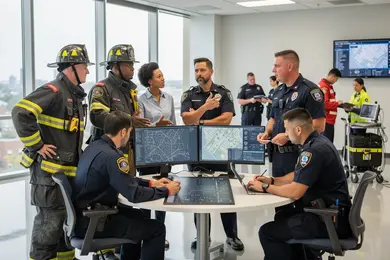
The career landscape for professionals with a public safety master's degree is shifting toward greater emphasis on leadership, advanced analytical skills, and technical expertise in areas like emergency management systems and regulatory compliance. Employers increasingly seek candidates familiar with incident command protocols, risk assessment methodologies, and interagency collaboration tools. Public safety graduate programs equip students to navigate complex operational environments, taking on roles in management, strategic planning, and specialized functions across sectors including government, healthcare, and private industry.
According to the National Center for Education Statistics, flexible online enrollment options have grown by over 12% since 2022, enabling working adults to upskill without interrupting their careers. This article explores varied career trajectories tied to a public safety master's degree and evaluates how these paths align with individual professional aspirations and workforce demands.
Key Things to Know About Career Paths With a Public Safety Master's Degree
- Specialized knowledge in public safety intersects with evolving industry standards, enhancing leadership roles but often requiring continual certification renewal, which can limit immediate career mobility despite advanced credentials.
- Employers increasingly value expertise in emergency management and data-driven risk assessment, making graduates more competitive for senior roles, yet access to these positions hinges on demonstrated operational experience beyond academics.
- The National Center for Education Statistics reports a 15% rise in online master's enrollment by adult learners in 2024, reflecting growing accessibility but highlighting a tradeoff between flexible schedules and diminished in-person networking crucial in public safety sectors.
What Can You Do With a Public Safety Master's Degree?
The paths unlocked by a public safety master's degree are diverse but inherently shaped by the complexity of managing risk, policy, and organizational dynamics. Graduates often face choices that reflect the balance between operational command and strategic influence, each with distinct career tradeoffs. For instance, those aiming for executive roles in government agencies must typically invest years in frontline experience before leveraging advanced education such as a master's degree in organizational leadership or public safety. Meanwhile specialization in emerging areas like cybersecurity can accelerate entry into private sector leaderships but may require supplementary technical skills. Understanding how this degree positions professionals relative to evolving public safety demands is critical to realistic planning and long-term employability.
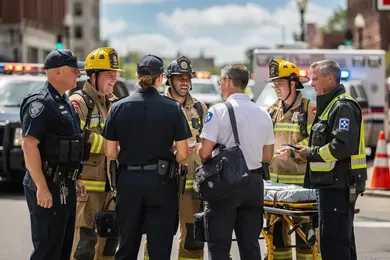
- Emergency Management Leadership: Roles such as emergency management directors require deep knowledge of disaster response logistics and policy frameworks. Holding a master's degree signals readiness for coordinating multi-agency operations, but candidates often contend with intense competition and must demonstrate significant field experience alongside academic credentials.
- Law Enforcement Administration: Graduates can pursue supervisory or command positions within police departments, where the degree informs policy development and community relations strategies. Advancement here hinges heavily on navigating institutional culture alongside applying analytical and communication skills gained through the program.
- Homeland Security Specialist: This pathway emphasizes intergovernmental coordination and critical infrastructure protection. A public safety master's degree enhances understanding of national security policy, but success depends on complementing it with security clearances and sector-specific certifications.
- Fire Services Management: Leadership roles in fire services combine operational risk management with public education responsibilities. The degree supports advancement into higher command roles, but practical fireground experience remains indispensable for credibility and effectiveness.
- Program Evaluation and Grant Writing: Graduates often transition laterally into specialized roles that focus on securing funding and assessing program efficacy. Such positions illustrate the degree's versatility, allowing professionals to leverage operational insight in administrative contexts critical to organizational sustainability.
- Corporate and Healthcare Security: Expanding beyond traditional public sector roles, the degree prepares professionals to manage risk in private environments where regulatory compliance and analytic capabilities are vital. These sectors offer alternative career trajectories, sometimes with faster advancement but require adaptation to profit-driven operational models.
What Are the Highest-Paying Careers With a Public Safety Master's Degree?
Compensation in public safety careers often reflects the intersection of leadership responsibility, sector-specific expertise, and the complexity of operational environments. Graduates holding a master's degree who target roles with significant strategic impact or specialized technical demands tend to access the most substantial salary packages. However, these roles frequently require not only advanced credentials but also considerable experience and readiness to manage high-stress and irregular schedules.
- Emergency management director: This role commands a high salary due to the critical responsibility of orchestrating disaster response, crisis mitigation, and recovery efforts. Annual salaries typically exceed $90,000, with the highest earners in high-risk urban areas making over $140,000. The demanding nature of the position and growing frequency of natural disasters sustain strong hiring trends.
- Homeland security leadership: Positions such as directors or senior analysts in homeland security require advanced knowledge of intelligence and inter-agency coordination. These roles offer salaries generally ranging from $85,000 to $130,000 and serve as pivotal advancement points for graduates aiming beyond operational entry-level jobs.
- Police chief or sheriff: These top-tier law enforcement roles often deliver compensation packages exceeding $100,000 annually, including benefits and pensions. Achieving such positions necessitates extensive years of leadership experience, with a master's degree acting as a competitive differentiator amid seasoned applicant pools.
Choosing any of these careers involves weighing elevated compensation against operational pressures and geographic salary disparities. Real-world tradeoffs include balancing long hours and stress against career stability and advancement potential. Graduates must consider how their professional goals align with these factors to optimize both earning capacity and job satisfaction.

Which Industries Hire Graduates With a Public Safety Master's Degree?
Employers across government, healthcare, transportation, and private sectors operationalize the expertise of public safety graduates in distinct, mission-critical ways that reflect both the programs' strategic and technical emphases. In federal and state agencies, these professionals often take on roles requiring command over regulatory frameworks, emergency crisis coordination, and interagency liaison-functions demanding more than technical knowledge, but also seasoned judgment and leadership under pressure.
Healthcare employers prioritize a different set of competencies, engaging graduates to navigate complex compliance landscapes and orchestrate responses to public health emergencies, where immediate risk mitigation and policy adherence intersect. Meanwhile, transportation industries emphasize vulnerability assessments and incident management, with a premium on candidates skilled in infrastructure security protocols and counterterrorism readiness, which can require more specialized certifications or prior operational experience to fully leverage advancement potential.
The private sector presents a tradeoff between broader strategic influence and operational specialization, as corporate security and risk management firms look for professionals able to integrate comprehensive threat analysis with business continuity planning. Demand here often favors those with diverse technological proficiency and adaptable communication skills, reflecting the fluidity of private security challenges versus the typically more structured public agency frameworks.
Career trajectories also diverge: government roles may offer clearer paths to senior leadership but sometimes involve slower progression and lower starting compensation compared to private industry roles, which can be faster-paced and more financially rewarding yet less stable. Choosing one sector over another hence involves weighing immediate remuneration against the long-term scope of influence and the nature of workplace pressure and accountability.
One graduate, initially torn between a healthcare system and a federal emergency management agency, found the decision hinged less on salary and more on the differing definitions of leadership and responsibility. The healthcare role demanded constant adaptation to regulatory changes and direct crisis communication, often under extreme time constraints, whereas the federal position required navigating bureaucratic complexity and fostering multi-jurisdictional cooperation. Ultimately, the graduate chose the healthcare route, citing the intensity and immediacy of operational impact as decisive, though acknowledging the ongoing challenge of balancing technical command with evolving public health priorities.
What Is the Job Outlook for Careers Requiring a Public Safety Master's Degree?
Demand for careers requiring a public safety master's degree is growing but unevenly distributed across sectors and regions, reflecting evolving organizational priorities and fiscal constraints. For instance, emergency management directors are projected by the U.S. Bureau of Labor Statistics to see an 8% job growth from 2022 to 2032, driven by increasing investments in disaster resilience and response systems.
However, roles in law enforcement administration may face slower expansion due to local budget limitations and political pressures. Employers consistently value advanced degrees for candidates capable of navigating complex policy, legal, and interagency challenges, particularly in supervisory or strategic positions where leadership and specialized knowledge intersect.
The job outlook for public safety master's degree graduates also depends on their facility with technology and adaptability across disciplines. Increasing integration of data analytics and cybersecurity within public safety heightens demand for professionals who can blend operational insight with tech proficiency. Regulatory shifts and community accountability add another layer of complexity, requiring nuanced leadership that balances compliance with public trust.
While overall demand is favorable, variability in government funding and regional workforce needs means that candidates should assess opportunities critically. Those weighing programs might also consider alternative or complementary pathways, such as business degrees, to amplify managerial skills and salary potential, as reflected in varied market demand across states and organizations: business degree.
What Entry-Level and Advanced Jobs Can You Get With a Public Safety Master's Degree?
Graduates holding a master's degree in public safety often enter the workforce through roles focused on operational support and program implementation, such as public safety analyst or emergency management coordinator. These positions emphasize data evaluation, community outreach, and tactical coordination rather than broad strategic leadership. While these entry-level jobs provide essential experience, they typically offer salaries in the $50,000 to $70,000 range, contingent on employer type and location. Importantly, many organizations expect candidates to accumulate relevant work experience before advancing, meaning the degree alone rarely substitutes for on-the-job learning or certifications when pursuing higher-level roles. This dynamic requires graduates to balance immediate employment with career development in sectors ranging from local government to emergency services.
Transitioning into advanced roles like public safety director, homeland security advisor, or emergency operations chief entails a substantial shift toward leadership, resource allocation, and interagency collaboration. These positions come with greater decision-making authority and often require specialized expertise and 5 to 10 years of progressive responsibility, reflecting the complexity and stakes involved.
Median salaries for senior roles, such as emergency management directors, exceed $110,000 annually, according to 2024 labor projections, illustrating significant financial incentives tied to experience and credential accumulation. However, the degree's value varies by employer; some sectors prioritize demonstrated leadership and certifications over academic credentials alone. Consequently, a master's in public safety equips graduates with analytical and managerial foundations necessary for advancement but must be complemented by practical experience and targeted professional development to fully capitalize on long-term career mobility and leadership readiness.

Can a Public Safety Master's Degree Help You Change Careers?
A master's degree in public safety can serve as a strategic tool for professional repositioning, though its effectiveness for career change is highly contingent on the candidate's background, their targeted industry segment, and compliance with sector-specific requirements. For example, someone transitioning from private sector management into emergency management gains not only foundational knowledge but also critical competencies such as risk assessment and crisis mitigation that are often prerequisites for leadership roles in public safety.
These specialized skills go beyond typical managerial training, enabling candidates to meet employer expectations in a field where understanding regulatory frameworks and operational protocols is crucial. However, career changers must navigate tradeoffs including possible entry-level positioning, salary adjustments, and the pursuit of additional certifications like emergency management credentials or law enforcement licensure, which remain significant barriers despite holding an advanced degree.
Programs often incorporate practicum experiences and networking opportunities that facilitate entry into public safety roles, which can be especially valuable for those lacking direct prior experience. This applied learning bridges theoretical knowledge and operational demands, thereby addressing some employer skepticism toward candidates without continuous, recent field experience. The variability in outcomes highlights the importance of aligning transferable skills from a public safety master's degree for new careers with labor market demand and specialization choices. Tuition for many public safety programs with rolling admissions ranges from $7,000 to $15,000, reflecting a mid-tier investment that must be weighed against potential salary resets and long-term mobility.
Professionals should also consider the degree's relevance compared with other options, such as a hospitality degree online, in shifting to sectors with overlapping operational themes but differing regulatory climates.
What Leadership and Management Roles Can You Pursue With a Public Safety Master's Degree?
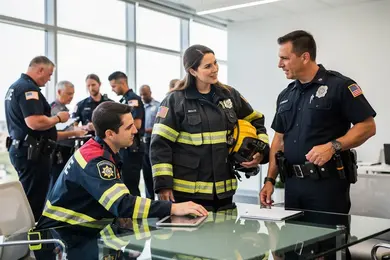
A public safety master's degree primarily equips graduates to assume multifaceted leadership roles that balance operational control with strategic vision across diverse environments such as law enforcement, emergency management, and occupational safety. These roles demand nuanced capabilities in managing teams under pressure while navigating regulatory and political landscapes unique to each sector. For instance, a law enforcement mid-level manager might juggle coordination of daily patrols and multi-unit communication, whereas a senior executive could be responsible for interagency policy formulation and resource allocation across jurisdictions.
Leadership trajectories in this field often differ substantially by specialization, with some roles prioritizing technical expertise and compliance, and others emphasizing cross-functional strategy and stakeholder engagement. Such variation influences not only promotion eligibility and supervisory scope but also compensation potential and accountability frameworks, reflecting the complexity of public safety administration today.
Employers increasingly expect leaders to demonstrate a blend of operational experience, regulatory knowledge, and the ability to lead diverse teams through crisis and routine challenges. This dual expectation means professionals often face a tradeoff: remain technical specialists or transition into broader managerial positions requiring long-term planning and cross-department collaboration. For many, advancing beyond entry-level supervisory roles involves supplemental credentials or targeted training, as rising standards reflect growing sector demands.
A 2024 survey of public sector agencies found that over 60% require a master's degree for senior leadership appointments, highlighting the credential's role in promotion pathways. However, the specifics of career progression vary widely between municipal agencies, private contractors, and federal departments, underscoring the importance of aligning degree focus with intended employment settings and leadership expectations.
One graduate recalled waiting weeks for admission decisions during a rolling application cycle, feeling uncertain about how delays might affect job prospects and tuition funding. They emphasized the strategic decision to apply early, balancing careful preparation of transcripts and recommendations with the anxiety of not having a firm timeline. When acceptance finally arrived, it validated their chosen path but also underscored how timing and persistence can be as critical in education access as in later career advancement opportunities.
What Skills Do Employers Expect From Graduates With a Public Safety Master's Degree?
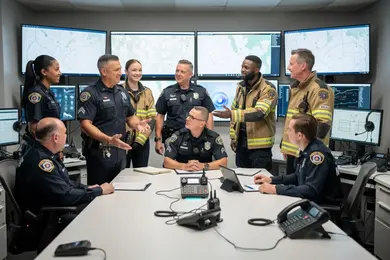
Graduates from master's programs in public safety face employer expectations that prioritize technical fluency alongside strategic and interpersonal competencies. Proficiency with advanced emergency management software, predictive analytics, and incident command systems is increasingly non-negotiable, as these tools directly affect response times and resource distribution in crisis scenarios. For example, a mid-level emergency management coordinator may be evaluated on their ability to synthesize real-time data feeds to optimize deployment during natural disasters.
This technical acumen often distinguishes candidates in a labor market where starting salaries for public safety graduates with rolling admissions can range between $60,000 and $85,000, reflecting employer valuation of actionable skills tied to operational effectiveness. The ability to conduct and interpret quantitative risk assessments also signifies readiness for roles demanding evidence-based decision-making, with graduate programs embedding these analytical skills through collaborative research projects and applied coursework designed to mirror the complexity of public safety challenges.
Leadership and communication skills are not uniform across public safety roles but remain critical for career progression, especially in public policy or interagency coordination positions. Employers expect competencies in strategic planning and negotiation, balancing compliance with proactive safety initiatives influenced by scenario-based training and simulation. Interpersonal effectiveness extends to navigating diverse stakeholder environments, from first responders to community leaders, necessitating cultural competency and conflict resolution capabilities that graduate training emphasizes through real-world engagement.
These skills are pivotal for graduates aiming for senior roles; lacking them can stunt mobility and earnings potential, as policy-focused positions often demand expertise in legislative frameworks and grant writing unavailable in purely technical tracks. Ultimately, variances in specialization and seniority shape what employers prioritize, with technical roles demanding certifications and hands-on technology experience, while managerial trajectories reward strategic and communicative mastery, both of which underpin salary differentiation in evolving public safety labor markets.
Are Remote and Flexible Careers Available With a Public Safety Master's Degree?
Remote and flexible careers with a public safety master's degree are highly dependent on the specific role and operational context, often requiring a nuanced tradeoff between flexibility and direct involvement. Positions focused on research, policy analysis, or compliance are more likely to offer hybrid or fully remote arrangements due to their reliance on data interpretation, digital collaboration, and virtual meetings. In contrast, frontline operational roles such as emergency management or law enforcement necessitate physical presence, limiting remote options mostly to off-shift administrative or consulting work.
Many employers in public safety balance the need for oversight and teamwork with flexible scheduling, but clear productivity metrics and communication protocols are crucial when remote work is part of the arrangement, especially given regulatory and safety compliance demands. Recent workforce analyses from 2024 indicate many public safety programs enrolling adult learners favor part-time or online modalities, reflecting professionals' desire for flexibility while maintaining career momentum.
Remote career opportunities for public safety master's graduates thus vary widely by employer sector, with government agencies often imposing stricter on-site requirements, while private consulting or research firms may enable more location independence. This variability creates important implications for job seekers weighing geographic mobility against potential salary differences, as remote roles sometimes adjust compensation for cost-of-living variances. Work-life integration in hybrid roles can improve, though leadership or mid-career specialists often face tradeoffs balancing strategic responsibilities with limited remote time. Understanding these operational complexities and infrastructure needs remains essential for professionals pursuing flexible work options with a public safety master's degree.
For those seeking further academic credentials with flexibility, options like online PhD criminal justice no dissertation pathways illustrate the evolving landscape of advanced public safety education and career development.
What Certifications or Licenses Complement a Public Safety Master's Degree?
Licenses and certifications often serve as critical complements to a Public Safety master's degree by meeting regulatory mandates and signaling specialized operational competence. For instance, a licensed peace officer credential is not simply a formality but a legal prerequisite that gates access to frontline and supervisory law enforcement roles regardless of academic achievement. Industry-preferred certifications such as the Certified Protection Professional (CPP) credential can distinguish candidates in competitive hiring environments by demonstrating validated expertise in areas like security management and risk assessment.
These licenses and credentials affect workforce outcomes by determining eligibility for higher compensation levels, expanded job responsibilities, and leadership positions, as many employers require proof of official authorization alongside graduate-level education to fulfill operational and compliance standards.
The influence of certifications for public safety master's degree graduates varies widely by sector and geography, reflecting differing institutional priorities and regulatory frameworks. For example, the Certified Emergency Manager (CEM) designation carries significant weight in federal agencies and disaster response roles, whereas local law enforcement tends to prioritize state-specific tactical certifications and licenses that authorize direct intervention. Optional credentials like CPR instructor training enhance practical skill sets but rarely impact salary or promotion unless paired with more substantial licensing. Understanding these distinctions is vital for career changers or current professionals who must balance the costs and ongoing requirements of maintaining credentials against their potential to unlock higher responsibility and earning power.
Those seeking swift entry or transition into public safety fields might also consider pathways like a fastest online cyber security degree offering to complement or bridge their master's expertise in this evolving area.
What Graduates Say About Career Opportunities With a Public Safety Master's Degree
- Jerome: "Balancing full-time work with the master's in public safety was tough, especially since my employer didn't offer tuition assistance. I chose this program because it allowed remote coursework, making it manageable alongside my 50-hour work weeks. Although I didn't obtain formal licensure, the internships included gave me a solid portfolio that helped me secure a coordinator role in emergency management."
- Erik: "Switching careers into public safety after years in retail meant I had to be very selective about where I invested my limited funds. I opted for a program known for its strong connections with local law enforcement agencies, which paid off through a competitive internship that led to a full-time analyst position. Despite challenges competing with candidates holding certifications, the real-world experience gave me a notable advantage."
- Weston: "After graduating, I realized that not getting licensed limited my rise beyond entry-level roles despite the degree. I focused instead on obtaining specialized certifications and building relationships through networking events the program facilitated. The workload was intense, but the program's focus on current workforce demands helped me find a remote position in cybersecurity within public safety, which fits my lifestyle much better."
Other Things You Should Know About Public Safety Degrees
Specialization can significantly influence career trajectories in public safety. Employers often value targeted expertise-for example, emergency management, cybersecurity, or homeland security-more than a generalist degree. Selecting a program with a clear focus aligned to your desired role may provide deeper skills and networking opportunities, which can lead to faster advancement. Conversely, overly broad programs might limit your competitive edge in specialized job markets or leadership positions that require niche knowledge.
Balancing studies with a full-time public safety career often proves challenging due to unpredictable work hours and high-stress environments. Programs that offer flexible scheduling, such as asynchronous online courses, tend to better accommodate working professionals. However, these formats may reduce live interaction and networking opportunities, which are crucial in public safety fields. Choosing between program structure and personal bandwidth is a critical decision impacting both learning quality and professional responsibilities.
A master's degree in public safety can enhance qualifications but does not guarantee immunity from sector volatility, such as budget cuts or policy changes affecting public agencies. The practical value depends on combining the degree with relevant experience and continuous skill updating. Candidates should weigh whether the credential will provide a meaningful edge in their specific employment context or if supplementary training and certifications might offer better resilience against economic and political shifts.
Programs with robust hands-on experiences provide essential real-world insight, which public safety employers increasingly demand. Internships, simulations, and capstone projects bridge theory and application, enhancing problem-solving skills relevant to crisis management and operations. For students lacking extensive field experience, these components are critical and should be prioritized higher than purely academic or research-focused curricula to ensure employability and readiness for complex job roles.
References
- Arizona State University. (n.d.). Master of Arts in emergency management and homeland security. https://asuonline.asu.edu/online-degree-programs/graduate/emergency-management-homeland-security-ma/
- Columbia Southern University. (n.d.). Master of Science in public safety administration. https://www.columbiasouthern.edu/online-degree/masters/public-safety-administration/
- Indeed Editorial Team. (2025, Dec. 10). What can you do with a public safety degree? (Plus types). Indeed. https://www.indeed.com/career-advice/finding-a-job/what-you-do-with-public-safety-degree
- LearningPath.org. (n.d.). Public safety degrees: Master's, PhD & online training info. https://learningpath.org/articles/Masters_Degrees_in_Public_Safety_Career_Info.html
- Purdue Global. (n.d.). What can you do with a master's degree in public administration? https://www.purdueglobal.edu/blog/public-service/what-can-you-do-with-masters-public-administration/
- U.S. Bureau of Labor Statistics. (2025). Emergency management directors. U.S. Department of Labor. https://www.bls.gov/ooh/management/emergency-management-directors.htm
- University of Maryland Global Campus. (2026, Apr. 20). Grow your career with an online master's in public safety leadership. https://www.umgc.edu/blog/grow-career-online-masters-public-safety-leadership