2027 Cheapest Online Applied Behavior Analysis Bachelor's Degrees That Pay Well: Tuition, Duration, and Earnings

Co-Founder and Chief Data Scientist
Choosing a low-cost online applied behavior analysis bachelor’s degree is mainly a value decision: you need a program that is affordable, accredited, flexible enough for your schedule, and useful for the ABA-related roles you want after graduation. This matters especially for working adults, transfer students, military-affiliated learners, and career changers who cannot afford to spend unnecessary time or money on credits that do not move them toward employment or graduate study.
Applied behavior analysis is used in autism services, special education, behavioral health, human services, workplace performance, and related support roles. Demand remains strong in many of these settings, and graduates of online applied behavior analysis bachelor's programs can expect a 17% employment growth over the next decade. Still, the cheapest program is not always the best choice if it lacks recognized accreditation, limits transfer credits, or does not align with certification and career goals.
This guide compares affordable online applied behavior analysis bachelor’s programs by tuition, program length, accreditation, transfer policy, financial aid, specializations, and earning potential so you can identify the option with the strongest practical return.
Key Benefits of the Cheapest Online Applied Behavior Analysis Bachelor's Degree That Pays Well
- Online applied behavior analysis bachelor's degrees offer lower tuition costs, reducing financial barriers and minimizing student debt compared to traditional on-campus programs.
- Flexible schedules and accelerated formats enable working professionals to gain marketable skills quickly without sacrificing current employment or income.
- Graduates benefit from strong return on investment, with median salaries exceeding $60,000 annually and opportunities for global networking through virtual communities and internships.
What Are the Most Affordable Accredited Online Applied Behavior Analysis Bachelor's Degree Programs Available Today?
The most affordable accredited online applied behavior analysis bachelor’s programs combine low tuition with institutional accreditation, flexible pacing, and policies that help students avoid paying for unnecessary credits. Accreditation should come first: it affects federal financial aid eligibility, transfer credit acceptance, employer confidence, and admission to graduate programs.
Regional accreditation from agencies such as the Higher Learning Commission (HLC) or the Northwest Commission on Colleges and Universities (NWCCU) confirms that the institution meets recognized academic standards. Program-level recognition from organizations such as the Association for Behavior Analysis International (ABAI) can add field-specific value, but students should verify how each curriculum aligns with their intended credential or career path.
Based on tuition figures verified through NCES College Navigator and university websites, these are among the affordable accredited online options students commonly compare for ABA-related bachelor’s study:
- Western Governors University: Regionally accredited by NWCCU, Western Governors University uses a fully online, competency-based model and charges about $3,500 per six-month term. This structure can lower total cost for students who complete courses quickly.
- University of Arkansas: Regionally accredited by HLC, the University of Arkansas charges roughly $340 per credit hour for online students and offers a public-university option with a recognized academic reputation.
- Ball State University: Regionally accredited by HLC, Ball State charges around $335 per credit hour for out-of-state online learners and is worth comparing if you have prior credits to transfer.
- Liberty University: Accredited by HLC, Liberty University offers online coursework at $390 per credit hour, with multiple start dates and financial aid options that can support working adults.
- Northwest Nazarene University: Regionally accredited by NWCCU, Northwest Nazarene University charges approximately $385 per credit hour and emphasizes advising and transfer-student support.
When comparing these programs, look beyond the posted tuition rate. A competency-based program may cost less if you can move quickly, while a per-credit program may be better if you need predictable pacing or plan to transfer many credits. Also confirm whether ABA coursework is part of the bachelor’s curriculum, a concentration, a related psychology or human services track, or preparation for later graduate study.
Students comparing adjacent human-services pathways may also want to review affordable online MSW programs to understand how costs and career outcomes differ across related fields.
How Does Tuition Cost for Online Applied Behavior Analysis Bachelor's Programs Compare Across Public and Private Universities?
Public universities are often less expensive for online applied behavior analysis bachelor’s students, especially when the school offers in-state or flat-rate online tuition. Public programs typically charge between $250 and $400 per credit, while private nonprofit schools often range from $400 to over $700 per credit. For a standard 120-credit bachelor’s degree, that can mean roughly $30,000 at a public university versus upward of $70,000 at a private institution.
The difference is not only about sticker price. Transfer credits, scholarships, term structure, fees, and time to graduation can change the final cost substantially. A private program with generous transfer policies or scholarships may sometimes be cheaper than a public program that accepts fewer credits.
- State subsidies: Public universities often receive government funding that helps reduce tuition, particularly for in-state learners. Online out-of-state students should check whether they pay a separate online rate or a higher nonresident rate.
- Enrollment scale: Large public universities may offer lower tuition because they serve more online students. Smaller private institutions may charge more to support smaller classes, advising, or specialized services.
- Program delivery: Some private universities include synchronous sessions, intensive advising, or additional student support. These services can be valuable, but they do not automatically shorten the degree or increase graduate earnings.
- Transfer and acceleration: A program that accepts more prior credits, offers accelerated terms, or lets students study year-round may reduce the total cost more than a low per-credit rate alone.
- Fees and aid: Technology fees, course materials, assessment fees, and institutional scholarships should be included in your cost comparison before you decide.
For most students, the best approach is to calculate the total remaining cost after transfer credits and aid, not simply compare tuition per credit. If you are reviewing online degree prices across disciplines, this resource on an affordable online business degree can provide a useful point of comparison for how public and private tuition models differ.
What Is the Typical Duration of an Online Applied Behavior Analysis Bachelor's Degree, and How Can Students Graduate Faster?
A typical online applied behavior analysis bachelor’s degree requires around 120 credit hours and takes about four years for full-time students who start without prior college credit. The curriculum usually includes general education, psychology or human-services coursework, ABA-focused classes, electives, and any required field-based or applied learning components.
Students with previous college credits, military training, CLEP or DSST scores, or professional experience may finish faster. The key is to choose a program that evaluates prior learning early and clearly explains how transferred credits apply to major, general education, and elective requirements.
- Use accelerated terms: Eight-week courses can help students complete more classes in a year than traditional 16-week semesters. This option works best for disciplined students who can handle faster deadlines.
- Enroll year-round: Taking courses during summer and winter sessions reduces long breaks and can shorten the calendar time to graduation.
- Choose competency-based learning when appropriate: Competency-based programs let students advance by demonstrating mastery rather than spending a fixed amount of time in class. This can benefit students with prior knowledge, strong study habits, or relevant work experience.
- Maximize transfer credits: Students who transfer in general education or elective credits can reduce both tuition and time. Always ask for a degree audit before enrolling.
- Balance speed with performance: Graduating quickly is useful only if you can maintain strong grades, complete required assignments, and build skills that employers and graduate programs recognize.
Schools such as Arizona State University and Capella University report that students often complete their applied behavior analysis bachelor's degrees in 2.5 to 3 years when using accelerated pathways. That timeline can reduce tuition exposure and opportunity cost, but it usually requires careful course planning and consistent enrollment.
For working adults, the fastest route is not always the most realistic one. A student taking two accelerated courses while working full-time may save time but risk burnout. Before committing to an accelerated schedule, compare weekly workload, course availability, field requirements, and your ability to study consistently across multiple terms.
Which Online Applied Behavior Analysis Bachelor's Programs Offer the Best Earning Potential After Graduation?
The online applied behavior analysis bachelor’s programs with the strongest earning potential are usually those that pair affordable tuition with career-aligned coursework, recognized accreditation, field experience, and preparation for further credentials. Graduates may pursue roles in autism services, special education support, behavioral health, human services, case management, organizational behavior, or related fields, depending on state rules and employer requirements.
Careers connected to autism spectrum disorder support, organizational behavior management, and educational behavior analysis frequently lead to median salaries between $60,000 and $75,000 annually, according to the Bureau of Labor Statistics Occupational Outlook Handbook. Actual earnings vary by role, credential level, employer, location, and experience. A bachelor’s degree may support entry-level or mid-level roles, while some higher-paying clinical or supervisory positions require graduate education and certification.
- Specialization matters: Autism support, organizational behavior management, and healthcare-related behavior change can offer stronger earning potential when they align with local demand.
- Certification planning matters: Students aiming for BCBA-level roles should understand that bachelor’s study is usually only one step in a longer credential path. If your goal is BCBA eligibility, compare accredited bcba master's programs online early so your undergraduate choices support later graduate study.
- Career services matter: Programs with employer partnerships, resume support, internship guidance, and job-placement assistance can help students move into better-fitting roles more quickly.
- Debt level matters: A lower-cost degree can improve net earnings even if two graduates earn similar salaries after graduation.
- Sector matters: Healthcare and education settings may offer different pay, benefits, supervision structures, and advancement pathways than community or residential support settings.
Students who want to broaden their behavioral health options can also compare related pathways, including online marriage and family therapy programs, to see how credential requirements and career outcomes differ.
What Financial Aid and Scholarship Opportunities Are Available for Online Applied Behavior Analysis Bachelor's Students?
Online applied behavior analysis bachelor’s students may qualify for federal aid, state grants, institutional scholarships, employer tuition assistance, military education benefits, and awards from professional organizations. The most important first step is completing the FAFSA, because many colleges use it to determine eligibility for federal, state, and institutional aid.
Federal aid may include Pell Grants and subsidized loans. Nearly 40% of undergraduates benefit from Pell Grants, which are awarded based on financial need and do not require repayment, according to the College Board's 2023 Trends in Student Aid report. Federal loans may also be available, but students should borrow only after using grants and scholarships first.
- Federal aid: Pell Grants and subsidized loans can lower upfront costs for eligible students. FAFSA submission is usually required.
- Institutional scholarships: Colleges may offer need-based, merit-based, transfer-student, adult-learner, or program-specific awards for students in psychology, education, ABA, or human services tracks.
- Professional grants: Organizations such as the Association for Behavior Analysis International periodically offer scholarships or grants for students committed to the field.
- State grants: In-state online students at public universities may qualify for state-funded aid, depending on residency rules and program eligibility.
- Employer support: Students already working in schools, clinics, nonprofits, or human services agencies should ask about tuition reimbursement or professional development funding.
- Military and veteran benefits: Military-affiliated students should confirm how GI Bill benefits, tuition assistance, or credit for training can reduce total cost.
A practical funding strategy is to apply early, track deadlines, and prioritize aid that does not need to be repaid. Even smaller scholarships can reduce borrowing and help students stay enrolled continuously. Before accepting an aid package, compare the net price, renewal requirements, minimum GPA rules, and whether awards apply to summer or accelerated terms.
How Many Transfer Credits Can Online Applied Behavior Analysis Bachelor's Programs Accept, and From Which Institutions?
Transfer credits can make the biggest difference in the total cost and speed of an online applied behavior analysis bachelor’s degree. Some institutions accept up to 90 credits, which is about three-quarters of a typical 120-credit bachelor’s requirement. For students with an associate degree, prior university coursework, military training, or exam-based credit, this can significantly reduce both tuition and time to graduation.
Most programs prefer credits from regionally accredited colleges and universities. Credits from nationally accredited schools, international institutions, professional training, or nontraditional sources may require additional review. Even when a school accepts the credits, they may apply as electives rather than toward major requirements, so students should request a detailed transfer evaluation before enrolling.
- Community colleges: General education and lower-division courses from accredited community colleges often transfer well, especially when articulation agreements exist.
- Four-year colleges: Prior bachelor’s-level coursework may satisfy general education, electives, prerequisites, or major requirements.
- CLEP and DSST exams: Some programs award credit for standardized exams, helping students bypass courses in subjects they already know.
- Military training: Military-affiliated students may receive credit when training has been evaluated for college equivalency.
- Prior learning: Some schools evaluate workplace learning, certifications, or portfolios, though policies vary widely.
Arizona State University offers up to 90 transfer credits, while Southern New Hampshire University grants credit for CLEP and military experience. These examples show why transfer policy should be reviewed alongside tuition: a slightly higher per-credit rate may still be cheaper if the program accepts more of your previous work.
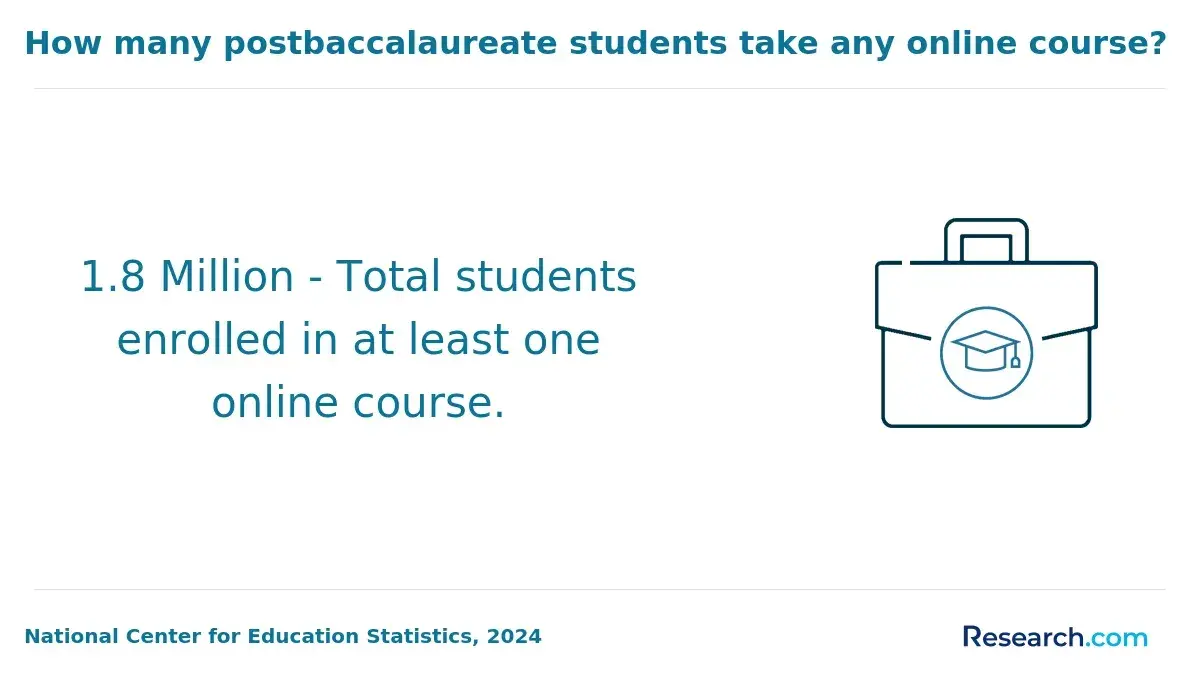
According to the National Center for Education Statistics, nearly 14 million U.S. students enrolled in at least one online course in recent years, making transfer-friendly online pathways increasingly important. Before applying, gather transcripts, exam scores, military records, course descriptions, and syllabi when available. Then ask each school for a written estimate of how many credits will count toward the degree.
What Accreditation Should an Online Applied Behavior Analysis Bachelor's Program Have to Ensure Quality and Employer Recognition?
An online applied behavior analysis bachelor’s program should be offered by an institution with recognized institutional accreditation. Regional accreditation is generally the strongest signal of academic legitimacy for transfer credit, employer recognition, graduate school admission, and federal financial aid eligibility.
Key regional accrediting bodies include the Higher Learning Commission (HLC), the Southern Association of Colleges and Schools Commission on Colleges (SACSCOC), and the New England Commission of Higher Education (NECHE). These agencies review institutional quality, faculty qualifications, curriculum, student support, governance, and academic resources.
Programmatic recognition can also matter. Some applied behavior analysis programs seek recognition or alignment through organizations such as the Association for Behavior Analysis International (ABAI) or the Behavior Analyst Certification Board (BACB). Students should be precise here: not every ABA-related bachelor’s program is designed for the same credential outcome, and credential rules can change. Always verify whether a program’s coursework supports your intended next step, such as employment, graduate admission, or later certification preparation.
- Prefer recognized institutional accreditation: HLC, SACSCOC, NECHE, and other recognized regional accreditors provide stronger portability than unaccredited options.
- Check ABA-specific recognition: ABAI recognition or coursework alignment with BACB-related requirements can strengthen field relevance when available.
- Avoid unaccredited programs: Degrees from non-accredited institutions can create problems with financial aid, transfer credits, employer trust, and graduate school admission.
- Be cautious with nationally accredited schools: Some nationally accredited institutions are legitimate, but credits may not transfer as easily to regionally accredited universities.
- Verify before enrolling: Use official accreditation databases and the school’s accreditation page, then confirm details with admissions or the registrar.
Online education enrollment has surged, with over 6 million U.S. students taking at least one online course. That growth makes accreditation especially important: a flexible online degree is valuable only if employers, graduate schools, and aid agencies recognize it.
What Are the Admission Requirements for the Cheapest Online Applied Behavior Analysis Bachelor's Programs?
The cheapest online applied behavior analysis bachelor’s programs usually have accessible admission requirements, especially when designed for transfer students, working adults, or first-generation college students. Most require a high school diploma or GED, official transcripts, and a minimum GPA. Minimum GPA standards commonly range from 2.0 to 2.5, depending on the institution.
Many affordable programs are test-optional or test-blind, meaning SAT or ACT scores are not required. This can benefit adult learners who have been out of school for several years or applicants whose academic record is better represented by work experience and prior college performance.
- High school diploma or GED: This is the baseline requirement for first-year admission to most bachelor’s programs.
- Official transcripts: Schools typically require records from high school and any prior colleges attended.
- Minimum GPA: Requirements often fall between 2.0 and 2.5, though selective programs may expect higher grades.
- Prerequisite coursework: Some programs prefer or require prior coursework in psychology, biology, statistics, education, or human services.
- Personal statement: Some schools ask applicants to explain career goals, relevant experience, or interest in ABA.
- Transfer documentation: Transfer students may need course descriptions, syllabi, or prior-learning records to maximize credit acceptance.
Open-admission and rolling-admission policies can make enrollment easier. Open admission generally allows most applicants who meet minimum requirements to enroll, while rolling admission lets students apply throughout the year. Selective programs may offer stronger academic branding or support services, but accessible programs can still provide practical training and useful field preparation.
If your GPA is below the posted threshold, contact admissions before ruling out a program. You may be able to apply conditionally, submit a stronger personal statement, complete prerequisite courses, or transfer after improving your grades elsewhere. Students comparing long-term academic pathways may also review an affordable online master's in communication to understand how bachelor’s admission choices can affect later graduate study.
What Concentrations or Specializations Are Available Within Affordable Online Applied Behavior Analysis Bachelor's Degree Programs?
Affordable online applied behavior analysis bachelor’s programs may offer concentrations that help students connect ABA principles to specific work settings. The best choice depends on your target population, preferred workplace, state requirements, and whether you plan to pursue graduate education or certification later.
- Autism Spectrum Disorders Intervention: This concentration focuses on behavioral support for individuals with autism. It can prepare students for roles in clinics, schools, home-based services, and community programs. Graduates often pursue credentials such as Registered Behavior Technician (RBT), while those aiming for BCBA roles should plan for graduate-level study.
- Organizational Behavior Management: This track applies behavioral principles to workplace performance, safety, training, and management. It can fit students interested in corporate training, human resources, operations, or performance improvement.
- Child and Adolescent Behavioral Support: This specialization emphasizes behavioral challenges among children and teens, often in schools, youth services, or family-support settings. Strong communication and collaboration skills are especially important.
- Health and Wellness Behavior Change: This area connects behavior analysis with lifestyle interventions such as smoking cessation and weight management. It may appeal to students interested in public health, coaching, prevention, or healthcare partnerships.
- Special Education Collaboration: This concentration blends ABA concepts with special education support. Students interested in school settings should check whether teaching certification or state licensure is required for their intended role.
Bureau of Labor Statistics (BLS) data show that labor-market outcomes differ by occupation and setting, so students should not choose a concentration based only on interest. Compare local job postings, required credentials, supervised-experience expectations, and whether the concentration prepares you for entry-level work or graduate study.
Students concerned about admission standards can also explore online colleges with low GPA policies while comparing concentrations, accreditation, and transfer options.
Can Students Earn College Credit Through CLEP, DSST, or Prior Learning Assessments in Online Applied Behavior Analysis Bachelor's Programs?
Yes. Many affordable online applied behavior analysis bachelor’s programs allow students to earn college credit through CLEP, DSST, and Prior Learning Assessments (PLA). These options can reduce tuition and shorten the time to degree completion, especially for adult learners, military-affiliated students, and students with substantial workplace training.
CLEP and DSST exams are standardized tests that can satisfy certain general education or elective requirements. Prior Learning Assessments evaluate learning from work experience, professional certifications, military training, or portfolios. Many institutions use guidance from the American Council on Education (ACE), which helps standardize how military and workplace learning may be recommended for college credit.
- CLEP credit: Useful for students who can demonstrate college-level knowledge in common subjects such as composition, history, math, or social sciences.
- DSST credit: Often used by military-affiliated students and adult learners to earn credit in business, humanities, math, science, and technology subjects.
- Prior Learning Assessment: May award credit for documented professional learning, certifications, workplace training, or portfolios.
- ACE-evaluated learning: ACE recommendations can help schools evaluate military training, workplace education, and some professional credentials.
- Credit limits: Some affordable programs permit up to 90 PLA credits, but limits and eligible categories vary by institution.
To maximize credit, request a policy sheet before applying. Ask which exams are accepted, what scores are required, how many credits can be awarded, and whether those credits apply to general education, electives, or the major. Submit documentation early, including transcripts, certificates, military records, exam scores, and portfolios, because late credit evaluations can delay graduation planning.
What Is the Return on Investment (ROI) of Earning a Cheap Online Applied Behavior Analysis Bachelor's Degree?
The ROI of a cheap online applied behavior analysis bachelor’s degree depends on the total cost of attendance, how quickly you graduate, how much debt you take on, and whether the degree helps you qualify for better-paying roles or graduate study. ROI is commonly understood by comparing the financial benefits of a degree with its total cost, including tuition, fees, borrowed interest, and time away from higher earnings.
Research from Georgetown University Center on Education and the Workforce and Payscale's College ROI reports confirms that graduates in applied behavior analysis often command competitive salaries in high-demand roles. Affordable online programs can produce stronger ROI than higher-cost options when they lead to similar employment outcomes with less debt.
- Lower tuition improves ROI: Paying less for an accredited degree increases the chance that future earnings will outweigh education costs.
- Transfer credits improve ROI: Students who bring in prior credits may pay for fewer courses and enter the workforce sooner.
- Acceleration improves ROI: Finishing faster can reduce opportunity cost, especially for students moving into higher-paying roles.
- Accreditation protects ROI: Recognized accreditation supports employer trust, credit transfer, aid eligibility, and graduate admission.
- Credentials affect ROI: Some ABA-related roles require additional certification, supervised experience, or graduate education, so students should include future costs in their planning.
Over 10 to 20 years, students who combine an affordable bachelor’s degree with relevant experience, certification planning, and continued professional development may see stronger salary growth. The best financial outcome usually comes from choosing the least expensive accredited program that still supports your specific career path.
What Graduates Say About Earning the Cheapest Online Applied Behavior Analysis Bachelor's Degree That Pays Well
- Eddie: "I chose the online applied behavior analysis bachelor's degree because it let me keep working while finishing school. The affordable tuition mattered, but the bigger benefit was being able to apply what I learned directly to my job and move toward better opportunities."
- Sage: "My goal was to build a career where I could make a practical difference in behavioral health. Choosing a reasonably priced online program helped me avoid overwhelming debt while gaining the foundation I needed for roles in different service settings."
- John: "For me, the degree was a strategic investment. I needed flexibility, a curriculum connected to real behavioral work, and a cost I could justify. After graduating, I had stronger credentials and more confidence applying for roles I had not qualified for before."
Other Things You Should Know About Applied Behavior Analysis Degrees
In 2027, the cost per credit hour for online Applied Behavior Analysis bachelor's programs varies significantly, often ranging from $250 to $400. The national average for similar degrees is approximately $350. Programs that are among the cheapest can still offer competitive advantages with lower tuition rates yet maintain similar quality.
In 2027, the tuition for the most affordable online Applied Behavior Analysis bachelor's programs ranges from $10,000 to $15,000 annually. The duration typically spans four years for full-time students. Graduates in this field can expect to earn an average starting salary of $50,000 to $60,000 per year.
Yes, several accredited online ABA bachelor's programs offer the same tuition rate for all students, regardless of residency. These programs aim to remove financial barriers for out-of-state learners by charging flat tuition fees or following in-state rates nationwide. Prospective students should verify tuition policies directly with institutions to avoid unexpected costs.
References
- Association for Behavior Analysis International Accreditation Board https://accreditation.abainternational.org/apply/accreditation-standards.aspx
- 7 Best Online Bachelors in Behavior Analysis Programs for 2026 - Online ABA Programs https://onlineabaprograms.org/bachelors/
- Bachelors in Applied Behavior Analysis | Online BA and BS Programs in Applied Behavior Analysis https://www.appliedbehavioranalysisedu.org/bachelors-in-aba/
- Applied Behavior Analysis MA (Online) Student Outcomes https://www.williamjames.edu/academics/school/applied-behavior-analysis/outcomes-online.html
- Top Applied Behavior Analysis Graduate Programs https://www.myteamaba.com/resources/applied-behavior-analysis-graduate-programs
- Applied Behavior Analysis Graduate Programs https://www.alumacare.com/blog/applied-behavior-analysis-graduate-programs
- 25+ Affordable ABA/BCBA Online Programs (Masters & Certs) https://abamastersprograms.org/affordable-online-aba-masters-programs/
- Applied Behavior Analysis, B.A. https://www.fit.edu/programs/applied-behavior-analysis-ba/
- Pros and Cons of Online ABA Courses and Certifications | Links https://linksaba.com/pros-and-cons-of-online-aba-courses-and-certifications/
- Return on Investment For an Online Psychology Degree https://www.onlinepsychologydegrees.com/articles/return-on-investment-for-an-online-psychology-degree/