2027 Choosing an Online MS in Psychology - Forensic Psychology Around A Need to Avoid Mandatory Daytime Meetings
Audited and Verified:
Our Editorial and Data Verification Process
Research.com uses government datasets, official education statistics and primary institutional information to support its career and degree guides. Our review process checks factual accuracy, occupational definitions, source dates and the requirements associated with the credentials discussed.
How This Article Was Fact-Checked
Our editorial team verifies salary estimates, employment projections, education requirements and program information against original data providers and official organizations. Salary figures are checked against the relevant occupational definitions and reporting periods. Information about licensure, accreditation and required in-person training is reviewed separately.
Fact-checked and verified on:

Co-Founder and Chief Data Scientist
An online forensic psychology master's can still require weekday video classes, group meetings, or fieldwork. If you work standard hours or care for family during the day, those obligations may determine whether a program is possible - not merely convenient. This guide explains how to verify a program's actual schedule, compare flexible options, and weigh the degree's cost against realistic career goals. It also separates forensic psychology coursework from the additional training required for licensed clinical or forensic practice.
Key Things You Should Know
- "Online" does not mean "no daytime meetings." Check required live classes, group work, faculty appointments, placements, and residencies for every term.
- Get scheduling requirements in writing before enrolling: one mandatory weekday placement or recurring live session can make an otherwise asynchronous program unworkable.
- A nonclinical forensic psychology MS does not, by itself, qualify you to become a licensed psychologist or perform forensic evaluations.
What is an online MS in forensic psychology?
An online Master of Science in forensic psychology studies psychological science in legal and justice settings. Depending on the program, students may examine behavior relevant to courts, corrections, victim services, investigative interviewing, or justice-system policy. An MS may emphasize research and statistics, applied work, or both; the degree name alone does not establish its curriculum or professional outcome.
For someone who already works in a justice agency or community organization, the useful question is whether the courses add skills needed for a specific responsibility, such as evaluating a support program or communicating research to agency staff. If the goal is an entry-level support role and you do not yet hold a bachelor's degree, compare the employer's requirements first. A full master's may be unnecessary; a relevant bachelor's pathway, including distance learning bachelor's degrees in addiction psychology for substance-use-service interests, addresses a different educational starting point.
Can you study forensic psychology online without mandatory daytime meetings?
Yes, some online study arrangements may fit that constraint, but asynchronous coursework is not proof that the entire degree avoids daytime obligations. Recorded lessons and flexible assignment deadlines can coexist with scheduled presentations, thesis meetings, an internship, or a campus visit. Requirements may also change between courses or terms.
The table separates common delivery features so you can assess the whole program rather than its advertising label. These are possibilities, not claims about any particular school.
| Program feature | Potential scheduling effect |
| Recorded lectures and discussion boards | Often allow work outside business hours, subject to deadlines |
| Live seminars or presentations | May require attendance at a fixed time |
| Group projects and research supervision | May require scheduling with peers or faculty |
| Internship or other site-based work | Depends on the site's hours, approval rules, and supervision |
| Residency or campus visit | May require travel and time away from work or caregiving |
Before applying, ask the program director and internship coordinator to confirm the following for your intended entry term. A general admissions assurance that the degree is "flexible" is not a substitute for course-level requirements.
- Which required courses have live attendance, and what days, times, time zone, and attendance exceptions apply?
- Can group meetings, faculty supervision, and presentations be scheduled outside weekday working hours?
- Is fieldwork required, who finds the site, and can approved work be completed during evenings or weekends?
- Are there residencies, proctored activities, or required campus visits, and when are they announced?
If a program cannot confirm the schedule, treat that uncertainty as a real enrollment risk. Compare it with accelerated forensic psychology master's costs and outcomes only after checking whether a faster pace adds fixed meetings or a heavier weekly workload.
Is an online forensic psychology master's degree accredited and reputable?
Start by verifying the university's institutional accreditation with its recognized accreditor and confirming that the accreditation covers the institution awarding the degree. Then examine the actual program: published degree requirements, faculty expertise, research supervision, student support, complaints procedures, and any available completion or employment outcomes. Ask what population and time period an outcome figure represents before relying on it.
Do not assume that an online forensic psychology MS has - or needs - American Psychological Association program accreditation. APA accreditation applies to specified professional psychology training programs, not every psychology master's degree. Nor does institutional accreditation establish that a nonclinical MS meets a state's licensing requirements. If you are comparing it with a counseling qualification, accredited counseling study with accelerated schedules involves different program-recognition and supervised-training questions.
Reputation matters most when it is tied to your goal: evidence that students can complete the required work on your schedule and obtain relevant research or nonclinical experience. Request the current handbook and a written explanation of any attendance exceptions before paying an enrollment deposit.
Curricula differ, but relevant courses may address psychology and the legal system, research methods, statistics, ethics, psychopathology as an academic subject, trauma-informed systems, corrections, and victim-related issues. A thesis or capstone can provide evidence of research or program-evaluation skills; an internship may offer supervised nonclinical experience. Check which offerings are required, elective, or available in the term you need them.
For a no-daytime-meetings decision, inspect how each requirement is completed. A research course may involve scheduled participant access or faculty meetings; a capstone may instead use an appropriately authorized literature or policy analysis. Work with client or justice-system information can require site permission, privacy safeguards, and institutional review where applicable. Coursework about assessment does not authorize a student to administer restricted tests or conduct clinical evaluations.
If your actual goal is substance-use treatment rather than justice-system research or support work, compare the curriculum and credential implications of online addiction counseling coursework and admissions. Subject overlap does not make the two degrees interchangeable.
Programs commonly evaluate an earned bachelor's degree, transcripts, academic preparation, and a statement of purpose; some also request recommendations or evidence of relevant work. Prerequisites, minimum grades, testing policies, and application deadlines are institution-specific. A criminal justice, sociology, health, or other non-psychology major is not automatically disqualifying, but a program may expect psychology, statistics, or research-methods preparation.
Ask admissions to separate required prerequisites from recommended coursework and to say whether missing courses may be completed before or after admission. If you have not finished a bachelor's degree, determine that first rather than assuming graduate admissions can substitute for it. Guidance on using previous coursework toward a psychology degree may help you frame questions for an undergraduate school, which has final authority over how credits apply.
For working applicants, the statement of purpose should connect existing experience to a feasible academic goal. It cannot resolve a schedule conflict, so request the live-attendance and fieldwork policies alongside the admissions requirements.
Completion time depends on required credits, course availability, enrollment pace, and whether an internship or thesis must fit a particular sequence. A shorter advertised duration may assume uninterrupted full-time study; part-time study may be easier to schedule but can extend fees or delay a career move. Compare the published plan with the number of hours you can reliably protect each week.
There is no sound program-wide price to quote without a specific school and entry term. Request an itemized estimate covering tuition, mandatory fees, books or software, potential travel, fieldwork expenses, and charges that continue if a thesis takes longer than planned. Ask how part-time enrollment affects aid eligibility and whether employer education assistance applies. For a broader tuition comparison, lower-tuition psychology master's options are a starting point, not a substitute for a current, individualized total-cost estimate.
Include the cost of missed work hours or paid care if any requirement falls during the day. A lower tuition bill may not be the less expensive option for your household if completing the program requires recurring unpaid leave.
Generally, a nonclinical forensic psychology MS alone does not qualify someone for licensure as a psychologist, independent forensic assessment, diagnosis, or psychotherapy. Licensed psychologist pathways ordinarily involve qualifying doctoral professional training and additional jurisdiction-specific requirements. Other regulated roles, including professional counseling, have their own degree, supervised-practice, examination, and state-board rules.
If your goal is to provide therapy in a justice setting, first identify the license and state where you intend to work. Ask that board whether a particular program meets its educational criteria; do not rely on a course title or an admissions representative's broad description. When comparing faster-paced online mental health counseling master's study, also check supervised clinical placement hours and site schedules. An online classroom cannot make required client-facing training asynchronous.
The most plausible opportunities depend on your prior experience and the employer's requirements. Graduates may seek nonclinical work in victim services, justice-program coordination, corrections-related support, policy research, or program evaluation. These jobs can involve referrals, documentation, research summaries, and collaboration with authorized professionals - not independent clinical or legal authority.
For someone already employed by an agency, the degree may be most useful if it develops a skill needed for a defined internal role. For a career changer, a supervised project, relevant employment, or volunteer experience may matter more to hiring than the specialization's name. Review actual job postings for required credentials and experience before enrolling. Some support positions may be accessible with a bachelor's degree; if that is your immediate goal, compare psychology degree completion through accelerated study rather than assuming a master's is the necessary first step.
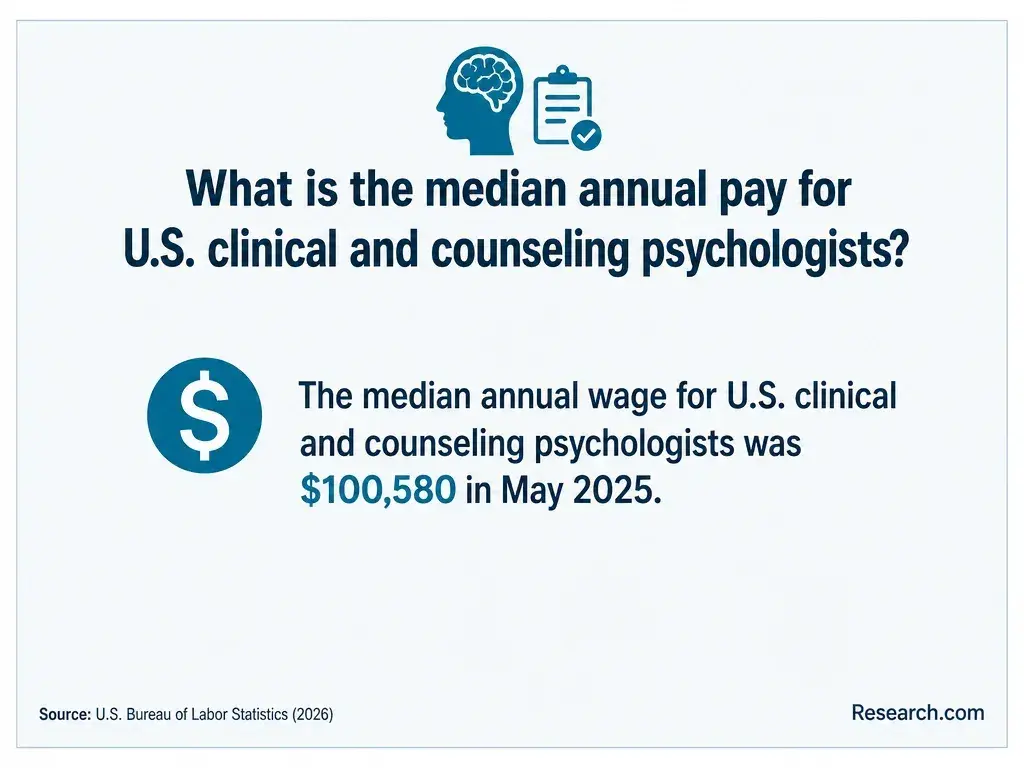
There is no single salary for holders of this degree. Pay depends on the occupation, location, employer, experience, and whether the position requires a separate license. A psychologist's occupational wage is not a reasonable earnings estimate for someone whose nonclinical MS does not qualify them to practice as a psychologist.
To estimate your own return, compare pay ranges in current postings for the specific nonclinical jobs you could meet the requirements for before and after graduation. Where available, use the U.S. Bureau of Labor Statistics occupational data for the closest matching job, while remembering that an occupation-wide median is not a graduate outcome. The discussion of earning potential after a master's in forensic psychology can help identify roles to investigate, but verify each role's credential requirements before using its pay in your calculation.
What is the job outlook for forensic psychology careers?
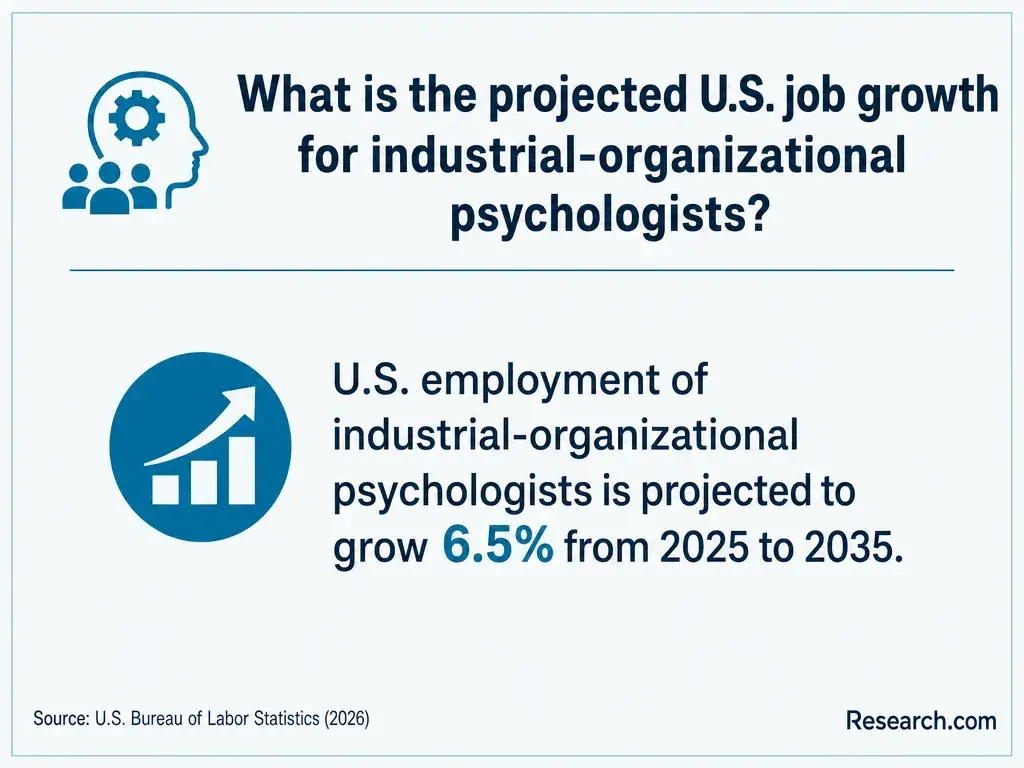
"Forensic psychology careers" do not form one employment category. Victim-services work, social-service support, research, counseling, and licensed psychology have different hiring conditions and qualifications. A broad occupational growth projection therefore cannot show how many jobs will be open to graduates of a particular online MS.
Use the Bureau of Labor Statistics outlook for the occupation that matches your target duties, then check local agency postings for degree requirements, schedules, and vacancies. Public-sector hiring may depend on budgets and formal job classifications, so a master's does not automatically produce a promotion. If your intended work is clinical counseling, compare that distinct path's mental health counseling graduate study costs versus earnings alongside its placement and licensing obligations. The better outlook is the one for a role you can realistically qualify for and perform on a workable schedule.
Other Things You Should Know About Psychology
Not necessarily. Recordings may have release dates, discussion deadlines, or attendance rules. Ask for a sample course calendar.
Only if the program approves the site, supervisor, duties, and learning objectives. Employment alone does not establish academic credit.
Contact the school's accessibility office early to discuss its accommodation process. Do not assume that an accommodation automatically removes an essential attendance requirement.
Check the program's leave, course-reentry, and financial-aid policies before enrolling. Ask when required courses are next offered and whether a pause changes your completion deadline.
- Recognition of Accrediting Agencies | Texas Higher Education Coordinating Board https://www.highered.texas.gov/recognition-of-accrediting-agencies/
- Accreditation in the U.S. | ed.gov http://www.ed.gov/laws-and-policy/higher-education-laws-and-policy/college-accreditation/accreditation-in-the-us
- Practicum Education Manual - VI. Practicum Education Placement Policies, Procedures, and Processes https://socialwork.wayne.edu/practicum/manual/policies
- Cost of Attendance | nyu.edu https://www.nyu.edu/admissions/financial-aid-and-scholarships/cost-of-attendance.html
- Skills You'll Build in a Master's Degree in Forensic Psychology | Neumann https://learn.neumann.edu/neuperspectives/skills-built-in-a-masters-degree-in-forensic-psychology
- Field Experience Requirements - SOC-OFE Masters Students | Academics at Walden University https://academicguides.waldenu.edu/fieldexperience/soc/mastersFEM/section4/requirements
- What Does Asynchronous Mean? A Simple Guide to Online Learning Formats - Professional Development at Charlotte https://professional.charlotte.edu/what-does-asynchronous-mean-a-simple-guide-to-online-learning-formats/
- FAQs for Clinical Courses: Practicum, Internship, & Field Experience - Wake Forest Department of Counseling https://counseling.wfu.edu/faqs-for-clinical-courses-practicum-internship-field-experience/
- Admission requirements for a master's in psychology | Capella University https://www.capella.edu/blog/psychology/requirements-for-masters-in-psychology/
- What Does a Forensic Psychologist Do? | National University https://www.nu.edu/blog/what-does-a-forensic-psychologist-do/