2027 Choosing an Online MS in Psychology - Forensic Psychology Around A Screen Reader Accommodation
Audited and Verified:
Our Editorial and Data Verification Process
Research.com uses government datasets, official education statistics and primary institutional information to support its career and degree guides. Our review process checks factual accuracy, occupational definitions, source dates and the requirements associated with the credentials discussed.
How This Article Was Fact-Checked
Our editorial team verifies salary estimates, employment projections, education requirements and program information against original data providers and official organizations. Salary figures are checked against the relevant occupational definitions and reporting periods. Information about licensure, accreditation and required in-person training is reviewed separately.
Fact-checked and verified on:

Co-Founder and Chief Data Scientist
An online forensic psychology master's may fit your career goals but still be difficult to complete if readings, statistics software, exams, or placement systems do not work with your screen reader.
This guide is for prospective students weighing both academic fit and accessible participation. It explains what to verify before enrolling, how to test a program's accommodation process, and where a forensic psychology MS does - and does not - lead professionally. The aim is to help you choose a program you can use effectively, not merely one advertised as online.
Key Things You Should Know
- Test access to actual course materials, required software, assessments, and any placement systems before committing; an accessible learning platform alone is not enough.
- A forensic psychology MS generally does not, by itself, qualify you for psychologist licensure, independent forensic evaluations, or psychotherapy.
- Compare the published credit total, full cost, required live or in-person hours, and written accommodation process - not just the advertised program length.
What Is an Online MS in Forensic Psychology?
An online MS in forensic psychology is graduate study of psychological science in legal and justice-related contexts. Depending on the program, it may emphasize research, behavior in legal settings, victim services, corrections, or justice-system policy. "Online" describes delivery, not a standard curriculum: live classes, campus visits, and site-based experiences vary.
It is also distinct from an undergraduate concentration. Someone considering addiction psychology undergraduate degree selection is making a different decision about foundational education, not choosing an equivalent graduate or professional credential. For this MS, start with the work you want to do, then ask whether the program teaches and lets you demonstrate the required skills.
Does an Online Forensic Psychology Master's Lead to Licensure?
Studying assessment, psychopathology, or the courts does not authorize diagnosis, psychotherapy, independent psychological testing, or use of a protected psychologist title. Psychologist licensure generally requires a qualifying doctoral pathway and additional jurisdiction-specific steps. Other licenses have different educational and supervised-practice rules.
If your goal is counseling, compare your state board's requirements with a program specifically designed for that license; clinical counseling degree formats and completion estimates address a different training route. Ask the forensic MS director for a written statement of its intended credential outcomes, then confirm any claimed eligibility with the relevant state board before applying.
How Do Screen Reader Accommodations Work in Online Programs?
A screen reader accommodation is not simply permission to use your own software. Effective access can require readable files, correctly labeled controls and headings, descriptions of meaningful images, accessible equations and data displays, workable testing arrangements, and usable third-party tools. The disability services office typically coordinates approved adjustments with instructors, while the academic program must make its required activities available in an accessible form.
The distinction between a platform and the materials inside it matters. This table identifies common access points to examine during a program review; it is not a guarantee that any particular technology will work for you.
| Required activity | Access issue worth checking |
| Reading research and legal materials | Scanned PDFs, image-only case documents, and unlabeled figures |
| Statistics or research work | Software controls, output tables, graphs, and alternative ways to complete equivalent work |
| Quizzes and proctored exams | Keyboard navigation, question formats, timing, and proctoring-tool compatibility |
| Placements or applied projects | Host-site systems, confidential records, and arrangements between the school and site |
Before paying a deposit, request a demonstration using sample materials from a required course and your screen reader. Ask disability services and the program director who fixes inaccessible vendor content, how quickly replacement formats are supplied, and what happens if a required tool cannot be used accessibly. A faster course sequence can leave less time to resolve problems; evaluate faster pathways through graduate psychology coursework against that practical constraint.
Verify that the institution holds recognized institutional accreditation and that it covers the school awarding the degree. Check the accreditor's record and the program's current catalog rather than relying on a marketing badge. Institutional accreditation supports a basic quality check; it does not certify that individual courses are screen-reader accessible or that the MS meets a licensing board's rules.
APA accreditation should not be treated as a required endorsement of a nonclinical forensic psychology MS: APA's program accreditation covers specified professional psychology training, not every psychology master's. When evaluating forensic psychology degree admissions, keep accreditation, credential eligibility, and accessible delivery as three separate checks. Ask which institution awards the degree if instruction involves a partner or online-program provider.
Coursework may combine psychological research methods and statistics with topics such as eyewitness memory, violence and risk research, victimization, corrections, and the psychology of legal decision-making. A thesis or applied capstone can be valuable if it produces evidence of research design, ethical reasoning, and clear communication. Confirm whether a thesis, placement, or particular elective is actually available online in your enrollment term.
For screen reader users, examine how the program teaches data analysis and presents visual evidence - not just whether readings can be converted to text. Ask to inspect an accessible sample assignment containing a graph, a data table, and feedback. If your intended work is substance-use treatment rather than justice-system research or support, planning a degree focused on addiction counseling involves different credential and supervised-training questions.
Programs set their own requirements. Common application materials include an accredited bachelor's degree, transcripts, a statement of purpose, and recommendations; some also specify psychology, statistics, or research-methods preparation. A non-psychology major is not automatically disqualifying. Ask admissions to distinguish required prerequisites from recommended preparation and whether any missing course can be completed before enrollment.
If you are still finishing a bachelor's, transferring college credits into a psychology degree may change your route to graduate eligibility, but the undergraduate school - not the prospective MS - decides how those credits satisfy its degree requirements. You generally do not need to disclose a disability to establish academic eligibility; contact disability services separately to investigate access and documentation procedures.
Completion time depends on credits, course sequencing, enrollment load, and any thesis, capstone, or placement. An advertised fast track may rely on continuous enrollment or overlapping courses. A longer path can be preferable if it leaves time for accessible-format preparation, research supervision, work, or caregiving.
When reviewing compressed online master's study in forensic psychology, request a term-by-term plan showing required live meetings, assignment-release dates, prerequisite sequences, and options to pause or change pace. Ask whether an unresolved access barrier can affect a course deadline and how the school handles that situation.
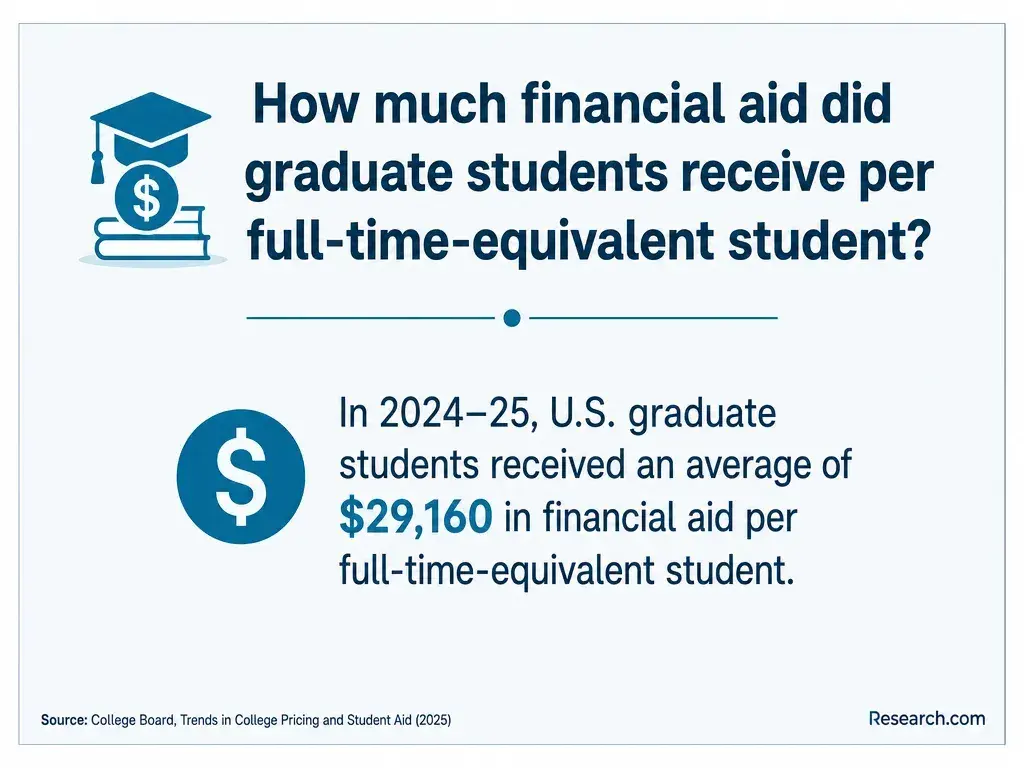
There is no reliable universal price for this degree. Build a school-specific estimate from required credits multiplied by tuition per credit, then add mandatory fees and any required travel, placement expenses, software, or continuation charges. Check whether changing to part-time enrollment changes fees or financial-aid eligibility. Do not assume an accommodation eliminates ordinary tuition or other published charges.
Cost comparisons need the same scope. The components below show why the lowest advertised tuition may not be the lowest total commitment.
| Cost component | What to obtain from the school |
| Tuition | Current per-credit rate and required credits for your entry term |
| Mandatory charges | Online, technology, graduation, and other applicable fees |
| Experiential requirements | Travel, site-related costs, and whether work is unpaid |
| Extended enrollment | Rates and fees if a thesis or capstone takes additional terms |
Compare a realistic accessible pace with comparing shorter online forensic psychology master's pathways: finishing sooner may reduce living or continuation costs, but only if the schedule is feasible. Ask the financial-aid office for an individualized estimate before borrowing.
Potential nonclinical directions include victim-services support, justice-program coordination, corrections-related program work, research support, and policy or program evaluation. Actual eligibility depends on the employer, location, experience, background checks, and duties. An MS does not confer investigative authority or make its holder a forensic evaluator or expert witness.
Match a target posting's tasks to evidence you can produce: accessible data analysis, research briefs, careful documentation, or supervised service experience. For example, a victim-services role may value referral knowledge and client communication more than a thesis, while an analyst role may require stronger methods skills. Use comparing forensic psychology master's career earnings to generate occupations to investigate, not as proof that the degree qualifies you for every listed job. If postings accept a bachelor's plus experience, test that route before paying for an MS.
What Salary and Job Outlook Can Forensic Psychology Graduates Expect?
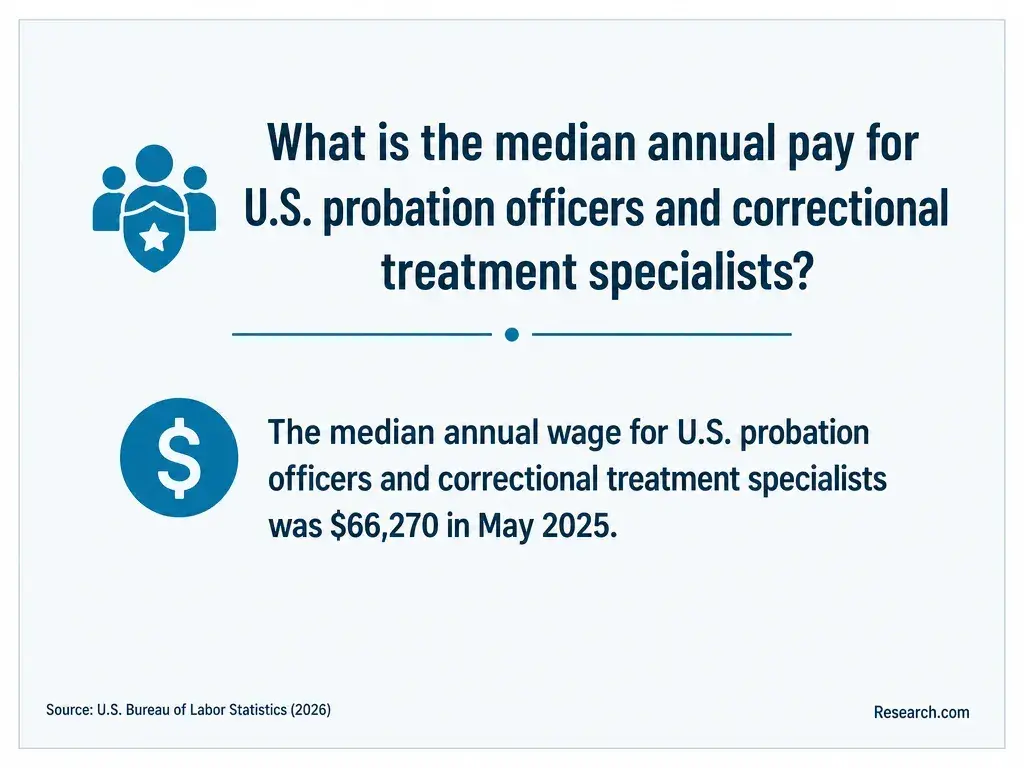
There is no single authoritative salary or job-growth figure for "forensic psychology MS graduates." US Bureau of Labor Statistics figures describe defined occupations, not everyone with a particular degree. A psychologist figure, for instance, would be a poor earnings forecast for someone seeking a nonclinical justice-program job - and psychologist positions generally have different qualification requirements.
Choose two or three realistic job titles, read local postings, then compare the corresponding Bureau of Labor Statistics occupational wage and outlook descriptions with the stated entry requirements. That approach is more useful for estimating a possible return than applying one broad salary figure to the MS. If the target job accepts undergraduate preparation, accelerated online psychology degrees may be relevant to someone who still needs a bachelor's; a person who already has one may instead benefit more from experience or targeted training.
Other Things You Should Know About Psychology
Often, but verify the specific exam platform and proctoring rules in advance. Arrange a practice test with disability services so technical restrictions can be addressed before a graded exam.
Ordinarily, a transcript records academic work rather than disability accommodations. Ask the registrar about the school's transcript policy if you need certainty.
Policies depend on the institution and the software involved. Ask disability services what technology the school supplies, what you must provide, and how access to required course tools will be arranged.
Report the barrier promptly to disability services and the instructor, with the task and deadline. Ask for an equally effective way to complete the required work rather than assuming you must skip it or accept a lower grade.
- Accreditation in the U.S. | ed.gov http://www.ed.gov/laws-and-policy/higher-education-laws-and-policy/college-accreditation/accreditation-in-the-us
- ADA Requirements: Testing Accommodations https://www.ada.gov/resources/testing-accommodations/
- Frequently Asked Questions - California Board of Psychology https://www.psychology.ca.gov/licensees/faq.shtml
- FP FAQs | John Jay College of Criminal Justice - CUNY https://www.jjay.cuny.edu/academics/graduate-programs/ma-forensic-psychology/fp-faqs
- Criminal Justice Career Pathways | College of Arts & Sciences | Information Technology Services https://artsandsciences.louisville.edu/criminal-justice/career-pathways
- Online MS in Forensic Psychology | Walden University https://www.waldenu.edu/online-masters-programs/ms-in-forensic-psychology
- Digital Accessibility Guide for Instructors - UMD https://it.umd.edu/accessibility/digital-accessibility-instructors
- Test Accommodations FAQ | Disability Resource Center https://drc.calpoly.edu/content/resources/testaccommodations