2027 Flexible Online Health Psychology Doctorate Programs: Part-Time, Hybrid, and Self-Paced Options
Audited and Verified:
Our Editorial and Data Verification Process
Research.com uses government datasets, official education statistics and primary institutional information to support its career and degree guides. Our review process checks factual accuracy, occupational definitions, source dates and the requirements associated with the credentials discussed.
How This Article Was Fact-Checked
Our editorial team verifies salary estimates, employment projections, education requirements and program information against original data providers and official organizations. Salary figures are checked against the relevant occupational definitions and reporting periods. Information about licensure, accreditation and required in-person training is reviewed separately.
Fact-checked and verified on:

Co-Founder and Chief Data Scientist
Choosing an online health psychology doctorate is difficult because flexibility can affect cost, licensure options, research access, and time to completion. The U. S. Bureau of Labor Statistics reports a May 2024 median pay of $94,310 for psychologists, with employment projected to grow 7% from 2024 to 2034, making program choice especially important for long-term ROI.
This guide is for working adults, clinicians, researchers, and career changers comparing part-time, hybrid, and self-paced doctorate options. You will learn how formats differ, what to verify before enrolling, and which program features best match your goals.
Key Things You Should Know
- Flexible health psychology doctorates are most commonly part-time, asynchronous, or hybrid; fully self-paced doctoral programs are less common because dissertations, practica, supervision, and residencies usually require scheduled milestones.
- Students seeking psychologist licensure should be especially cautious: health psychology is a specialty area, and fully online doctorates may not meet state licensure, APA accreditation, internship, or supervised practice requirements.
- Cost depends more on total credits, dissertation time, residency travel, and loan borrowing than tuition alone; federal graduate borrowing commonly includes up to $20,500 per year in Direct Unsubsidized Loans before Grad PLUS options are considered.
Which Flexible Online Health Psychology Doctorate Programs Offer Part-Time Options?
Part-time options are most common in online PhD, PsyD, Doctor of Behavioral Health, and psychology-related doctoral programs that focus on health behavior, integrated care, wellness, behavioral medicine, or population health. However, "health psychology doctorate" is not always the exact degree title. Schools may place health psychology under psychology, clinical psychology, counseling psychology, behavioral health, or health sciences.
The most flexible programs usually serve students who are already working in healthcare, counseling, wellness, research, public health, coaching, or education. If you are still building clinical foundations, an online clinical psychology masters may be a more practical step before committing to a doctorate, especially if your goal involves patient-facing mental health work.
When comparing part-time doctoral options, pay attention to the program's actual structure rather than the marketing language. A program may say "flexible" but still require synchronous seminars, fixed dissertation checkpoints, or in-person clinical training.
| Program type | Typical flexibility | Best fit | Main caution |
| Online PhD in Psychology with health psychology focus | Often part-time and research-heavy | Students interested in teaching, research, consulting, health behavior, or non-licensure applied psychology roles | May not prepare students for psychologist licensure |
| Hybrid PsyD or clinical psychology doctorate with health focus | Moderate flexibility, often with residencies and supervised training | Students seeking clinical practice pathways where the program meets state and accreditation requirements | Fieldwork, internship, and residency demands can limit schedule flexibility |
| Doctor of Behavioral Health or integrated care doctorate | Often designed for working healthcare professionals | Clinicians, administrators, and care team leaders focused on behavioral health integration | Usually not equivalent to a psychology licensure doctorate |
| Health sciences or public health doctorate with behavioral focus | Often part-time and applied | Students focused on population health, program evaluation, policy, or health promotion | May be broader than health psychology and less psychology-specific |
Part-time doctoral enrollment usually works best when the school publishes a clear sequence for reduced course loads. Ask whether part-time students receive the same dissertation support, faculty access, funding consideration, and practicum placement guidance as full-time students.
How Do Hybrid and Fully Online Health Psychology Doctorate Programs Differ?
The main difference is how much of the program happens in person. Fully online programs deliver most coursework remotely, while hybrid programs combine online classes with campus visits, clinical skills training, research intensives, residencies, or supervised field placements.
This comparison helps clarify which format is more realistic for your schedule and career goal. The best choice depends less on convenience alone and more on whether the format supports your intended outcome.
| Feature | Fully online format | Hybrid format |
| Course delivery | Most classes are completed through a learning platform, often with asynchronous discussions and scheduled virtual meetings | Online coursework is combined with in-person sessions, labs, intensives, or campus-based meetings |
| Clinical or applied training | May be limited, locally arranged, or not included for non-licensure tracks | More likely to include structured skills practice, supervision, or field expectations |
| Residency burden | Lower travel burden, though some programs still require dissertation or orientation residencies | Higher travel and time-off requirements due to required in-person sessions |
| Licensure alignment | Must be verified carefully, especially for clinical psychology pathways | May be more compatible with licensure-oriented training, but this is not automatic |
| Best for | Working adults pursuing research, teaching, consulting, health promotion, or non-licensure applied roles | Students who need more hands-on training and can travel for required experiences |
A fully online doctorate can be convenient, but it may not provide enough face-to-face clinical preparation for some professional goals. A hybrid doctorate can be less convenient, but the in-person components may strengthen supervision, cohort connection, research mentoring, and clinical readiness.
The safest approach is to start with your endpoint. If you want licensed psychologist status, verify state requirements before comparing convenience. If you want research, program evaluation, wellness consulting, healthcare administration, or teaching, a fully online or low-residency model may be sufficient if it has strong faculty mentoring and dissertation support.
Do Online Health Psychology Doctorate Programs Offer Self-Paced or Asynchronous Learning?
Many online health psychology doctorate programs offer asynchronous coursework, but true self-paced doctoral study is uncommon. Asynchronous means you can watch lectures, complete readings, and post discussions on your own weekly schedule. Self-paced means you can move through requirements as quickly or slowly as you want, which is harder to offer at the doctoral level because research supervision, cohort courses, ethics review, and dissertation milestones require faculty coordination.
Students should separate flexible coursework from flexible degree completion. These features are often advertised together, but they do not mean the same thing.
- Asynchronous classes: Useful for working adults because assignments can often be completed during evenings or weekends, although deadlines still apply.
- Synchronous sessions: Live seminars, dissertation meetings, or skills labs may be required and can affect students in different time zones.
- Competency-based pacing: Less common at the doctoral level and usually still includes fixed assessments, faculty review, and dissertation sequencing.
- Independent research time: Flexible in theory, but progress depends on advisor availability, institutional review board approval, data access, and writing discipline.
A practical way to evaluate flexibility is to request a sample term schedule. Look for the number of weekly deadlines, required live meetings, group projects, residency dates, dissertation checkpoints, and expected faculty response times. A program that is asynchronous but assignment-heavy may be less flexible than a hybrid program with fewer but more predictable in-person sessions.
Most flexible online health psychology doctorates take several years because doctoral work includes advanced seminars, research methods, comprehensive exams, dissertation or capstone work, and sometimes supervised practice. Part-time enrollment can make the degree more manageable, but it usually extends the timeline and may increase total cost if fees continue each term.
The table below summarizes realistic completion patterns. Exact timelines vary by transfer credits, enrollment intensity, dissertation progress, and whether the program includes clinical training.
| Enrollment pattern | Common timeline | What usually drives the timeline | Best fit |
| Full-time online or hybrid doctorate | About 4 to 6 years | Heavier course load, faster research sequence, earlier dissertation start | Students who can reduce work hours or have strong financial support |
| Part-time online doctorate | About 5 to 8 years | Reduced course load, slower milestone completion, dissertation pacing | Working adults balancing employment, caregiving, or clinical practice |
| Clinical or licensure-oriented hybrid doctorate | Often 5 or more years | Practicum, internship, supervised hours, residency, and state requirements | Students pursuing health service psychology careers |
| Post-master's applied doctorate | Sometimes shorter than bachelor's-entry routes | Transferable graduate credits and narrower applied focus | Experienced professionals with a related master's degree |
The dissertation is often the biggest variable. Students who enter with a clear research interest, strong writing habits, and access to a feasible participant population usually move more efficiently. Students who change topics, struggle to secure data, or lose advisor alignment may need additional terms.
Before enrolling, ask whether the school has a maximum time-to-degree policy. This matters for part-time students because a flexible pace is helpful only if the program allows enough time to finish without repeated extensions or extra fees.
Flexible doctoral programs are usually built around predictable weekly workloads rather than total freedom. The strongest programs help working adults plan ahead by publishing course rotations, residency calendars, dissertation milestones, and field placement expectations early.
Working professionals should look for accommodations that reduce uncertainty without weakening academic quality. The most useful features are those that make time management and professional continuity easier.
- Part-time course sequencing: A published reduced-load plan helps students avoid taking advanced statistics, research methods, and dissertation preparation in an unrealistic combination.
- Evening or weekend live sessions: These can be helpful if they are scheduled consistently and recorded when appropriate.
- Local practicum or applied project options: Programs that allow approved local sites may reduce relocation pressure, although approval is never automatic.
- Dissertation planning from the first year: Early topic development prevents students from reaching the dissertation stage without a feasible research plan.
- Leave or stop-out policies: Clear policies matter for students managing job changes, illness, military service, or caregiving responsibilities.
One current trend shaping flexible programs is the growth of telehealth, digital behavioral interventions, and remote patient monitoring. Health psychology students may now encounter more coursework or research involving digital adherence tools, virtual care engagement, behavioral data, and AI-assisted screening. These tools can expand research possibilities, but students should still receive training in ethics, privacy, bias, and evidence-based practice.
The key trade-off is workload compression. A program may be "work-friendly" because it avoids daytime classes, but doctoral reading, research, and writing still require sustained weekly time. Students working full time should ask current students how many hours they actually spend per week during statistics, proposal writing, and dissertation phases.
Attendance requirements vary widely. Some programs require weekly online engagement only, while others require live seminars, periodic campus residencies, clinical skills sessions, dissertation intensives, or in-person internships. Residency is especially important to verify because it can add travel costs and require time away from work.
Before applying, review the program handbook rather than relying only on admissions pages. The handbook is more likely to describe attendance rules, residency expectations, academic progress standards, and consequences for missed sessions.
- Online attendance: Programs may require weekly discussion posts, quizzes, group work, live sessions, or documented participation in learning activities.
- Campus residency: Some doctorates require short in-person visits for orientation, research training, clinical skills, comprehensive exams, or dissertation development.
- Clinical or field attendance: Licensure-oriented pathways may require practicum, internship, and supervised hours that follow site schedules rather than student preferences.
- Dissertation attendance: Even online students may need scheduled meetings with chairs, committee members, research teams, or writing groups.
The main red flag is a program that describes itself as fully online but does not clearly explain whether in-person residencies, supervised placements, or synchronous meetings are required. If the school cannot provide a written residency calendar before enrollment, treat the program as less predictable than advertised.
For licensure-minded students, attendance is not just a convenience issue. State boards may review whether training included appropriate supervision, practicum quality, internship structure, and accredited doctoral preparation. Requirements vary by state, so students should check the licensing board where they plan to practice before committing to an online or hybrid format.
Flexible online doctorate costs include more than tuition. Students should calculate credits, fees, residency travel, books, technology, dissertation continuation fees, clinical placement expenses, and borrowing costs. A part-time plan can make each term more affordable, but it may increase the number of terms in which fees are charged.
Federal loan limits also affect affordability. Graduate students commonly may borrow up to $20,500 per year through Direct Unsubsidized Loans, while additional borrowing may come through Grad PLUS loans; for loans first disbursed during the 2024-25 federal cycle, the Grad PLUS loan fee is 4.228%. This matters because doctoral students who rely heavily on loans may pay substantially more than the listed tuition after interest and fees.
Use the following cost categories to build a realistic budget before comparing programs. The lowest tuition rate is not always the lowest total cost.
- Per-credit tuition multiplied by the total number of required credits
- University fees, technology fees, graduation fees, and dissertation continuation fees
- Residency travel, lodging, meals, parking, and time away from work
- Books, statistical software, assessment materials, transcription, or research participant costs
- Practicum, internship, background check, liability insurance, or site onboarding expenses when applicable
- Loan origination fees and interest, especially if borrowing extends over several years
The table below shows how major cost drivers can affect flexible doctoral students. It is most useful as a checklist when speaking with financial aid and program advisors.
| Cost factor | Why it matters | Question to ask |
| Total credits | A lower per-credit rate may still be expensive if the program requires many credits | How many credits are required after transfer review? |
| Time to dissertation | Extra dissertation terms can add tuition or continuation fees | What is the median dissertation completion pattern for part-time students? |
| Residency | Short campus visits can create travel and missed-work costs | How many in-person visits are required from start to finish? |
| Clinical placement | Placement expectations may require commuting, schedule changes, or unpaid hours | Does the school help secure approved sites? |
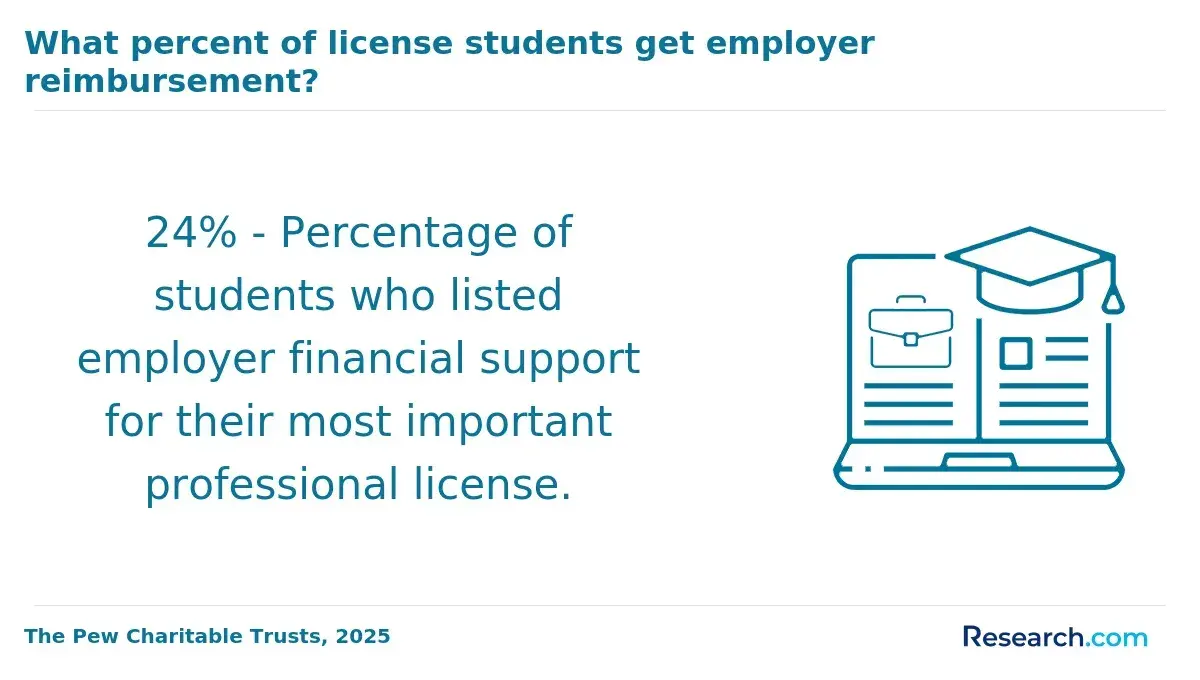
| Employer support | Tuition reimbursement can reduce out-of-pocket cost but may require continued employment | Will the program's pacing satisfy employer reimbursement rules? |
Avoid choosing a program based only on monthly payment size. Instead, calculate total program cost under your expected pace, then compare that number with your target career path, current income, employer support, and willingness to take on long-term debt.
Flexible online health psychology doctorates are best for students who need doctoral-level training but cannot relocate or pause their careers. They are especially useful for professionals who already work in healthcare, psychology-adjacent services, wellness, public health, research, coaching, education, or administration and want to deepen expertise in behavior change, chronic illness, prevention, adherence, stress, or integrated care.
These programs are not ideal for everyone. Students who want intensive lab work, fully funded doctoral training, traditional campus mentorship, or a straightforward clinical licensure pathway may find that a residential or APA-accredited health service psychology program fits better.
- Strong fit: Working professionals with a related master's degree who want research, teaching, leadership, consulting, or applied behavioral health expertise.
- Possible fit with caution: Students seeking clinical practice who have confirmed that the program meets state licensure, practicum, internship, and accreditation expectations.
- Weak fit: Students who need maximum financial aid, extensive in-person supervision, or a program that guarantees local clinical placement.
- Alternative fit: Students interested in specialized populations or legal settings may be better served by targeted options such as forensic psychology master's programs before deciding whether a doctorate is necessary.
The most successful students tend to be self-directed but not isolated. They can manage deadlines independently while still seeking faculty feedback, peer support, and research guidance. If you know you need frequent in-person accountability, a low-residency or campus-based program may be a better match than a mostly asynchronous doctorate.
Program flexibility can affect career outcomes indirectly. Employers and licensing boards usually care more about accreditation, supervised experience, research quality, specialization, and demonstrated skills than whether every lecture happened online. However, a flexible program with weak mentoring, limited placement support, or unclear licensure alignment can narrow options.
Health psychology doctorate graduates may pursue roles in academic teaching, behavioral medicine research, healthcare consulting, integrated care leadership, wellness program design, patient adherence research, public health evaluation, or clinical practice if they complete a licensure-eligible pathway. The BLS 2024 median wage for psychologists provides a useful benchmark, but it should not be treated as a promise because pay varies by role, state, employer, license status, and experience.
Students comparing psychology specialties should also understand that adjacent fields can have very different labor markets. For example, those evaluating legal or correctional settings may want to research how much do forensic psychologists make before assuming that all psychology doctorates lead to similar compensation.
To protect career outcomes, evaluate whether the program helps you build evidence of competence. Important signals include publishable research, applied projects with measurable outcomes, supervised experience, statistical training, grant or program evaluation exposure, and faculty expertise aligned with your goals.
- For academic or research careers: Prioritize faculty match, research methods depth, publication opportunities, conference support, and dissertation quality.
- For healthcare leadership: Look for integrated care, implementation science, program evaluation, interprofessional collaboration, and health systems coursework.
- For clinical practice: Verify accreditation, practicum, internship, supervision, and state licensing requirements before enrollment.
- For consulting or wellness roles: Build a portfolio showing behavior change design, outcome measurement, ethics, and experience with real organizations.
The biggest mistake is assuming that a doctorate title alone determines employability. Career outcomes are strongest when the program format, accreditation status, field experience, dissertation topic, and professional network all point toward the same goal.
How Should Students Choose the Most Flexible Online Health Psychology Doctorate Program?
The best flexible program is the one that fits your career goal, state requirements, budget, schedule, and preferred learning style. Start with the outcome you want, then work backward to the program features that make that outcome realistic.
Use a structured process rather than relying on rankings, ads, or a single tuition number. The steps below can help you compare programs more safely.
- Define your goal: licensure, research, teaching, healthcare leadership, consulting, or career advancement in your current field.
- Check accreditation and state rules, especially if you plan to use the doctorate for psychologist licensure or supervised clinical practice.
- Request the part-time course map, residency calendar, dissertation sequence, and maximum time-to-degree policy in writing.
- Compare total cost, including fees, travel, dissertation terms, and likely borrowing rather than tuition alone.
- Review faculty expertise to confirm that at least two potential mentors work in your area of interest.
- Ask about dissertation completion support, research tools, student outcomes, and placement assistance.
- Speak with current students or alumni about workload, responsiveness, and whether the advertised flexibility matches reality.
If your interest is narrower than health psychology, compare adjacent pathways before committing to a doctorate. For example, students focused on youth mental health, family systems, or developmental issues may find that child psychology master's programs provide a more targeted and lower-cost route before doctoral study.
The table below highlights common red flags and better alternatives. Use it as a final screen before submitting an application deposit.
| Red flag | Why it matters | Better alternative |
| The program says "licensure eligible" but does not name state-specific requirements | Licensure rules vary and may include accreditation, internship, and supervised hours | Contact the state board and request written confirmation from the school |
| No clear residency calendar | Unexpected travel can disrupt work and increase cost | Ask for all required in-person dates before enrolling |
| Vague dissertation support | Dissertation delays can add years and expenses | Ask about chair assignment, milestone timelines, and completion support |
| Only tuition is disclosed | Fees, travel, software, and continuation costs can change affordability | Build a total cost estimate for your expected pace |
| No faculty match in health psychology | A doctorate depends heavily on mentoring and research alignment | Apply only where faculty expertise matches your topic |
A flexible online health psychology doctorate can be worth it when it connects directly to a realistic career goal and offers credible academic support. It is a poor investment when flexibility is used to overlook accreditation, licensure limits, weak mentoring, or a budget that depends on best-case assumptions.
Other Things You Should Know About Health Psychology
No. Health psychology focuses on how behavior, stress, emotions, social factors, and lifestyle affect physical health and illness. Clinical psychology is broader and often focuses on assessment, diagnosis, and treatment of mental health conditions. Some clinical psychologists specialize in health psychology, but the terms are not interchangeable.
In most states, psychologists do not prescribe medication. A few jurisdictions allow specially trained prescribing psychologists to prescribe under specific rules, but this is not the standard path. Students interested in medication management should compare psychology with psychiatry, psychiatric nursing, or other medical routes.
Important skills include research design, statistics, motivational interviewing, behavior change theory, cultural competence, ethics, communication, program evaluation, and understanding chronic illness. For applied roles, the ability to collaborate with physicians, nurses, social workers, and public health teams is also valuable.
Not always. A doctorate is usually needed for psychologist licensure, university faculty roles, and advanced research leadership. However, master's-level professionals may work in wellness, health education, case management, research coordination, behavioral coaching, or program support depending on employer requirements and state rules.
- Best Online Health Psychology Degree Programs https://www.psychology.org/online-degrees/health-psychology/
- Understanding the Differences Between Graduate Degrees in Clinical Psychology – IECA https://www.iecaonline.com/journal-article/understanding-the-differences-between-graduate-degrees-in-clinical-psychology/
- Online and Hybrid PhD & PsyD Programs in Psychology https://www.psychologist-license.com/phd/
- 13 Best Online Doctorate in Psychology Programs for 2026 - Online Psychology Programs https://onlinepsychologyprograms.org/doctoral/
- 2025 Most Affordable Online Colleges for a PhD in Psychology https://www.onlineu.com/most-affordable-colleges/psychology-doctoral-degrees
- 25 Psychology Ph.D. Programs Online | GradSchoolHub.com https://www.gradschoolhub.com/best/doctoral-programs-in-psychology/
- Hybrid PsyD Program: Accelerated, Comprehensive, and Blended Psychology Doctorate https://www.scuhs.edu/psyd-article/hybrid-psyd-program-accelerated-comprehensive-and-blended-psychology-doctorate/
- Doctor of Psychology (PsyD) Online Degree Program https://www.calsouthern.edu/online-degree-programs/behavioral-sciences/doctor-psychology-psyd/