2027 Online BA in Psychology - General Psychology After ACE-Reviewed Workplace Training: Compare Transfer Credit and Remaining Coursework
Audited and Verified:
Our Editorial and Data Verification Process
Research.com uses government datasets, official education statistics and primary institutional information to support its career and degree guides. Our review process checks factual accuracy, occupational definitions, source dates and the requirements associated with the credentials discussed.
How This Article Was Fact-Checked
Our editorial team verifies salary estimates, employment projections, education requirements and program information against original data providers and official organizations. Salary figures are checked against the relevant occupational definitions and reporting periods. Information about licensure, accreditation and required in-person training is reviewed separately.
Fact-checked and verified on:

Co-Founder and Chief Data Scientist
Workplace training may earn a college credit recommendation without replacing the psychology courses you need to graduate. If you are returning to school with employer, military, or other ACE-reviewed learning, the useful comparison is not how many credits a college accepts, it is how many degree requirements those credits satisfy.
This guide explains how to read an ACE recommendation, compare online BA evaluations, identify remaining psychology coursework, and estimate your time and cost before committing to a program.
Key Things You Should Know
- ACE recommends credit; the receiving college decides whether to award it and where it applies in the BA.
- Compare written degree audits, not advertised transfer maximums: accepted electives may leave statistics, research methods, upper-level psychology, and residency requirements untouched.
- A typical bachelor's degree requires about 120 semester credits, but your remaining credits, tuition, and timeline depend on the specific college's evaluation and graduation rules.
What Is an Online BA in General Psychology After ACE-Reviewed Training?
It is a psychology bachelor's degree completed partly online after a college evaluates learning from a workplace course, apprenticeship, professional training program, or other experience reviewed by the American Council on Education (ACE). ACE review produces a credit recommendation, not college credit automatically. "General psychology" usually indicates a broad major rather than a clinical qualification or a named specialty.
This route can suit a returning student whose training demonstrates learning in subjects such as management, communication, or information systems. Those credits might fill electives or general education requirements while the student completes the psychology major. Compare the actual degree and delivery requirements, not simply a school's online label - when reviewing distance learning psychology degree options.
How Does ACE-Recommended Workplace Training Transfer Into a Psychology Degree?
First, confirm that the specific training you completed has an ACE recommendation covering your completion dates. Obtain the designated official record and keep the course description, learning outcomes, and assessment documentation. The registrar or transfer-credit office determines whether the college awards credit; the psychology department or academic advisor may need to approve a major equivalency.
The distinction is between credit accepted and credit applied. A recommendation for lower-division business or human-services learning could become a free elective even when the experience feels psychology-related. A course on workplace behavior, for example, should not be assumed equivalent to an upper-level research-methods course. If addiction-service training is part of your record, also check whether the BA or a separate state-recognized credential serves your goal; reducing undergraduate substance abuse counseling tuition through aid is a different question from whether that training fulfills a major requirement.
Ask each school for an itemized evaluation showing the ACE-recommended subject and level, the school's awarded credit, the requirement satisfied, and any credits excluded by duplication or transfer limits. If a relevant course lands only as an elective, request the documented substitution or appeal process before enrolling.
How Much Coursework Remains After Transferring ACE-Reviewed Training?
Subtracting accepted credits from a degree's total gives only a rough estimate. The reliable answer comes from a degree audit that accounts for general education, the psychology major, electives, minimum upper-level work, and credits that must be earned at the graduating institution.
This illustrative comparison shows why two identical transfer totals can produce different schedules. It is not an estimate for any named college or student.
| Illustrative audit | Credits accepted | What still matters |
| Student A | 60 toward a 120-credit degree | Many credits satisfy general education and electives; major courses remain. |
| Student B | 60 toward a 120-credit degree | Some prior psychology and statistics courses satisfy major requirements; required courses may be easier to sequence. |
Both students appear to need 60 more credits, but Student A may face longer prerequisite sequences or less scheduling flexibility. An approved psychology course equivalency can therefore be more useful than several unrestricted electives. Check whether courses such as statistics must precede research methods and whether each required course is offered during your intended terms. Online psychology programs with faster pacing help only if their course schedule lets you take the requirements your audit actually leaves open.
Southern New Hampshire University and Thomas Edison State University are starting points to investigate for an online BA in Psychology and evaluation of nontraditional or ACE-recommended learning. Neither institution's general transfer policy establishes that your training will satisfy its psychology major. Confirm the current degree title, online availability, ACE-record submission rules, transfer limits, and written evaluation for your entry term directly with each school.
Compare institutions using the same records and the same questions. The useful result is a side-by-side view of credits that count toward graduation, outstanding named courses, residency obligations, and the terms in which those courses are available. If your intended degree is specifically forensic rather than general psychology, compare fast-paced BA and BS forensic psychology pathways separately: a specialty curriculum can change which of your existing credits apply.
Look for institutional accreditation recognized by the U.S. Department of Education or the Council for Higher Education Accreditation, and verify the institution's status with the accreditor. This matters for the degree's recognition and often for federal financial-aid eligibility. Also check the school's current authorization to enroll students in your state.
Do not require APA accreditation of a general psychology BA: APA accreditation applies to specified professional psychology training programs, not ordinary undergraduate psychology majors. If you are considering an addiction-focused alternative, choosing an accredited addiction psychology bachelor's still requires separate checks of institutional accreditation, curriculum, and any state credential requirements. Accreditation alone does not establish transfer equivalency or permission to provide treatment.
Requirements vary, but a general psychology BA commonly combines introductory psychology, statistics, research methods, upper-level study of areas such as development, social behavior, cognition, and biological or abnormal psychology, plus writing, general education, and electives. A senior seminar or capstone may also be required. Read the catalog for the specific program and entry term rather than assuming another school's psychology course will substitute.
For a transfer student, statistics and research methods deserve particular attention: an ACE recommendation for data or employee-training work may demonstrate useful experience without matching the department's methods requirements. If graduate study is possible, preserve access to substantial methods coursework and faculty-guided research rather than maximizing elective transfer at the expense of preparation. A BA course about counseling does not replace later professional training or mental health counseling program charges beyond tuition if that becomes your career goal.
For an online bachelor's program, expect an institutional application and documentation of prior education, typically including official transcripts from colleges attended. Schools may have separate rules for transfer admission, admission to a major, minimum grades for transferred courses, and submission of ACE learning records. Admission does not mean the psychology department has approved every proposed course equivalency.
Submit your ACE record and prior college transcripts early enough to receive an evaluation before choosing courses. If graduate study is a longer-term aim, keep its admission requirements separate from BA admission: intensive forensic psychology master's admissions and study plans, for example, may place different weight on undergraduate statistics, research preparation, and prior academic performance. Do not take unnecessary BA courses based on an assumed graduate prerequisite; check programs you might actually apply to.
Time depends on the approved audit, course prerequisites and availability, and how many credits you can complete each term. Cost depends on tuition charged for the remaining courses, mandatory fees, books or software, and any requirements that affect your work schedule. An advertised per-credit price or large transfer allowance does not establish the final bill.
For each school, request a term-by-term course plan and calculate its price using the school's current charges. Ask whether ACE credits carry evaluation fees, whether your intended enrollment level supports the aid you expect, and whether employer assistance has reimbursement conditions. If the BA is preparation for graduate study, keep that later expense separate; planning the cost of a psychology master's can change whether the shortest BA route is also the most sensible overall route.
A general psychology BA can support applications for nonclinical roles such as research support, human-services coordination, community outreach, or organizational training. Your prior workplace experience may be especially valuable when the role calls for documentation, communication, data handling, or supervision. Employers determine whether a particular vacancy requires additional experience, certification, or another degree.
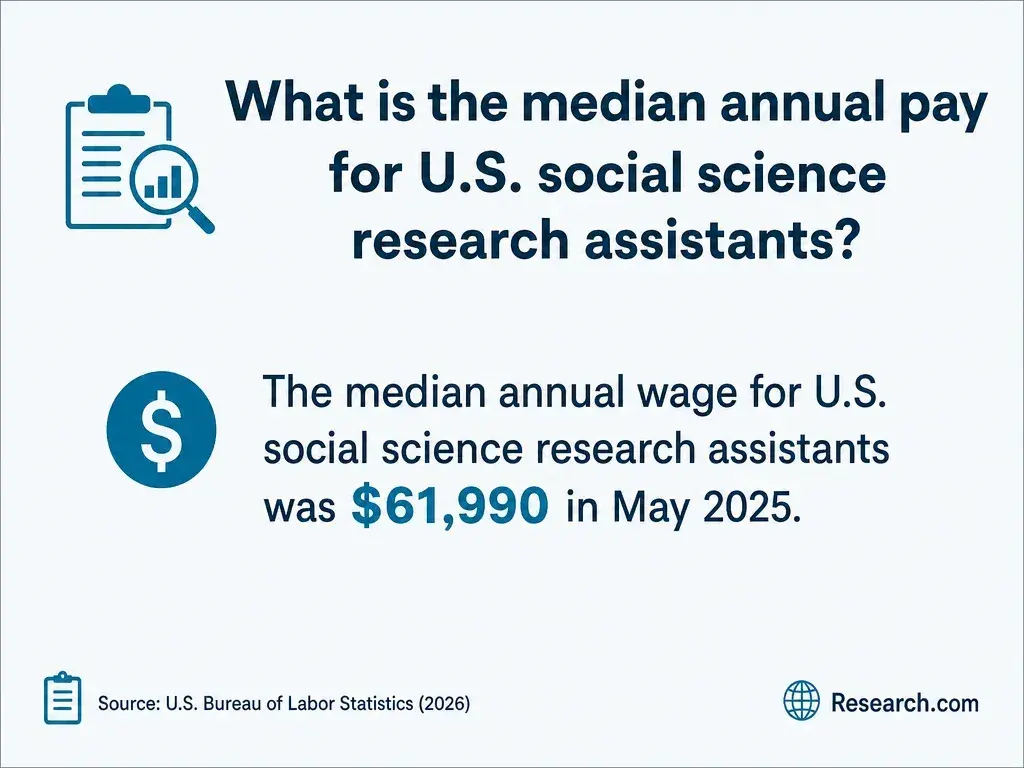
For pay comparisons, use the U.S. Bureau of Labor Statistics occupation that matches the job duties and entry requirements you are considering, then compare local postings. An occupation-wide median is not a salary forecast for psychology BA graduates or for someone changing fields. If advancement in your existing nonclinical role requires only a targeted skill, employer training or a specific course may have a better return than another degree; evaluating shorter graduate psychology degree options makes sense only after you establish that the target role values a master's.
Does a Psychology Bachelor's Degree Qualify You for Licensure?
No. A general psychology BA alone does not qualify someone to practice as a licensed psychologist, diagnose mental health conditions, or provide independent psychotherapy. Requirements for psychologists and other regulated mental-health roles depend on the profession and state and generally involve further qualifying education, supervised experience, and examination.
If your goal is therapy rather than a nonclinical psychology-related job, compare the applicable professional pathways before choosing a BA primarily for its transfer policy. A counseling master's, for example, has educational and supervised-training requirements distinct from a general psychology degree; planning the time and cost of a counseling master's helps put the BA in the context of the full pathway. Check the licensing board in the state where you intend to practice before relying on any degree plan.
Other Things You Should Know About Psychology
Possibly. What matters is whether you completed the reviewed training within the recommendation's applicable dates and can provide the official record the college requires.
Not necessarily. A college may record an equivalent course, subject-area credit, or elective credit. Ask for its transcript notation policy if you need a particular course shown for a later application.
Sometimes, but obtain advance approval through the graduating school's concurrent-enrollment or transfer process. Otherwise, a course you pay for may not meet the intended requirement.
Ask whether the policy covers your chosen institution, online courses, fees, and courses paid for before an ACE evaluation. Check grade, employment, and repayment conditions before relying on the benefit.
- CBP Training Courses and ACE CREDIT® https://www.cbp.gov/employee-resources/benefits/tap/cbp-training-courses-ace-credit
- Transfer Credit - College of LSA - University of Michigan https://lsa.umich.edu/lsa/academics/lsa-academic-policies-and-procedures/transfer-information---residence-policy.html
- How Long Does It Take to Finish an Online Degree? | NMSU Global Campus https://global.nmsu.edu/blog/general/how-long-does-it-take-to-finish-an-online-degree/
- FAQs | FIU Transfer & Transition Services https://transfer.fiu.edu/resources/
- Transcripts | acenet.edu https://www.acenet.edu/Programs-Services/Pages/Credit-Transcripts/Request-Transcripts.aspx
- Transfer Credit Policy | SUNY Empire https://sunyempire.edu/policies/transfer-credit-policy.html
- General Psychology | Online Bachelor's Degree | Capella University https://www.capella.edu/online-psychology-degrees/bs-psychology-program/bachelors-general-psychology/
- Online Psychology B.A. or B.S. Degree Completion Program | gsu.edu https://online.gsu.edu/program/psychology-ba-or-bs-completion-program/
- Online Bachelor's in Psychology | University of Kansas https://online.ku.edu/undergraduate-programs/online-bachelors-psychology
- Transfer Glossary - NCCCS https://www.nccommunitycolleges.edu/transfer-glossary/