2027 Online BA in Psychology - General Psychology After an AAS in Community Health: Compare Transfer Credit and Remaining Coursework
Audited and Verified:
Our Editorial and Data Verification Process
Research.com uses government datasets, official education statistics and primary institutional information to support its career and degree guides. Our review process checks factual accuracy, occupational definitions, source dates and the requirements associated with the credentials discussed.
How This Article Was Fact-Checked
Our editorial team verifies salary estimates, employment projections, education requirements and program information against original data providers and official organizations. Salary figures are checked against the relevant occupational definitions and reporting periods. Information about licensure, accreditation and required in-person training is reviewed separately.
Fact-checked and verified on:

Co-Founder and Chief Data Scientist
An AAS in Community Health can give you a head start on an online BA in General Psychology, but the number of credits a college accepts is not the number that necessarily moves you toward graduation. Applied health courses may become electives while psychology, statistics, and research requirements remain.
This guide helps community health graduates compare transfer evaluations, identify likely coursework gaps, and estimate the time and cost of finishing. The goal is to choose a program based on a written path to graduation, not an advertised transfer maximum.
Key Things You Should Know
- Ask for a degree audit that separates accepted AAS credits from credits satisfying general education, psychology major, and elective requirements.
- For an illustrative 120-credit BA, 60 accepted credits do not necessarily mean 60 credits remain. Unmet requirements and residency rules can change the total.
- Compare the remaining required courses, their availability, and the full cost to graduation. A general psychology BA does not itself qualify you to provide therapy or practice as a psychologist.
How much transfer credit can an AAS in Community Health apply toward an online BA in Psychology?
There is no universal AAS-to-BA credit allowance. The receiving college decides which courses it accepts and where each accepted course fits. An Associate of Applied Science is often designed for employment, so community health courses that transferred successfully may still count only as free electives rather than replacing psychology major or general education requirements.
A useful evaluation separates four outcomes: credit rejected, credit accepted as an elective, credit applied to a specific requirement, and credit accepted but unusable because an elective category is full. Also check the maximum transferable credits, minimum credits that must be completed at the university, and any minimum number of upper-division psychology credits completed there.
Consider an illustrative 120-credit BA and a student with 60 AAS credits. If all 60 transfer, the student appears halfway through by credit count. If several remaining requirements have prerequisites or cannot be met with those credits, the actual course plan may extend beyond the apparent 60-credit balance.
This is why even a program marketed for quick completion, including intensive online forensic psychology bachelor's study, must be judged against your own approved audit, not its advertised pace.
Send official transcripts and, for courses without clear equivalencies, syllabi showing topics, assignments, and credit hours. Ask the transfer-credit office about acceptance and the psychology department or authorized advisor about major substitutions; obtain both decisions in writing before enrolling.
What coursework remains after transferring from an AAS in Community Health?
The remaining work usually combines unfinished general education, psychology major courses, upper-division electives, and any university residency or capstone requirement. Community health coursework can provide useful preparation in outreach, health education, and service systems without automatically replacing courses in psychological science.
The comparison below shows why a course's subject matter matters less than its approved place in the degree audit. These are possibilities, not promised equivalencies.
| AAS coursework | Possible BA application | Common issue to check |
| English composition | General education writing | Does the BA require additional writing? |
| Human anatomy or public health | Science or elective credit | Does it meet the specified laboratory or science category? |
| Community health practicum | Elective or approved experiential credit | Is a psychology internship or capstone separately required? |
| Statistics | Quantitative general education or psychology methods prerequisite | Does the department approve its content and level? |
| Health behavior or counseling-related course | Elective or possible psychology substitution | Is there an approved equivalency, rather than topical overlap alone? |
If your goal specifically involves substance-use prevention or recovery support, compare the remaining general psychology curriculum with distance learning bachelor's degrees in addiction psychology. Check whether the alternative offers relevant courses and accepts your AAS requirements efficiently; a concentration label does not establish eligibility for a state credential.
Is an online BA in General Psychology worth pursuing after a community health degree?
It can be worthwhile if a bachelor's degree is required for the jobs or graduate programs you want and the approved transfer plan leaves a manageable path to completion. Your community health background may make psychology's developmental, social, and research coursework more useful in outreach, program support, or evaluation work. The BA adds broad academic preparation; it does not replace job experience or confer a clinical credential.
Start with a target rather than the degree title. For advancement within a community organization, ask whether the employer requires any bachelor's degree, prefers psychology, or values public health, social work, or another field more.
If the goal is substance-use counseling, compare state credential rules and undergraduate substance use counseling study on a budget before paying for general psychology courses that may not meet those rules.
A shorter option may be better when the immediate gap is a specific skill, such as program evaluation, data analysis, or case-management documentation, and neither your employer nor your intended next program requires a BA. Conversely, if a bachelor's degree is a firm entry requirement, compare the total remaining cost of several majors rather than assuming the most familiar subject is the fastest route.
Delivery mode does not determine how AAS credits apply. An online and a campus-based BA at the same university may share degree requirements, but colleges can differ in course schedules, available electives, research access, and internship arrangements. Compare the specific program and entry term, not just the words "online" and "on campus."
Online study may reduce commuting while introducing live meetings, timed exams, group work, or locally arranged placements. Campus study may make it easier to meet faculty or join research teams, but commuting and fixed class times can limit progress for employed students. In either format, ask when required statistics, methods, and upper-division courses are offered; an infrequently offered prerequisite can delay completion more than the delivery format does.
Also distinguish format from specialization. When comparing a general online BA with forensic psychology curricula and career fit, check required courses and transfer application separately. A specialized curriculum may be appealing yet leave fewer elective slots for your community health credits.
Requirements vary by institution, but a general psychology BA commonly builds from introductory psychology into statistics, research methods, and upper-division study of behavior and development. Programs may also require courses in biological, cognitive, social, or abnormal psychology, plus a senior seminar or capstone. The catalog and an approved audit determine what you must take.
Pay particular attention to sequencing. Statistics may precede research methods, and methods may precede a capstone. A community health statistics course can be valuable preparation even if the psychology department does not approve it as the major's methods prerequisite. Ask whether a syllabus review, placement decision, or formal substitution is possible before repeating work.
If graduate study is a possibility, choose electives for the intended program's prerequisites and evidence of research readiness, not merely for a fast finish. Even faster routes through forensic psychology graduate coursework represent a separate, post-bachelor's decision; completing a BA quickly should not come at the expense of required methods or writing preparation.
Admission to the university, admission to the psychology major, and approval of transfer courses can be separate decisions. Schools may request an application, official transcripts from every college attended, and evidence that published transfer standards are met. Some majors impose additional prerequisites or progression rules; others admit students to the major with the university application.
Apply early enough to obtain an evaluation before committing to a schedule. Provide the AAS transcript, descriptions or syllabi for community health and statistics courses, and documentation of any relevant learning the institution says it will review. Ask when the evaluation becomes final, who approves psychology substitutions, and whether a later catalog change could affect the plan.
Do not confuse transfer admission with entry to a future master's program. A student considering graduate specialization should first verify that the planned BA meets that program's bachelor's-degree and prerequisite rules; information about accelerated forensic psychology master's costs and outcomes is not evidence that an AAS alone meets graduate admission requirements.
Time depends on required courses remaining, their sequence and availability, and how many you can take each term, not just on accepted credits. For planning, divide your approved remaining credits by a sustainable term load, then adjust for prerequisites, courses offered only in certain terms, and any placement or capstone schedule. Treat that result as an estimate rather than a graduation date.
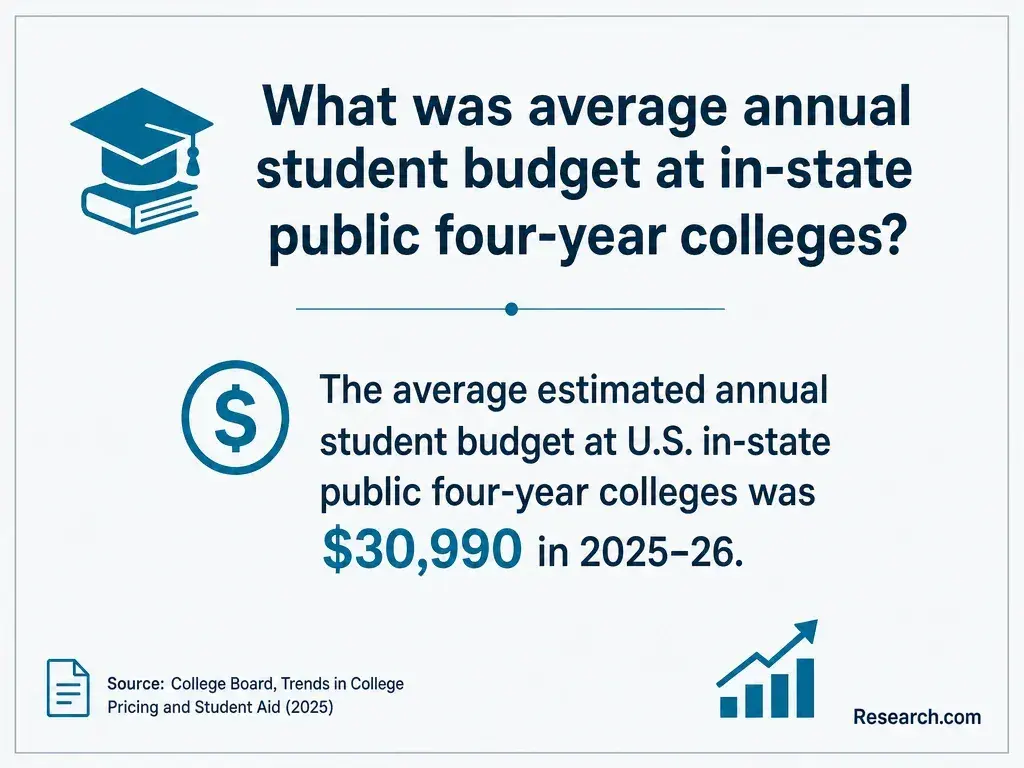
To compare costs, request a written estimate using the same assumptions at each school: remaining credits, tuition per credit or term, required fees, books or software, and any travel or unpaid experiential work. Ask how a different transfer decision would change the bill. Also confirm financial-aid eligibility and satisfactory academic progress with the aid office; accepted transfer work and enrollment intensity can affect an individual aid review.
If graduate education is part of your plan, keep it in a separate budget. Planning the cost of a psychology master's can help frame that later expense, but it should not obscure the first decision: which BA offers the lowest credible cost and workable time to graduation.
With an AAS in Community Health and a psychology BA, plausible targets include community health or outreach positions, human-services and case-coordination support, program assistant roles, and entry-level research or evaluation support. The BA may strengthen applications requiring a bachelor's degree, while your existing service experience can demonstrate skills that coursework alone cannot.
Match job postings to actual duties. Outreach work may emphasize trust, referral networks, and documentation; evaluation support may require spreadsheets, survey methods, and careful handling of participant information.
For substance-use settings, careers in addiction treatment and support settings differ substantially in supervision and credential requirements. A psychology BA does not authorize diagnosis, psychotherapy, or independent psychological assessment.
Before choosing electives, collect local postings for two or three target roles and compare their stated degree, experience, and credential requirements. That exercise can show whether you need the BA, a targeted technical skill, supervised experience, or a different professional pathway.
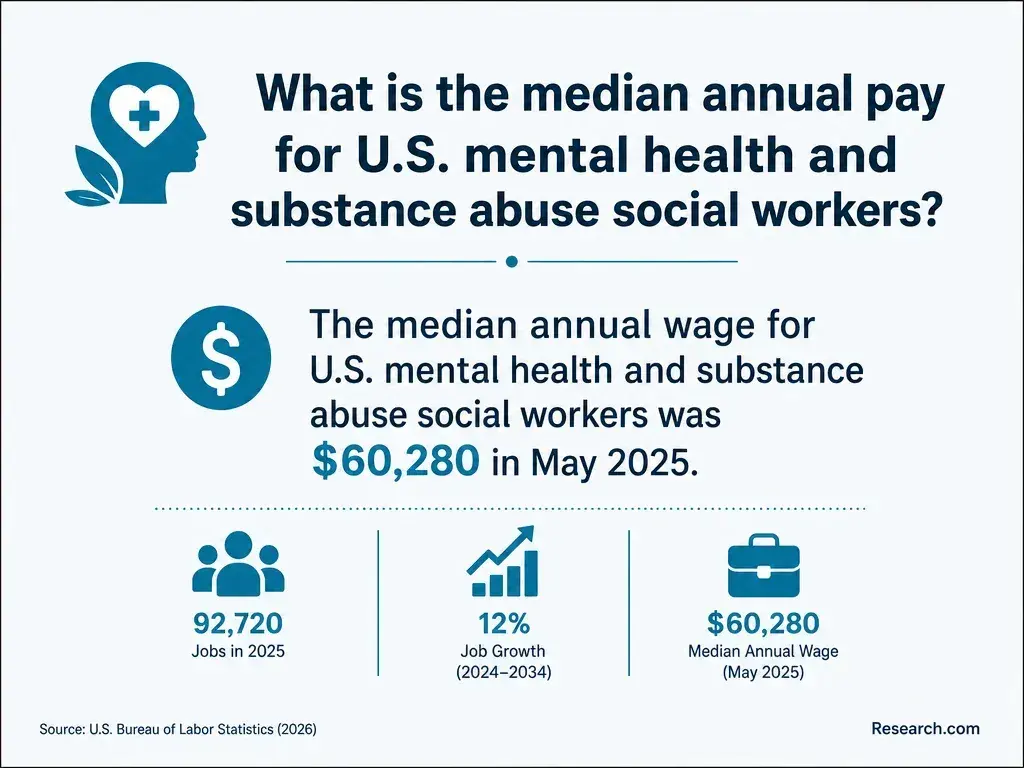
There is no single reliable salary or growth rate for "psychology BA graduates." Pay and outlook attach to occupations, not majors, and community health worker, human-services, and research-support jobs have different duties and entry standards. A national occupational median also is not a starting-pay offer in your area.
For a useful comparison, look up the latest U.S. Bureau of Labor Statistics Occupational Outlook Handbook entry for each specific target occupation. Check its wage reference year, projection period, typical education, and job description.
Then compare local postings with your AAS experience and proposed BA. Use those figures to test whether a bachelor's requirement opens roles you cannot currently pursue, rather than assuming the degree produces a fixed raise.
Include further education only when the target job calls for it. If you are weighing a later graduate degree, planning the cost of a psychology master's is a different financial calculation from estimating earnings with a BA.
Neither a higher degree title nor an occupational median establishes your personal return. Students should also compare budget planning for mental health counseling study and compute the return on investment.
How can you verify accreditation and psychology licensure requirements?
Confirm the university's institutional accreditation through the accreditor's directory and the U.S. Department of Education's recognized-accreditor information. Check the exact campus or online program and its current status, then ask the university which academic policies apply to your entry term.
Do not expect APA accreditation for a general psychology BA: APA accreditation covers specified professional psychology programs and training, not general undergraduate majors.
If your goal is a regulated occupation, identify the state board and credential before selecting a degree. A licensed psychologist, counselor, social worker, or addiction counselor may need a particular qualifying program, supervised experience, examinations, and other state-specific steps.
For example, choosing a shorter clinical mental health counseling master's requires checking the relevant state's educational and placement rules; neither its duration nor a preceding psychology BA proves licensure eligibility.
Request written answers from both the program and the responsible board when requirements are unclear. Institutional accreditation confirms something important about the school, but it does not certify that your chosen degree qualifies you for a particular professional license.
Other Things You Should Know About Psychology Programs
Many schools accept an application with in-progress coursework, but admission and the transfer evaluation may remain conditional. Ask when your final official transcript is due.
Only if the university offers an applicable prior-learning assessment and awards credit that fits your BA. Professional experience alone does not automatically waive major requirements.
Ask about the formal appeal or substitution process. Submit the course syllabus and identify the specific requirement you believe it meets; the receiving institution makes the final decision.
Yes. Syllabi can help a department assess course content, particularly for statistics, health behavior, or other courses whose titles do not clearly show whether they match a requirement.
- Frequently Asked Questions - California Board of Psychology https://www.psychology.ca.gov/licensees/faq.shtml
- Rule 4732-9-01 - Ohio Administrative Code https://codes.ohio.gov/ohio-administrative-code/rule-4732-9-01
- Transfer & Articulation | Kansas Board of Regents https://kansasregents.gov/academic_affairs/transfer-articulation
- Evaluation and Review Process for Transfer of Courses and Credits. | Library of Maryland Regulations https://regs.maryland.gov/us/md/exec/comar/13B.06.02.14
- Transfer Degrees | Colorado Department of Higher Education Home https://cdhe.colorado.gov/transfer-degrees
- Bachelor of Arts in Psychology - Texas State's online programs https://online.txst.edu/degrees/undergraduate/ba-psychology/
- Undergraduate Transfer Credit | University of Arizona Catalog https://catalog.arizona.edu/policy/courses-credit/credit/undergraduate-transfer
- Transfer and Articulation Agreements - NYU Bulletins https://bulletins.nyu.edu/nyu/policies/transfer/
- General Education Requirements - San José State University https://catalog.sjsu.edu/preview_program.php
- General Education | uakron.edu https://bulletin.uakron.edu/undergraduate/general-education/