2027 Online Christian Counseling Doctorate Programs with Capstone or Applied Project Options
Audited and Verified:
Our Editorial and Data Verification Process
Research.com uses government datasets, official education statistics and primary institutional information to support its career and degree guides. Our review process checks factual accuracy, occupational definitions, source dates and the requirements associated with the credentials discussed.
How This Article Was Fact-Checked
Our editorial team verifies salary estimates, employment projections, education requirements and program information against original data providers and official organizations. Salary figures are checked against the relevant occupational definitions and reporting periods. Information about licensure, accreditation and required in-person training is reviewed separately.
Fact-checked and verified on:

Co-Founder and Chief Data Scientist
Choosing an online Christian counseling doctorate often comes down to one question: do you want to produce original academic research or solve a real ministry, counseling, or community-care problem through an applied project? The distinction matters because the U.S. Bureau of Labor Statistics projects 19% growth for substance abuse, behavioral disorder, and mental health counselor roles through 2033, a much faster-than-average pace.
This guide helps pastors, counselors, ministry leaders, educators, and working professionals compare capstone-based options, understand trade-offs, and choose a doctoral structure that fits their goals.
Key Things You Should Know
- Most online Christian counseling doctorates with capstone or applied project options are applied ministry, pastoral counseling, biblical counseling, or community-care doctorates; they usually do not replace state licensure requirements for LPC, LMFT, or clinical mental health counseling roles.
- A capstone or applied project can be more practice-centered than a dissertation, but it is still a rigorous doctoral requirement involving research, writing, faculty review, implementation, and often a final defense or presentation.
- Cost varies widely, so compare total tuition rather than per-credit price alone; NCES data released in 2024 shows average graduate tuition and required fees were about $12,600 at public institutions and $29,900 at private nonprofit institutions for 2022-23.
Which Online Christian Counseling Doctorate Programs Offer Capstone or Applied Project Options?
Online Christian counseling doctorate programs with capstone or applied project options are most often found in Doctor of Ministry, Doctor of Education, or applied pastoral care programs. They are different from research-heavy PhD programs because the final requirement usually asks students to diagnose a practical problem, design an intervention, apply it in a ministry or counseling-related setting, and evaluate the results.
The table below highlights program types that commonly fit this search. Catalogs, delivery formats, and final-project names can change, so use this as a comparison starting point and verify details directly with each school before applying.
| School | Relevant online or mostly online doctorate | Final doctoral requirement | Best fit | Licensure caution |
| Liberty University | EdD in Community Care and Counseling or related Christian counseling concentrations | Applied doctoral project or capstone-style research sequence, depending on catalog | Christian community-care leaders, ministry counselors, chaplaincy-related professionals, and nonprofit leaders | Typically not designed as a direct path to LPC or LMFT licensure |
| Regent University | Doctor of Ministry with pastoral counseling or ministry-care emphasis options | Doctoral ministry project | Pastors, ministry executives, pastoral counselors, and church-based care leaders | Ministry doctorate rather than a clinical counseling license program |
| Clarks Summit University | Doctor of Ministry in biblical counseling or ministry leadership areas | Ministry research project or applied ministry project | Biblical counselors, pastors, and church-based discipleship or care leaders | Designed for ministry practice, not state-regulated clinical counseling practice |
| Midwestern Baptist Theological Seminary | Doctor of Ministry with biblical counseling-related study options | Doctoral ministry project | Pastors, biblical counseling directors, and ministry leaders seeking applied theological research | Does not by itself establish professional counseling licensure eligibility |
| The Southern Baptist Theological Seminary | Doctor of Ministry in biblical counseling or pastoral care-related pathways | Ministry research project | Church leaders, pastoral counselors, and biblical counseling practitioners | Ministry credential, not a substitute for clinical licensure requirements |
| Kairos University | Contextual Doctor of Ministry with spiritual care, formation, or counseling-adjacent project work | Contextual applied project | Working ministry professionals who want a customized applied project in their own context | Project may be counseling-adjacent rather than a clinical counseling doctorate |
A key decision is whether you need a doctorate at all. If your goal is to become a licensed professional counselor, most states focus first on a qualifying master's degree, supervised hours, and exams; in that case, comparing online master's programs for counseling may be the more practical first step.
Before shortlisting programs, ask whether the school uses the words "capstone," "doctoral project," "applied project," "ministry project," or "project dissertation" to describe the final requirement. These labels are not interchangeable, so the important issue is what students actually produce and how it is evaluated.
What Does a Capstone or Applied Project Involve in an Online Christian Counseling Doctorate?
A capstone or applied project is a supervised doctoral project that connects scholarship with practice. In Christian counseling programs, the project often focuses on a problem such as trauma-informed pastoral care, marriage enrichment, grief support, addiction recovery ministry, lay counseling training, chaplaincy care, discipleship-based counseling, or community mental health collaboration from a Christian worldview.
Although schools use different terminology, most applied doctoral projects follow a sequence like this. Understanding the sequence helps you estimate workload before assuming a capstone will be faster or easier than a dissertation.
- Problem identification: The student defines a real counseling, ministry, or community-care problem in a specific setting.
- Literature and theological review: The student reviews scholarly counseling literature, ministry research, ethical considerations, and biblical or theological frameworks relevant to the problem.
- Project design: The student creates an intervention, curriculum, assessment model, training plan, program evaluation, or ministry-care strategy.
- Faculty approval: The project committee or advisor reviews the proposal for feasibility, ethical soundness, academic rigor, and alignment with doctoral outcomes.
- Implementation or field application: The student applies the project in a church, nonprofit, counseling-adjacent ministry, chaplaincy setting, school, or community organization when allowed by the program.
- Evaluation and reflection: The student analyzes outcomes using appropriate evidence, which may include surveys, interviews, case analysis, program data, or qualitative feedback.
- Final paper and presentation: The student submits a substantial written report and may complete an oral defense, presentation, or faculty review.
The strongest projects are not simply inspirational essays or ministry ideas. They demonstrate that the student can use research responsibly, work within ethical limits, evaluate impact, and translate Christian counseling theory into a setting where people actually receive care.
One common mistake is choosing a project topic that is personally meaningful but professionally weak. A better approach is to choose a problem that is narrow enough to complete, important enough to matter, and aligned with the role you want after graduation.
How Do Capstone-Based and Dissertation-Based Online Christian Counseling Doctorates Compare?
The capstone-versus-dissertation decision should be based on your career goal, not on which option sounds easier. A dissertation is usually built around original research that contributes to the academic literature, while a capstone or applied project is usually built around solving or evaluating a real-world problem.
The comparison below shows how these doctoral structures differ in purpose, output, and career alignment. It can help you decide whether an applied doctorate or a traditional research doctorate is the better fit.
| Feature | Capstone or applied project | Traditional dissertation | Project dissertation or ministry research project |
| Main purpose | Apply scholarship to a practical counseling, ministry, or care problem | Generate original research for an academic field | Blend applied ministry practice with formal research and evaluation |
| Typical degree types | EdD, DMin, applied doctorates | PhD and some professional doctorates | DMin, professional doctorates, some seminary doctorates |
| Best for | Practitioners, ministry leaders, program directors, educators, and consultants | Future researchers, tenure-track faculty, and students seeking advanced research training | Pastors, pastoral counselors, biblical counseling leaders, and ministry executives |
| Research expectation | Applied research, program evaluation, field assessment, or evidence-based practice | Original empirical, historical, theoretical, or qualitative research | Research-informed intervention in a ministry or community context |
| Final output | Project report, implementation plan, evaluation, and presentation | Full dissertation with methodology, findings, and defense | Written project document plus ministry or field implementation |
| Potential limitation | May be less ideal for research-intensive academic careers | May feel less directly connected to day-to-day ministry or counseling leadership | May vary widely in rigor and portability across institutions |
A capstone-based doctorate may make more sense if your goal is to improve a counseling ministry, lead a care program, train lay counselors, build trauma-informed church systems, or strengthen nonprofit services. A dissertation-based doctorate may make more sense if you want to teach in a research university, publish empirical studies, supervise doctoral research, or pursue counselor education roles where a PhD is preferred.
Another common mistake is assuming "applied" means "less scholarly." In reputable programs, applied doctoral students still read advanced research, cite academic literature, follow ethical review procedures, and defend their conclusions.
Some online Christian counseling doctorates are offered by institutionally accredited universities or seminaries, while others operate under religious exemption, private certification models, or unaccredited frameworks. Accreditation matters because it can affect transferability, employer recognition, federal financial aid eligibility, faculty credibility, and whether another school will recognize the doctorate for teaching or further study.
For U.S. students, the most important baseline is institutional accreditation from an accreditor recognized by the U.S. Department of Education or the Council for Higher Education Accreditation. Seminary programs may also hold accreditation from the Association of Theological Schools, while counseling licensure programs may need specialized alignment such as CACREP at the master's or doctoral counselor education level.
Use the checklist below before treating any capstone-based Christian counseling doctorate as academically credible. It is especially important because "Christian counseling" can refer to very different fields, from pastoral care to licensed mental health practice.
- Verify institutional accreditation: Confirm the school appears in the U.S. Department of Education's Database of Accredited Postsecondary Institutions and Programs or an equivalent recognized accreditation directory.
- Check specialized accreditation when relevant: If your goal involves counselor education, clinical supervision, or licensure-related work, ask whether the program meets the standards expected in that field.
- Read the catalog, not just the marketing page: Look for credit hours, project courses, residency rules, defense requirements, grading policies, and continuation fees.
- Ask employers what they recognize: Churches, seminaries, counseling centers, schools, hospitals, and nonprofits may evaluate doctorates differently.
- Separate ministry credentials from clinical credentials: A pastoral counseling doctorate may be respected in ministry settings but still not qualify someone to diagnose or treat mental health conditions without the proper license.
If you are still deciding between a licensure-focused pathway and a later doctorate, it may help to compare master's routes first. Students who want a family systems pathway, for example, can review the best online MFT programs before investing in a doctoral program that may not change licensure eligibility.
A major red flag is a school that implies a doctorate alone allows independent clinical counseling practice. Licensure is controlled by state boards, and requirements vary by state, degree type, supervised experience, exam results, and program content.
Most online Christian counseling doctorates with capstone or applied project requirements take about three to five years, but the final project can stretch the timeline if students choose an overly broad topic, change jobs, lose access to a project site, or underestimate writing and revision time. A capstone can be efficient when it is built into the curriculum from the beginning, but it is not automatically shorter than a dissertation.
The table below summarizes common timeline patterns. Use it to compare program structure rather than relying only on advertised minimum completion times.
| Doctoral pathway | Typical pace for working adults | Why completion may be faster | Why completion may be delayed |
| Coursework plus capstone | About 3 to 4 years | Project milestones are embedded in courses, and the topic is usually practice-based | Students may need multiple proposal revisions or a new project site |
| Coursework plus doctoral ministry project | About 3 to 5 years | Students often use their current ministry context for implementation | Church transitions, site approval, or committee review can slow progress |
| Coursework plus dissertation | About 4 to 7 years | Strong research preparation and a focused question can keep progress steady | Data collection, methodology review, and dissertation revisions can extend the timeline |
| Low-residency or hybrid applied doctorate | About 3 to 5 years | Residencies may accelerate advisor feedback and cohort planning | Travel requirements can create scheduling or cost barriers |
Students should also ask how long they may remain enrolled after coursework. Some schools charge continuation, project supervision, or doctoral writing fees if the capstone extends beyond the standard sequence.
A practical way to reduce timeline risk is to evaluate project feasibility before admission. If you already know your setting, population, permissions, and likely project topic, you are less likely to lose momentum during the final doctoral phase.
Support quality can make or break an applied doctorate. In a strong online program, students should not be left alone to figure out research design, project ethics, theological integration, and final writing after coursework ends.
Look for these support features when comparing schools. They reveal whether the program has a real doctoral mentoring structure or simply advertises flexibility.
- Early project planning: Strong programs introduce project development in the first year rather than waiting until the final term.
- Faculty advisors with relevant expertise: A student working on trauma-informed pastoral care should have access to faculty who understand counseling, ministry ethics, and applied research.
- Clear project rubrics: Rubrics should explain how proposals, literature reviews, implementation plans, analysis, theological reflection, and final presentations are evaluated.
- Writing and research support: Doctoral writing centers, library consultations, methodology support, and citation help can reduce delays.
- Ethics or institutional review guidance: Projects involving people, surveys, interviews, counseling data, or ministry participants may require formal ethical review.
- Cohort interaction: Peer feedback can help students refine project scope and stay accountable during long writing phases.
- Technology support: Online students need reliable access to databases, video meetings, learning platforms, and presentation tools.
One current trend affecting online doctoral study is the broader adoption of digital advising and virtual research collaboration. This can help working professionals receive faster feedback, but it also means students should ask how often advisors meet, whether meetings are synchronous, and how quickly faculty typically return drafts.
Be cautious if a program cannot explain who supervises the final project, how committee members are assigned, or what happens if a student's project site becomes unavailable. Those details are not administrative trivia; they directly affect completion risk.
A well-designed capstone can help students build skills that are useful in ministry leadership, counseling-adjacent care, nonprofit administration, chaplaincy, teaching, consulting, and program development. The value is strongest when the project produces a portfolio-worthy outcome, such as a training model, curriculum, assessment process, care pathway, or evaluated intervention.
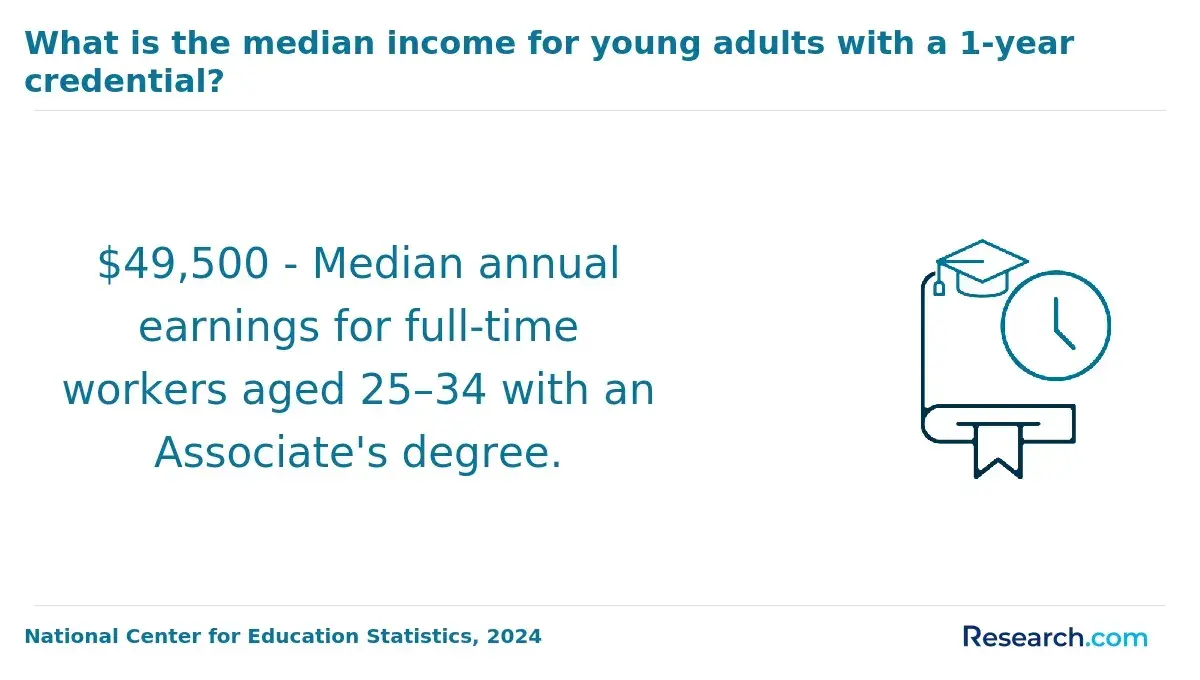
The labor market context is also important. The BLS Occupational Outlook Handbook update released in 2024 reports a median annual wage of $53,710 for substance abuse, behavioral disorder, and mental health counselors in May 2023; this figure does not represent doctorate-specific pay, but it shows that many counseling-related roles remain grounded in regulated clinical preparation rather than doctoral title alone.
Capstone projects can strengthen career-ready skills in several ways. These skills are most valuable when they match the student's actual job market and professional authority.
- Program evaluation: Students learn to measure whether a counseling ministry, care initiative, or training program is working.
- Ethical decision-making: Applied projects require students to consider confidentiality, informed consent, referral boundaries, and the limits of pastoral care.
- Research translation: Students practice turning scholarly findings into usable tools for churches, nonprofits, schools, or community programs.
- Leadership communication: Final presentations help students explain complex counseling and theological ideas to boards, pastors, staff, volunteers, and stakeholders.
- Curriculum and training design: Many projects produce workshops, lay counseling training, support group models, or discipleship-care resources.
- Data-informed ministry: Students learn to use evidence rather than intuition alone when evaluating spiritual care or counseling-related programs.
The strongest career outcome is not simply having "Dr." before your name. It is being able to show a concrete doctoral project that solved a relevant problem and can be discussed in interviews, consulting proposals, teaching applications, or ministry leadership conversations.
Costs vary by school, credit load, residency requirements, technology fees, continuation fees, books, and travel. NCES data released in 2024 shows average graduate tuition and required fees were about $12,600 at public institutions and $29,900 at private nonprofit institutions, but many Christian counseling doctorates are housed in private universities or seminaries, so students should request a full program cost sheet rather than relying on national averages.
When comparing prices, focus on total cost to completion. A lower per-credit tuition rate may not be cheaper if the program requires more credits, repeated project-enrollment terms, or in-person intensives.
- Total tuition: Multiply tuition per credit by the required number of credits, then confirm whether project or continuation credits are included.
- Institutional fees: Ask about technology, library, graduation, portfolio, assessment, and doctoral supervision fees.
- Residency or intensive costs: Include travel, lodging, meals, time off work, and childcare if the program has in-person requirements.
- Books and research tools: Budget for theological texts, counseling resources, software, transcription, survey tools, or style manuals.
- Financial aid limits: Confirm whether the program is eligible for federal aid, scholarships, employer tuition assistance, military benefits, or denominational funding.
- Opportunity cost: Consider whether coursework and project work will reduce paid clinical hours, ministry workload, consulting availability, or family capacity.
Students comparing doctoral ROI may also want to review options beyond applied Christian counseling doctorates. If affordability is the main priority, comparing the cheapest online PhD in counseling can clarify whether a research doctorate, applied doctorate, or master's-level credential offers the better value for the intended career path.
A common mistake is treating advertised tuition as the final price. Before enrolling, ask for a written estimate that includes all required credits, fees, expected project terms, and any charges that apply if the capstone takes longer than planned.
An applied Christian counseling doctorate is usually most valuable for experienced professionals who already have a ministry, counseling-adjacent, education, chaplaincy, or nonprofit context where doctoral learning can be applied immediately. It is less suitable for students who need a first counseling credential or who want a research-intensive academic career.
The following profiles are often the strongest fit for a capstone or applied project pathway. Use them to assess whether the degree matches your current role and next career step.
- Pastors and church care leaders: The degree can help them design better systems for pastoral counseling, crisis response, grief care, premarital support, or referral networks.
- Biblical counselors and ministry counselors: Applied projects can strengthen supervision, curriculum design, discipleship-care models, or lay counselor training.
- Chaplains and spiritual care professionals: A project may focus on trauma, moral injury, bereavement, institutional care, or interdisciplinary spiritual support.
- Nonprofit and community-care leaders: The doctorate can support program evaluation, volunteer training, faith-based recovery initiatives, or family support services.
- Experienced licensed clinicians with Christian practice interests: Licensed professionals may use the doctorate to build teaching, supervision, program development, or faith-integrated consulting expertise, while continuing to practice under their existing license.
Students who primarily need a faster path into clinical practice should be careful. A doctorate with a capstone may sound appealing, but state licensure usually begins with a qualifying master's degree; in that case, accelerated mental health counseling programs online may be more aligned with the immediate goal.
A dissertation-based doctorate may be better for students who want to become full-time researchers, compete for tenure-track faculty roles, lead empirical studies, or enter counselor education positions where research production is central. An applied doctorate may still support teaching in some settings, but expectations vary by institution and discipline.
How Should Students Choose an Online Christian Counseling Doctorate With a Capstone or Applied Project?
The best program is not simply the one with the shortest completion time or the most appealing Christian language. It is the program whose accreditation, project structure, faculty expertise, cost, and career outcomes match your goals.
Use this step-by-step process to compare programs before you apply. It is designed to help you separate meaningful applied doctoral training from weak programs that use capstone terminology as a marketing shortcut.
- Define your end goal first: Decide whether you want ministry leadership, clinical practice, teaching, consulting, chaplaincy advancement, nonprofit leadership, or academic research.
- Confirm the degree type: Compare DMin, EdD, PhD, PsyD, and other doctorates because each carries different expectations in ministry, counseling, and higher education settings.
- Verify accreditation: Check institutional accreditation and any specialized accreditation relevant to your career path.
- Request the final-project handbook: Ask for the capstone manual, doctoral project guide, dissertation alternatives, rubrics, and sample project titles.
- Compare faculty expertise: Look for faculty who understand Christian counseling, pastoral care, ethics, trauma, marriage and family systems, addiction, chaplaincy, or your intended project area.
- Check residency requirements: Determine whether the program is fully online, low-residency, hybrid, or dependent on campus intensives.
- Ask about project-site rules: Confirm whether you can use your workplace, church, nonprofit, or ministry context and what approvals are required.
- Calculate total cost: Include tuition, fees, travel, books, continuation terms, and lost work time.
- Clarify licensure limitations: Ask in writing whether the program meets any state counseling, marriage and family therapy, psychology, or chaplaincy certification requirements.
- Evaluate evidence of student support: Ask about advisor load, draft turnaround times, research support, writing help, and completion policies.
Important questions to ask admissions and faculty include: What replaces the dissertation? How many pages is the typical final project? Is there a proposal defense? Are human participants involved? What happens if the project is not approved? Can graduates publish or present their work? How many students finish within the advertised timeline?
Red flags include vague accreditation language, no published catalog, no clear project rubric, unrealistic completion promises, pressure to enroll quickly, no faculty biographies, unclear licensure disclaimers, and programs that imply a religious counseling doctorate automatically permits clinical mental health practice.
Other Things You Should Know About Christian Counseling
It depends on your state, employer, role, and license. "Christian counselor" may describe pastoral or ministry counseling, but clinical counseling titles such as LPC, LMFT, psychologist, or mental health counselor are regulated by state law.
Some do, especially programs connected to professional counseling or family therapy. Others accept applicants with seminary, ministry, theology, education, psychology, social work, or related graduate degrees, often with ministry or professional experience.
Often, yes, if the project is strong and the school permits it. Graduates may adapt projects into training manuals, conference presentations, ministry resources, articles, or consulting tools, but publication is not automatic.
No. Biblical counseling is usually ministry-based and grounded in Scripture and theology, while clinical mental health counseling is a regulated professional field requiring specific education, supervised experience, exams, and state licensure.
- Strategies for a Successful Capstone Project - Graduate Programs for Educators https://www.graduateprogram.org/blog/strategies-for-a-successful-capstone-project/
- Doctor of Christian Counseling - Logos University https://logos.edu/academics/graduate-programs/doctor-of-christian-counseling/
- Accreditation FAQs https://www.apbahome.net/accreditation-faqs
- Doctor of Christian Psychology and Counseling Online https://cornerstonechristianuniversity.com/programs/christian-psychology-and-counseling/doctor-of-christian-psychology-and-counseling/
- Serving Others Through Mental Health: A Guide to Master’s Degrees in Counseling and Psychology https://www.dbu.edu/blog/serving-others-through-mental-health-a-guide-to-masters-degrees-in-counseling-and-psychology.html
- Service Center https://cutsedu.org/doctor-of-philosophy-in-christian-counseling-ph-d-c-c/
- M.A. in Christian Counseling - Erskine College https://www.erskine.edu/academics/christian-counseling/
- Advance Your Ministry: Doctorate in Christian Counseling! https://andersonvilleseminary.com/gradulate/doctor-of-ministry-christian-counseling/
- Doctor of Philosophy (Ph.D.) in Christian Education and Counseling https://eldermont.com/course/doctor-of-philosophy-ph-d-in-christian-education-and-counseling/
- Best Online Master's in Christian Counseling in 2025 https://www.onlinemastersdegrees.org/best-programs/counseling/christian-counseling/