2027 Online Educational Psychology Doctorate Programs with Strong Student Support: Advising, Writing Help, and Career Services
Audited and Verified:
Our Editorial and Data Verification Process
Research.com uses government datasets, official education statistics and primary institutional information to support its career and degree guides. Our review process checks factual accuracy, occupational definitions, source dates and the requirements associated with the credentials discussed.
How This Article Was Fact-Checked
Our editorial team verifies salary estimates, employment projections, education requirements and program information against original data providers and official organizations. Salary figures are checked against the relevant occupational definitions and reporting periods. Information about licensure, accreditation and required in-person training is reviewed separately.
Fact-checked and verified on:

Co-Founder and Chief Data Scientist
Doctoral research in a digital environment often feels isolating, leaving many professionals to tackle complex dissertation milestones and career pivots without adequate guidance. According to the Council of Graduate Schools, roughly 50% of doctoral candidates fail to finish their degrees, frequently due to an absence of structured institutional mentorship rather than academic capability. Targeting online educational psychology doctorate programs with strong student support ensures you receive dedicated faculty advising, specialized writing assistance, and proactive career placement services designed to secure your investment and degree completion.
Key Things You Should Know
- Strong online educational psychology doctorate programs provide support that is proactive, doctoral-level, and accessible to fully online students, not just campus-based services repackaged on a website.
- Advising quality varies sharply: dedicated doctoral advisors, clear response-time expectations, dissertation planning, and faculty mentoring are stronger indicators than a general student services inbox.
- Recent federal data shows distance education is now common among graduate students, so applicants should verify virtual writing help, research support, career coaching, and after-hours access before choosing a program.
What Student Support Services Should Strong Online Educational Psychology Doctorate Programs Provide?
A strong online educational psychology doctorate program supports the whole doctoral journey: coursework, research design, dissertation or capstone work, professional identity, and career planning. "Student support" should mean more than orientation videos or a help desk; it should include people, processes, and services that help online doctoral students stay on track when coursework becomes independent research.
Educational psychology doctoral programs may be PhD, EdD, PsyD-adjacent, or specialized doctoral programs in learning sciences, human development, assessment, research methods, instructional psychology, or school-related psychology. The best fit depends on whether you want to conduct research, lead educational systems, design learning interventions, teach at the college level, or work in school psychology-related roles. If your goal involves credentialed school psychology practice, compare program alignment carefully and review school psychology programs online accredited by NASP, because licensure and credential expectations differ from general educational psychology degrees.
The table below summarizes the core support areas to compare. Use it to distinguish a program that merely lists services from one that has a coherent support model for online doctoral students.
| Support area | What strong support looks like | What to verify before enrolling |
| Academic advising | A dedicated advisor or small advising team that understands doctoral milestones, transfer credits, residency requirements, and dissertation timelines. | Ask whether online doctoral students receive a named advisor and how often degree plans are reviewed. |
| Faculty mentoring | Regular access to faculty with expertise in educational psychology, quantitative or qualitative methods, learning theory, assessment, or school-based research. | Ask how students are matched with faculty and whether mentoring begins before the dissertation stage. |
| Writing and dissertation support | Doctoral writing coaching, proposal feedback, APA style support, literature review guidance, and dissertation milestone workshops. | Ask whether writing support includes dissertations or only course papers. |
| Research and statistics help | Library consultations, database access, methodology support, statistics tutoring, and software guidance for tools such as SPSS, R, NVivo, or Qualtrics. | Ask whether support is available outside standard business hours for working students. |
| Career services | Doctoral-level career coaching, CV and résumé help, interview preparation, academic job-market support, and networking assistance. | Ask whether services are designed for experienced professionals or only entry-level students. |
| Technology and accessibility | Reliable learning management systems, remote library authentication, tech support, disability accommodations, captioned content, and telehealth or wellness referrals. | Ask whether all services are available to students who never visit campus. |
Common red flags include vague phrases like "faculty are available," "students receive mentoring," or "career support is provided" without details. Stronger programs publish advising roles, dissertation checkpoints, virtual appointment options, and clear escalation paths when a student cannot reach an advisor or committee member.
How Does Academic Advising Work in Online Educational Psychology Doctorate Programs?
Academic advising in an online educational psychology doctorate should help students understand requirements, sequence courses, prepare for comprehensive exams, plan research milestones, and avoid administrative delays. At the doctoral level, advising is not just scheduling; it is risk management for a long, complex degree.
Online students should look for an advising model that is specific to doctoral education. A general advisor can answer registration questions, but a doctoral advisor should also understand dissertation readiness, research ethics approvals, transfer-credit limits, continuous enrollment rules, and how professional goals connect to course selection.
When comparing advising models, focus on the student experience behind the label. The following features are especially important for working adults and students balancing research with full-time employment:
- Named advisor access: A dedicated advisor or clearly assigned advising team is usually better than a rotating support queue, because doctoral planning requires continuity.
- Proactive check-ins: Strong programs contact students before registration, major exams, proposal development, and dissertation enrollment rather than waiting for problems to surface.
- Documented degree plans: Students should receive a written plan showing required courses, electives, milestones, residency expectations, and estimated completion timeline.
- Clear response standards: Ask whether advisors typically respond within a stated window and whether urgent issues have an escalation process.
- Evening or virtual availability: Online doctoral students often need advising outside standard campus office hours, especially if they work in schools, districts, universities, or corporate learning roles.
Some applicants look for compressed doctoral timelines, including 1 year EdD programs online. Fast-track formats can work for highly prepared students, but advising becomes even more important because there is less time to recover from missed prerequisites, delayed approvals, or an unclear research plan.
A practical test is to ask admissions for a sample advising map. If the program cannot explain who advises you, when advising occurs, and what happens if you fall behind, the support model may be too passive for a doctoral program.
What Dissertation Mentoring and Committee Support Should Online Educational Psychology Doctoral Students Expect?
Dissertation mentoring is one of the biggest differences between a manageable doctoral experience and a frustrating one. In educational psychology, students may study learning processes, motivation, assessment, cognition, program evaluation, school-based interventions, instructional design, or human development. These topics often require careful research design, ethical review, data access, and iterative feedback from faculty.
Students should expect a clear process for moving from coursework to research. This includes topic development, chair selection, committee formation, proposal approval, institutional review board review, data collection, analysis, defense preparation, and final manuscript submission.
The table below compares levels of dissertation support. It can help you evaluate whether a program's mentoring structure matches your independence, research background, and timeline needs.
| Support level | Typical features | Best fit |
| High-touch dissertation model | Early topic workshops, formal chair matching, frequent milestone reviews, committee timelines, and structured proposal seminars. | Students new to doctoral research, students changing fields, or working professionals who need predictable deadlines. |
| Moderate-support model | Faculty chair assigned near the dissertation stage, periodic feedback, online dissertation resources, and student-initiated meetings. | Students with prior graduate research experience who are comfortable managing timelines. |
| Low-structure model | Students independently identify chairs, request feedback, and manage most deadlines with limited centralized oversight. | Highly independent researchers with strong methodological preparation and flexible timelines. |
| Applied doctoral project model | Practice-based capstone, evaluation project, improvement initiative, or dissertation-in-practice instead of a traditional dissertation. | Education leaders focused on applied change rather than academic research careers. |
Some education doctorates use alternatives to the traditional dissertation, so applicants who are comparing research-heavy and practice-oriented formats may also want to review online EdD programs no dissertation. However, "no dissertation" does not mean "no major project"; strong programs still provide mentoring, evaluation support, and writing guidance for doctoral-level applied work.
Before enrolling, ask how many students each dissertation chair typically supervises, whether committee members meet virtually, and what happens if a faculty member leaves the university. Delays often occur not because students lack motivation, but because expectations, feedback cycles, or committee responsibilities are unclear.
Doctoral writing support matters because educational psychology students must write in several demanding formats: literature reviews, research proposals, methodological justifications, grant-style rationales, journal-style manuscripts, and dissertation chapters. A standard undergraduate writing center may not be enough if tutors are not trained for doctoral research writing.
Strong online programs usually combine self-service resources with live support. The strongest options provide feedback on argument structure, synthesis of research, APA style, alignment among research questions and methods, and clarity of data interpretation.
Look for writing help that addresses the specific bottlenecks doctoral students face. These services are worth asking about during the admissions process:
- Doctoral writing consultations: One-on-one virtual appointments with staff who understand dissertation chapters, scholarly tone, citation practices, and research synthesis.
- Literature review support: Guidance on search strategies, source organization, theoretical frameworks, and avoiding annotated-bibliography-style writing.
- Proposal and dissertation workshops: Live or recorded sessions that explain chapter expectations, common committee feedback, and revision planning.
- APA and editing guidance: Help with formatting, tables, headings, bias-free language, and citation accuracy without crossing into unethical ghostwriting.
- Multilingual and returning-student support: Assistance for students who are strong professionals but need support re-entering academic writing after years in practice.
A useful question is whether the writing center reviews dissertation chapters or only short assignments. Also ask whether students can meet with the same writing consultant over time. Continuity can make feedback more useful because the consultant learns your topic, methodology, and committee expectations.
Be cautious if a program outsources all writing support to generic online tutoring with no doctoral specialization. That may help with grammar, but it may not help you build a defensible argument in educational psychology research.
Yes, strong programs provide research, statistics, and library support, but the depth varies. Educational psychology often relies on quantitative methods, qualitative inquiry, mixed methods, psychometrics, program evaluation, learning analytics, or intervention research. Students who have been away from statistics or research writing may need structured help beyond a single methods course.
Library support is especially important for online doctoral students because literature reviews require access to scholarly databases, interlibrary loan, citation management tools, and librarian consultations. A strong library model gives distance learners the same practical access as campus students, including remote authentication and virtual research appointments.
Research support should match the methods used in your program. When reviewing schools, ask about the following resources and how they are delivered online:
- Research design consultation: Help clarifying research questions, variables, sampling, instruments, and feasibility before proposal approval.
- Statistics support: Tutoring or workshops for regression, ANOVA, multilevel modeling, structural equation modeling, or other methods used in the curriculum.
- Qualitative methods support: Guidance on interviews, coding, trustworthiness, thematic analysis, and qualitative software.
- IRB guidance: Clear support for human-subjects review, consent forms, school-site approvals, and data privacy.
- Software access: Discounted or institution-provided access to statistical, survey, reference-management, and qualitative-analysis tools.
Current trends make this support more important. AI tools can assist with brainstorming, coding support, or literature organization, but universities increasingly expect students to follow academic integrity rules and disclose or limit AI use. Ask each program for its AI policy, especially for dissertation writing, data analysis, and literature review work.
The strongest programs teach students how to evaluate research quality, use tools ethically, and document methods transparently. That is more valuable than simply giving access to software without guidance.
Career services for doctoral students should be more specialized than résumé templates and job postings. Educational psychology doctorates can lead to roles in higher education, research, assessment, school systems, learning design, program evaluation, education consulting, nonprofit leadership, government agencies, and corporate learning teams. Career support should help students translate doctoral research into professional opportunities.
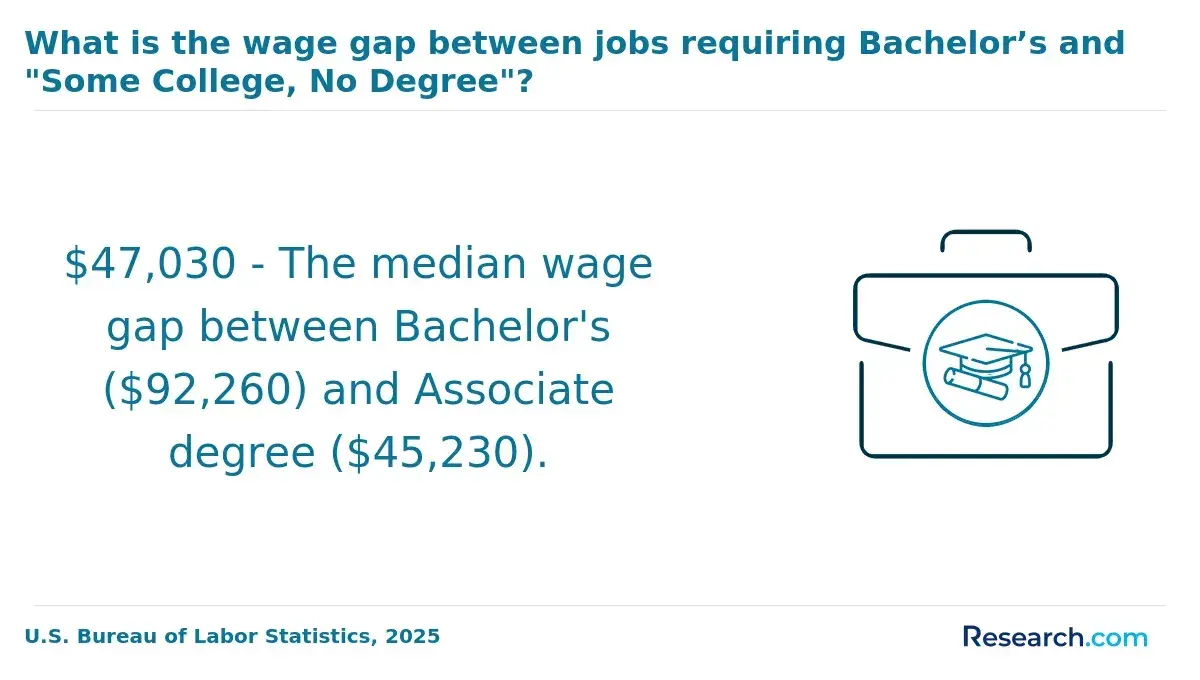
BLS May 2024 wage data reported a median annual wage of $94,310 for psychologists, while postsecondary teachers had a median annual wage of $83,980. These figures are not promises for educational psychology graduates, but they provide a useful labor-market reference point for students comparing research, teaching, consulting, and applied education pathways.
The table below shows common career directions and the kinds of support that matter most for each. Use it to judge whether a program's career office understands your likely path.
| Career direction | Typical responsibilities | Career support to look for |
| Higher education faculty or lecturer | Teaching, research, student advising, curriculum development, and academic service. | CV review, teaching portfolio help, academic interview preparation, and publication strategy. |
| Educational researcher or evaluator | Designing studies, analyzing learning outcomes, evaluating programs, and reporting findings. | Research portfolio guidance, data-project examples, grant-writing support, and networking with research organizations. |
| School or district leadership support role | Assessment planning, intervention evaluation, professional development, and learning improvement initiatives. | Leadership coaching, applied project framing, and support translating dissertation work into district impact. |
| Instructional design or learning science role | Designing evidence-based learning experiences, evaluating training, and using learning data. | Portfolio development, employer-aligned project feedback, and help describing learning theory in practical terms. |
| Consulting or nonprofit education role | Program design, evaluation, needs assessment, research translation, and stakeholder reporting. | Consulting résumé support, proposal-writing practice, and client-facing communication coaching. |
Some students discover that a doctorate is not the only route to their preferred learning design role. If your main goal is applied design rather than doctoral research, comparing the best online instructional design master's programs may help you decide whether a shorter graduate pathway fits better.
Ask whether career services include doctoral students who are already mid-career. A career coach should be able to help you reposition experience, develop an academic CV, prepare for research presentations, and explain your dissertation's value to employers outside academia.
Faculty and staff accessibility is one of the most practical indicators of student support quality. A program can have excellent faculty on paper, but online students need reliable ways to reach them, receive feedback, and build professional relationships without relying on chance encounters on campus.
Accessibility should be evaluated across three groups: faculty, advisors, and service staff. Faculty provide scholarly guidance; advisors help with academic progress; service staff support financial aid, registration, technology, accessibility, library access, and career resources.
When you contact programs, ask for specifics rather than accepting broad assurances. These questions help reveal how accessible the program really is:
- Faculty communication: Do faculty hold virtual office hours, and are they available across time zones?
- Feedback timelines: How quickly do instructors typically return major assignments, proposal drafts, or dissertation chapter feedback?
- Advisor availability: Can students schedule video appointments, or is advising handled only by email?
- Support escalation: Who helps if a faculty member, advisor, or committee chair is unresponsive?
- Online parity: Are online students eligible for the same mentoring, research groups, library services, and career appointments as campus students?
A good sign is a program that publishes office-hour expectations, service hours, and contact pathways. A weaker sign is a program that depends on individual faculty goodwill without a consistent system for communication.
If you are comparing programs, send a pre-enrollment question that requires a detailed answer, such as how dissertation chair matching works. The response time, clarity, and ownership of that answer often preview the support culture you may experience after enrollment.
Peer support can reduce isolation in online doctoral study, especially during dissertation work when students may no longer have weekly class discussions. Educational psychology students also benefit from exchanging ideas with peers working in schools, universities, assessment roles, counseling-adjacent settings, research organizations, and learning technology environments.
Cohort models are common in online education doctorates, but they vary. Some programs use a true cohort, where students move through courses together. Others use flexible enrollment, where students meet peers only within individual courses. Neither model is automatically better; the right choice depends on your need for structure, speed, and community.
The table below compares common online community models and how they affect support.
| Community model | Strengths | Trade-offs |
| Lockstep cohort | Predictable pacing, strong peer relationships, shared milestones, and easier group accountability. | Less flexibility if you need to pause, accelerate, or change course load. |
| Flexible cohort | Some shared courses or residencies with more room to adjust pacing. | Peer connections may be less consistent across the full program. |
| Self-paced or rolling enrollment | Maximum scheduling flexibility for experienced, independent students. | Students may need to work harder to build mentoring and peer networks. |
| Residency-enhanced online model | Short virtual or in-person intensives can strengthen faculty and peer relationships. | Residencies may add travel, time, or scheduling costs if they are required in person. |
Strong programs create community intentionally. That may include doctoral writing groups, research labs, virtual dissertation boot camps, peer mentoring, alumni panels, conference preparation groups, or online communities organized by research interest.
Ask whether peer support continues after coursework. Many students feel most isolated after comprehensive exams, so dissertation-stage writing groups and chair-led research communities can be more valuable than early orientation activities alone.
Technology, accessibility, and wellness support affect whether online students can actually use the academic resources a program advertises. Doctoral students often study while working full time, managing family responsibilities, and coordinating research across institutions, so support must be reliable and easy to access.
A strong online program should provide a stable learning management system, remote library access, video conferencing tools, secure file storage, technical support, and clear instructions for research-related platforms. It should also support students with disabilities through accommodations such as captioning, accessible documents, testing adjustments, and assistive technology compatibility.
Wellness support is also relevant. Doctoral study can be isolating, and dissertation delays can create stress. Programs do not need to replace local health care, but they should clearly explain counseling referrals, student assistance resources, crisis protocols, and leave-of-absence processes.
Before enrolling, check how support works during the hours you are most likely to study. For many online doctoral students, that means evenings, weekends, and school breaks. Ask about these service details:
- Technical support hours: Confirm whether help is available during live class sessions, assignment deadlines, and dissertation defense meetings.
- Accessibility process: Ask how quickly accommodations are approved and whether online course materials are designed for accessibility from the start.
- Identity and security tools: Understand proctoring, login authentication, data privacy, and research data storage rules.
- Wellness and leave policies: Review how the program handles temporary interruptions, medical leave, caregiver responsibilities, or military obligations.
- Orientation quality: Look for orientation that teaches library access, advising procedures, research expectations, and technology use, not just navigation of the course platform.
The best support systems are easy to use before a crisis. If every service requires a different portal, unclear approval process, or campus-only appointment, the program may be less online-friendly than it appears.
How Can You Compare Online Educational Psychology Doctorate Programs Based on Student Support Quality?
To compare online educational psychology doctorate programs effectively, evaluate student support as part of program quality, not as a bonus. Tuition, accreditation, curriculum, faculty expertise, and timeline matter, but weak advising or limited dissertation support can increase frustration, extend time to completion, and reduce the practical value of the degree.
Start with accreditation. Institutional accreditation is essential for federal financial aid eligibility and general academic credibility. Program-specific accreditation may matter for school psychology or licensure-related goals, but requirements vary by state and role. Always verify licensing rules directly with the relevant state board or credentialing agency before enrolling.
Use the following process to compare support quality in a practical way. This sequence helps you move beyond marketing claims and gather evidence you can actually use:
- Map your support needs: Identify whether you need heavy help with statistics, writing, dissertation structure, career transition, time management, or faculty mentoring.
- Request a doctoral support map: Ask each program to show when advising, dissertation mentoring, writing help, research support, and career coaching occur across the degree.
- Verify online access: Confirm that every listed service is available remotely, including library consultations, writing appointments, disability accommodations, and career coaching.
- Ask about response times: Look for stated expectations for advisor replies, faculty feedback, dissertation chapter review, and technical support.
- Speak with current students or alumni: Ask what support was useful, what was hard to access, and whether services remained available during the dissertation stage.
- Compare total cost with support intensity: Lower tuition can be attractive, but additional semesters, private editing, outside statistics help, or delayed dissertation progress can change the real cost.
- Review policies before committing: Check continuous enrollment, dissertation extension fees, leave policies, transfer-credit rules, and committee-change procedures.
The table below provides a quick scoring framework. It is not a ranking system, but it can help you compare programs consistently.
| Evaluation factor | Stronger evidence | Weaker evidence |
| Advising | Named advisor, scheduled check-ins, documented degree plan, and doctoral milestone tracking. | Generic advising email, unclear ownership, and no published milestone process. |
| Writing support | Doctoral writing consultations, dissertation workshops, APA support, and literature review guidance. | Only grammar help or automated writing resources. |
| Dissertation mentoring | Transparent chair matching, committee expectations, proposal timeline, and feedback standards. | Students must find support informally after coursework. |
| Career services | Doctoral-level coaching, academic CV help, portfolio support, and employer or alumni networking. | Basic job board with little support for experienced professionals. |
| Online student access | Virtual appointments, remote library access, evening options, and online parity with campus students. | Services technically available but scheduled only for campus hours or in-person visits. |
| Transparency | Clear policies, sample plans, service hours, and escalation procedures. | Marketing language without operational details. |
Common mistakes include choosing only by tuition, assuming all dissertation chairs are equally available, ignoring writing support until the proposal stage, and overlooking whether career services understand doctoral-level transitions. A better approach is to compare the support system you will use most often, not just the curriculum you will read about in the catalog.
Your final decision should match your risk profile. If you are a first-generation doctoral student, returning after many years away from graduate research, changing fields, or balancing full-time work, stronger advising and writing support may justify choosing a program with more structure. If you already have strong research experience and a clear faculty match, a more flexible program may work well.
Other Things You Should Know About Educational Psychology
An online doctorate can be respected when it comes from an institutionally accredited university and the curriculum, faculty expertise, and research expectations match your career goal. Employers usually care about accreditation, relevant experience, research or leadership skills, and whether the degree aligns with the role.
Not automatically. Psychologist licensure requirements vary by state and usually depend on program type, supervised experience, exams, and whether the program meets specific clinical, counseling, or school psychology criteria. Always check state licensing rules before enrolling.
Many programs take several years, depending on transfer credits, enrollment pace, dissertation progress, and whether the program uses a cohort or flexible format. The dissertation or doctoral project often has the most variable timeline, so ask schools for completion expectations and extension policies.
A PhD is often more research-oriented and may fit students interested in scholarship, faculty roles, or advanced research positions. An EdD is often more practice-oriented and may fit educators, administrators, and learning leaders who want to apply research to organizational problems. Program design matters more than the label alone.
- Online Writing Support https://www.onlinewritingcenters.org/values/online-writing-support/
- Book Review: Re/Writing the Center: Approaches to Supporting Graduate Students in the Writing Center https://thepeerreview-iwca.org/issues/issue-4-0/book-review-re-writing-the-center-approaches-to-supporting-graduate-students-in-the-writing-center/
- Why Career Readiness Is a Signal — Not Just an Outcome — of Student Success - Civitas Learning https://www.civitaslearning.com/blog/why-career-readiness-is-a-signal-not-just-an-outcome-of-student-success/
- Pursuing a career as an educational psychologist https://online.wrexham.ac.uk/blogs/pursuing-a-career-as-an-educational-psychologist/
- Interested in a career in Educational Psychology? https://www.aep.org.uk/interested-career-educational-psychology
- Advising as a Strategy for Achieving Equitable Student Outcomes | MDRC https://www.mdrc.org/work/publications/advising-strategy-achieving-equitable-student-outcomes
- Composition Forum https://compositionforum.com/issue/57/tutor-training-matters/
- Professional Doctorate in Educational Psychology (D.Ed.Psych) | Maynooth University https://www.maynoothuniversity.ie/education/professional-doctorate-educational-psychology-dedpsych
- Top Accrediting Bodies For Counseling Degrees https://www.psychology.org/resources/accreditation-for-counseling-degrees/
- Educational Psychology Degrees and Careers https://www.onlinepsychologydegrees.com/specialty/educational-psychology/