2027 Online MS in Psychology - Forensic Psychology for Competency Evaluation Research: Which Courses Should You Look For?
Audited and Verified:
Our Editorial and Data Verification Process
Research.com uses government datasets, official education statistics and primary institutional information to support its career and degree guides. Our review process checks factual accuracy, occupational definitions, source dates and the requirements associated with the credentials discussed.
How This Article Was Fact-Checked
Our editorial team verifies salary estimates, employment projections, education requirements and program information against original data providers and official organizations. Salary figures are checked against the relevant occupational definitions and reporting periods. Information about licensure, accreditation and required in-person training is reviewed separately.
Fact-checked and verified on:

Co-Founder and Chief Data Scientist
A forensic psychology master's can teach you about competency evaluations without preparing you to conduct them. That distinction matters if you want to study how evaluations work, analyze outcomes, or eventually become a licensed evaluator. This guide is for prospective online master's students comparing courses and research opportunities. It identifies the legal, psychological, measurement, and statistical training worth looking for - and shows how to check whether a program's supervision and data access support the work you actually want to do.
Key Things You Should Know
- Prioritize competency-specific law and psychology, psychopathology, psychological measurement, research design, and statistics - not a forensic course title alone.
- For research readiness, ask whether you can complete a supervised thesis or substantial project using lawfully accessible data; an online course catalog cannot establish that opportunity.
- A nonclinical forensic psychology MS does not itself authorize competency assessments. Compare its full cost with the training required for your intended research job or licensed role.
What is forensic psychology for competency evaluation research?
Competency evaluation research studies how legal questions about a person's present ability to participate in proceedings are assessed and answered. In criminal cases, competency to stand trial concerns capacities such as understanding the proceedings and assisting counsel. It is different from an insanity defense, which concerns mental state at the time of an alleged offense. The applicable legal standard and procedure depend on the jurisdiction.
Researchers might examine the reliability of assessment methods, disparities in referral or restoration processes, report quality, or the time between referral and case resolution. Studying those questions does not require a student to perform an evaluation. If you are still deciding whether your interests lie in research, justice-system support, or professional assessment, compare forensic psychology study choices and employment preparation against the duties of your target role.
Can an online master's in psychology prepare you for forensic competency evaluations?
For research about evaluations, potentially yes; for independent evaluations, generally no. An online MS can build the skills to read competency reports critically, design a study, analyze appropriately obtained records, and communicate findings. Its value depends on the actual curriculum, qualified research mentorship, and feasible access to data - not its forensic label or delivery mode.
Conducting clinical forensic assessments requires a different level of professional preparation and authority. In many settings, independent evaluator roles call for psychologist licensure, typically following doctoral professional training and jurisdiction-specific requirements. A counseling pathway has its own scope and rules; comparing online mental health counseling master's timelines may clarify that alternative, but a counseling degree should not be assumed to qualify someone for competency evaluations either. Before enrolling, identify whether your goal is research employment, eventual doctoral training, or a regulated assessment role.
Which courses should an online forensic psychology master's include?
Look for a sequence that connects the legal question to psychological evidence. Course titles vary, so inspect syllabi, assignments, and prerequisites rather than counting courses labeled "forensic." These subject areas have different jobs in a competency-focused curriculum:
- Psychology and law: Competency standards, court procedures, the evaluator's role, and limits of expert conclusions.
- Psychopathology and cognitive functioning: Academic study of symptoms and abilities relevant to understanding proceedings, without treating classroom exposure as clinical training.
- Psychological assessment and psychometrics: Reliability, validity, response style, cultural and language considerations, and restrictions on professional instruments.
- Forensic ethics: Conflicting obligations, informed notification, confidentiality limits, bias, and careful communication of uncertainty.
- Research seminar or thesis: A supervised opportunity to turn a narrow competency-related question into a defensible study or evidence review.
A useful test is whether students must critique an evaluation study, explain why its measure fits the legal question, and identify what its findings cannot establish. If substance-use research is your main interest rather than competency, compare that curriculum with online colleges for addiction-focused psychology study before paying for a forensic specialization.
Research design and statistics should extend beyond an introductory survey. Useful preparation includes sampling, observational and longitudinal designs, regression, missing-data analysis, and reproducible documentation. Measurement coursework is especially important: a score may be consistent without measuring the legal capacity a study claims it measures.
Consider a proposed study of whether case characteristics are associated with time to competency disposition. Students would need to define the starting and ending events, account for cases with incomplete follow-up, and consider differences in court processes and access to services. An association would not show that any characteristic caused a delay. A methods course should teach students to make those limits explicit.
Ask how a student obtains faculty guidance and an approved, usable dataset. Court records may be public, sealed, or otherwise restricted; clinical records raise additional permissions and privacy obligations. The institution must determine whether a project requires human-subjects review, and the data holder must authorize access. If considering psychology master's programs with intensive pacing, confirm that compressed methods courses still leave enough time for feedback, approvals, analysis, and revision.
Delivery mode matters less than access to supervision and workable research conditions. The comparison below separates advantages from questions that require program-specific answers.
| Feature | Online program | Campus-based program |
| Course access | May reduce travel; live sessions and fixed deadlines may remain | Requires campus attendance but may offer easier informal faculty contact |
| Research mentorship | Depends on remote meetings, feedback, and faculty availability | May offer in-person teams; access is not guaranteed |
| Data and applied work | Local partnerships or approved remote projects may be necessary | Nearby partnerships may help, but permissions still apply |
| Scheduling | Check residencies, group meetings, and thesis milestones | Check commute, course times, and on-site research obligations |
For a student balancing work with study, request a typical term schedule and the thesis-supervision policy in writing. Broad lists of distance learning psychology degree options can help generate possibilities, but only the individual program can confirm its competency-related courses and research access.
First, verify the institution's current accreditation with an accreditor recognized by the U.S. Department of Education and confirm that it applies to the institution awarding the degree. Then check the exact program's degree designation, curriculum, and any claims about professional eligibility. Institutional accreditation is important, but it does not establish that a forensic MS qualifies graduates for clinical practice.
Do not reject a nonclinical master's because it lacks American Psychological Association program accreditation: APA accreditation does not generally cover stand-alone, nonclinical psychology MS programs. Conversely, do not transfer accreditation claims from another discipline to this degree. For example, intensive schedules in accredited mental health counseling study concern a distinct professional program and credential pathway. Ask the school to identify the accreditation and eligibility claims that apply specifically to the program and entry term you are considering.
Requirements vary by school. Programs commonly review a bachelor's degree, transcripts, a statement of purpose, and evidence of academic preparation; some specify psychology, statistics, or research-methods prerequisites, while others admit applicants from related fields. A criminal justice, health, or quantitative background may be useful, but it does not automatically replace a stated prerequisite.
For this research goal, use your application to show how prior coursework or work prepared you to frame a question, interpret evidence, and write clearly. Ask admissions whether missing prerequisites can be completed before or after admission and whether an undergraduate course meets their standard. If you are finishing a bachelor's after a transfer, verify remaining coursework after transferring into psychology with the degree-awarding institution; accepted credit does not necessarily satisfy a required methods course.
Completion time depends on credit requirements, course availability, enrollment pace, and whether a thesis or project needs approvals and revisions. Tuition alone understates the commitment. Compare the school's published per-credit or per-term charges with mandatory fees, materials, any residency travel, and the cost of extra terms if research takes longer than planned.
Request a written, program-specific estimate for your intended pace and ask when each required course is offered. If considering forensic psychology master's intensive study options, check whether the advertised timeline includes the research requirement and whether its weekly workload is realistic alongside employment. If your goal is solely to strengthen statistics skills, targeted coursework or supervised research experience may cost less than a full degree.
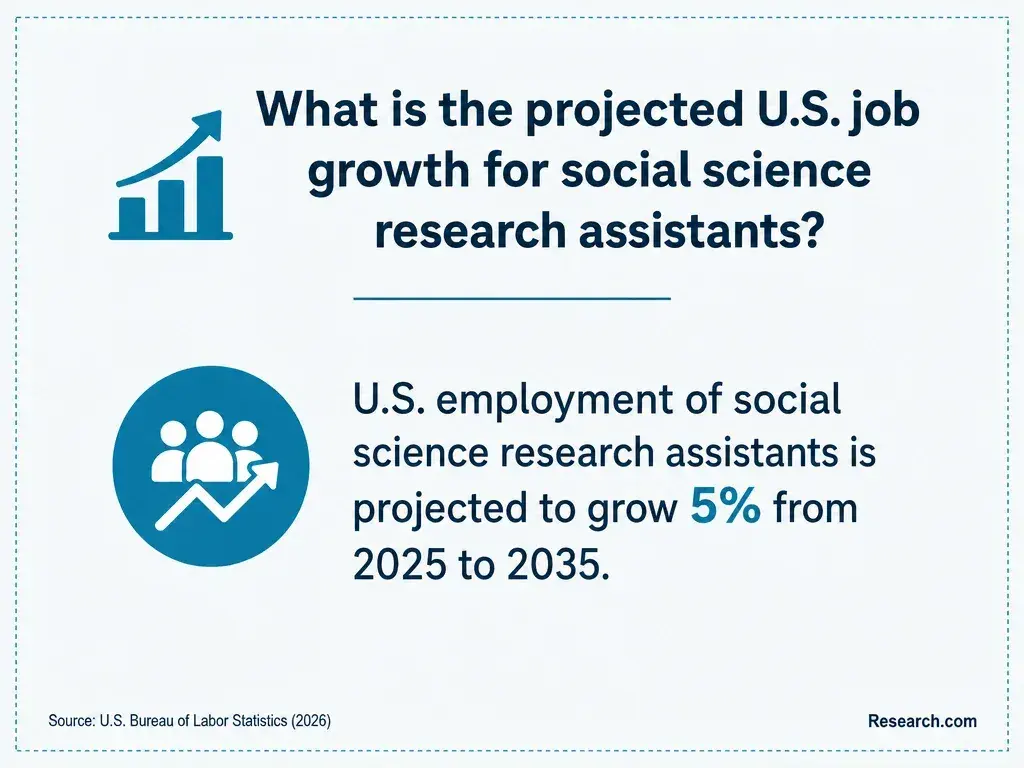
Potential nonclinical destinations include research assistant or coordinator roles, justice-program evaluation, policy analysis, and agency research support. Actual eligibility depends on an employer's methods, software, data-security, and experience requirements; the degree alone does not confer a particular job title. A thesis, documented analysis, or carefully redacted research brief can demonstrate more than a forensic concentration name.
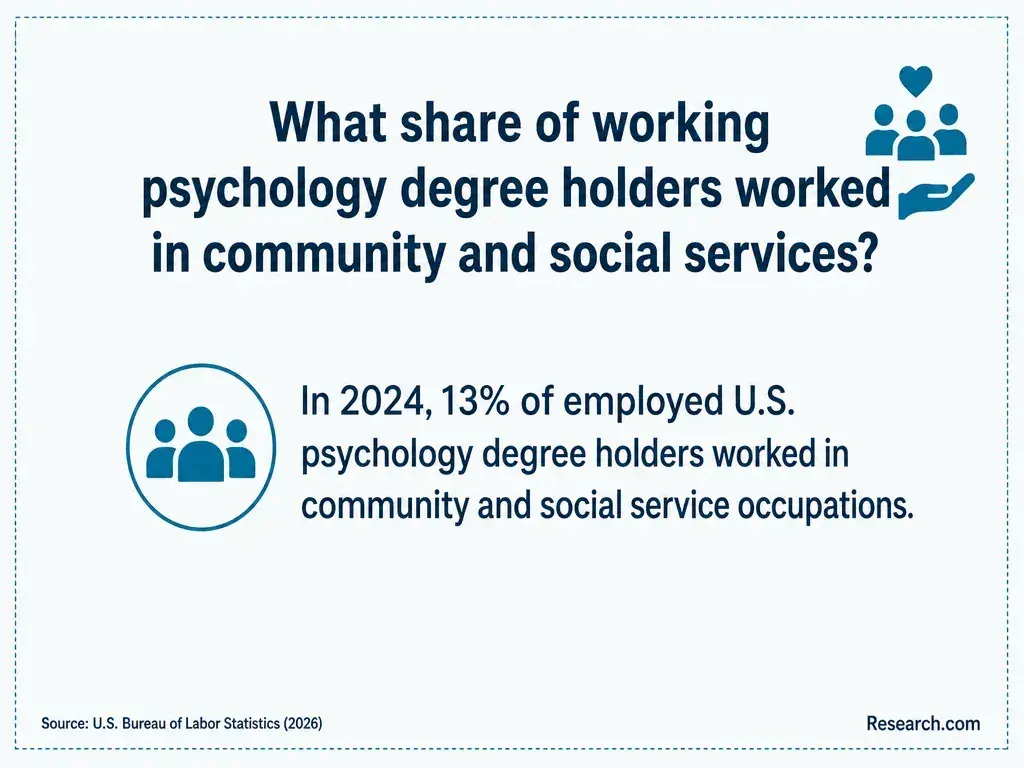
Justice and community-service roles may instead emphasize case coordination, referrals, or program operations rather than competency research. If that work is your target, compare its hiring requirements - and adjacent recovery services employment pathways if relevant - before investing in advanced research training. Published occupation-wide wages should not be interpreted as earnings promised to forensic psychology MS graduates.
Does a forensic psychology master's qualify you for licensure or certification?
Do not assume it does. A nonclinical forensic psychology MS generally serves academic or research purposes, not independent psychological practice. Licensing boards, certification bodies, courts, and employers set different requirements for different roles; a course in assessment does not authorize someone to administer restricted tests, diagnose, or offer expert opinions as a qualified evaluator.
If your aim is to perform competency evaluations, identify the jurisdiction and target job first. Obtain the applicable licensing-board requirements and ask prospective programs, in writing, whether their specific degree satisfies any of them. If your aim is research, compare the tuition and opportunity cost of an MS with online psychology programs ranked by affordability and with narrower methods training. The best-value route is the one that supplies the skills and supervised work your goal actually requires.
Other Things You Should Know About Psychology
Yes. A literature review, analysis of appropriately available court information, or approved secondary-data project may be possible. Faculty and data-holder approval still matter.
No. A competency-related measure addresses abilities relevant to a legal question; diagnosis concerns a clinical condition. Neither a measure nor a diagnosis alone decides the legal issue.
Possibly, but public access does not remove institutional research rules or ethical concerns. Check your instructor's requirements, data-use restrictions, and whether review is needed before collecting or sharing records.
Ask which competency-related questions they supervise, what data students can realistically access, how often they provide feedback, and what happens if a proposed dataset becomes unavailable.
- Internship Rotations | wa.gov https://www.dshs.wa.gov/mental-health-and-recovery/forensic-mental-health-services/psychology-internship-program/internship-rotations
- Training and Education | CCCCP https://cp.cuyahogacounty.gov/departments/forensic-evaluation-center/training-and-education/
- Master's in Forensic Psychology | du.edu https://psychology.du.edu/forensicpsychology
- Online Master's Degree in Forensic Psychology | Monroe University https://www.monroeu.edu/academics/king-graduate-school/online-masters-degree-forensic-psychology
- What Should I, as a Forensic Psychologist Testifying in Criminal Court, Understand About the Dusky Standard? https://paloaltou.edu/resources/business-of-practice-blog/what-should-i-as-a-forensic-psychologist-testifying-in-criminal-court-understand-about-the-dusky-standard
- 22 Tex. Admin. Code § 884.50 - Competency Evaluations under Chapter 501 of the Occupations Code https://www.law.cornell.edu/regulations/texas/22-Tex-Admin-Code-SS-884-50
- Online MS in Forensic Psychology | Walden University https://www.waldenu.edu/online-masters-programs/ms-in-forensic-psychology
- Online Master of Science in Forensic Psychology | Touro University Worldwide https://www.tuw.edu/academics/psychology/online-masters-in-forensic-psychology/
- Ethical principles of psychologists and code of conduct | apa.org https://www.apa.org/ethics/code
- Competence to Stand Trial Should Require Rational Understanding | jaapl.org https://jaapl.org/content/39/1/19