2027 Online MS in Psychology - Forensic Psychology for Psychology of Witness Identification: Which Courses Should You Look For?
Audited and Verified:
Our Editorial and Data Verification Process
Research.com uses government datasets, official education statistics and primary institutional information to support its career and degree guides. Our review process checks factual accuracy, occupational definitions, source dates and the requirements associated with the credentials discussed.
How This Article Was Fact-Checked
Our editorial team verifies salary estimates, employment projections, education requirements and program information against original data providers and official organizations. Salary figures are checked against the relevant occupational definitions and reporting periods. Information about licensure, accreditation and required in-person training is reviewed separately.
Fact-checked and verified on:

Co-Founder and Chief Data Scientist
An online forensic psychology master's can teach the science behind eyewitness identification - or devote little time to it. That difference matters if you want to study lineup procedures, evaluate evidence, or support research in a justice agency. This guide is for prospective master's students, including psychology and criminal justice graduates, who want to compare curricula rather than rely on a program's concentration name. You'll learn which courses and research opportunities build relevant skills, what online study may limit, and when a different educational route better fits your goal.
Key Things You Should Know
- Prioritize cognitive psychology and memory, eyewitness identification, research design, statistics, and legal psychology; a course labeled "forensic psychology" alone is not enough.
- Look for supervised work with lineup research, evidence reviews, or appropriately authorized data. Online delivery does not establish access to a research mentor or justice-agency placement.
- A typical nonclinical forensic psychology MS does not authorize independent forensic assessment or establish psychologist licensure eligibility. Check the curriculum against the specific job or further degree you want.
What Is Forensic Psychology in Witness Identification?
Witness identification research examines how people perceive, remember, and identify individuals involved in an event. It studies factors such as viewing conditions, the delay before identification, questioning, and the design and administration of identification procedures. The aim is to understand when an identification provides useful evidence and when error becomes more likely - not to determine whether a particular witness is truthful.
This is a narrower academic focus than forensic psychology as a whole. A program emphasizing offender assessment or correctional treatment may offer little preparation for eyewitness research. If your actual goal is treatment work rather than identification research, compare the education and credential requirements for substance use counseling education and degree options instead of assuming that forensic coursework serves both purposes.
Which Courses Should an Online Forensic Psychology Master's Include?
Judge a curriculum by the work its courses require, not just their titles. For witness identification, the strongest combination connects memory theory to legal procedures and gives you the methods to evaluate published findings. The following course areas show what to seek in syllabi and elective schedules.
| Course area | Relevant learning | What to check |
| Cognitive psychology and memory | Encoding, retrieval, recognition, and memory distortion | Whether students apply these concepts to eyewitness evidence |
| Eyewitness identification or psychology and law | Lineups, witness interviews, identification decisions, and legal context | Whether identification receives sustained coverage rather than one lecture |
| Research design and statistics | Experiments, comparison groups, uncertainty, and limits of causal claims | Whether assignments involve reading and analyzing empirical studies |
| Psychological measurement | Reliability, validity, and careful interpretation of confidence or accuracy measures | Whether measurement limitations are taught explicitly |
| Research ethics and scientific communication | Participant protections, responsible data use, and evidence-based writing | Whether students produce a review, proposal, thesis, or research brief |
If you lack undergraduate statistics or cognitive psychology, ask whether you can take a foundation course before an advanced eyewitness seminar. Do not substitute clinical interviewing coursework for experimental memory training: the skills and intended professional roles differ. Likewise, shorter accredited clinical mental health counseling study plans should be evaluated against counseling requirements, not treated as interchangeable with this research-oriented course sequence.
Can an Online MS in Forensic Psychology Lead to Licensure?
A nonclinical MS in forensic psychology generally should not be treated as a psychologist-licensure program. Studying eyewitness evidence, assessment theory, or legal testimony does not itself authorize psychological testing, diagnosis, therapy, independent forensic evaluation, or use of a protected professional title. Psychologist licensure ordinarily involves qualifying professional education and jurisdiction-specific supervised experience and examinations; the applicable board decides eligibility.
If you want to provide therapy, identify the license and state where you intend to practice, then check that board's educational rules against the exact degree. For a counseling goal, affordable accredited mental health counseling study options are a more relevant comparison than the lowest-priced forensic psychology MS. Accreditation and affordability still do not replace a state-specific eligibility check.
Online instruction can suit someone employed in a justice agency or living far from a relevant campus. Campus study may make it easier to join an in-person research group or attend agency events, but neither format guarantees mentorship, data access, or a placement. Compare the actual opportunities available to online and campus students, including who supervises their work.
Ask whether seminars meet live, research meetings occur during work hours, and any residency or placement requires travel. An asynchronous lecture may still lead to a scheduled group project. If speed is a deciding factor, compare the faster-paced online mental health counseling master's study route only if counseling is your intended profession; its required training serves a different goal from eyewitness research.
Requirements vary by school. Programs may consider applicants with psychology, criminal justice, or other bachelor's degrees, while specifying prerequisites in psychology, statistics, or research methods. Check the current catalog for the accepted degree, minimum academic standards, application materials, prerequisite deadlines, and whether relevant work can strengthen an application without replacing required courses.
A criminal justice graduate may bring valuable knowledge of legal procedures yet need more preparation in experimental design and memory science. A psychology graduate may need the opposite: exposure to evidence rules and justice-system practice. Ask admissions staff which gaps must be closed before enrollment and which can be addressed through electives. Applicants primarily seeking therapist preparation should compare separate counseling admissions and sequencing rules, including those for shorter accredited clinical mental health counseling study plans.
Completion time depends on required credits, course availability, enrollment pace, and whether a thesis or capstone is required. Ask for a term-by-term plan based on your intended pace; an advertised fastest completion time may assume courses are offered in a particular sequence and that you can meet live or research obligations.
For cost, calculate required credits multiplied by your applicable tuition rate, then add mandatory fees and any travel, software, or continued-enrollment charges. Confirm the school's current rates rather than relying on a program-wide estimate. Online psychology education on a budget may offer a useful starting comparison, but the least expensive degree is poor value if it lacks the memory and methods training your goal requires.
For an eyewitness focus, a useful thesis, capstone, or supervised assistantship could involve a systematic evidence review, an approved study of identification decisions, or a research brief assessing lineup procedures. What matters is feedback on research design, analysis, limitations, and communication - not simply a project with a forensic-sounding title.
Ask who can supervise online students, how projects are assigned, and whether an agency-based project requires separate site approval. Access to witness records, investigative files, or participants must never be assumed. Check institutional review requirements, consent, privacy rules, and data-use permissions before collecting or sharing information; a public literature review may be feasible when restricted data is not. Even psychology master's programs with intensive pacing need enough time for meaningful supervision and revision if research skill is the objective.
Potential nonclinical directions include research support, justice-agency program evaluation, policy analysis, victim-services administration, and training or communications work concerning evidence practices. Hiring depends on the position's duties, your experience, and agency requirements. Demonstrated statistical analysis, careful evidence writing, and experience working within justice-system confidentiality rules may matter more than the concentration label.
An officer, advocate, or analyst might use the degree to strengthen an existing role; a career changer may first need agency experience or an entry-level research position. If your intended work is direct recovery support rather than identification research, examine recovery services employment pathways and their distinct employer or credential requirements. Neither route turns a graduate into a licensed forensic psychologist.
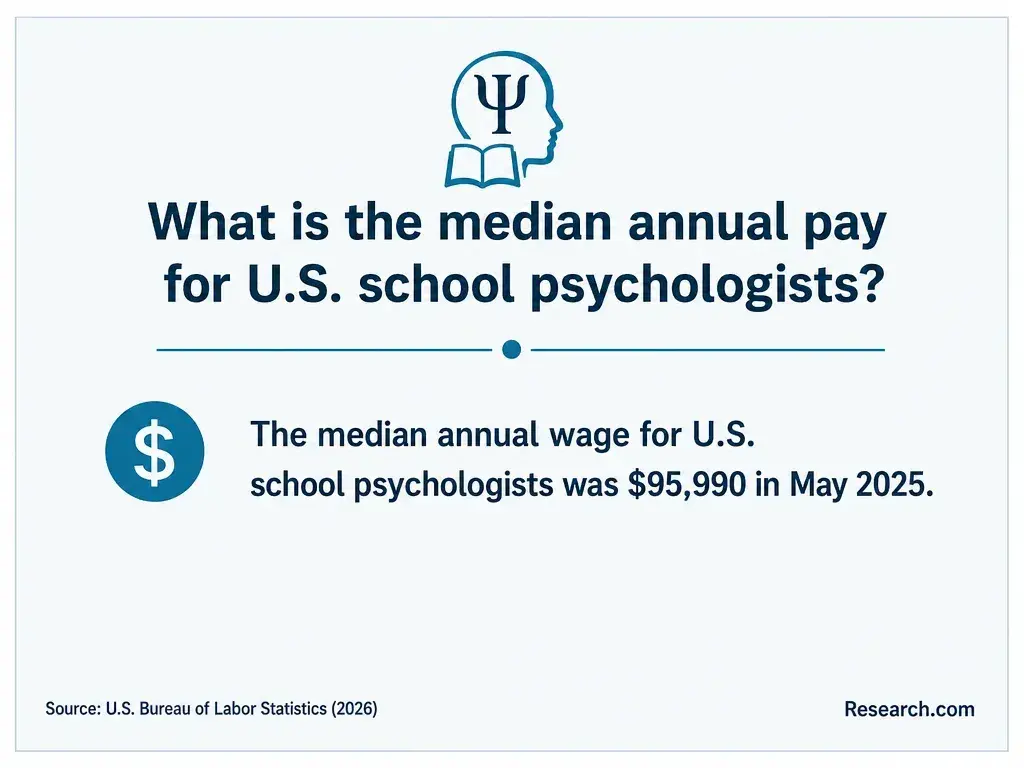
There is no single reliable salary for graduates of an online forensic psychology MS focused on witness identification. A research assistant, government analyst, victim-services employee, and licensed psychologist occupy different jobs with different qualifications and pay structures. Even an occupation-wide government wage figure describes people employed in that occupation - not the earnings of graduates from a particular program.
For a useful estimate, identify a job title you could realistically pursue, check its current US Bureau of Labor Statistics occupational wage information where available, and compare local postings' duties and pay ranges. Public-agency pay scales may provide a more precise comparison for a named position. Guides to understanding pay and entry requirements in forensic psychology careers can suggest roles to investigate, but verify whether each role requires a license or experience beyond the MS.
How Can You Choose an Accredited Online Forensic Psychology Program?
First, confirm the institution's current accreditation with the accreditor and the school. Then verify the exact degree, its online availability, and its published curriculum. Institution-level accreditation does not mean that a nonclinical MS has APA accreditation or meets a licensing board's educational rules.
For a focused comparison, request a current course schedule and relevant syllabi, then ask the program these questions:
- Which required or reliably offered elective courses examine eyewitness memory and identification procedures?
- Can online students work with a faculty member whose research fits this subject, and what form does supervision take?
- What thesis, capstone, placement, live-session, or campus-visit requirements apply to my entry term?
- What recent graduate outcomes can the school document for research or justice-related roles?
Use a forensic psychology program review before enrollment to build a shortlist, then resolve those questions directly with each school. Choose the program that supplies the relevant methods, mentorship, and feasible schedule - not merely the strongest forensic branding.
Other Things You Should Know About Psychology
No. Confidence must be interpreted in context, including when and how it was recorded and what happened before the identification. It is not a stand-alone proof of accuracy.
It is a lineup administered by someone who does not know which person is the suspect. The procedure is intended to reduce the possibility that an administrator unintentionally influences the witness.
No. Developmental differences and the conditions under which information is obtained matter. Research involving children also requires appropriate safeguarding and oversight.
Often, if your instructor approves the scope. Separate verified case facts from claims about memory, avoid declaring a witness accurate or mistaken without sufficient evidence, and follow course rules on sourcing and privacy.
- Police Lineups: Making Eyewitness Identification More Reliable | National Institute of Justice https://nij.ojp.gov/topics/articles/police-lineups-making-eyewitness-identification-more-reliable
- Reference Guide on Eyewitness Identification - NCBI - NIH https://www.ncbi.nlm.nih.gov/books/NBK621592/
- Accreditation & Licensing | Avila University https://www.avila.edu/accreditation-licensing/
- Eyewitness testimony (2.5) - The Cambridge Handbook of Forensic Psychology https://www.cambridge.org/core/books/cambridge-handbook-of-forensic-psychology/eyewitness-testimony/94E888D666FE0AFDC17B8A6FA35F3BF7
- What is forensic psychology? | apa.org https://www.apa.org/ed/precollege/psn/2013/09/forensic-psychology
- Expert Testimony Regarding Eyewitness Identification | iastate.edu https://dr.lib.iastate.edu/bitstreams/75029d1d-014d-4be7-8c86-52fa772601fd/download
- Witnesses: Eyewitness Identification | cornell.edu https://courses2.cit.cornell.edu/sociallaw/topics/EyewitnessIdentification.html