2027 Online MS in Psychology - Forensic Psychology: How to Compare Internships When You Have No Local Placement Options
Audited and Verified:
Our Editorial and Data Verification Process
Research.com uses government datasets, official education statistics and primary institutional information to support its career and degree guides. Our review process checks factual accuracy, occupational definitions, source dates and the requirements associated with the credentials discussed.
How This Article Was Fact-Checked
Our editorial team verifies salary estimates, employment projections, education requirements and program information against original data providers and official organizations. Salary figures are checked against the relevant occupational definitions and reporting periods. Information about licensure, accreditation and required in-person training is reviewed separately.
Fact-checked and verified on:

Co-Founder and Chief Data Scientist
An online forensic psychology master's may let you study from home, but its internship can still depend on finding an approved organization nearby. If you have no local placement options, that requirement could delay graduation or make the program unworkable.
This guide is for prospective students comparing online programs and current students planning ahead. It explains which remote or nonclinical alternatives may be possible, how to test a school's placement support, and what to get approved in writing before committing your time and money.
Key Things You Should Know
- Compare the approved work and supervision, not just whether a program advertises remote internships; a virtual site may still require local onboarding or in-person duties.
- Get written answers about site eligibility, supervisor qualifications, and alternatives before enrolling.
- Host-site interest alone does not count as academic approval. If no feasible placement exists, a program with an approved capstone or research route may fit better - provided it develops evidence relevant to your career goal.
What Is an Online Forensic Psychology Master's Degree?
An online forensic psychology MS or MA studies psychological science in legal and justice-related settings. Depending on the program, students may examine research on decision-making, victimization, correctional systems, or behavioral assessment. "Online" describes course delivery; it does not establish that applied work can be completed remotely.
Most applicants need a bachelor's degree, but prerequisites vary. If you are still choosing an undergraduate route, online bachelor's program choices in psychology can provide context for building research-methods and statistics preparation. A forensic master's is a distinct, usually nonclinical credential: its name does not authorize psychological evaluations or therapy.
How Can You Compare Internships Without Local Placement Options?
Start with the experience your intended work requires: research support, victim-service coordination, corrections administration, or another nonclinical function. Then compare approved learning outcomes rather than treating every opportunity labeled "internship" as equivalent. The following options differ in what they can teach and in the barriers they may create.
| Possible route | Potential value | Principal limitation |
| Remote agency placement | Supervised documentation, outreach, or program-support work | The agency may restrict remote access to clients or records |
| Remote research placement | Literature reviews, approved data work, or research coordination | May offer little direct exposure to service systems |
| Placement near a temporary residence | Site-based observation and agency experience | Travel, housing, scheduling, and approval costs |
| Approved capstone instead of an internship | A defined research or program-analysis deliverable | May not satisfy an employer seeking field experience |
For each route, ask the program which tasks count toward its requirement, whether the site must be in your state, who supervises you, and whether any on-site hours remain mandatory. Compare the calendar as carefully as the course format: compressed online master's study in forensic psychology can leave less time to secure approvals, complete background checks, and recover from a site cancellation.
Does an Online Forensic Psychology Program Require an Internship?
Not necessarily. Programs may require an internship, offer one as an elective, or use a thesis, research project, or capstone instead. An internship is an academically approved learning experience; it is not interchangeable with a clinical practicum or a license-supervised professional internship. Read the degree requirements for your intended entry term, including minimum hours, course prerequisites, site restrictions, and what happens if no site is available.
If you hope to change schools after starting, request a written evaluation before assuming completed placement work will count elsewhere. Guidance on psychology major credit portability illustrates the broader distinction between accepting a credit and applying it to a specific requirement; the receiving graduate program makes its own determination.
"Placement support" can mean anything from a job board to staff who actively approach potential sites. Ask for the current internship handbook and speak with the person authorized to approve sites - not only an admissions representative. These questions expose the difference between a plausible remote opportunity and a workable placement:
- Who identifies sites, and what happens if a student cannot secure one by the placement deadline?
- Which remote tasks and organizations qualify, and have comparable arrangements been approved for students outside the school's region?
- What qualifications must the site supervisor hold, and how often must supervision and faculty check-ins occur?
- Who arranges affiliation agreements, background checks, liability coverage, and access to required systems?
- Can a site or supervisor be replaced without repeating hours, and who decides?
Request answers in writing, including any conditions. A site's willingness to host you does not establish program approval, permission to access confidential information, or eligibility to work across jurisdictions. Compare the cost of this support alongside tuition; headline comparisons of online psychology programs ranked by affordability cannot tell you whether a particular graduate placement is feasible.
Check the institution's recognized accreditation and confirm that the online master's is offered by that institution. Then ask whether the program claims any separate recognition relevant to your goal. Institutional accreditation does not certify a particular internship arrangement, and APA accreditation should not be assumed for a general or nonclinical forensic psychology master's.
Verify accreditation status through the accreditor and the school, then separately verify placement policies with the academic department. This distinction also applies when comparing earlier credentials, including addiction psychology BA and BS degree options: a recognized institution, a named concentration, and eligibility for a professional credential are different claims.
A nonclinical forensic psychology master's generally does not, by itself, qualify a graduate for independent psychological assessment, diagnosis, psychotherapy, or the protected title of psychologist. Rules depend on the occupation and state, but licensed forensic evaluation ordinarily requires a qualifying professional training pathway and additional supervised experience. An agency-based internship in advocacy or research does not convert the degree into clinical training.
If your goal is licensed counseling rather than nonclinical justice-system work, compare qualifying programs against the relevant state board's rules. Accelerated counseling study and accreditation requirements are a separate decision; a faster timetable is useful only if the program and its fieldwork meet your intended jurisdiction's requirements.
Curricula vary, but relevant courses may cover psychology and law, research methods, statistics, ethics, victimology, or behavior in correctional settings. For a student without a local site, methods and program-evaluation coursework can support a remote research placement or capstone. Check whether these are required courses, electives, or merely topics mentioned in a program description.
Match courses and applied work to the job's tasks. Someone seeking supervised support work in substance-use services, for example, should compare role-specific credentials and experience requirements rather than assume forensic coursework is the shortest route; inexpensive undergraduate substance use counseling degree choices address a different educational pathway. Courses discussing assessment or treatment do not grant permission to perform either independently.
Completion time depends on credit load, course availability, and whether internship approval must precede enrollment in the placement course. Ask each school for a term-by-term plan showing the earliest realistic placement start and what happens if a site falls through. An asynchronous course schedule does not make required supervision meetings or agency hours asynchronous.
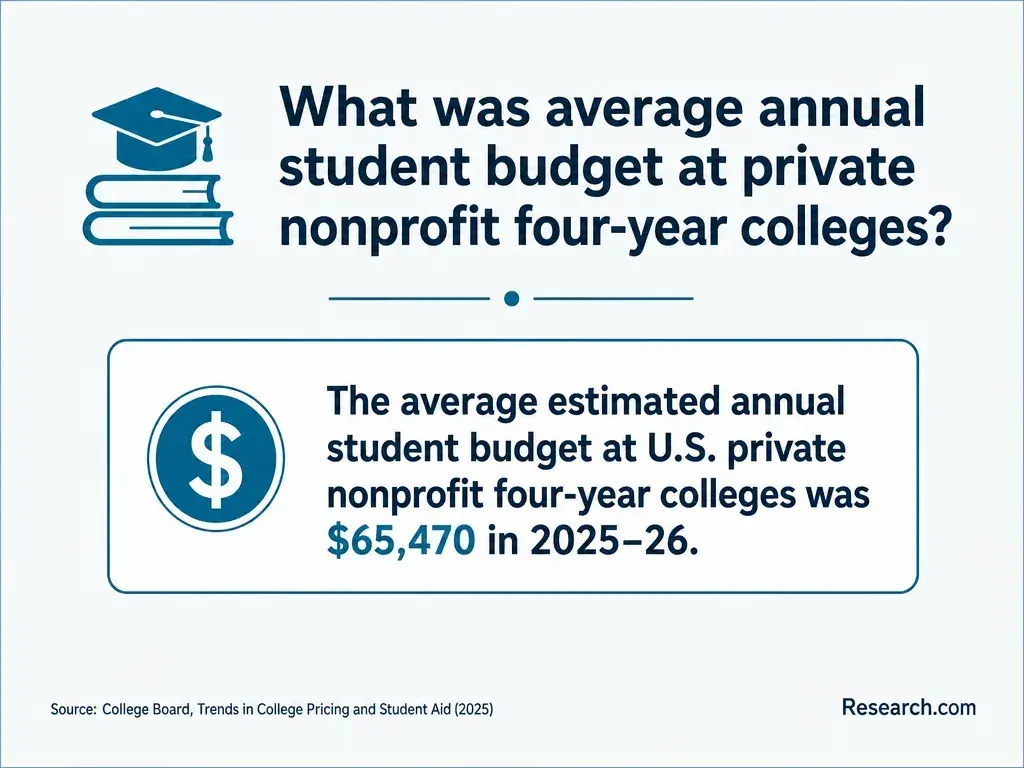
For a useful cost comparison, obtain the school's tuition and mandatory fees for your planned credit load, then add possible travel, temporary housing, background-check, and unpaid-work costs. Ask whether a delayed placement creates another term of charges or affects aid eligibility. Graduate aid should be checked on its own terms; grants for substance abuse counseling bachelor's study describe undergraduate funding considerations, not a promise of equivalent graduate funding.
Depending on prior experience and employer requirements, graduates may pursue nonclinical work in victim services, corrections program support, research coordination, or justice-related program evaluation. An internship is most valuable when its supervised tasks provide evidence for the specific role: for example, approved research documentation for a research job or service coordination for an advocacy role. It does not confer investigative authority or qualify someone as a forensic psychologist.
Compare pay using the occupation and location in an actual job posting, not a salary advertised for the degree. Bureau of Labor Statistics occupational wages describe people employed across an occupation, with varied credentials and experience; they are not predicted earnings for new graduates. Use career planning with a forensic psychology graduate degree to explore possible roles, then verify each employer's requirements and current compensation before calculating whether the degree and placement costs make sense.
How Do You Choose a Reputable Online Forensic Psychology Program?
Shortlist programs only after defining the work you want to do. Ask each school for its current degree plan, internship handbook, written remote-site criteria, supervision rules, and a sample completion timeline for a student without local sites. Compare what the documents establish with what an authorized coordinator confirms; do not treat a suggested organization or a past student's placement as a guaranteed opening.
Favor a program whose approved internship or alternative produces relevant skills at a feasible cost. If your actual goal is licensed therapy, compare qualifying routes and their fieldwork obligations instead; online mental health counseling master's timelines may be more pertinent than a forensic MS. If neither route's required placement is workable, postponing enrollment while gaining targeted experience may be the sounder choice.
Other Things You Should Know About Psychology
Yes, if approved tasks build evidence for your target role and the supervision is meaningful. Weigh that benefit against lost earnings and any fees before accepting it.
It may. Remote access to agency systems can still trigger screening and onboarding requirements. Ask the host and program early rather than assuming off-site work is exempt.
Only with the site's permission. Use approved, appropriately redacted work or a separate public-information project; do not share client records or restricted agency data.
Tell the program before moving. Site agreements, work authorization policies, and available supervision can depend on location, even when classes remain online.
- WAC 246-809-134 | wa.gov https://app.leg.wa.gov/wac/default.aspx
- Physical Presence Approval | New York State Education Department https://www.nysed.gov/college-university-evaluation/physical-presence-approval
- Rule 4757-17-01 | Counseling supervision. https://codes.ohio.gov/ohio-administrative-code/rule-4757-17-01
- Program Eligibility, Written Arrangements, and Distance Education | 2024-2025 Federal Student Aid Handbook https://fsapartners.ed.gov/knowledge-center/fsa-handbook/2024-2025/vol2/ch2-program-eligibility-written-arrangements-and-distance-education
- Background Checks: What Employers Need to Know | U.S. Equal Employment Opportunity Commission https://www.eeoc.gov/laws/guidance/background-checks-what-employers-need-know
- Online Student Placement Process | asu.edu https://clinicalpartnerships.asu.edu/online-student-placement-process
- Forensic Psychology, MA Frequently Asked Questions | calbaptist.edu https://calbaptist.edu/academics/programs/master-of-arts-forensic-psychology/faqs
- CSU Policy: Background Checks https://policylibrary.colostate.edu/policy.aspx
- Out of State Student Learning Experience Placement | Michigan State University https://u.policies.msu.edu/doctract/documentportal/08DEB695CC613228801F18219BD7D5A8
- Background Check Policy for Employees and Affiliates | University of North Carolina at Chapel Hill https://policies.unc.edu/TDClient/2833/Portal/KB/Article/131796/Background-Check-Policy-for-Employees-and-Affiliates