2027 Online MS in Psychology - Forensic Psychology: Research Conference Opportunities to Compare Before Enrolling
Audited and Verified:
Our Editorial and Data Verification Process
Research.com uses government datasets, official education statistics and primary institutional information to support its career and degree guides. Our review process checks factual accuracy, occupational definitions, source dates and the requirements associated with the credentials discussed.
How This Article Was Fact-Checked
Our editorial team verifies salary estimates, employment projections, education requirements and program information against original data providers and official organizations. Salary figures are checked against the relevant occupational definitions and reporting periods. Information about licensure, accreditation and required in-person training is reviewed separately.
Fact-checked and verified on:

Co-Founder and Chief Data Scientist
An online forensic psychology master's may teach you to evaluate research without giving you a practical way to present your own. That distinction matters if you hope to build a research portfolio, meet potential doctoral mentors, or connect with justice-system researchers.
This guide is for prospective students comparing programs on conference opportunities - not simply on course titles. It explains which conferences fit different interests, what an online program must provide for participation to be realistic, and which questions to answer before paying a deposit.
Key Things You Should Know
- Compare conference fit, faculty mentorship, and funding separately: access to an event does not mean a student will have a project accepted or travel paid for.
- AP-LS, APA, ASC, and ACJS offer different audiences for psychology-and-law or justice research; check each event's current submission rules before planning a project around it.
- Ask for evidence of recent online-student presentations and a workable research timeline. An accelerated program may end before a student can develop, submit, and present a study.
What Is an Online Master's in Forensic Psychology?
An online master's in forensic psychology is graduate study of psychological science in legal and justice-related contexts. Depending on the program, students may examine eyewitness memory, decision-making, victimization, risk research, corrections, or the interpretation of behavioral evidence. An MS may emphasize statistics and original research, while another program with a similar name may focus more on applied coursework. Neither format, nor the word "forensic," establishes eligibility to conduct clinical evaluations or practice as a psychologist.
For a conference-minded applicant, the consequential distinction is between learning about published studies and producing a supervised, presentable project. A thesis, research assistantship, or substantial methods-based capstone may help with the latter; a course discussion board alone usually will not. If your goal is specifically addiction-service work rather than psychology-and-law research, undergraduate psychology programs with an addictions focus may be a more relevant starting comparison than a forensic MS.
Which Research Conferences Offer Opportunities for Forensic Psychology Graduate Students?
Start with the audience for your proposed question, not the prestige of the event. These US-based professional communities commonly convene meetings relevant to forensic psychology students, but submission categories, eligibility, dates, fees, and virtual options can change from one meeting to the next.
The comparison below identifies where a student's work might fit; it does not imply that any organization will accept a particular abstract.
| Conference or meeting | Best research fit | Important distinction |
| American Psychology-Law Society (AP-LS) conference | Psychological research involving law, legal decisions, or justice settings | A particularly direct audience for psychology-and-law methods and theory |
| American Psychological Association (APA) convention | Psychology research with a relevant division or session audience | Psychology-and-law opportunities depend on the current program and submission routes; AP-LS is APA Division 41 |
| American Society of Criminology (ASC) annual meeting | Crime, victimization, corrections, and justice-system research | A broader criminology audience may expect a strong policy or justice-system contribution |
| Academy of Criminal Justice Sciences (ACJS) annual meeting | Research on courts, policing, corrections, and justice education | Useful when the project speaks to criminal justice scholarship as well as psychology |
A student studying eyewitness memory might prioritize AP-LS; one evaluating a corrections program might also consider ASC or ACJS. Conference participation can mean attending sessions, presenting a poster, joining a panel, or meeting researchers - activities with different costs and academic value. If you are considering a short-format forensic psychology graduate program, compare its project milestones with actual abstract deadlines. A fast degree can be valuable, but its calendar may leave little time for an original submission.
How Do You Compare Online Forensic Psychology Programs and Accreditation?
First confirm that the institution holds recognized institutional accreditation and that the advertised forensic option is the degree or concentration you intend to earn. Then compare the research experience the specific online program makes available. Institutional accreditation is not proof of a thesis, a conference travel budget, or licensure eligibility. APA does not accredit a general, nonclinical forensic psychology master's simply because its subject is psychology.
Request the current catalog and ask who can supervise an online student's research, whether thesis or capstone places are limited, how often faculty meet with students, and whether remote students may use the same presentation funding as campus students. Ask whether any mandatory residencies, live meetings, or on-site activities coincide with work and caregiving obligations. Published policies - not a general promise of "research opportunities" - should control the comparison.
If you must finish a bachelor's degree first, resolve that separate decision before relying on an MS start date. A school's evaluation of evaluating transfer options before psychology enrollment concerns undergraduate completion; it does not establish that those credits satisfy a particular master's admission prerequisite.
Course titles vary, but a research-capable curriculum should connect psychological theory with research design, statistics, ethical interpretation, and a defensible question about legal settings. For conference preparation, look closely at the sequence: a methods course taken near graduation may be too late to support a supervised project and an abstract submission.
Relevant work might include evaluating eyewitness-memory measures, examining bias in legal decision-making, or reviewing evidence on victim services. A stronger project pathway adds feedback on study design, analysis, limitations, and scientific writing. Coursework about psychological assessment does not qualify a student to administer restricted tests, diagnose someone, or conduct a forensic evaluation.
If your intended work is substance-use counseling, compare the curriculum and credential requirements of distance learning degrees in addiction counseling instead of assuming that forensic electives supply counseling preparation. The best curriculum is the one that develops evidence for your actual next step - research presentation, nonclinical employment, or a separately regulated profession.
Programs set their own requirements. Applicants commonly need a completed bachelor's degree and academic records; a program may also request psychology or statistics preparation, recommendations, a statement of purpose, or relevant experience. An undergraduate major outside psychology is not necessarily disqualifying. What matters is whether you meet the particular school's stated prerequisites and can handle its graduate methods work.
For research-focused applications, explain a feasible question and the skills you already have - not an unsupported promise to publish. A criminal justice applicant might demonstrate knowledge of court systems but need stronger psychology methods preparation; a psychology applicant might have statistics training but little experience with justice research. Ask admissions staff which gaps are required to fix before entry and which are recommendations. If you are still completing your bachelor's degree, speeding up an online psychology degree is useful only if the schedule also leaves time to build the preparation your target MS requires.
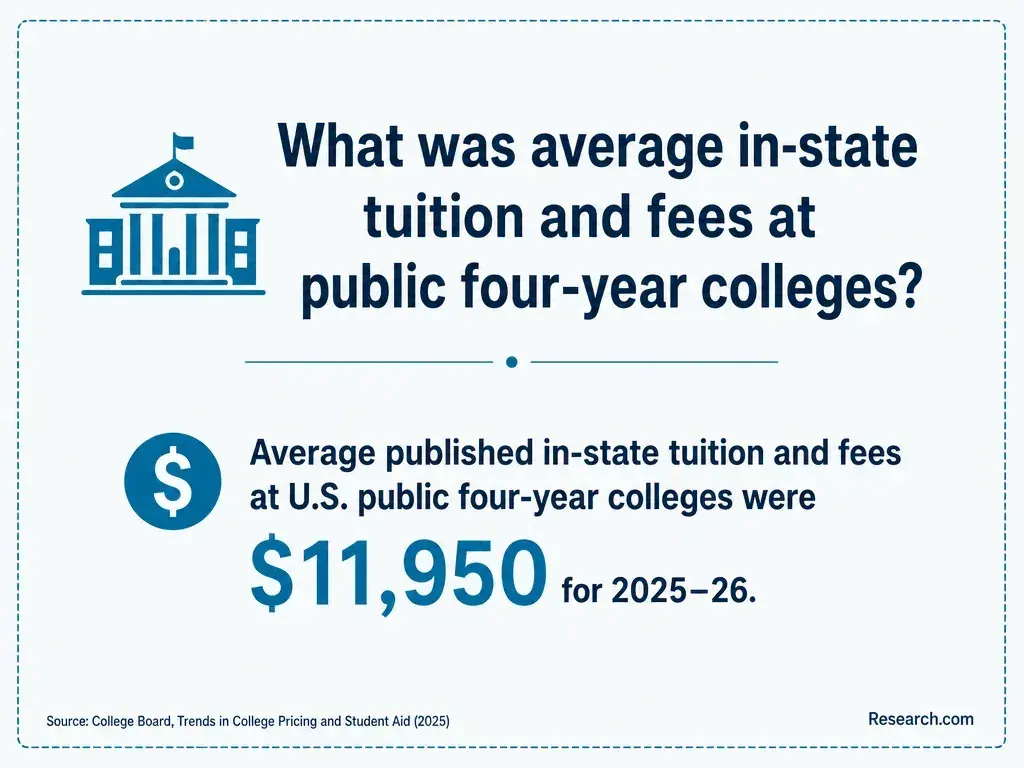
Completion time depends on required credits, course availability, enrollment pace, and whether a thesis or capstone must be completed on a fixed schedule. Published tuition is only part of the conference decision: technology or graduation fees, research materials, association membership, registration, travel, lodging, and time away from work can change the total. Do not assume an online program covers conference expenses or permits virtual presentation.
Obtain a written estimate for your intended pace and ask whether research supervision continues if a project extends beyond normal coursework. A shorter program may reduce time out of the workforce, while a longer sequence may offer more chances to revise a project and submit it. When comparing the fastest psychology master's formats, evaluate the conference-submission calendar alongside the graduation calendar; speed and research development are different benefits.
A forensic psychology MS may support applications for nonclinical research, program evaluation, victim-services coordination, corrections-related support, or justice-agency roles when the applicant also meets an employer's experience and hiring requirements. Duties might involve literature reviews, careful handling of authorized data, referral coordination, reports, or evaluation support. A conference poster can demonstrate research communication, but it is not a professional credential or proof of experience working with clients.
Match your target job postings to the preparation you would actually gain. Justice agencies may value policy, data, or case-support experience more than a specialized degree title. For some support-service goals, cost-conscious substance use counseling undergraduate options and applicable state credentials may offer a more direct route. Neither route alone grants authority to provide psychotherapy, perform forensic assessments, investigate crimes, or practice law.
If "forensic psychologist" means a licensed psychologist who performs psychological evaluations in legal matters, a nonclinical forensic MS alone is not sufficient. Psychologist licensure generally involves qualifying doctoral professional education and additional jurisdiction-specific supervised experience and examination requirements. The relevant state licensing board determines eligibility; a master's program cannot confer it through a concentration name or a conference presentation.
Some jurisdictions regulate other master's-level mental health professions under different titles and educational rules. If your goal is therapy rather than psychological evaluation, compare a qualifying counseling or social-work pathway and its state requirements. Clinical mental health master's tuition and career value is a different decision from the research-conference value of a forensic psychology MS. Prospective doctoral applicants should likewise check each target program's prerequisites; a master's degree and a publication are not universal admission requirements.
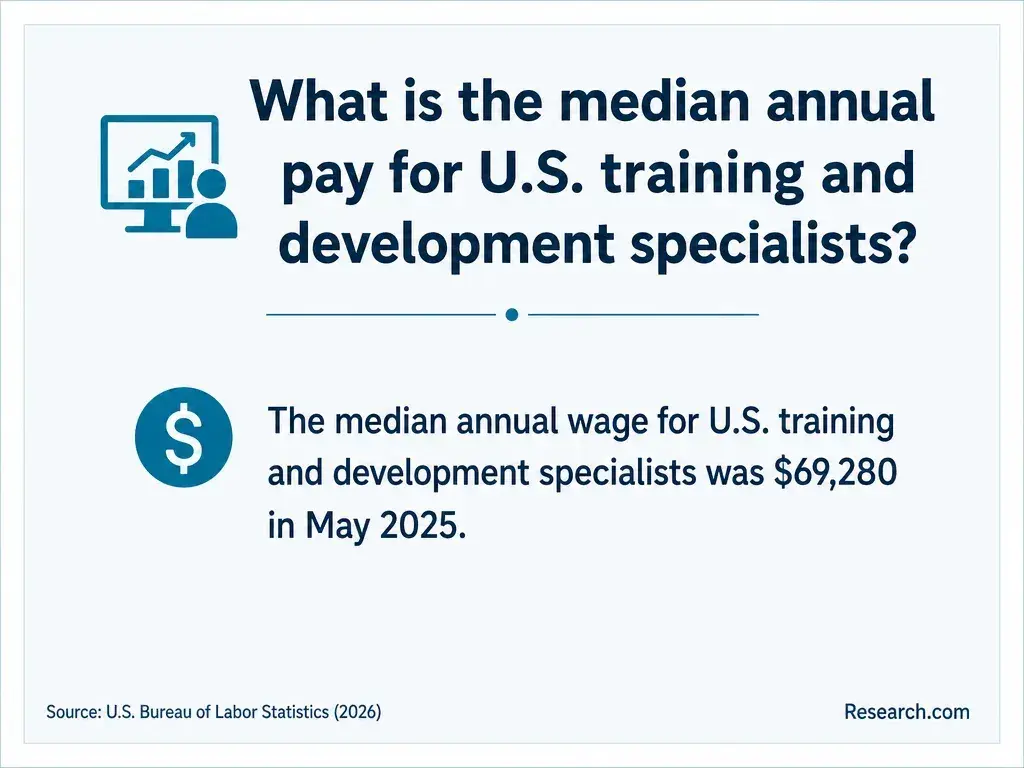
There is no single reliable salary or employment-growth figure for "forensic psychology MS graduates": graduates enter different occupations, and some pursue further education. US Bureau of Labor Statistics figures for psychologists describe an occupation with its own entry and licensing requirements, not the earnings of everyone with a forensic master's. For a realistic comparison, identify the exact job title and location you want, review its current Occupational Outlook Handbook entry where one exists, and examine local employer requirements and pay ranges.
Conference participation is most likely to improve an application when the role rewards research, analysis, or scholarly communication. It cannot justify borrowing on an assumed salary increase. Compare the full program and presentation costs with the qualifications required for your target role; if a lower-cost undergraduate support-services route is sufficient, review online substance use counseling bachelor's aid resources as part of that separate cost comparison.
How Can You Choose a Reputable Online Forensic Psychology Program?
Use the conference opportunity as an evidence test. A reputable program should be able to explain what research an online student can realistically undertake, who supervises it, what approvals it requires, and how presentation support works. Recent student examples are informative, but ask whether they represent online students and whether participation was independently arranged rather than program-supported.
Before enrolling, request answers to the questions that most directly affect your plan:
- Which faculty currently supervise online forensic research, and how is a student matched with a supervisor?
- Is a thesis, research capstone, or assistantship available to online students, and when can it begin?
- Who approves abstracts, authorship, data use, and any required human-participant or agency review?
- Have online students recently presented at relevant meetings, and what registration or travel support was actually available?
- What happens if a submission deadline falls before the project is ready or after graduation?
A project using court records, agency information, or participant responses may require permissions and privacy safeguards; removing names does not automatically make the data free to present. Weigh the answers against your intended occupation, using graduate-level forensic psychology career research to distinguish plausible roles from job titles that require additional credentials. Enroll for a research pathway you can document, not a conference opportunity that exists only in promotional language.
Other Things You Should Know About Psychology
Usually, yes, if registration is open to students or other attendees. Check the event's current registration rules and cost. Attending can help you assess research interests before developing a submission.
Possibly. The work must fit the event's submission rules, and your instructor or supervisor should review its quality, authorship, and permissions before you submit it.
No. A carefully scoped literature review or an appropriately authorized analysis can make a worthwhile scholarly contribution. Never use restricted records without the required permissions and oversight.
It is optional. Compare student membership benefits, meeting costs, and research interests first; membership does not guarantee mentorship, acceptance, or funding.
- Training, practice, and career considerations in forensic... - PMC https://pmc.ncbi.nlm.nih.gov/articles/PMC11638730/
- Cost of Attendance (Budget) | 2025-2026 Federal Student Aid Handbook https://fsapartners.ed.gov/knowledge-center/fsa-handbook/2025-2026/vol3/ch2-cost-attendance-budget
- Travel and Conference attendance Support by OUR | charlotte.edu https://our.charlotte.edu/travel-and-conference-attendance-support-by-our/
- Independent Research Projects | Babson College https://undergraduatecatalog.babson.edu/independent-research-projects
- A Career in Forensic and Public Service Psychology | apa.org https://www.apa.org/education-career/guide/subfields/forensic/education-training
- Options for Paying Conference Registration Fees | Travel Services https://travel.ucla.edu/policy-resources/options-for-paying-conference-registration-fees
- How to get involved in research as an online student | Oregon State Ecampus https://ecampus.oregonstate.edu/news/how-to-get-involved-in-research-as-an-online-student/
- Student Research Program (SRP-99) Courses | ucla.edu https://sciences.ugresearch.ucla.edu/courses/srp/
- Conference Grants | University of Pittsburgh https://www.asgraduate.pitt.edu/financial-support/conference-grants
- Thinking of going virtual or hybrid with your event? | umich.edu https://palmercommons.umich.edu/article/thinking-going-virtual-or-hybrid-your-event