2027 Regional vs Programmatic Accreditation for Public Administration Master's Degrees

Co-Founder and Chief Data Scientist
A prospective graduate considering a master's in public administration may wonder how accreditation impacts program quality and career prospects. Nearly 35% of public administration master's programs in the U.S. hold programmatic accreditation from NASPAA, while most also maintain regional accreditation from their institutions. This dual system can confuse applicants about which credential truly assures academic rigor and employer recognition.
Understanding these distinctions helps avoid enrolling in programs that may limit future licensure or federal funding eligibility. This article will clarify regional versus programmatic accreditation differences and guide readers in choosing a master's program aligning with their educational objectives and career ambitions.
Key Things to Know About Regional vs Programmatic Accreditation for Public Administration Master's Degrees
- Regional accreditation ensures overall institutional quality, critical for employers valuing degrees that support long-term career advancement in public administration.
- Programmatic accreditation focuses on specialized skills and curriculum relevance, directly impacting practical competencies for public administration professionals.
- Degrees from regionally accredited institutions often correlate with higher earning potential; 65% of public administration managers prefer candidates from regionally accredited programs.
What is regional accreditation for a public administration master's degree?
Accreditation acts as a primary indicator of academic quality and institutional integrity, ensuring that public administration master's degree programs meet rigorous educational standards. Over 90% of traditional degree-granting institutions in the United States hold regional accreditation, highlighting its role as the industry standard for higher education quality.
Regional accreditation criteria affecting public administration graduate programs focus on areas such as curriculum design, faculty qualifications, and student support services. Below are some of the key requirements and benefits associated with this process:
- Wide Recognition: Degrees from regionally accredited institutions are broadly accepted by employers and other educational establishments, making transfer credits and graduate admissions easier.
- Continuous Evaluation: Programs must undergo regular and thorough reviews to maintain accreditation, fostering ongoing improvements in academic offerings.
- Federal Financial Aid Eligibility: Students enrolled in regionally accredited schools qualify for federal financial aid, which is often unavailable at non-accredited institutions.
- Transparency and Accountability: Institutions are required to demonstrate clear and responsible administrative and financial practices.
- Quality Student Services: Accreditation ensures access to essential services such as career counseling and library resources that meet established standards.
Prospective students should pay close attention to regional accreditation for public administration master's degrees in the United States when comparing programs. Understanding these criteria can influence academic and career outcomes, especially as some students seek the fastest degree to get with solid recognition and return on investment.
What is programmatic accreditation for public administration master's programs?
Programmatic accreditation for public administration master's programs specifically evaluates the curriculum and professional standards of individual departments or academic units rather than entire institutions. This specialized accreditation plays a critical role in ensuring programs meet industry-specific benchmarks.
For instance, the Network of Schools of Public Policy, Affairs, and Administration (NASPAA) accredits about 300 member programs across the United States, highlighting the programmatic accreditation standards for public administration master's programs as essential for professional validation. The benefits of this focused accreditation include the following key impacts:
- Curriculum Rigor: Programmatic accreditation ensures that courses continuously reflect the latest public administration theory and practical skills, aligning education with evolving professional standards.
- Graduate Readiness: By matching program outcomes to employer expectations, accreditation improves graduates' career prospects and readiness for public sector roles.
- Professional Recognition: It enhances the reputation of both the program and institution among academic peers and practitioners in the field, fostering increased trust and credibility.
- Continuous Improvement: Accredited programs engage in ongoing assessment and updates, promoting adaptability to emerging challenges and innovations in public administration.
- Access to Funding: National programmatic accreditation benefits for public administration degrees often include eligibility for certain grants or federal aid tied to accredited status.
Prospective students should also explore options such as 1 year MSW programs when considering accelerated graduate studies alongside their focus on public administration degrees.
Do you need both regional and programmatic accreditation for a public administration master's degree?
Regional and programmatic accreditation often work together to provide a thorough guarantee of quality in graduate education. More than 70% of top-ranked public administration programs maintain both accreditations, reflecting a widely accepted standard for rigorous academic and professional preparation.
This dual-layer approach is important when evaluating the importance of regional and programmatic accreditation in public administration graduate programs. The following points highlight key implications of holding both credentials.
- Enhanced Credibility: Employers typically prefer degrees from programs accredited both regionally and programmatically, viewing graduates as better prepared and more reliable.
- Transferability of Credits: Regional accreditation facilitates smoother credit transfers between institutions, which benefits students seeking flexibility in their education path.
- Funding Opportunities: Federal financial aid eligibility often requires enrollment in a regionally accredited institution, making this accreditation critical for many students.
- Curriculum Relevance: Programmatic accreditation ensures that the curriculum aligns with current industry standards and evolves with public administration trends.
- Career Advancement: Some public sector jobs or licensure programs mandate degrees from accredited public administration programs, influencing employability and career progression.
Prospective students should carefully verify accreditation status when researching programs. Additionally, those exploring options for an engineering degree online may find similar accreditation importance applies in STEM fields.
Which accreditation is required for public administration licensure?
State regulatory boards frequently use accreditation status as a critical measure to assess whether candidates meet professional standards for public administration licensure. According to a 2022 survey by the National Association of State Boards of Public Administration, more than 85% of state boards insist on graduation from regionally accredited institutions to validate licensure eligibility, highlighting the legal risks involved with enrolling in non-accredited or exclusively programmatically accredited programs. The following agencies are the principal bodies responsible for establishing these accreditation standards.
- Higher Learning Commission (Regional): This agency provides regional accreditation covering a broad range of degree programs. Its endorsement confirms institutional quality, which is typically required by state boards to satisfy licensure criteria in public administration.
- Middle States Commission on Higher Education (Regional): As a regional accreditor, it evaluates the overall educational quality and institutional effectiveness. Graduation from a Middle States accredited institution is commonly accepted for professional licensure.
- New England Commission of Higher Education (Regional): Offering regional accreditation primarily in New England, this agency's recognition supports the wide-ranging quality assurance essential for licensure approval.
- Network of Schools of Public Policy, Affairs, and Administration (NASPAA) (Programmatic): NASPAA focuses exclusively on public administration and related fields, providing programmatic accreditation that attests to curricular rigor. However, its accreditation does not replace the legal licensure significance of regional accreditation.
These accrediting bodies play distinct but complementary roles. For licensure purposes, regional accreditation remains the key requirement, while programmatic accreditation like NASPAA's can enhance program reputation and curricular quality without directly impacting licensure eligibility.
Which accreditation is required for public administration master's financial aid eligibility?
For master's students pursuing a degree in public administration, regional accreditation is the essential requirement for qualifying for federal financial aid under Title IV programs. This form of accreditation, granted by one of six U.S. Department of Education-recognized regional bodies, guarantees that institutions meet overall quality standards.
Over $120 billion in federal student aid is distributed annually to students attending regionally accredited schools, underscoring the importance of this accreditation in securing financial support. While programmatic accreditation from organizations like NASPAA can enhance a program's credibility, it is not necessary to access federal loans or grants.
Additionally, regional accreditation often influences eligibility for private scholarships and corporate tuition reimbursement, providing a broader foundation for funding opportunities and supporting the long-term affordability and financial stability of earning a master's in Public Administration.
When I spoke with a graduate of a Public Administration master's program, he recounted the complexity of confirming his school's accreditation status before applying for aid. He emphasized the anxiety of navigating financial aid without clear guidance and noted, "I had to double-check the regional accreditation to ensure my eligibility, which wasn't immediately obvious from the program's website."
He also mentioned that receiving corporate tuition reimbursement hinged on this accreditation clarity, stating, "My employer was strict about the credentials of the institution." His experience highlighted how crucial understanding these distinctions is for students to confidently pursue and finance their graduate studies.
Does online format affect regional vs programmatic accreditation status?
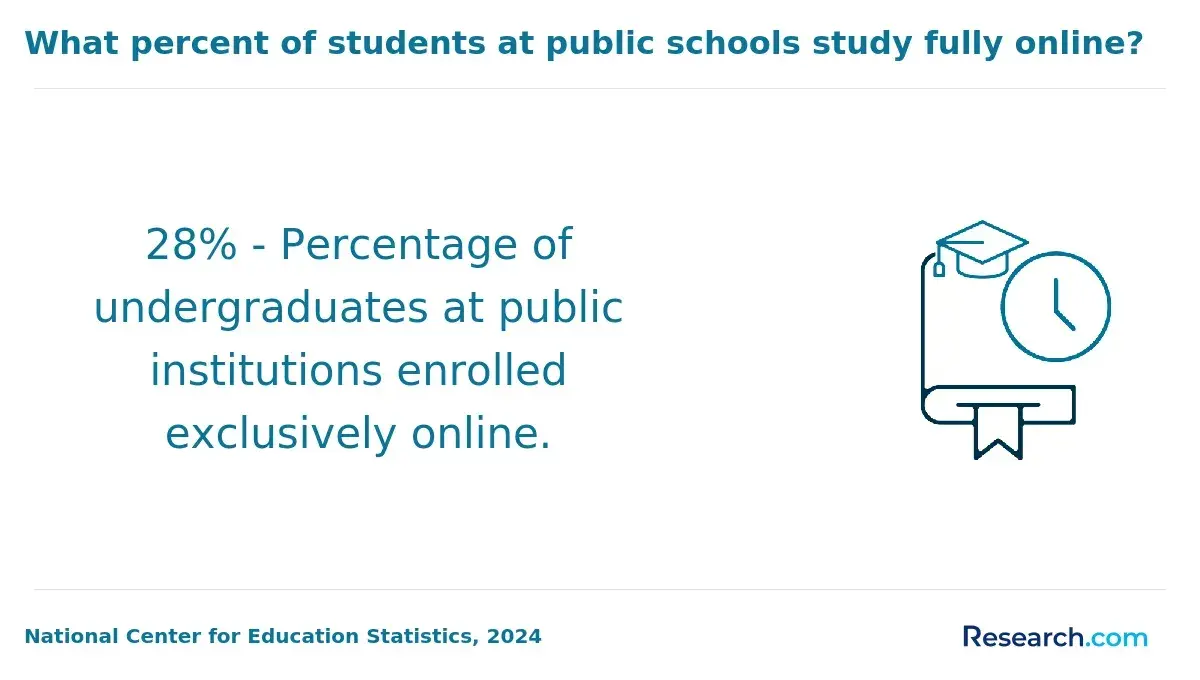
Reputable universities apply identical accreditation standards to both online and on-campus public administration master's programs, ensuring consistent quality regardless of delivery method. In 2019, over 6 million U.S. students participated in at least one distance education course, highlighting the widespread acceptance and credibility of online learning. The following key points clarify how accreditation is maintained for online formats.
- Regional Accreditation: This evaluates the entire institution as a whole, requiring that online offerings meet the same standards as traditional, campus-based programs to maintain institutional accreditation.
- Programmatic Accreditation: Focused specifically on the public administration curriculum and faculty, this accreditation remains consistent whether the program is delivered online or in person.
- Faculty Qualifications: Universities ensure that instructors teaching online possess the same credentials and expertise as those leading face-to-face courses, preserving academic rigor across formats.
- Student Support and Resources: Online programs must provide adequate technological infrastructure and support services comparable to those available on campus, facilitating student success and program integrity.
- Credit Transferability: When an institution holds proper accreditation, credits earned in an online public administration master's program are typically accepted and transferable without differentiation from on-campus credits.
Do employers care about regional vs programmatic accreditation in public administration fields?
While regional accreditation establishes that a university meets broad educational quality standards and qualifies for federal financial aid, programmatic accreditation often acts as a specialized "seal of approval" for hiring managers in public administration.
A survey revealed that 72% of employers in public sector roles value programmatic accreditation highly when assessing graduate credentials. This highlights how programmatic accreditation frequently carries greater professional weight. Below are key ways employer expectations are shaped by these accrediting bodies.
- Industry-Specific Assurance: Programmatic accreditation guarantees that graduates are trained according to competencies relevant to the public administration field, assuring employers of a candidate's specialized preparation.
- Job Market Advantage: Candidates from programmatically accredited programs may stand out due to the program's commitment to current trends and best practices, enhancing their appeal to employers.
- Legitimacy Confirmation: Regional accreditation confirms the institution's validity, which is essential for degree recognition but generally less influential on perceptions of professional readiness.
- Curriculum Rigor Indicator: Some employers interpret programmatic accreditation as a marker of a program's curriculum relevance and academic quality specific to public administration.
- Skill Preparation Concerns: Absence of programmatic accreditation may lead employers to question whether graduates possess the depth of skills required for specialized public administration roles.
When I asked a professional who graduated from a public administration master's degree program about her experience with employer views on accreditation, she described it as a nuanced challenge. She noted that while her institution's regional accreditation was a given, securing job interviews often depended on whether her program held the recognized programmatic accreditation.
"It was reassuring during job searches to highlight the program's NASPAA accreditation," she explained, "because it showed employers my education wasn't just general but tailored to the profession's standards." She recalled feeling more confident discussing her skillset knowing the program's specialized approval helped open doors that might otherwise have remained closed. This perspective underscores how programmatic accreditation can influence professional opportunities beyond institutional recognition alone.
Does accreditation type influence salary potential in public administration careers?
Recognized academic quality strongly correlates with long-term earning power for graduates in public administration careers. A report by the National Association of Colleges and Employers found that graduates from regionally accredited institutions typically earn about 10% more on average during their early career stages compared to those from non-regionally accredited schools.
This impact of regional versus programmatic accreditation on public administration salaries highlights the importance of accreditation in shaping salary outcomes for graduates of accredited public administration master's programs. The following points outline specific financial implications of accreditation type.
- Access to Financial Aid: Regional accreditation often qualifies students for federal financial aid programs, reducing the initial cost of education and improving overall return on investment (ROI).
- Curriculum Relevance: Programmatic accreditation, such as from NASPAA, ensures that the curriculum meets industry standards, which can enhance job placement and strengthen salary negotiation positions.
- Employer Recognition: Diplomas from regionally accredited universities are more widely accepted by employers and credential evaluators, often leading to better career advancement opportunities and higher salary scales.
- Salary Scale Eligibility: Many public sector employers require degrees from regionally accredited institutions to qualify for specific salary grades, directly affecting compensation.
- Specialized Expertise: Programmatic accreditation signals specialized knowledge in public administration, which can translate into higher starting salaries in niche government roles.
Prospective students should carefully consider these factors along with program costs and outcomes when choosing their graduate studies. Exploring an affordable master degree online option with appropriate accreditation can help optimize both educational expenses and career earnings potential.
How do you check if a public administration master's program has legitimate accreditations?
Prospective students should use official government and non-profit databases to avoid "accreditation mills" that issue unrecognized credentials. Between 2010 and 2020, nearly 150 institutions lost accreditation due to fraudulent practices, highlighting the importance of verification by trustworthy sources. Below are key steps for checking how to verify public administration master's degree accreditation accurately.
- Use Government Databases: Consult the U.S. Department of Education's Database of Accredited Postsecondary Institutions and Programs (DAPIP) to identify recognized regional and national accreditors associated with the institution.
- Consult CHEA Resources: The Council for Higher Education Accreditation (CHEA) maintains a database of legitimate accrediting bodies. Confirming the accreditor's status here ensures the program's regional or national recognition.
- Check Institutional Disclosures: Review the university's official website carefully for clear information about both regional and programmatic accreditation specific to public administration master's programs.
- Verify Programmatic Accreditation: Look for accreditation by organizations like the Network of Schools of Public Policy, Affairs, and Administration (NASPAA), which specializes in programmatic accreditation for public administration excellence.
- Avoid Marketing Reliance: Do not depend solely on promotional materials. Cross-reference multiple official sources for accurate details regarding the program's accreditation status.
Checking regional versus programmatic accreditation for public administration programs is crucial to ensure both academic quality and employer acceptance. For those exploring related online studies, the 2 year construction management degree online may offer a comparable example of verified and accelerated graduate education options.
What are the pros and cons of regional vs programmatic accreditation for public administration master's degrees?
Both regional and programmatic accreditation indicate educational quality, but they serve distinct functions: regional accreditation confirms an institution's overall stability and governance, while programmatic accreditation ensures that specific curricula meet industry benchmarks. Approximately 70% of U.S. colleges hold regional accreditation, underlining its role as a widespread and trusted standard of institutional quality.
Regional Accreditation
- Credit Transferability: Credits earned at regionally accredited institutions are more widely accepted by other colleges, facilitating smoother academic transitions.
- Financial Aid Access: Students typically qualify for federal financial aid programs, easing tuition payment and making education more affordable.
- Employer Recognition: Graduates benefit from employer confidence in the institution's overall reputation, which can support career advancement.
- Limited Program Specificity: This accreditation may not reflect the depth or rigor of the public administration coursework, potentially overlooking specialized academic strengths.
Programmatic Accreditation
- Industry-Relevant Curriculum: It verifies that the program's content aligns with professional standards, equipping students with targeted skills desired by employers.
- Licensure Eligibility: Graduates may have an advantage when seeking licenses or certifications required in public administration careers.
- Enhanced Job Placement: Career services and recruitment often favor programmatically accredited degrees, improving employment prospects.
- Narrower Institutional Recognition: The focus on specific programs might limit credit transferability or broader institutional benefits often associated with regional accreditation.
What Graduates Say About Regional vs Programmatic Accreditation for Public Administration Master's Degrees
- Linda: "Choosing a master's program in public administration with regional accreditation gave me confidence that my degree met rigorous academic standards. The cost was surprisingly manageable, especially considering the quality of education and resources I received. Since graduation, the accreditation has opened doors in government agencies, affirming the value of my credentials in a competitive job market."
- Monique: "Reflecting on my journey, what stood out most was the programmatic accreditation that ensured specialized curriculum focused on leadership and policy analysis. The investment felt justified not only because of the affordable tuition but also due to the network of professionals I connected with. Accreditation was a key factor when employers evaluated my qualifications, providing a tangible advantage as I advanced my career."
- Brianne: "My decision to pursue a master's in public administration was heavily influenced by the program's dual regional and programmatic accreditation, which guaranteed academic excellence and practical relevance. Balancing cost with quality was important to me, and this program struck that balance perfectly. Thanks to the accreditation, I noticed a direct positive impact on my professional credibility and opportunities for advancement in public service."
Other Things You Should Know About Public Administration Degrees
Yes, regional accreditation significantly affects credit transferability. Credits earned from a regionally accredited institution are generally accepted by other regionally accredited universities, facilitating smoother transfers. In contrast, credits from schools lacking regional accreditation or only holding programmatic accreditation may face rejection or require additional evaluation.
Regionally accredited universities typically have broader institutional resources, such as extensive libraries, research centers, and student services, benefiting Public Administration graduate students. Programmatically accredited programs may excel in specialized faculty and curriculum quality but often exist within institutions with more limited general resources.
In 2027, while regional accreditation ensures institutional credibility, programmatic accreditation in public administration provides assurance of specialized training. Employers in government and nonprofit sectors may prioritize programmatic accreditation for specific field expertise, potentially improving job prospects for graduates of such programs.
Employers in government and nonprofit sectors generally recognize regionally accredited degrees as a baseline for academic quality and institutional legitimacy. However, many also highly value programmatic accreditation as it signifies the program meets specific standards relevant to Public Administration practice, which may influence hiring decisions and candidate preference.
References
- Best Online MPA Degree Program Guide, Updated for 2024 https://www.mastersofpublicadministration.org/online/mpa
- Find Your Graduate Degree for Public Service https://www.naspaa.org/schools-search
- The Benefits and Challenges of Programmatic Accreditation in Higher Education https://www.globalaccrediting.org/news-and-updates/the-benefits-and-challenges-of-programmatic-accreditation-in-higher-education
- Do Employers Care About College Accreditation? https://www.accreditedschoolsonline.org/accreditation/do-employers-care/
- Masters in Public Administration: Guide For Public Leaders https://mastersinpublicadministration.org/
- Regional vs National Accreditation: What This Means for You https://www.uopeople.edu/blog/regional-vs-national-accreditation-whats-the-difference/
- Accreditation Standards and Procedures - Canadian Association of Programs in Public Administration https://cappa.ca/en/what-we-do/accreditation/standards-and-procedures/
- Top 10 Careers in Public Administration https://online.eou.edu/resources/article/careers-in-public-administration/
- Understanding the Difference Between Regional and National Accreditation https://www.qahe.org/article/understanding-the-difference-between-regional-and-national-accreditation/