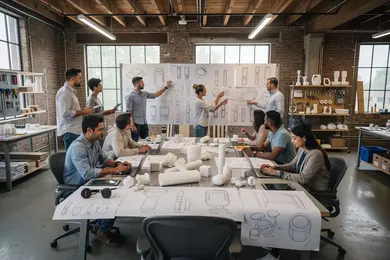
2027 Work Experience Requirements for Industrial Design Degree Programs

Co-Founder and Chief Data Scientist
Applicants often struggle to decipher work experience requirements for industrial design degree programs—requirements that vary widely across undergraduate, master's, doctoral, and professional degrees at accredited U. S. institutions. Experience thresholds are set based on program rigor and purpose, then evaluated through portfolios, references, and official documentation.
Notably, 62% of graduates with industry-relevant work experience secure jobs with salaries 15% higher than their peers, underscoring the importance of meaningful experience.
This article examines how experience is defined and weighted—including paid, unpaid, part-time, and international work—to guide prospective students through the complex admissions criteria across program types and concentrations.
Key Things to Know About Work Experience Requirements for Industrial Design Degree Programs
- Work experience thresholds for industrial design degrees vary by level; undergraduate programs often require minimal or none, while master's and doctoral tracks commonly demand 1-3 years of relevant work history.
- Admissions committees evaluate experience quality by portfolio impact and direct design involvement—unpaid and international work count when well-documented and contextually explained.
- Documentation must include detailed employer verification or project summaries—accelerated programs weigh experience more heavily, emphasizing practical skills over academic achievements.
What Are the Work Experience Requirements for Industrial Design Degree Programs at the Undergraduate Level?
Undergraduate industrial design degree programs across accredited community colleges and four-year institutions rarely require prior work experience for admission—this contrasts with graduate-level programs, which often place greater emphasis on relevant professional backgrounds.
These undergraduate programs reflect the entry-level nature of the degree by treating work experience as supplemental, focusing on foundational skills rather than extensive prior exposure. Research into work experience requirements for undergraduate industrial design programs in the United States reveals three common approaches:
- Admission Requirements: Few programs mandate work experience. This is mostly seen in accelerated or dual-enrollment pathways designed for career changers, where prior experience helps establish readiness.
- Recommendations: Many schools encourage applicants to have some involvement in design-related activities—such as internships, part-time roles, or volunteering—to strengthen portfolios and demonstrate commitment to the field.
- Course Credit: Several programs award academic credit for hands-on learning through internships or cooperative education, blending practical experience with academic progress.
This approach reflects how undergraduate programs prioritize building core competencies assuming students enter with minimal professional exposure, which differs markedly from graduate admissions that evaluate how experience fits specialized or advanced study needs.
For those entering directly from secondary school, it's advisable to target undergraduate industrial design programs that embed internships or co-op experiences within the curriculum—these integrate work exposure, better preparing students for the competitive job market.
Applicants also benefit from exploring options such as easy degrees to get online that pay well, which can complement industrial design studies with practical credentialing and flexible scheduling.
How Much Professional Experience Do Industrial Design Graduate Programs Typically Require Before Admission?
Professional experience requirements for industrial design graduate programs vary widely across accredited institutions in the United States, reflecting diverse program goals and applicant profiles.
Many programs do not strictly require work experience, instead welcoming recent graduates with strong academic portfolios and creative potential. These pathways often prioritize academic excellence and design talent over formal work history.
Other programs recommend two to three years of relevant professional experience to ensure candidates bring practical skills and industry insight into their graduate studies, especially in master's programs designed for applied research.
This experience threshold balances readiness with accessibility for early- to mid-career applicants navigating typical industrial design graduate program work experience requirements in the United States.
Elite or highly selective programs—particularly doctoral or specialized professional degrees—frequently expect five or more years of applied experience, emphasizing advanced expertise and leadership in the industrial design field. This level cultivates practitioners equipped for sustained impact and scholarly contributions.
Key considerations include:
- None Required: Admission directly from undergraduate studies is common for many master's programs prioritizing demonstrated talent.
- Recommended Experience: Two to three years validates applied skills and readiness for complex design challenges.
- Extensive Experience: Five-plus years signals maturity and leadership, sought in research-intensive programs.
- Evaluation Factors: Paid, unpaid, part-time, internships, and international work may count—documentation and relevance remain critical.
- Applicant Profile: Applicants range from recent graduates to international students and career changers, each with varying professional backgrounds.
- Experience as a Floor: Minimums establish entry points; strong portfolios may compensate for fewer years.
This nuanced approach helps candidates understand how program types, timelines, and experience categories shape admissions. Individuals interested in top-tier counseling programs may also explore CACREP schools for comparison across fields.
What Types of Work Experience Are Considered Relevant for Admission Into Industrial Design Programs?
Graduate programs in industrial design often request "relevant" work experience without clearly defining the term-creating uncertainty for applicants about what qualifies. Generally, programs prioritize experience linked to creative and technical aspects of industrial design.
Commonly accepted roles include product designer, UX designer, prototype developer, and manufacturing technician within industries like consumer electronics, automotive, furniture, and packaging.
Relevant tasks are hands-on sketching, 3D and CAD modeling, materials testing, and cross-functional collaboration with engineering or marketing teams. Internships or paid work demonstrating these skills are highly regarded.
By contrast, roles disconnected from design—such as administrative duties, sales without design involvement, or unrelated service sectors—are usually less valued. That said, some programs may accept allied experiences like graphic or interaction design if they involve similar creative problem-solving.
The interpretation of relevance varies depending on the program's focus. General industrial design tracks often welcome broader design-related experience, while specialized concentrations—such as sustainable design, furniture design, or digital fabrication—require more narrowly tailored backgrounds.
Applicants are encouraged to carefully investigate each program's expectations rather than assuming a one-size-fits-all definition.
For those with experience that falls outside typical categories—such as cross-disciplinary or international work—contacting admissions directly is advisable since evaluations differ widely.
- Professional Roles: Product designers, UX designers, prototype developers, manufacturing technicians in key industries.
- Industries: Consumer electronics, automotive, furniture, packaging, and related manufacturing sectors.
- Functional Responsibilities: Sketching, CAD modeling, testing materials, teamwork with engineers and marketers.
- Irrelevant Experience: Pure administration, sales without design input, unrelated service roles.
- Program Specialization: Broader programs accept varied design positions; specialized tracks require focused experience.
- Applicant Advice: Research thoroughly; consult admissions for unclear or international work.
A professional who earned an industrial design degree recently shared that navigating the ambiguity of "relevant" experience was challenging when applying.
He explained, "I worried that some of my freelance work might not count because it was part-time and mixed with graphic design. It wasn't until I spoke with the admissions team that I understood which of my projects truly aligned with their expectations."
He highlighted the importance of clarifying doubts early, noting, "This guidance gave me confidence and helped me present my background in a way that matched the program's criteria."
How Do Industrial Design Master's Programs Evaluate Part-Time or Volunteer Work Experience?
Master's programs in industrial design weigh part-time or volunteer work experience by focusing on quality and relevance rather than traditional full-time involvement. Admissions committees emphasize demonstrated responsibility—applicants must show meaningful roles like managing projects or solving design challenges that reveal initiative and capability within the industrial design field.
- Sustained Duration: Ongoing commitment is key. Even if the work was unpaid or part-time, consistent engagement that shows growth and reliability holds significant value when assessing experience thresholds for graduate admissions.
- Field Connection: Experience closely linked to industrial design—such as user research, product prototyping, or design consulting—carries more weight than unrelated roles, ensuring the background reflects relevant skills and knowledge.
- Skill Articulation: Applicants should frame their contributions in terms of skills acquired, decisions taken, and impact made, rather than focusing on job titles or hours. This approach helps evaluators better appreciate non-traditional experience formats.
- Letters of Recommendation: Strong endorsements from supervisors or clients familiar with applicants' design-related work enhance credibility and can effectively bridge gaps caused by the absence of full-time experience.
- Program Flexibility: Certain industrial design master's programs—especially those with interdisciplinary or practice-based orientations—explicitly welcome diverse work backgrounds, including freelance and volunteer roles.
Applicants navigating the weighting of unpaid and part-time industrial design work experience in the United States can leverage this understanding to tailor their submissions.
Those seeking expansion into graduate study might also consider exploring options such as an online degree psychology if diversifying studies.
What Is the Minimum Work Experience Requirement for Industrial Design MBA or Professional Degree Programs?
Work experience requirements for industrial design MBA and professional degree programs vary significantly depending on program structure and student focus. Part-time, evening, and online programs geared toward working adults usually expect several years of relevant experience since they build upon practical skills to advance careers.
Conversely, full-time traditional programs often welcome recent graduates with minimal or no professional experience, emphasizing foundational knowledge and potential.
Admissions committees consider average work experience within their enrolled cohorts—not just minimum criteria—to provide a realistic benchmark of candidate competitiveness.
This reflects a mix of paid, unpaid, part-time, and international work, offering a full picture of applicants' backgrounds. Prospective students benefit from researching median experience levels disclosed by programs to better understand admission profiles.
- Experience Variability: Executive and part-time programs typically require 3 to 7 years of work experience; full-time master's paths may accept applicants with less than 2 years or none.
- Experience Calculation: Teams include all relevant professional and volunteer engagements, ensuring comprehensive assessment.
- Program Type Influence: Specialized or accelerated tracks might call for unique experience portfolios compared to standard routes.
- Paid vs. Unpaid: Some programs value unpaid internships and volunteer roles when highly relevant, while others prioritize paid professional positions.
- Research Median Profiles: Exploring median-not just minimum-experience metrics helps applicants set realistic expectations.
One professional who built her career after completing an industrial design degree shared that navigating experience requirements was initially daunting. She recalled feeling uncertain about how her unpaid volunteer work abroad would be viewed but was encouraged after learning admissions offices weigh diverse experiences carefully.
"Understanding the emphasis on real-world application helped me highlight my unique background," she explained. This perspective eased her application process and ultimately shaped her confidence entering the field.
How Do Industrial Design Doctoral Programs Distinguish Between Industry Experience and Academic Research Experience?
Doctoral programs in industrial design differentiate substantially between applied professional experience and academic research background, reflecting their core objectives. Practice-oriented doctorates—such as professional doctorates—place higher importance on hands-on industry involvement, viewing real-world design work as vital for deepening dissertation relevance and innovation.
Conversely, research-focused programs like Ph.D. tracks emphasize scholarly inquiry, expecting applicants to demonstrate strong undergraduate or master's research experience, often supported by publications or presentations.
- Emphasis: Practice-based programs prioritize professional design work, while research-centric degrees value academic research qualifications more.
- Preference: Some institutions actively seek candidates with industry experience to enrich practical insights; others rate research aptitude and academic accomplishments above practical experience.
- Documentation: Portfolios showcasing design projects matter for practice-led applications, whereas detailed resumes highlighting research activities and publications are critical for research-focused tracks.
- Application Strategy: Tailoring application materials—such as statements and CVs—to highlight relevant experience aligned with the program's focus is essential.
- Guidance: Applicants should engage with doctoral program directors to clarify how professional experience compares with GPA and test scores in admissions decisions.
International candidates face added complexity in translating foreign work and research credentials to U.S. admissions, requiring clear articulation of how their experience fits program expectations.
Notably, a 2024 survey found that 68% of industrial design doctoral programs increasingly integrate professional experience as a key admissions factor to foster innovation grounded in industry challenges.
Which Industrial Design Degree Programs Accept Internships or Co-Op Experience in Lieu of Full-Time Work History?
Many industrial design degree programs—especially bachelor's completion and professional master's formats—accept co-op placements, structured internships, or supervised field practicums as valid substitutes for traditional full-time work experience.
These experiential components must meet clearly defined academic and professional benchmarks to fulfill program prerequisites or graduation requirements at accredited institutions.
- Co-Op Credit: Co-ops typically alternate between terms of work and study, offering high institutional oversight and formal learning objectives. They often include paid positions and require comprehensive reporting through supervisor evaluations and academic reflections, reflecting greater rigor than internships.
- Internship Credit: Internships can vary in duration and supervision level. Those accepted for credit generally involve faculty oversight, submission of work portfolios, and detailed task summaries. They may be unpaid or part-time but remain important for skill development and practical exposure.
- Documentation: Programs usually require official employer letters, learning agreements signed before placement, timesheets, and reflective presentations or papers that verify the experience's alignment with curricular goals.
- Admissions Considerations: Competitive industrial design programs may view internships favorably during holistic reviews—even when not formally substituting for paid work—especially benefiting recent graduates or career changers with limited full-time employment history.
- Caution: Students are strongly advised to obtain written confirmation from their program to ensure any planned internship or co-op will satisfy experiential requirements before committing.
A 2024 survey by the National Association of Colleges and Employers found over 65% of industrial design programs now incorporate co-op or internship experiences as part of degree credentials or admissions criteria-highlighting their increasing significance across educational pathways.
How Do Industrial Design Online Programs Handle Work Experience Verification During the Admissions Process?
Online industrial design programs—especially those serving adult learners, career changers, and international students—face unique challenges verifying relevant work experience during admissions in the United States. Without in-person interviews, programs rely heavily on documentation and digital methods to assess applicants' qualifications.
Evaluation methods for professional experience in US-based industrial design online degree applications vary widely by program and degree level, shaping how experience thresholds are set, evaluated, and documented.
- Resume Submission: A comprehensive professional resume outlining relevant roles, projects, and responsibilities typically forms the foundation of experience verification.
- Employer Confirmation Letters: Some programs require letters confirming employment dates and job duties to serve as direct proof of industrial design-related experience.
- Professional References: Verifiable references—often supervisors or colleagues who understand an applicant's practical competencies—are commonly requested to strengthen applications.
- LinkedIn Profiles: Many admissions offices use LinkedIn to cross-check work histories and endorsements, although profiles rarely serve as sole evidence.
- Experience Verification Variability: Graduate-level programs tend to mandate documented experience, while some undergraduate or accelerated formats treat it as optional, enhancing but not essential for admission.
- Challenges in Validation: To counter fraud risks—especially with self-reported histories—programs conduct follow-up calls and apply digital verification tools.
- International Applicants: Translating foreign work records presents extra verification steps, sometimes requiring notarized or third-party evaluations to satisfy experience prerequisites.
- Advice for Applicants: Preparing a detailed resume and securing at least one professional reference who can clearly articulate industrial design skills will improve admissions chances and streamline evaluation.
Prospective students navigating competitive admissions processes, including those seeking accelerated pathways or advanced degrees, should understand how relevant work experience is weighted based on program type and format, considering distinctions among paid, unpaid, part-time, and internationally earned experience.
For financial considerations aligned with further advancement, exploring the most affordable MBA programs may also offer complementary career benefits.
What Role Does Work Experience Play in Industrial Design Program Rankings and Selectivity?
Work experience significantly influences the rankings and selectivity of industrial design degree programs across the United States, shaping both the quality of admitted students and the programs' reputations within the professional community.
Ranking methodologies typically incorporate metrics such as average entering student experience, employer reputation scores, and alumni career outcomes. These components generate a feedback loop-programs with cohorts possessing stronger work histories tend to attract more competitive applicants, reinforcing their status over time.
Average Experience: Programs reporting higher average years of professional experience among incoming students generally receive better rankings. This signals a mature and prepared student body, capable of advanced study and making an industry impact. Applicants can use these statistics along with selectivity data to assess where their own experience fits within competitive admissions.
Employer Reputation: Institutions known for producing graduates who excel in the industrial design workforce achieve higher employer reputation scores. This recognition amplifies program rankings, drawing top-tier applicants-especially those with substantial professional backgrounds eager to join prestigious cohorts.
Alumni Outcomes: Strong career trajectories of graduates boost rankings and attract experienced applicants. Prospective students targeting the most selective programs often weigh these outcomes alongside their work experience levels to calibrate application strategies realistically.
Selectivity Insight: Amid the complex selectivity factors for industrial design degrees in the United States, analyzing average entering work experience helps applicants identify programs where their background remains competitive and admissions chances are more realistic.
Holistic Decision-Making: While rankings and work experience matter, candidates must also consider program fit, tuition cost, and how well a concentration aligns with individual career goals. These factors together guide balanced enrollment choices for undergraduate, master's, doctoral, and professional degree formats—especially when accounting for paid, unpaid, part-time, and internationally earned experience.
For those exploring graduate pathways-including career changers and international applicants-resources on related fields like clinical psychology masters programs can offer useful comparative perspectives on the role of professional experience in shaping admissions selectivity and program reputation.
How Do Industrial Design Programs With Accelerated Tracks Adjust Their Work Experience Expectations?
Accelerated industrial design programs often balance the needs of recent graduates and experienced professionals, leading to varied expectations around work and project experience. Their fast-paced structure requires students to adapt quickly while demonstrating strong creative and technical readiness.
As a result, many programs increasingly prioritize hands-on project work, leadership, and practical skills when evaluating applicants.
Experience Expectations: Accelerated industrial design degrees often attract two primary groups—recent graduates needing less professional experience and mid-career professionals who require more extensive work histories to handle condensed, intensive programs. This dual focus creates varied admissions standards depending on the target student profile.
Cohort Diversity: These programs frequently trade breadth for focused expertise: cohorts may be younger with limited practical exposure or older with specialized backgrounds. This dynamic shapes peer collaboration and networking opportunities, influencing the overall learning environment.
Coursework Intensity: Condensed timelines demand rapid skill acquisition, reducing time for exploratory or broad-based study compared to traditional two-year options. Students must quickly adapt to increased academic pressure and pace.
Career Support Services: Accelerated formats often streamline career resources, prioritizing short-term job placement over prolonged development. Students lacking robust work experience may find leveraging these services more challenging.
Peer Learning Impact: Students with limited professional backgrounds may struggle to contribute practical insights during collaborative projects. Conversely, those with substantial career histories enrich discussions and enhance project results through applied knowledge.
Applicant Advice: Prospective students without significant experience should strengthen applications by highlighting leadership roles, research involvement, or project work to demonstrate readiness for accelerated study demands.
Recent Trend: A 2024 survey revealed 62% of accelerated industrial design programs now prioritize demonstrable project experience over traditional paid employment histories when assessing applicants.
Which Industrial Design Degree Concentrations Require the Highest Levels of Prior Professional Experience?
Certain industrial design degree concentrations consistently demand significant professional experience, often targeting individuals well into their careers rather than those just starting out. Tracks such as clinical industrial design, executive leadership programs, and policy-focused studies emphasize practical understanding and nuanced expertise gained through years of industry exposure.
- Disciplinary Rigor: These specializations require deep familiarity with regulatory frameworks, user-focused research, and sector-specific environments—knowledge usually acquired through extended professional engagement.
- Accreditation Standards: Accrediting bodies often set experience thresholds to ensure programs cultivate leadership and innovation, making several years of work history a formal admission prerequisite.
- Program Structure: To accommodate varying experience levels, many institutions offer foundational concentrations for early-career students alongside advanced pathways designed for seasoned professionals.
- Applicant Guidance: Investigating the backgrounds of current students and recent graduates helps prospective applicants understand typical experience expectations and admission competitiveness.
- Experience Evaluation: Schools assess paid, unpaid, part-time, and international work differently, considering relevance and documentation quality—highlighting that how experience is framed matters as much as its duration.
- Recent Trend: As of 2024, over 60% of executive-focused industrial design graduate tracks require five or more years of professional experience, underscoring a heightened emphasis on leadership credentials.
What Graduates Say About the Work Experience Requirements for Industrial Design Degree Programs
- Cade: "What struck me most about the work experience requirements in the industrial design degree program was how clearly they set thresholds depending on the degree level-undergraduate students focused on foundational internships, while master's and doctoral candidates were expected to demonstrate research or project leadership. The evaluation process was surprisingly personalized, with mentors reviewing portfolios and reflecting on practical contributions rather than just hours logged. Documenting this experience taught me the importance of detailed presentation and professional storytelling, which made the transition into my career much smoother."
- Mohamed: "Looking back, I realize how the structured approach to work experience in industrial design programs helps maintain academic and professional rigor at every level-undergraduates are encouraged to accumulate diverse experiences, whereas professional degrees require specialized, industry-aligned work. Programs across accredited institutions consistently assess experience through reflective reports, supervisor feedback, and project outcomes, which adds a layer of qualitative assessment that numbers alone can't capture. I appreciated how documenting these experiences wasn't just a formality but a critical step in understanding my own growth and preparedness."
- Axel: "From a professional standpoint, the industrial design degree's work experience requirements are meticulously calibrated to bridge academic learning with real-world applicability. Thresholds vary widely-doctoral candidates might engage in multi-year collaborative research, while undergraduates focus on hands-on studio work and internships-but all evaluations center on demonstrating tangible skills and creative problem-solving. Personally, maintaining thorough documentation across formal evaluations and portfolios was invaluable; it sharpened my professionalism and proved essential when seeking advanced career opportunities."
Other Things You Should Know About Industrial Design Degrees
Applicants lacking formal industrial design work experience can highlight related activities such as internships, volunteer projects, or freelance design work. Demonstrating skills through portfolios and personal projects aligned with industrial design principles often helps compensate for the absence of paid roles. Additionally, emphasizing relevant coursework or creative problem-solving experiences can make an application more competitive.
Most industrial design programs require official letters from employers or supervisors that describe the nature and duration of the work experience. Detailed job descriptions, resumes, and portfolios showcasing completed projects are also commonly requested to verify and contextualize the experience. Some schools may require these documents to be on official company letterhead or include contact information for follow-up.
International applicants should provide translated and notarized copies of employment records, letters of recommendation, and any certifications related to their work experience. Equivalency evaluations may be necessary to help admissions committees understand foreign professional standards. It is advisable to clarify how the experience aligns with industrial design requirements in the applicant's personal statement or supplementary materials.
In 2027, work experience can enhance a student's eligibility for scholarships or fellowships by demonstrating practical skills and industry knowledge. Many programs prioritize applicants who have relevant experience, as it indicates a commitment to the field and can add value to academic pursuits.
References
- Industrial Design Co-op Employers https://wit.edu/academics/industrial-design/co-op
- Benefits of an Industrial Design Masters degree https://boards.core77.com/t/benefits-of-an-industrial-design-masters-degree/25720
- Application Requirements https://www.fh-joanneum.at/industrial-design/master/en/admissions/application-requirements/
- Learning at Industrial Design https://educationguide.tue.nl/programs/bachelor-college/majors/industrial-design/learning-at-industrial-design
- From Industrial Design to Transforming User Experience - DesignSingapore Council https://designsingapore.org/stories/from-industrial-design-to-transforming-user-experience/
- Academic PhD Vs Industrial PhD in STEM Fields - Higher Education Digest https://www.highereducationdigest.com/academic-phd-vs-industrial-phd-in-stem-fields/
- Admission requirements Master Industrial Design | KABK https://www.kabk.nl/en/programmes/master/industrial-design/admission-requirements
- How to become an Industrial Designer | Domus Academy https://www.domusacademy.com/the-envisioner-magazine/jobs/how-to-become-industrial-designer/
- Careers in Industrial Design https://www.artcenter.edu/academics/graduate-degrees/industrial-design/careers-in-industrial-design.html