2027 BCBA Tuition & Fees Breakdown: Total Cost to Become Certified

Co-Founder and Chief Data Scientist
Becoming a Board Certified Behavior Analyst (BCBA) is a career decision and a financial decision. Before you enroll in a graduate program, you need to know what the full pathway may cost—not just tuition, but also supervised fieldwork, BACB fees, study materials, insurance, and the ongoing costs of keeping the credential active. For many candidates, the total investment can range from $25,000 to over $60,000, depending on the school, supervision model, and funding options available.
This guide breaks the cost of BCBA certification into the expenses you can plan for, the costs that are easy to overlook, and the financial factors that affect return on investment. It is designed for prospective graduate students, career changers, ABA technicians planning their next step, and working professionals comparing online, in-person, public, and private program options.
Use it to build a realistic budget, compare programs more carefully, ask better questions before committing, and decide whether the BCBA pathway fits your career goals and financial situation.
Key Benefits of Becoming a Certified BCBA
- Gain the ROI of becoming a BCBA with an initial investment of $25,000 to over $60,000.
- A BCBA certification can unlock significant earning power, with the average national salary for a BCBA reaching approximately $89,075 per year, according to 2025 data from ZipRecruiter.
- Step into a career with exceptional job security, as nationwide demand for behavior analysts holding BCBA certification saw a remarkable 58% increase from 2023 to 2024 alone, based on a 2025 report from the Behavior Analyst Certification Board.
What are the main cost components for BCBA certification?
The cost of becoming a BCBA usually falls into three major categories: graduate education, supervised fieldwork, and BACB certification fees. Tuition is often the largest expense, but supervision can become a major cost if your employer does not provide it. The board fees are smaller by comparison, but they are required and should be included in your timeline.
A practical BCBA budget should separate these costs instead of treating the pathway as one lump sum. That makes it easier to compare programs, identify where you can save money, and avoid being surprised late in the process.
The three core cost categories
| Cost component | What it covers | Why it matters |
| Graduate Program Tuition & Fees | A qualifying master's degree in applied behavior analysis, education, psychology, or a related approved field | This is usually the largest single cost and varies widely by institution, format, and credit requirements. |
| Supervised Fieldwork | The required practical experience completed under qualified supervision | This may be free through an employer or become a substantial out-of-pocket expense if you hire an outside supervisor. |
| BACB Certification Fees | Application, examination, and later renewal fees paid to the Behavior Analyst Certification Board | These fees are fixed parts of the certification process and must be paid at specific stages. |
What to check before you commit
- Total program cost, not just cost per credit: A lower per-credit price may not save money if the program requires more credits or charges high fees.
- Whether supervision is included: Ask whether the school or employer provides supervision, whether it costs extra, and whether it meets BACB requirements.
- Timing of expenses: Tuition is paid throughout the program, supervision costs may occur over time, and BACB fees come near the certification stage.
- State requirements: Certification and state licensure are related but not always identical. Check your state's rules before assuming BCBA certification alone is enough for independent practice.
How much does a qualifying master's degree cost?
A qualifying master's degree typically costs between $15,000 and $40,000 for the full program, though the final amount depends heavily on the university, program length, residency status, and fee structure. According to the National Center for Education Statistics, the average price for a graduate credit is around $690 at public universities and can exceed $1,500 at private universities. Because most programs charge by credit, even a small difference in per-credit tuition can significantly change the total cost.
Students often compare BCBA master's programs online because online formats can reduce indirect costs such as commuting, relocation, parking, and campus-based fees. However, online does not automatically mean cheaper. The most important number is the full cost of attendance, including tuition, university fees, technology fees, books, and any required campus visits.
Public vs. private institution costs
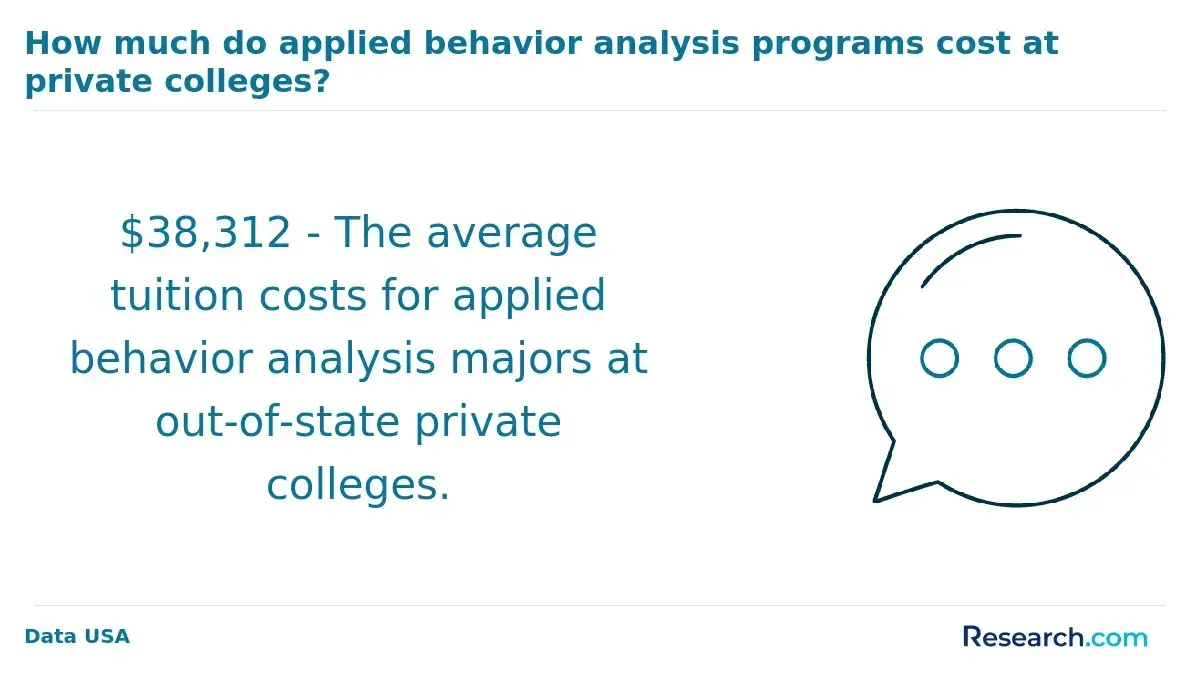
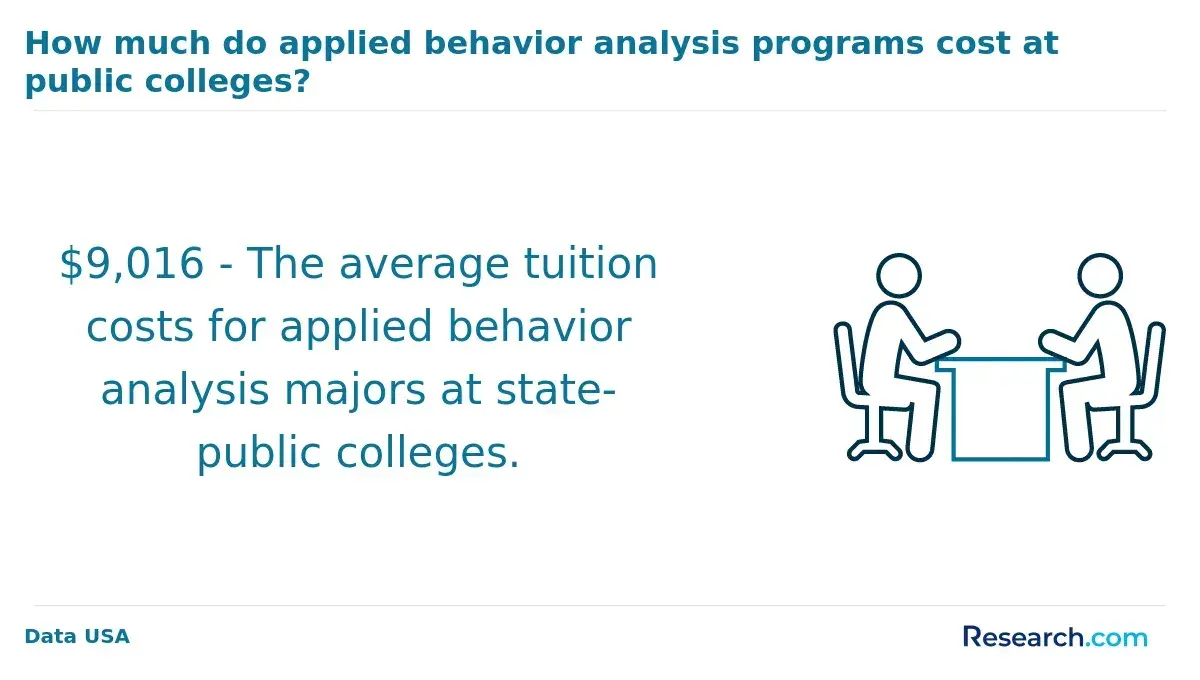
Your choice of institution has the largest effect on tuition. A master's degree from a public, in-state university might cost between $15,000 and $25,000 in total tuition. A similar program at a private or out-of-state university could range from $30,000 to over $50,000. The lowest-cost option is not always the best fit, but a higher price should be justified by strong advising, reliable fieldwork support, good exam preparation, and scheduling flexibility.
| Program type | Typical cost pattern | Questions to ask |
| Public in-state university | Often the most affordable tuition option | Are online students charged in-state tuition? Are there additional program or distance-learning fees? |
| Public out-of-state university | May cost substantially more than in-state study | Does the program offer reduced online tuition or tuition waivers? |
| Private university | Often higher per-credit tuition | Are scholarships, tuition discounts, or employer partnerships available? |
| Online program | May reduce indirect costs while allowing continued employment | Does the program help arrange supervision, and are there required in-person components? |
How to compare programs accurately
- Calculate total credits multiplied by tuition per credit. Do not rely only on advertised per-credit prices.
- Add mandatory fees. Technology, student services, graduation, and course-specific fees can change the final cost.
- Ask whether the program meets BCBA coursework requirements. A lower-cost degree is not a bargain if it does not satisfy certification requirements.
- Consider work flexibility. A program that lets you keep earning income may be more affordable overall than a cheaper program that requires you to reduce work hours.
What is the cost of the required supervision hours?
The cost of required supervised fieldwork can range from $0 to over $10,000, depending on how you obtain supervision. The most affordable path is employer-provided supervision, where an ABA provider, school, clinic, or healthcare organization offers supervision as part of your job. This can dramatically lower the total cost of certification.
If supervision is not included through your workplace or graduate program, you may need to hire an independent BCBA supervisor or use a supervision agency. Rates for this service typically range from $50 to $150 per hour. Because the BACB requires supervision for 5% of your fieldwork hours, that equals 100 total hours for a 2,000-hour track. Over the one to two years it takes to complete the requirement, supervision can become one of the most important budget items.
Common supervision models
| Supervision model | Typical cost impact | Best for |
| Employer-Provided Supervision | Often offered at no direct cost | Candidates working for ABA providers or organizations with established BCBA supervision systems |
| University-Arranged Supervision | May be included in tuition or charged as an added fee | Students who want structured placements and closer coordination between coursework and fieldwork |
| Independent/Agency Supervision | Usually paid out of pocket at hourly rates | Candidates whose workplaces do not provide qualified supervision or whose schedules require flexibility |
Strategies for managing supervision costs
- Look for jobs that include supervision before enrolling. This is often the single most effective way to reduce your total cost.
- Get the supervision agreement in writing. Clarify fees, meeting frequency, documentation expectations, and what happens if you leave the employer.
- Confirm that the supervisor meets BACB requirements. Supervision that does not qualify can delay certification and waste money.
- Compare more than price. Low-cost supervision is not helpful if it is inconsistent, poorly documented, or unavailable when you need support.
- Ask graduate programs about placement support. Some programs have employer partnerships or practicum arrangements that can reduce the burden of finding supervision on your own.
What are the BACB application and examination fees?
The BACB application and examination fees total $370 for the initial certification process. The BCBA application fee is $245 and is paid when you submit documentation showing that you have met the degree, coursework, and fieldwork requirements. After the BACB approves your application, you pay a separate $125 examination fee to schedule and take the BCBA exam.
These fees are much smaller than tuition and supervision costs, but they are still required. Budgeting for them early helps you avoid delays at the end of the process, especially when you may also be paying for exam preparation materials, final transcripts, or state licensure steps.
Board-mandated fees to plan for
| Fee | Amount | When it applies |
| BCBA Application Fee | $245 | Submitted with your certification application |
| BCBA Examination Fee | $125 | Paid after application approval when scheduling the exam |
| Annual Certification Renewal Fee | $215 | Ongoing cost required to maintain your credential after initial certification |
Important budgeting note
The application and exam fees are not the only costs that may appear near the end of the pathway. Candidates may also need to budget for transcript fees, exam preparation resources, state licensing fees, or retesting costs if they do not pass on the first attempt. Those amounts vary, so verify the current requirements directly with your program, the BACB, and your state licensing board.
Are there other hidden costs to budget for?
Yes. Tuition, supervision, and BACB fees are the main expenses, but they do not capture the full cost of becoming a BCBA. Smaller required expenses can add up over the length of a graduate program and fieldwork period. These may include textbooks, assessment tools, software, background checks, professional liability insurance, and exam preparation materials.
Some of these costs are required by the university. Others are tied to fieldwork sites, employers, supervisors, or state rules. The safest approach is to build a contingency fund rather than assuming tuition is the only major expense.
Common additional costs
- Textbooks and course materials: ABA graduate courses may require specialized texts, manuals, articles, or digital platforms.
- Required software: Some programs use data collection, video review, learning management, or exam preparation tools.
- Professional liability insurance: Many supervisors and fieldwork sites require coverage before you work with clients.
- Background checks: These may be required for admission, employment, fieldwork placement, or work with vulnerable populations.
- Exam preparation: Study guides, practice exams, tutoring, or review courses can be useful, especially for candidates who want structured preparation.
- Professional memberships: Associations can provide networking, continuing education, and career resources, though they may not be mandatory.
- Travel and commuting: Even online students may need to travel for fieldwork, practicum, employer training, or required campus activities.
How much extra should you set aside?
A reasonable planning approach is to set aside an additional $1,000 to $2,000 for these expenses. The exact amount depends on your program, fieldwork arrangement, and whether your employer pays for items such as liability insurance, background checks, or professional development.
Before enrolling, ask the program for a written list of estimated non-tuition costs. Also ask fieldwork sites what they require before you begin. Small costs become easier to manage when you know when they are due.
How can you fund your BCBA education and training?
You can fund BCBA education through a mix of federal aid, employer assistance, scholarships, graduate assistantships, personal savings, and income from continued employment. Most students should begin by completing the Free Application for Federal Student Aid (FAFSA), which determines eligibility for federal loans, grants, and work-study programs. According to data from the College Board, graduate students receive an average of over $28,000 in financial aid annually, primarily through loans.
Employer tuition assistance can be especially valuable in ABA, healthcare, education, and human services settings. Many organizations need qualified BCBAs and may help employees pay for graduate coursework or supervision. Flexible online BCBA programs can also help students keep working while they complete coursework, which may reduce the need to borrow.
Funding options to compare
| Funding source | How it helps | What to watch for |
| Federal financial aid | Can help cover tuition and approved education costs | Graduate aid is often loan-based, so compare repayment obligations carefully. |
| Employer tuition assistance | Can reduce out-of-pocket costs and may include supervision support | Some employers require a work commitment after receiving assistance. |
| Scholarships | Do not need to be repaid | Deadlines, eligibility rules, and award amounts vary. |
| Graduate assistantships | May provide a tuition waiver and stipend in exchange for part-time university work | Availability is limited and may be more common in campus-based programs. |
| Continued employment | Provides income while studying, especially in online or part-time programs | Balancing work, coursework, and fieldwork can be demanding. |
Build a layered funding plan
The strongest funding strategy usually combines several sources. For example, you might use employer assistance for part of tuition, apply for scholarships, choose an affordable online program, and use federal loans only for the remaining balance. This approach can reduce debt while keeping your certification timeline realistic.
- Start with the least expensive qualified programs. Make sure they meet certification requirements before comparing prices.
- Ask your employer about supervision and tuition support. These benefits can change your total cost more than a small tuition discount.
- Apply for scholarships early. Many awards have deadlines before the academic year begins.
- Borrow conservatively. Base loan decisions on your full budget, expected salary, and repayment plan.
- Keep working if feasible. Maintaining income can reduce borrowing, but do not overload your schedule to the point that coursework or fieldwork suffers.
What is the typical salary for a BCBA?
The national average salary for a Board Certified Behavior Analyst is approximately $89,075 per year, according to 2025 data from ZipRecruiter. This salary level is one reason many candidates view BCBA certification as a strong return-on-investment opportunity. However, it should not be treated as a guaranteed starting salary. Actual compensation varies by location, employer type, experience, caseload, setting, and whether the role includes supervision or leadership responsibilities.
BCBAs in major metropolitan areas or high-demand states such as California and Massachusetts may earn higher average salaries than the national average. Work setting also matters. Private practice, hospitals, and clinical leadership roles may pay differently from school-based or nonprofit positions. When evaluating the cost of certification, compare likely salaries in your target region and setting, not just national averages.
Factors that influence earning potential
- Geographic location: Demand, cost of living, insurance reimbursement patterns, and state funding can affect pay.
- Work setting: Schools, clinics, hospitals, home-based service providers, private practices, and organizations may use different pay structures.
- Experience level: New BCBAs may start below the average, while experienced clinicians, supervisors, and directors may earn more.
- Specialization: Expertise in areas such as early intervention, severe problem behavior, or organizational behavior management (OBM) can improve marketability.
- Advanced credentials: A doctoral degree and BCBA-D designation can support roles in academia, advanced clinical leadership, and research.
- Benefits and workload: Salary is only one part of compensation. Compare health benefits, paid time off, billable-hour expectations, supervision duties, and travel requirements.
How to use salary data in your decision
Use salary estimates to test affordability, not to assume a guaranteed outcome. A practical approach is to compare your expected total certification cost with entry-level and mid-career BCBA salaries in the area where you plan to work. If you expect to borrow for tuition, include projected loan payments when deciding whether a program is financially realistic.
How has the demand for behavior analysts changed?
Demand for behavior analysts has grown sharply, strengthening the career case for BCBA certification. According to a 2025 report from the Behavior Analyst Certification Board, annual demand for individuals holding BCBA certification increased by 58% between 2023 and 2024. This level of growth shows that employers continue to seek qualified professionals across clinical, educational, and behavioral health settings.
Several factors contribute to the demand, including increased awareness of autism spectrum disorder, expanded insurance mandates for ABA services, and broader use of behavior-analytic services. The five states with the highest demand are California, Massachusetts, Texas, New Jersey, and Florida, which collectively account for 40% of recent job postings.
What the job market means for candidates
A strong labor market can improve job options, but candidates should still evaluate roles carefully. High demand does not automatically mean every job offers reasonable caseloads, quality supervision, ethical service models, or competitive benefits. Your goal should be to find a role that supports sustainable practice, not simply the first available opening.
- Ask about caseload size and billable-hour expectations. These factors strongly affect work-life balance.
- Review supervision and clinical support. New BCBAs benefit from mentorship, even after certification.
- Compare benefits and salary together. A higher salary may be less attractive if travel, workload, or benefits are poor.
- Check state licensure rules. Some states require licensure in addition to certification for independent practice.
- Consider long-term career paths. Demand can create opportunities in clinical leadership, training, consulting, program development, and administration.
Where demand may be strongest
Demand is often highest in areas with large populations, expanded service coverage, and active ABA provider networks. If you are willing to relocate, states such as California, Massachusetts, Texas, New Jersey, and Florida may offer a broader range of openings. If you plan to stay local, research employers in your area before choosing a program so you understand likely job options after certification.
What are the educational requirements to become a BCBA?
To become a BCBA, candidates must meet education, coursework, supervised fieldwork, and examination requirements established by the BACB. The education requirement centers on a qualifying graduate degree from an accredited university. According to the U.S. Bureau of Labor Statistics, professionals in fields related to psychology, including behavior analysis, typically need at least a master's degree to enter the occupation.
The most direct route is to earn a BCBA degree from a program that includes an ABAI-accredited Verified Course Sequence (VCS). This helps ensure that the coursework is designed to meet the board's academic requirements in areas such as ethics, measurement, assessment, intervention, and behavior-analytic principles.
Typical steps to BCBA certification
- Earn a qualifying graduate degree. The degree must meet BACB education requirements.
- Complete required behavior-analytic coursework. Many candidates do this through a Verified Course Sequence.
- Accumulate supervised fieldwork. Fieldwork must be completed and documented according to BACB standards.
- Apply to the BACB. Submit the application and required documentation for review.
- Pass the BCBA examination. After approval, schedule and complete the exam.
- Meet state requirements, if applicable. Some states require licensure or additional steps before independent practice.
The path to independent practice
BCBA certification is a national professional credential, but state laws determine whether you need a license to practice independently. In many states, behavior analysts must be licensed in addition to being certified. This may require passing the BCBA exam, submitting a state application, paying state fees, and, in some cases, completing a jurisprudence exam on state-specific laws and ethical requirements.
Before enrolling in a program, check three things: whether the degree is from an accredited institution, whether the coursework meets BACB requirements, and whether the program prepares you for licensure in the state where you plan to work. This is especially important for online students enrolling in out-of-state universities.
Is the total investment in BCBA certification worth it?
For many candidates, the investment in BCBA certification can be worth it because the credential is tied to strong demand, clear professional identity, and a national average salary of approximately $89,075 per year. The financial case is strongest when you choose an affordable qualified program, secure low-cost or employer-provided supervision, keep borrowing manageable, and plan to work in a region with steady demand.
The value is not automatic, however. A program that costs far more than comparable options, lacks fieldwork support, or requires heavy borrowing may reduce your return on investment. The 58% growth in demand from 2023 to 2024 is encouraging, but your personal outcome depends on your location, employment setting, debt level, and ability to complete all certification requirements on schedule. Choosing one of the best online ABA master's programs may improve the return if it allows you to keep working while earning the degree.
How to calculate your personal return on investment
Start with your total expected cost, including tuition, supervision, BACB fees, hidden expenses, and any loan interest you expect to pay. Then compare that figure with realistic BCBA salaries in your target job market. A total investment of $40,000, for example, may be easier to justify if you can access roles near the national average salary and keep debt payments manageable.
| ROI factor | Why it matters | How to evaluate it |
| Total program cost | Higher tuition increases the amount you must recover through future earnings | Compare full cost of attendance across several qualified programs. |
| Supervision cost | Paid supervision can add thousands to the pathway | Prioritize employers or programs that provide reliable supervision. |
| Salary in your region | National averages may not reflect your local job market | Review postings in your state and preferred work setting. |
| Ability to keep working | Continued income can reduce borrowing | Consider online, part-time, or flexible formats if they meet certification requirements. |
| Licensure requirements | State rules can affect timeline and cost | Check licensing requirements before choosing a program, especially if studying online. |
When the investment makes the most sense
- You are committed to behavior analysis as a long-term career. The credential is specialized, so motivation and fit matter.
- You can complete a qualifying program without excessive debt. Lower fixed costs improve ROI.
- You have access to affordable supervision. Employer-provided supervision can make the pathway much more manageable.
- Your local job market is strong. Demand in your target area affects salary, job choice, and advancement.
- You understand state practice rules. Certification, licensure, and independent practice requirements should be clear before you invest.
In short, BCBA certification can be a financially and professionally strong investment, but the best decision is based on your actual costs, funding options, supervision plan, and career goals—not on tuition or salary figures alone.
Other Things You Should Know About BCBA Tuition and Fees
For BCBA certification in 2027, applicants must complete an approved program comprising a minimum of 270 credit hours. These hours must include coursework in behavior analysis principles, assessment, and ethics taught by qualified instructors in accredited institutions.
The 2027 BCBA certification cost includes tuition fees for required coursework, which typically ranges between $20,000 to $50,000. Additional expenses involve application and exam fees ($245 and $450 respectively), textbooks and materials, supervision costs, and possibly workshop or continuing education credits.
In 2027, the total estimated tuition and fees for completing a BCBA program range from $20,000 to $30,000. This includes coursework, supervision hours, application fees, and the BCBA exam cost. Costs vary based on institution and geographical location.
References
- Behavior Analyst Certification Board. (2025). US employment demand for behavior analysts: 2010–2024. Retrieved November 10, 2025, from BACB.
- College Board. (2025). Trends in college pricing and student aid 2024. Retrieved November 10, 2025, from College Board.
- National Center for Education Statistics. (2025). Digest of education statistics, 2024. Table 330.10: Average graduate tuition and required fees. U.S. Department of Education. Retrieved November 10, 2025, from NCES.
- U.S. Bureau of Labor Statistics. (2025). Occupational outlook handbook: Psychologists. Retrieved November 10, 2025, from BLS.
- ZipRecruiter. (2025). BCBA salary. Retrieved November 10, 2025, from ZipRecruiter.