
2027 How To Become a High School Teacher: Salary & Career Paths

Co-Founder and Chief Data Scientist
Becoming a high school teacher is a rewarding career path that allows you to shape the next generation while enjoying job stability and growth opportunities. However, navigating the requirements, certifications, and career paths can feel overwhelming, especially with varying state regulations and alternative routes to licensure. Many aspiring teachers also wonder about salary expectations, job prospects, and ways to stand out in the hiring process.
This guide will break down everything you need to know about becoming a high school teacher, from education requirements and certification options to salary insights and career advancement opportunities. Whether you're a recent graduate, a professional considering a career change, or someone exploring alternative pathways into education, this comprehensive resource will help you make informed decisions and confidently take the next steps toward your teaching career.
Key things you should know about becoming a high school teacher
- Most states require high school teachers to have at least a bachelor’s degree and obtain a state teaching license.
- The average salary for high school teachers in the U.S. is around $65,220 per year.
- High school teachers can increase their salary and job prospects by pursuing advanced degrees.
- What are the steps to becoming a high school teacher for 2027?
- How long does it take to become a high school teacher for 2027?
- What are some certifications you can get as a high school teacher?
- Can you become a high school teacher without a teaching degree?
- How much do high school teachers make per year?
- What career paths are available for high school teachers?
- How do teaching requirements vary by state?
- How can advanced degrees enhance my teaching career?
- Are there affordable online options for obtaining a teaching degree?
- What are the highest-paying states for high school teachers?
- How can I balance program quality with cost in my teaching degree selection?
- What does a high school teacher do on a daily basis?
- How can collaborating with library science experts enrich high school instruction?
- How can an interdisciplinary studies degree support my high school teaching career?
- What is the job outlook for high school teachers?
- How can leadership and organizational development improve my teaching career?
- How can an online EdD enhance my career opportunities?
What are the steps to becoming a high school teacher for 2027?
Becoming a high school teacher requires a combination of education, hands-on training, and certification to ensure you are fully prepared for the classroom. Below is a step-by-step guide on how to become a high school teacher and start a rewarding career in education.
- Earn a Bachelor’s Degree – Obtain a bachelor’s degree in education or a subject area you want to teach, such as mathematics, science, or English. Most states require at least a bachelor’s degree for teaching certification. If you are interested in teaching social studies, earning a history degree online can be a flexible and convenient option while still meeting the requirements for teaching certification in most states.
- Complete a Teacher Preparation Program – Enroll in an accredited teacher preparation program, which includes coursework in teaching methods, classroom management, and educational psychology. Some programs are integrated into bachelor’s degrees, while others are standalone.
- Gain Student Teaching Experience – Complete a student teaching internship, where you work under the supervision of an experienced teacher to develop practical classroom skills. This hands-on experience is a mandatory requirement for licensure in most states.
- Pass Certification Exams – Take and pass required state certification exams, such as the Praxis Series or state-specific assessments. These tests evaluate your subject matter expertise and teaching skills.
- Apply for State Teaching License – Submit an application for a teaching license in the state where you plan to work. This process usually includes a background check and proof of completed coursework, exams, and student teaching.
- Seek Employment as a High School Teacher – Apply for teaching positions at public or private high schools. Some states or school districts may require additional certifications or endorsements in specialized subjects.
- Pursue Continuing Education – Many states require teachers to complete professional development courses or earn a master’s degree within a certain timeframe to maintain their certification and stay updated on best teaching practices.
- Consider Specializations or Advanced Roles – After gaining experience, teachers can pursue leadership roles, such as department head, instructional coach, or administrator, or earn additional certifications in special education, ESL, or advanced placement (AP) courses. Some also choose to pursue the cheapest online graphic design degree that can open opportunities in curriculum development, educational media, or instructional design.
How long does it take to become a high school teacher for 2027?
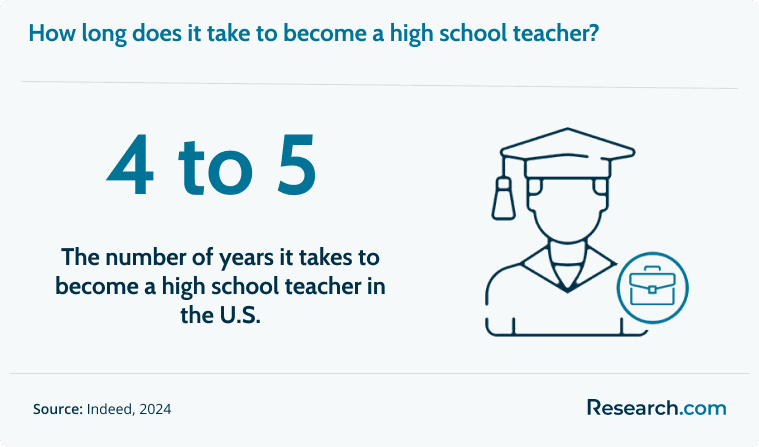
The time it takes to become a high school teacher typically ranges from four to five years, depending on the educational path chosen. The most common route involves earning a bachelor’s degree in education or a subject area like math, science, or English, which usually takes four years of full-time study. After completing the degree, aspiring teachers must obtain state certification, which may require passing exams like the Praxis or other state-specific tests. Some states also mandate a student teaching internship, adding an extra semester to a year to the timeline.
For those entering teaching through alternative certification programs, the process may take one to two additional years beyond a bachelor's degree. Career changers with degrees in non-education fields can often teach while earning their certification through post-baccalaureate or master’s programs. This is similar to how professionals compare different career paths like LCSW vs MSW when transitioning into social work.
What are some certifications you can get as a high school teacher?
High school teachers can enhance their qualifications and expand their career opportunities by earning specialized certifications. These certifications allow educators to teach advanced courses, support diverse student needs, and qualify for leadership roles:
- State Teaching Certification – This is the primary certification required to teach in public high schools. Each state has its own licensure requirements, typically including a bachelor’s degree, completion of a teacher preparation program, and passing state exams such as the Praxis or other state-specific tests.
- National Board Certification – Offered by the National Board for Professional Teaching Standards (NBPTS), this certification is a voluntary, advanced credential that demonstrates excellence in teaching. It can enhance career opportunities and lead to higher salaries in some states.
- Advanced Placement (AP) Certification – Teachers who want to teach AP courses in subjects like Calculus, Biology, or U.S. History can receive training and certification through College Board.-endorsed programs, making them eligible to teach college-level coursework to high school students.
- Special Education Certification – This certification allows teachers to work with students who have disabilities or special learning needs. It typically requires additional coursework and training in individualized education plans (IEPs), classroom accommodations, and behavioral management.
- English as a Second Language (ESL) Certification – High school teachers can earn an ESL certification to teach English language learners (ELLs). This qualification is especially useful in diverse school districts and can open up more job opportunities, and some educators choose to further their expertise by pursuing a masters in ESL online for advanced training and career growth.
- STEM Certifications – Teachers specializing in science, technology, engineering, and math (STEM) can earn certifications that demonstrate expertise in these high-demand subject areas. Some states offer STEM-specific teaching endorsements to meet the growing demand for qualified educators.
- Career and Technical Education (CTE) Certification – This certification is designed for teachers who instruct students in technical, vocational, or trade-based subjects such as automotive technology, culinary arts, business, or healthcare. It often requires industry experience or credentials in addition to a teaching license.
High school teacher salaries vary based on whether they work in public or private schools. Teachers in local elementary and secondary schools earn a median annual salary of $66,070, reflecting the generally higher pay and better benefits offered by public school districts. In contrast, teachers in private elementary and secondary schools earn slightly less, with a median salary of $61,290, due to differences in funding sources and budget allocations. The chart below shows the average salary for high school teachers working in local and private schools:
Can you become a high school teacher without a teaching degree?
Yes, it is possible to become a high school teacher without a traditional teaching degree, but it depends on state requirements and alternative certification pathways. Many states offer alternative certification programs for individuals who hold a bachelor’s degree in a subject area like math, science, or English but have not completed a formal teacher preparation program. These programs typically involve pedagogy coursework, classroom training, and passing state certification exams to qualify for a teaching license.
Additionally, some private schools and charter schools have more flexible hiring requirements and may allow individuals with strong subject matter expertise to teach without a state-issued teaching license. Another option is career and technical education (CTE) certification, which allows professionals with industry experience in fields like healthcare, business, or technology to transition into teaching high school students. However, public school positions usually require some form of certification, even if a traditional education degree is not needed.
How much do high school teachers make per year?
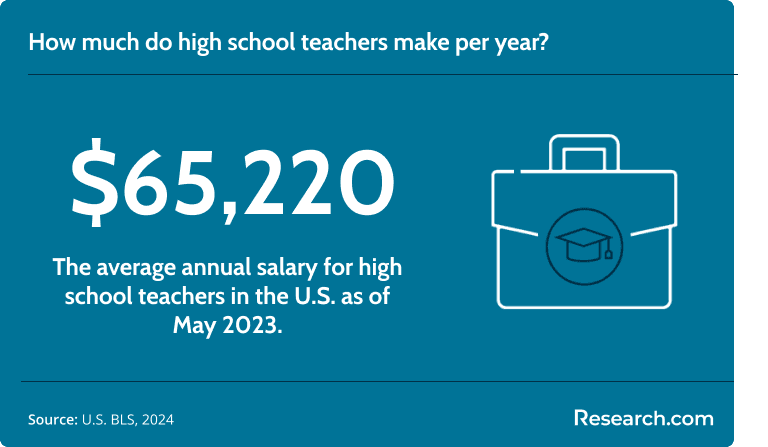
According to the U.S. Bureau of Labor Statistics (BLS), as of May 2023, the median annual wage for high school teachers was $65,220. This means that half of the teachers earned more than this amount, while the other half earned less. The lowest 10 percent of high school teachers earned less than $48,040 annually, whereas the highest 10 percent earned over $106,380.
Salaries for high school teachers can vary significantly based on factors such as geographic location, years of experience, level of education, and the specific school district. Generally, teachers with advanced degrees or additional certifications may qualify for higher salaries. Additionally, certain states and metropolitan areas tend to offer higher wages to attract and retain qualified educators. It's also important to consider that benefits such as health insurance, retirement plans, and paid leave contribute to the overall compensation package for high school teachers.
What career paths are available for high school teachers?
Becoming a high school teacher opens the door to various career opportunities beyond the traditional classroom setting. Whether you want to advance within the education system, transition into leadership, or explore alternative fields, there are many ways to grow professionally. Below are some career paths available to high school teachers looking to expand their skills and impact:
- Traditional Teaching Career – Many high school teachers spend their careers in the classroom, gaining experience and advancing to senior teaching positions or earning higher salaries through additional certifications and education.
- Department Head or Lead Teacher – Experienced teachers can take on leadership roles within their schools, mentoring new educators, developing curricula, and assisting with school-wide instructional strategies.
- School Administration – Teachers with advanced degrees in educational leadership or administration can move into roles such as assistant principal, principal, or district administrator, overseeing school operations and policies.
- Curriculum Developer or Instructional Coach – Some teachers transition into roles focused on developing educational materials, improving teaching strategies, and training educators at the district or state level. Those interested in teaching English or literature may also benefit from earning a creative writing degree online, which can enhance their skills for developing engaging curricula and teaching writing-focused courses.
- Education Policy or Advocacy – With additional experience and credentials, teachers can work in education policy, research, or nonprofit organizations, helping shape education reform and advocate for teachers and students.
- Higher Education and Teacher Training – Teachers with master’s or doctoral degrees can move into college-level instruction, teacher preparation programs, or educational consulting, training the next generation of educators.
- Online Teaching and Tutoring – With the rise of virtual education, high school teachers can explore remote teaching roles, online course development, or private tutoring for standardized test prep and specialized subjects.
- Corporate Training and Educational Consulting – Some teachers use their skills in communication, leadership, and instruction to transition into corporate training, instructional design, or private education consulting.
How do teaching requirements vary by state?
Each state has its own licensure requirements, certification exams, and education standards for high school teachers, which can impact how you qualify for a teaching position. While all states require at least a bachelor’s degree and a state-approved teacher preparation program, differences exist in testing, alternative pathways, and continuing education requirements.
Some states require teachers to pass specific certification exams, such as the Praxis Series, while others have their own state-developed tests. Additionally, certain states offer alternative certification programs for career changers, allowing individuals with subject-area expertise to teach while completing licensure requirements. Continuing education expectations also vary, with some states mandating teachers to earn a master’s degree within a set timeframe or complete ongoing professional development courses to maintain their teaching license.
How can advanced degrees enhance my teaching career?
Pursuing an advanced degree can refine instructional skills, expand leadership capabilities, and open pathways to higher administrative roles and specialized educational positions. Many educators turn to advanced programs to integrate rigorous research with contemporary pedagogical practices, resulting in improved classroom strategies and enhanced career mobility. For those seeking an accelerated route, EdD programs online offer a structured, fast-track curriculum that blends theoretical foundations with practical leadership training. Evaluating program structure and alignment with professional objectives is essential for teachers aiming to maximize their growth and salary potential.
Are there affordable online options for obtaining a teaching degree?
Affordable online programs are increasingly popular for those seeking flexibility and reduced costs without compromising the quality of education. Institutions now offer accredited courses that satisfy state licensure requirements while accommodating working professionals and career changers. For budget-conscious aspirants, pursuing a cheapest online teaching degree can be a strategic move to enter the profession efficiently and economically.
What are the highest-paying states for high school teachers?
High school teacher salaries vary widely across the United States, with some states offering significantly higher pay due to factors like cost of living, education funding, and demand for teachers. States with strong investment in public education and higher living costs tend to offer the most competitive salaries. Below are the top five highest-paying states for high school teachers and what contributes to their earnings.
- California ($92,960) – California offers the highest average salary for high school teachers, driven by a high cost of living and strong investment in public education. Many districts provide competitive pay and benefits to attract and retain qualified educators.
- New York ($91,290) – High school teachers in New York earn some of the top salaries in the nation, particularly in metropolitan areas like New York City. The state’s strong teachers’ unions and emphasis on education funding contribute to these higher wages.
- Washington ($88,530) – Washington ranks among the highest-paying states for high school teachers, thanks to increasing investments in education and rising demand for qualified educators. Teachers in cities like Seattle often earn more due to the area’s higher living costs.
- Massachusetts ($82,960) – Known for its excellent education system, Massachusetts compensates high school teachers well, particularly in affluent school districts. The state’s commitment to high academic standards and teacher training supports these competitive salaries.
- Connecticut ($80,230) – Connecticut offers strong salaries for high school teachers, particularly in suburban and urban districts. The state’s emphasis on high-quality education and teacher professional development contributes to its attractive pay scale.
These states provide some of the best compensation packages for high school teachers, reflecting their commitment to education and the need to attract skilled professionals. The chart below visually represents the average annual salaries for high school teachers in these top-paying states, making it easier to compare earnings across different locations.
How can I balance program quality with cost in my teaching degree selection?
When evaluating teaching degree programs, focus on factors that ensure both academic excellence and financial feasibility. Compare accredited institutions by reviewing tuition fees, available scholarships, and loan options while confirming the curriculum meets state licensure requirements and offers hands-on training. Assess program outcomes through graduate reviews and performance metrics before committing to a pathway. For additional cost-effective study options, explore the cheapest English degree online.
What does a high school teacher do on a daily basis?
High school teachers play a crucial role in educating and mentoring students, balancing classroom instruction with lesson planning, grading, and administrative tasks, such as:
- Teach and Deliver Lessons – High school teachers present lessons, lead discussions, and engage students in activities related to their subject area.
- Plan and Prepare Instructional Materials – They create lesson plans, assignments, and assessments that align with curriculum standards and student needs.
- Grade and Assess Student Work – Teachers evaluate tests, homework, and projects to track student progress and provide feedback.
- Support and Mentor Students – They offer academic guidance, help students develop critical thinking skills, and provide emotional or career support when needed. For students interested in social work, teachers may also advise them on pathways such as accredited MSW programs, which can lead to careers in counseling and community support services.
- Communicate with Parents and Guardians – Teachers keep families or concerned adults informed about student performance, behavior, and any areas of concern.
- Collaborate with Colleagues and Staff – They work with other teachers, school counselors, and administrators to improve educational strategies and support student success.
- Supervise Extracurricular Activities – Many teachers lead or assist with clubs, sports teams, or student organizations outside of classroom hours.
- Attend Professional Development and Meetings – Teachers participate in training sessions, workshops, and faculty meetings to stay updated on best teaching practices and school policies.
How can collaborating with library science experts enrich high school instruction?
High school educators can enhance their instructional strategies by partnering with library science professionals. This collaboration enables teachers to integrate advanced research skills and digital literacy into classroom curricula, ensuring students gain a comprehensive understanding of information evaluation and resource management. By working together with experts knowledgeable in library science careers, teachers can design innovative lesson plans that utilize emerging informational tools while fostering critical thinking and independent inquiry.
How can an interdisciplinary studies degree support my high school teaching career?
Integrating interdisciplinary studies into your professional development expands your ability to design innovative, cross-curricular lesson plans that engage students in complex problem-solving. By blending methodologies from different academic fields, you can foster critical thinking and adapt to evolving educational standards. This versatile approach not only enhances classroom instruction but also positions you to address diverse learning needs and collaborate on multi-disciplinary projects. Educators aiming to broaden their instructional strategies may benefit from exploring an interdisciplinary studies degree online.
What is the job outlook for high school teachers?
According to the U.S. Bureau of Labor Statistics (BLS), employment for high school teachers is projected to decline by 1 percent from 2022 to 2032. This decline is largely due to lower student enrollment in some areas and budget constraints affecting school hiring. However, despite the overall decrease, an estimated 67,100 job openings for high school teachers are expected each year. These openings will primarily come from teachers retiring or leaving the profession, rather than new job growth.
Job prospects will vary based on location and subject specialization. Teachers in high-demand fields like mathematics, science, and special education may have better employment opportunities. Additionally, schools in urban and rural districts, which often struggle to attract and retain educators, may continue to offer more job openings. While the overall number of high school teaching positions may slightly decline, opportunities will still exist, especially for those with specialized skills or a willingness to work in underserved areas.
Here’s what graduates have to say about their teaching degrees
Earning my teaching degree was one of the most fulfilling experiences of my life. The program gave me the skills and confidence to manage a classroom, develop engaging lesson plans, and truly make a difference in my students’ lives. Every day, I see the impact of my education as I help young minds grow. – Jenny
Studying to become a high school teacher challenged me in the best way possible. From hands-on student teaching experiences to learning innovative instructional strategies, I felt fully prepared to step into the classroom. Seeing my students succeed makes all the hard work worth it! – Daniel
My teaching degree not only gave me the knowledge I needed but also connected me with an amazing network of educators and mentors. The real-world classroom training and coursework prepared me for the challenges of teaching, and now, I get to inspire students every day. I wouldn’t trade this career for anything! – Rosa
How can leadership and organizational development improve my teaching career?
High school teachers who cultivate leadership and organizational development skills can drive meaningful changes both inside and beyond the classroom. Mastery of these competencies supports the implementation of effective school initiatives, enhances collaboration among staff, and promotes innovative instructional strategies. By engaging in focused leadership training, educators are better positioned to influence policy decisions and mentor emerging teachers. Pursuing advanced qualifications, such as a PhD in organizational development online, provides a structured approach to developing these essential skills while aligning with career advancement and improved classroom outcomes.
How can an online EdD enhance my career opportunities?
High school teachers looking to expand their roles can benefit from advanced professional studies, particularly by pursuing an online EdD. This degree equips educators with strategic leadership skills, deeper insights into educational policy, and the ability to drive systemic improvements in schools. By integrating rigorous academic coursework with practical leadership training, teachers can access new administrative responsibilities and improved salary prospects. Explore affordable EdD programs online to discover programs that combine flexibility with quality, helping you bridge classroom expertise with district-level leadership.
Key Findings
- It typically takes 4-5 years to become a high school teacher, including earning a bachelor's degree and completing a teacher preparation program.
- All states require teachers to be licensed, which usually involves passing certification exams, completing student teaching, and undergoing a background check.
- The average salary for high school teachers is $65,220 per year, though earnings vary based on location, experience, and subject area.
- Job demand for high school teachers is expected to decline by 1% from 2022 to 2032, but there are still strong opportunities in STEM, special education, and underserved areas.
- High school teachers can advance their careers by pursuing additional certifications, earning a master's degree, or moving into leadership roles such as department head or school administrator.
References:
- Eads, A. (2024). How Long Does It Take To Become a Teacher? Indeed. https://www.indeed.com
- Study.com. (2024). Teacher Salary by State. https://study.com
- U.S. Bureau of Labor Statistics. (2024). OOH: High School Teachers. https://www.bls.gov
Other Things You Should Know About Becoming a High School Teacher
In 2027, aspiring high school teachers typically require a bachelor's degree in education or their specific subject area. Additionally, they need to complete a teacher preparation program and obtain state certification or licensure. Some states may also require teacher mentoring or induction programs for new teachers.
To become a certified high school teacher in 2027, you must pass exams like the Praxis series, which assesses subject-specific knowledge and teaching skills. Some states might require additional tests or have alternative assessments, depending on their certification requirements.


