2027 Best Online Bachelor's in Environmental Science for Water Resources Career Paths

Co-Founder and Chief Data Scientist
Facing the urgent need to address increasingly complex water resource challenges, professionals must balance advancing their expertise with demanding work schedules and geographic constraints. With water-related jobs projected to grow 8% over the next decade, according to the US Bureau of Labor Statistics, accessibility to flexible, credible education becomes pivotal for career shifts and timely upskilling.
The surge in adult learners enrolling in online degree programs-now comprising over 40% of higher education enrollments per NCES data-reflects a clear shift toward remote learning as a practical solution for those balancing employment and education.
This article evaluates top online bachelor's programs in environmental science optimized for water resource careers, emphasizing how they align with real-world demands and learner constraints to inform strategic program selection.
Key Things You Should Know
- Only 35% of online bachelor's in environmental science graduates specializing in water resources find direct-entry roles within two years due to employer preference for candidates with extensive fieldwork experience, prompting strategic supplemental internships.
- Water resource agencies prioritize candidates with GIS and hydrology certifications alongside degrees, reflecting a workforce trend where combined technical credentials increase starting salaries by up to 18%, based on 2024 Bureau of Labor Statistics data.
- Online programs averaging $20,000-$30,000 total tuition reduce local access barriers but extend time-to-completion by 20% compared to on-campus cohorts, influencing cost-efficiency calculations for career changers balancing employment.
What is an online bachelor's in environmental science focused on water resources?
Choosing an online bachelor's degree in environmental science with a water resources emphasis demands scrutiny of curriculum depth and practical applicability. This specialization blends core environmental science knowledge-ecology, chemistry, geology-with targeted water resource subjects like treatment technologies and regulatory compliance.
Graduates develop technical competence in contaminant monitoring, water flow modeling, and mitigation design essential for roles in government, utilities, or consulting firms focused on freshwater systems.
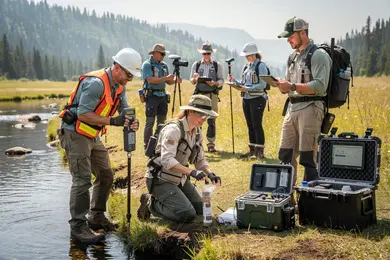
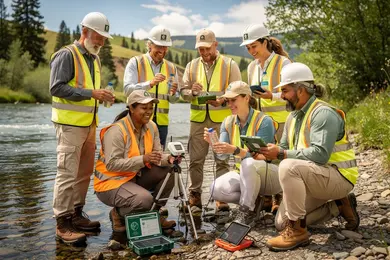
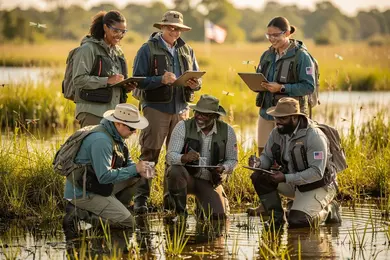
The job market outlook signals a 6% growth in environmental scientists and specialists through 2032, driven by increased demand for water quality expertise. However, employers prioritize graduates with hands-on skills such as field data collection and proficiency in geographic information systems (GIS), especially for watershed management and regulatory enforcement projects.
Candidates should assess programs for opportunities in hydrogeology labs and environmental modeling software to align with employer expectations.
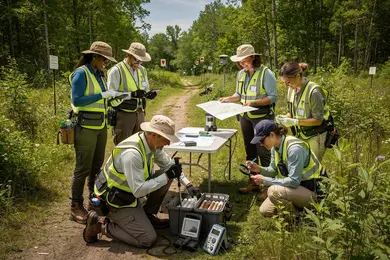
Students often face the real-world challenge of supplementing online coursework with experiential learning, typically through local internships or collaboration with water resource agencies. Attention to these practical elements distinguishes successful applicants for technical versus policy-oriented roles.
For those evaluating water resources management in environmental science programs, a strong foundation in GIS is critical; exploring the best GIS schools can clarify this pathway.
Online environmental science degrees with water resources focus demand strategic course selection to balance theoretical knowledge and applied skills-key for long-term career adaptability across regulatory, technical, or managerial tracks.
How does an online environmental science degree compare to campus programs for water resources?
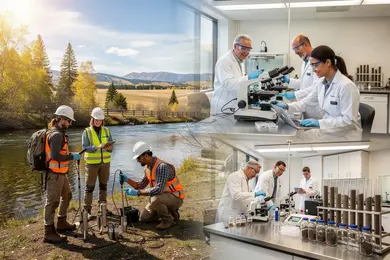
Online environmental science degree benefits for water resources careers hinge largely on the practical limitations inherent in remote learning formats. Unlike campus-based programs, online degrees typically lack consistent access to hands-on lab work and direct field observations, which are indispensable for developing applied skills in hydrological monitoring and water quality analysis.
While some accredited online programs now incorporate virtual labs and encourage partnerships for local fieldwork, students must independently engage with internships or community projects to fill these gaps.
Comparing campus and online environmental science programs for water management reveals a tradeoff between flexibility and embedded professional networks. Online learners can maintain employment in water management or consulting during their studies, accommodating work-life balance.
However, campus programs provide structural advantages through established agency collaborations and mentorship, easing pathways into employment.
From a workforce perspective, employers in water resources expect candidates to bring demonstrated applied science capabilities and familiarity with local regulations. Online students face the challenge of strategically planning field experiences and certifications to meet these expectations.
Earnings data reflect the premium of a bachelor's degree in environmental science, with graduates earning about $48,000 early-career and $75,000 mid-career, outpacing the median $49,000 for high school graduates according to the U.S. Bureau of Labor Statistics.
For professionals weighing advanced options, exploring the best online data science masters programs can complement environmental expertise with quantitative skills increasingly valued in water resources analytics and management.
Which online bachelor's in environmental science programs for water resources are properly accredited?
Enrollment in online bachelor's in environmental science programs with regional accreditation is a non-negotiable factor for candidates targeting water resource careers. Accreditation from recognized agencies such as the Higher Learning Commission ensures that the curriculum and faculty qualifications meet industry standards, which employers rely on to validate applicants' knowledge.
Graduates from non-accredited programs risk exclusion from critical roles; one hydrologist finalist for a U.S. Geological Survey job lost eligibility due to attending a non-accredited online program.
Employers in water resource management routinely require degrees from accredited environmental science degrees for water resources careers to prioritize candidates with verified academic credentials. Without proper accreditation, graduates face limited access to internships, certifications, and state licensing needed for entry-level positions.
Prospective students must independently verify accreditation status through official databases, as institutional claims may omit vital details. Given the median annual wage of $89,440 for hydrologists, with top earners exceeding $136,110, program accreditation directly affects employability in this competitive field.
For those comparing related disciplines, understanding how an online sports science degree differs in accreditation and career outcomes can clarify the uniqueness of environmental science paths. Selecting the right accredited program minimizes career barriers and aligns education with workforce demands.
What courses and specializations prepare students for water resources careers?
Water resources management courses in environmental science programs focus heavily on integrating technical water science with regulatory and practical skills. Specializations such as aquatic ecosystems and sustainable water solutions anchor theoretical learning in real-world applications, emphasizing groundwater and surface water hydrology, ecological risk assessment, and wastewater treatment.
These programs must balance foundational coursework with proficiency in Geographic Information Systems (GIS) and remote sensing, competencies employers require to map and manage water resources effectively.
Employers expect graduates to navigate complex regulatory frameworks like the Clean Water Act and perform rigorous environmental impact assessments. For example, designing municipal water systems demands advanced understanding of fluid dynamics and infrastructure risk, which specialized courses in fluid mechanics and hydraulics provide.
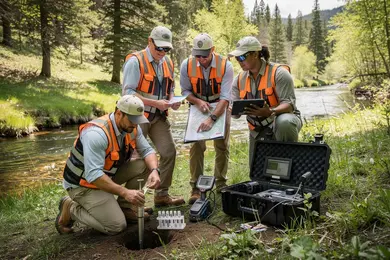
Employers prioritize candidates with field experience in stream restoration or lab-intensive water chemistry to ensure readiness for water quality compliance monitoring and ecosystem rehabilitation.
Bridging theoretical knowledge with practical experience remains a significant challenge, but programs offering internships through water utilities or government agencies enhance employability by exposing students to implementation challenges in water resource management.
Salary data reflects these demands: environmental engineers with a focus on water systems earned a median salary of $99,000 in 2023, with job growth projected at 3% from 2022 to 2032, adding roughly 3,300 openings annually.
Students should prioritize targeted coursework alongside applied experience to align with workforce needs. For those weighing broader educational options or additional credentials, questions like is a library science degree worth it arise, underscoring the need for focused decision-making based on career goals.
What are typical admission requirements for online environmental science bachelor's programs?
Admission to online environmental science bachelor's programs demands more than baseline academic readiness; it strategically balances measurable competencies with real-world applicability.
A high school diploma and a GPA between 2.5 and 3.0 often serve as minimum thresholds, but employers and rigorous programs prioritize candidates who demonstrate proficiency in fundamental sciences and math-biology, chemistry, physics, and algebra or higher-level math-to ensure graduates can navigate both theoretical and practical demands of environmental careers.
Standardized tests like the SAT/ACT are frequently optional, reflecting a shift to accommodate working adults pursuing career pivots. Yet programs with limited seats or higher selectivity may still require these or advanced placement credits to more precisely gauge preparedness. Letters of recommendation and personal statements, while less common, play a role when applicants lack direct science coursework but can offer relevant professional or volunteer experience.
Those currently employed in fields such as water resource management can leverage documented experience to strengthen applications, emphasizing workforce relevance over purely academic indicators. Transfer students face additional scrutiny with requirements around transferable credits (generally 30-60 semester hours) and must demonstrate competency in prior science classes.
Financial considerations shape access and choices: OnlineU's 2026 data notes affordable annual tuition ranges from $4,620 to $9,000, with many public institutions charging under $7,000.
Students must weigh these costs against accelerated or part-time enrollment options, alongside necessary logistical skills like reliable internet and time management that directly impact success in asynchronous, workforce-aligned programs.
How long do online environmental science degrees take, and what do they cost?
Choosing an online environmental science bachelor's degree often demands balancing academic pace with professional engagement. Programs typically require four years full-time, but extending to six years part-time can benefit individuals actively employed in related fields, such as a water resource manager integrating coursework with practical work experience.
Tuition costs vary widely: public in-state options generally range from $30,000 to $60,000 total, contrasting sharply with private or out-of-state tuition that can be double this amount. Given that environmental and sustainability consulting starting salaries average around $72,000, the return on investment depends heavily on cost control measures, including federal grants, state scholarships, and employer tuition assistance.
Prospective students must weigh several operational factors:
- The impact of prior credits on program length and cost.
- The opportunity cost of full-time study versus employment.
- Experience gained through integrated internships or practicum requirements.
Employers value consistent progress without educational gaps, especially when coursework complements ongoing industry work. Selecting programs with strong alumni networks and career placement in water resource sectors can enhance long-term employment prospects and financial stability better than solely attending lower-cost institutions without such connections.
What water resources careers can you pursue with this online degree?
Graduates holding an online bachelor's in environmental science focused on water resources typically enter roles requiring both technical skill and regulatory knowledge, such as water resource specialists, hydrologists, or environmental consultants. For instance, a water quality analyst at a municipal utility applies data modeling to track pollutants and update treatment protocols to meet EPA standards-a clear example of balancing scientific expertise with public health mandates.
Entry-level jobs demand proficiency in geographic information systems (GIS), remote sensing, and environmental data interpretation, skills deliberately emphasized in quality online programs. However, meaningful career progression often hinges on obtaining certifications or pursuing graduate studies, given the increasing complexity and specialization of water resource management.
Employers in public agencies, including the U.S. Geological Survey, expect candidates to have hands-on experience with regulatory frameworks and field data collection, while consulting firms in the private sector prioritize project management and client communication abilities. This dual expectation underscores the tradeoff between technical depth and multidisciplinary skills in online curricula.
Financially, online bachelor's degrees cost substantially, with per-credit tuition ranging from $330 to $550 according to Forbes Advisor's 2026 data. A full 120-credit program totals between $39,600 and $66,000, excluding living expenses, demanding a pragmatic assessment of return on investment relative to typical starting salaries of $50,000 to $65,000 annually as per 2024 U.S. labor statistics.
What is the salary potential and job outlook in water resources fields?
Water resources roles demand a balance of technical proficiency and hands-on experience, as employers prioritize practical skills verified through internships or hybrid education models. Graduates with environmental science degrees focusing on hydrology or water management often see salary ranges from approximately $69,000 up to $90,000 annually, depending on credentials and experience.
Job growth in related sectors is steady at around 5% through 2034, driven by environmental regulations and investment in sustainable water infrastructure across agriculture, municipal, and industrial domains.
Program format critically influences career readiness: fully online degrees increase accessibility but require proactive pursuit of local field internships to avoid skill gaps, whereas hybrid programs embed supervised fieldwork, facilitating direct application of water quality monitoring and watershed assessment techniques.
Early-career professionals often find regional government and utilities offer structured advancement at median wage levels, while consulting and specialty roles in urban water management provide higher, project-based earnings with less job stability.
Key workforce implications include:
- Necessity of integrated field experience alongside data analysis competence to meet employer expectations.
- Strategic selection of educational pathways based on access to practicum components and local internship opportunities.
- Tradeoffs between job predictability in public sector roles and higher, variable consultant incomes.
Agencies such as the EPA and USGS remain principal public employers, but private consulting and engineering firms focused on climate resilience increasingly expand. Over 50 accredited U.S. colleges offer fully online or hybrid environmental science bachelor's degrees, widening access without compromising essential workforce skills.
Are licenses or professional certifications needed for water resources careers?
Licenses and certifications are rarely mandatory to start in water resource roles but become pivotal for leadership or specialized functions, particularly in regulatory or consulting environments.
Many employers expect a Professional Engineer (PE) license or Certified Environmental Professional (CEP) credential to manage projects requiring strict compliance with water quality and infrastructure standards. These credentials typically require about four years of relevant experience plus success on challenging exams that test technical competency.
State-specific licensure brings tangible career consequences. Without these credentials, professionals can find themselves excluded from roles involving contract authority or project oversight. In contrast, technician positions in water fields often emphasize hands-on skills and current industry training over formal certifications, reflecting an operational tradeoff between experiential capability and regulatory qualification.
The University of Arizona's online BS in Environmental Science focuses curriculum on soil, water, and environmental quality topics aligned with employer demand. Median salaries near $79,000 reflect market valuation for candidates who demonstrate this specialized knowledge combined with applicable certifications or state licensure options.
For prospective students, balancing coursework with internships or EPA-recognized training that contribute to licensure eligibility is vital. Navigating these state-specific licensing laws requires strategic planning to avoid delayed career progression or missed opportunities amid evolving workforce standards.
How can you choose a reputable online environmental science program for water resources?
Selecting an online environmental science program focused on water resources demands careful attention to regional accreditation, as employers and graduate schools prioritize recognized credentials. Without this, career options in government agencies, consulting firms, and environmental nonprofits can be severely limited due to strict credential verification.
Programs targeting core industry needs-such as hydrology, water quality management, or watershed analysis-offer a competitive advantage. For instance, candidates aiming for regulatory roles on state water boards must ensure their curriculum includes environmental law and data reporting, essential for compliance and monitoring.
Given the sector's projected 6% job growth over 2022-2032, practical skills like GIS mapping, remote sensing, and environmental policy analysis tied to water resource management significantly boost employability. However, program flexibility is equally important, especially for working professionals. Prioritize offerings with asynchronous courses and fieldwork or internships connected to industry stakeholders, as these develop critical hands-on experience often missing from purely theoretical degrees.
Labor market data confirms graduates with applied technical training attain higher placement rates in water resource management and consulting. Be wary of programs that emphasize broad environmental science theory without water-specific applications, as they may hinder entry into this specialized and competitive labor market.
Other Things You Should Know About Environmental Science
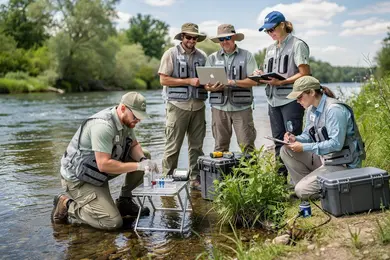
Online programs often emphasize theoretical knowledge and data analysis skills but may offer limited hands-on field training, which is critical for some water resources roles. Before enrolling, verify whether the program includes local lab partnerships, fieldwork components, or practical internships to develop necessary field competencies. Without these, graduates may need supplementary experience to meet employer expectations for real-world water sampling, site assessments, or equipment handling.
In 2027, students should assess their learning preferences and circumstances. Flexible programs cater to those needing schedule adaptability, while cohort models offer peer support and networking opportunities. Consider job market demands and your personal growth needs when deciding.
Employers increasingly accept accredited online degrees but focus on demonstrated skills and relevant experience rather than delivery format alone. Graduates need to highlight practical competencies, internships, or certifications to counter any bias. Selecting programs with robust experiential learning and industry partnerships improves credibility and hiring prospects in competitive water resources job markets.
Yes, professional certifications such as Certified Water Resource Specialist or GIS certifications enhance job marketability by validating specialized skills widely demanded by employers. Completing certifications during or after the degree signals commitment and expertise beyond academic knowledge, addressing industry expectations. Prioritize certifications aligned with your targeted water resources niche to maximize career impact.
References
- Water Industry Certifications – Career & Salary Guide https://jobs.watertechintel.com/water-certifications
- Online Environmental Science Degree | Programs & Career Options https://www.learnhowtobecome.org/best-online-bachelors-in-environmental-science-degree-programs/
- Water Career Guide - Freshwater Society https://freshwater.org/watercareerguide/
- Careers in Water https://www.wrd.org/careers-in-water
- Careers in the Environmental and Water Resources Management https://www.knowyourh2o.com/water-blog/careers-in-the-environmental-and-water-resources-management
- What Can You Do With an Environmental Science Degree? https://willamette.edu/academics/college/environmental-science/career-options
- Choosing a bachelor's in environmental science | edX https://www.edx.org/resources/how-to-choose-a-bachelors-in-environmental-science
- How to Start a Career in Water & Wastewater Treatment https://waterworkforce.com/blog/how-to-start-a-career-in-water-and-wastewater-treatment/
- Water Resources Careers Outlook - NWF EcoLeaders https://www.nwfecoleaders.org/careercenter/water
- Water Resource Specialists Career Guide, Salary, Skills, Education, Outlook | Assessment.com https://www.assessment.com/management-careers/water-resource-specialists