2027 Best Online Nurse Practitioner Programs for Telehealth Careers

Co-Founder and Chief Data Scientist
For many registered nurses pursuing nurse practitioner roles with telehealth specialization, balancing rigorous clinical requirements alongside full-time employment creates a bottleneck that delays career advancement. The surge in telehealth demand has intensified the need for flexible NP programs, yet recent data from the National Center for Education Statistics shows only 35% of graduate nursing students find programs accommodating enough to fully integrate work and study.
This gap penalizes working adults who must choose between enrolling in slower-paced curricula or risking burnout. This article evaluates the top online nurse practitioner programs that optimize scheduling flexibility, accreditation, and clinical placement for telehealth careers, enabling informed decisions amid complex constraints.
Key Things You Should Know
- Only 38% of nurse practitioner telehealth roles require full online NP Programs, forcing candidates to weigh online convenience against partial in-person clinical mandates, influencing program selection based on geographic flexibility.
- Employers in rural telehealth settings increasingly prioritize graduates from programs with integrated telemedicine training, reflecting a 27% uptick in role requirements tied to virtual patient-care competencies per HR data in 2025.
- Average total program costs rose 8% since 2023, with accelerated pathways reducing time to license by 4-6 months but often increasing tuition intensity, challenging budget-conscious professionals balancing upskilling speed against financial strain.
What are online nurse practitioner programs and how do they prepare you for telehealth careers?
Online nurse practitioner programs for telehealth certification must be scrutinized for their practical alignment with employer expectations rather than merely curricular scope. Telehealth-focused NPs, such as family nurse practitioners serving rural areas, require extensive proficiency in electronic health record systems and diagnostic reasoning adapted for virtual patient interactions.
These skills are embedded in some accredited online NP programs but vary significantly in depth and telehealth clinical placement availability.
The U.S. Bureau of Labor Statistics projects a 40% growth in nurse practitioner employment from 2024 to 2034, adding 128,400 new positions and signaling expanding telehealth roles.
However, graduates often encounter obstacles including securing clinical experiences that include telehealth exposure and navigating complex, state-specific telemedicine regulations. Programs with targeted virtual simulation labs or telehealth internships provide a more robust bridge between online coursework and on-the-ground job requirements.
Prospective students assessing how nurse practitioner programs prepare students for telehealth careers must weigh program resources that address remote patient privacy management, multidisciplinary team coordination, and evolving technology use in care delivery.
This training focus corresponds with a median NP salary of $129,210 in 2024 and reflects healthcare's acceleration toward remote, tech-enabled models. Candidates interested in specialized tracks should consider curated resources such as top psychiatric mental health nurse practitioner programs online known for clinical placement alignment with telehealth demands.
How do online nurse practitioner programs compare to campus-based options for training and outcomes?
Choosing between online nurse practitioner programs versus campus-based training outcomes involves weighing real differences in practical skill acquisition and workforce readiness. Online NP programs deliver equivalent theoretical knowledge but place the onus on students to independently secure telehealth-focused clinical placements, which can complicate timely graduation and practical mastery.
Campus-based programs, in contrast, offer structured local clinical rotations with integrated patient care simulations and direct mentorship, facilitating more consistent telehealth nurse practitioner program effectiveness.
For working professionals pivoting careers, online programs provide flexibility but require a deliberate approach to arrange quality clinical hours emphasizing digital patient management. Employers prioritize demonstrated telehealth competencies and reliable clinical experience, meaning online graduates must proactively address these gaps to avoid longer job searches or supplementary training.
Florida's projected 45% growth in nurse practitioner roles over the next decade, with roughly 950 new jobs annually, reflects the urgency of meeting telehealth demand immediately on graduation, underscoring the operational impact of clinical experience availability.
Students should factor these tradeoffs carefully when comparing pathways, balancing convenience against real-world practical experience needs. Those interested in expedited credentialing or program length can explore options like the fastest DNP program pathways, but must still ensure clinical competencies align with local workforce standards.
What accreditation should online nurse practitioner programs have for telehealth-focused practice?
Accreditation is a decisive factor in shaping telehealth nurse practitioner career trajectories, particularly for online nurse practitioner programs in the United States. Employers and licensure boards prioritize graduates from programs accredited by the Commission on Collegiate Nursing Education (CCNE) or the Accreditation Commission for Education in Nursing (ACEN).
Without this validation, candidates face immediate barriers: ineligibility for state licensure, exclusion from national certification exams, and restricted access to telehealth provider networks.
This gatekeeping extends beyond credentialing into practical workforce dynamics. Graduates of accredited programs typically navigate interstate telehealth care delivery more smoothly due to alignment with diverse state licensure requirements and possession of up-to-date telehealth competencies-digital health technologies, remote patient monitoring, and virtual communication skills-which are increasingly mandatory.
Nonaccredited credentials often translate into reduced employer confidence, lower reimbursement potential, and limited continuing education access.
In evaluating educational investment, it's instructive to consider West Coast University's online MSN-FNP program, which holds CCNE accreditation and reports median alumni earnings of $140,067 against an annual tuition near $24,207. This differential underscores a measurable return on investment in programs that meet strict accreditation standards.
Prospective students researching options for online NP Programs should also consult resources such as best DNP programs online to contextualize affordability alongside accreditation reliability.
Approaching choices with an accurate understanding of accreditation standards for online nurse practitioner programs in the United States and essential accrediting bodies for telehealth nurse practitioner education reduces operational friction, ensuring graduates remain competitive in a rapidly evolving remote care landscape.
What degree pathways lead to becoming a nurse practitioner specializing in telehealth?
Choosing between nurse practitioner degree pathways for telehealth specialization involves balancing program length, cost, and practical experience against career objectives. MSN programs typically last 2-3 years and emphasize direct patient care via virtual platforms, favored by rural clinics needing hands-on telehealth practitioners. In contrast, DNP pathways extend 3-5 years and develop leadership and policy skills critical in urban hospital systems overseeing telehealth implementation.
Telehealth NP programs require prior RN licensure and often a BSN, with curricula stressing clinical decision-making, remote patient monitoring, and telecommunication technologies. Employers prioritize graduates who have completed substantial telehealth practicum hours, reflecting real-world competency in managing remote patient interactions.
Tuition varies widely, with per-credit rates from $420 at some public institutions up to $2,250 at Duke University, significantly affecting total program costs since telehealth NP programs generally demand 30 to 40 credits. Prospective students pursuing online programs for nurse practitioner telehealth careers should weigh affordability alongside accreditation and program-specific telehealth practicum availability.
Understanding these practical considerations supports strategic decision-making aligned with employer demands and workforce realities. For those evaluating related specialization options, resources such as the functional medicine nurse practitioner pathway offer a complementary perspective on niche healthcare roles within NP Programs.
What telehealth-specific coursework and clinical training do online nurse practitioner programs include?
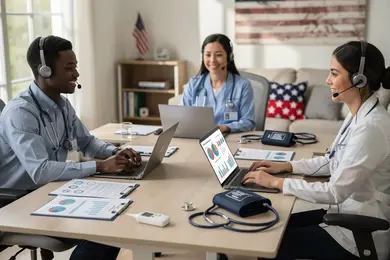
Competency in telehealth is increasingly a decisive factor for nurse practitioners entering remote care roles, yet many programs fail to standardize or sufficiently integrate this training. Online nurse practitioner programs that embed telehealth-specific coursework not only cover core patient management but also prioritize skills like secure video consultations, electronic prescribing, and compliance with regulations such as HIPAA.
For example, a nurse practitioner working in rural telepsychiatry must navigate crisis intervention remotely, a skill cultivated through targeted coursework and practicum experiences.
Key program components include simulated telehealth visits and a minimum of 500 virtual clinical contact hours, which significantly enhance readiness for independent telehealth practice. Interprofessional collaboration modules also reflect the operational realities of coordinating care with pharmacists and specialists across distributed networks.
Practical barriers persist, notably the scarcity of telehealth clinical placements. However, partnerships with telemedicine providers and expanding virtual simulations mitigate this challenge. Lack of accreditation can limit access to such experiences and reduce employability since employer expectations heavily favor verified telehealth competencies.
1,305 online nurse practitioner programs enrolling students at various graduate levels show rapid growth reflective of telehealth workforce demand. Selecting programs that verify telehealth clinical hours and embed these competencies directly influences long-term career sustainability and the ability to meet evolving employer standards in remote care.
What are typical admission requirements for online nurse practitioner programs in the United States?
Admission to online nurse practitioner programs demands more than academic credentials; it requires strategic alignment with clinical experience and state-specific licensure realities. An active RN license, a BSN or its equivalent, and at least one year of clinical nursing practice are baseline expectations.
However, the practical challenge lies in securing supervised clinical hours, especially for professionals transitioning to telehealth roles where synchronous, technology-driven patient interactions must be demonstrated.
Applicants frequently need to meet a minimum GPA near 3.0 and submit detailed documentation such as transcripts, clinical supervisor recommendations, CPR certification, and background checks.
Additional prerequisite coursework in advanced physiology and pharmacology may be necessary if previous education lacks depth in those areas. This layered vetting correlates with measurable outcomes, exemplified by a reported institution-wide graduation rate of 91.2%, indicating that stringent admission criteria often predict program completion and readiness for advanced practice.
The workforce implications are significant: candidates who tailor their preparation toward telehealth competencies-such as remote patient assessment technologies-gain an edge in a sector adapting to virtual care.
Prospective students should factor in variability in clinical placement access by state, which can extend timelines and increase costs. Understanding these operational nuances is critical when evaluating online NP programs for a sustained, practical career pivot rather than a generic credential upgrade.
How long do online nurse practitioner programs take and what do they cost?
Choosing between MSN and DNP pathways requires weighing time commitment against workforce readiness and earning potential. Online nurse practitioner programs typically span 2 to 4 years, with part-time enrollment extending duration and accelerated tracks available for students holding a Bachelor of Science in Nursing (BSN).
MSN programs usually take 24 to 36 months, while DNP programs approach 3 to 4 years due to mandated clinical hours and capstone projects, which can delay labor market entry but may open opportunities for higher clinical leadership roles.
Cost variability is significant and often underestimated. Public universities generally charge $30,000 to $60,000 for program completion, while private programs exceed $90,000, excluding expenses like clinical placement fees, textbooks, and technology. Students should also account for travel costs when on-site residencies are required, despite the "online" designation. These factors influence the total investment and must be balanced against potential salary gains and job market demands.
Employers' priorities are shifting with increasing emphasis on telehealth expertise, especially in states like Florida, where upcoming policy changes will expand NP telehealth roles in rural behavioral health and chronic disease management. Graduates from programs that combine telehealth curriculum with flexible timelines position themselves advantageously for rapid deployment in emerging healthcare settings.
- Full-time vs. part-time enrollment impacts duration and earning potential.
- Hidden costs such as clinical fees and travel can add thousands annually.
- Telehealth training aligns with evolving employer expectations and policy shifts.
What telehealth roles and practice settings are available to graduates of NP programs?
Telehealth roles for nurse practitioner graduates demand a blend of clinical expertise and technology fluency, reflecting distinct practice settings and employer priorities.
Hospital-affiliated virtual clinics require seamless integration with electronic health records and interdisciplinary collaboration, whereas commercial telehealth platforms prioritize swift patient evaluation and digital communication skills.
This divergence affects the competencies graduates must develop to remain competitive.
State licensing remains a significant operational barrier; nurse practitioners must often secure multi-state licenses to work for national telehealth providers, complicating compliance and increasing administrative burden.
Employers expect proficiency in telehealth platforms and the ability to conduct effective remote assessments using patient-reported data and digital diagnostics. These expectations reinforce the value of NP programs incorporating focused telehealth training and virtual clinical practicums.
Salary data from OnlineU's 2026 median alumni rankings indicates telehealth NP roles yield median incomes between $120,851 and $140,067, which signals strong market demand but also underscores the premium placed on these specialized skill sets. Graduates should weigh these returns against the practical challenges of navigating regulatory landscapes and acquiring the digital communication abilities telehealth practice requires.
What is the salary potential and job outlook for nurse practitioners working in telehealth?
Telehealth nurse practitioner roles project significant opportunity but impose practical prerequisites that affect candidate viability. Annual salaries typically range from $110,000 to $140,000, guided by demand from outpatient clinics, insurers, and mental health providers expanding remote care.
However, employer preference for candidates with a BSN plus 1-2 years of bedside RN experience limits immediate entry for newly licensed NPs, given the technical and clinical independence expected in virtual care settings.
Consider a professional weighing direct telehealth NP program admission against accruing bedside experience first: while direct entry may accelerate pivot timing, it risks insufficient clinical grounding and digital tool proficiency, complicating employability.
Conversely, gaining hands-on RN experience enhances readiness to manage complex cases independently and meet selective telehealth NP program standards. Geographic compensation differences are muted due to remote work; instead, multidimensional licensure and telemedicine certification critically influence job security and network access.
Behavioral health telehealth NPs often encounter salary models starting near $100,000 with added incentives for patient retention, versus primary care roles relying more on standardized employer packages. Advancement relies heavily on certifications in informatics or chronic disease management, credentials that differentiate candidates amid a growing applicant pool.
- Essential skills include technological competence, clinical judgment, and communication-core admission criteria in many telehealth NP programs.
- Mandatory clinical practicum hours, typically remote supervised, remain a non-negotiable step before income gains materialize.
The projected 40% growth through 2032 signals demand, but selective hiring and workforce expectations impose a realistic barrier for immediate specialization versus measured experience accumulation.
How can you evaluate and choose a reputable online nurse practitioner program for telehealth?
Choosing an online nurse practitioner program for telehealth requires more than accreditation; it demands alignment with workforce needs and telehealth-specific skill development. Graduates of programs lacking focused telehealth clinical experiences often face delayed competence and limited earning potential despite holding the degree.
Conversely, structured telehealth practicums translate directly to faster adaptation and higher starting salaries. For instance, Purdue Global's MSN-FNP program, with 337 graduates, reports median salaries exceeding $120,000 in telehealth roles, illustrating employer preference for candidates with proven telehealth readiness.
Prospective students should critically assess:
- Regional accreditation by agencies like CCNE or ACEN to ensure licensure and market acceptance
- Availability of telehealth-specific clinical placements or simulations reflecting real-world virtual care workflows
- Faculty expertise with direct telehealth or advanced practice experience
- Program flexibility including part-time options that balance income continuity for working professionals
Comparing graduation rates, licensure exam pass rates emphasizing telehealth readiness, and median alumni income provides insight beyond institutional branding.
Graduates lacking telehealth-relevant practicum-and thus practical readiness-may struggle to meet evolving employer expectations or secure telehealth roles that offer premium compensation and career mobility. Thoroughly vetting program outcomes ensures a strategic investment rather than a credential that falls short in this shifting healthcare landscape.
Other Things You Should Know About NP Programs
Part-time online nurse practitioner programs offer flexibility that fits working professionals' schedules, but they usually extend the time to graduation, typically by 1-2 years. The tradeoff is between maintaining income and delaying entry into advanced roles. Employers in telehealth often value recent clinical experience, so students should ensure part-time pacing does not reduce opportunities for up-to-date hands-on training or professional networking during the program.
In-person clinical placement remains essential despite program delivery mode because telehealth skills build on solid direct patient care experience. Programs with strong partnerships that place students in real healthcare settings, ideally with telehealth components, better prepare graduates for employer expectations.
Applicants should prioritize NP programs that facilitate relevant clinical sites instead of those allowing students to source placements independently, which can limit consistent, quality experiences.
To be admitted into top 2027 online nurse practitioner programs for telehealth, candidates typically need a Bachelor of Science in Nursing (BSN), an active RN license, and relevant clinical experience. Some programs may also require GRE scores or specific undergraduate coursework.
When selecting an online nurse practitioner program for telehealth careers in 2027, consider the program’s focus on telehealth technology and virtual care, its integration of telehealth-specific courses, accreditation, flexibility for working professionals, and access to a robust support network for clinical placements and mentorship.
References
- Nurse Practitioner Programs & Careers | How To Become A Nurse Practitioner https://www.learnhowtobecome.org/nurse/nurse-practitioner/
- Is Being a Telehealth Nurse Practitioner Right for You? https://credenzahealth.com/career-advice/is-being-a-telehealth-nurse-practitioner-right-for-you
- Online Family Nurse Practitioner Programs (Canada and the United States) — NP Reasoning https://www.npreasoning.com/practice-management/online-fnp-programs
- Home https://www.husson.edu/online/blog/2024/10/nurse-practitioners-and-telehealth
- Telehealth Nursing Careers and Education (Schools & Salary 2025) https://www.allnursingschools.com/specialties/telehealth-nurse/
- Online Nurse Practitioner Degree Programs Guide https://teach.com/online-ed/healthcare-degrees/online-nurse-practitioner-programs/
- MSN Family Nurse Practitioner https://www.chamberlain.edu/academics/nursing-school/fnp-family-nurse-practitioner
- Telehealth and eHealth in nurse practitioner training: current perspec | AMEP https://www.dovepress.com/telehealth-and-ehealth-in-nurse-practitioner-training-current-perspect-peer-reviewed-fulltext-article-AMEP
- Wheel | How to Get A Telehealth Nurse Practitioner Job https://www.wheel.com/blog/how-to-get-a-telehealth-nurse-practitioner-job