2027 Public Administration Careers Most Resilient to AI and Automation

Co-Founder and Chief Data Scientist
Many professionals face uncertainty as automation and artificial intelligence transform landscapes, threatening roles once considered stable. This shift challenges those targeting careers in public administration to identify positions less vulnerable to replacement.
Traditional administration tasks increasingly yield to technology, requiring strategic foresight for career resilience. Understanding which fields within public administration remain essential despite automation enables smarter career choices and targeted education.
This article explores the public administration careers that exhibit strong resistance to AI and automation, guiding readers toward sustainable paths in a rapidly evolving job market.
Key Things You Should Know
- Roles requiring complex decision-making and interpersonal communication in public administration show less than 10% automation risk, according to 2025 labor market analyses.
- Positions emphasizing ethical oversight and community engagement are projected to grow 8% through 2030, reflecting increased demand for human judgment.
- Technological integration creates new public administration careers focused on AI management and policy development, ensuring resilience despite automation trends.
Which public administration careers are most resilient to AI and automation disruption?
Careers in public administration least affected by automation typically require advanced problem-solving, strategic insight, and interpersonal judgment. Roles such as management and program analysts blend data analysis with policy development and organizational strategy, reflecting strong resilience against AI disruption.
The Bureau of Labor Statistics projects a 10% employment growth for these analysts from 2022 to 2032, well above the 3% average for all jobs, and their median pay stands at $99,410.
Jobs emphasizing human-centered skills, including public policy advisors, urban planners, and government relations specialists, also resist automation effectively. These careers involve ethical considerations, stakeholder engagement, and a deep understanding of societal needs, which machines cannot easily replicate.
Leadership positions in public agencies remain secure by relying on adaptive decision-making and crisis management, where AI mainly serves as a support tool.
Those working in compliance, community outreach, and interagency coordination face less risk because their roles depend on communication, negotiation, and cultural competence. Success here involves discretionary judgment, ethical accountability, and contextual awareness.
Graduates aiming for the most resilient public administration jobs against AI disruption should develop a combination of data literacy and social intelligence.
Integrating technology skills with policy knowledge improves adaptability without compromising the essential human elements of public administration work. For those interested in strengthening their credentials, pursuing an online administration degree can provide valuable expertise and flexibility.
How is AI changing public administration work, and which human skills stay in demand?
AI is increasingly reshaping public administration workforce adaptation to AI by automating routine data processing, document management, and basic service delivery. This transition enables human workers to concentrate on complex decision-making, policy development, and strategic leadership roles that AI cannot replace.
Despite advances in AI-driven automation, OECD data indicate that employment in "public administration and defence; compulsory social security" grew by 6.3% between 2019 and 2023, surpassing the overall employment growth rate of 4.6%. This growth signals sustained demand for experienced public-sector managers and senior roles.
Human skills essential in public administration roles include:
- Analytical reasoning: Interpreting AI-generated data to inform and shape policy decisions remains vital.
- Ethical judgment: Applying strong ethical frameworks and transparency is crucial for navigating AI's societal impacts.
- Emotional intelligence: Building and managing relationships with diverse stakeholders requires empathy and negotiation skills that AI cannot emulate.
- Adaptability: Continuous learning to effectively integrate new technologies is necessary.
- Leadership and collaboration: Leading cross-sector teams and fostering consensus are fundamentally human tasks.
For instance, a public administrator using AI tools to assess community needs must still engage directly with citizens and craft nuanced responses. Policy analysts interpret AI-driven forecasts without replacing the critical thinking behind legislative recommendations.
Students and professionals should supplement technical skills with strong communication, ethical decision-making, and management abilities to remain competitive.
Those interested in advancing their career should consider a master in health administration, which integrates these human competencies with technical proficiency. Strong interdisciplinary knowledge combined with these human qualities offers a competitive edge in careers resilient to automation.
What education and degree levels best prepare for AI-resistant public administration jobs?
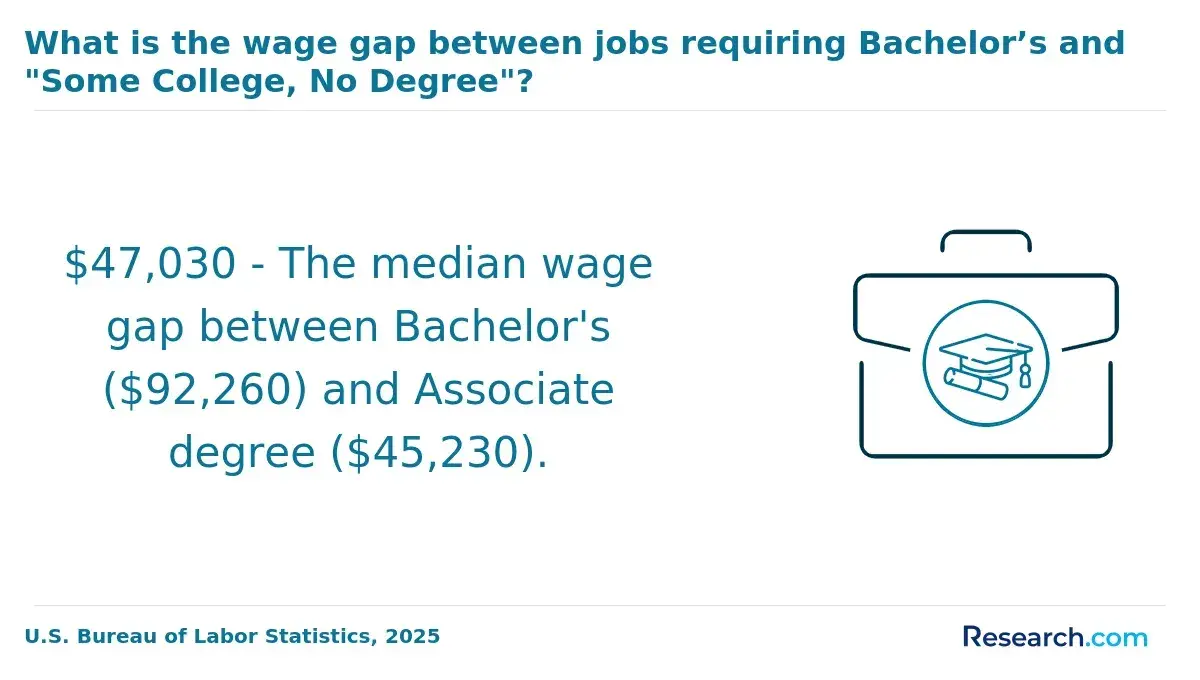
The best education pathways for resilient public administration careers combine specialized degrees with interdisciplinary skills. A bachelor's degree in public administration, emergency management, or related fields provides a foundation, but advanced degrees like a master's in public administration (MPA) are increasingly important.
These programs focus on critical thinking, ethical judgment, leadership, and complex problem-solving-capabilities that automation and AI cannot easily replicate.
Emergency management is a field where these advanced skills are vital. The U.S. Bureau of Labor Statistics projects a 4% employment growth for emergency management directors from 2022 to 2032, with a median annual wage of $87,910. This growth is driven by climate-related disasters and the need for professionals skilled in strategic planning and crisis coordination.
Relevant public administration degree programs for AI resistance emphasize real-world experiences through internships, simulations, and partnerships with government agencies. Courses blending policy analysis, data interpretation, and human-centered approaches enhance job readiness. Certifications in emergency preparedness or public policy analysis also add value.
For working professionals, part-time MPA programs or graduate certificates focusing on resilience, cybersecurity, and disaster planning improve adaptability. Prioritizing communication, ethics, and human judgment alongside digital literacy is essential.
Those considering educational options may find comparisons like Capella university vs WGU RN to BSN helpful for navigating similar pathways in education.
Which public administration concentrations lead to the most automation-proof career paths?
The public administration concentrations most resistant to automation emphasize human judgment, policy analysis, and social services oversight. Career paths in social science, psychology, and welfare program management are among the most resilient public administration career paths in the US, requiring empathy, ethical decision-making, and complex problem-solving tailored to diverse populations.
Federal employment in "Social Science, Psychology, and Welfare" job families increased by 12% between FY 2020 and FY 2024, according to the U.S. Office of Personnel Management. This growth reflects an expanding need for human-centered oversight roles that manage welfare programs, conduct impact assessments, and design policy solutions sensitive to societal contexts.
Social program administration, mental health policy, and community welfare planning involve coordinating multidisciplinary teams and navigating unforeseen human factors. These functions resist automation since they involve interpreting nuanced social data and handling confidential information.
Other automation-proof areas include regulatory compliance officers, ethics coordinators, and emergency management administrators, who combine rapid decision-making with community engagement and require critical interpretation of laws and principles beyond AI's capacity.
Prospective students should focus on concentrations blending quantitative skills with interpersonal expertise to build resilience to automation. Developing expertise in program evaluation, behavioral analysis, and policy advocacy creates career advantages in public administration.
Those interested may also consider a project management degree to complement their skill set and strengthen leadership capabilities.
How do online public administration degrees compare with campus programs for future-proof skills?
Online public administration degrees now closely mirror campus programs in equipping students with skills suited for AI and automation challenges. Both formats focus on essential competencies such as regulatory expertise, critical thinking, and ethical decision-making-areas where human insight remains indispensable.
This emphasis is supported by data showing over 80% of high-income countries have expanded regulatory impact assessments since 2019, according to the World Bank's 2024 Regulatory Governance Indicators.
Online coursework frequently includes real-time case studies, simulations, and interactive policy analysis, enabling practical learning similar to in-person classes. These programs often provide greater flexibility for professionals seeking skill updates without interrupting their careers.
Conversely, campus programs typically offer enhanced mentorship, networking, and experiential learning opportunities through internships or local government engagement. Prospective students should weigh these factors in line with their personal and career goals.
Key skills for durability in the field include:
- Advanced regulatory analysis with AI tool integration.
- Stakeholder communication and negotiation beyond automation capabilities.
- Ethical governance and policy adaptation amidst technological shifts.
- Data literacy combined with qualitative oversight.
Choosing programs with curricula that reflect expanded regulatory environments is critical. Ensuring that courses cover compliance frameworks, scenario-based learning, and AI policy impacts helps maintain relevance in evolving public administration careers.
What core public administration courses build skills least likely to be automated?
Core public administration courses focus on skills that are least likely to be automated, such as complex problem-solving, human judgment, and nuanced regulatory knowledge. Important subjects include organizational theory, ethics, public policy analysis, and intergovernmental relations.
These areas emphasize critical thinking, leadership, and decision-making in uncertain environments where automation falls short.
Courses in data management and health services administration are also essential, especially as healthcare managers coordinate regulations, organizational operations, and data oversight.
The U.S. Bureau of Labor Statistics projects a 28% employment growth for this sector over the decade, with a median pay of $125,040, reflecting the high demand for expertise in managing complex health data and regulations.
Other valuable course areas include public budgeting and financial management, which develop skills needed to handle resource allocation amid political realities. Training in negotiation, conflict resolution, and stakeholder engagement builds interpersonal capabilities critical for collaboration across multiple sectors.
Qualitative research methods and policy implementation courses enhance analytical abilities tied to interpreting unique social behaviors and trends, areas where artificial intelligence still struggles to compete.
Students and professionals should seek programs integrating these multidisciplinary subjects to sustain resilience against automation in public administration careers.
Employer Confidence in Online vs. In-Person Degree Skills, Global 2024

What are the typical salaries for AI-resilient public administration careers in the U.S.?
Financial managers in public administration, especially those involved in government budgeting and finance, earn a median salary of $156,100. This high wage reflects the complexity and critical oversight these roles require, tasks that automation struggles to replicate.
Other positions like urban planners, policy analysts, and administrative services managers usually earn between $75,000 and $110,000. For instance, urban planners focused on sustainable development often make around $80,000, while data-driven policy analysts in metropolitan areas can earn up to $100,000.
Employment for financial managers is expected to grow by 17% over the next decade, outpacing many other fields. This trend highlights how automation is shifting the workforce toward roles demanding advanced strategic analysis and oversight rather than replacing these jobs.
Mid-level professionals specializing in managing complex systems, regulatory compliance, and strategic planning generally see salaries above $90,000, with senior experts earning $140,000 or more. Career success in public administration increasingly favors individuals skilled in leadership, technological fluency, and cross-sector collaboration.
What is the long-term job outlook for public administration roles least impacted by automation?
The job outlook for public administration roles less affected by automation remains strong due to the need for complex judgment and interpersonal skills that AI cannot easily replicate.
Positions focused on strategic planning, policy development, and human resources management often require ethical decision-making and a nuanced understanding of social contexts, helping sustain demand despite technological advances.
A 2025 OECD survey found that while 67% of OECD governments use AI to improve service delivery, this has generally increased demand for HR-led reskilling and change management rather than reducing jobs. This highlights the growing importance of human roles in managing AI integration and ethical considerations.
Examples of resilient roles in public administration include:
- Policy analysts who translate complex data into actionable strategies.
- Program managers coordinating multi-agency efforts and addressing political and public concerns.
- Human resources specialists leading workforce development and ensuring compliance with labor laws.
To build long-term career resilience, professionals should develop strong communication skills, adaptability to technology, and expertise in change management. Knowledge of AI's capabilities and ethical implementation will be valuable for roles that facilitate AI-human collaboration, rather than compete against automation.
Public administration careers focused on governance, ethical oversight, and social services remain stable pathways for graduates and professionals navigating an evolving digital workforce.
Are there certifications or professional designations that strengthen AI-resistant public administration careers?
Certifications and professional designations are essential for strengthening careers in AI-resistant public administration by validating expertise in complex, human-centered skills that AI struggles to replicate.
For instance, the Certified Public Manager (CPM) credential demonstrates managerial competence and ethical leadership, areas with limited AI support. The Project Management Professional (PMP) certification prepares public administrators to manage intricate projects requiring critical judgment and stakeholder engagement.
Specialized credentials like those from the International Association of Program Managers (IAPM) are aligned with growth areas funded by substantial official development assistance (ODA). According to UN DESA's "World Public Sector Report," ODA reached a record USD 223.7 billion in 2023, highlighting expanding opportunities in international aid program management.
Other valuable certifications include Certified Government Financial Manager (CGFM), which emphasizes oversight and policy interpretation that AI cannot fully replace. Expertise in public policy analysis and negotiation further enhances career resilience by focusing on nuanced legislation and dynamic communication skills.
Professionals combining technical certifications with leadership and interpersonal skills are best positioned to thrive. This combination emphasizes empathy, ethical decision-making, and adaptable problem-solving, making them indispensable in evolving public administration environments.
How can students evaluate and choose accredited public administration programs aligned with future automation trends?
Students selecting accredited public administration programs aligned with automation trends should focus on curricula emphasizing human-centered governance, civic technology, and participatory democracy.
Graduates trained in managing complex public consultation processes are increasingly valuable, as over 60% of governments expanded national participatory initiatives from 2019 to 2023, according to the OECD's survey on "Innovative Citizen Participation."
Important evaluation factors include:
- Curriculum content covering digital governance, community engagement strategies, and data ethics.
- Faculty expertise combining public policy and technology implementation.
- Hands-on opportunities like internships or projects with government agencies using advanced civic participation platforms.
- Accreditation by recognized bodies ensuring quality and relevance to public sector needs.
- Graduate outcomes showing employment in emerging roles such as civic tech coordinators or participatory process designers.
Programs offering interdisciplinary options merging public administration with information systems or data analytics better prepare students for automation-resistant roles. Partnerships with local governments on digital consultation exemplify responsiveness to current demands.
As automation impacts routine tasks, schools fostering complex decision-making, stakeholder collaboration, and community engagement equip students with skills AI cannot replace, enhancing long-term career resilience.
Other Things You Should Know About Public Administration
In 2027, public administration professionals often confront challenges such as ensuring equitable access to technology, navigating privacy concerns, and maintaining ethical standards. The integration of technology must consider societal impacts and public trust while balancing efficiency improvements against potential unemployment caused by automation.
Adaptability is crucial for public administration professionals as technology and workflows evolve rapidly. Those who continuously update their skills and stay informed about emerging tools are better positioned to maintain relevance and contribute strategically. Adaptability also ensures responsiveness to changing public needs and policy landscapes.
While AI can handle routine data processing and generate reports, public administration roles involving complex data interpretation and policy implications require human judgment. Public administrators must understand context, ethical considerations, and societal impacts, which AI currently cannot replicate fully. Thus, these roles remain only partially automatable.
References
- How We Evaluated MPA Programs to Identify the Very Best https://mpadegree.org/how-we-evaluated-mpa-programs-to-identify-the-very-best/
- Roster of Accredited Programs https://www.naspaa.org/accreditation/roster-accredited-programs
- Generative AI, the American worker, and the future of work | Brookings https://www.brookings.edu/articles/generative-ai-the-american-worker-and-the-future-of-work/
- How To Future-Proof Your Career In The Age Of AI | NOEMA
- AI Proof Degrees for AI Proof Jobs https://www.pacificu.edu/blog/ai-proof-degrees-ai-proof-careers
- 8 Public Administration Careers and Salaries https://online.hilbert.edu/blog/public-administration-careers/
- What Does a Public Administrator Do? https://www.allbusinessschools.com/public-administration/career-paths/
- The Business Master's Degrees That Will AI-Proof Your Career in 2026 https://mastergradschools.com/master-jobs/business-masters-for-ai-proof-jobs-2026