
Laxis Review 2027: Pricing, Features, Pros & Cons, Ratings & More

Co-Founder and Chief Data Scientist

Laxis: Top AI Software
4 / 5
Featured AI Software Alternatives for Laxis

Custom
No
regulatory compliance, automation, cloud access
Editor's Take
NetSuite ERP is a comprehensive cloud-based enterprise resource planning (ERP) software designed to streamline business processes for organizations of all sizes. Key features include financial management, order management, inventory control, and procurement. It also offers advanced analytics and real-time reporting, making it ideal for decision-making. Pros include scalability, extensive customization, and seamless integration with other NetSuite modules like CRM and eCommerce. However, it can have a steep learning curve, and pricing may be high for smaller businesses. NetSuite ERP is best suited for growing companies needing a robust, all-in-one platform to manage complex operations across multiple departments.
Expert Score
In evaluating SaaS software, a comprehensive and structured methodology ensures a fair and accurate comparison across key metrics. This approach focuses on the most critical aspects that affect user experience, functionality, and business value. The following metrics—general features, cost, customer service, integrations, and mobile support—are evaluated to provide a holistic view of each software solution’s strengths and weaknesses. These metrics are selected based on their direct impact on software usability, scalability, and long-term effectiveness for businesses.
1. General Features - scoring weight 40%
This metric evaluates the core functionalities and tools the software offers. It involves assessing the comprehensiveness of the features, their relevance to the target users, and the ease of use. This is important because robust and well-designed features determine the software's overall utility and efficiency in solving user problems.
2. Cost - scoring weight 15%
Cost analysis focuses on pricing models, value for money, and scalability. It's crucial to evaluate whether the software’s features justify its price, considering different plans for small and large organizations. This is vital for businesses to ensure they invest in cost-effective solutions that fit their budget.
3. Customer Service - scoring weight 15%
This evaluates the responsiveness, quality, and availability of customer support, including channels like chat, email, or phone. Good customer service is essential for troubleshooting and ensuring smooth software usage, which reduces downtime and frustration for users.
4. Integrations - scoring weight 15%
This examines how well the software integrates with third-party tools (e.g., CRM, payment systems, collaboration apps). Seamless integrations are key for creating a unified workflow and enhancing productivity by connecting multiple systems, which is crucial for operational efficiency.
5. Mobile Support - scoring weight 15%
Mobile support assesses the software’s functionality and performance on mobile devices, including apps and mobile web versions. With increasing remote work and on-the-go usage, strong mobile support is critical to ensure users can access and utilize the software effectively, regardless of location.

By quote
Demo available
payment reminders, customizable workflows, analytics
Editor's Take
Gaviti is a specialized accounts receivable (AR) software designed to streamline and optimize the invoice collection process. Tailored for finance teams, Gaviti automates the entire AR workflow, from invoice generation to payment collection, helping businesses reduce late payments and improve cash flow. Its user-friendly platform provides real-time visibility into payment statuses and collection activities, enabling teams to track, manage, and prioritize outstanding invoices effectively.
Key features include automated payment reminders, customizable workflows, and detailed analytics for tracking AR performance. Gaviti also integrates seamlessly with existing accounting and ERP systems, allowing for smooth data synchronization and improved efficiency in managing receivables.
With its focus on improving the efficiency of AR processes and reducing the payment cycle, Gaviti is ideal for businesses looking to enhance their cash flow management and reduce operational bottlenecks in collections.
Expert Score
In evaluating SaaS software, a comprehensive and structured methodology ensures a fair and accurate comparison across key metrics. This approach focuses on the most critical aspects that affect user experience, functionality, and business value. The following metrics—general features, cost, customer service, integrations, and mobile support—are evaluated to provide a holistic view of each software solution’s strengths and weaknesses. These metrics are selected based on their direct impact on software usability, scalability, and long-term effectiveness for businesses.
1. General Features - scoring weight 40%
This metric evaluates the core functionalities and tools the software offers. It involves assessing the comprehensiveness of the features, their relevance to the target users, and the ease of use. This is important because robust and well-designed features determine the software's overall utility and efficiency in solving user problems.
2. Cost - scoring weight 15%
Cost analysis focuses on pricing models, value for money, and scalability. It's crucial to evaluate whether the software’s features justify its price, considering different plans for small and large organizations. This is vital for businesses to ensure they invest in cost-effective solutions that fit their budget.
3. Customer Service - scoring weight 15%
This evaluates the responsiveness, quality, and availability of customer support, including channels like chat, email, or phone. Good customer service is essential for troubleshooting and ensuring smooth software usage, which reduces downtime and frustration for users.
4. Integrations - scoring weight 15%
This examines how well the software integrates with third-party tools (e.g., CRM, payment systems, collaboration apps). Seamless integrations are key for creating a unified workflow and enhancing productivity by connecting multiple systems, which is crucial for operational efficiency.
5. Mobile Support - scoring weight 15%
Mobile support assesses the software’s functionality and performance on mobile devices, including apps and mobile web versions. With increasing remote work and on-the-go usage, strong mobile support is critical to ensure users can access and utilize the software effectively, regardless of location.

Custom
No
Payroll processing, HR management, analytics
Editor's Take
Paylocity is a comprehensive cloud-based software solution designed to streamline and enhance human resource and payroll management for businesses of all sizes. As an all-in-one platform, it caters to the evolving needs of HR professionals by offering a suite of tools that cover payroll processing, benefits administration, talent management, workforce management, and employee engagement. Its user-friendly interface and automation capabilities aim to reduce manual tasks, ensuring greater accuracy and efficiency in day-to-day operations.
One of Paylocity's standout features is its ability to integrate seamlessly with other software systems, providing businesses with the flexibility to customize their workflows. Its payroll processing tool is particularly robust, offering automated tax filing, compliance management, and real-time reporting to minimize errors and save time. Additionally, its talent management module supports recruitment, onboarding, performance tracking, and employee development, making it a valuable tool for organizations focused on growth and retention.
Employee engagement is a key focus of Paylocity, reflected in its modern tools like peer recognition, surveys, and an intuitive self-service portal. These features foster better communication and collaboration, helping businesses build a more connected and motivated workforce. The platform also offers advanced analytics and reporting capabilities, enabling HR teams to make data-driven decisions to support strategic initiatives.
Paylocity is known for its customer support and commitment to innovation, regularly introducing new features to stay ahead of market trends. While the platform is designed for scalability, some smaller businesses may find the breadth of its features overwhelming or more suitable for mid-sized and larger organizations. Nevertheless, Paylocity remains a leading choice for businesses seeking a comprehensive, integrated, and customizable solution for managing HR and payroll functions.
Expert Score
In evaluating SaaS software, a comprehensive and structured methodology ensures a fair and accurate comparison across key metrics. This approach focuses on the most critical aspects that affect user experience, functionality, and business value. The following metrics—general features, cost, customer service, integrations, and mobile support—are evaluated to provide a holistic view of each software solution’s strengths and weaknesses. These metrics are selected based on their direct impact on software usability, scalability, and long-term effectiveness for businesses.
1. General Features - scoring weight 40%
This metric evaluates the core functionalities and tools the software offers. It involves assessing the comprehensiveness of the features, their relevance to the target users, and the ease of use. This is important because robust and well-designed features determine the software’s overall utility and efficiency in solving user problems.
2. Cost - scoring weight 15%
Cost analysis focuses on pricing models, value for money, and scalability. It’s crucial to evaluate whether the software’s features justify its price, considering different plans for small and large organizations. This is vital for businesses to ensure they invest in cost-effective solutions that fit their budget.
3. Customer Service - scoring weight 15%
This evaluates the responsiveness, quality, and availability of customer support, including channels like chat, email, or phone. Good customer service is essential for troubleshooting and ensuring smooth software usage, which reduces downtime and frustration for users.
4. Integrations - scoring weight 15%
This examines how well the software integrates with third-party tools (e.g., CRM, payment systems, collaboration apps). Seamless integrations are key for creating a unified workflow and enhancing productivity by connecting multiple systems, which is crucial for operational efficiency.
5. Mobile Support - scoring weight 15%
Mobile support assesses the software’s functionality and performance on mobile devices, including apps and mobile web versions. With increasing remote work and on-the-go usage, strong mobile support is critical to ensure users can access and utilize the software effectively, regardless of location.
Laxis Review
What is Laxis?
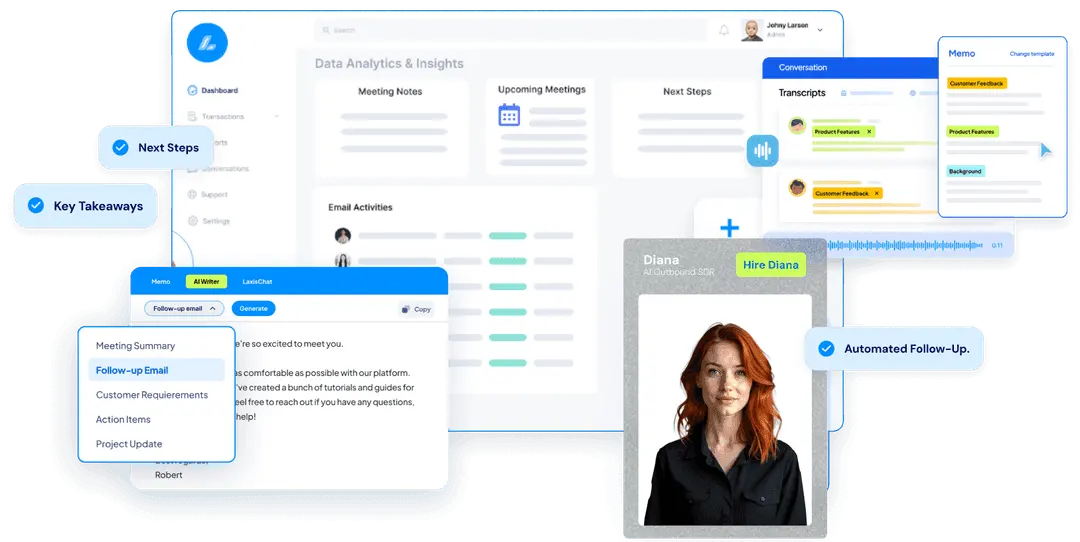
Laxis is an AI-powered meeting assistant and conversation intelligence tool designed to streamline how professionals capture, analyze, and act on spoken insights during meetings. Whether you're conducting internal team syncs, sales calls, client interviews, or research sessions, Laxis offers an automated way to transcribe conversations, extract key takeaways, and surface actionable insights in real time. It empowers users to focus on the conversation rather than note-taking, reducing cognitive load while improving information retention.
At the core of Laxis is its AI copilot, which integrates with popular conferencing platforms like Zoom, Google Meet, and Microsoft Teams. The copilot provides live transcription, smart tagging, and real-time summarization features, transforming raw dialogue into structured, searchable, and shareable content. With customizable templates and intelligent keyword tracking, Laxis tailors its outputs to meet diverse professional needs—from sales teams analyzing deal progress to researchers identifying recurring themes.
The platform also serves as a central hub for managing meeting knowledge. Users can revisit conversations with searchable transcripts, identify patterns across meetings, and export insights into CRM systems or productivity tools. By merging AI capabilities with an intuitive interface, Laxis helps organizations increase meeting productivity, improve follow-up actions, and make better data-driven decisions from every interaction.
What’s New in Laxis?
Laxis continues to evolve rapidly, adding features that improve both user experience and meeting efficiency.
Real-time Meeting Insights: One of the newest updates includes real-time meeting insights, which offer live suggestions, sentiment cues, and topic tagging as the conversation unfolds—helping users stay contextually aware and respond more effectively. This proactive guidance can significantly enhance participation and help steer discussions toward desired outcomes, making every interaction more impactful.
Expanded Productivity Tool Integrations: Another recent enhancement is the expanded integrations with productivity tools, allowing users to export summaries and key insights directly into platforms like Notion, HubSpot, and Salesforce. This boosts workflow continuity and ensures insights don’t get lost after meetings end, streamlining project management and client relationship tracking.
Featured AI Software Products
Custom
No
regulatory compliance, automation, cloud access
Editor's Take
NetSuite ERP is a comprehensive cloud-based enterprise resource planning (ERP) software designed to streamline business processes for organizations of all sizes. Key features include financial management, order management, inventory control, and procurement. It also offers advanced analytics and real-time reporting, making it ideal for decision-making. Pros include scalability, extensive customization, and seamless integration with other NetSuite modules like CRM and eCommerce. However, it can have a steep learning curve, and pricing may be high for smaller businesses. NetSuite ERP is best suited for growing companies needing a robust, all-in-one platform to manage complex operations across multiple departments.
Expert Score
In evaluating SaaS software, a comprehensive and structured methodology ensures a fair and accurate comparison across key metrics. This approach focuses on the most critical aspects that affect user experience, functionality, and business value. The following metrics—general features, cost, customer service, integrations, and mobile support—are evaluated to provide a holistic view of each software solution’s strengths and weaknesses. These metrics are selected based on their direct impact on software usability, scalability, and long-term effectiveness for businesses.
1. General Features - scoring weight 40%
This metric evaluates the core functionalities and tools the software offers. It involves assessing the comprehensiveness of the features, their relevance to the target users, and the ease of use. This is important because robust and well-designed features determine the software's overall utility and efficiency in solving user problems.
2. Cost - scoring weight 15%
Cost analysis focuses on pricing models, value for money, and scalability. It's crucial to evaluate whether the software’s features justify its price, considering different plans for small and large organizations. This is vital for businesses to ensure they invest in cost-effective solutions that fit their budget.
3. Customer Service - scoring weight 15%
This evaluates the responsiveness, quality, and availability of customer support, including channels like chat, email, or phone. Good customer service is essential for troubleshooting and ensuring smooth software usage, which reduces downtime and frustration for users.
4. Integrations - scoring weight 15%
This examines how well the software integrates with third-party tools (e.g., CRM, payment systems, collaboration apps). Seamless integrations are key for creating a unified workflow and enhancing productivity by connecting multiple systems, which is crucial for operational efficiency.
5. Mobile Support - scoring weight 15%
Mobile support assesses the software’s functionality and performance on mobile devices, including apps and mobile web versions. With increasing remote work and on-the-go usage, strong mobile support is critical to ensure users can access and utilize the software effectively, regardless of location.
By quote
Demo available
payment reminders, customizable workflows, analytics
Editor's Take
Gaviti is a specialized accounts receivable (AR) software designed to streamline and optimize the invoice collection process. Tailored for finance teams, Gaviti automates the entire AR workflow, from invoice generation to payment collection, helping businesses reduce late payments and improve cash flow. Its user-friendly platform provides real-time visibility into payment statuses and collection activities, enabling teams to track, manage, and prioritize outstanding invoices effectively.
Key features include automated payment reminders, customizable workflows, and detailed analytics for tracking AR performance. Gaviti also integrates seamlessly with existing accounting and ERP systems, allowing for smooth data synchronization and improved efficiency in managing receivables.
With its focus on improving the efficiency of AR processes and reducing the payment cycle, Gaviti is ideal for businesses looking to enhance their cash flow management and reduce operational bottlenecks in collections.
Expert Score
In evaluating SaaS software, a comprehensive and structured methodology ensures a fair and accurate comparison across key metrics. This approach focuses on the most critical aspects that affect user experience, functionality, and business value. The following metrics—general features, cost, customer service, integrations, and mobile support—are evaluated to provide a holistic view of each software solution’s strengths and weaknesses. These metrics are selected based on their direct impact on software usability, scalability, and long-term effectiveness for businesses.
1. General Features - scoring weight 40%
This metric evaluates the core functionalities and tools the software offers. It involves assessing the comprehensiveness of the features, their relevance to the target users, and the ease of use. This is important because robust and well-designed features determine the software's overall utility and efficiency in solving user problems.
2. Cost - scoring weight 15%
Cost analysis focuses on pricing models, value for money, and scalability. It's crucial to evaluate whether the software’s features justify its price, considering different plans for small and large organizations. This is vital for businesses to ensure they invest in cost-effective solutions that fit their budget.
3. Customer Service - scoring weight 15%
This evaluates the responsiveness, quality, and availability of customer support, including channels like chat, email, or phone. Good customer service is essential for troubleshooting and ensuring smooth software usage, which reduces downtime and frustration for users.
4. Integrations - scoring weight 15%
This examines how well the software integrates with third-party tools (e.g., CRM, payment systems, collaboration apps). Seamless integrations are key for creating a unified workflow and enhancing productivity by connecting multiple systems, which is crucial for operational efficiency.
5. Mobile Support - scoring weight 15%
Mobile support assesses the software’s functionality and performance on mobile devices, including apps and mobile web versions. With increasing remote work and on-the-go usage, strong mobile support is critical to ensure users can access and utilize the software effectively, regardless of location.
Custom
No
Payroll processing, HR management, analytics
Editor's Take
Paylocity is a comprehensive cloud-based software solution designed to streamline and enhance human resource and payroll management for businesses of all sizes. As an all-in-one platform, it caters to the evolving needs of HR professionals by offering a suite of tools that cover payroll processing, benefits administration, talent management, workforce management, and employee engagement. Its user-friendly interface and automation capabilities aim to reduce manual tasks, ensuring greater accuracy and efficiency in day-to-day operations.
One of Paylocity's standout features is its ability to integrate seamlessly with other software systems, providing businesses with the flexibility to customize their workflows. Its payroll processing tool is particularly robust, offering automated tax filing, compliance management, and real-time reporting to minimize errors and save time. Additionally, its talent management module supports recruitment, onboarding, performance tracking, and employee development, making it a valuable tool for organizations focused on growth and retention.
Employee engagement is a key focus of Paylocity, reflected in its modern tools like peer recognition, surveys, and an intuitive self-service portal. These features foster better communication and collaboration, helping businesses build a more connected and motivated workforce. The platform also offers advanced analytics and reporting capabilities, enabling HR teams to make data-driven decisions to support strategic initiatives.
Paylocity is known for its customer support and commitment to innovation, regularly introducing new features to stay ahead of market trends. While the platform is designed for scalability, some smaller businesses may find the breadth of its features overwhelming or more suitable for mid-sized and larger organizations. Nevertheless, Paylocity remains a leading choice for businesses seeking a comprehensive, integrated, and customizable solution for managing HR and payroll functions.
Expert Score
In evaluating SaaS software, a comprehensive and structured methodology ensures a fair and accurate comparison across key metrics. This approach focuses on the most critical aspects that affect user experience, functionality, and business value. The following metrics—general features, cost, customer service, integrations, and mobile support—are evaluated to provide a holistic view of each software solution’s strengths and weaknesses. These metrics are selected based on their direct impact on software usability, scalability, and long-term effectiveness for businesses.
1. General Features - scoring weight 40%
This metric evaluates the core functionalities and tools the software offers. It involves assessing the comprehensiveness of the features, their relevance to the target users, and the ease of use. This is important because robust and well-designed features determine the software’s overall utility and efficiency in solving user problems.
2. Cost - scoring weight 15%
Cost analysis focuses on pricing models, value for money, and scalability. It’s crucial to evaluate whether the software’s features justify its price, considering different plans for small and large organizations. This is vital for businesses to ensure they invest in cost-effective solutions that fit their budget.
3. Customer Service - scoring weight 15%
This evaluates the responsiveness, quality, and availability of customer support, including channels like chat, email, or phone. Good customer service is essential for troubleshooting and ensuring smooth software usage, which reduces downtime and frustration for users.
4. Integrations - scoring weight 15%
This examines how well the software integrates with third-party tools (e.g., CRM, payment systems, collaboration apps). Seamless integrations are key for creating a unified workflow and enhancing productivity by connecting multiple systems, which is crucial for operational efficiency.
5. Mobile Support - scoring weight 15%
Mobile support assesses the software’s functionality and performance on mobile devices, including apps and mobile web versions. With increasing remote work and on-the-go usage, strong mobile support is critical to ensure users can access and utilize the software effectively, regardless of location.


$15 per month, free plan is available
14 days
Editor's Take
Zoho Books is a versatile, cloud-based accounting software designed to meet the financial needs of small to medium-sized businesses. Part of the comprehensive Zoho suite, it offers end-to-end tools for managing core accounting functions, from invoicing and expense tracking to bank reconciliation and tax compliance. Zoho Books stands out for its user-friendly interface and integration capabilities, especially for businesses already using other Zoho applications like Zoho CRM, Zoho Inventory, or Zoho Projects. This seamless connectivity makes Zoho Books an attractive option for businesses aiming to centralize and streamline their financial operations.
Zoho Books simplifies invoicing with customizable templates and automated payment reminders, helping businesses accelerate cash flow and keep track of payments in real time. Expense tracking and bank reconciliation tools make it easy to monitor spending and match financial records accurately, enhancing visibility into cash flow. For companies managing multiple projects, Zoho Books also includes project-based accounting features, allowing users to log billable hours, track project-specific expenses, and generate dedicated reports.
With built-in tax compliance tools, Zoho Books supports tax tracking and automated calculations for various jurisdictions, including GST and VAT, which helps businesses stay compliant with local regulations. The platform also integrates with popular third-party tools like PayPal and Stripe, broadening its versatility for managing payments and transactions.
For businesses that rely on inventory, Zoho Books includes inventory management capabilities, supporting low-stock alerts, stock movement tracking, and inventory valuation. With robust reporting features, Zoho Books provides insights into profits, expenses, and taxes, empowering businesses to make data-driven financial decisions and remain compliant.
Overall, Zoho Books is a well-rounded solution that streamlines accounting for small and growing businesses, combining essential accounting functions with the flexibility to grow alongside a business’s needs.
Expert Score
In evaluating SaaS software, a comprehensive and structured methodology ensures a fair and accurate comparison across key metrics. This approach focuses on the most critical aspects that affect user experience, functionality, and business value. The following metrics—general features, cost, customer service, integrations, and mobile support—are evaluated to provide a holistic view of each software solution’s strengths and weaknesses. These metrics are selected based on their direct impact on software usability, scalability, and long-term effectiveness for businesses.
1. General Features - scoring weight 40%
This metric evaluates the core functionalities and tools the software offers. It involves assessing the comprehensiveness of the features, their relevance to the target users, and the ease of use. This is important because robust and well-designed features determine the software’s overall utility and efficiency in solving user problems.
2. Cost - scoring weight 15%
Cost analysis focuses on pricing models, value for money, and scalability. It’s crucial to evaluate whether the software’s features justify its price, considering different plans for small and large organizations. This is vital for businesses to ensure they invest in cost-effective solutions that fit their budget.
3. Customer Service - scoring weight 15%
This evaluates the responsiveness, quality, and availability of customer support, including channels like chat, email, or phone. Good customer service is essential for troubleshooting and ensuring smooth software usage, which reduces downtime and frustration for users.
4. Integrations - scoring weight 15%
This examines how well the software integrates with third-party tools (e.g., CRM, payment systems, collaboration apps). Seamless integrations are key for creating a unified workflow and enhancing productivity by connecting multiple systems, which is crucial for operational efficiency.
5. Mobile Support - scoring weight 15%
Mobile support assesses the software’s functionality and performance on mobile devices, including apps and mobile web versions. With increasing remote work and on-the-go usage, strong mobile support is critical to ensure users can access and utilize the software effectively, regardless of location.
How Much Does Laxis Cost?
Laxis: Top AI Software
4 / 5
Basic - Free
- Transcription: 300 minutes per month
- Conversation storage: 1000 minutes
- AI Assistant integrated with Zoom, Google Meet, Teams, and Webex
- Online meeting video recording replay
- AI Summary with action items, keyword tracking and topics
- Audio file upload
- Search across all conversations
- Team Channel
- Support email response time: 5 business days
Premium - $9.99/month
- Everything in Basic, plus
- Transcription: 2000 minutes per month
- Unlimited Google Meet transcription
- Unlimited conversation storage
- 20+ Professional Reports and customized AI templates
- LaxisChat: ChatGPT-like chatbot for meetings
- Auto record meetings with calendar integration
- Conversation Insight
- Support email response time: 2 business days
Business - $19.99/month
- Everything in Premium, plus
- Unlimited Transcription
- Unlimited conversation storage
- Unlimited AI Writer and LaxisChat
- Personalized meeting assistant name
- 7000+ App Integrations
- CRM Automation via Hubspot & Salesforce
- Admin functionality
- Team Channel insight (coming soon)
- Support email response time: 1 business day
Enterprise - By quote
- Everything in Business, plus
- Unlimited Transcription
- Unlimited AI Writer and LaxisChat
- Custom AI writer template
- Executive dashboard
- Dedicated account manager
- API integrations
- Personalized onboarding & training for your business
- AI Sales Coaching (coming soon)
What Sets Laxis Apart?
Context-Aware AI Copilot
Laxis distinguishes itself with its context-aware AI copilot that not only transcribes meetings but also generates real-time insights tailored to specific goals like sales tracking, project management, or user research. Its use of smart tags and customizable templates enables personalized analysis that most generic transcription tools don’t offer, providing a deeper understanding of discussions.
Focus on Post-Meeting Actionability
Another key differentiator is its focus on post-meeting actionability. Laxis doesn’t just summarize conversations—it extracts next steps, key decisions, and themes across sessions, transforming passive meetings into data-rich, decision-driving assets. This proactive approach ensures that meeting outcomes are clearly defined and easily integrated into subsequent workflows.

Laxis Pros
Real-Time AI Transcription: Laxis provides live transcription during meetings, enabling participants to focus on discussions without worrying about note-taking. This immediate feedback helps confirm clarity and accuracy, allowing for on-the-spot corrections or elaborations during the conversation.
Customizable Meeting Templates: Users can build templates tailored to sales calls, research interviews, or internal syncs, allowing for consistent structure and keyword tracking across meetings. These templates ensure that crucial information is consistently captured, streamlining data collection and analysis.
Smart Summarization and Action Items: The AI identifies decisions, follow-up tasks, and highlights, creating actionable summaries that accelerate post-meeting workflows. This feature drastically reduces the time spent on manual summary creation, freeing up valuable time for more strategic tasks.
Cross-Platform Integration: Laxis integrates with Zoom, Google Meet, Microsoft Teams, and major productivity tools—ensuring a seamless workflow from meeting to insight. This broad compatibility allows users to incorporate Laxis into their existing tech stack with minimal disruption, enhancing overall efficiency.
Keyword and Theme Detection: Track custom keywords or themes automatically, helping users identify patterns across different meetings or client interactions. This capability is particularly useful for identifying recurring topics, sentiment shifts, or specific customer needs over time.
Laxis Cons
Accuracy Varies with Audio Quality: Like many AI transcription tools, Laxis's performance can be affected by poor audio quality, heavy accents, or background noise. Ensuring clear audio input is crucial to maximize the accuracy of the transcription and subsequent AI analysis.
Learning Curve for Custom Templates: While customizable templates are powerful, new users may need time to set them up effectively and fully utilize smart tagging features. Initial investment in understanding these advanced features will yield significant long-term benefits in personalized meeting insights.
Requires Internet Connection: Laxis is a cloud-based tool and needs a stable internet connection to function properly, including during live transcription and insight generation. Users in areas with unreliable internet may experience interruptions in service or a degraded user experience.
Laxis Core Features
Laxis: Top AI Software
4 / 5
Laxis offers a powerful suite of AI-driven tools for capturing, analyzing, and leveraging conversations across industries and functions:
Live Transcription: Accurately transcribe spoken conversations in real time across various conferencing platforms. This immediate record allows participants to refer back to specific points during the meeting, ensuring clarity and consensus.
AI Meeting Summaries: Generate concise summaries of meetings with action items, decisions, and key themes identified automatically. These summaries serve as an excellent record for all attendees, facilitating quick comprehension of outcomes and responsibilities.
Custom Templates: Create and reuse meeting formats tailored to specific use cases, ensuring consistent insights and output structure. These templates help standardize information gathering, making cross-meeting analysis more reliable and efficient.
Smart Tags and Keywords: Highlight important terms, track themes, and capture speaker-specific notes with intelligent tagging. This feature allows for granular organization of information, making it easier to retrieve specific details from lengthy transcripts.
Post-Meeting Analytics: Analyze conversations over time to identify patterns, recurring topics, and client behavior trends. This deep analytical capability helps businesses make more informed decisions based on cumulative meeting data.
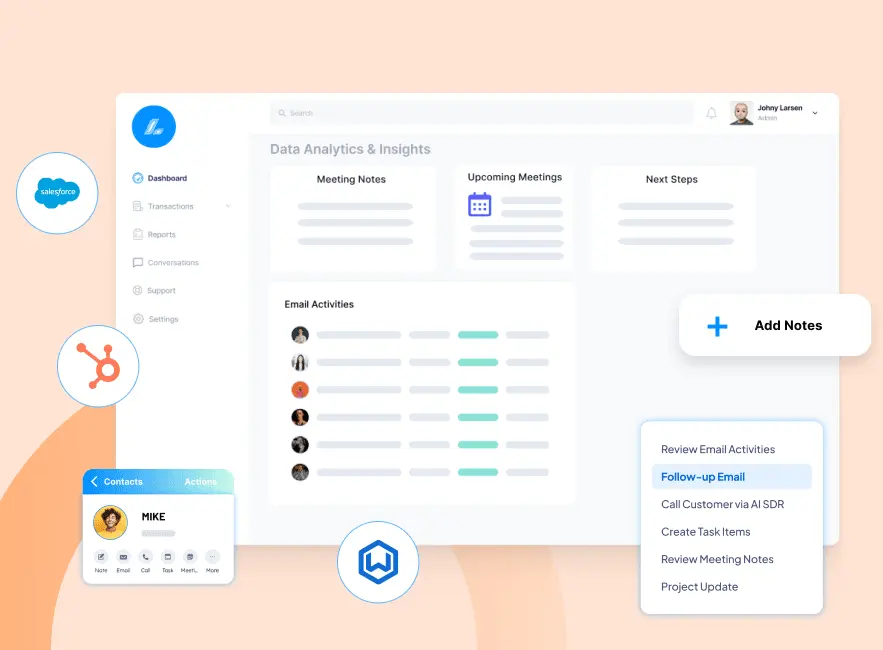
Integrations with Productivity Tools: Export insights to Notion, HubSpot, Slack, Salesforce, and more for continued team collaboration. This seamless integration ensures that meeting outcomes are directly actionable within familiar team workflows.
Benefits of Using Laxis
Laxis simplifies the meeting lifecycle by automating key aspects of documentation and follow-up. Here’s how it helps:
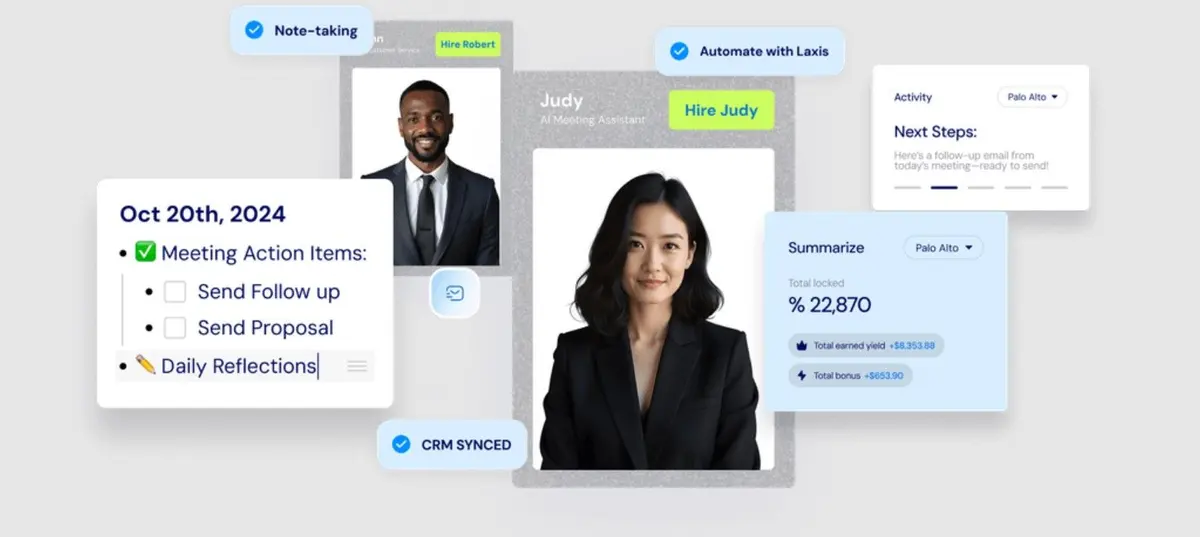
Increased Meeting Productivity: By handling note-taking and summarization, Laxis allows teams to focus on strategy and engagement instead of admin work. This shift in focus can lead to more dynamic discussions and more productive outcomes within the meeting itself.
Enhanced Collaboration: Centralized, searchable transcripts and summaries make it easier to share meeting knowledge and align teams. This ensures that all team members, including those who couldn't attend, have immediate access to critical information.
Data-Driven Decision Making: With insights extracted across meetings, teams can spot trends, customer pain points, and decision bottlenecks with clarity. This analytical depth empowers organizations to make strategic choices backed by concrete conversational data.
Faster Follow-Up: AI-generated action items and key points accelerate follow-up emails, task creation, and decision execution. This reduces the lag time between a meeting ending and the subsequent tasks beginning, improving overall project momentum.
What Business Types Use Laxis?
Laxis is versatile enough to support professionals across industries and team sizes. Here are the main types of users:
Sales Teams: Use Laxis to capture client needs, track objections, and auto-log CRM data for streamlined deal management. This ensures that every client interaction is documented thoroughly, helping sales professionals tailor their strategies effectively.
Product Managers and UX Researchers: Document user feedback sessions and usability tests while extracting themes and insights for roadmap planning. This tool facilitates a deeper understanding of user behavior and preferences, directly informing product development cycles.
Consultants and Agencies: Maintain accurate records of client meetings, deliverables, and next steps while reducing manual documentation. This efficiency allows consultants to dedicate more time to client interaction and strategic advice rather than administrative tasks.
Startup Founders and Executives: Leverage meeting intelligence for investor calls, board meetings, and strategic planning with minimal overhead. The ability to quickly extract key insights from high-level discussions supports agile decision-making critical for growth.
What Are the Top 5 Alternatives to Laxis?
While Laxis stands out for real-time AI and deep customization, here are five alternatives that may also fit your needs:
1. Otter.ai
A popular transcription and meeting notes app with live collaboration features, suitable for both business and education use. Otter.ai is known for its user-friendly interface and robust transcription capabilities, making it a strong contender for various users.
2. Fireflies.ai
Fireflies.ai offers meeting recording, transcription, and CRM integration, with strong automation features for sales teams. This alternative provides a comprehensive suite of tools for sales professionals, streamlining their post-call workflows.
3. Fathom
A free Zoom-based meeting assistant focused on summarizing and highlighting key parts of conversations in real time. Fathom offers a cost-effective solution for users primarily looking for immediate summarization within Zoom meetings.
4. Grain
Specializes in video highlights and short clips from recorded meetings, useful for sharing customer quotes or feedback moments. Grain is particularly beneficial for creating shareable content from meetings, ideal for presentations or team training.
5. Rev
Best known for its highly accurate human transcription services, Rev is ideal when transcription precision is critical. While not an AI-first solution, its human touch provides unparalleled accuracy for legal, medical, or other sensitive transcriptions.


