2027 Are Online Liberal Arts Master's Degrees Respected by Employers? Hiring Trends & Career Outcomes

Co-Founder and Chief Data Scientist
Many professionals consider pursuing an online liberal arts master's degree but hesitate, questioning if employers value this credential as much as traditional, on-campus degrees. Despite growing popularity, 42% of hiring managers remain unsure how to assess online liberal arts programs compared to campus-based ones. This uncertainty can affect graduate job prospects and salary negotiations. The challenge lies in distinguishing reputable online programs with solid academic rigor from less recognized options. This article examines employer perceptions, accreditation impact, and graduate outcomes to provide prospective students a clear framework for evaluating online liberal arts master's degrees and their real-world career benefits.
Key Benefits of Knowing Whether Online Liberal Arts Master's Degrees Are Respected by Employers
- Employer perception of online liberal arts master's graduates has improved, with 68% of hiring managers recognizing program accreditation and institutional reputation as key quality indicators.
- Graduates often demonstrate strong workplace performance, critical thinking, and adaptability, driving higher chances for promotions and salary increases within five years post-graduation.
- Skills-based hiring trends prioritize competencies over degree format, enhancing online liberal arts degree holders' career prospects across education, nonprofits, and corporate sectors.
How Have Employer Perceptions of Online Liberal Arts Master's Degrees Changed Over the Past Decade?
Employer attitudes toward online liberal arts master's degrees have transformed considerably since the early 2010s. Initial skepticism stemmed largely from the negative stigma surrounding for-profit colleges, which then dominated online education. Surveys from that era showed many employers questioned the rigor and credibility of online degrees compared to traditional, on-campus programs. These concerns were tied to perceived lower academic standards and less effective instruction in online formats.
The COVID-19 pandemic significantly accelerated the acceptance of online credentials. As universities rapidly shifted to remote learning, hiring managers gained firsthand experience with online education's quality across disciplines, including liberal arts. This shift contributed to more positive perceptions and decreased bias. For example, Champlain College's 2023 survey found that 84% of employers are now more receptive to online education than before the pandemic, underscoring the growing employer acceptance trends for online liberal arts master's degrees.
Today, accreditation and institutional reputation have become the chief indicators employers rely on when evaluating online liberal arts graduate programs. Employers prioritize degrees from well-regarded, accredited institutions, which signals program rigor and ensures graduates meet established academic standards. This evolving perspective benefits prospective students researching programs, including those seeking the cheapest BCBA online program, who should consider these key factors carefully.
What Do Hiring Managers Actually Think About Online Liberal Arts Graduate Credentials?
Employer attitudes toward online liberal arts master's degrees have evolved significantly over the past decade. A 2023 survey by the National Association of Colleges and Employers (NACE) shows that many hiring managers now regard these degrees as comparable to traditional graduate credentials, particularly when the program holds proper accreditation and comes from a reputable institution. However, acceptance varies widely based on industry, company size, and geography.
- Sector Variations: Tech and communications industries are most open to online liberal arts degrees, while finance, law, and some nonprofits remain cautious due to concerns about program rigor and networking.
- Company Size Impact: Larger firms with structured hiring processes tend to show more acceptance of online credentials compared to smaller companies influenced by personal impressions.
- Geographical Differences: Urban employers generally accept online graduate degrees more readily, whereas rural and conservative areas often exhibit greater skepticism toward these formats.
- Skills Over Format: Employers increasingly prioritize portfolio quality, work experience, and applied skills in their evaluations, reducing the weight given to how degrees were earned.
- Quality and Accreditation: Graduates from accredited programs at respected institutions experience less bias, highlighting the importance of program reputation in hiring decisions.
One HR director interviewed by SHRM remarked, "We're less concerned about where a candidate studied if they demonstrate the competencies and critical thinking we need for the role." This aligns with an overall trend emphasizing skills, internships, and portfolios over the delivery format, particularly in fields emphasizing analytical reasoning and communication.
Prospective students should weigh factors like accreditation and institutional reputation carefully. Additionally, for those considering further education or credential enhancements, exploring programs such as the associates degree online might offer valuable, accelerated pathways tailored to modern workforce demands.
Does Accreditation Determine Whether an Online Liberal Arts Master's Degree Is Respected?
When evaluating an online liberal arts master's degree, employers and credentialing agencies primarily look at accreditation status. Regional accreditation validates the entire institution, establishing a baseline for legitimacy. Programmatic or professional accreditation, however, assesses specific academic disciplines or departments, offering a deeper assurance of program quality tailored to liberal arts specialties. This distinction is critical since some employers prioritize specialized accreditation when judging the relevance and rigor of a candidate's training.
Prospective students can confirm accreditation through reliable databases maintained by the U.S. Department of Education's Database of Accredited Postsecondary Institutions and Programs (DAPIP) and the Council for Higher Education Accreditation (CHEA). These resources provide official, current listings that help identify recognized institutions and accredited programs. Regional accrediting bodies like the Middle States Commission on Higher Education (MSCHE) or the Higher Learning Commission (HLC) frequently oversee entire institutions, while additional programmatic accreditors focus on particular fields, such as communication or counseling, enhancing a program's professional credibility.
Online degrees from unaccredited schools typically hold little value in professional settings and are rarely acknowledged by employers. Therefore, researching and verifying accreditation is essential before committing to any program. Reaching out to alumni or industry professionals for feedback can also shed light on a degree's real-world impact.
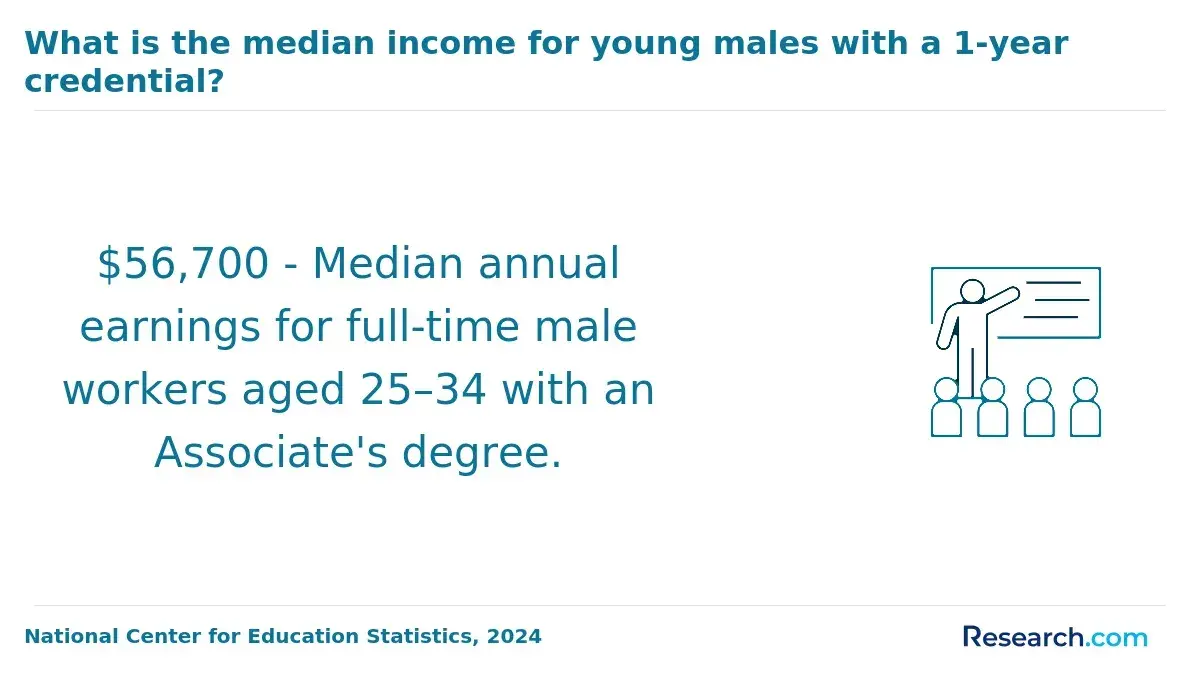
A 2023 survey from the National Center for Education Statistics found nearly 60% of employers now view accredited online degrees as equal to those earned on campus, signaling an increasing acceptance of distance education credentials.
A professional who enrolled in an online liberal arts master's program shared that deciding on an accredited institution was his top priority amid uncertainty about how his degree would be perceived. He reflected, "It was nerve-wracking at first, knowing some employers might dismiss online degrees outright. I spent a lot of time cross-checking the school's credentials with official government databases and even spoke to alumni about their job market experiences." Despite the challenges, he noted that the accreditation helped him feel confident in his investment and played a decisive role when discussing qualifications with potential employers, confirming that accreditation indeed influenced respect for his degree during his career transition.
How Does Institutional Reputation Affect the Value of an Online Liberal Arts Master's Degree in the Job Market?
Employers often attach a "brand premium" to degrees from well-known institutions, where the reputation of the university elevates a credential's perceived value, regardless of whether the program was completed online or campus-based. Prestigious schools like Georgetown University and the University of Southern California offer flagship online liberal arts master's degrees that use the same faculty, curriculum, and academic standards as their on-campus counterparts. Data from National Association of Colleges and Employers (NACE) employer surveys confirm that school name recognition remains highly influential in hiring decisions, shaping the employer pipeline for graduates with an online liberal arts master's degree employer perceptions.
Nonetheless, it is important not to rely solely on institutional prestige. Mid-tier programs with solid accreditation, established employer partnerships, and proven career placement rates may yield stronger career results than highly ranked schools lacking these connections. Increasingly, recruiters emphasize skills, practical experiences, and alumni outcomes rather than just the brand of the institution.
Evaluating online liberal arts careers means balancing reputation with rigor and tangible career support to find the program best suited to individual professional goals, including salary negotiation and advancement prospects within today's competitive landscape of highest paying jobs.
What Salary Outcomes Can Online Liberal Arts Master's Graduates Realistically Expect?
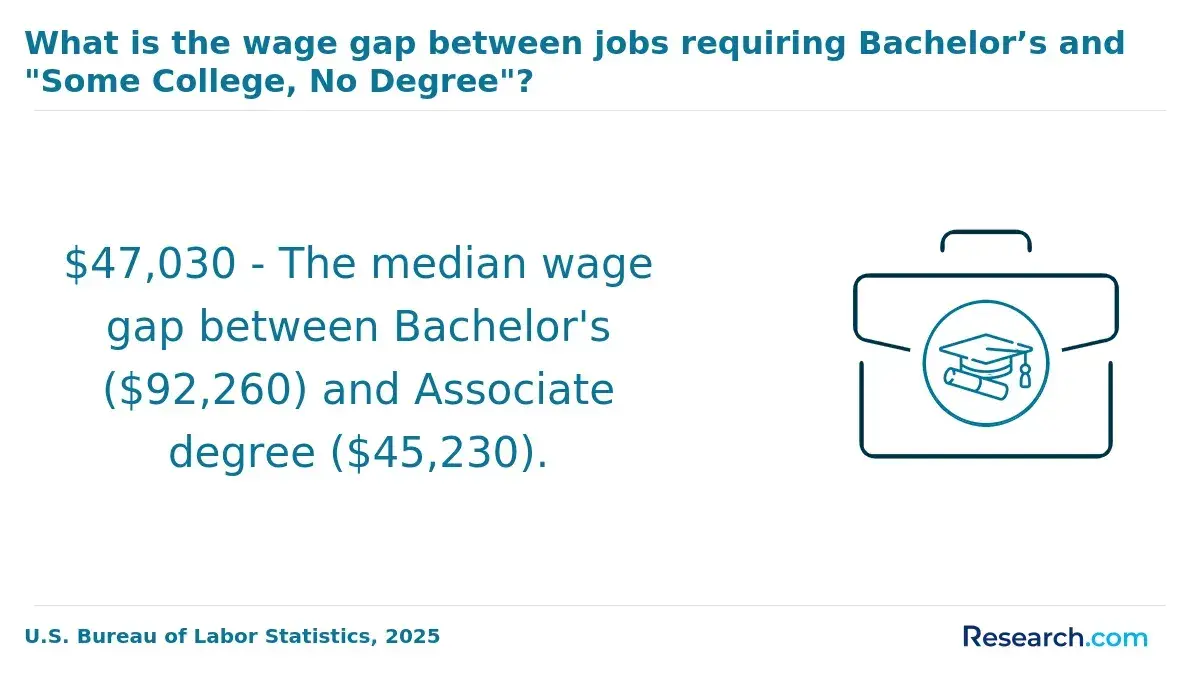
Data from the 2024 Education Pays report by the U.S. Bureau of Labor Statistics highlights that individuals with master's degrees earn notably higher median weekly wages and face lower unemployment rates than those possessing only bachelor's degrees. When focusing on liberal arts fields, BLS Occupational Outlook Handbook figures indicate median annual salaries for bachelor's-level workers typically range from $55,000 to $65,000. In contrast, master's graduates often earn between $70,000 and $85,000, though exact figures vary by discipline and experience.
Regarding salary differences between online and on-campus liberal arts master's degree recipients, research-including studies from New York University's School of Professional Studies-reveals minimal variation when comparing graduates from the same institution and area of study. Employers prioritize institutional accreditation, demonstrated skills, and relevant experience over whether the degree was earned online or in person, reflecting growing acceptance of online credentials in hiring practices.
Prospective students should carefully evaluate the return on investment by considering tuition (commonly $15,000 to $40,000), program duration (typically 1.5 to 3 years), and potential salary increase. This approach helps determine if post-graduation earnings justify the financial and time commitments. Notably, approximately 45% of U.S. graduate students now engage in at least some online coursework, underscoring the evolving landscape of graduate education.
A professional who completed an online liberal arts master's program shared her experience, emphasizing that the degree opened doors she had not anticipated. While balancing work and studies posed challenges, she found that the program's flexibility allowed her to acquire valuable skills without sacrificing job responsibilities. Reflecting on salary outcomes, she noted, "I didn't expect an immediate jump, but within two years, my earnings matched peers from on-campus programs." She also highlighted how employers respected the credential once they recognized the institution's accreditation and her demonstrated capabilities, reinforcing the idea that quality and skill matter most in salary negotiations.
Which Liberal Arts Industries and Employers Are Most Receptive to Online Master's Degree Holders?
Industries vary widely in how they value online liberal arts master's degrees, with nonprofit, government, and consulting sectors showing the greatest openness.
- Sector Openness: Nonprofit, government, and consulting fields lead in welcoming online liberal arts graduates due to an emphasis on skills over degree format.
- Skills-Based Hiring: With 70% of employers adopting this approach, online degree holders have improved competitiveness by showcasing applicable competencies.
- Employer Diversity: Smaller firms and public institutions exhibit greater acceptance of online degrees compared to many large corporations, although changes are underway.
- Accreditation Matters: The credibility and reputation of online programs remain pivotal in gaining employer trust across sectors.
- Data-Backed Research: Job seekers should prioritize verified employer statements to accurately assess acceptance of online graduate credentials.
The Job Outlook 2026 survey by NACE reveals that 70% of employers now prioritize skills-first recruitment methods, enabling online degree holders to compete more fairly with those who earned degrees through traditional in-person programs. Healthcare administration and certain government roles similarly acknowledge the value of online degrees when paired with relevant certifications and proven abilities.
How Do Online Liberal Arts Master's Programs Compare to On-Campus Programs in Terms of Curriculum and Academic Rigor?
Many online liberal arts master's programs offered by established universities maintain strict curriculum equivalency with their on-campus counterparts, using identical syllabi, faculty, and assessment methods.
- Curriculum Equivalency: Established programs use the same courses, faculty, and assessments online and on-campus, ensuring consistent academic standards and employer trust.
- Accreditation Assurance: Regional and programmatic accreditors require uniform quality benchmarks across delivery formats, guaranteeing degree credibility for employers.
- Peer Collaboration: Virtual cohorts, synchronous sessions, and collaborative projects simulate in-person interaction and support active learning.
- Discipline-Specific Adaptations: Hands-on requirements are met through hybrid models, local arrangements, or simulations, preserving vital practical experiences.
- Growing Acceptance: Increased online graduate enrollment reflects rising employer confidence and broader recognition of online liberal arts master's credentials.
What Role Does the Online Learning Format Play in Developing Job-Ready Skills for Liberal Arts Careers?
Online learning for liberal arts master's degree skills development plays a crucial role in cultivating competencies that employers highly value, such as project management, digital literacy, and time management. According to the National Association of Colleges and Employers (NACE) career readiness framework, essential workplace skills include critical thinking, professionalism, adaptability, and digital communication. Online liberal arts programs are intentionally designed to embed these competencies through interactive coursework, virtual teamwork, and asynchronous discussions that mirror real-world professional settings.
Graduates from these programs navigate diverse digital platforms and manage deadlines independently, enhancing accountability and self-directed learning skills. Employer perspectives and graduate outcome data increasingly demonstrate that online liberal arts alumni possess practical skills comparable to, or even exceeding, those of traditional on-campus peers. This shift reflects broader skills-based hiring trends and growing confidence in the quality and rigor of online credentials, especially relevant as remote and hybrid work environments expand.
However, when considering the impact of virtual learning on liberal arts career readiness, it is important to acknowledge challenges in networking and mentorship. Without physical campus access, online students must proactively seek virtual career services and build professional connections to complement their technical skills. Institutions are thus encouraged to integrate robust career support tailored for online learners to help bridge this gap.
Prospective students can explore affordable program options such as the MLIS, which exemplifies accessible and competency-driven online graduate education in the liberal arts field.
What Do Graduate Employment Outcomes and Alumni Data Reveal About Online Liberal Arts Master's Degrees?
Graduate employment outcomes and alumni data provide vital insights for assessing the value and respect commanded by online liberal arts master's degrees in today's job market. Prospective students should request official placement rates, median salaries, and employer partner lists directly from programs to understand how graduates perform professionally. This approach ensures access to program-level data rather than relying on broad sector statistics, which may obscure key nuances in career outcomes for graduates with online liberal arts master's degrees.
The National Center for Education Statistics (NCES) Integrated Postsecondary Education Data System (IPEDS) offers graduation rate benchmarks that serve as useful indicators of student completion success. Alongside this, the National Association of Colleges and Employers (NACE) publishes annual graduate outcomes benchmarks that allow comparison of employment rates and starting salary levels across programs. Aligning a program's published outcomes with or above these benchmarks signals strong connection to labor market expectations.
Many programs base their outcomes on self-reported alumni surveys or internal tracking, which can introduce bias or overstate success. Programs employing independent third-party verification methods-such as audits by external accounting firms or validation through NACE surveys-offer more credible and trustworthy evidence of career impact. This external validation reassures prospective students that employment and salary figures reflect real-world results.
Increasingly, hiring trends emphasize skills-based evaluation alongside academic credentials. Online programs combining rigorous curricula with solid institutional reputation can provide graduates competitive advantages similar to campus-based degrees. Reviewing verified alumni outcomes thus helps determine whether an online liberal arts master's degree is respected and supports meaningful career advancement.
Prospective students evaluating their options may also review lists of what are the best online universities to identify programs recognized for quality and respect within the higher education landscape.
What Are the Biggest Misconceptions Employers Have About Online Liberal Arts Master's Degrees?
Several persistent myths about online liberal arts master's degrees continue to influence employer perceptions, despite growing evidence to the contrary. Many assume these degrees reflect lower academic standards, yet rigorous accreditation and curriculum parity with traditional programs dispel this notion. The 2022 Excelsior/Zogby survey reveals that 83% of executives regard online qualifications as equally credible.
- Academic Rigor Doubts: Despite assumptions, many online liberal arts programs maintain academic standards equivalent to on-campus courses, supported by surveys showing high executive confidence.
- Accreditation Concerns: Most respected online degrees have proper regional or national accreditation, ensuring quality and legitimacy despite common misconceptions.
- Perceived Ease and Speed: The self-paced nature of online learning requires strong discipline, often equaling or surpassing traditional program demands.
- Lack of Commitment Signal: Online students frequently balance multiple responsibilities, demonstrating notable perseverance contrary to skeptics' beliefs.
- Normalization Through Remote Work: The rise of remote work and elite online offerings has increased acceptance and relevance of online liberal arts degrees in modern careers.
What Is the Long-Term Career Outlook for Professionals Who Hold an Online Liberal Arts Master's Degree?
Employment opportunities for professionals with online liberal arts master's degrees often center on fields such as education administration, human resources, social sciences, and public relations, where advanced degrees enhance career prospects. The U.S. Bureau of Labor Statistics (BLS) projects steady growth in these areas through 2032, including about 6% growth in social science roles with median salaries near $80,000 and roughly 8% growth in education administration positions, where median wages frequently surpass $100,000.
Long-term earnings data from the BLS Monthly Labor Review reveal that obtaining a master's degree typically results in an average annual salary increase of approximately $24,588, lifting median income from near $69,459 to around $94,047 in related occupations. This uplift reflects the premium employers place on advanced skills and credentials.
As professionals gain experience and demonstrate performance, the mode of degree delivery-online or traditional-generally becomes less relevant to employers and promotion committees. The rise in exclusively online graduate enrollment, with more than 2.5 million students in 2023-24 according to the National Center for Education Statistics (NCES), signals the normalization and growing industry acceptance of online credentials.
What Graduates Say About Employer Reception to Their Online Liberal Arts Master's Degree
- Callen: "Pursuing my online liberal arts master's degree was a strategic move that truly paid off. My employer was surprisingly open and valued the accredited nature of the program, which boosted my confidence in applying my newly acquired skills on the job. I now feel better equipped to contribute creatively and think critically, reinforcing the important role such degrees play in today's workplace."
- Koen: "Reflecting on my career change, the decision to earn an online liberal arts master's degree was crucial. Initially, I was unsure how my prospective employers would perceive an online degree, but their response was overwhelmingly positive once I highlighted the program's accreditation and rigorous curriculum. This acceptance gave me renewed motivation and a solid foundation to shift directions professionally."
- Owen: "From a strictly professional standpoint, obtaining my online liberal arts master's degree has opened doors I hadn't imagined. My employer recognizes the value of accredited online programs and respects the discipline and commitment required to complete one while working full-time. It's empowering to know that this degree enhances my career prospects in a meaningful way."
Other Things You Should Know About Liberal Arts Degrees
In 2027, the rise of skills-based hiring emphasizes practical skills over traditional credentials, affecting the value of online liberal arts master's degrees. Employers are increasingly interested in candidates who can demonstrate specific, transferrable skills, making it crucial for graduates to highlight applicable competencies gained during their studies.
Prospective students should ask about the program's accreditation status, faculty qualifications, and how the curriculum prepares graduates for real-world applications. It is also important to inquire about alumni employment outcomes, career support services, and whether the degree is recognized by potential employers in their target industries. Understanding transfer options and residency requirements can also clarify how flexible the program truly is.
Graduates should emphasize the program's rigor, the institution's reputation, and the specific skills they developed that align with job requirements. Highlighting any hands-on projects, internships, or research completed during the program can reinforce practical experience. It is advisable to be transparent about the online format but frame it positively, focusing on self-motivation, time management, and adaptability demonstrated through remote learning.
References
- 7 Myths Surrounding Online Master’s Degree Programs https://www.snu.edu/blog/7-myths-surrounding-online-masters-degree-programs
- Level Up Your Career: 6 Reasons to Embrace Online Learning - Office of Professional Education | Central Connecticut State University https://pe.ccsu.edu/level-up-your-career-6-reasons-to-embrace-online-learning/
- The Benefits of Online Learning | Earn a Graduate Degree Online https://www.tuw.edu/school-news/benefits-of-online-learning-graduate-degree/
- Are Online Master’s Degrees Respected? https://www.snhu.edu/about-us/newsroom/education/are-online-masters-degrees-respected
- Blending Liberal Arts with Career Relevance: An Integrated Approach to Meet Todayâs Student Demands https://www.rize.education/blog/liberal-arts-and-career-readiness
- Online Master’s Degrees That Pay: Top Fields for Solid Salaries https://www.onlinemastersdegrees.org/features/top-earning-masters-degrees/
- Online vs. On Campus: Which Grad School Format Is Right for You? https://www.utrgv.edu/accelerated/articles/general/online-vs-on-campus-which-grad-school-format-is-right-for-you/index.htm
- Top 5 Industries for Liberal Arts Majors https://vault.com/blogs/admit-one-vaults-mba-law-school-and-college-blog/top-5-industries-for-liberal-arts-majors
- Liberal Arts Degrees: The Value of Lifelong Skills https://www.keg.com/news/liberal-arts-programs-the-value-of-lifelong-skills
- Have a Liberal Arts Degree? These Companies Want to Hire You https://www.clestatecareers.com/post/have-a-liberal-arts-degree-these-companies-want-to-hire-you