2027 Are Online Public Relations Master's Degrees Respected by Employers? Hiring Trends & Career Outcomes

Co-Founder and Chief Data Scientist
Imagine a recent graduate debating whether to invest in an online public relations master's degree amid doubts about its legitimacy in hiring circles. Employers often question if such programs match the rigor and networking opportunities of traditional degrees. Studies show 67% of hiring managers remain uncertain about the credibility of online communication degrees despite growing enrollment.
This skepticism can impact salary offers and career progression for online graduates. This article examines employer perceptions, accreditation importance, and alumni success to provide a nuanced understanding of how online public relations master's programs translate into respected credentials and tangible career gains.
Key Benefits of Knowing Whether Online Public Relations Master's Degrees Are Respected by Employers
- Employer perception of online public relations master's graduates is increasingly positive, with over 65% of hiring managers acknowledging comparable skill levels to traditional candidates.
- Graduates from accredited online programs often demonstrate strong workplace performance, facilitating access to promotions and average salary increases of 10-15% within three years.
- Skills-based hiring trends favor competencies gained through rigorous online curricula, expanding career prospects in communications, crisis management, and digital strategy roles.
How have employer perceptions of online public relations master's degrees changed over the past decade?
Employer perceptions of online public relations master's degrees have shifted significantly since the early 2010s. Initially, many employers were skeptical due to the widespread association of online programs with for-profit colleges, which carried reputations for lower academic standards and questionable outcomes. This early skepticism shaped hiring trends for online public relations graduates and fueled concerns about the rigor and authenticity of distance education compared to traditional, campus-based degrees.
The COVID-19 pandemic dramatically accelerated the adoption of remote learning, forcing institutions and employers to reconsider their stance on online credentials across many fields, including public relations. As remote work and virtual collaboration became standard, hiring managers increasingly focused on skills and tangible outcomes rather than the mode of education delivery.
A 2023 survey by Champlain College found that 84% of employers are now more accepting of online education than before the pandemic. This remarkable change highlights the growing respect online public relations master's degrees command in today's labor market. Prospective students evaluating programs should especially consider factors like accreditation and institutional prestige, which remain key filters employers use to assess the quality of online degrees.
For those investigating their options, resources on the best online degrees can provide valuable guidance on program quality and outcomes.
- Early Skepticism: In the 2010s, employer distrust was widespread, largely due to the dominance of for-profit online colleges, which cast doubt on online public relations degrees' legitimacy and rigor.
- Pandemic Catalyst: The COVID-19 crisis normalized online learning and led many employers to reassess and raise their acceptance of online credentials across various industries.
- Survey Evidence: Champlain College's 2023 study shows 84% of employers are now more open to online education, marking a significant evolution in hiring trends for online public relations graduates.
- Accreditation Matters: Employers now prioritize institutional accreditation as a key signal of program quality, a critical factor overriding previous biases against online formats.
- Institutional Prestige: Reputation and program rigor remain essential, ensuring online public relations degrees from respected schools earn respect comparable to traditional qualifications.
What do hiring managers actually think about online public relations graduate credentials?
Recruiter attitudes toward online public relations master's degrees have shifted notably in the last decade. Surveys from the National Association of Colleges and Employers (NACE) and the Society for Human Resource Management (SHRM) reveal that many hiring managers prioritize the quality and relevance of the degree over whether it was earned online or in person. However, this perception is not uniform; employer views vary significantly across sectors, company sizes, and geographic regions.
In larger metropolitan areas and multinational firms, online credentials from accredited and reputable institutions often receive greater acceptance. Contrastingly, sectors such as government agencies or highly regulated industries continue to approach online degrees with more caution, reflecting lingering skepticism about program rigor. As one HR director from a mid-sized public relations agency stated, "We want to see proven capabilities, regardless of whether the education was online or in-person." This emphasizes the importance of practical skills, portfolio strength, and internship experience, which frequently outweigh the diploma's format in the evaluation process.
Regional differences also influence hiring manager views on online graduate credentials in public relations. Tech hubs and progressive urban markets tend to value skills-based hiring and display more openness to online education, while traditional markets remain more conservative. Across all contexts, accreditation status and institutional reputation remain critical for graduates seeking salary negotiation leverage and career advancement.
For prospective students, understanding these dynamics is essential when assessing online programs. Programs that demonstrate rigor and produce strong alumni outcomes can offer career benefits comparable to campus-based degrees. For those exploring similar credentials, reviewing options among reputable online EdD programs can provide insights into how flexibility and quality coexist in graduate-level education.
- Sector Variability: Employer acceptance of online public relations credentials varies widely by sector, with larger corporations being more open and regulated industries showing greater cautiousness.
- Company Size and Location: Larger urban companies tend to respect online degrees more than smaller or rural firms, reflecting differing exposure and willingness to adapt to new educational models.
- Emphasis on Skills: Practical skills, portfolio quality, and internship experience often matter more than whether the degree was earned online or in-person.
- Accreditation and Reputation: Hiring managers prioritize degrees from accredited programs with strong institutional reputations, considering these factors as markers of quality.
- Shifting Perceptions: While some skepticism remains, the trend is toward growing acceptance as online programs demonstrate rigor and produce successful graduates.
Does accreditation determine whether an online public relations master's degree is respected?
When evaluating online public relations master's degrees, understanding the distinction between regional and programmatic accreditation is essential. Regional accreditation validates an institution's overall quality, while programmatic accreditation assesses the specific academic program's rigor and industry relevance. Employers and certification bodies often consider programmatic accreditation a stronger indication of a program's alignment with professional standards.
Prospective students should verify accreditation through reliable databases like the U.S. Department of Education's Database of Accredited Postsecondary Institutions and Programs (DAPIP) and the Council for Higher Education Accreditation (CHEA) directory. This step helps avoid unaccredited or diploma mill programs that are unlikely to be accepted by employers.
For public relations specifically, the Accrediting Council on Education in Journalism and Mass Communications (ACEJMC) is the primary discipline-specific accrediting body. While not all programs hold this credential, programs with ACEJMC accreditation often provide a curriculum and faculty expertise that employers value highly. Degrees lacking at least regional accreditation generally do not hold weight in professional hiring, regardless of whether they were earned online or on campus.
Recent surveys note that nearly 80% of employers place accreditation among the top factors when assessing candidates' educational backgrounds, particularly in communication-related careers.
- Accreditation Types: Regional accreditation assures institutional standards, whereas programmatic accreditation evaluates specific public relations programs for deeper industry relevance.
- Verification Tools: Using DAPIP and CHEA directories enables students to confirm legitimate accreditation and protects against fraudulent claims.
- Discipline-Specific Accreditor: ACEJMC stands out as a key accrediting agency for public relations programs, endorsing program quality and employer confidence.
- Unaccredited Degree Risks: Degrees without recognized accreditation typically lack employer recognition and can hinder professional advancement.
- Employer Priorities: Accreditation remains a critical criterion in hiring decisions, reflecting the growing trust in accredited online education.
A professional pursuing an online public relations master's degree shared how crucial accreditation was in his career transition. He recalled feeling anxious about whether employers would value a degree earned remotely. "I specifically chose a program with strong accreditation because I knew it would be a hurdle otherwise," he said.
Navigating employer skepticism, he emphasized how the program's credibility opened doors and validated his new qualifications. Despite challenges balancing work and study, he found reassurance in his degree's recognition, which made salary negotiations and networking more productive. His experience illustrates that while online degrees can face bias, accredited programs significantly improve acceptance and career prospects.
How does institutional reputation affect the value of an online public relations master's degree in the job market?
The prestige of the university awarding an online public relations master's degree remains a key factor in how employers view graduates. This "brand premium" means that degrees from highly ranked institutions like the University of Southern California (USC) or Syracuse University often retain strong value, whether earned online or in person. These schools provide flagship online public relations programs with the same faculty, curriculum, and academic standards as their on-campus offerings, ensuring comparable rigor and credential quality.
Data from the National Association of Colleges and Employers (NACE) indicates that employers often prioritize candidates from well-known, reputable institutions in their hiring pipelines. This trend highlights how school reputation can significantly mediate employer perception, regardless of the completion mode. However, the impact of university reputation on public relations job prospects should be considered alongside other program qualities.
Prospective students should recognize that mid-tier programs with solid accreditation, established industry connections, and effective career services may yield better employment and advancement opportunities than prestigious schools lacking these strengths.
Evaluating these factors alongside brand reputation offers a more comprehensive view of program value. For those exploring options, reviewing recognized resources can help-for example, consider evaluating an online degree in business as a model for understanding program affordability and outcomes.
- Brand Premium Impact: Employer perception favors degrees from recognized institutions, conferring value irrespective of online or in-person delivery.
- Equal Academic Standards: Leading universities ensure online programs match the curriculum and faculty quality of their campus-based counterparts.
- Employer Preferences: Hiring surveys like those from NACE show a preference for graduates from prestigious institutions in public relations roles.
- Beyond Prestige: Accreditation, industry partnerships, and placement rates often influence career success more than a school's brand alone.
- Balanced Evaluation: Students should weigh reputation alongside tangible outcomes like alumni success and career support when selecting programs.
What salary outcomes can online public relations master's graduates realistically expect?
The 2024 "Education Pays" report from the Bureau of Labor Statistics reveals that individuals with a master's degree earn median weekly wages about 24% higher than those holding only a bachelor's degree across all professions. This wage premium coincides with lower unemployment rates for master's degree holders, highlighting their competitive advantage in the job market.
Within public relations specifically, the BLS Occupational Outlook Handbook notes a median annual salary near $62,800 for bachelor's degree holders versus roughly $79,000 for those with a master's, illustrating a substantial income increase tied to advanced credentials.
Extensive research, including studies from NYU SPS, shows that salaries among graduates of online versus on-campus public relations master's programs are closely aligned when controlling for institutional prestige, program rigor, and field specialization. This evidence counters outdated assumptions that online degrees yield poorer financial outcomes, emphasizing that employers prioritize skills and demonstrated expertise over delivery format.
When evaluating return on investment, students should consider tuition, program length (typically one to two years), and salary uplift. For instance, a $30,000 program cost paired with a $16,000 annual salary increase compared to bachelor's degree holders suggests that graduates can often recoup their expenses within two years, depending on job growth and individual advancement paths.
- Higher Median Wages: Master's degree holders earn about 25% more than those with just a bachelor's in public relations, according to BLS data.
- Minimal Online Impact: Salary outcomes show negligible differences between online and traditional program graduates when program quality is comparable.
- Strong ROI Potential: Considering costs and salary gain, students may recover their investment quickly, typically within a few years.
- Lower Unemployment: Master's graduates enjoy reduced unemployment rates, an advantage in competitive sectors.
- Rising Online Enrollment: Over one-third of graduate students now study fully online, reflecting growing acceptance of virtual credentials.
A professional who built her career after completing an online public relations master's shared that initially, she worried how employers might view her degree. However, she found that her skills, portfolio, and networking mattered far more during salary discussions than the learning format.
She recalls, "I focused on applying what I learned immediately to real campaigns, which helped me demonstrate value quickly." Despite some early anxiety, she felt her online education opened doors and that salary negotiations reflected her expertise rather than skepticism about her program's delivery mode.
Which public relations industries and employers are most receptive to online master's degree holders?
Acceptance of online master's degrees in public relations varies notably across industries, with technology and consulting firms showing the highest levels of openness. These sectors emphasize current digital skills and adaptability, aligning well with what many online programs provide. Healthcare and nonprofit organizations also demonstrate increasing acceptance, motivated by the need for diverse communication expertise and flexible education options.
Government entities and certain large corporations, particularly some Fortune 500 companies, have traditionally held stricter preferences for conventional degrees but are gradually easing such requirements. The National Association of Colleges and Employers (NACE) reports that 70% of employers now prioritize skills-based hiring, which benefits candidates holding online credentials by shifting focus from degree format to demonstrated competencies. Small businesses and startups often value practical abilities over the origin of a candidate's degree, making them more receptive to online graduates.
Several prominent employers have made public commitments to evaluating applicants without bias toward online credentials, often favoring relevant professional experience and certifications. While some public sector jobs still require degrees from traditionally accredited programs, there is a slow but noticeable move toward flexibility depending on the job's demands.
Prospective students should rely on verified employer policies or trustworthy surveys when assessing the value of an online master's degree in public relations. Avoiding broad assumptions without evidence helps ensure more accurate understanding of employer preferences and supports informed academic choices.
- Industry Variability: Technology and consulting lead in accepting online degrees due to focus on digital skills; healthcare and nonprofit show steady growth in acceptance.
- Skills-Based Hiring Impact: With 70% of employers adopting skills-focused hiring, online degree holders benefit as expertise often outweighs degree delivery method.
- Employer Type Differences: Small businesses and startups prioritize talent over degree origin, while some government and large corporations maintain traditional preferences but are increasingly flexible.
- Verified Employer Policies: Candidates should base decisions on public statements and reliable data rather than anecdotal evidence regarding employer attitudes.
How do online public relations master's programs compare to on-campus programs in terms of curriculum and academic rigor?
Many reputable universities design their online Public Relations master's programs to mirror their on-campus counterparts by using identical syllabi, faculty, and assessments. This curriculum equivalency ensures consistent academic rigor across both delivery formats, fostering employer trust in the degree's validity.
Regional and programmatic accreditation agencies play a central role in maintaining quality, as they require institutions to meet strict benchmarks regardless of whether education occurs online or in person. This guarantees that degrees earned through accredited online programs meet the same academic standards expected by hiring managers.
Addressing common concerns about reduced peer interaction, most online Public Relations programs incorporate synchronous video sessions, virtual cohorts, and project-based collaborations to replicate the dynamic learning environment of traditional classrooms.
While some specializations in Public Relations may involve hands-on labs or clinical placements that are challenging for fully remote students, well-regarded programs offer hybrid models, local partnerships, or intensive residency options to fulfill these experiential requirements without compromising educational quality.
Data reflects a positive shift in employer perceptions. According to a 2023 report, there was a 35% increase in hiring managers recognizing accredited online master's degrees as equivalent to traditional degrees in communication fields-a significant indicator of evolving acceptance.
- Curriculum Equivalency: Online programs often replicate the same syllabi, faculty expertise, and assessments as on-campus courses, ensuring consistent academic rigor.
- Accreditation Standards: Regional and specialized accreditors mandate uniform quality benchmarks for both online and face-to-face programs, reassuring employers of degree legitimacy.
- Interactive Learning: Synchronous classes, virtual cohorts, and group projects foster peer engagement mirroring traditional classroom experiences.
- Hands-On Components: Hybrid formats, local partnerships, or residency elements accommodate practical requirements inherent in some Public Relations specializations.
- Employer Perception Trends: Recent studies show a notable increase in industry acceptance of accredited online degrees, reflecting broader confidence in their value.
What role does the online learning format play in developing job-ready skills for public relations careers?
Online learning increasingly shapes job-ready skills in public relations careers, transforming initial skepticism into recognition of its value. Programs leveraging self-directed study, digital collaboration, and asynchronous communication help students develop critical competencies emphasized by the National Association of Colleges and Employers (NACE) career readiness competency framework, such as project management, digital literacy, and time management. Thoughtful curriculum design in online public relations master's degree programs intentionally builds these skills, paralleling real-world professional demands despite the absence of a traditional campus setting.
Employers often report that graduates of online public relations programs demonstrate comparable or even superior technical proficiency and independent work habits relative to their on-campus peers. Graduate outcome data further supports employment success, especially when programs emphasize applied learning and e-portfolios. However, networking, in-person mentorship, and campus recruiting opportunities remain areas where online students must take a more proactive approach to establish connections.
- Self-Directed Learning: Online programs encourage students to manage their studies independently, fostering autonomy and accountability-qualities that employers highly value in dynamic PR roles.
- Digital Collaboration Tools: Platforms such as Slack and Zoom cultivate teamwork and communication skills essential to modern public relations environments.
- Asynchronous Communication: Learning across diverse time zones promotes flexibility and clear written communication, mirroring client and media interactions.
- Competency-Based Curriculum: Alignment with NACE's framework ensures graduates acquire the core abilities needed for effective public relations practice.
- Proactive Networking Needs: Online students must actively seek mentorship and professional networking opportunities beyond virtual classrooms to fully compete with on-campus peers.
Prospective students aiming to enhance their credentials in leadership may also explore options such as a doctorate in organizational leadership to complement their online public relations master's degree employment outcomes and career advancement.
What do graduate employment outcomes and alumni data reveal about online public relations master's degrees?
Graduate employment outcomes and alumni data offer vital insights into how online public relations master's degrees perform in the job market. Prospective students are advised to request official placement rates, median salaries, and lists of employer partners directly from programs before enrolling. These detailed program-level data points provide a clearer picture of graduate success and the degree's true market value, supplementing the often variable self-reported statistics commonly published.
External frameworks like the National Center for Education Statistics' (NCES) Integrated Postsecondary Education Data System (IPEDS) graduation rate data and the National Association of Colleges and Employers (NACE) graduate outcomes benchmarks serve as essential reference points. These benchmarks allow prospective students to gauge if a specific program's reported employment rates, salaries, and time to employment meet or surpass sector averages.
Reliability of outcomes data is critical. Programs subject to third-party verification-through audits by external accounting firms or validation via NACE surveys-offer stronger and more trustworthy signals of quality than those relying solely on internal or anecdotal surveys. This transparency is increasingly important in a field like public relations, where employers emphasize skills-based hiring along with academic credentials.
Alumni career success of online public relations master's degrees shows growing employer acceptance, especially for graduates from accredited, reputable institutions with rigorous curricula. These graduates typically achieve salary negotiations and career advancements comparable to their campus-based peers, supported by evidence of effective program outcomes and professional networks. For those comparing options, exploring programs like the cheapest online PhD in criminal justice may also offer insight into cost-effective graduate pathways.
- Program-Level Transparency: Requesting official placement and salary data directly from programs ensures access to accurate and up-to-date graduate employment outcomes beyond self-reported figures.
- External Benchmarks: Utilizing NCES IPEDS graduation data and NACE benchmarks allows comparison of a program's performance against national standards, aiding informed decisions.
- Third-Party Verification: Programs with external audits or NACE validation provide higher confidence in reported outcomes, minimizing reliance on potentially biased internal surveys.
- Industry-Aligned Outcomes: Skills-based hiring trends in public relations value graduates from programs demonstrating measurable success in alumni career outcomes and employer partnerships.
- Career Advancement Evidence: Alumni career success of online public relations master's degrees is increasingly parallel to traditional programs when supported by credible outcome data and strong institutional reputation.
What are the biggest misconceptions employers have about online public relations master's degrees?
Many employers once doubted the quality and rigor of online public relations master's programs, but recent evidence challenges these outdated views. A 2022 survey by Excelsior College and Zogby Analytics revealed that 83% of executives now regard online degrees as equally credible compared to their traditional counterparts.
Concerns about accreditation no longer hold weight, as most reputable online programs meet the same stringent standards as on-campus degrees, ensuring academic integrity. Misperceptions that online degrees are quicker or less demanding overlook the fact that many top institutions employ structured, cohort-based courses requiring substantial practical work and commitment.
The rise of remote work has further elevated the value of skills nurtured by online programs, such as digital communication and adaptability, which are crucial in today's workplace. Additionally, the entrance of prestigious universities into online education has narrowed the credibility gap, fostering employer confidence in these credentials.
- Quality Perception: A majority of hiring managers now consider online degrees equally reputable, dispelling myths about inferior academic standards.
- Accreditation Assurance: Accredited online programs adhere to rigorous criteria identical to campus-based offerings, guaranteeing academic quality.
- Program Rigor: Cohort-based structures and applied projects ensure these degrees demand equal dedication and skill as traditional programs.
- Remote Work Alignment: The pandemic-driven shift to remote work emphasizes digital literacy and communication skills emphasized in online public relations curricula.
- Elite Institution Involvement: Top-tier universities' participation in online master's programs strengthens graduate outcomes and employer trust.
What is the long-term career outlook for professionals who hold an online public relations master's degree?
Projected job growth for master's degree holders in public relations-related fields remains strong through 2032-2034. Positions such as public relations specialists, marketing managers, and advertising and promotions managers are expected to increase between 6% and 10%. Median annual wages for these occupations typically range from $75,000 to $140,000, signaling robust earning potential for graduates.
Data from the BLS Monthly Labor Review reveals that professionals with an advanced degree see average salary increases of about $24,588 annually compared to their bachelor's-level counterparts, with median incomes rising from roughly $69,459 to $94,047. This wage growth highlights the tangible financial benefits of graduate-level study in public relations and related areas.
Over time, employers and promotion panels tend to focus on demonstrated skills and experience rather than whether the master's degree was earned online or in person. Proven accomplishments often overshadow the mode of education, making degree format less relevant once a career is established.
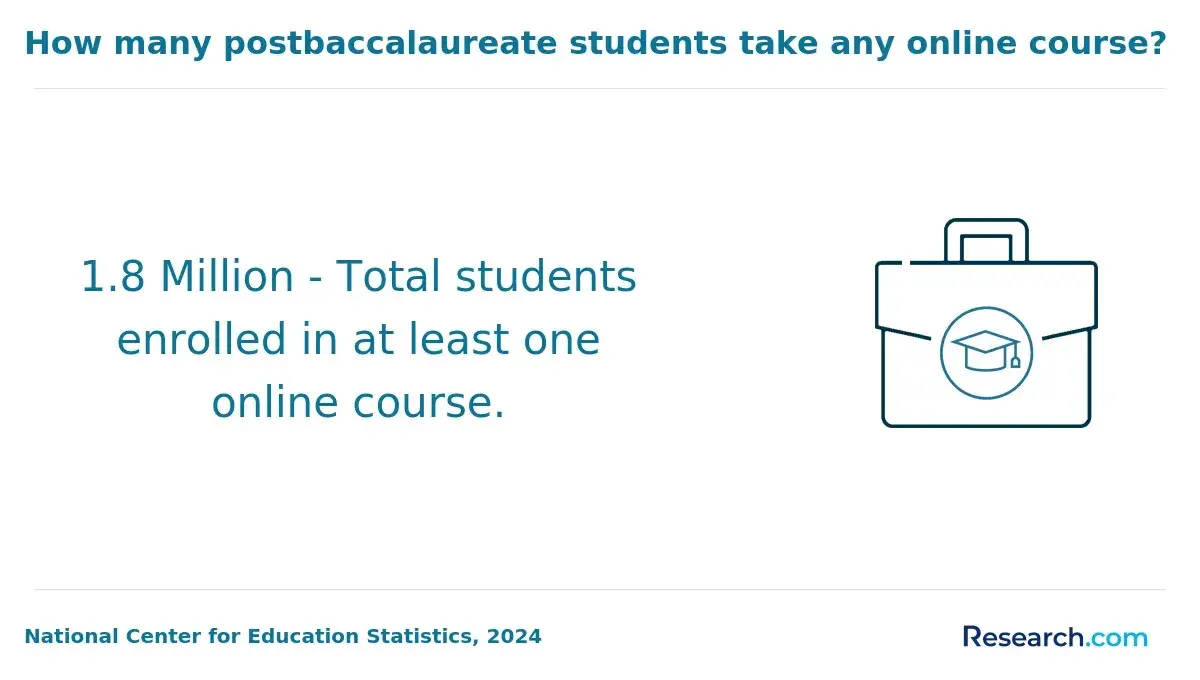
Meanwhile, online graduate education is becoming increasingly normalized, with NCES reporting 2,506,983 graduate students enrolled fully online in 2023-24. This growth reflects wider employer confidence and the mainstream acceptance of online public relations master's credentials.
- Consistent Job Growth: Public relations-related managerial and specialist roles requiring advanced degrees are growing steadily between 6% and 10% through the early 2030s.
- Significant Salary Increase: Graduates with a master's degree enjoy an average earnings boost of over $24,500 annually, raising median wages from about $69,000 to $94,000 in these fields.
- Degree Format Neutrality: Employer focus shifts toward real-world performance, rendering the distinction between online and traditional degrees less significant over time.
- Widespread Online Enrollment: More than 2.5 million graduate students pursued online-only programs in 2023-24, signaling growing acceptance and credibility of online education.
What Graduates Say About Employer Reception to Their Online Public Relations Master's Degree
- Jessica: "Choosing an online public relations master's degree was initially a leap of faith, but my employer welcomed it warmly, valuing the flexibility and rigor of accredited programs. This experience boosted my confidence in applying contemporary strategies at work, showing that a remote degree can hold equal weight and respect in the industry. It truly opened doors I hadn't anticipated."
- Andrea: "Reflecting on my journey, the importance of selecting an accredited online public relations program can't be overstated. My employer was impressed by the program's credentials, which helped dispel any doubts about remote education. This degree significantly contributed to my career pivot and demonstrated that quality education transcends the delivery method."
- Katrina: "From a professional standpoint, earning an online public relations master's degree was a strategic move in my career change. Initially, I was unsure how my company would perceive an online credential, but their positive reception affirmed its practical value and relevance. It empowered me to confidently step into new roles and expand my expertise in the field."
Other Things You Should Know About Public Relations Degrees
In 2027, employers continue to respect online public relations master's degrees, recognizing them as equal to traditional degrees. This is due to accredited programs offering rigorous curricula and the prevalence of remote work, which demonstrates the effectiveness of online education.
Skills-based hiring emphasizes practical abilities over the degree's mode of delivery. This trend benefits online public relations master's graduates who can showcase relevant skills like digital media management, crisis communication, and analytics. Consequently, employers are increasingly open to online degrees as long as candidates demonstrate the necessary competencies for the role.
Graduates should emphasize the program's accreditation and the hands-on experiences gained during their studies. Highlighting skills and specific achievements through internships or capstone projects strengthens their profile. Positioning the degree as equivalent in quality to traditional programs helps overcome lingering employer biases.
References
- Bias against online degrees "a PR issue", stakeholders suggest https://thepienews.com/bias-against-online-degrees-a-pr-issue-stakeholders-suggest/
- Are Online Master’s Degrees Respected? https://www.snhu.edu/about-us/newsroom/education/are-online-masters-degrees-respected
- Necessary Skills for Incoming PR Professionals - Institute for Public Relations https://instituteforpr.org/necessary-skills-for-incoming-pr-professionals/
- Master’s in Communications Salary and Careers https://teach.com/online-ed/communications-degrees/online-masters-communications/salary-and-career-outlook/
- The Role of Online Learning in Career Advancement https://www.onrec.com/news/news-archive/the-role-of-online-learning-in-career-advancement
- Why Public Relations Training is Important for Brands Today? https://zabeelinstitute.ae/blog/public-relations-training-importance/
- Breaking into Digital PR Post-Graduation: Tips and Strategies for Success https://everything-pr.com/breaking-into-digital-pr-post-graduation-tips-and-strategies-for-success/
- Education vs. Experience: Three Misconceptions Dispelled by Actually Working in PR | Nuffer, Smith, Tucker | San Diego Public Relations https://nstpr.com/blog/education-vs-experience-three-misconceptions-dispelled-by-actually-working-in-pr/
- The Ultimate Guide to Accreditation for Master’s Students https://www.onlinemastersdegrees.org/student-resources/graduate-school-accreditation/
- Master's in Communication Salaries by Career and Position (2025 Update) https://www.mastersincommunications.com/faqs/masters-in-communication-salary