2027 Best Nursing Education Master's Specializations for Career Growth

Co-Founder and Chief Data Scientist
The shifting landscape of healthcare education demands nursing education professionals who can navigate complex workforce dynamics and evolving regulatory frameworks. Specializations that emphasize leadership, curriculum innovation, or clinical simulation address distinct institutional needs, influencing career mobility and organizational influence.
Employers increasingly seek candidates with skills aligned to emerging technologies and integrated care models, creating divergent pathways for advancement. Understanding how different master's specializations correspond with changing employer expectations, labor shortages, and scope-of-practice expansions is critical.
This analysis examines which nursing education specializations strategically position graduates for sustained career growth grounded in current workforce realities and sector transformation trends.
Key Benefits of the Best Nursing Education Master's Specializations for Career Growth
- Specializations demand balancing clinical duties with coursework, reflecting a tradeoff where applied learning deepens expertise but may extend program duration for working nurses.
- Employers increasingly prioritize candidates with education-focused credentials, as 2024 research links such qualifications with improved teaching outcomes, influencing hiring preferences toward specialized master's holders.
- Part-time Nursing Education master's programs offer access for professionals managing multiple responsibilities, though prolonged timelines can affect opportunity costs and require realistic planning of career transitions.
Which Nursing Education Master's Specializations Offer the Best Career Growth?
Choosing a nursing education master's specialization is fundamentally a long-term career strategy shaped by how well the area aligns with shifting healthcare demands, leadership paths, and the development of broadly applicable skills.
Specializations that foster both clinical expertise and administrative competence tend to create sustainable trajectories, offering faster promotions, advanced roles, and broader sector mobility.
- Nurse Educator (Curriculum Development): This specialization is key for professionals aiming to influence academic frameworks and teaching methodologies, often positioning graduates for faculty leadership roles. Demand from universities and medical centers for educators skilled in evidence-based curriculum design drives steady advancement opportunities, reflecting a 23% growth rate in this educator category per the U.S. Bureau of Labor Statistics.
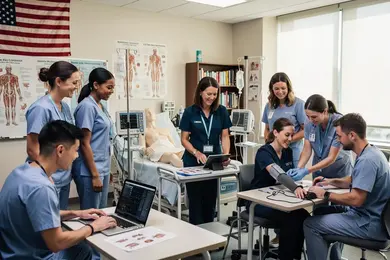
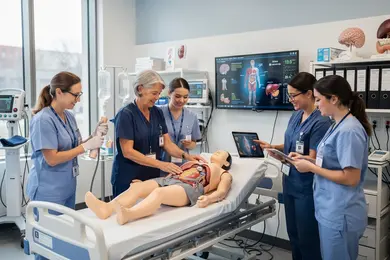
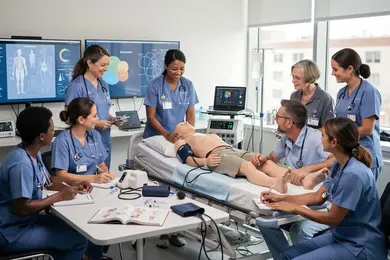
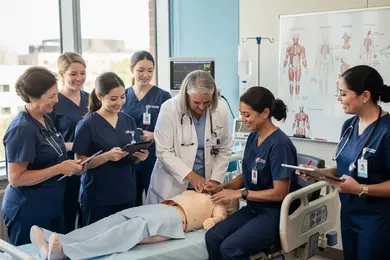
- Simulation Nursing Education: Expertise in simulation integrates clinical technology with education, enabling nurses to lead innovation in training environments. Adoption of simulation labs across hospitals elevates practitioners into specialized educator roles with faster promotion velocity due to their niche skill set and impact on reducing demand for traditional clinical hours.
- Nurse Leadership and Administration: Combining nursing education with leadership equips graduates for strategic roles like Director of Nursing Education or Chief Learning Officer, bridging clinical knowledge with organizational management. These positions command higher salaries and broaden influence, as leadership skills translate well across healthcare and academic systems, supporting significant long-term growth.
- Gerontological Nursing Education: This emerging specialization responds to demographic shifts by focusing on elderly care education and training. While still evolving, it offers unique roles in community and institutional settings, with career growth driven by population health trends and increasing public health prioritization.
- Community Health Nursing Education: As healthcare systems emphasize population-specific preventive care, this specialization builds skills for designing educational interventions addressing broad public health needs. Its relevance to shifting healthcare models supports versatile career options across governmental and non-profit sectors, enhancing professional adaptability.
Given these considerations, nurses looking to develop high-demand nursing education master's specializations for career advancement should prioritize areas that combine leadership opportunities with technical innovation and cross-sector applicability. Those balancing educational innovation and administrative responsibility typically experience stronger job growth and promotion rates.
For more insights on cost-effective paths within nursing specialties, resources like the cheapest online acute care nurse practitioner programs provide valuable context for related clinical advancement routes.
Which Nursing Education Master's Specializations Are Most In Demand?
Demand for nursing education specializations reflects shifting workforce needs driven by healthcare delivery changes, technology integration, and evolving regulatory landscapes. These dynamic factors influence employer preferences differently across clinical, academic, and administrative roles, requiring students to consider both current labor market signals and future adaptability when selecting a focus.
- Clinical Nurse Educator Programs: These remain essential due to ongoing nursing shortages coupled with an aging population requiring more skilled care providers. The U.S. Bureau of Labor Statistics highlights consistent growth for instructors charged with preparing practice-ready nurses, underscoring employers' sustained need for educators who combine clinical expertise with teaching effectiveness.
- Simulation Education Specialization: Rapid advances in simulation technology are reshaping clinical training, with institutions prioritizing educators able to design realistic, low-risk scenarios that improve skill acquisition and patient safety. Adoption of simulated clinical hours by licensing boards cements this specialization's expanding role as a cost-effective alternative to traditional clinical placements.
- Curriculum Development and Instructional Design: The pivot to hybrid and online learning post-pandemic has elevated demand for educators skilled in integrating educational technology within nursing programs. Success in this field requires navigating strict accreditation requirements while innovating pedagogy, reflecting employers' need for flexible, tech-savvy professionals who align curriculum with digital delivery models.
- Leadership and Academic Administration: With nursing programs under pressure to maintain accreditation and faculty quality, administrators who merge clinical insight with management competence are increasingly sought. However, these roles often necessitate substantial prior experience beyond a master's degree, limiting immediate access but offering long-term career impact for those advancing into academic leadership.
- Community Health and Gerontological Nursing Education: Emerging demand stems from demographic shifts such as population aging and intensifying focus on health equity. Though still niche, these specializations address targeted workforce gaps in public health and elder care education, positioning graduates to meet growing needs in underserved and specialized care settings.

What Skills Are Developed in Different Nursing Education Master's Specializations?
Selecting a specific nursing education master's specialization fundamentally shapes the skill sets that graduates acquire, which in turn impacts their career trajectories and practical capacity. These specializations cultivate distinct blends of technical expertise, leadership abilities, and applied pedagogical skills that correspond with the varied demands of academic, clinical, and administrative roles.
Understanding how these competencies translate into workplace performance and advancement opportunities clarifies the real-world value of different program tracks.
- Curriculum Development and Instructional Design: Specializations focusing on curriculum design foster skills in creating evidence-based nursing education programs and adapting instructional methods to diverse learner needs. Graduates emerge prepared to innovate program offerings and align content with evolving accreditation standards, positioning themselves for roles that require educational leadership and quality assurance within nursing schools or healthcare training centers.
- Clinical Teaching and Practicum Coordination: Programs emphasizing clinical education develop abilities in supervising hands-on training, evaluating clinical performance, and integrating theoretical knowledge into patient care contexts. These skills are critical for faculty who must ensure regulatory compliance and student readiness for licensure, often translating into heightened employability within hospital-based academic partnerships and community healthcare agencies.
- Leadership and Educational Administration: Specializations with a leadership focus train students in organizational management, faculty mentorship, and strategic planning within nursing education environments. Mastery in these areas supports career advancement into administrative roles such as program directors or department chairs, where influencing policy, budgeting, and faculty development are central responsibilities.
- Informatics and Technology Integration: Growing program tracks target competencies in healthcare informatics, virtual simulation, and e-learning platforms. Graduates who develop these technical and analytical capabilities meet rising employer demand for educators who can leverage digital tools to enhance learning outcomes and program reach, particularly important as hybrid and online formats become standard.
- Assessment and Evaluation Strategies: Specializations focusing on assessment sharpen the ability to design valid testing instruments, analyze student performance data, and refine teaching methods based on outcomes. These skills underpin continuous program improvement and ensure that graduates are prepared to meet rigorous licensure and certification benchmarks, critical for institutions maintaining high educational quality.
A 2024 report by the National League for Nursing underscores a strong link between specialized instruction in critical thinking and clinical decision-making and successful educator outcomes, with 78% of nursing educators highlighting these skills as program-defining.
One nursing education master's graduate recalled the complexity of applying during a rolling admissions cycle. Initially hesitant due to workload demands, she delayed submitting her application while awaiting clarity on program delivery modes post-pandemic. Navigating uncertainty about in-person versus hybrid coursework and aligning her timeline with family commitments, she eventually prioritized a specialization emphasizing clinical teaching.
This choice reflected her intent to remain active in bedside education, a pragmatic decision reinforced by the program's emphasis on practicum coordination skills highly sought by her employer. Her experience illustrates how timing and strategic alignment between personal circumstances and specialization demands critically influence admission decisions and career-readiness outcomes.
Which Nursing Education Master's Specializations Require Professional Licensure?
Licensure functions as a critical structural factor influencing specialization decisions within nursing education master's programs. While many tracks do not require active professional licensure, those that do are typically tied to regulated roles with clear legal obligations and defined career parameters.
Understanding these distinctions helps prospective students navigate the relationship between licensure, curriculum demands, and long-term employment prospects.
- Clinical Nurse Educator: This specialization generally mandates maintaining an active registered nurse (RN) license, often accompanied by advanced practice certifications. Because clinical nurse educators directly oversee or participate in patient care training, licensure acts as a professional gatekeeping mechanism ensuring compliance with healthcare regulations and institutional standards. This requirement often extends program curricula to include clinical practicums and fosters career pathways that blend frontline clinical expertise with educational leadership.
- Nurse Practitioner Education: Programs targeting nurse practitioners enforcing clinical mastery demand both RN licensure and certification in advanced practice areas. The dual licensure requirements are intended to safeguard patient safety by limiting instructional roles to those with demonstrated clinical competence. Consequently, students must balance rigorous licensing exams alongside pedagogical preparation, which can slow entry but improve access to higher-responsibility roles within clinical education spheres.
- Nursing Administration or Educational Leadership: These specializations typically do not require active RN licensure despite valuing prior nursing credentials. The focus here is on developing managerial skills, curriculum design, or technology integration rather than direct clinical involvement. Accordingly, licensure plays a lesser role, widening accessibility but potentially restricting eligibility for roles that demand regulated clinical oversight or direct patient instruction.
- Nursing Informatics Education: This track prioritizes data management, informatics systems, and technology use in healthcare education, generally lacking strict licensure mandates. Employers often prefer RN credentials for credibility, but the absence of licensure requirements reflects the field's emphasis on technical and analytical capabilities over clinical practice. This specialization thus offers flexibility but may limit advancement into clinically regulated educational positions.
Licensure requirements also vary by jurisdiction and employer expectations, necessitating that students consider state nursing board rules and institutional policies before choosing a specialization.
According to recent workforce data from the American Association of Colleges of Nursing, nearly 60% of nursing education master's graduates entering clinical teaching roles hold active licenses, underscoring licensure's centrality in those career tracks. Given these nuances, the interplay between professional licensure and specialization choice shapes not only curriculum design but also long-term employability and mobility within nursing education.
Nursing education advanced degrees with professional licensure requirements create a distinct pathway that involves higher upfront costs and exam preparation, often offset by access to regulated roles with clearer advancement ladders.
Those investigating options outside clinical instruction or regulation may find more flexible routes that align with administrative, informatics, or leadership ambitions without the burdens of licensure. For individuals contemplating cross-field moves or uncertain about patient care teaching, a careful appraisal of licensure mandates is essential to avoid unexpected barriers.
Prospective students are also encouraged to explore allied health fields where regulatory frameworks differ substantially, such as medical billing and coding-a domain with contrasting licensure implications that some consider when evaluating healthcare career options.
For an informed comparison, resources covering is medical coding a good career may provide relevant context regarding workforce demands and credentialing tradeoffs outside nursing education.
Which Nursing Education Master's Specializations Are Best for Career Changers?
Selecting a master's specialization in nursing education is a strategic pivot for career changers that can either streamline entry into the field or prolong adjustment due to misaligned skillsets.
The most effective pathways minimize gaps between previous experience and nursing education demands while providing access to roles that balance realistic upskilling with employer expectations.
- Nurse Educator with Instructional Design Focus: This specialization leverages transferable skills from teaching, corporate training, or adult education by emphasizing curriculum development and adult learning theory. Its compatibility with prior pedagogy reduces the learning curve in clinical content, making it a preferred choice for those moving from education sectors into healthcare instruction.
- Nursing Leadership and Administration: Career changers from management or administrative backgrounds can translate organizational and leadership competencies into faculty oversight or nursing program administration. Since many employers value interdisciplinary expertise, this pathway allows professionals to expand beyond classroom teaching into roles involving policy shaping and institutional governance.
- Clinical Nurse Educator with Simulation and Informatics: Those with technology or healthcare IT experience find this specialization well-suited for combining clinical instruction with emerging simulation technologies and data analytics. According to a 2024 report by the American Association of Colleges of Nursing, nurse educators skilled in informatics are expected to experience a 15% employment growth through 2030, signaling increased demand for tech-savvy educators capable of integrating digital tools into nursing education.
- Curriculum Development and Academic Innovation: This path fits career changers who excel in educational design but require greater clinical proficiency. It requires a steeper learning curve in nursing content but offers roles focused on shaping educational frameworks, appealing to candidates aiming for long-term involvement in academic program advancement and pedagogical innovation.
One nursing education master's student transitioning from corporate training recalls applying early in a rolling admissions cycle. They hesitated between specializing in instructional design or leadership, balancing urgency against preparation time for prerequisite clinical coursework.
Despite initial anxiety over delayed acceptance notifications, the eventual admission came after submitting a revised portfolio highlighting educational certifications, illustrating the unpredictability and strategic considerations inherent in program selection for career changers.
Which Online Nursing Education Master's Specializations Support Career Growth Most Effectively?
Online nursing education master's specializations can serve as strategic levers for accelerating professional advancement, especially for working clinicians balancing ongoing responsibilities. The effectiveness of these specializations depends largely on how well they align with evolving industry demands, including digital proficiency, leadership expectations, and the capacity to apply new skills within remote or hybrid educational frameworks.
- Leadership and Administration: Specializations focused on leadership cultivate competencies essential for higher-level roles such as program directors or academic administrators. These programs emphasize strategic decision-making and change management, equipping graduates to influence organizational culture and policy, which significantly enhances promotion potential in academic or healthcare settings.
- Curriculum Development and Instructional Design: This specialization aligns closely with the growing emphasis on integrating technology and evidence-based teaching methodologies in nursing programs. Graduates who master curriculum innovation are better positioned for roles that require designing scalable, hybrid learning experiences, a skill that has become critical as institutions expand online offerings.
- Clinical Education and Simulation Training: Programs emphasizing clinical instruction equip educators with practical skills to lead hands-on training in simulation labs and clinical settings. This specialization often opens pathways into tenure-track faculty positions or clinical educator roles within hospitals, where there is increasing demand for professionals who can directly integrate education with patient care and staff development.
- Educational Technology Integration: Although less traditional, specialization in this area addresses a vital niche as nursing education shifts toward online and blended modalities. Mastery of digital learning platforms and analytics supports seamless adaptation to hybrid environments, providing a competitive edge for roles that require facilitating innovative, tech-enabled instruction.
A 2024 report from the U.S. Bureau of Labor Statistics projects a 14% growth in employment for nurse educators over the next ten years, outpacing many other occupations due to rising demand for faculty capable of modern, flexible teaching approaches.
Of note, many employers now expect nursing educators to demonstrate adaptability, leadership potential, and the ability to collaborate effectively in digital and remote settings. These dynamics mean that specializations fostering these skills provide the most durable career advantages.
Choosing the right online nursing education master's concentration for job growth means evaluating the fit between program content and the realities of evolving healthcare education roles. Candidates benefit by considering how each specialization supports applied learning immediacy, digital collaboration readiness, and long-term leadership trajectories rather than relying solely on general popularity or salary data.
For working professionals aiming to complement clinical expertise with academic credentials, combining clinical specializations with leadership or curriculum design can amplify advancement prospects. Complementary credentials may sometimes be required, but the alignment between specialization and employer expectations remains the key driver.
For those exploring further certifications to specialize clinical or educational practice, related FNP programs also offer pathways that can intersect with nursing education roles, especially where clinical practice informs instructional quality.
What Nursing Education Master's Concentrations Lead to Management Careers?
Management roles in nursing result from progressively expanded decision-making authority rather than solely completing a graduate program. Various nursing education master's concentrations build distinct leadership assets, making some pathways more effective at fostering the strategic, operational, and interpersonal skills required for supervisory and administrative positions.
- Nursing Administration: This concentration immerses students in the mechanics of resource allocation, regulatory compliance, and financial oversight, developing competencies directly linked to managing units or departments. It cultivates cross-functional expertise and accountability for operational efficiency, equipping graduates with the ability to navigate organizational complexities and lead multidisciplinary teams effectively.
- Nurse Leadership: Programs focusing on nurse leadership emphasize strategic planning and stakeholder communication, enhancing skills critical for influencing policy implementation and workforce engagement. Graduates gain insights into workforce dynamics and organizational behavior, which enable them to drive cultural change and improve team performance within healthcare settings.
- Healthcare Management: By integrating business acumen with clinical understanding, this specialization sharpens decision-making related to budgeting, personnel management, and quality assurance. It builds the analytical framework necessary for roles that require balancing patient care priorities with fiscal and regulatory constraints, a combination highly valued by employers seeking managerial candidates.
- Nursing Informatics: As healthcare increasingly depends on technology and data-driven decision-making, this concentration positions professionals at the intersection of clinical practice and IT infrastructure. Expertise in informatics enhances visibility in strategic initiatives, such as electronic health records implementation and workflow optimization, which can accelerate advancement into leadership positions overseeing clinical and technical teams.
Data from the American Organization for Nursing Leadership's 2024 report reveals that nurses with master's degrees emphasizing administration or leadership have a 43% higher likelihood of obtaining managerial appointments within five years compared to those from solely clinical specializations.
Concentrations centered exclusively on education or clinical practice, while essential for instructional roles, often demand additional qualifications or experience before transitioning into formal management.
How Does Earning Potential Vary by Nursing Education Master's Specialization?
Earning potential within nursing education master's specializations varies considerably depending on clinical versus academic focus and the integration of advanced practice roles. According to recent data from sources including Payscale and the U.S. Bureau of Labor Statistics, nurse educators who hold advanced clinical certifications such as nurse practitioner or clinical nurse specialist credentials can command median salaries near $95,000 annually.
In contrast, those specializing strictly in education theory or curriculum administration often see median salaries closer to $75,000. Specializations involving healthcare simulation and technology integration are also notable for exceeding the general nurse educator average by 10-15%, reflecting growing employer demand for modernized training expertise.
The variations in salary align closely with a range of structural factors influencing compensation. Specializations that combine direct patient care and advanced licensure create a scarcity of professionals capable of bridging clinical expertise with pedagogical responsibilities, thereby justifying higher pay.
Additionally, fields demanding technical proficiency in simulation or educational technology benefit from limited labor market supply and the increasing organizational emphasis on innovative training methods.
Administrative and leadership-oriented nursing education roles often provide moderate salary growth but leverage managerial responsibilities and program development influence, which can affect compensation indirectly through career advancement. Regulatory requirements and the financial impact of clinical programs on healthcare institutions also contribute to the wage differentials observed between specializations.
Long-term earning trajectories within nursing education master's pathways are influenced not only by initial compensation but also by the depth of specialization and evolving industry needs. For instance, clinical-focused educators often see sustained salary growth tied to professional licensure renewal, expanded clinical scopes, and leadership within clinical education settings.
Conversely, those in academic administration may rely more heavily on institutional promotion tracks and tenure opportunities that prioritize stability over rapid pay increases. Emerging sectors like healthcare simulation present opportunities for accelerated salary gains as demand escalates, but these remain contingent upon ongoing skill development and technology adoption trends.
These dynamics underscore the importance of evaluating both immediate salary potential and long-term professional positioning when selecting a nursing education specialization.
What Mistakes Do Students Make When Selecting a Specialization?
Selecting a nursing education master's specialization is a strategic decision that extends beyond personal interest or immediate convenience. Many of the common mistakes arise from prioritizing short-term factors while overlooking how specialization choices impact long-term employability, career growth, and professional satisfaction.
- Choosing Specialization Based on Perceived Ease: Students often pick specializations they believe are less demanding or more familiar, not fully considering how this misalignment can stunt career advancement. This short-term convenience may limit opportunities for leadership roles or salary progression, underscoring the importance of evaluating how the specialization aligns with future professional goals.
- Ignoring Regional Labor Market Trends: Many overlook the variation in healthcare demands by geography, leading to specialization choices that do not match local employer needs. This disconnect reduces employability and salary potential, making informed regional labor market analysis a crucial step in avoiding common mistakes in nursing education specialization selection.
- Insufficient Consultation with Mentors or Industry Experts: Failing to seek guidance from experienced professionals deprives students of nuanced insights into real-world workplace expectations and career pathways. This oversight can result in unrealistic assumptions about job roles and weaken long-term career planning.
- Overlooking Program Outcomes and Employability Data: Some students neglect to evaluate graduation rates, certification pass rates, and employment statistics related to specializations, missing key indicators of practical value. Ignoring such data increases the risk of selecting a path with limited job placement or professional credentialing success.
- Failing to Consider Long-Term Work-Life Balance and Role Flexibility: Prioritizing immediate salary or prestige without assessing how the specialization affects work-life integration or adaptability can lead to burnout or career dissatisfaction. Understanding these factors supports sustainable career growth and professional longevity.
Recent data from the National Center for Education Statistics (2024) reports that about 37% of nursing master's students feel dissatisfied with their specialization within two years, highlighting the nursing education specialization impact on career growth when initial choices miss these strategic considerations.
To better navigate these decisions, students should integrate labor market interpretations, program outcomes, and personal career frameworks rather than focusing solely on short-term appeal or trending disciplines.
For those exploring pathways or comparing program formats, resources such as Capella vs WGU RN to BSN provide evidence-based comparisons that can help clarify important practical differences relevant to specialization choices.
How Can Students Align Specialization Choices With Long-Term Career Plans?
Students pursuing a nursing education master's degree must evaluate how their specialization aligns with long-term career goals by analyzing labor market trends, required competencies, and typical career progression pathways. This process treats specialization choice as a strategic, multi-year career decision rather than a short-term academic convenience.
For example, the U.S. Bureau of Labor Statistics projects a 12% growth in advanced nursing roles by 2032, highlighting how specializations that emphasize leadership, clinical expertise, or educational innovation position graduates for expanded opportunities. Incorporating the evolving needs of healthcare systems and employer demand into this analysis ensures that specialization decisions support upward mobility and relevance in future nursing education roles.
To align specialization choices effectively with long-term career plans, students can map potential career outcomes to specific nursing education roles and assess the portability of associated skills across healthcare settings. They should also consider how each specialization supports advancement into leadership or technical positions that require certifications or emerging competencies, such as informatics or simulation-based instruction.
A common misstep is selecting a specialization solely on immediate interest or transient market trends, neglecting the trajectory of workforce needs and the depth of expertise demanded for sustainable employability. Engaging with professional networks and exploring related options like DSW programs online can further help students refine specialization choices in line with tangible career advancement frameworks within nursing education.
What Graduates Say About the Best Nursing Education Master's Specializations for Career Growth
- Mia: "After completing my master's with a focus on nursing education, I quickly realized that many employers emphasized clinical experience and internship portfolios over just having licensure. This pushed me to seek additional hands-on roles before landing a full-time educator spot, which actually helped me build practical teaching skills that made a significant difference in interviews."
- Silvia: "The flexibility offered by specializing in Nursing Education allowed me to transition into remote training roles within a year of graduating, which was vital for my work-life balance. However, I noticed salary growth often plateaued without pursuing advanced clinical credentials, so I'm now considering a parallel path to maintain upward momentum."
- Lucy: "I entered the nursing education field hoping for straightforward advancement, but competition for teaching positions was strong, especially from candidates with extensive bedside experience. Navigating this, I took my time pivoting from clinical roles to curriculum development, which ultimately expanded my options but required patience and strategic networking."
Other Things You Should Know About Nursing Education Degrees
Online or hybrid programs offer flexibility but may reduce opportunities for face-to-face interactions that build professional networks, which are critical in academic hiring and leadership roles. In-person programs often provide stronger connections with faculty and peers, leading to more robust mentorship and job referrals. If career advancement hinges on networking within academic or clinical education institutions, prioritizing programs with meaningful in-person engagement or structured networking events will yield better long-term outcomes.
The depth and quality of practicum experiences influence how well graduates meet employer expectations, especially for educator roles requiring hands-on teaching with students in clinical settings. Programs with comprehensive internships often produce candidates who are more job-ready, having demonstrated instructional skills in real-world environments. Prospective students should weigh the availability and rigor of practicum opportunities heavily, as insufficient practical teaching experience can hinder initial employment in competitive academic roles.
Choosing a specialization targeting a specific patient population or teaching context can deepen expertise and differentiate candidates in certain educational roles, but it may also limit flexibility for lateral moves later in a career. Generalist nursing education degrees allow broader employment options across diverse educational settings but might face more competition and require additional credentials for niche roles. For most career growth, prioritizing a specialization should be based on a clear understanding of desired work environments and long-term job market trends rather than short-term convenience.
References
- Highest Paid Nursing Positions https://onlineprograms.sacredheart.edu/resources/article/highest-paying-career-paths-for-msn-graduates/
- Master's Education https://www.aacnnursing.org/students/nursing-education-pathways/masters-education
- An MSN Degree Can Boost Your Knowledge and Earnings https://www.allnursingschools.com/msn/salary/
- How to Choose Your MSN Specialty in 3 Easy Steps https://www.edumed.org/articles/how-to-choose-your-msn-speciality-in-3-easy-steps/
- Aligning Student Goals with Academic Opportunities https://www.liaisonedu.com/resources/blog/aligning-student-goals-with-academic-opportunities-for-greater-community-college-student-engagement/
- Reasons to Pursue a Master’s in Nursing Degree https://nursinglicensemap.com/nursing-degrees/masters-in-nursing/benefits-msn-degree/
- The Future of Nursing: Top 5 Most In-Demand MSc Nursing Specialisations and Career Opportunities https://sgtuniversity.ac.in/nursing/blogs/future-nursing-top-5-msc-nursing-specializations-career-opportunities